
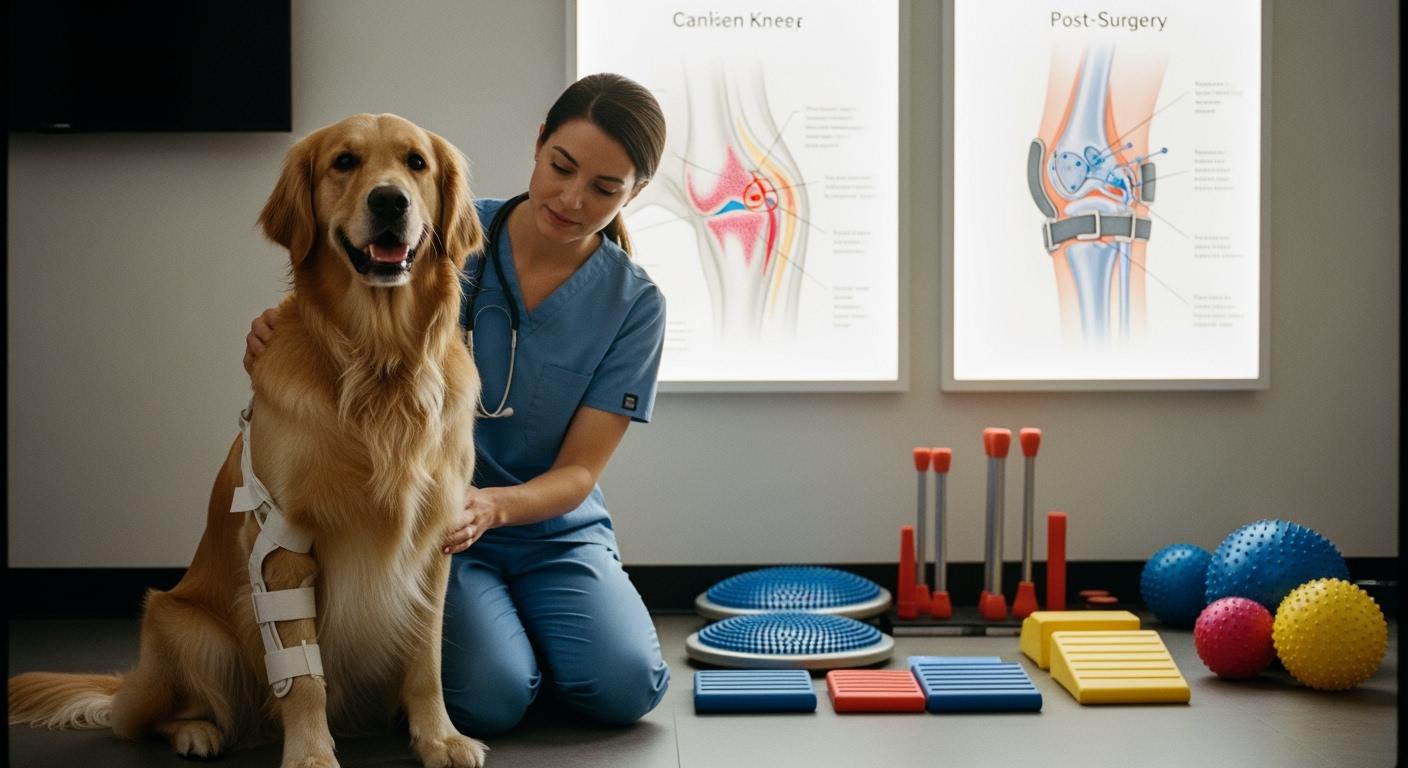
When comparing dog cruciate brace partial tear vs post-op use, the main decision is not whether a brace is useful in both cases, but whether the support goal is conservative management before surgery or protection and controlled rehabilitation after surgery. This article is for owners, clinics, and rehab-minded buyers who need to compare how brace selection, wear routine, and monitoring priorities change between these two situations. Read it to understand what a brace is realistically expected to do in partial tear management, how that differs from post-op support, and when to review condition-based support pathways before moving into product selection.
Key Takeaways
Partial-tear bracing is mainly about controlling instability and supporting safer conservative management.
Post-op bracing is mainly about protection, guided recovery, and controlled return to function.
Fit, wear tolerance, and activity control affect outcomes in both cases.
A brace should follow diagnosis and rehab goals, not replace them.
Dog Cruciate Brace Partial Tear vs Post-Op: Key Differences
What Is a Dog Cruciate Brace
A dog cruciate brace is an external support device designed to add stability around the stifle when a CCL or ACL-related knee problem changes normal function. In practical use, the brace helps manage motion, reduce symptom-provoking instability, and support safer movement during either conservative management or structured recovery. It does not repair the ligament by itself, but it can play a useful role when the support objective is clearly defined.
Brace construction varies, but the decision should stay focused on function rather than features alone. The relevant questions are whether the brace offers the needed level of control, whether it can be fitted consistently, and whether the dog can tolerate the routine required for partial-tear use or post-op use.
Background note: If you need broader educational context before comparing brace roles, review the knee-support basics in our GaitGuard Guides.
Support Goals for Partial Tear
In partial-tear cases, the brace is mainly a conservative-management tool. The goal is to reduce excess knee motion, make daily activity safer, and lower the chance that uncontrolled loading will worsen the situation before the case is reassessed or stabilized through a broader plan.
Here are the main support goals for a dog cruciate brace in partial tear cases:
Reduce instability during controlled daily movement.
Support safer weight-bearing while activity is managed.
Make conservative care easier to execute consistently.
Provide support during reassessment, rehab, or surgery-deferral periods.
A brace does not resolve the tear itself, but it can improve the management environment around the injury when the case is still appropriate for conservative support. This is especially relevant when activity control, fit, and monitoring are being handled carefully. If you are still deciding whether the case fits a support-first pathway, compare it against the scenarios in our Solutionsoverview.
Support Goals for Post-Op Recovery
After surgery, the brace has a more protective and rehabilitation-oriented role. The main objective is to support controlled recovery, reduce risky motion during early healing, and make the return-to-function process more structured under veterinary guidance.
Key support goals for a dog cruciate brace after surgery include:
Protect the repair during early recovery phases.
Support controlled walking and staged rehabilitation.
Reduce the chance of overload from sudden movement or poor activity timing.
Help transition from protection toward functional recovery.
Post-op bracing only works well when it follows the surgical plan, activity limits, and recovery stage. In other words, the brace is part of the rehab setup, not the rehab setup by itself.
Comparison Table: Dog Cruciate Brace Partial Tear vs Post-Op
Use case | Main brace role | Decision focus |
|---|---|---|
Partial tear | Control instability and support conservative management. | Can the case still be managed safely without surgery right now? |
Post-op recovery | Protect healing and support controlled rehab progression. | Does the brace match the current recovery stage and wear plan? |
The same brace category may appear in both situations, but the decision logic is different. Partial-tear use is about management and risk control. Post-op use is about protection and staged recovery.
Decision rule: choose by rehab objective first, then by brace type. That prevents partial-tear and post-op cases from being managed as if they need the same setup.
Dog ACL Injury Bracing: When and Why
Bracing for Partial ACL Tear
Use bracing for a partial tear when the veterinary plan still supports conservative management and the case benefits from external stability, controlled activity, and close monitoring. This is less about avoiding surgery at all costs and more about matching support to the current stage of the injury.
Partial-tear use usually requires closer day-to-day control than owners expect. Activity level, gait response, swelling, and tolerance to the brace all need to be observed. If the knee is worsening despite support, the brace should be reassessed as a limited tool, not assumed to be solving the case.
Product review point: once the case is confirmed as brace-appropriate, compare dog knee brace product options by support level, fit structure, and monitoring practicality.
Post-Operative ACL Braces
Post-op bracing should be judged by how well it supports the recovery stage, not by whether the brace is simply being worn. Early protection, controlled walking, and gradual rehab progression matter more than generic “extra support” language.
Fit checks, skin checks, and wear-time control are especially important in post-op use because a brace that twists, rubs, or is worn outside the intended schedule can create new problems during recovery.
Note: Always talk to your vet before starting or changing your dog’s knee brace routine. For more rehab tips, see our ACL injury care articles.
Choosing the Right Brace and Rehab Setup
Fit and Comfort for Partial Tear
For partial-tear cases, fit quality determines whether the brace can provide usable stability during conservative management. The brace should stay aligned, resist slipping, and remain tolerable enough for repeated daily use without creating pressure-related setbacks.
Fit and Comfort for Post-Op
For post-op cases, comfort still matters, but schedule control matters just as much. The brace should support the current recovery phase without creating avoidable skin issues, twisting, or false confidence that leads to too much activity too early.
Activity Control and Monitoring
Monitoring should focus on repeatable signals: weight-bearing quality, gait consistency, swelling response, stride tolerance, and skin condition after wear. These observations matter more than whether the brace “looks supportive.” A brace is performing well only when the dog is functioning better within the intended rehab plan.
Record daily: wear time, walk duration, weight-bearing quality, swelling after activity, skin response, and whether the dog tolerated the brace calmly. This is the minimum useful rehab log for partial-tear or post-op brace use.
Common Mistakes and Recovery Tips for Dog ACL Injury
Mistakes to Avoid with Bracing
The most common bracing mistakes are poor fit oversight, overestimating what the brace can control, and letting activity progress faster than the support plan allows. These mistakes reduce brace value in both partial-tear and post-op cases.
Another common mistake is treating bracing as a stand-alone answer. Veterinary review, activity management, weight control, and rehab progression still determine whether the case is improving. The brace should support that system, not replace it.
Tip: Always talk to your vet about your dog’s progress. They can help you adjust the brace or rehab plan if needed.
Tips for Effective Rehab
Effective rehab depends on matching exercise intensity to the current case stage. Partial-tear management usually prioritizes controlled stabilization and monitored function. Post-op rehab usually prioritizes staged recovery milestones and stricter activity timing.
Use simple, low-risk exercises only when they fit the veterinary rehab plan:
Exercise type | Rehab purpose |
|---|---|
Weight shifting | Supports controlled loading and balance awareness. |
Slow supported walking | Builds consistency in gait without introducing sudden stress. |
Work with your vet to create a rehab plan that fits your dog’s needs. Veterinary professionals make sure the brace fits right and check your dog’s progress. They help you pick the best type of brace and show you how to care for it. They also guide you on how much activity is safe for your dog.
Vets confirm the injury with exams.
They advise on the right brace for your dog’s body.
They work with brace specialists for adjustments.
They teach you how to monitor and care for the brace.
You play a big role in your dog’s recovery. Watch your dog every day and be patient. Follow your vet’s advice and keep track of your dog’s activity and pain. For more rehab tips and support, visit our ACL/CCL educational articles, main dog knee brace category, or condition-based support page.
The key difference between partial-tear bracing and post-op bracing is the rehab objective. Partial-tear use is about controlled conservative management. Post-op use is about protecting healing and supporting staged recovery. The better setup is the one that matches the case stage, not the one that simply adds more support.
Define whether the case is conservative management or post-op recovery.
Match wear routine and activity control to that objective.
Track response with a daily log rather than assumptions.
Reassess quickly if function, fit, or tolerance worsens.
Operational factor | Why it matters |
|---|---|
Fit quality | Determines whether support stays aligned and wearable. |
Routine compliance | Controls whether the brace is used consistently enough to matter. |
Rehab integration | Keeps brace use connected to the larger recovery plan. |
Veterinary oversight | Confirms whether the current setup still matches the case stage. |
For broader follow-up after this comparison, continue to the most relevant internal paths only: use Guides for educational background, Solutions for condition-based direction, and Products when the case is ready for brace evaluation.
FAQ
Can a dog cruciate brace help with a partial ACL tear?
Yes, when the case is still appropriate for conservative management. In that setting, the brace can help reduce instability and support safer daily function, but it still needs to be part of a broader monitoring and rehab plan.
Should my dog wear a brace after ACL surgery?
Sometimes, yes. Post-op use depends on the surgical plan and recovery stage. The important question is not whether every dog needs a brace after surgery, but whether the brace adds useful protection and structure to the recovery process in that case.
How do I know if the brace fits my dog correctly?
A correct fit stays aligned, does not rotate excessively, avoids pressure marks, and remains tolerable during the intended wear window. If the brace slips, rubs, or changes gait negatively, the fit or support plan needs review.
How long should my dog wear the brace each day?
Wear time should follow the rehab objective and veterinary guidance. Partial-tear use and post-op use do not always follow the same schedule, so daily duration should be set by case stage, tolerance, and response.
What activities are safe for my dog with a cruciate brace?
Low-risk, controlled activity is usually the safest default, but what counts as safe depends on whether the case is partial tear management or post-op rehab. Activity should progress by plan, not by enthusiasm or short-term improvement.
Data authenticity note: This article is for educational purposes only. It is designed to help readers compare how brace goals differ between partial cruciate tears and post-operative recovery. It does not replace veterinary diagnosis, imaging, surgical guidance, individualized brace fitting, or a structured rehabilitation plan.
