
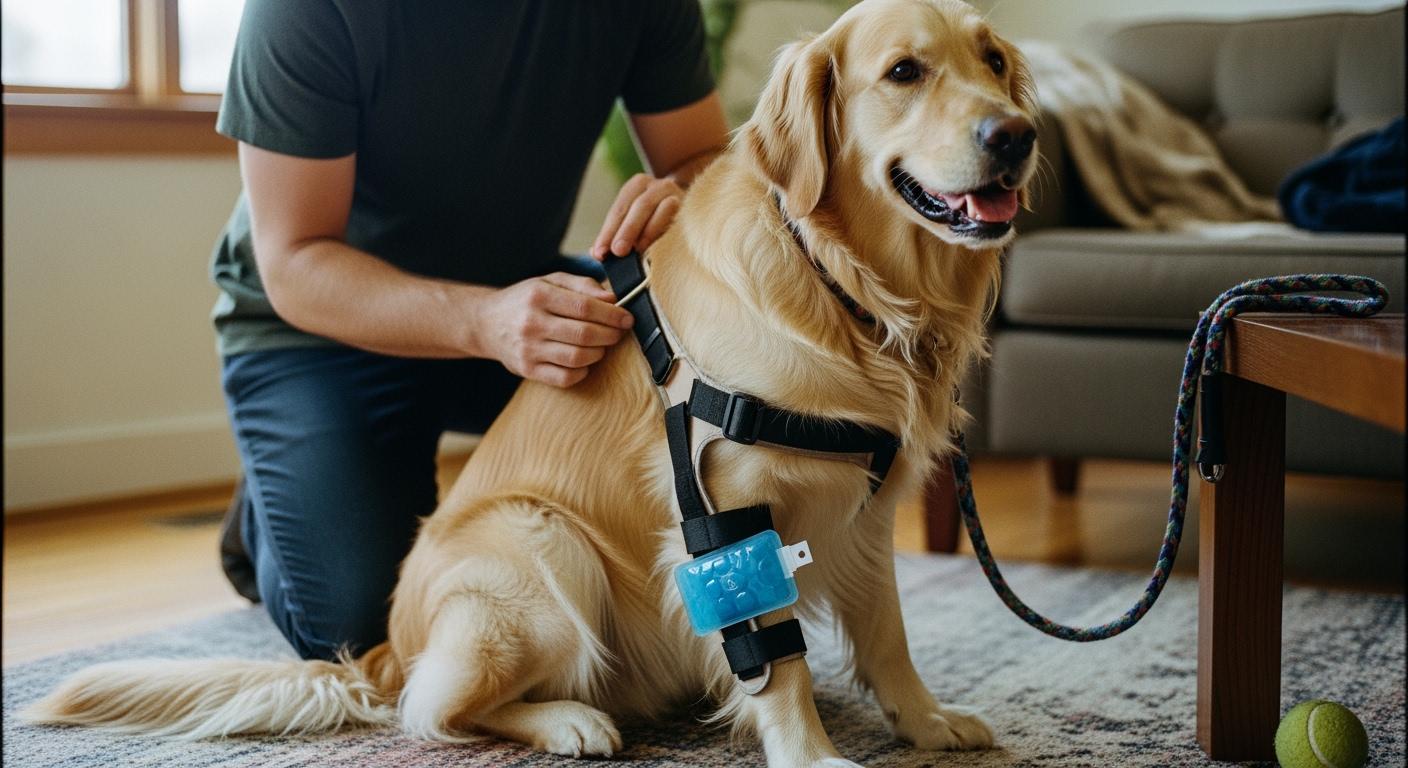
You want your dog’s knee to have good support while healing and moving every day. A dog cruciate ligament brace with hot cold gel pack provides strong knee support and enhances the benefits of heat or cold therapy. This combination can make it easier for your dog to walk, stand, and rest comfortably. Always consult your veterinarian before selecting a brace. Consider your dog’s daily activities, their comfort level, and your rehabilitation goals. For more information, check out our existing content on ACL and CCL braces available on our site.
Key Takeaways
Pick a dog cruciate ligament brace that fits your dog well. A good fit gives the best support and comfort when your dog is healing.
Use hot and cold gel packs the right way. Cold therapy helps lower swelling after your dog gets hurt. Heat therapy helps relax muscles later when your dog is getting better.
Watch your dog’s comfort often. Look for any signs of irritation or pain. Change the brace if your dog seems uncomfortable.
Add easy exercises to your dog’s daily routine. Short walks and swimming help make muscles stronger. These activities do not put too much stress on the knee.
Always talk to your veterinarian before using a brace. Your veterinarian can give you the best advice and care for your dog.
What Is a Dog Cruciate Ligament Brace with Hot Cold Gel Pack?
Targeted Knee Support for Dogs
You want your dog to feel safe when moving after an injury. The dog cruciate ligament brace with hot cold gel pack gives special support to the knee, which is also called the stifle joint. This brace helps keep the joint steady and takes pressure off the cruciate ligament. It is made for comfort and daily use, so your dog can walk, stand, or rest with less pain.
Let’s look at what makes this brace different:
Component/Feature | Description |
|---|---|
Custom Fit or Highly Adjustable | Advanced technology allows for custom fitting without the need for casting. |
Targeted Support | Designed to provide precise support for specific joint or limb issues. |
Advanced Design | Incorporates biomechanical principles, hinges, adjustable straps, and padding for comfort. |
Durability and Longevity | Made from high-quality materials for increased durability and long-lasting support. |
Comfort and Compliance | Lightweight and well-fitting for better comfort and compliance during rehabilitation. |
You can change the brace to fit your dog’s leg shape. Hinges and straps help keep the brace in place. The strong materials make the brace last a long time. Your dog will feel good wearing it, so rehab is easier to follow.
Added Value of Hot & Cold Therapy
The dog cruciate ligament brace with hot cold gel pack does more than just support. The gel pack lets you use heat or cold right on your dog’s knee. This makes it easy to help with pain and swelling during rehab or walks.
Tip: Always listen to your veterinarian when using hot or cold therapy.
Here are the main ways hot and cold therapy help your dog’s knee:
Cold therapy helps stop swelling, lowers pain, and keeps swelling down. Use it for new injuries or arthritis. Put it on for up to 20 minutes, a few times a day.
Heat therapy helps blood flow, brings nutrients, and helps the body heal. It relaxes muscles and helps your dog move better. Use it for 15 to 20 minutes.
Using both hot and cold packs can help blood move and clean out bad stuff from the hurt area.
The gel pack can help your dog feel better after playing or while healing. The dog cruciate ligament brace with hot cold gel pack lets you give support and therapy at the same time.
When to Choose a Brace with Hot & Cold Gel Pack
Rehab and Recovery Needs
You want your dog to heal well after torn ligaments or surgery. A canine rehabilitation brace with a hot and cold gel pack can help you follow a rehab plan at home. This brace gives your dog steady support and lets you use therapy right on the knee. You can use cold packs to reduce swelling and pain in the first days after injury. Later, you can use heat to relax muscles and improve blood flow.
Here is a simple table showing common rehab protocols for dog knee injuries:
Therapy Type | Description | Duration/Method | Purpose |
|---|---|---|---|
Ice Therapy | Use after new injuries or surgery. | 10-15 minutes with a towel or frozen veggies. | Lowers pain and swelling. |
Dry Heat Therapy | Use later in recovery. | 3-6 times per day for 5-10 minutes. | Helps healing and comfort. |
Passive Range of Motion (PROM) | Move the joint gently to keep it flexible. | No muscle use, just gentle movement. | Prevents stiffness and keeps mobility. |
You can use a canine rehabilitation brace to make these steps easier. The brace keeps the knee stable while you apply therapy. You can follow your vet’s rehab plan and adjust therapy as your dog improves.
Walking, Standing, and Daily Comfort
Your dog needs support for walking and standing every day. A canine rehabilitation brace with a gel pack helps your dog move with less pain. You can use cold therapy after walks to soothe sore joints. Heat therapy before activity can loosen muscles and make movement easier.
Tip: Watch your dog’s comfort during therapy. If your dog seems uneasy, stop and check the brace fit.
You can use the brace for daily routines, short walks, or rest time. The brace gives steady support and lets you add therapy when needed. You help your dog feel better and stay active during recovery from dog knee injuries. You can adjust your rehab plan as your dog’s needs change.
Key Features to Look For in a Dog Knee Brace
Picking the right dog knee brace helps your dog move better. It also helps your dog heal faster. You should look for features that fit your dog’s needs. Think about your dog’s daily life. Focus on how the brace fits, what it is made of, and if you can adjust it. These things give your dog the best support.
Fit and Sizing for Canine Comfort
The way the brace fits is very important. The brace should match your dog’s leg shape and size. If the brace fits right, your dog will feel good and get steady support. If the brace is too loose or tight, it can rub or slip. This can even hurt your dog.
Here are steps to check if the brace fits:
Measure your dog’s leg at the knee and above and below it.
Look at the sizing chart for each brace and compare.
Put the brace on your dog and check for gaps or tight spots.
Watch your dog walk and stand with the brace on.
Tip: A good-fitting brace can help swelling go down. It can also make your dog feel better during rehab.
There are different braces for different injuries. Always pick the one that fits your dog’s size and problem. Fit, type, and comfort all work together to give the right support.
Materials and Durability
What the brace is made of matters for comfort and how long it lasts. You want the brace to feel nice on your dog’s skin. It should also last through daily use. Good materials help your dog move easily and keep the brace in place.
Material Type | Benefits |
|---|---|
Medical-Grade Neoprene | Flexible, lightweight, water-resistant; allows full range of motion; reduces knee strain. |
Memory Foam Padding | Molds to dog’s leg; reduces pressure points; enhances comfort for long-term wear. |
Reinforced Aluminum or Plastic Stays | Provides additional structural support; improves stability for severe conditions. |
Safety and Sustainability | Poor-quality materials can cause skin irritation; sustainable materials indicate higher quality. |
Medical-grade neoprene lets your dog move and keeps the brace light. Memory foam padding shapes to your dog’s leg and stops sore spots. Reinforced stays give extra support for bad injuries. Always check for safe and earth-friendly materials. This helps stop skin problems.
Adjustability and Ease of Use
Being able to adjust the brace makes it easy to use. It also keeps your dog comfortable. You want straps and closures you can change as needed. Adjustable parts help you get a good fit. They also keep the brace in place when your dog walks or does rehab.
Evidence Type | Description |
|---|---|
Growth Drivers | More dogs have joint problems now. More people have pets. This means we need braces that are easy to use and adjust. |
Technological Innovations | New adjustable and custom-fit features make braces work better. |
Look for these things:
Straps you can adjust for a snug fit.
Designs that are easy to put on and take off.
Support you can change for different types of braces.
A brace that is easy to use saves you time. It also keeps your dog happy. You can change the brace as your dog’s needs change. This helps you follow your dog’s rehab plan and daily life.
Note: The most important things are fit, type, material, and how easy it is to use. Being able to adjust the brace gives your dog the best support.
A dog knee brace that fits well, uses good materials, and can be adjusted gives your dog the support needed for walking, standing, and healing. You help your dog stay active and comfy every day.
How to Measure and Fit Dog Leg Braces
Step-by-Step Measuring Guide
You need accurate measurements to choose the right dog leg brace. Start by making sure your dog stands naturally. This helps you avoid errors caused by bending or lying down. Use a soft measuring tape and allow one finger under the tape for a snug fit.
Follow these steps to measure your dog:
Measure the thigh circumference. Wrap the tape around the upper thigh, about one inch below where the leg meets the body.
Measure the knee circumference. Find the center of the knee joint and wrap the tape around this midpoint.
Measure the hock to knee length. Start at the knee and measure down to the hock joint. This shows the brace height.
Measure the lower leg circumference. Place the tape halfway between the hock and the paw.
Record your dog’s weight and breed. Some braces work best for certain breeds.
Tip: Repeat each measurement twice to check for accuracy. Record photos or videos for reference if needed.
You should never measure your dog while it is lying down. This can distort the results. If you need help, contact the brace provider for virtual fitting support.
Measurement Area | How to Measure | Why It Matters |
|---|---|---|
Thigh Circumference | Upper thigh, just below the hip | Ensures proper brace fit |
Knee Circumference | Center of knee joint | Targets support for the stifle |
Hock to Knee Length | From knee to hock joint | Determines brace height |
Lower Leg Circumference | Halfway between hock and paw | Helps with strap placement |
Weight and Breed | Use scale and note breed | Some braces are breed-specific |
Ensuring Proper Fit and Placement
A well-fitted dog leg brace gives your dog stability and reduces harmful motion. This is important for healing during rehabilitation. When you fit the brace, check for gaps or tight spots. The brace should stay in place when your dog walks or stands.
Proper fit allows your dog to move normally during recovery. This helps preserve muscle mass and supports better long-term outcomes. You need to follow the wearing and activity plan from your veterinarian. Poor fit can lead to inadequate stabilization and slow healing.
Note: Always monitor your dog’s comfort. Adjust the brace if you see rubbing or slipping.
You help your dog recover faster when you measure your dog carefully and fit the brace correctly. Dog leg braces work best when you check fit often and follow your rehab plan.
Using Hot & Cold Gel Packs Safely
When to Use Cold vs. Heat
You want to help your dog heal and feel better. Hot and cold gel packs can give pain relief and support your dog’s knee during recovery. You should know when to use cold and when to use heat.
Use cold packs right after an injury or surgery. Cold helps lower swelling and gives pain relief. Place the cold pack on your dog’s knee for 10 to 20 minutes. You can repeat this every 2 to 4 hours for up to 72 hours.
Never leave a cold pack on for more than 30 minutes. This helps prevent tissue damage and skin irritation.
Always check your dog’s skin after 5 minutes. Look for redness or pale spots. If you see these, remove the pack to avoid skin irritation.
Use a thin towel as a barrier between the gel pack and your dog’s skin. This keeps the area clean and helps prevent infection, especially after surgery.
Wait to use heat therapy until your dog’s swelling goes down. Using heat too soon can cause more inflammation and skin irritation.
When you use heat, keep the pack on for 15 to 20 minutes. Watch your dog closely to prevent burns and skin irritation.
You can help your dog by integrating braces into rehabilitation. The brace keeps the gel pack in place and supports the knee during therapy.
Monitoring for Comfort and Safety
You must watch your dog during every session. Dogs cannot tell you if something feels wrong. You need to check for signs of skin irritation or discomfort.
What to Watch For | What to Do |
|---|---|
Redness or pale spots | Remove the pack right away |
Whining or restlessness | Stop therapy and check the skin |
Wet or broken skin | Do not use the pack on that area |
Shivering or shaking | Shorten the session or stop |
Swelling after therapy | Call your veterinarian |
Small, young, or older dogs may not handle full therapy times. You should shorten sessions if your dog seems cold or uncomfortable. Always use a towel to protect the skin and lower the risk of skin irritation. Check the skin after each session. If you see any signs of skin irritation, let the area rest before trying again.
You want your dog to get pain relief and stay safe. Careful use of hot and cold gel packs helps your dog heal and keeps the skin healthy.
Integrating a Canine Rehabilitation Brace into Daily Life
Introducing the Brace to Your Dog
You want your dog to feel okay with a new cruciate ligament brace. Let your dog sniff and look at the brace before you put it on. Make sure the brace fits so your dog does not feel pain. Keep your dog’s activity low for the first few days. This helps your dog get used to the brace. If your dog acts like it hurts, ask your veterinarian about medicine or supplements to help.
Here are some helpful strategies:
Check if the brace fits right every time.
Do not let your dog run or jump while adjusting.
Give treats or praise when your dog wears the brace.
Watch your dog for signs of pain or skin problems.
Tip: Be patient and calm. Your dog will learn to wear the brace with gentle help.
Building a Routine for Canine Mobility
You can make a daily routine to help your dog heal and feel good. Low-impact exercise helps your dog get stronger without hurting the knee. Try short walks on a leash or swimming. These activities help muscles and keep joints steady. Keeping your dog at a healthy weight is important for the knees. Feed your dog healthy food and do not give too much.
Strength exercises help too. Sit-to-stand movements, walking over poles, and balancing on soft surfaces build muscle around the knee. These routines help your dog move and stay active.
Routine Element | Benefit |
|---|---|
Short leash walks | Builds strength, protects joints |
Swimming or water therapy | Low-impact, improves mobility |
Balanced diet | Reduces knee stress |
Sit-to-stand exercises | Strengthens muscles |
Cavaletti pole walking | Enhances coordination |
Balance on soft surfaces | Supports joint stability |
You help your dog feel confident and move better by following a routine. Change activities as your dog gets stronger. Always watch for tiredness or pain and ask your veterinarian if you need help.
Common Mistakes and How to Avoid Them
Fit and Sizing Errors
You want your dog to get the best joint support during recovery from cruciate injuries. One of the most common mistakes is choosing a brace that does not fit well. If the brace is too loose or too tight, your dog may feel discomfort. The brace can slip or rub against the skin, causing irritation. Sometimes, a poor fit puts extra stress on other parts of the leg. This can lead to new injuries and slow down healing.
An improperly fitted brace may cause chafing and skin irritation.
A brace that slips loses its effectiveness and does not stabilize the knee.
Incorrect sizing can add stress to the joint, making recovery harder.
You should always measure your dog’s leg carefully. Custom-made or professionally fitted braces help ensure proper support and stabilization. Check the brace often and adjust it as your dog’s needs change.
Tip: Watch your dog walk and stand with the brace. If you see limping or discomfort, review the fit and sizing.
Misuse of Hot or Cold Therapy
Hot and cold gel packs offer relief, but you must use them safely. Many owners make mistakes by leaving packs on too long or using the wrong temperature. If you use cold therapy for more than 30 minutes, your dog may get skin irritation or tissue damage. Heat therapy used too soon after injury can increase swelling.
Common Mistake | How to Avoid It |
|---|---|
Leaving cold pack too long | Limit sessions to 10-20 minutes |
Using heat on fresh injury | Wait until swelling goes down |
Not using a towel barrier | Always protect your dog’s skin |
Always monitor your dog during therapy. If you notice redness, shivering, or restlessness, stop the session. Use a towel as a barrier between the gel pack and your dog’s skin. Adjust therapy times based on your dog’s comfort and size.
Note: Safe use of hot and cold therapy helps your dog heal and keeps the skin healthy.
When to Consult Your Veterinarian
Knowing When to Ask for Help
You want your dog to get good care while healing. Talking to your veterinarian helps you make safe choices for your dog’s knee. You should ask your veterinarian before using any brace, especially one with a hot and cold gel pack.
A veterinarian can check your dog’s injury and suggest the best support. Sometimes, your dog needs tests like gait analysis or muscle checks. A certified canine rehabilitation therapist can help decide if a brace is right or if other treatments are better. Your veterinarian will also look for skin or joint problems that could get worse with a brace.
Note: Always ask your veterinarian before trying a new brace or therapy. This makes sure your dog gets safe and helpful care.
You should watch your dog closely when using the brace. Some signs mean you need to call your veterinarian right away. Look for these symptoms:
Limping or changes in how your dog walks
Noticeable pain or discomfort during movement
Pain when you touch certain areas
Loss of coordination or agility
Dragging a foot
Slow to get up from lying down
If you see any of these signs, stop using the brace and call your veterinarian. Your dog may need a new treatment plan or a different kind of support.
You help your dog heal by staying alert and asking for expert advice. Your veterinarian can guide you from picking the right brace to checking progress. This keeps your dog safe and comfortable while healing.
Tip: Regular visits with your veterinarian help you change your dog’s rehab plan as needed. You help your dog’s healing and daily comfort by working with professionals.
Learn More About Dog Knee Brace Options
Internal Links to CCL/ACL Support Resources
You can learn more about dog knee braces by checking our guides. These resources explain the different types of braces and how they help your dog. You will see how braces support the stifle joint. Targeted support is important for rehab and comfort.
Dog Knee Brace for CCL Tear Article: This article shows how braces help dogs with CCL injuries. It gives tips for pet owners.
Dog Knee Brace Category/Product Pages: Look at many braces made for different needs and sizes.
Knee Brace with Hot and Cold Gel Pack Product Path: Find out about braces that give support and therapy together.
ACL/CCL Condition-Based Support Page: Get advice and tips for certain knee problems.
Specialized Pet Solutions uses ideas from human orthotics to make strong braces. Features like the Achilles relief channel and patellar bar help keep the knee steady. These features also lower the chance of more injury. You can order custom braces by mail, which is easy and quick.
Where to Find Product and Condition Guides
You want to make good choices for your dog’s knees. Our guides tell you when to use a brace and why bracing helps. They show how to use braces with weight control and safe exercise. These resources talk about care for partial CCL tears and help for older dogs.
Resource Type | What You Learn |
|---|---|
Product Guides | Compare brace features and materials |
Condition Guides | Understand knee injuries and rehab plans |
Therapy Integration | Combine bracing with physical therapy |
Note: This article is part of a bigger group of guides. You can read more articles to learn and find the best help for your dog.
Learning about all your options helps your dog heal and feel better. Reading these guides gets you ready to talk with your veterinarian. You will be able to pick the right brace for rehab, walking, and daily comfort.
Picking a dog cruciate ligament brace with a hot and cold gel pack helps your dog feel comfortable every day and during rehab. Here are some easy steps:
Make sure the brace fits your dog well. This gives good support after a torn acl or surgery.
Choose strong materials. They help your dog move and lower joint pain from arthritis.
Ask your veterinarian for help with acl injuries and how to use the brace.
Watch your dog closely. Check the brace fit each day. Look for signs your dog feels uncomfortable. Change the brace if needed. Read more guides to learn about rehab and healing after surgery.
FAQ
How does a dog cruciate ligament brace with hot and cold gel pack help my dog with a ccl injury?
You give your dog targeted knee support for the stifle area. The brace stabilizes the joint after a ccl injury. The gel pack lets you apply cold or heat therapy. This helps reduce swelling and pain during rehab and daily walks.
Can I use the brace for daily activities if my dog has a ccl tear?
You can use the brace for walking, standing, and resting. The brace supports the knee after a ccl tear. You help your dog move comfortably. The gel pack adds relief after exercise or during recovery. Always check your dog’s comfort and follow your veterinarian’s advice.
How do I know if the brace fits my dog’s leg after a ccl injury?
You measure your dog’s leg at the knee, thigh, and lower leg. The brace should match your dog’s size and shape. A good fit keeps the brace stable and supports the ccl area. Watch your dog walk and stand. Adjust the brace if you see slipping or discomfort.
Is hot and cold therapy safe for my dog’s ccl rehab?
You use cold therapy right after a ccl injury to lower swelling. You use heat therapy later to relax muscles. Always use a towel between the gel pack and your dog’s skin. Monitor your dog for signs of irritation. Ask your veterinarian before starting therapy.
When should I consult my veterinarian about a ccl brace with gel pack?
You consult your veterinarian before using any brace for a ccl injury. Your veterinarian checks your dog’s knee and recommends the best support. If your dog shows pain, limping, or skin problems, you call your veterinarian. Professional advice helps you choose the right brace and therapy.
