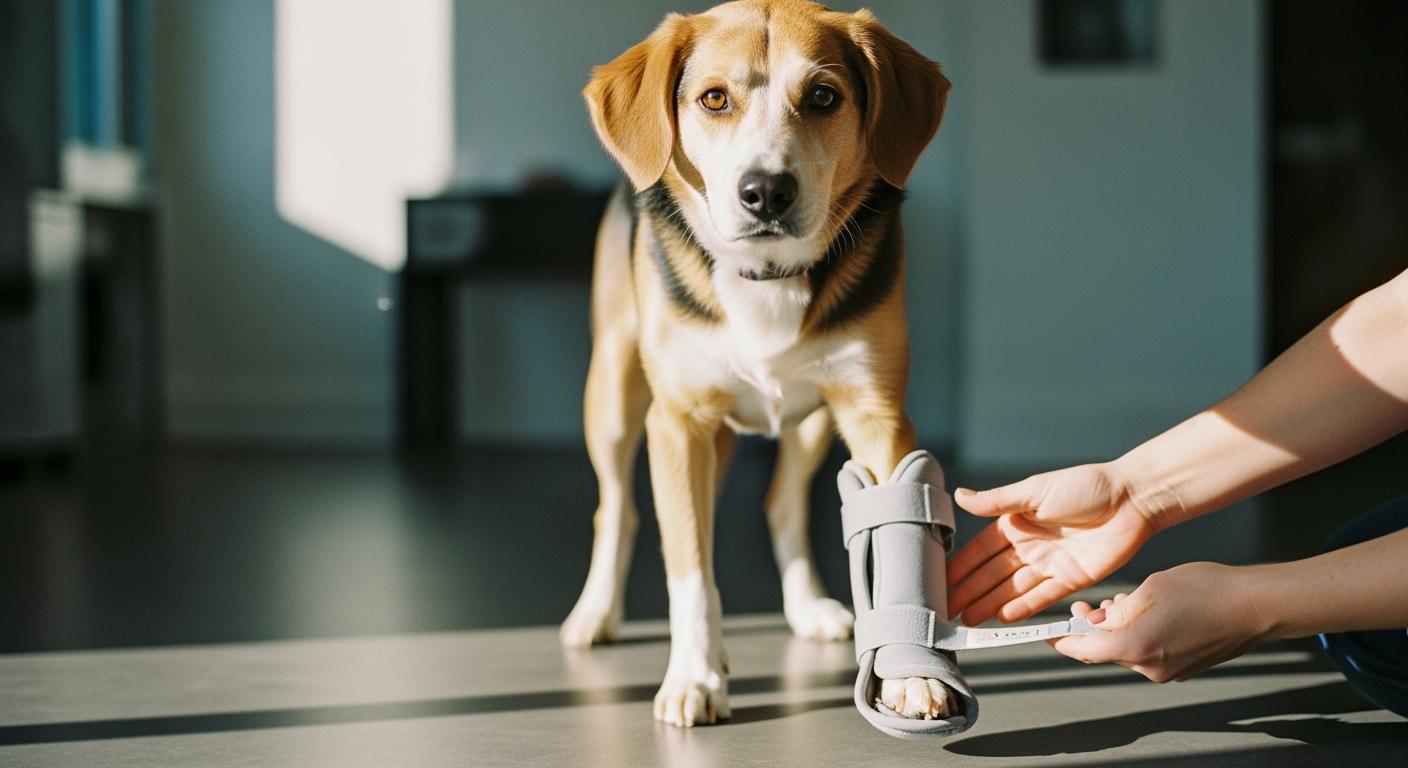
A dog foot brace is usually considered when a dog needs paw support, toe-up control, or safer walking because of paw drag, knuckling, or lower-limb instability. In practice, this term may refer to toe-up supports, no-knuckling devices, paw-protection splints, or lower front-leg support around the carpal area. The right setup depends on whether the main issue is toe drag, paw placement, surface protection, or wrist-level stability. Here are some common types you might find:
Rear splint for hind paw support
Hock splint for the lower back leg
Front splint for the front paw
Carpal splint for the lower front leg
Bootie splint for paw, toe, and ankle support
Always check with your veterinarian to understand your dog’s needs before you choose a brace.
Key Takeaways
Pick the right dog foot brace for your dog’s needs. Your dog may need paw support or toe-up control. Watch for signs your dog needs a brace. These signs include dragging paws or trouble walking. Ask your veterinarian for help. Measure your dog’s paw and leg carefully for a good fit. A snug fit stops discomfort and gives better support. Choose braces with breathable materials. This keeps your dog’s paws cool and comfy. Check your dog often for irritation or discomfort. Talk to your vet if you see any problems.
What Is a Dog Foot Brace?
A dog foot brace helps your dog walk safely by supporting the paw and lower leg. When you see the term “dog foot brace,” it usually means a device for paw support, toe-up control, or no-knuckling assistance. These braces do not cover the whole leg like some other types of dog braces. Instead, they focus on the lower part of the limb, where many dogs need extra help.
Paw and Toe-Up Support Explained
You may notice your dog dragging a paw or struggling with injuries to the paw pad. In these cases, a splint can protect the paw and keep your dog moving comfortably. Paw and toe-up support braces address problems such as:
Cuts, burns, or punctures on the paw pad
Cracked pads or excessive licking
Weakness that causes the paw to drag
A splint for the paw or carpal area stabilizes the lower leg and helps prevent further injury. These braces allow your dog to move naturally while protecting sensitive areas. Unlike general leg braces, a dog foot brace targets the carpal joint and paw, not the larger joints like the elbow or knee. If you want to learn more about the toe-up and paw-support solutions, you can explore guides that compare splint options for various conditions.
If the main issue is wrist-level instability or lower front-leg support rather than toe drag alone, compare our dog carpal brace options.
When to Consider No-Knuckling Braces
Some dogs flip their paw under or “knuckle” when they walk. This can lead to tripping or more serious injuries. A no-knuckling splint or training sock helps correct this by gently lifting the toes and encouraging proper paw placement. These devices are lightweight and keep the toes uncovered, so your dog can feel the ground. You use them for short training sessions, usually just a few minutes at a time, to help your dog regain a normal gait.
Tip: If you notice your dog dragging a paw or knuckling, talk to your veterinarian. They can help you decide if a dog foot brace or another type of support is best for your dog’s needs.
If you want to understand more about condition-based support or how to train your dog to walk better, look for resources on gait training and rehabilitation.
For a condition-led overview focused on paw drag, toe-up control, and walking stability, continue with our dog knuckling brace solutions.
When Does Your Dog Need Paw or Toe-Up Support?
Signs Your Dog Needs a Foot Brace
You may wonder when your dog needs extra help for their paws. Certain signs can show that your dog could benefit from a dog foot brace. Watch for these common signs:
Your dog’s paw bends under while walking.
You see weakness or trouble moving.
Your dog seems reluctant to play or move.
Walking looks shaky, and your dog stumbles often.
Paws drag, and you hear nails scraping the ground.
These signs often mean your dog needs more stability and support. A dog foot brace can help protect the paw and encourage safer walking. If you notice these changes, talk to your veterinarian. They can help you decide if a paw or toe-up brace is right for your dog.
When to Consider Dog Leg Braces
Sometimes, your dog may need more than just paw or toe-up support. You should consider dog leg braces if your dog has:
Arthritis or pain in the wrist or ankle
Injuries, sprains, or strains
Joint deformities
Tears or ruptures of the ACL
Support needs after a leg amputation
Problems with movement and stability in the knees
Dog leg braces give extra stability for the whole limb. They can help manage pain, support healing, and improve movement. If your dog has these conditions, ask your veterinarian about the best type of brace. You can also explore guides on condition-based support and broader mobility aids for more information.
Dog Foot Brace Features to Look For
Picking the right features in a dog foot brace helps your dog walk better. The brace should give support and keep your dog safe. It should not rub or stop your dog from moving. Find a splint that fits your dog’s needs for paw support, toe-up help, and safer walks.
For product-side comparison of toe-up and paw-drag support options, review our dog knuckling brace options.
Materials and Breathability
The splint’s material changes how your dog feels when walking. Fabrics that let air through keep paws cool and stop skin problems. Hard plastics last longer but do not let much air in. You can see how materials compare in this table:
Material Type | Breathability | Durability | Comfort Level |
|---|---|---|---|
Breathable Fabrics | High | Moderate | High |
Sturdy Plastics | Low | High | Moderate |
Some splints, like the Dixie Dog Hock Brace, use polyester and polypropylene with a mesh that lets air in. This makes the brace cooler and more comfy. Neoprene sleeves fit the paw well and bend easily. Polypropylene shells make the brace strong but still light. These materials help your dog walk in a normal way and heal faster.
Tip: Pick a splint with fabric that breathes for long use and less heat.
Toe-Up and No-Knuckling Support
Toe-up and no-knuckling splints help dogs who drag their paws or knuckle. These splints lift the toes and keep the paw in the right spot. Some splints have these features:
Toe-Up help to lift the paw and stop rolling
Waterproof, anti-slip toe cap for wet floors
Soft fabric for comfort if worn a long time
Strong straps for easy and quick use
Fully adjustable design for different needs
Toe-up splints help dogs with nerve or spine problems. They teach your dog to walk better, protect paws, and help your dog know where their feet are. No-knuckling supports, like training socks, let your dog feel the ground. These splints work best for dogs who can move their legs forward. Devices like the No-Knuckling Training Sock and Hindlimb Dorsi-Flex Assist support under the paw and around the carpal or hock. Your vet can help you pick the right splint for your dog.
Adjustability and Fit
A splint should fit tight but not hurt your dog. Straps that adjust and many fitting points help you get the right fit. Here is a table of common adjustability features:
Feature | Description |
|---|---|
Adjustability | Makes sure the brace is tight but not painful |
Adjustment Points | Many spots to change fit for your dog’s size and shape |
If a splint is too loose, it will not help your dog. If it is too tight, it can hurt or stop blood flow. Adjustable splints stop rubbing and make your dog want to wear the brace. Vets say adjustable splints are best to stop slipping and rubbing. This gives your dog the right support at the carpal or hock.
Safety for Walking
Safety features in a dog foot brace help your dog walk safely. Look for splints with:
Velcro® straps you can adjust so the brace stays on
Reflective parts so your dog can be seen in the dark
Choosing a Dog Leg Brace: Fit and Comfort
A good fit is the foundation of effective support for your dog. When you focus on fit and comfort, you help your dog adjust to a splint and get the most out of every walk. This section will guide you through measuring, fitting, and avoiding common mistakes when buying a dog leg brace.
Measuring for the Right Size
Accurate measurement is the first step in choosing a dog leg brace that works. A brace that fits well gives your dog the stability and support needed for safe movement. If the brace is too loose, it will not help. If it is too tight, it can cause pain or restrict blood flow. Always measure your dog while standing to get the most accurate results.
Follow these steps to measure your dog for a foot brace or paw-support device:
Place your dog on a flat surface and let the target paw bear weight naturally.
Measure paw width at the widest point while the paw is loaded.
Measure paw length from the nail tip area to the back of the main pad.
If the support includes the lower limb, measure the circumference just above the paw at the narrowest stable point.
For front-leg support, measure from the paw base to the carpal area. For rear toe-up support, measure from the paw base to the hock area.
If using a toe-up or no-knuckling device, confirm whether the dog needs front-limb or hind-limb support before choosing the fit path.
Tip: Use a straight pen for tracing the paw. This helps you avoid slim or inaccurate measurements.
A custom-fitted brace based on these measurements will give your dog the best chance for comfort and support.
Ensuring a Snug, Comfortable Fit
Once you have the right size, focus on how the splint feels on your dog. A snug fit keeps the brace in place and provides stability. Adjustable straps help you fine-tune the fit for your dog’s unique shape. Check the brace often, especially in the first week.
Adjust the straps so the splint is secure but not too tight.
Look for signs of rubbing, redness, or swelling around the brace.
Give your dog breaks from the brace to check for irritation.
Massage the limb gently to help with fluid movement and comfort.
A splint that fits well should not slip or twist. Your dog should walk with more confidence and less stumbling. If you notice any discomfort, remove the brace and check the fit again. Sometimes, a small adjustment makes a big difference.
Note: If you see swelling, sores, or hair loss, stop using the brace and contact your veterinarian. Early signs of irritation can lead to bigger problems if ignored.
Avoiding Common Mistakes
Many dog owners make simple mistakes when fitting a dog foot brace or splint. You can avoid these issues by following a few key steps:
Do not skip the break-in schedule. Start with 30 minutes on the first day and slowly increase wear time over a week.
Check the fit several times a day, especially in the beginning.
Watch for swelling, redness, or changes in how your dog walks.
Adjust strap tension as needed to prevent rubbing or slipping.
Clean the splint weekly and check for chewing or damage.
Give your dog regular breaks to rest and recover.
Common Mistake | How to Avoid It |
|---|---|
Not monitoring for swelling | Check paws and legs daily for changes |
Skipping break-in schedule | Gradually increase wear time over 7 days |
Ignoring fit adjustments | Re-check and adjust straps as needed |
Neglecting cleaning | Clean brace weekly and inspect for damage |
Remember: Your veterinarian is your best resource if you have questions about fit, comfort, or signs of irritation.
Choosing a dog leg brace with the right fit and comfort helps your dog get the most benefit from support under the paw. When you take time to measure, fit, and monitor your dog, you set the stage for safer, happier walks. If you want to learn more about dog splint options or broader gait training, explore related guides on stability and support for dogs.
For a broader guide on lighter coverage, fit checks, and daily-use comfort around the leg, see our dog leg sleeve guide.
Using a Dog Foot Brace Safely
A dog foot brace can help your pet walk with more stability, but you should always remember that it does not replace a veterinary diagnosis. You need to use the splint correctly to keep your dog safe and comfortable. This section explains how to introduce the brace, keep it clean, and know when to ask your veterinarian for help.
Gradual Wear and Monitoring
Start by letting your dog wear the splint for short periods. Increase the time slowly each day. Watch your dog closely for any signs of discomfort or irritation. Check the fit every time you put the splint on. Use the table below to help you spot problems early:
Signs of Proper Fit | Signs of Too Small | Signs of Too Big |
|---|---|---|
All toes fit comfortably in the splint | Toes hanging over the edge | Splint goes too high up leg |
Straps are snug but not tight | Skin bulging over straps | Splint shifts or moves |
Leg fits comfortably into the splint | Paw portion not long enough | Paw portion too wide |
Bend aligns with natural leg shape | Bend sits below the joint | Pet can easily remove splint |
If you see redness, swelling, or your dog tries to remove the splint, stop use and check the fit. These steps help prevent pressure sores and keep your dog happy. You can also look for resources on gait training to support your dog’s progress.
Cleaning and Maintenance
A clean splint lasts longer and keeps your dog’s skin healthy. Follow these steps for cleaning and care:
Wipe the splint daily to remove fur, dirt, and sweat.
Wash the brace with mild soap and lukewarm water. Let it dry completely before using it again.
Use a lint roller to remove extra fur.
Check straps and Velcro often to make sure they work well.
Store the splint in a cool, dry place away from sharp objects.
Look for signs of wear and fix small problems quickly.
Regular cleaning prevents skin infections and helps the splint last longer. A good routine keeps your dog comfortable and supports healing.
When to Consult Your Vet
You should always involve your veterinarian when using a dog splint. Some situations need expert advice:
Situation for Consultation | Description |
|---|---|
Initial Diagnosis | Your vet identifies the injury or condition. |
Monitoring Complications | Your vet checks for fit issues or discomfort. |
Tailoring Treatment Plan | Your vet adds medication, therapy, or exercise. |
Rehabilitation Decisions | Your vet decides if bracing or surgery is best. |
Braces should work with veterinary care, not replace it. Using the wrong splint or an ill-fitting brace can cause more harm. If you see any problems, contact your vet right away. For more information, you can read about dog leg braces and other mobility support options.
Tip: Regular checkups and open communication with your vet help your dog get the best results from a splint.
You can help your dog walk safely by following expert advice. First, measure your dog’s leg with care. Pick a brace that you can adjust easily. Check every day to make sure the brace feels good and fits well. Ask your veterinarian for help and support. Look for resources about gait training and mobility aids for different conditions.
Avoid mistakes by learning about your choices and talking to specialists. Buy braces from trusted sellers. Dog leg braces work best when you choose the right one for your dog and watch for any signs of irritation.
FAQ
How do you know if your dog needs a foot brace?
You see your dog dragging its paw, knuckling, or stumbling. Your veterinarian can confirm if a brace will help. Watch for changes in walking or reluctance to move.
Can you use a dog foot brace for any breed?
Most braces fit many breeds. You need to measure your dog’s paw and leg for the right size. Some braces work better for small or large dogs.
How long should your dog wear a foot brace each day?
Start with 30 minutes. Slowly increase wear time as your dog adjusts. Always check for signs of irritation or discomfort. Follow your veterinarian’s advice.
Do dog foot braces help with knuckling?
Yes, toe-up and no-knuckling braces lift the paw and encourage proper placement. These braces support safer walking and help your dog regain a normal gait.
Where can you learn more about dog mobility aids?
You can find guides on gait training, brace education, and condition-based support. Ask your veterinarian for recommendations. Explore trusted resources for more information.