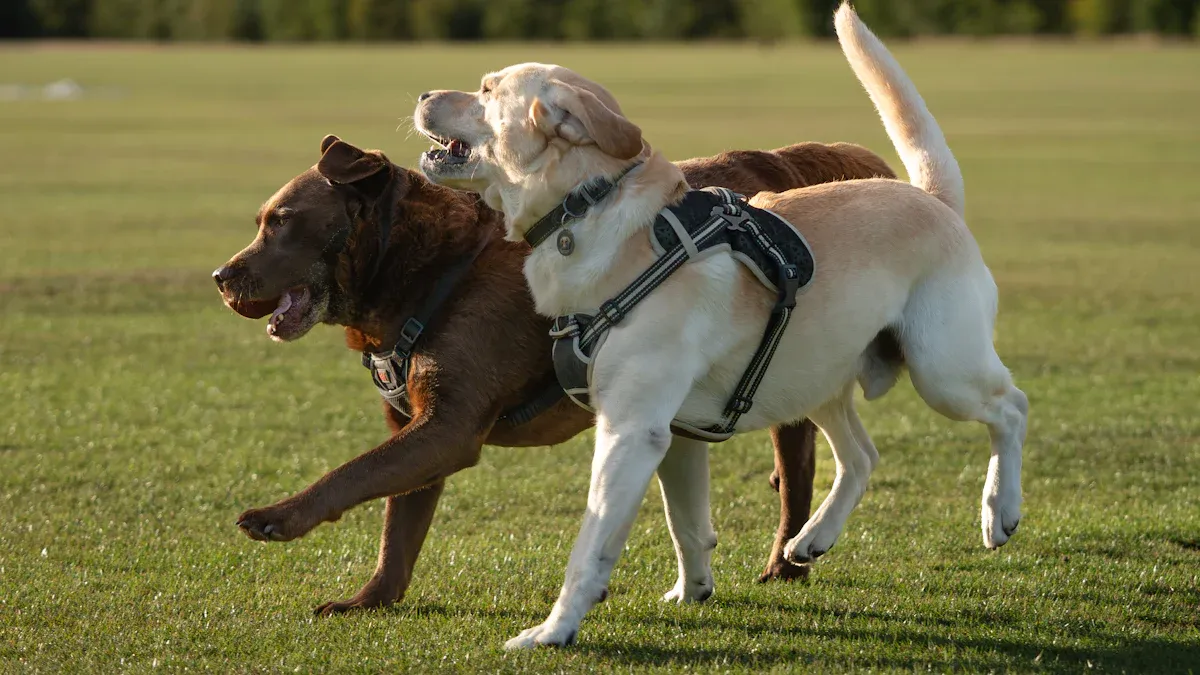
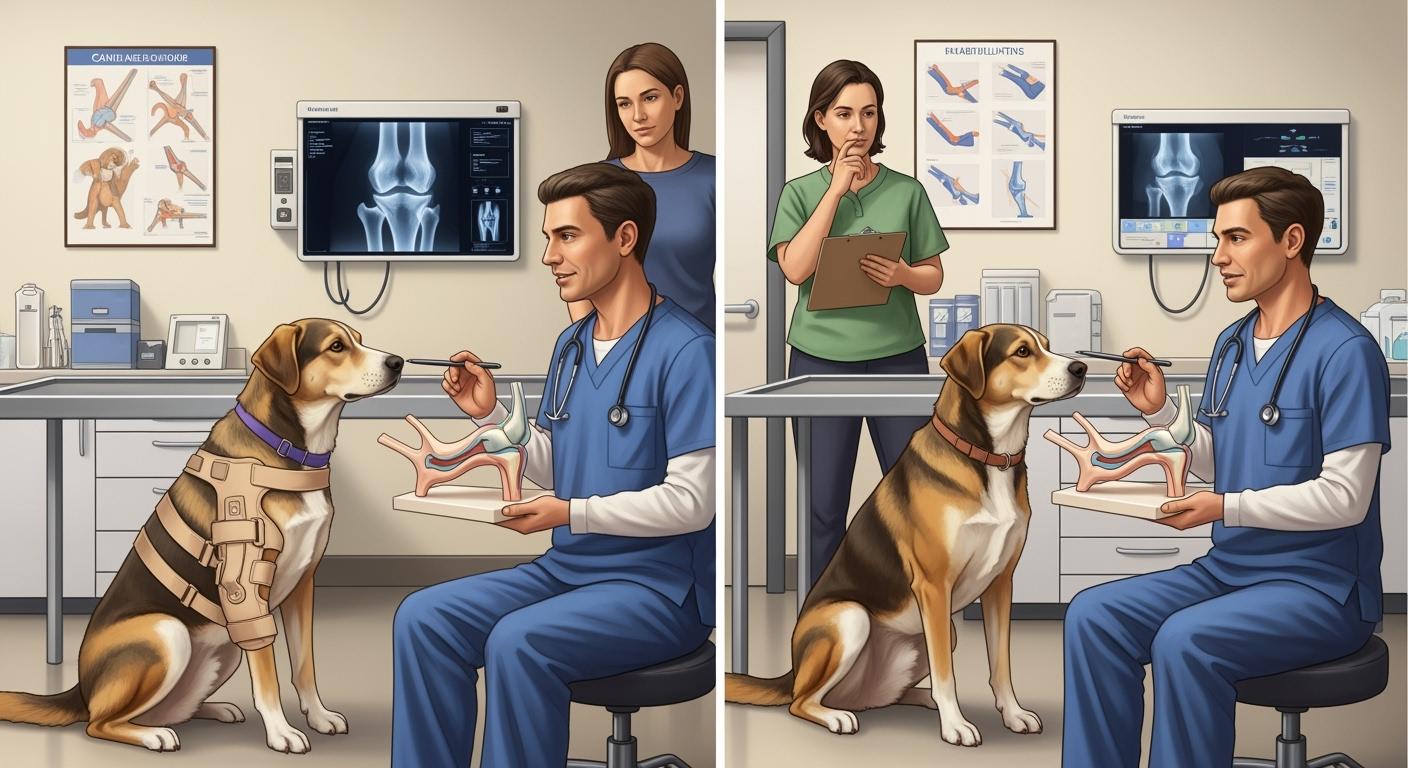
Should you choose a dog knee brace vs surgery for your dog’s CCL tear? This is a significant decision. Your dog’s breed, age, weight, and activity level all play a crucial role. Larger dogs and spayed female dogs have a higher likelihood of CCL tears, and this risk increases as dogs age. Consider the following table to understand how risk varies:
Breed Type | Risk of CCL Tear | Notes |
|---|---|---|
Large Breeds | Increased | Spayed females have more risk. |
Giant Breeds | Increased | Their body shape makes them more likely. |
Small Breeds | Lower | CCL tears do not occur as frequently. |
Dogs aged 5 to 7 years often experience degenerative tears, while younger dogs under 4 years old may suffer sudden tears due to injury. The costs and recovery times differ significantly between options. Surgery can range from $1,500 to $6,000, while a dog knee brace typically costs less. Post-surgery recovery can take months, requiring dogs to rest and limit their movement during this period. To make the best choice between a dog knee brace vs surgery, consider your dog’s specific needs and consult with your veterinarian to determine the most appropriate option.
Key Takeaways
Think about your dog’s size, age, and how active they are when you pick between a knee brace or surgery for a CCL tear.
A dog knee brace can help support the leg and lower pain. It works well for small dogs or dogs with less serious injuries.
Surgery is usually best for big, active dogs with bad CCL tears. It helps keep the joint steady.
You should always talk to your veterinarian. They will check what your dog needs and make a special recovery plan.
Watch your dog carefully while they heal, with a brace or after surgery. This helps make sure they heal right and do not get hurt again.
CCL tear and knee stability in dogs
Why rest alone rarely heals a torn CCL
If your dog limps on a back leg, you might hope rest will help. Many people think less activity will fix a torn CCL. But resting does not let the cranial cruciate ligament heal by itself. The CCL helps keep your dog’s knee steady. When it tears, the knee loses support. Even with lots of rest, the torn CCL cannot grow back or get strong again. Most dogs still have weak knees, which can cause more harm.
Limping in the back leg can happen for many reasons. Only a vet can tell if your dog has a CCL tear by checking and using pictures. Always get a vet’s opinion before picking a dog knee brace or surgery.
How instability causes pain and arthritis
A torn CCL makes the knee unstable all the time. Every step your dog takes can make the bones move in odd ways. This shifting causes pain and swelling. After a while, the joint gets sore. Your dog might seem stiff, have trouble getting up, or not want to play.
A CCL tear makes the knee unstable and painful. It raises the chance of arthritis. It makes moving hard for your dog and can cause new injuries.
Dogs with CCL problems often get arthritis in the hurt knee. This can make them sore for a long time and less able to move. You can look up a week-by-week CCL recovery plan or tips for pain and swelling to learn more.
What vets check during diagnosis
Your vet will do a full check to see if the CCL is torn. They look for swelling, pain, and odd knee movement. Special tests show if the tibia moves forward or turns in ways it should not. The table below lists what the cranial cruciate ligament does:
Function | Description |
|---|---|
Prevent cranial displacement | Stops the tibia from moving forward compared to the femur, which keeps the knee steady. |
Prevent hyperextension | Keeps the knee at the right angle and stops it from stretching too far. |
Prevent internal rotation | Stops the tibia from turning inward, which helps the joint stay strong. |
Your vet might suggest X-rays or other scans to check for other causes of limping. This careful check helps your dog get the best care for their injury.
Dog knee brace vs surgery: key differences
When you pick between a dog knee brace or surgery for a CCL tear, you need to know what each does. Your goal might be comfort, movement, or keeping the joint safe. You want your dog to walk safely and hurt less.
What a dog knee brace can do
A dog knee brace helps support the hurt leg. It stops the knee from moving too much. The brace squeezes the knee, which can help with swelling. It also helps your dog put less weight on the sore leg. This makes walking easier. Some braces help your dog notice how their leg moves, which helps with balance.
Here is a table that shows what a dog knee brace does for the knee:
Function | Dog Knee Brace |
|---|---|
Stabilization | Prevents too much movement |
Compression | Helps with swelling and inflammation |
Redistribution of Weight | Supports the hurt leg, eases pressure |
Increased Proprioception | Helps your dog notice movement |
A dog knee brace can:
Lower pain and swelling in the knee
Keep the cartilage healthy
Stop muscles from getting weak
Help the knee move well
Keep your dog in good shape
Lower stress on other joints
Most braces cost $200 to $700. You need to check the fit every day. Watch for rubbing or slipping. The brace does not fix the torn CCL, but it helps your dog feel better while healing.
Most owners are happy with braces. About 88% say their dog limps little or not at all after using a brace. Success rates for braces are between 33% and 63% over 12 to 52 weeks. You should use a brace with your vet’s help.
How surgery stabilizes the joint
Surgery for a CCL tear fixes the knee so your dog can walk and run again. The vet uses special ways to keep the joint steady. Surgery may use a suture or change the bone shape to help the knee stay strong. This stops odd movement and keeps the cartilage safe.
Here is a table that shows common surgery costs:
Procedure Type | Cost Range | Location Type |
|---|---|---|
CCL Surgery | $1,500 – $6,000 | Depends on region |
Lateral Suture | $750 – $2,000 | Smaller dogs |
TPLO | Higher cost | Bigger, active dogs |
Rural Midwest | $2,500 – $3,500 | Rural areas |
Major cities | $4,000 – $6,000 | Urban areas |
Surgery works well for most dogs. About 85–90% get better after surgery. At 24 weeks, 92.6% of dogs do well. Surgery lowers short-term limping by about 25% and long-term limping by about 32% compared to no surgery. Surgery is best for bigger dogs, active pets, or those with bad knee problems.
Rehab and recovery for both options
Healing after surgery takes time. Your dog must rest for 6–8 weeks. Most dogs get back to normal in about 3 months. Full healing can take up to 16 weeks. Some dogs need longer if the problem is old.
With a dog knee brace, healing is slower but not as hard on your dog. Your dog can start easy walks sooner, but you must control activity and check the brace every day. Rehab exercises help make the knee stronger. Both choices need careful watching and regular vet visits.
Here is a table that compares healing times:
Treatment Method | Recovery Duration |
|---|---|
Surgery | 8-12 weeks for basic healing, up to 16 weeks for full healing, and maybe 6 months for old problems |
Knee Braces | Usually faster and easier healing |
Decision table: dog knee brace vs surgery
If this is true… | Brace-first may fit | Surgery is usually preferred |
|---|---|---|
Dog weighs under 33 lb | Yes | Not always needed |
Dog is older or has health issues | Yes | May be risky |
Dog has partial tear | Yes | Sometimes |
Dog is very active | Sometimes | Yes |
Dog has severe instability | No | Yes |
Brace vs Surgery Comparison Table
Best For | Pros | Cons | Common Failure Modes | Owner Time Commitment | |
|---|---|---|---|---|---|
Brace | Small dogs, mild tears | Costs less, not as hard on dog | Needs daily checks, not a cure | Slipping, rubbing, bad fit | High (daily checks) |
Surgery | Big, active dogs | Works well, keeps joint steady | Costs more, harder on dog | Infection, implant problems | High (after surgery care) |
Questions to ask your vet or surgeon before choosing
What is best for my dog’s size and activity?
How bad is the CCL tear?
What are the risks and good things about each choice?
How much does each treatment cost?
How long will healing take?
What rehab steps should I follow?
How do I watch for problems?
Tip: Ask your vet for a week-by-week CCL healing plan and ways to help with pain and swelling. These tips can help you care for your dog.
You can use this info to compare a dog knee brace and surgery. This helps you pick what is best for your dog. Always talk to your vet before you decide.
When is a dog knee brace the best choice?
Small dogs, partial tears, and low activity
A dog knee brace works well for small dogs. It is best for dogs under 33 pounds. Dogs with partial ccl tears or mild limping can use a brace. If your dog does not run much or is older, a brace helps. It keeps the knee steady and lowers pain. Studies show bracing helps the joint and stops more knee problems. Using dog knee braces gives less pain and better movement. Dogs feel more comfortable when they do not have surgery.
Study | Findings |
|---|---|
Dog Knee Brace Conservative Treatment Research 2025 | Bracing a ccl tear helps dogs who cannot have surgery. Custom braces keep the knee steady and lower pain. |
TailwindPets | Braces help small and medium dogs with partial ccl tears. They work well for older dogs or those who should not have surgery. |
Weight Cut-off | Management Approach |
|---|---|
Under 33 lb | Use a dog knee brace for care |
Medical or access reasons to avoid surgery
Some dogs cannot have surgery because of health problems. If your dog has heart disease, cancer, or bone issues, a dog knee brace is a safe choice. Owners who want less risk or cannot get surgery may pick this option. The table below shows why some dogs should not have surgery:
Medical Conditions/Barriers | Description |
|---|---|
Severe heart disease | Surgery is risky for these dogs. |
Cancer | Other treatments may be more important. |
Orthopedic diseases | Surgery is harder to plan. |
Owner’s expectations | How active and happy your dog is matters. |
Using a brace before surgery
A dog knee brace helps while waiting for surgery. Braces give support and lower stress on the hurt knee. They help stop more injury. Studies say dogs with braces before surgery walk better and limp less. You can use a brace for care or as a short-term fix.
Checklist for home management:
Put rugs or mats on floors that are slippery.
Take your dog outside with a leash for bathroom breaks.
Block stairs and furniture so your dog cannot jump.
Check for rubbing or slipping from the brace.
Ask your vet about easy rehab moves.
You can find a week-by-week ccl recovery plan or tips for pain and swelling to help more.
A brace helps your dog but does not fix the problem. Check the fit every day and listen to your vet. This keeps your dog’s knee safe and helps healing.
When is surgery better for your dog?
Large dogs and active pets
Surgery is usually best for big dogs or those who play a lot. If your dog weighs more than 33 pounds, the knee gets more pressure. A torn ccl in a large dog causes more pain and less movement. Surgery can make the knee steady again. It helps your dog get back to normal life. The table below explains why surgery is often picked for these dogs:
Evidence Summary | Findings |
|---|---|
Surgical vs. Nonsurgical Treatment | Surgery usually works better for big dogs with bad knee problems. |
Arthritis and Dysfunction | Big dogs can get arthritis and have trouble moving without surgery. |
Most dogs do well after surgery. About 85–90% can walk almost like before. TPLO surgery is common and works 90–95% of the time. Problems after surgery happen in 4.4% to 34% of dogs. Infection and implant trouble are the main issues. Fewer than 10% of dogs need another surgery.
Persistent lameness or meniscus injury
If your dog keeps limping or hurts the meniscus, surgery can help. Dogs with pain that does not go away or very loose knees do not get better with rest or a brace. Surgery helps them heal faster and better. This is true when the ccl tear makes the knee move wrong. The table below shows what happens with each choice:
Management Type | Outcome Description |
|---|---|
Surgical Intervention | Surgery helps dogs heal faster and better, especially with bad knee problems or meniscus injury. |
Conservative Management | Small dogs may do okay with rest, but most do not get better as fast. |
Big dogs with very loose knees do not get better without surgery. Small dogs with small problems might do fine with rest. But most big or active dogs need surgery to feel good again.
Risks of delaying surgery
Waiting too long for surgery can make things worse. Every step on a weak knee hurts the joint more. A small tear can turn into a full tear in weeks or months. Waiting for surgery can cause:
Full ligament tear
Meniscus damage
Bad arthritis
Limping that does not go away
If you do not treat a ccl tear, your dog can have pain and knee problems for life. Many dogs also hurt their other knee later. Studies say 22% to 54% of dogs may tear the other ccl. Age, knee shape, and being neutered can change this risk.
You can find out more about healing and pain by looking at a week-by-week ccl recovery plan or reading about how to help pain and swelling in dogs.
Comparison table: dog knee brace vs surgery
Table: goals, best fit, watch-outs, vet questions
Choosing between a dog knee brace and surgery depends on several factors. You want to help your dog feel comfortable and move safely. Use the table below to compare your options:
Goal | Best Fit Option | Watch-Outs | Questions for Your Vet |
|---|---|---|---|
Dog Size | Brace for under 33 lb | Large dogs may need surgery | Is my dog’s weight a concern? |
Activity Level | Brace for low activity | High activity needs surgery | How active should my dog be? |
Pain Control | Both can help | Brace needs daily checks | How do I manage my dog’s pain? |
Owner Compliance | Brace needs daily care | Surgery needs strict rest | Can I follow the care plan at home? |
Health Issues | Brace for seniors | Surgery for healthy dogs | Does my dog have health risks? |
Tip: Ask your vet about a week-by-week CCL recovery timeline and pain/swelling management for extra support.
Factors: size, activity, pain, owner compliance, health
You need to look at your dog’s size, activity level, pain, your ability to follow care instructions, and health. For example, if you have a small dog who likes short walks and you can check the knee brace every day, a brace may work well. If your dog is large, loves to run, and has a severe tear, surgery often gives better stability.
Scenario Example:
You have a 25-pound dog who enjoys gentle walks. Your vet says the tear is mild. You choose a knee brace. The first week at home, you help your dog wear the brace for short periods. You check for rubbing and make sure your dog rests on soft surfaces. You follow your vet’s advice for gentle rehab moves. If you had a 70-pound dog who loves to play fetch, your vet would likely recommend surgery. You would keep your dog quiet for several weeks and watch for swelling or pain.
Note: Always talk with your vet before deciding. You can read more in a week-by-week CCL recovery timeline or a pain and swelling management guide.
Home care for dogs after CCL injury
Activity restriction and safe surfaces
After a CCL injury, you must keep your dog calm. Use a leash for bathroom breaks. Do not let your dog use stairs or jump on furniture. Put rugs or mats on slippery floors so your dog does not slip. Crate rest or a small room helps stop sudden moves. Watch your dog outside so they do not run or play rough. These steps help stop more injury and help with pain.
Weight management and gentle exercise
Keeping your dog at a healthy weight helps the knee heal. Extra weight makes the hurt joint work harder. Ask your vet for a weight loss plan that fits your dog. Gentle exercise, like short walks on a leash, helps the leg move better and keeps the joint steady. Overweight dogs move better and get stronger when they lose weight and do easy exercises.
Some helpful steps include:
Give measured meals and skip extra treats.
Begin with slow, short walks on flat ground.
Only add more activity if your vet says it is safe.
Tip: Gentle exercise and weight control help your dog feel better and heal faster.
Basic rehab moves to discuss with your vet
Rehab exercises help your dog get strength and movement back in the knee. Always talk to your vet or rehab team before you start new activities. They may show you easy moves to do at home.
Exercise Type | Purpose |
|---|---|
Therapeutic Exercise | Helps your dog stand, get stronger, and move the knee. |
Manual Therapy | Lowers pain and swelling, helps the joint move right. |
Physical Rehabilitation | Uses gentle stretching, massage, and balance practice. |
Hydrotherapy | Makes moving easier and helps the joint work better. |
Home Exercise Program (HEP) | Gives safe ways for your dog to stay active and heal. |
Common rehab moves are soft tissue massage, gentle joint movement, and balance work. Always do these with help from a professional. You can read a week-by-week CCL recovery timeline or a pain and swelling management article to learn more.
Best knee brace: safe use and fit tips
Measuring, fitting, and daily skin checks
You want the best knee brace for your dog. Start with careful measuring. Use a soft tape measure and keep your dog standing. Follow these steps:
Measure the thigh circumference about one inch above the knee.
Measure directly over the knee cap.
Measure the lower leg just below the knee.
Measure the leg length from the top of the thigh to the ankle.
Measure the distance between the inner thighs while your dog stands.
Avoid guessing numbers or using a stiff ruler. Do not measure while your dog sits or lies down. Double-check each measurement. If you measure wrong, the brace may fit too tight or too loose. For example, Jake, a Labrador, got a brace that was too tight because his owner measured him lying down. After remeasuring while standing, the new brace fit well and Jake could walk again.
Check your dog’s skin every day. Look for redness, sores, or hair loss under the brace. Remove the brace if you see any problems and talk to your vet.
Preventing slip and rub
A good fit helps stop the brace from slipping or rubbing. Make sure the straps are snug but not too tight. You should fit one finger under each strap. Watch your dog walk and adjust the brace if it moves out of place. Try different types of dog knee braces if one style does not stay put.
Use soft padding if you see rubbing. Clean the brace often to keep it comfortable. Start with short wear times and slowly increase as your dog gets used to it.
Tip: Always check the brace after walks or play. This helps you spot problems early.
Signs a brace isn’t working
Watch for signs that the dog knee brace is not helping or may be causing harm:
Sudden limping or refusal to put weight on the leg
Bunny-hopping or skipping steps
Swelling, warmth, or a change in the knee shape
Clicking or grinding sounds from the knee
Muscle loss or less activity
If you see any of these signs, remove the brace and call your vet. You can also read a week-by-week CCL recovery timeline or a pain and swelling management article for more tips.
Note: The brace supports the knee but does not cure a torn ligament. Always follow your vet’s advice for the best results.
Safety red flags: when to call your vet
You want your dog to heal well after a CCL injury. Sometimes, problems can happen that need quick action. Knowing when to call your vet helps keep your dog safe. Watch for these warning signs and decide if you need to call your vet today or seek urgent care right away.
Sudden severe lameness or pain
If your dog suddenly cannot use their leg or shows strong pain, this is a red flag. You may see your dog limp, refuse to walk, or cry out. These signs can mean a new injury, a meniscus tear, or even a broken bone. You might notice your dog has trouble rising, sitting, or jumping. Sometimes, you hear a popping or clicking sound in the knee. Muscle loss or a stiff walk can also show a problem.
Call your vet today if you notice:
Trouble getting up or sitting down
Less interest in playing or walking
Stiffness or pain in the knee
Seek urgent care now if you see:
Collapse or inability to walk
Severe trauma or sudden, intense pain
Refusal to put any weight on the leg
If you see these signs, your dog needs help. Early care can prevent more damage.
Swelling, fever, or wound issues
Swelling around the knee, heat, or redness can mean infection or inflammation. Fever, wounds that do not heal, or any discharge from a surgical site are also warning signs. Infection can happen after surgery or with a brace. You may see firm swelling on the inside of the shin bone or notice your dog licking the area.
Call your vet today if you notice:
Swelling or heat near the knee
Redness or discharge from a wound
Mild fever or your dog seems tired
Seek urgent care now if you see:
Rapidly growing swelling
High fever or your dog seems very sick
You can read more about pain and swelling management in dogs for extra tips.
New neurologic signs
Watch for changes in how your dog moves or acts. Signs like wobbling, dragging a leg, or sudden weakness can mean nerve problems. These symptoms are rare but serious. You may also see your dog collapse or lose balance.
Seek urgent care now if you notice:
Sudden loss of balance or collapse
Dragging a leg or not knowing where the foot is
Any new, strange behavior or confusion
For more details on recovery, you can check a week-by-week CCL recovery timeline article.
Red-flag checklist
Call Your Vet Today | Seek Urgent Care Now |
|---|---|
New or worse limping | Collapse or inability to walk |
Swelling, heat, or redness | Severe trauma or intense pain |
Mild fever or wound discharge | Rapidly growing swelling |
Trouble rising or sitting | High fever, very sick behavior |
Less activity or muscle loss | Sudden neurologic signs |
Stay alert to these signs. Quick action can protect your dog’s knee and overall health.
You have a big decision for your dog’s CCL tear. Think about your dog’s size and how much they move. Look at how bad the injury is. Cost and healing time matter too. Both a brace and surgery can help your dog walk better. They can make your dog feel happier. Surgery helps big or active dogs more. Braces work well for small dogs or those with health problems. Check the table and checklist to help you choose. You can read more in a week-by-week CCL recovery timeline or a pain and swelling guide.
Treatment Type | Outcome | Notes |
|---|---|---|
Surgery (TPLO) | About 90% get good limb use | Long-term results are best with rehab. |
Braces | Help limb use, lower odd movement | How well they work depends on your dog. |
Many dogs do best with surgery.
Braces help but do not fix loose knees.
How well it works depends on age, weight, and activity.
Most dogs move better and feel less pain with good care.
FAQ
How do I know if my dog needs surgery or a knee brace?
You should look at your dog’s size, activity, and pain. Dogs over 33 pounds often need surgery. Small, calm dogs may do well with a brace. Ask your vet for advice.
You can read a week-by-week CCL recovery timeline for more details.
Can a dog knee brace heal a torn CCL?
A knee brace does not heal the ligament. It supports the knee and helps with comfort. You should use it with rest and rehab.
For more help, see a pain and swelling management article.
How long does recovery take after CCL surgery?
Most dogs need 6–8 weeks of rest after surgery. Many return to good function in about 3 months. Healing can take longer for older dogs.
Your vet can give you a week-by-week CCL recovery plan.
Is it safe to walk my dog with a knee brace?
You can take short, slow walks with a brace if your vet says it is safe. Always watch for limping or pain. Stop if your dog seems sore.
Ask your vet for safe exercise tips.
What signs mean I should call my vet right away?
Call your vet if you see sudden limping, swelling, fever, or your dog cannot walk. These signs can mean a serious problem.
You can find more safety tips in a pain and swelling management article.