
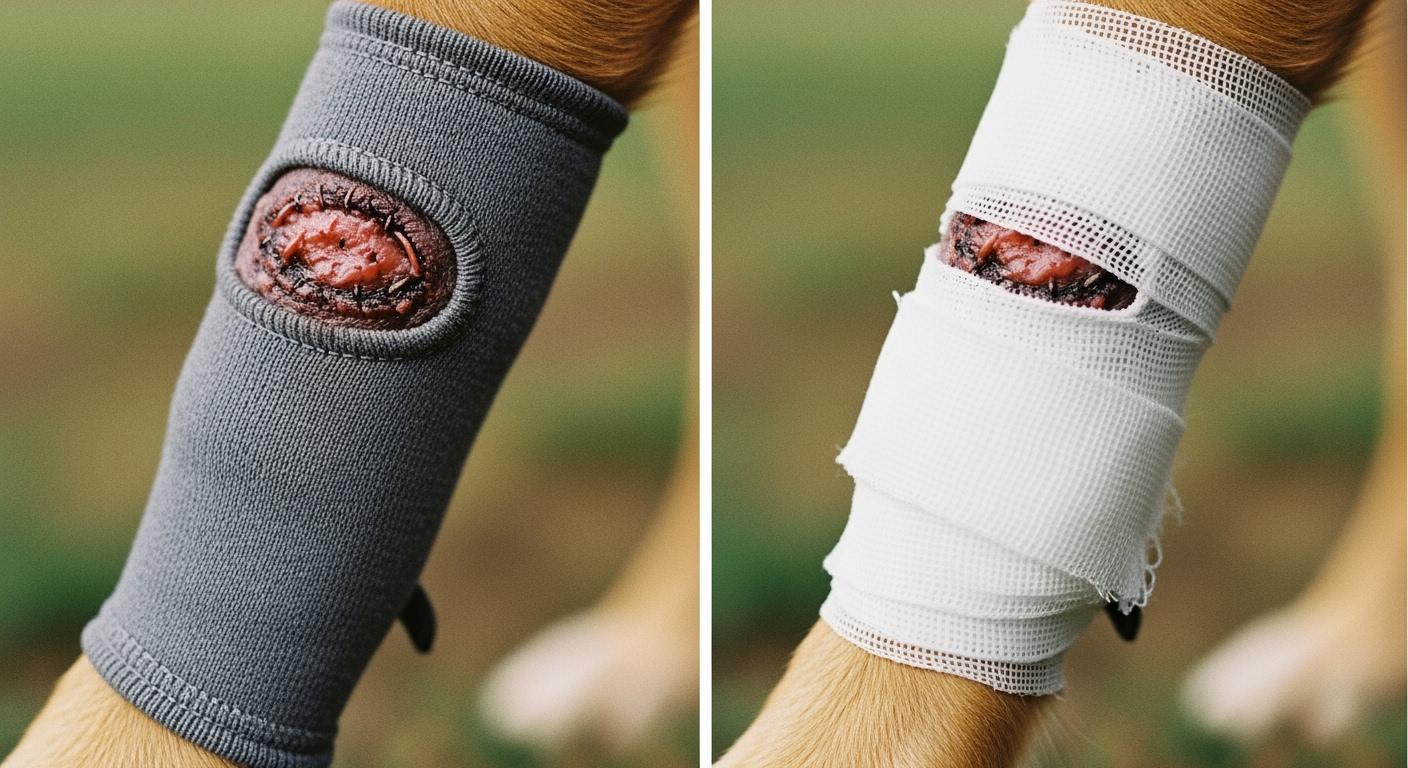
A dog leg wound protection sleeve and a bandage do not solve the same problem in the same way. A sleeve is usually the better option when you need targeted limb coverage, better anti-lick protection, and easier daily movement, while a bandage is more suitable for smaller wound areas, shorter-term coverage, or situations where dressing changes happen often. If you want a broader overview of sleeve types, fit, and daily-use coverage before comparing products, start with this dog leg sleeve guide.
- Whether the cover stays in place during normal movement and reduces access for licking or chewing
- Whether the dog can still walk, rest, and reposition comfortably during recovery
- Whether daily wound checks, cleaning, and reapplication are practical for repeated use
- Whether the material balances breathability, washability, and protection from dirt or abrasion
- Whether the closure and fit can be adjusted without creating slipping, bunching, or pressure marks
Both options can be useful, but the better choice usually depends on wound location, licking behavior, movement level, and how often you need to inspect or redress the area. For daily recovery routines and anti-lick support, this dog recovery sleeve solution page is a strong next step if you want to compare use cases before moving into product review.
Key Takeaways
- A sleeve is usually better when you need targeted leg coverage, better anti-lick protection, and easier mobility during recovery.
- A bandage is usually better for smaller wound areas, short-term dressing changes, or cases where a sleeve would cover more than necessary.
- Daily checks matter with both options, but sleeves are often easier to remove, inspect, wash, and reapply during routine care.
What Is a Dog Leg Wound Protection Sleeve?
Recovery Sleeve Design and Function
You use a dog leg wound protection sleeve when the wound is on the leg and needs targeted coverage that still allows the dog to move more naturally than with a bulky barrier. A sleeve helps protect the area from dirt, scratching, licking, and everyday friction while keeping the wound easier to monitor than a full recovery suit. It is commonly used for surgical sites, hot spots, skin irritation, and limb wounds that benefit from direct, wearable protection.
Here is a quick look at what a dog leg wound protection sleeve does:
Definition | Primary Function |
|---|---|
A dog leg wound protection sleeve, specifically the Lick Sleeve, is designed to protect a dog’s injured leg or surgical site. | It allows for mobility while protecting against mud, grime, scratches, licks, bites, and abrasions. |
You can find sleeves in different lengths and coverage styles, from lower-leg options to fuller limb protection. The best fit should stay in place without squeezing, bunching, or restricting movement. If you want a product-level example of a wound-protection sleeve designed for daily wear, licking prevention, and outdoor use, review this hind leg sleeve.
Dog Lick Sleeve Features
A dog lick sleeve is most useful when the main recovery risk is repeated licking, chewing, or irritation at a localized leg wound. It gives more targeted anti-lick coverage than a standard bandage and usually preserves normal movement better than a cone. If you want a direct comparison between targeted sleeve coverage and broader barriers, this dog lick sleeve vs cone guide is a useful companion page.
You should look for these features in a dog lick sleeve:
Breathable fabric that keeps your dog’s leg cool and dry
Flexible material for a snug fit and easy movement
Durable design for daily use and washing
Easy to put on and take off for wound checks
Material choice matters because recovery sleeves have to balance airflow, softness, washability, and anti-lick performance. A good sleeve should let you remove it for checks, clean it easily, and put it back on without turning daily wound care into a long process. For broader recovery use cases, visit this dog recovery sleeve solution page or compare current anti-lick options in the dog anti lick collection.
What Is a Bandage for Dog Leg Wounds?
Bandage Types and Uses
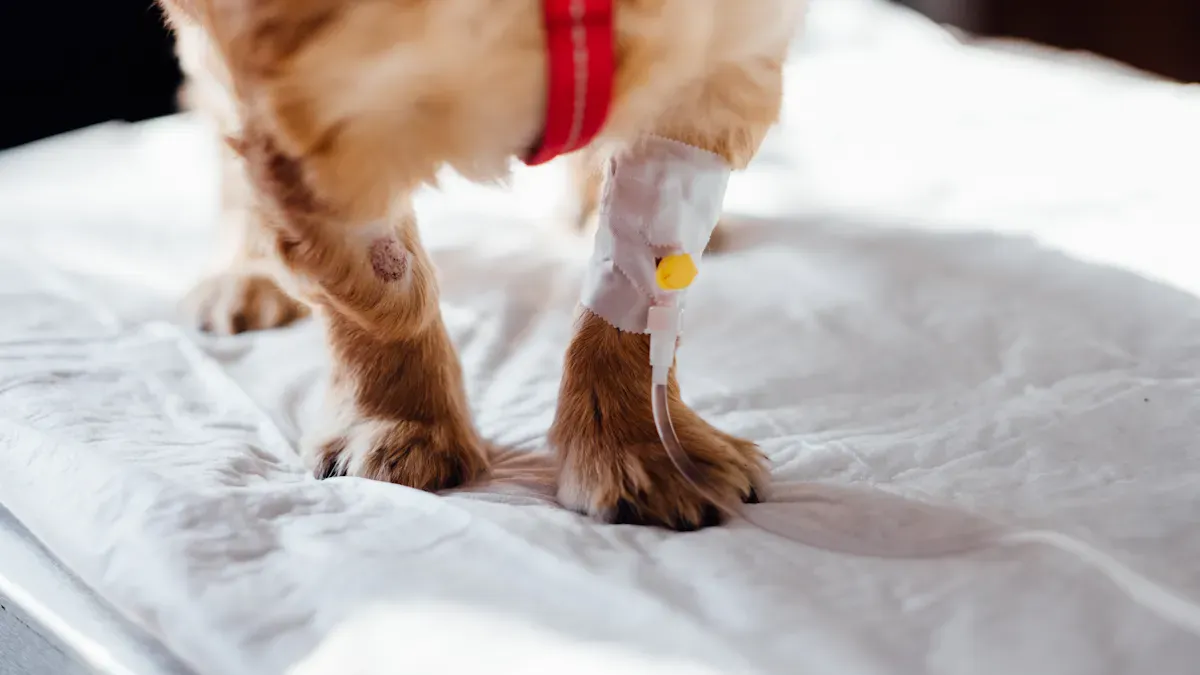
A bandage is usually better suited to smaller wound areas, short-term dressing protection, or situations where direct dressing changes happen often. It helps keep dirt away from the wound, holds medication or wound pads in place, and works well when the coverage area is limited and carefully monitored.
Bandages can be useful, but they often need more hands-on daily management than a sleeve. They may loosen with activity, absorb moisture, or shift if the dog keeps licking or moving aggressively. That is why bandages often work best for calmer dogs, smaller wound areas, or shorter protection windows rather than longer daily wear.
Tip: Check any bandage at least once a day to make sure it stays clean, dry, and correctly positioned. If the wound needs broader daily protection from licking or abrasion, review this recovery sleeve support page before deciding that a bandage alone is enough.
Coverage and Stability
Bandages can cover and protect a wound well, but their performance depends heavily on correct wrapping, daily monitoring, and how active the dog is. If the wrap is too loose, it can slip. If it is too tight, it can create circulation or pressure problems. That makes stability one of the main tradeoffs compared with a sleeve.
Bandages also offer less reliable anti-lick protection when the dog is persistent or active. Some dogs can still chew, loosen, or work around the wrap, which means the wound may not stay consistently protected between checks. For more targeted anti-lick comparison, review this lick sleeve vs cone comparison and use it alongside this article when you are deciding between local coverage and broader barriers.
Here is a quick chart about bandage coverage and stability:
Feature | Bandage Performance |
|---|---|
Wound coverage | Good for small to medium wounds |
Protection | Shields from dirt and debris |
Anti-lick | Limited, may need extra support |
Stability | Can loosen with movement |
If your goal is steadier leg coverage during routine movement, a sleeve is often easier to manage than a bandage because it is designed to stay on the limb as the dog walks, rests, and repositions.
Dog Lick Sleeve vs Bandage: Key Differences
Coverage and Anti-Lick Performance
You want your dog’s wound to stay safe. A sleeve covers the whole leg with soft, stretchy fabric. This keeps dirt and dust away from the wound. The sleeve also stops your dog from licking or biting the wound. This helps your dog heal faster. Many people say a sleeve works well to stop licking. It is better than a cone for some dogs. The sleeve fits tightly, so your dog cannot take it off easily.
A bandage only covers the wound, not the whole leg. Some dogs can chew or pull off the bandage. If your dog moves a lot, you might need extra help. Bandages can slip or get loose when your dog walks or runs. This means the wound is not always protected. You have to check the bandage often to make sure it stays on.
Here is a quick comparison:
Feature | Sleeve | Bandage |
|---|---|---|
Coverage | Full leg or targeted area | Wound area only |
Anti-lick performance | High, especially for lick sleeve vs cone | Moderate, may need extra tools |
Stability | Secure fit, less likely to slip | Can loosen with activity |
Protection | Blocks dirt, licking, and biting | Shields from dirt, less anti-lick |
If you want to compare sleeve fit, coverage, and daily-use behavior in more detail, go from this article to the dog leg sleeve guide. If you are ready to look at a product-level example for wound protection, chewing prevention, and daily wear, review this hind leg sleeve.
Comfort and Mobility During Recovery
A sleeve is usually more comfortable than a bandage for daily wear because it moves with the leg instead of relying on repeated wrapping and adhesive materials. That makes it easier for the dog to walk, rest, and reposition without the same level of bunching, tape pull, or dressing shift that can happen with a bandage.
A bandage might use sticky tape that pulls fur or hurts the skin. Some dogs feel bad if the bandage is too tight or too loose. Bandages can make it hard to move, especially if they cover joints. Your dog might limp or try to take the bandage off.
Here are some comfort and movement points:
- Sleeves usually preserve mobility better during short walks and normal indoor movement.
- Bandages often need closer monitoring when they cross a joint or loosen during activity.
- Sleeves avoid adhesive pull and are often easier to reapply after wound checks.
- Bandages may still be useful when direct wound dressing changes are the main priority.
For recovery routines where comfort and anti-lick performance both matter, compare this article with the dog recovery sleeve solution page and then move to the dog anti lick category if you want to review current wearable options.
Wound Checks and Daily Maintenance
You need to look at your dog’s wound every day. A sleeve makes this simple. You can take the sleeve off fast to check the wound. You can clean the area and put the sleeve back on. The sleeve can be washed, so it stays clean each day.
Bandages need to be checked a lot. You should look at the bandage every day or two. Make sure it is clean, dry, and not too tight. If the bandage gets wet or dirty, change it right away. Always use new, clean bandages. Bandages can hide problems like infection. Watch for red skin, swelling, or a bad smell. If your dog seems tired or will not eat, the wound might be infected.
Here is a summary for daily care:
Take off the sleeve to check and clean the wound.
Wash the sleeve to keep it clean.
Change bandages often to stop infection.
Look for signs of problems under both sleeves and bandages.
Ask your vet if you see anything wrong.
If daily wound checks are a major part of the recovery plan, sleeves often save time because they can be removed, cleaned, and reapplied more easily than a fresh bandage wrap. For a broader recovery framework, continue to this daily recovery sleeve support page.
Note: Both sleeves and bandages require regular inspection, cleaning, and veterinary oversight when the wound is not improving or when infection is suspected.
Choosing the Right Dog Leg Wound Protection
Wound Type and Location
Wound type and location should decide the protection method first. A sleeve is usually the better choice when the wound is on the leg, crosses a moving area, or needs more continuous protection from licking and abrasion. A bandage is usually more practical for smaller or more localized wounds that need frequent dressing changes. If you are comparing recovery covering options for daily support, start with this recovery sleeve solution page and then compare it with the broader dog leg sleeve guide.
Dog Behavior and Activity
Behavior and activity level often decide whether a sleeve will outperform a bandage in real life. A dog that walks often, licks persistently, or keeps disturbing the wound usually needs a more stable barrier than a basic wrap. In those cases, a sleeve can protect the leg more consistently because it is built for movement rather than just dressing retention.
Licking can make an infected wound worse.
New bacteria can get in, slowing healing.
Deeper infections or abscesses can form.
A well-fitted sleeve is often the better option for active dogs that still need short walks or routine household movement during recovery. For calmer dogs or closely supervised rest periods, a bandage may still be enough if it stays clean, dry, and correctly positioned.
When to Consult a Veterinarian
You should know when to ask for professional help. Some wounds need more than home care. You should consult your veterinarian if:
You feel unsure about how to apply a sleeve or bandage.
Your dog’s condition does not improve with daily recovery.
The wound shows redness, swelling, or discharge.
Your dog has pain, fever, or stops eating.
The injury is severe, like a fracture or deep cut.
Common mistakes include letting the dog keep licking the wound, waiting too long to reassess a slipping cover, or relying on home care when the wound is worsening. If you need a more structured next step for daily coverage and anti-lick recovery support, continue to this dog recovery sleeve support page before moving into product selection.
A dog leg wound protection sleeve is usually the better fit when the main goals are anti-lick protection, daily mobility, and more stable limb coverage. A bandage is usually the better fit when the wound area is smaller, dressing changes are frequent, or short-term localized coverage is enough. Use this quick review checklist before choosing:
- Coverage goal: full limb protection or wound-only dressing support
- Daily routine: active movement, short walks, rest, or repeated dressing changes
- Risk level: licking, slipping, moisture, or difficulty checking the wound
If you want to continue with sleeve-based recovery options, go next to the dog leg sleeve guide, the recovery sleeve solution page, or the dog anti lick product category. Data authenticity note: This article is for educational purposes only. It is designed to help readers compare sleeve and bandage options for leg wound protection, not to replace veterinary diagnosis or individualized treatment advice.
FAQ
How do you choose the right sleeve or bandage for your dog’s leg wound?
Start with the wound location, the dog’s licking behavior, and how much daily movement the dog still has. A sleeve is usually better for targeted leg coverage and routine anti-lick protection, while a bandage is usually better for smaller wound areas and short-term dressing support.
Can a sleeve stop a dog from licking a wound better than a bandage?
Yes, in many cases a sleeve works better than a bandage for stopping licking because it covers more of the leg and is harder for active dogs to loosen during normal movement.
How often should you check your dog’s wound under a sleeve or bandage?
Check the wound every day, and sooner if the dog keeps licking, the cover slips, or the area becomes wet or dirty. Daily checks help you catch rubbing, swelling, discharge, or early infection before recovery gets harder.
What makes a good fit for a dog leg wound protection sleeve?
A good fit means the sleeve stays in place, covers the wound area fully, and lets the dog move without bunching, twisting, or obvious pressure marks. It should feel secure without squeezing the limb.
Can you use a sleeve for outdoor activity during recovery?
Yes, a sleeve can work for short outdoor walks if the fit is secure and the wound is suitable for that level of activity. Check the sleeve after the walk to make sure it stayed in place and did not trap moisture or debris.
