
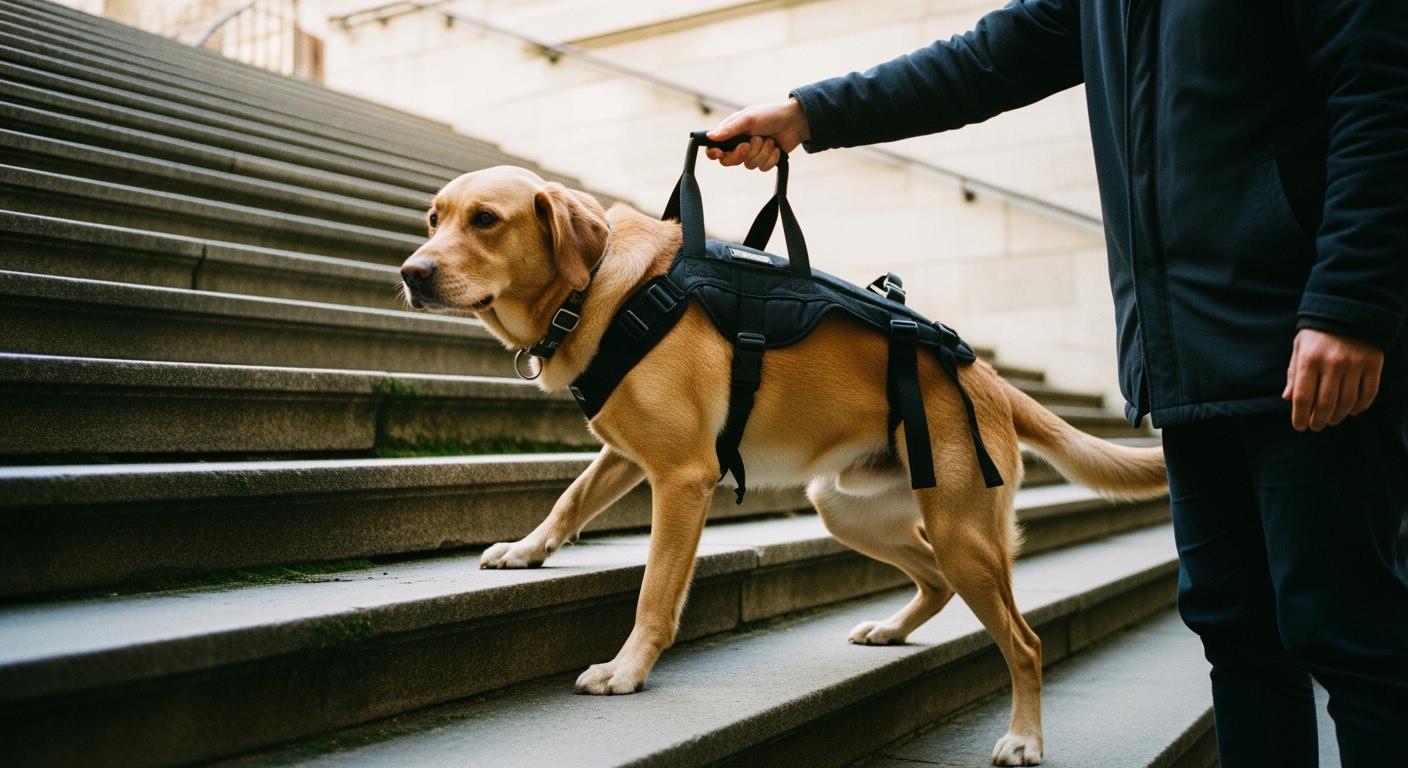
You may see dogs have a hard time with stairs if their back legs are weak. This can happen because of arthritis, hip dysplasia, healing after surgery, or short-term injuries. These dogs might have joint pain, problems getting up, or trouble going up steps. In your clinic or business, you want to help every dog live better. A dog lift harness for back legs stairs and transfers lets you give safe and steady support. Always use your professional skills and ask a vet for advice in tough cases.
Key Takeaways
Pick a dog lift harness that gives good support for back legs, especially when using stairs or moving your dog. Make sure the harness fits well but is not too tight. You should be able to fit two fingers between the harness and your dog’s body. Choose harnesses made from materials that let air through. This helps keep your dog cool and stops skin problems. Always look at the harness before you use it to check for damage and make sure it fits right. This keeps your dog safe and comfortable. Ask a vet for help if your dog seems hurt or uncomfortable when using the harness.
Evaluating a Dog Lift Harness for Back Legs
When picking a dog lift harness for back legs, you should look at important features. These features help the harness give good support, safety, and comfort. Checking these things helps you find a harness that fits the dog’s needs and the job.
Key Features for Stairs and Transfers
Choose harnesses made for dogs with trouble moving. Find models that help take weight off sore joints and make climbing stairs easier. Comfort is important. For example, a harness with soft fleece can make the dog’s belly feel better and less sore.
It should be easy for owners to use. Handles and straps need to adjust easily and help you control the dog. This stops back pain and lets you help your dog safely. A good harness keeps your dog steady and balanced. This is very important for stairs or getting in and out of cars. The right harness makes things safer and more comfortable for both you and your dog.
Support Balance and Lift Control
Balance and lift control stop falls and injuries. A harness with lift control lets you help the dog’s back legs without using too much force. This keeps the dog’s body in the right position and stops slips.
Studies show balance exercises and good support lower the chance of falling. A harness that spreads pressure out helps the dog stay steady and comfy. Dogs with weak back legs need this support to stand, walk, and go up stairs. It also stops tiredness and helps the dog keep moving, even on stairs.
Lift control also means using materials that do not hurt the dog. Things like breathable fabric and padding make the harness more comfortable. These features keep the harness nice to wear, even if you use it a lot.
Contact-Area Comfort and Repeated Use
If a dog wears a harness often, it must be comfortable. Dogs with trouble moving may wear harnesses for a long time, so comfort matters. Fabrics like mesh or ones that wick away sweat help keep the dog cool and dry. This stops skin problems.
Spreading pressure over bigger areas makes the harness less painful and stops sores. A harness that fits well and is shaped right stops rubbing and lets the dog move naturally. Padding in sensitive spots protects the dog’s skin, especially if the harness is worn for a long time.
When you check a dog lift harness, look for these things:
Breathable, moisture-wicking materials
Pressure spread out over big areas
Padding in sensitive spots
Straps that adjust for a tight fit
Additional Considerations and Common Mistakes
Before you pick a harness, make a checklist:
Is it made for back leg support on stairs?
Can you adjust it for a tight fit?
Are the parts that touch the dog padded and breathable?
Does it have strong handles or slings for easy use?
Can the dog wear it often without pain?
Mistakes happen if the harness is too tight or too loose. This can cause rubbing or not enough support. Some people think the harness fixes medical problems, but it does not. You still need to ask a vet for help. The harness helps the dog move but does not cure health issues.
Summary
To pick a dog lift harness for back legs, check for support, lift control, comfort, and easy use. Choose harnesses that spread pressure, use breathable materials, and adjust for a tight fit. Avoid mistakes like picking the wrong size or thinking the harness replaces vet care.
If your dog has big problems moving, talk to a vet or rehab expert. The right harness and fit help your dog move safely and feel better. This supports your dog’s freedom and happiness.
Fitting and Adjusting the Harness
Step-by-Step Fitting Guide
You need to fit a lifting harness correctly to support your dog’s back legs on stairs and transfers. Follow these steps to ensure safety and comfort:
Place the harness gently on your dog’s back legs. Make sure your dog stays calm and relaxed.
Adjust the straps so the harness fits snugly. You should be able to fit two fingers between the harness and your dog’s body. This prevents the harness from being too tight or too loose.
Use treats and praise to help your dog feel comfortable. Positive reinforcement builds trust and makes the harness experience pleasant.
Allow your dog to get used to the harness. Let your dog walk around and feel the sensation of being lifted. Gradually increase the time your dog wears the harness.
Tip: Always check the harness before each use. Look for signs of wear or damage. A well-maintained lifting harness keeps your dog safe during stairs and transfers.
Common Fit and Handling Mistakes
Mistakes in fitting and handling can cause discomfort and health problems. You must avoid these issues to protect your dog’s mobility.
If the harness is too tight, it can restrict movement and increase pressure on sensitive areas. This may lead to skin damage or muscle problems.
A harness that is too loose does not provide enough support. Your dog may slip or lose balance, especially on stairs.
The chest section should not be too wide. If it rubs or chafes, your dog may change its walking pattern. This puts abnormal pressure on shoulder joints.
Improper fitting can impair spinal movement. Your dog needs to move naturally to avoid joint stress and long-term health issues.
Veterinary care for injuries caused by poor fitting can be expensive. You help prevent these costs by checking the harness fit and watching your dog’s gait. Always adjust the harness for each use and monitor your dog’s comfort.
Note: If you notice any signs of discomfort or changes in movement, consult a veterinary professional. Proper fitting and handling of a lifting harness support safe mobility for stairs and transfers.
Handling Techniques for Stairs and Transfers
Using a Dog Lift Harness on Stairs
You want your dog to move safely when using stairs. Start by standing close to your dog. Hold the harness handle firmly. Keep your back straight and bend your knees. This position gives you better control and protects your own body. Guide your dog slowly. Let your dog take one step at a time. Pause if your dog seems unsure or tired.
Many dogs with weak back legs need help to climb the stairs. You should always support the back end with an assisted lift. This keeps your dog balanced and prevents falls. If your dog struggles, consider using a ramp instead of stairs. Ramps reduce strain on joints and make movement easier.
Veterinary professionals often recommend choosing a harness that fits well and spreads pressure evenly. This helps your dog stay comfortable while calmly navigating the steps. You can find more details about harness selection and rear support in our mobility support guide.
Here is a table showing common risks and how you can prevent them:
Risks of Improper Use of Dog Lift Harness on Stairs | Mitigation Strategies |
|---|---|
Worsening of dog’s condition due to strain on joints | Use ramps instead of stairs |
Increased risk of accidents while navigating stairs | Ensure the harness fits properly |
Potential pain and discomfort for the dog | Make living spaces more accessible |
You should always check the harness before each use. Look for signs of wear or damage. A well-maintained harness supports safe movement every time your dog needs assistance.
Car Transfers and Short Walks
Moving your dog into a car or taking short walks requires careful handling. Use a harness designed for lifting dogs with back leg weakness. A rear harness works well for most dogs who need extra support. For dogs with arthritis in both front and back legs, a full-body harness gives total control.
When you lift your dog, use your legs, not your back. This method keeps you stable and prevents injury. Never try to lift a dog that is too heavy for you. Ask for help if needed. During car transfers, keep your dog close to your body. Move slowly and avoid sudden movements.
Short walks with an assisted lift help your dog stay active. Support your dog’s back legs as you walk. Let your dog set the pace. Stop if your dog shows signs of fatigue or discomfort. Many clinics and rehab professionals recommend the Help ‘Em Up harness for medium-to-large dogs. This harness provides strong support and helps prevent strain on your back. You can learn more about harness options for recovery and daily mobility on our hind-leg weakness solutions page.
Safety and Injury Prevention
Safety comes first when you help your dog climb the stairs or move around. Always use a harness that fits well. Check the straps and padding before each use. Make sure the harness does not rub or pinch your dog’s skin.
Here are some tips for injury prevention:
Watch your dog’s body language. Stop if your dog seems stressed or in pain.
Use ramps or make living spaces more accessible if stairs are too hard.
Practice calm, steady movements. Sudden pulls can cause injury.
Give your dog time to adjust to the harness and new routines.
Veterinary professionals give positive feedback on dog lift harnesses for back legs. They stress the importance of choosing the right type for each dog’s needs. This is especially important for dogs recovering from surgery or living with chronic mobility problems. You can find more information about safe handling and injury prevention in our assisted movement tools guide and rear support harness category.
Note: Always consult a veterinary or rehab professional if your dog has ongoing mobility issues or if you notice any changes in movement. Proper use of a dog lift harness for back legs stairs and transfers supports safe, comfortable movement for both you and your dog.
Training and Comfort for Daily Use
Introducing the Harness to Dogs
You want your dog to feel safe and comfortable with a new dog lift harness for back legs stairs and transfers. Most dogs need time to get used to wearing a harness, especially if they have weak back legs. Start by letting your dog sniff and see the harness. Sit facing your dog’s head and offer treats for calm behavior. This helps your dog feel secure.
When you fit the harness, use gentle hands. Place the rear leg straps under your dog’s back legs. Use minimal upward pressure at first. Let your dog stand and walk a few steps. Give praise and treats after each small success. If your harness has a rear lifting handle, use it gently to help your pet feel the lift. You can guide your dog with a leash if needed. For large dogs, ask for help or talk to your veterinarian about the best harness option.
Most dogs resist at first because the harness feels new. Keep training sessions short. Practice a few minutes at a time, several times a day. With positive reinforcement, most dogs adjust within one to two weeks.
Building Confidence and Reducing Stress
You can build your dog’s confidence by starting in a quiet room. Use treats and praise when your dog walks calmly with the harness. Reward loose leash walking and relaxed behavior. As your dog gets used to the harness, try short walks in new places. Go slowly and watch for signs of stress, like ears back, lip licking, or a lowered tail.
If your dog shows stress signals, stop and give space. Never punish your dog for feeling nervous. Instead, use treats and gentle words to create positive associations. Respect your dog’s signals and do not force movement. If stress continues or your dog seems very anxious, talk to a professional for advice.
For long-term comfort, check the harness fit often. Make sure the harness does not pinch or rub. Padding and a wide coverage area help prevent discomfort. The harness should support your dog without stopping natural movement. Handles should feel comfortable in your hand and allow safe lifting. Adapt the harness as your dog’s needs change over time.
Tip: Consistent, gentle training and a well-fitted harness help your pet stay active and safe during stairs, transfers, and daily movement.
When you pick a dog lift harness for back legs stairs and transfers, remember these important things:
The harness must fit tightly so it does not twist or slip.
Soft straps and padding keep your dog’s skin safe from rubbing.
Adjustable straps and easy-to-use parts make it simple to put on every day.
This harness helps your dog move safely on stairs, in cars, and on short walks. If your dog has serious trouble moving, talk to a vet or rehab expert. You can read our guides and rear support tips to learn more.
FAQ
How do you choose the right size dog lift harness for back legs stairs and transfers?
You should measure your dog’s girth and weight. Check the harness size chart before buying. A proper fit gives better support and comfort. If you have questions, ask a veterinary or rehab professional.
Can you leave a dog lift harness on all day?
You should not leave the harness on all day. Remove it during rest or sleep. Check your dog’s skin for redness or rubbing. Use the harness only when your dog needs help with stairs, transfers, or short walks.
What is the best way to help your dog up stairs with a lift harness?
Stand close to your dog. Hold the harness handle firmly. Guide your dog step by step. Move slowly and watch for signs of stress. Support the back legs to keep your dog balanced and safe.
When should you ask a professional for help?
If your dog has pain, new weakness, or trouble moving, contact a veterinary or rehab expert. You should also ask for help if you see sores, swelling, or changes in walking. Professional advice ensures safe use of the harness.
