
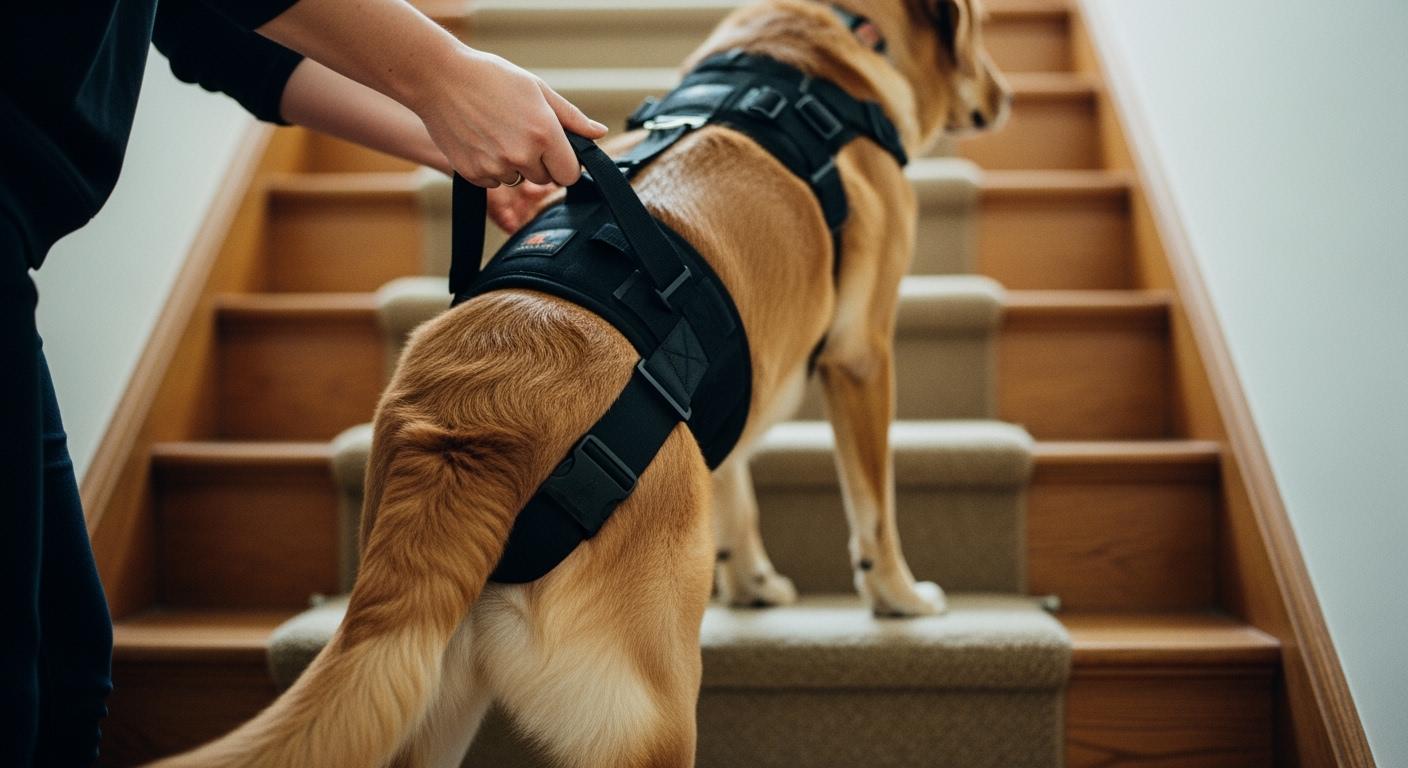
A dog lift harness for stairs should do more than add support. It should help you control balance, guide each step, and reduce sudden weight shifts while your dog moves up or down. Good handle control matters because stairs place more demand on balance, timing, and body position than flat ground. If you want a broader overview of support methods, fit, and daily mobility use before comparing stair-specific options, start with this dog support sling guide.
- Sudden loss of balance during step-up or step-down movement
- Extra strain on weak hind legs or recovering joints
- Uneven pressure through the chest, shoulders, or hips during lifting
- Falls or twisting incidents caused by poor support timing or unstable grip
Choosing the right dog lift harness for stairs can lower these risks when the handle sits in the correct support zone, the harness stays balanced under light load, and the dog can still move in a steady pattern. Dogs with weak hind legs often need a support setup that works for walking, stairs, and bathroom breaks, which is why it helps to compare your options with a more specific dog lift harness solution for hind leg weakness before making a final choice.
Key Takeaways
- The handle should help you support the dog without tipping the body forward or pulling unevenly on stairs.
- For stair use, fit matters just as much as handle position. A harness that shifts or twists under load is not ready for daily stair support.
- Traction, slow pacing, and clear step-by-step guidance are part of safe stair handling, not optional extras.
Handle Control in Dog Lift Harness for Stairs
Why Handle Position Matters
Handle position matters because stairs change the dog’s balance point with every step. If the handle sits too far forward, too far back, or too high for the dog’s frame, the lift can feel uneven and make the dog hesitate or sway. A better position helps you guide the dog through each step with less twisting and less sudden weight shift.
This becomes even more important for dogs with weak back legs, post-surgical instability, or reduced confidence on stairs. If you need a broader support framework before comparing individual harnesses, review this hind leg weakness lift harness solution page for common support scenarios such as walking, climbing stairs, and bathroom breaks.
Tip: Always make sure the handle is above your dog’s middle. This spot gives you the best control and helps your dog feel safe.
Risks of Poor Handle Control
Poor handle control affects both the dog and the handler. If the dog’s weight shifts suddenly on stairs, the dog may stumble, hesitate, or twist while the handler may over-lift, pull unevenly, or lose the best support angle. The most common problems include:
Losing balance on stairs
More chances of falling or slipping
Extra pressure on your dog’s joints
Trouble guiding your dog around corners
New dog lift harness for stairs handle control designs have features to lower these risks. Look for handles that fit your dog’s size and needs. The table below lists some good features for handle placement and safety:
Feature | Description |
|---|---|
Front handle & ‘D’ ring | Lets you attach a leash and lift easily |
‘T’ pad | Lifts under the chest for better support |
Adjustable strap | Fits dogs of different sizes |
Rear handle with reflective strips | Makes it safer in the dark |
Patented hip lift | Helps lift both you and your dog comfortably |
If you want to compare balanced front-and-rear support layouts before choosing a stair-use harness, this lift harness for front and hind legs is a useful reference because it highlights dual padded handles, adjustable fit, and full-body assistance.
Buyer Priorities for Stair Safety
When choosing a dog lift harness for stairs, focus on balance, fit stability, and how the handler will actually guide the dog through each step. The best stair-use harness is not simply the one with a handle. It is the one that stays stable under light lifting, supports the right body area, and makes step-by-step assistance easier to repeat.
Make sure the harness fits your dog well but does not squeeze.
Pick a harness with front and back handles for better balance.
Find harnesses with straps you can adjust for size.
Choose harnesses with reflective strips for dark stairs.
Ask your vet which harness is best for your dog’s health.
If you are comparing categories rather than one product, review the broader dog lift harness collection to see which styles are better suited to rear support, full-body assistance, or daily mobility help on stairs and short walks.
A dog lift harness for stairs handle control helps you keep your dog safe. You can lower the chance of injury and make stairs easier for both you and your dog.
Support Balance and Harness Selection
Front-and-Rear Support Considerations
Support balance matters on stairs because some dogs mainly need rear assistance while others need more even front-and-rear guidance. A rear-support setup may work when the front legs are still strong, but a full-body layout is often more stable when the dog has broader weakness, poor balance, or reduced confidence. If you want a broader overview of sling and harness types before comparing stair-use options, this dog support sling and daily mobility guide is a good starting point.
Harnesses with adjustable straps, balanced body coverage, and ergonomic handles are usually easier to control on stairs because they help the dog stay more level from step to step. That matters more than simply adding more lifting force.
Harness Fit and Adjustment for Stairs
A proper fit is essential for safe stair use because even a well-designed harness can become unstable if it sits too high, too low, or too loosely on the body. Before using stairs, check that the support panels are centered, the straps lie flat, and the harness does not crowd the shoulders or shift behind the elbows. If you need a more detailed fit protocol for checking rubbing, clearance, and strap tension, review this harness fit and safety guide.
Tip: A well-fitted lifting harness keeps your dog safe and gives you better control on stairs.
Limitations and When to Seek Guidance
Sometimes, a support harness does not give enough balance. Watch for signs like tipping, swaying, or reluctance to use stairs. If your dog moves down stairs too fast or shows weakness in both ends, the harness may not provide enough support. Here is a quick reference:
Sign of Inadequate Support | Description |
|---|---|
Tipping or Swaying | The harness may not give enough balance for your dog. |
Weakness in Both Ends | A rear-only harness may not be enough for stability. |
Some dogs will still need a different support layout, a second handler, or a ramp instead of stairs. If you see repeated tipping, swaying, panic, or weakness at both ends, stop and reassess the support plan. A better next step may be a more balanced lift harness option or a veterinary recommendation on whether stair use should be limited altogether.
Practical Stair Navigation with Dog Lift Harness
Handle Position and Grip Techniques
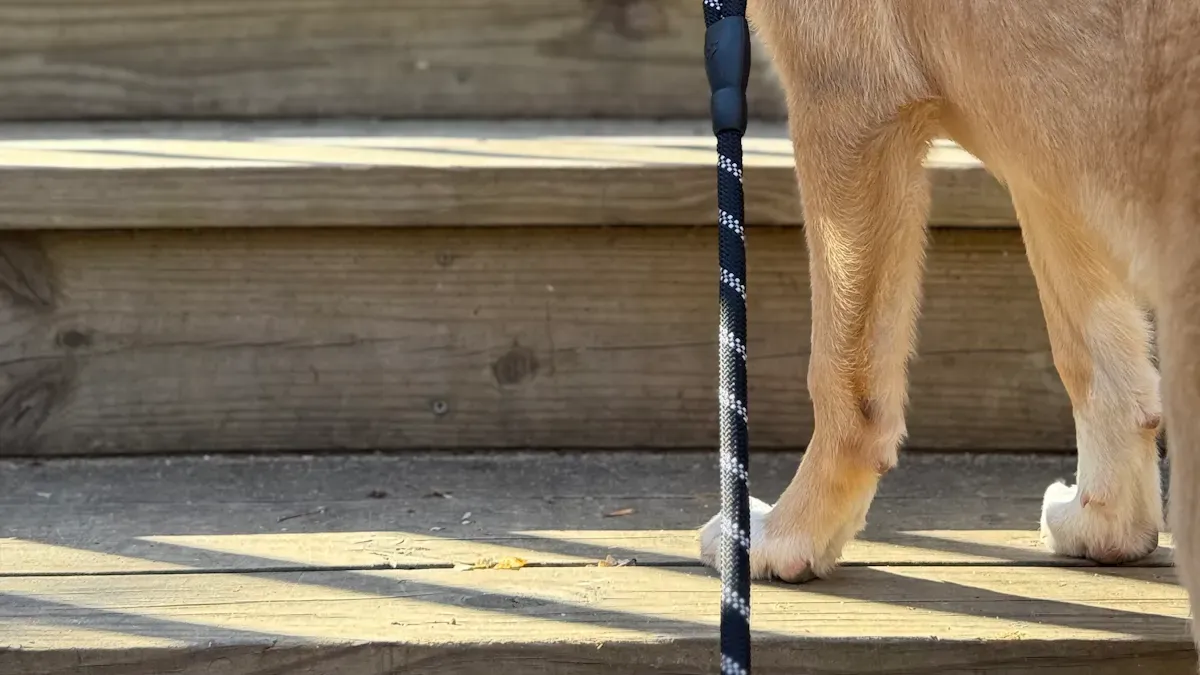
You need to use the right grip and handle position when you help your pet climb stairs. Good grip techniques make stair use safer for both you and your dog. Here are the best steps for using a dog lift harness on stairs:
Talk to your helper if you have one. Use clear words like “Ready, lift” or “Pause” so you both move together.
Support both the front and rear of your pet at the same time. Lift gently and keep your dog’s spine straight.
Only lift as much as your pet needs. Do not raise your dog too high. Give just enough assistance for each step.
Move slowly. Keep your pet calm and use a loose lead to guide your dog.
If your pet is large or disabled, use a rear sling and a front support. One person lifts the back, and the other lifts the front. Place a non-slip runner on the stairs for better traction.
If you want a more detailed example of how lift-assist support is used during controlled movement and transfers, this IVDD dog lift harness guide is useful for understanding straight-line support, short assisted movement, and how to avoid twisting during handling.
Tip: Always check your grip before you start. A steady hold on the dog lift harness helps prevent slips and gives your pet more comfort.
Maintaining Balance on Stairs
Balance is the main goal when helping a dog on stairs. The harness should reduce stress on weak legs without forcing the dog to hang from the handles. Good stair setup also matters. Non-slip tape, a stair runner, and slower pacing often do as much for safety as the harness itself. If the dog has severe mobility issues or cannot stay level even with support, a ramp may be safer than stairs.
Here are some ways to keep balance and safety:
Use a full body harness for pets with weakness in both front and back legs.
Stand close to your pet. Keep your knees bent and your back straight.
Move at a slow pace. Let your pet take one step at a time.
Give clear cues and praise your pet for each step.
If the stairs are narrow, make sure you have enough space to turn and guide your pet safely.
For dogs that need more balanced assistance than a rear-only setup can provide, compare the options in this dog lift harness category and look for full-body or front-and-rear support layouts that stay stable on stairs.
Common Mistakes and Safety Tips
Many people make mistakes when they use a dog lift harness for stairs. These errors can put your pet at risk. Here are the most common mistakes and how to avoid them:
Mistake | How to Avoid It |
|---|---|
Lifting too quickly | Move slowly and give your pet time to adjust |
Not checking harness fit | Adjust straps before each use |
Using stairs with slippery steps | Add non-slip tape or a runner for traction |
Not practicing on short stairs | Start with a few steps before longer flights |
Trying to help alone with a large dog | Ask for help from another person |
Safety Tip: Teach your pet to wear the dog lift harness before using stairs. Practice on small steps first. Reward your pet for calm behavior.
Checklist for Safe Stair Navigation:
Check the fit of the dog lift harness and adjust as needed.
Make sure the stairs have good traction.
Use a full body harness for pets with severe mobility challenges.
Give clear cues and move at a slow pace.
Ask for help if your pet is large or disabled.
Avoid stairs if your pet shows pain or fear.
Reward your pet after each safe climb.
If stair use is a regular part of the dog’s daily routine, use each session as a fit and safety check. The harness should stay centered, the dog should move with steady rhythm, and the handler should not need to over-lift to keep control.
A dog lift harness for stairs handle control can make life easier for you and your pet. With the right assistance, you help your dog stay safe and comfortable while preventing injuries. Always use mobility aids as recommended by your veterinary professional.
Safe stair support starts with a short, repeatable routine: check the fit, confirm traction on the stairs, guide the dog one step at a time, and stop if balance breaks down. If you need a product-focused next step after reading this guide, compare your options in the dog lift harness range. If you still need help deciding when a harness is appropriate for weak hind legs, go back to this lift harness solution page before moving into product review.
Checklist for safe stair use:
- Review your support method if stair use is becoming harder instead of easier.
- Check fit and handle position before each stair session.
- Use a non-slip stair surface and move one step at a time.
- Support only as much as the dog needs without over-lifting.
- Stop if the dog tips, sways, panics, or resists the stairs.
FAQ
How do you use handle control on stairs with a dog lift harness?
Hold the harness where it helps the dog stay level instead of tipping forward or backward. In many cases that means supporting from the dog’s mid-body or the intended lift zone, then moving one step at a time with a steady pace.
What features help with stair safety in a dog lift harness?
Look for stable body coverage, adjustable straps, and handles that let you guide the dog without twisting the torso. Front-and-rear support layouts are often more useful on stairs than a simple rear-only lift when the dog needs broader balance help.
Can you use any dog lift harness for stairs?
No. A stair-use harness needs better balance control than an ordinary walking harness. It should stay stable under light lift, fit securely, and match the dog’s real support needs instead of just offering a grab handle.
What should you do if your dog struggles on stairs, even with a harness?
If your dog tips, sways, freezes, or shows panic on stairs, stop and reassess. Check fit, traction, and whether the support method is right for stair use at all. Some dogs need a different harness layout or a ramp instead of repeated stair practice.
How can you make stairs safer for your dog?
Add non-slip mats or tape to each step.
Use clear cues and move at a slow pace.
Practice on a few steps first.
Reward your dog for calm behavior.
These steps help your dog feel safe and confident.
