
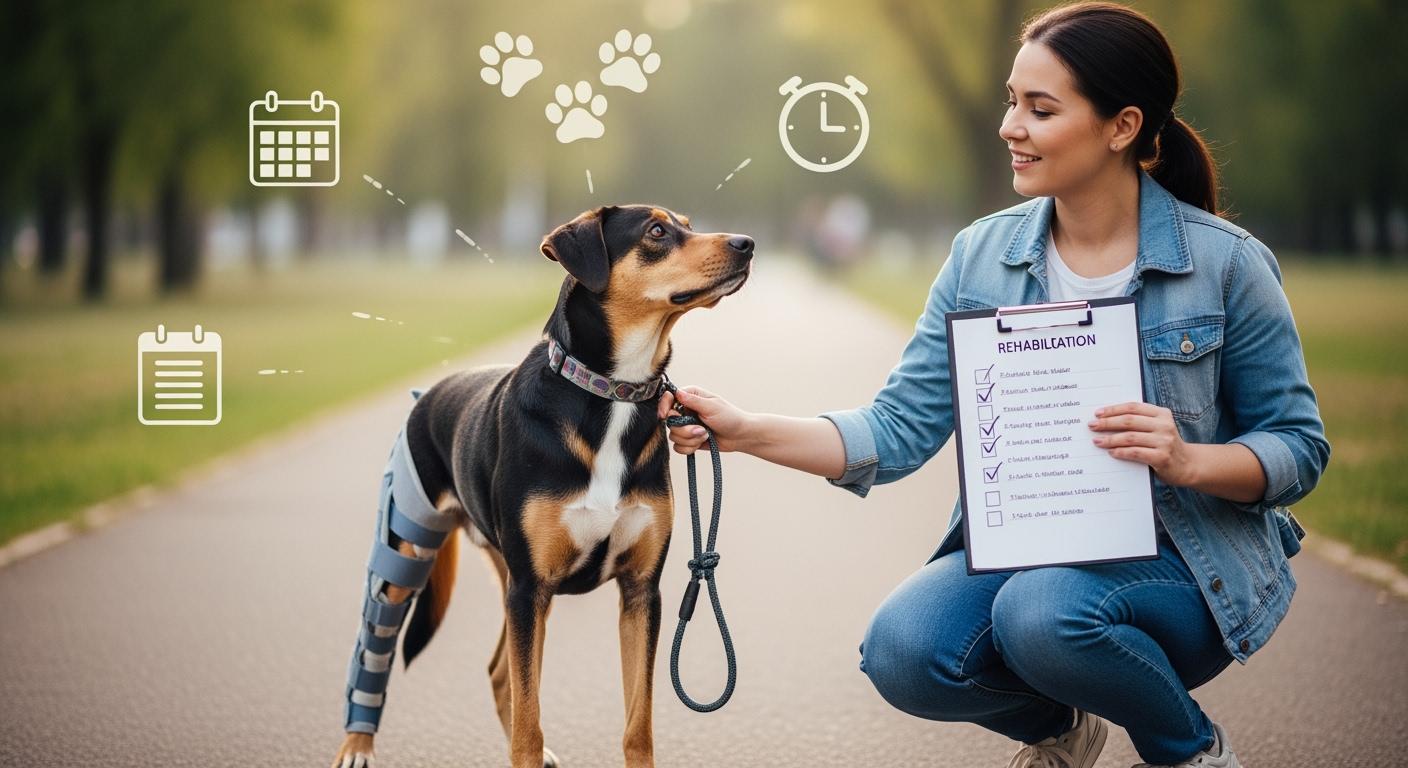
You want to help your dog recover safely with a dog stifle brace walking plan and wear schedule. Start by knowing that slow, steady progress gives your dog the best chance for healing. Short, controlled walks help your dog build strength and protect the joint. Watch your dog closely for comfort and signs of pain. Every dog needs time to adjust. Common concerns include:
Making sure the brace fits well
Keeping a consistent routine for walks
Checking your dog’s skin and movement after each walk
Focus on straight-line walking and avoid sharp turns. Always check for any signs of discomfort after each session.
Key Takeaways
Begin with short times when you first use the stifle brace. Slowly make the sessions longer as your dog gets used to it. This helps your dog stay safe and comfortable.
Watch your dog closely during walks. Always use a leash. Do not let your dog play rough. This keeps your dog safe and helps control movement.
Look at your dog’s skin often for any redness or pain. Change how the brace fits if you see problems. This helps your dog heal better.
Write down your dog’s walk times and how your dog acts. This helps you see how your dog is doing. You can change the walking plan if needed.
Use a set walking plan to help your dog get better. Doing the same thing each time helps your dog get stronger and more sure.
Dog Stifle Brace Basics and Walking Control
What Is Dog Bracing
Dog bracing gives your dog support during recovery from a CCL injury. You use a dog stifle brace to help your dog walk safely and build strength. The stifle joint in your dog works like a human knee. When your dog wears a dog knee brace, you help control movement and protect the joint from further injury.
A dog stifle brace supports dogs with CCL tears.
The brace stabilizes the stifle joint and prevents too much movement.
Custom dog bracing fits your dog’s body for the best support.
Dog bracing helps your dog move with less pain. You use a dog knee brace to guide your dog through rehab. This support lets your dog start walking again in a safe way.
Why Walking Plans Matter
You need a walking plan for your dog when using dog bracing. A dog knee brace works best when you control your dog’s walks. You start with short, slow walks. You keep your dog on a leash and walk in straight lines. This helps your dog learn to use the dog knee brace and build muscle.
A walking plan helps you:
Prevent your dog from moving too fast.
Give your dog time to adjust to dog bracing.
Track your dog’s progress each day.
You want your dog to feel safe and comfortable. A good walking plan with a dog knee brace helps your dog heal.
Risks of Unstructured Activity
If you let your dog move without a plan, you risk injury. Unstructured activity can cause your dog to twist, jump, or run. These actions can hurt your dog’s stifle joint, even with dog bracing. You must avoid rough play, sudden turns, and jumping.
Tip: Always supervise your dog when using a dog knee brace. Keep walks short and calm.
You protect your dog by using a dog knee brace and following a walking plan. This keeps your dog safe and helps your dog recover faster.
Dog Stifle Brace Walking Plan and Wear Schedule
A safe and effective dog stifle brace walking plan and wear schedule helps your dog recover with confidence. You need to follow a structured approach that supports healing and keeps your dog comfortable. This section gives you clear steps for daily routines, gradual increases in activity, and ways to blend walks with your dog rehab exercise schedule.
Initial Wear and Walk Schedule
Start your dog’s stifle brace journey with short, supervised sessions. Your dog needs time to get used to the brace and new walking patterns. Here is a simple plan for the first week:
Days 1–3: Put the stifle brace on your dog for 30 minutes at a time. Repeat this 2–3 times each day. Always supervise your dog and check the skin after each session.
Days 4–7: Increase the stifle brace wear to 45–60 minutes per session. Aim for 3–5 sessions each day. Keep your dog on a leash for all walks and toilet breaks to control movement.
Use a walking harness instead of a neck collar. This reduces strain on your dog’s neck and helps guide safe movement.
Limit walk duration based on your veterinarian’s advice. Avoid overexertion and keep walks slow and steady.
Record the length and frequency of each walk. This helps you track your dog’s progress and adjust the dog stifle brace walking plan and wear schedule as needed.
Tip: Always check your dog’s skin and the fit of the stifle brace after each session. Look for redness, swelling, or signs of discomfort.
You can find more details about brace fit and comfort in our dog knee brace for CCL tear article.
Gradual Increase in Brace Time
As your dog adjusts, you can slowly increase the time spent wearing the stifle brace. This step is important for building strength and confidence. Follow these guidelines:
Weeks 2–4: Use the stifle brace during walks, outdoor potty breaks, light play, and rehab exercises. Aim for a total of 2–4 hours of wear per day.
Add about one hour of brace time each day if your dog shows no signs of discomfort. Watch for limping, licking, or attempts to remove the brace.
Remove the stifle brace during rest or sleep unless your veterinarian says otherwise.
Check your dog’s skin daily for rubbing, rashes, or sores. Adjust the brace or add padding if needed.
Keep your dog’s activity level within safe limits. Avoid fatigue by sticking to the dog stifle brace walking plan and wear schedule.
Note: If your dog returns from a walk more lame or sore than before, reduce the activity and consult your vet.
For more on safe activity increases and equipment, visit our main dog knee brace category page.
Integrating Walks with Dog Rehab Exercise Schedule
You need to blend walks with your dog rehab exercise schedule for the best results. Walks help your dog release energy, maintain a healthy weight, and reinforce good behavior. Here’s how to make walks part of your rehab exercise schedule:
Start each walk with a gentle warm-up. Let your dog move slowly to loosen up the joints.
Use basic commands like “sit” during stops. Reward your dog to keep training positive.
Practice the “heel” command to keep your dog close and safe during walks.
Mix up exercises during walks. Try short straight-line walks, slow turns, and brief pauses to keep your dog engaged.
Keep all walks short and controlled. Avoid rough play, sudden turns, or jumping.
Track your dog’s progress in a rehab journal. Note the duration, distance, and your dog’s response to each walk.
Combine walks with other rehab exercises, such as gentle range-of-motion movements or balance drills, as recommended by your vet.
Callout: Consistency is key. Stick to your dog stifle brace walking plan and wear schedule every day for steady progress.
For more ideas on blending walks with your dog rehab exercise schedule, check out our gait training support content and ACL/CCL condition-based support page.
A well-structured dog stifle brace walking plan and wear schedule, combined with a thoughtful rehab exercise schedule, gives your dog the best chance for a safe and strong recovery. Always adjust the plan based on your dog’s needs and consult your veterinarian for guidance.
Comfort Checks and Activity Limits
Monitoring Brace Fit and Skin
You want your dog to stay comfortable and safe during recovery. Always check the fit of the stifle brace before and after each walk. The brace should feel snug but not tight. You should fit two fingers between the brace and your dog’s leg. Watch your dog walk. Your dog should move without limping or showing discomfort.
Check your dog’s skin under the brace. Look for redness, sores, or hair loss. Keep the skin clean and dry. Add padding if you see any signs of rubbing or irritation. Start with short periods of brace use, about 30–60 minutes, two to five times a day. Increase the time each day as your dog adjusts. During the first 72 hours, check the skin often. For the first two weeks, check daily.
Tip: A well-fitted brace helps your dog avoid skin problems and supports a smooth recovery.
Signs of Discomfort or Poor Tolerance
You need to watch for signs that your dog does not tolerate the brace. Some dogs may show discomfort or have trouble with the device. Look for these warning signs:
Skin irritation, redness, or sores
Loss of hair under the brace
Limping or shortened stride
Bunny hopping when trotting
Licking one joint after walks
Nails scuffing on one side
Hesitation before jumping or walking
If you see any of these signs, reduce brace time and check the fit. Remove the brace at night and during crating unless your vet says otherwise. Always adjust your dog’s walking plan if discomfort appears. This keeps your dog’s recovery on track.
Setting Safe Activity Limits
You must set clear activity limits for your dog. Start with short, supervised walks. Avoid rough play, sudden turns, and jumping. For the first week, use the brace for 30–60 minutes, two to five times daily. In weeks two to four, increase to 2–4 hours per day during walks, potty breaks, and light play. Some dogs with special needs may wear the brace for 6–12 hours during active periods. Always supervise your dog and check the skin after each session.
Note: Consistent limits protect your dog’s joint and support safe recovery. Never leave your dog unsupervised with the brace during early rehab.
By following these comfort checks and activity limits, you help your dog heal safely and steadily. Always adjust the plan based on your dog’s needs and consult your veterinarian for guidance.
Common Mistakes and Practical Tips
Avoiding Overuse and Underuse
You want your dog to get better without getting hurt. Some owners let their dog do too much or not enough. Mistakes happen when the brace does not fit right or is used too much. Ignoring how much activity your dog should have is also a problem. You can stop these mistakes by following a set plan. Slowly add more activity with your vet’s help. Give your dog both rest and exercise to avoid doing too much. Make sure your dog stands up straight during walks and therapy. Pick a brace that fits well and can be adjusted for comfort. Clean the brace often to keep your dog’s skin healthy. Follow the rules for exercise and do not let your dog jump or run hard. These steps help your dog get stronger and move better in a safe way.
Problems with fit and size of the brace
Using the brace too much instead of doing full rehab
Skin problems and not keeping the brace clean
Thinking your dog is ready for more activity too soon
Tip: Always watch how your dog is doing and change the walking plan if needed. For more help, check our dog knee brace for CCL tear article.
Handling Slipping or Rubbing
Slipping and rubbing can make your dog uncomfortable and slow down healing. The Hero Brace has a neoprene sleeve that fits your dog’s leg shape. This helps stop slipping and rubbing. Keep the brace dry after walks, especially if it is wet outside. This helps prevent skin problems. Use non-slip dog booties when it is icy or wet to help your dog walk and not slip. Adjust the straps and cuffs a few times each day. Your dog’s leg might swell or change, so check the fit often. If you see rubbing or sore spots, add padding or ask your vet for help.
Note: Taking care of the brace helps your dog heal better. For more tips, see our main dog knee brace category page.
Tracking Progress in Rehab Exercise Schedule
Watching your dog’s progress is important for good rehab. Keep a journal to write down how long and how far your dog walks. Write how your dog acts during each therapy session. See how long your dog can hold a command and try to make this time longer. Check how far you can move away while your dog stays in place. Try commands in different places with new things around to distract your dog. Use different surfaces during therapy to help your dog learn balance and move better. A set plan in rehab helps you see muscle changes and change exercises for better support.
“The goal of rehab exercises is to help your dog put weight on the sore leg, especially after surgery. Using different surfaces helps your dog learn to balance and walk on many types of ground, which is important for tracking how well your dog is getting better.”
For more ideas about rehab and therapy, visit our gait training support content and ACL/CCL condition-based support page.
To help your dog recover, follow these steps for a safe walking plan and wear schedule:
Introduce the brace slowly. Start with short sessions and increase time each day.
Use the brace during walks, rehab, and potty breaks. Remove it at night.
Check your dog’s skin twice daily for redness or sores.
Keep your dog’s fur and brace clean.
Watch for limping or swelling. Contact your vet if you see problems.
Most dogs need gradual changes, comfort checks, and clear activity limits. For more support, visit Dog Bracing Made Simple, Tech Tips: Custom Brace Break-In Schedule, and TPLO Rehab Exercises for Dogs.
FAQ
How long should my dog wear a stifle brace each day?
You should start with short sessions, about 30–60 minutes, two to five times daily. Increase brace time slowly as your dog adjusts. Always check your dog’s skin and comfort after each session.
Can I walk my dog outside with a stifle brace?
Yes, you can walk your dog outside using a stifle brace. Keep walks short and controlled. Use a leash and avoid rough play, sudden turns, or jumping. Supervise your dog during every walk.
What signs show my dog needs a break from the brace?
Look for redness, sores, limping, or licking at the brace area. If you see these signs, remove the brace and let your dog rest. Check the fit and consult your veterinarian if problems continue.
Should I use the brace during rehab therapy or post-surgery recovery?
You should use the brace during rehab therapy and post-surgery recovery as your veterinarian recommends. The brace helps support the stifle joint and aids gentle rehab. Always follow your vet’s advice for safe home recovery.
How do I track progress with a custom stifle brace?
Keep a journal of walk times, distances, and your dog’s response. Record any changes in movement or comfort. Use this information to adjust the walking plan and wear schedule for your canine’s torn acl in dogs recovery.
