
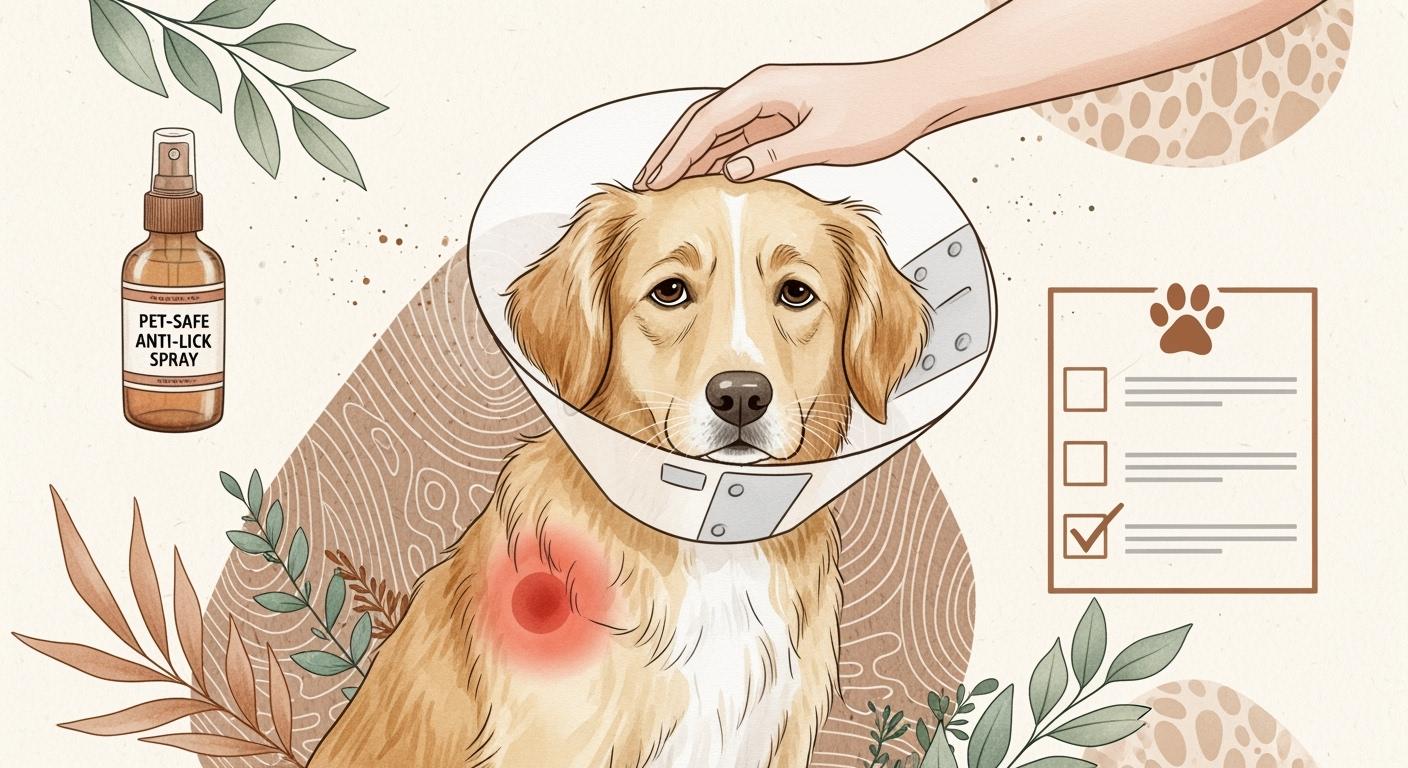
If you need to stop your dog from licking a hot spot right now, act quickly. Hot spots can become infected fast and cause pain.
Quick answer:
Put an E-collar, inflatable collar, or protective suit on your dog.
Cover the sore with a safe barrier.
Watch your dog closely and distract them.
Hotspot dog from licking often appears as a red, oozing sore. The area can spread quickly if your dog keeps licking, chewing, or scratching. Untreated hot spots may show redness, swelling, or pus and often need a vet if not improved in 24 hours.
Key Takeaways
Stop your dog from licking hot spots right away. Put on an E-collar or a suit to keep them from licking more.
Make sure the hot spot stays clean and dry. Cut the hair around the sore and use a gentle antiseptic to help it heal.
Check your dog’s hot spot every day. Take pictures and write down changes to show your vet if you need to.
Find out what is causing the hot spot, like allergies or parasites. Fix these problems so hot spots do not come back.
Give your dog things to do for their body and mind. Play with toys and go for walks to help stop stress and boredom.
Quick Answer: Stop Dog From Licking Hot Spots Now
Emergency Checklist:
Stop your dog from licking hot spots right away.
Isolate your dog in a safe area.
Gather cleaning supplies (dog-safe clippers, mild antiseptic spray, clean towels).
Avoid using harsh products like peroxide, alcohol, or essential oils.
Dog hot spots can get much worse in just one day if you do not act quickly. A small sore can grow several inches in diameter within 24 hours if your dog keeps licking. You need to stop dog from licking hot spots as soon as you notice them.
Use a Barrier (E-collar, Inflatable Collar, Suit)
You can use a physical barrier to keep your dog from reaching the sore. This step is the most effective way to stop dog from licking hot spots. Choose the right barrier based on where the wound is located and your dog’s comfort.
Here is a comparison table to help you pick the best option:
Barrier Type | Best For Body Location | Failure Risk | Notes |
|---|---|---|---|
E-collar (cone) | Head, neck, upper body | Low | Blocks mouth access; may cause stress for some dogs |
Inflatable collar | Neck, upper body | Medium | Comfortable; less effective for long-nosed or flexible dogs |
Recovery suit/sleeve | Torso, legs, belly | Low | Covers wounds; good for active dogs |
Boot/sock | Paws, lower legs | Medium | Easy to remove; best for short-term use |
Temporary wrap | Legs, tail | High | Use only for brief periods; monitor for moisture buildup |
If you want more details about cone alternatives or recovery wear, check our guides on cones vs suits and lick sleeves vs bandages.
Cover or Protect the Area
Trim the hair around the hot spot with dog-safe clippers. This helps air reach the sore and keeps moisture away. Clean the skin gently with a mild antiseptic spray or antibacterial shampoo. Use a veterinary-recommended hot spot spray if your vet approves. Cover the area with a suit or sleeve if the wound is on the torso or leg. Make sure the cover is clean and dry. Do not use tight bandages over wet skin because this can trap moisture and slow healing.
Distract and Supervise
Keep your dog busy with toys or gentle activities. Supervise your dog closely, especially during the first few hours after you apply a barrier. If your dog tries to remove the barrier or cover, redirect their attention. Give treats or praise when your dog leaves the sore alone. Watch for signs of discomfort or stress.
If the sore is more than 24 hours old or looks worse, call your vet. Hot spots can get infected fast. Your vet may recommend stronger treatments or check for underlying causes.
You can track healing by taking daily photos of the sore. Use the same lighting and distance each time. Measure the diameter with a ruler and write down any changes. This helps you and your vet see if the hot spot is improving.
Red Flags: When to Call the Vet
Signs of Infection or Emergency
You must watch for warning signs that show your dog’s hot spot needs veterinary attention. Some symptoms mean you should call your vet right away. These include:
Hot spots larger than a quarter
Foul odor from the sore (learn more about infection signs after surgery)
Extreme discomfort or distress
Rapid spreading of the hot spot
Fever or low energy
Hot spots near eyes, ears, or throat
Red Flags Checklist:
Swelling, pus, or thick discharge
Redness that spreads quickly
Your dog seems very tired or refuses food
The sore does not improve after 24 hours
The area smells bad or looks raw
If you see any of these signs, you should contact your veterinarian as soon as possible. Hot spots can get worse quickly, and early treatment helps prevent pain and infection.
Clinical Safety Thresholds
Veterinarians want to stop the itch-scratch cycle first. They clip fur around the sore to let air reach the skin. They clean and disinfect the area to remove bacteria. For severe cases, vets may use topical ointments, oral antibiotics, or anti-inflammatory medications. Mild cases sometimes improve with over-the-counter treatments.
If your dog’s hot spot does not heal within a few days of home care, or if you notice recurrent sores, your vet may recommend tests to find underlying problems. Always seek help if the sore is more than 24 hours old or gets worse.
Situation | What to Do | Next Steps |
|---|---|---|
Small, mild hot spot, no red flags | Home care | Monitor daily, track changes |
Sore >24 hours old, mild swelling | Call vet today | Follow vet advice, possible exam |
Severe swelling, pus, odor, distress | Emergency vet visit | Immediate treatment, diagnostics |
If you feel unsure, call your vet for guidance. Quick action keeps your dog safe and comfortable.
What Is a Hotspot Dog From Licking?
Acute Moist Dermatitis Explained
A hotspot dog from licking is a skin problem that appears suddenly. Vets call this condition acute moist dermatitis or pyotraumatic dermatitis. You will see a red, wet, and sometimes oozing sore on your dog’s skin. This sore forms because your dog keeps licking or chewing the same spot. The skin becomes inflamed and may even develop pus. Hotspot dog from licking often starts with an itch or irritation. Your dog tries to relieve the itch by licking, but this only makes the sore worse.
Hot spots are red, moist lesions that show up quickly.
They result from repeated licking, chewing, or scratching.
Allergies, fleas, or poor grooming can trigger the behavior.
Stress can also make your dog lick more than usual.
Hot Spot vs Lick Granuloma
You might wonder if a hotspot dog from licking is the same as a lick granuloma. These two problems look similar but have key differences.
Hot spots develop fast. They are painful, sensitive, and can grow in size within hours. You often see them on the head, neck, or hips. Infections are common.
Lick granulomas form slowly. They usually appear on the legs. The skin becomes thick, hard, and has clear borders. Anxiety or boredom often causes this type of sore.
Condition | How It Starts | Common Locations | Appearance | Main Cause |
|---|---|---|---|---|
Hot Spot | Sudden, rapid | Head, neck, hips | Red, moist, painful, oozing | Allergies, fleas, moisture |
Lick Granuloma | Slow, over weeks | Legs | Thick, hard, well-defined | Anxiety, boredom |
Why Dogs Lick Hot Spots
Dogs lick hot spots for many reasons. You need to find the cause to stop the cycle. Common triggers include:
Allergies to pollen, mold, or food
Flea or tick bites
Skin irritation from grooming products
Poor grooming, which traps moisture and bacteria
Underlying health issues like hypothyroidism
Stress or boredom
Some breeds get hotspot dog from licking more often. Long-haired dogs like Golden Retrievers and Saint Bernards have thick fur that traps moisture. Breeds with skin folds, such as Bulldogs and Pugs, also face higher risk. Allergy-prone breeds like Labradors and Boxers may develop dog hot spots due to itching. If you notice excessive licking, check your dog’s skin and talk to your vet for advice.
Treat Hot Spots on Dogs at Home
Safe Cleaning and Drying
You need to keep the hot spot clean and dry to help your dog heal. Start by trimming the hair around the sore with dog-safe clippers. This step lets air reach the skin and stops fur from trapping moisture. Use a mild antiseptic cleanser, such as a 2–4% chlorhexidine solution, to gently clean the area. Rinse away any debris and pat the skin dry with a clean towel. Avoid scrubbing, which can cause more irritation.
Veterinarians recommend cleaning the hot spot two to three times per week if you use a medicated shampoo. If you use a leave-on spray or mousse, apply it daily or up to three times per day, following your vet’s advice. Always check the skin for signs of improvement, like less redness or moisture. If the sore looks worse or spreads, stop at-home treatments and call your vet.
Hot Spot Treatment Steps
You can treat hot spots on dogs at home by following a step-by-step routine. Each step helps reduce pain, prevent infection, and support healing.
Trim Hair: Remove hair around the hot spot to reduce irritation and allow air flow.
Clean Gently: Wash the area with a mild antiseptic soap or veterinary cleanser.
Dry Out the Sore: Apply a solution that helps dry the infection, such as cooled black tea dabbed on the skin.
Soothe the Skin: Use natural remedies like Calendula or Aloe Vera to calm inflammation.
Pain Relief: Ask your vet about safe options for pain relief, such as CBD products.
Steroid Alternatives: Consider licorice root extract for its natural anti-inflammatory effects, but only if your vet approves.
Antihistamine Support: Quercetin may help with itching, but always check with your vet before giving supplements.
You should apply soothing treatments three to four times per day, especially after your dog goes outside or gets wet. This routine creates a clean, dry environment that supports hot spot treatment and healing. If you notice less redness, less moisture, and the spot getting smaller, your dog is likely improving.
What NOT to Do (Boxed Callout)
🚫 Common Mistakes to Avoid When Treating Hot Spots at Home
Do not let your dog lick or chew the sore. Use a barrier right away.
Do not use harsh products like peroxide, alcohol, or essential oils. These can damage the skin and slow healing.
Do not use moisturizers. Hot spots need to stay dry.
Do not use tight bandages over wet skin. This traps moisture and worsens infection.
Do not use substances not designed for dogs. Human products can cause harmful side effects.
Do not use Benadryl unless your vet recommends it. Overuse can suppress natural healing.
Keep the area dry and break the lick-chew cycle. If you see pus, swelling, or spreading redness, stop treating hot spots at home and call your vet.
Daily Monitoring and Tracking
You need to monitor your dog’s hot spot every day. Tracking helps you spot changes early and share accurate updates with your vet. Take a clear photo of the sore each day using the same lighting and distance. Measure the diameter with a ruler and write down the size. Keep a log with the date, time of treatment, and notes about your dog’s behavior.
Look for signs of healing, such as reduced redness, less moisture, and the spot getting smaller. If the hot spot spreads, oozes pus, or your dog seems uncomfortable, contact your vet for further care. Consistent daily monitoring helps you catch problems early and adjust your at-home treatments as needed.
Prevent Dog Hot Spots Coming Back
Address Underlying Causes
To stop hot spots from coming back, find the main cause. Many dogs get skin problems from allergies or parasites. Some health issues can also lead to hot spots. About 15% of dogs will get hot spots at least once. Fleas, food allergies, mites, fungus, and hormone problems are common reasons. Your veterinarian can help you figure out what is wrong. Ask your vet about allergy tests, parasite checks, and changing your dog’s food. Using a flea and tick plan helps stop itching and lowers the chance of new sores.
Recurrence Prevention Checklist:
Look for fleas, ticks, and mites
Check for ear infections or skin fold problems
Dry your dog well after baths
Watch for allergy signs like itching or redness
Help your dog feel less stressed or bored
Check for things stuck in the skin like thorns
Grooming and Skin Care
Grooming often keeps your dog’s coat clean and smooth. Brush your dog to get rid of dirt and loose fur. Use flea control to protect against bugs. After a bath, dry your dog all the way to stop wetness. Feed your dog healthy food with omega-3 fatty acids for good skin. Take your dog to the vet for checkups to catch problems early. If your dog has allergies, work with your vet to manage them and prevent hot spots.
Grooming Tip | Purpose |
|---|---|
Brush regularly | Gets rid of dirt, stops mats |
Use flea control | Stops bugs from bothering skin |
Dry after bathing | Stops wetness from building up |
Balanced diet | Helps keep skin healthy |
Enrichment and Stress Relief
Dogs need things to do and exercise to stay healthy. If dogs get bored or stressed, they may lick themselves too much. Give your dog puzzle toys, walks, and playtime every day. If your dog seems bored, add more exercise. Keeping your dog busy and happy helps stop hot spots from coming back.
When to Follow Up with Your Vet
Call your vet if you see more redness, swelling, or pain. Watch for new or worse discharge, bigger sores, or symptoms that do not go away. Getting help early stops bigger problems and keeps your dog feeling good. Your vet can look for causes and change your dog’s care if needed.
For more tips, check our guides on cones vs suits, lick sleeves vs bandages, and signs of incision infection.
You can help your dog heal by acting quickly and following these steps:
Stop licking and chewing with a collar or suit.
Treat and clean the hot spot as your vet recommends.
Monitor the sore daily for changes.
Call your vet if the area gets worse or does not improve in a few days.
Prompt care often leads to faster healing and less discomfort. If you feel unsure, your veterinarian can guide you. Your attention and quick action support your dog’s health and comfort.
FAQ
How long does it take for a dog hot spot to heal?
Most hot spots heal in 3–7 days with proper care. You should see improvement within 48 hours. If the sore gets bigger or does not improve, call your vet for advice.
Can I walk my dog with a hot spot?
You can walk your dog if the hot spot is covered and your dog feels comfortable. Use a secure leash for safety. Read our anti-slip leash guide for tips on safe walks during recovery.
Should I let my dog go outside with a hot spot?
You can let your dog outside, but supervise closely. Keep the hot spot clean and dry. Avoid wet grass or dirt. If your dog has trouble walking, see our post-op walking tips for extra support.
What if my dog keeps licking the hot spot through the barrier?
Check the fit of the barrier. Try a different type, like a recovery suit or sleeve. Distract your dog with toys. If licking continues, call your vet for help.
Can I use human creams or ointments on my dog’s hot spot?
Do not use human creams unless your vet says it is safe. Some ingredients can harm dogs. Always ask your vet before applying any new product.
