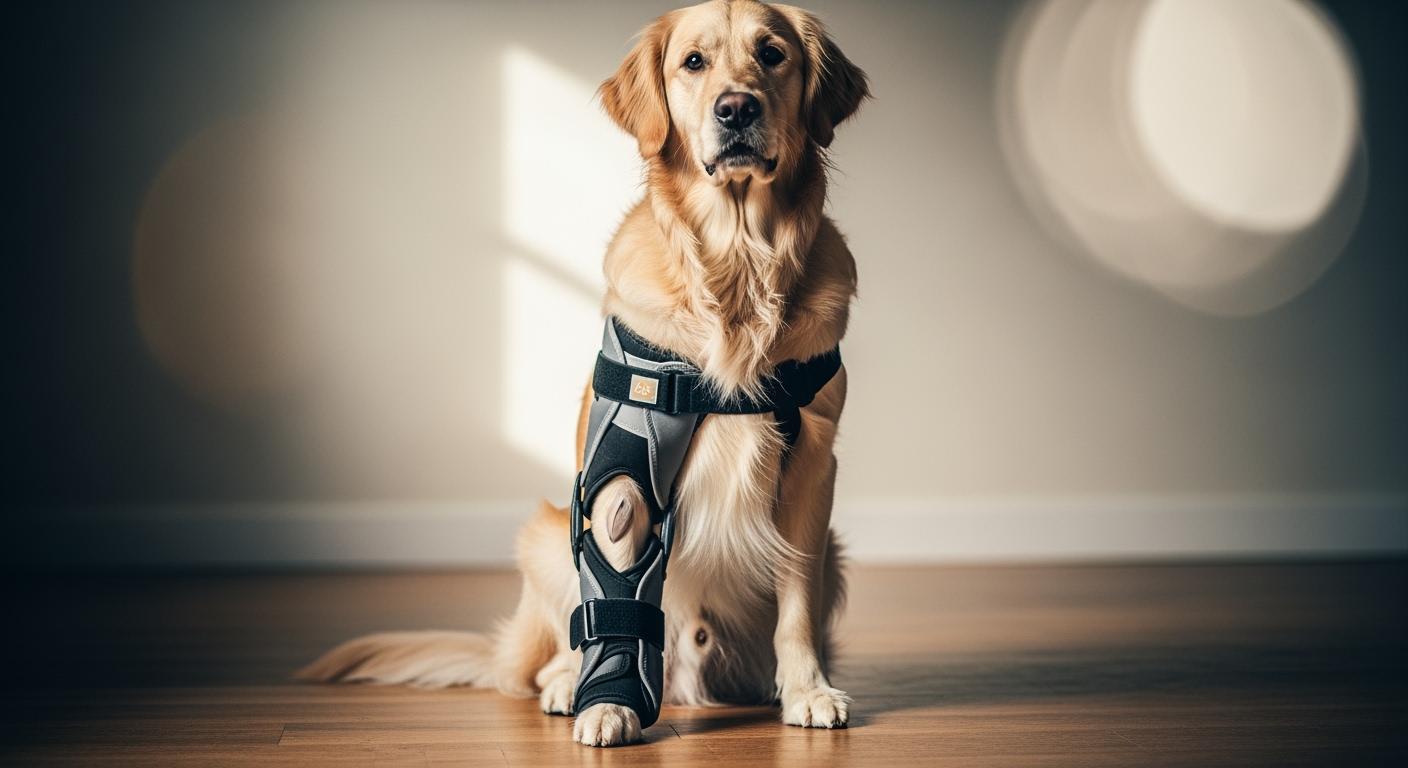
Before selecting a leg brace for your dog’s ACL injury, it is crucial to evaluate the leg brace for dog ACL injury fit and stability. A proper fit can significantly reduce your dog’s pain and enhance mobility. When the brace is well-fitted, it stabilizes your dog’s knee, which can help decrease swelling and improve comfort during walking. Conversely, an ill-fitting brace may cause skin irritation or may not stay in place. Therefore, it is essential to measure your dog accurately and observe their behavior while wearing the brace. Always consult a veterinarian for guidance, as braces should not replace professional veterinary advice or care.
Key Takeaways
A brace that fits well helps your dog feel less pain. It also helps your dog move better. Measure your dog’s leg carefully to get the right size.
Look at the brace often to see if it causes problems. Watch for red marks or if the brace slips. Change the straps if your dog seems uncomfortable.
Talk to your veterinarian before you pick a brace. Your veterinarian can help you choose the best brace for your dog’s injury.
Think about how much your dog moves when picking a brace. Dogs that run and play a lot may need stronger support. Dogs that rest more may need less support.
Use a checklist to check the brace’s fit and stability before buying. This makes sure your dog gets the best support.
Leg Brace for Dog ACL Injury Fit and Stability
What Fit Means in Practice
When you pick a leg brace for your dog, you need to know what fit means. Fit is about how the brace sits on your dog’s leg and how it moves with them. A good fit keeps the brace in place and helps the knee. It should not hurt your dog. The brace should feel snug but not squeeze too hard. You should check the straps often and make sure they are tight enough. If the brace slips or pinches, your dog might feel pain or get sore skin. Your dog’s activity and health also matter for fit. Dogs that run a lot may need more support and straps. Dogs that rest more may want a softer brace.
Tip: Check the brace often for loose straps or worn spots. Adjust the straps as your dog moves during the day.
Signs of Proper Fit
You can look for some signs to see if the brace fits right:
Your dog walks well and does not limp or act hurt.
The brace stays on and does not slide down.
There are no red spots, rubbing, or swelling under the brace.
The straps hold the brace but do not press into the skin.
Your dog does not try to bite or pull off the brace.
If your dog seems upset or the brace moves, check the fit again. A good leg brace for dog acl injury fit and stability helps your dog walk better and keeps the knee safe.
Measuring for Correct Size
Getting the right size is the first step to picking a good brace. You need to measure your dog’s leg the right way so the brace fits and gives support. Here are the steps:
Measure the thigh. Wrap a tape around the top part of your dog’s thigh, just under the body.
Measure the knee. Find the middle of your dog’s knee and wrap the tape there.
Measure from the knee to the hock. Start at the knee and go down to the hock to see how tall the brace should be.
Measure the lower leg. Put the tape halfway between the hock and paw for the bottom strap.
Write down your dog’s weight and breed. Some braces are made for certain breeds.
If you measure wrong, the brace may not fit. A bad leg brace for dog acl injury fit and stability can hurt, make it hard to move, or not help the knee. Always check your numbers and ask your vet for help.
Note: Good measurements stop problems like rubbing, loose braces, or more knee pain. Always use the maker’s guide for measuring your dog for a brace.
Practical Checklist for Assessing Fit and Stability
Use this checklist to see if the leg brace for dog acl injury fit and stability is right before you buy:
Did you talk to your vet about your dog’s ACL injury and what support is needed?
Did you measure your dog’s thigh, knee, and lower leg the right way?
Does the brace fit snug but not hurt your dog?
Can you adjust the straps and fasten them easily?
Does the brace stay on when your dog moves?
Is the material strong and lets air through?
Does your dog walk better and seem more sure?
Comparison Table: Fit and Stability Factors
Factor | What to Check | Why It Matters |
|---|---|---|
Type of Injury | Partial or full ACL tear | Different injuries need different help |
Size and Fit | Right measurements and custom fit | Stops new problems and pain |
Comfort and Material | Airy, non-slip, strong straps | Helps healing and daily use |
Internal Link Opportunities
If you want to learn more about picking the best dog brace or knee brace, visit our Knee Brace Selection Pillar Page. For more help with ACL injuries, check out our ACL Support Solution Page. You can also look at our Dog Leg Brace Product Category for braces made for fit and stability.
Reminder: Only a vet can diagnose and plan treatment. Braces help your dog heal but do not take the place of a vet.
Stability and Support Evaluation
Stability Expectations by Activity Level
You need to pick a brace that matches how active your dog is. Dogs with an anterior cruciate ligament injury need different support, depending on how much they move. The brace helps keep the knee steady from the outside. This lets your dog walk, play, and keep their muscles strong while healing. If your dog runs and plays a lot, the brace must hold the knee still. This stops more injury and helps the knee heal. Dogs that do not move much may not need a stiff brace, but it still has to fit well and stay on.
Here is a table that shows what kind of stability is needed for different activity levels:
Activity Level | Stability Expectation |
|---|---|
Sedentary (small dogs) | Often manage well with conservative care |
Highly active (large dogs) | More likely to require surgical intervention for better long-term comfort and stability |
You should always ask your vet what your dog needs. For more help about support, visit our ACL Support Solution Page.
Testing Brace Support
It is important to test if the brace supports your dog well. You can use these steps to check if the brace works:
First, get your dog checked by a vet. Make sure your dog has an ACL injury and not something else like arthritis or a luxating patella.
Next, check the fit. The brace should not rub or make sores. It should keep the knee steady and not slip.
Use the brace with rehab and weight control. Take your dog on leash walks, do muscle exercises, and watch their weight for better healing.
Follow a schedule for wearing the brace. Most dogs wear the brace for a few hours each day. Your dog will get better slowly, not right away.
You can also think about what kind of brace you use. Here is a table that shows what to expect from different braces:
Type of Brace | Expected Outcome |
|---|---|
Custom Orthotics | Discuss expected outcomes and measurements with your vet before use. |
Neoprene Slings | Often work well when fitted and used correctly. |
Support Wraps | Can improve stability and help healing if used the right way. |
Orthopedic braces give support without surgery. They help your dog feel less pain and stop more injury. If you want to see more braces, visit our Dog Leg Brace Product Category.
Common Stability Issues
Some problems can happen when your dog uses a brace for an ACL injury. Stifle braces are made to keep the knee steady and stop too much movement. This helps the knee heal. Sometimes, the brace does not fit right or slips when your dog moves. This can cause rubbing, skin problems, or less support for the knee. If the brace does not stay on, your dog may not get all the help they need.
Common mistakes are:
Not measuring your dog’s leg the right way before picking a brace.
Not noticing signs of pain, like licking or biting at the brace.
Using the wrong brace for how active your dog is.
Thinking your dog will get better fast instead of slowly.
Tip: Always look at the brace after your dog moves or plays. Fix the straps if you need to. If you see swelling, red skin, or your dog limps more, call your vet.
If you are not sure which brace is best for your dog, visit our ACL Support Solution Page for more help.
Remember, only a vet can tell what is wrong with your dog and make a treatment plan. Braces help with support and stability, but they do not take the place of a vet.
Daily Use and Design Features
Comfort and Wearability
You want your dog to feel good every day in the brace. The right materials are important for comfort. Soft padding stops the brace from rubbing and keeps your dog happy when walking or resting. Adjustable straps help you put the brace on without making it too tight. Custom braces match your dog’s leg shape and give better support. Vets often say custom braces are best for serious injuries. They keep the knee steady and lower the chance of more harm. Braces from the store might slip or rub and make your dog uncomfortable. Measuring your dog the right way helps the brace fit well and support healing.
Factor | Description |
|---|---|
Materials Used | The kind of material changes comfort, strength, and how well it works. |
Padding | Good padding makes the brace comfy and stops skin problems. |
Adjustability | Straps that adjust keep the brace on without hurting your dog. |
Tip: Check your dog’s skin under the brace for red spots or swelling. Change the straps if you see a problem.
Ease of Use and Maintenance
You need a brace that is simple to put on and take off. Easy straps save time and make things less stressful for you and your dog. Learning how to use the brace helps you follow the rules and keep your dog safe. Clear fitting steps make you happier and help you stick to the plan. Check your dog’s skin every day. Look for red spots, missing hair, or sores. Make sure the brace fits and does not move around. Let your dog wear the brace a little longer each day. Change the straps as your dog moves. Always ask your vet for advice and checkups.
Maintenance Practice | Description |
|---|---|
Daily skin checks | Look for red spots, missing hair, or sores under the brace. |
Make sure the brace fits right and does not slip. | |
Monitor for discomfort | Watch for pain, like whining or not wanting to move. |
Adjust straps | Keep the brace snug but not too tight, and change if needed. |
Gradual acclimatization | Start with short times wearing the brace, then add more time slowly. |
Consult veterinarian | Always talk to your vet for help, picking a brace, and checking how your dog is doing. |
Note: Your vet should always help you so your dog heals safely.
Material and Customization
You can pick from different materials for your dog’s brace. Fabric braces bend easily and are light. They let air in and keep your dog cool, but they might not last long if your dog is very active. Plastic braces are strong and last longer. They do not get wet and are good for dogs who need more support. Custom braces are made to fit your dog’s needs. They fit better and help your dog walk with more confidence. Braces with fabric are comfy, and plastic ones are tough and give more support.
Fabric braces: Bend easily, let air in, light to wear.
Plastic braces: Strong, do not get wet, keep the leg steady.
Custom options: Made to fit your dog’s leg and how much they move.
If you want to see more braces for your dog’s comfort and movement, visit our Dog Leg Brace Product Category.
Reminder: Only a vet can tell what is wrong and pick the best brace and treatment for your dog.
Limitations and Professional Guidance
When to Consult a Specialist
You should always talk to a vet before using a brace for your dog’s ACL injury. The vet can check how bad the injury is and tell you the best way to help your dog. Vets and rehab therapists help you know if a brace is right for your dog. They look at how the brace fits and watch for problems like sore spots or if the brace is not lined up right. You need their help to stop more injury and make sure your dog gets the right care.
Here are some signs that mean your dog needs a vet to help:
Clinical Sign | Description |
|---|---|
Stiffness | You see this most after your dog rests or plays. |
Difficulty rising and jumping | Your dog may feel pain or have trouble moving. |
Hind leg lameness and limping | Your dog does not want to use the hurt leg. |
If you see limping, swelling, stiffness, or your dog will not stand on one leg, call your vet. These signs can mean the brace is not enough, or your dog needs something else.
Note: Only a vet can say for sure if your dog has an ACL injury and make a treatment plan. Braces help your dog heal but do not take the place of a vet.
Recognizing Brace Limitations
A brace can help your dog by giving support and keeping the knee steady, but you need to know what it cannot do. Braces do not fix torn ligaments. They work best if your dog cannot have surgery. Big dogs with very weak knees may not get as much help from a brace. Braces are not as strong as surgery, but they are easier to use and do not need an operation.
Braces help support the knee but do not fix torn ligaments.
Braces may not work as well for big dogs with very weak knees.
Braces are good if your dog cannot have surgery, but they are not a full fix.
Braces must fit right and be checked often to stop problems.
Limitations |
|---|
Must fit well and be checked a lot |
Not always as good as surgery |
Dogs need time to get used to them |
You need to have real expectations. Your dog will need time to get used to the brace. Always watch for pain or if the brace moves. For more about braces and how they fit, visit our Dog Leg Brace Product Category.
Tip: If your dog seems hurt or the brace will not stay on, ask your vet for help right away.
When picking a leg brace for a dog with an ACL injury, you must check fit, stability, and comfort. Watch your dog often and change the brace if needed. This helps your dog heal and walk better. The table below explains why checking the brace matters:
Evidence Point | Description |
|---|---|
Custom-made braces | Fit your dog’s needs and help them get better. |
Stabilization | Keep the knee steady and stop more harm. |
Comprehensive care | Teaching owners and using the brace helps dogs move more easily. |
Always talk to your vet for advice. For more choices, look at our Dog Leg Brace Product Category.
FAQ
How do you know if a dog’s leg brace fits correctly?
You should see the brace stay in place without sliding or pinching. Your dog should walk comfortably. Check for red spots or swelling. For more details, visit our Dog Leg Brace Product Category.
What should you look for in brace stability?
You want the brace to keep your dog’s knee steady during movement. The brace should not twist or slip. Strong straps and proper alignment help maintain stability. Ask your vet if you have concerns.
Can your dog wear a brace all day?
Most dogs should not wear a brace all day at first. Start with short periods and increase time as your dog adjusts. Always check your dog’s skin and comfort. Follow your vet’s advice for daily use.
What materials offer the best comfort for daily use?
Soft padding and breathable fabrics help prevent rubbing and overheating. Custom-fit options often provide better comfort and support. You can explore more options on our Dog Leg Brace Product Category.
When should you consult a veterinarian about brace use?
You should contact your vet if your dog limps, shows pain, or if the brace does not fit well. Only a licensed veterinarian can diagnose ACL injuries and recommend the best treatment plan.