
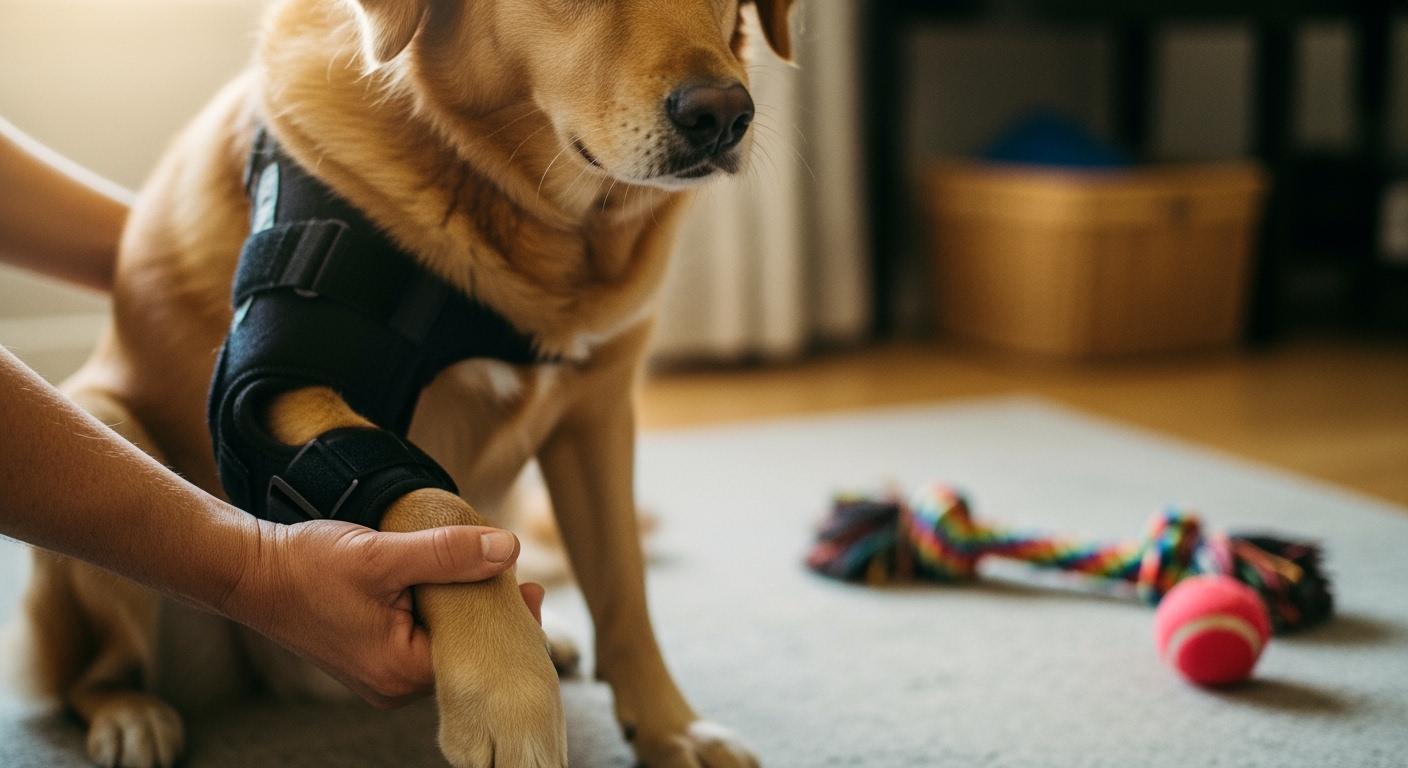
A brace for dog ACL injury gives your dog’s knee extra stability when the ligament gets hurt. The right knee brace supports the joint and lets your dog move more easily during recovery. This support helps your dog stay active, which keeps muscles strong and leads to better healing. You need to choose a brace that fits your dog’s size and breed. Always ask your veterinarian for help with diagnosis and picking the right support. This article focuses on ACL and CCL knee support for your dog. If the diagnosis is already confirmed, you can also start with our solutions by condition page for a condition-first support path.
Key Takeaways
A knee brace gives important support to dogs with ACL injuries. It helps them move better and heal well.
Always talk to your veterinarian for the right diagnosis. Your vet can help you compare the best knee-brace support path for torn ACL cases.
Measure your dog carefully while they are standing. This makes sure the brace fits right. Use our adjustable dog knee brace fit guide for fit checks, break-in timing, and activity limits.
Pick a brace made for ACL injuries, not just any leg brace. This gives your dog the best support and helps them heal.
Watch your dog to see if they are comfortable. Change the brace if it rubs or slips. This helps your dog recover better.
What Is a Brace for Dog ACL Injury?
ACL and CCL Injuries in Dogs
A brace for dog ACL injury helps when your dog’s knee ligament is hurt. For conservative support examples and rehab context, review our dog knee brace for torn ACL article. The cranial cruciate ligament, or CCL, is like the ACL in people. If your dog tears the ACL or CCL, you might see limping or pain after running. Your dog may also have trouble standing up. These injuries often happen when dogs turn fast, jump, or slip. Some breeds, like Labrador Retrievers and Rottweilers, get these injuries more often. Dogs that are overweight or change exercise routines quickly can also tear the ACL or CCL.
Cause | Description |
|---|---|
Sudden pivoting or twisting | This can happen during play or on slippery floors. |
Breed predispositions | Labrador Retrievers, Rottweilers, and some herding breeds get hurt more easily. |
Obesity and exercise habits | Extra weight and sudden changes in activity make injury more likely. |
Why Knee Support Matters for Stability
When your dog tears the ACL, the knee gets wobbly. A brace for dog ACL injury gives the knee more support. This helps your dog move with less pain and feel safer. Canine knee braces help by:
Keeping the knee steady and stopping strange movement.
Stopping the knee from turning too much or bending wrong.
Lowering swelling and helping blood move better.
Helping your dog know where their leg is, so they walk better.
Helping your dog heal after surgery or if surgery is not done.
You might use a brace for dog ACL injury if your dog cannot have surgery or needs more help during rehab. Many owners see their dogs walk better with the right brace.
Targeted Knee Braces vs. Generic Rear-Leg Braces
Not all braces work the same way. A brace for dog ACL injury is made to help the ACL or CCL. These knee braces fit around the knee and support the hurt ligament. They keep the knee steady and help with pain from a torn ACL or CCL.
Generic rear-leg braces cover more of the leg and do not focus on the knee. They can help with other leg problems but do not give the same support for ACL injuries. When you pick a brace for dog ACL injury, choose one made for knee support and rehab, not just any leg brace.
When to Use a Brace for Dog Knee Pain or Torn ACL
Signs Your Dog May Need Support
Your dog might limp after playing or resting. Some dogs have trouble getting up from the floor. They may sit with only their toes touching the ground. Sometimes, dogs do not want to use the sore leg. You might see swelling around the knee. You could also hear a click when your dog moves. These signs mean your dog may need extra help for knee injuries. The table below lists common signs:
Symptom | Description | Severity |
|---|---|---|
Intermittent Limping | Limping after exercise or waking up | Mild to Moderate |
Difficulty Rising | Trouble getting up from lying or sitting | Moderate |
“Toe-Touching” Stance | Only the toe touches the ground | Moderate to Severe |
Audible “Click” or “Pop” | Clicking sound from the knee during movement | Moderate to Severe |
Constant Lameness | Refuses to put weight on the affected leg | Severe |
A brace for dog ACL injury can help keep the knee steady. For product-side comparison, review our dog knee brace options. It gives the ligament time to heal and helps lower knee pain.
Diagnosis and Veterinary Guidance
You should talk to your vet if your dog shows knee pain or ccl injuries. Vets check the knee by feeling it and watching your dog walk. They may use X-rays to look for other problems. Some tests, like the cranial drawer test, check if the knee is loose. The table below shows common ways vets find out what is wrong:
Diagnostic Method | Description |
|---|---|
Physical Examination | Checks for knee instability and pain |
Cranial Drawer Test | Identifies knee instability from torn ligament |
Tibial Compression Test | Assesses ACL damage, sometimes needs sedation |
X-rays | Rules out fractures or arthritis causing dog knee pain |
Arthroscopy | Visual inspection of the joint for injury assessment |
Your vet will help you pick the best brace for your dog. Not all dogs with ccl injuries need surgery. Many dogs get better with a brace and less activity.
Activity Level and Injury Severity
How active your dog is and how bad the injury is will help you choose a brace. Braces help mild or moderate injuries heal and let dogs move. They take pressure off the knee and help recovery. Dogs that run a lot may need strong, hinged braces. Older or calm dogs may like soft, comfy braces for daily use. Braces are often considered for partial CCL tears, older dogs, and dogs that do not move much. For a broader conservative-care comparison, review our non-surgical dog ACL brace options article.
Tip: Watch your dog as they heal. Change how much they move and use the brace as your vet says.
Key Features of the Best Brace for Dog ACL Injury
Fit, Sizing, and Measuring Your Dog
You must measure your dog before you buy a brace. A good fit helps your dog’s knee stay steady. This can stop the knee from moving too much. Use a soft tape to measure your dog’s knee and thigh. Look at the size chart for each brand. Each dog is different, so one brace will not fit all dogs. If your dog runs a lot, pick a brace that stays on during fast moves. A brace that fits well can lower pain and help your dog heal. It also helps your dog get back to normal life. A brace does not take the place of surgery, but it can help your dog walk and feel better.
For product-side browsing across current ACL/CCL support lines, review our dog knee brace options category.
Benefit | Description |
|---|---|
External stabilization | Gives support to a weak or wobbly knee. |
Reduced strain on ligaments | Takes pressure off the hurt ligaments. |
Improved joint alignment | Helps the knee move in the right way. |
Pain reduction | Stops bad movement, so your dog feels less pain. |
Reduced tibial thrust | Less knee movement means less pain and damage. |
Comfort, Material, and Durability
Your dog should wear the brace every day, so comfort is key. Soft and light braces are good for small injuries or calm dogs. Hard braces give more support for big injuries or active dogs. The material changes how long the brace lasts and how it feels.
Material Type | Advantages | Disadvantages |
|---|---|---|
Fabric | Soft, lets air in, and is light | May break faster if used a lot |
Plastic | Strong, lasts longer, and is waterproof | Not as soft, can be less comfy |
Pick a brace that fits your dog’s needs and how much they move.
Ease of Use and Maintenance
Choose a brace that is simple to put on and take off. This makes it easy to use every day. Taking care of the brace helps it last longer and keeps your dog safe.
Wash the brace with gentle soap and water.
Make sure the brace is dry before using it again.
Check for broken straps, buckles, or padding often.
Fix or change parts if they break.
Keep the brace in a cool, dry spot.
Clean and check the brace often.
A brace that is easy to use and clean helps your dog walk better and stay safe while healing.
How to Choose the Right Support Brace
Common Mistakes to Avoid
Many owners want to help their dog quickly, but some choices can slow recovery. You might see a cheap fabric brace and think it will work. These often do not give enough support or comfort. Custom braces cost more, but they help your dog heal better and feel less pain. Picking a generic brace can lead to poor fit and even harm your dog’s knee.
Mistake | Explanation |
|---|---|
Choosing a generic brace | Generic braces do not fit each dog well. They can slip or cause new issues. |
Not opting for a custom brace | Custom braces give better support and comfort for your dog’s recovery. |
You should also avoid errors when measuring your dog. Do not guess or round numbers. Use a soft tape and measure while your dog stands naturally. Double-check your numbers to make sure the brace fits right. If you measure while your dog sits or lies down, the fit will be wrong and the brace will not help.
Tip: Always measure your dog when they stand in a relaxed, natural pose. This gives the most accurate fit for the brace.
Custom vs. Off-the-Shelf Braces
You can choose between custom and off-the-shelf braces. Each type has pros and cons. Custom braces fit your dog perfectly. They move with your dog and give strong support. Off-the-shelf braces come in general sizes like small, medium, or large. They are easy to buy and use right away, but they may slip or cause skin problems.
Feature | Custom Braces | Off-the-Shelf Braces |
|---|---|---|
Fit | Precision-made for your dog | General sizes (S, M, L, XL) |
Comfort | Moves naturally, less rubbing | May slip or cause skin issues |
Biomechanics | Controls joint movement, reduces pain | Basic support, less control |
Support Level | High, for tough cases | Mild to moderate support |
Effectiveness | Improves weight-bearing and gait | May not help all dogs |
Cost | $1,000 – $1,800 | Under $100 to over $1,000 |
Accessibility | Takes time, needs a vet | Buy and use right away |
Owner Involvement | High, with vet guidance | Low to moderate |
Complications | Fewer if fitted well | More common (skin sores, slippage) |
Custom-made plastic braces give better support and comfort. They may cost more at first, but they last longer and help your dog move better. Many owners see big changes when they switch from a generic brace to a custom one.
“Our 90-pound Lab had a partial tear. We tried an off-the-shelf brace first, but it slipped constantly. Switching to a custom 3D-scanned brace made a huge difference. He wore it comfortably for months during rehab, and his limping improved dramatically.” – Sarah, dog owner
Internal Links to Broader Knee-Brace and Condition Pages
Choosing the right brace for dog ACL injury takes a few steps. Use our adjustable dog knee brace fit guide before you finalize sizing or daily wear. You should:
Learn about your dog’s injury. Each case needs a different level of support.
Talk to your veterinarian. They will help you pick the best brace and check your dog’s progress.
Measure your dog carefully. Use a soft tape and measure while your dog stands.
Think about daily use. Pick a brace that is easy to put on, clean, and adjust.
Watch your dog’s comfort. Check for rubbing or skin problems and adjust the brace if needed.
Our dog knee brace for torn ACL article explains how bracing can help stabilize the knee, reduce pain, and support safer use of the leg again. They also lower the risk of hurting the other leg. The right brace improves joint stability, reduces stress on the ligament, and supports rehab exercises.
You can find more details in our solutions by condition page and compare current dog knee brace options for your dog’s needs. These resources cover surgical and non-surgical options, plus tips for rehab and daily care.
Note: Braces work best as part of a full care plan. Combine them with weight control, gentle exercise, and advice from your vet for the best results.
Choosing the right brace for dog ACL injury means you need to focus on fit, comfort, and advice from your veterinarian. You help your dog by:
Measuring carefully for a secure fit
Picking a brace that matches your dog’s activity and needs
Following your vet’s guidance for use and care
A well-fitted brace can reduce pain, improve movement, and help your dog enjoy daily life again. Always use a brace as part of a full care plan. For more tips on dog knee pain and bracing, check our related resources.
If your team is comparing brace-based support with broader conservative-care choices, review our non-surgical dog ACL brace options article before final selection.
FAQ
What is a brace for dog ACL injury?
A brace for dog ACL injury supports your dog’s knee after a ligament tear. It helps keep the joint steady. You use it to help your dog walk, reduce pain, and support healing during rehab.
When should you use a brace for your dog’s ACL injury?
You should use a brace if your dog has a mild or moderate ACL tear. Your vet may suggest it for older dogs, dogs that cannot have surgery, or during rehab after surgery.
How do you measure your dog for a knee brace?
You measure your dog while they stand. Use a soft tape to check around the knee and thigh. Always follow the sizing chart for the brace brand. Accurate measuring helps the brace fit well and support your dog.
Can a brace replace surgery for a dog ACL injury?
A brace does not replace surgery for every dog. Some dogs need surgery for full tears. A brace helps with support, pain relief, and rehab. Always ask your vet what is best for your dog.
How do you keep your dog comfortable while wearing a brace?
Check the brace for rubbing or slipping. Adjust straps for a snug fit. Clean the brace often. Watch your dog for signs of discomfort. Comfort helps your dog heal and move better.
