
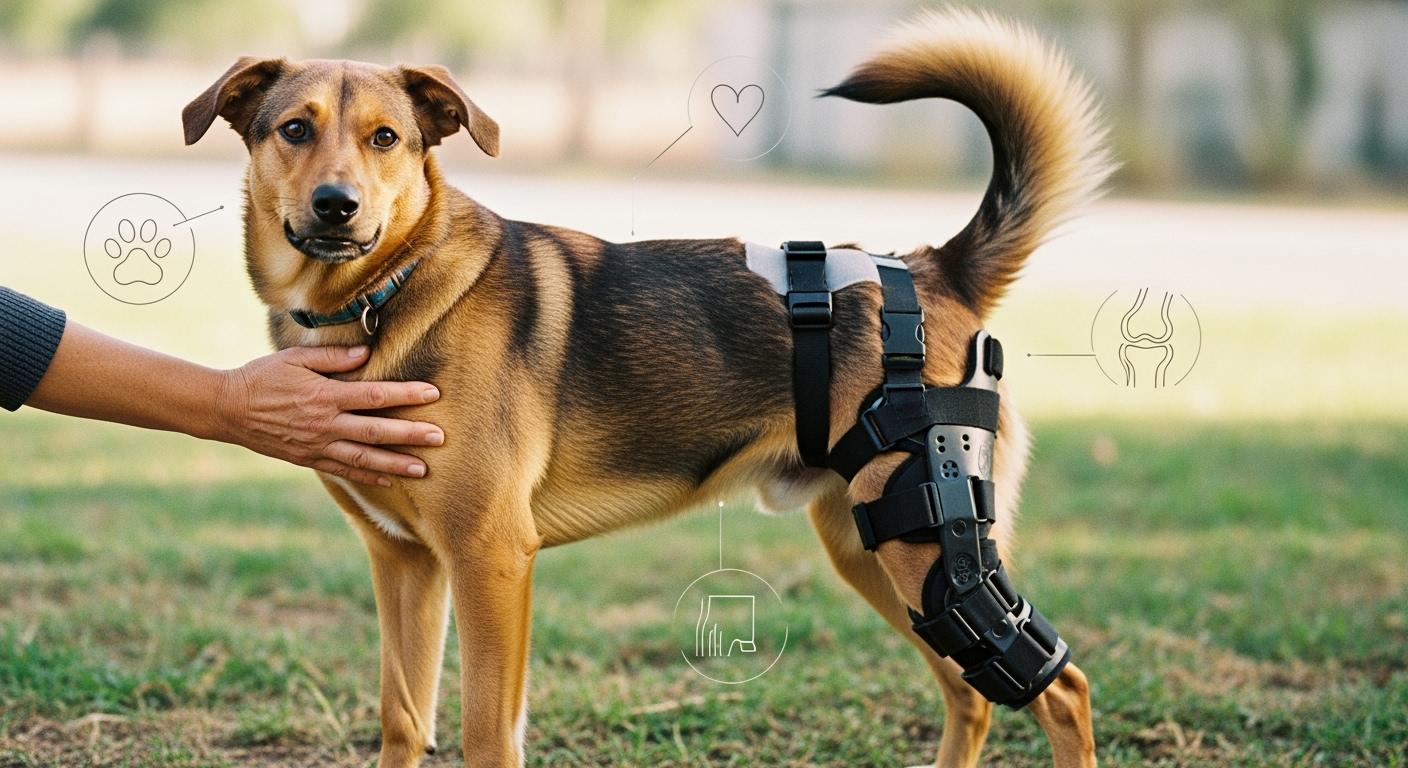
Choosing the right dog hind leg brace starts with knowing your dog’s needs. Some dogs need knee stability. Others need help with their hind legs or moving around. Watch for changes in how your dog walks or stands. Always talk to your veterinarian before you decide. Make sure the brace fits well and is comfortable. Think about how active your dog is. Many owners make mistakes. They do not ask a veterinarian for advice. They pick the wrong brace type. They forget to check the fit often. Some dogs may need more than a brace. Reading other guides can help you find the best way forward.
Key Takeaways
Find out what your dog needs before picking a hind leg brace. Ask your vet to check your dog and give advice.
Use our dog leg brace guide to compare brace types before choosing support for knee, hock, hip, or broader hind-leg weakness.
Use our canine rehabilitation brace fit, comfort, and safety guide to measure your dog’s leg well. A good fit keeps your dog comfortable and gives more reliable support.
Watch your dog to see if they feel okay in the brace. Look for any redness or pain under the brace.
Think about your dog’s size, breed, and how active they are. This helps you choose a brace that fits their daily life.
What Is a Dog Hind Leg Brace?
A dog hind leg brace is a support device for your dog’s rear legs. This term covers many products. You might see braces for the knee, hock (ankle), or the whole hind leg. Some braces help with joint injuries. Others give general support for weak or aging dogs. You can find more details about brace categories in our dog leg brace guide and explore hind-leg weakness solutionswhen rear-leg support alone may not be enough.
Types of Hind-Leg Braces
You will find several types of dog leg brace on the market. Each type serves a different purpose. Here are the most common options:
Knee brace or stifle brace: Supports dogs with ACL tears or knee injuries.
Tarsal or hock brace: Stabilizes the hock joint for hyperextension or soft-tissue injuries.
Hip brace: Helps dogs with hip dysplasia or hip pain.
Full rear-leg support systems: Used when dogs need broader hind-leg control instead of single-joint support.
The table below shows how these braces differ from other supports:
Type of Brace | Purpose and Benefits |
|---|---|
Hind Leg Braces | Stabilize the tarsal joint, help recovery from ACL/CCL injuries, improve mobility. |
Front Leg Braces | Support carpal and elbow issues. |
Hip and Back Braces | Provide support for hip dysplasia and spinal issues. |
When to Use a Dog Knee Brace
A dog knee brace works best for mild to moderate ligament injuries. Many veterinarians recommend it for cranial cruciate ligament (CCL/ACL) injuries, especially if surgery is not possible. The brace gives external stability and helps your dog recover. It does not replace surgery for severe injuries, but it can help dogs who are not good candidates for surgery. Dogs using a knee brace often regain some mobility and put more weight on the injured leg.
Hind-Leg Support vs. Mobility Aids
Not all dogs need the same kind of support. A hind-leg brace gives stability and helps with mild to moderate weakness. If your dog cannot walk or stand without help, a brace may not be enough. In these cases, mobility aids like wheelchairs can make a big difference. For severe hip dysplasia or advanced weakness, a wheelchair may be the best choice. Always match the support to your dog’s needs for the best results.
If your dog needs rear-end help during stairs, bathroom breaks, or assisted walks, compare our dog lift harness options before deciding that a brace alone is enough.
Tip: Talk to your veterinarian to decide if your dog needs a brace, a mobility aid, or both. You can also check our hind-leg weakness solutions for more options.
Identifying Your Dog’s Support Needs
Signs Your Dog May Need a Brace
You might see your dog move differently or act strange. These changes can mean your dog needs extra help. Some signs your dog may need a leg brace are:
Lameness or limping
Swelling in the hind leg
Not able to put weight on one leg
Pain when moving or being touched
Other signs are stiffness after resting, holding up a leg, or avoiding things like jumping or climbing stairs. If you notice these symptoms, ask your veterinarian before picking any support device, then use a structured fit, comfort, and safety guide to compare sizing and daily-use checks.
Diagnosing Knee vs. General Weakness
You must find out if your dog’s problem is in the knee or the whole hind leg. Dogs with knee problems often show:
Limping or favoring one leg
Swelling or heat near the knee joint
Clicking sounds from the knee
The kneecap or joint slipping out of place
Not wanting to run or jump
Licking or chewing at the knee a lot
General hind-leg weakness looks different. You may see trouble getting up, less jumping, or a weird walking style like toe-tapping. Your veterinarian can help you tell the difference. Getting the right diagnosis helps you pick the best support path for your dog, whether that means a rear-leg brace, more structured rehabilitation support, or assisted walking solutions.
Dr. Lena Torres, DVM, DACVSMR, says misdiagnosis is the main reason braces do not work. The brace must fit the kind of instability, not just where the pain is.
When to Consult Your Vet
You should talk to your veterinarian if you see any of these signs. Their advice helps you avoid mistakes and find the best support. Ask your veterinarian if your dog:
Cannot have surgery because of age or health
Has a partial ligament tear or early instability
Needs temporary support before or after surgery
Has other health problems that make surgery risky
Your veterinarian will help you choose the best option. They may suggest a dog hind leg brace, a mobility aid, or both. Always follow your veterinarian’s advice for the safest results.
Choosing the Right Dog Hind Leg Brace
Matching Brace Type to Condition
Choosing the right dog hind leg brace starts with knowing your dog’s exact condition. You need to match the brace type to your dog’s injury or weakness. Here are the most important steps to follow:
Get a Veterinary Diagnosis
Always ask your veterinarian to check your dog. A professional diagnosis helps you pick the right brace and avoid mistakes.Pick the Correct Brace Type
Each brace serves a different purpose. For example, a dog knee brace works best for cruciate ligament injuries. This type of knee brace helps stabilize the joint and reduce strain. Braces for older dogs with arthritis give mechanical support and help with mobility. If your dog has general hind-leg weakness, a brace may not be enough. Some dogs need lift-assist or mobility aids for stronger support and safer daily movement. For product-side browsing, you can also review our dog lift harness options. You can learn more about these options in our hind-leg weakness solutions.Choose Custom-Fit or Adjustable Braces
Look for braces that fit your dog well. A good fit gives strong support and comfort. Adjustable braces can help if your dog’s leg changes shape during healing.Consult with Professionals
Work with your veterinarian or a certified orthotist. They can help you measure your dog and fit the brace correctly.Monitor Fit and Comfort
Check the brace often. Make sure it stays comfortable as your dog moves and heals.
Tip: The top benefits of dog leg braces come from matching the brace to your dog’s needs. A proper fit and the right type of support while healing can make a big difference.
Considering Size, Breed, and Activity
Your dog’s size, breed, and activity level all affect which dog hind leg brace will work best. Different breeds have unique body shapes. This changes how a brace fits and works.
Large breeds, like German Shepherds or Labradors, often need a leg brace for larger hounds. These braces must be strong and durable to handle more weight and hip issues.
Small breeds, such as Dachshunds or Chihuahuas, may need a lighter knee brace for small dogs. These braces should not add extra weight or limit movement.
Active dogs need braces that allow for running, playing, and daily walks. Less active or older dogs may need more gentle support.
A dog leg brace should match your dog’s lifestyle. If your dog loves to run, pick a brace that allows for movement and flexibility. If your dog spends more time resting, focus on comfort and easy wear.
Dog Type | Recommended Brace Features | Example Use Case |
|---|---|---|
Large Breeds | Strong support, durable material | Hip dysplasia, joint injuries |
Small Breeds | Lightweight, flexible fit | Knee brace for small dogs, arthritis |
Active Dogs | Adjustable, secure straps | Recovery after injury |
Senior Dogs | Soft padding, easy to put on | Arthritis, general weakness |
Common Mistakes to Avoid
Many dog owners make simple mistakes when choosing a dog hind leg brace. Avoid these common errors to help your dog heal and stay comfortable:
Skipping the veterinary visit. Always get a diagnosis before buying a brace.
Picking the wrong brace type. A knee brace will not help if your dog needs support for the whole leg.
Ignoring fit and comfort. A brace that is too tight or too loose can cause pain or sores.
Forgetting to check the brace often. Your dog’s leg may change shape as it heals.
Overlooking other support options. Some dogs need more than a brace. Lift-assist harnesses or mobility aids may work better for dogs with severe weakness.
Note: If your dog cannot walk or stand with a brace alone, consider a mobility aid. You can find more information in our hind-leg weakness solutions page and our main brace fitting guide.
Choosing the right dog hind leg brace means looking at your dog’s condition, size, and daily needs. Take your time, ask for help, and check the fit often. This careful approach gives your dog the strong support needed for healing and better mobility.
Ensuring Proper Fit and Comfort
Choosing the right dog hind leg brace is only the first step. You also need to make sure the brace fits well and keeps your dog comfortable. A good fit helps your dog heal and move better. Comfort and regular checks keep your dog happy and safe.
How to Measure for Proper Fit
Getting the proper fit starts with careful measuring. You want your dog to feel secure and supported. Follow these steps to measure your dog for a hind leg brace:
Gather a soft measuring tape, treats, and something to write with. Make sure your dog stands calmly on a flat surface.
Measure only the injured leg. Keep the tape snug but do not press into the skin.
Double-check your measurements for accuracy.
For some braces, you may need to lay your dog on their side. Flex the hip, knee, and hock. Use a stockinette to protect the leg if needed.
Measure the thigh, knee, and lower leg. Take clear photos of each step if possible.
Enter your measurements into the sizing guide. Always measure twice to avoid mistakes.
Good lighting helps you see and record each measurement clearly.
Tip: Measuring while your dog stands gives the most accurate results. Calm your dog with gentle words or treats.
Features for Comfort and Adjustability
Comfort and adjustability matter as much as support. The right features help your dog wear the brace for longer periods and stay active. Look for these important features:
Feature | Description |
|---|---|
Stability and Support | Gives strong structure to joints and reduces pain from abnormal movement. |
Therapeutic Compression | Boosts circulation and lowers swelling, making recovery faster and more comfortable. |
Adjustable Fit | Lets you change strap tightness for a custom fit without cutting off circulation. |
Lightweight and Breathable | Uses materials that keep your dog cool and prevent skin irritation during daily wear. |
Adjustable straps help the brace mold to your dog’s leg. This reduces slipping and rubbing. As your dog heals or if swelling changes, you can adjust the brace for ongoing comfort. These features support long-term use and help your dog keep up with daily activities.
Monitoring Fit and Skin Health
Once your dog starts wearing a brace, you need to check the fit and skin health often. This keeps your dog safe and comfortable. Use the table below to guide your checks:
Best Practice | What to Look For or Do |
|---|---|
Inspect skin under the brace | No redness, sores, or rubbing |
Observe walking and standing | Less limping, more steady movement |
Monitor activity level | More interest in walks and play |
Maintain fur cleanliness | Keep fur clean and dry; trim fur under straps |
Clean the brace | Follow care instructions; replace worn padding |
Check your dog’s skin twice a day, especially during the first week. Remove the brace at night or when your dog rests, unless your veterinarian says otherwise. In the first 72 hours, check the skin more often to catch any problems early. Clean the brace as directed and keep fur trimmed to prevent bunching.
Note: Regular checks help you spot problems before they get worse. A well-fitted brace supports healing and improves your dog’s mobility.
You can help your dog move better by following a few key steps. First, identify your dog’s needs and talk to your vet. Next, choose the right dog hind leg brace and make sure it fits well. Use a checklist when shopping or consulting professionals to avoid missing important details. A good fit, owner follow-up, and regular checks support comfort and healing. Custom fit and daily care often lead to better mobility and less pain. For more complex cases, explore our dog leg brace guide, our hind-leg weakness solutions, and our dog braces options page.
FAQ
What types of dog hind leg braces are available?
You can find knee braces, hock (ankle) braces, and full-leg supports. Each type helps with different injuries or weakness. Your veterinarian can help you choose the right one for your dog’s needs.
How do I know if my dog needs a brace or a mobility aid?
Watch how your dog moves. If your dog struggles to stand or walk, a mobility aid may help more than a brace. For mild to moderate joint issues, a brace often gives enough support.
How should a dog hind leg brace fit?
A good brace fits snugly but does not pinch or rub. You should check for redness or sores daily. Adjust the straps as needed. Always follow the sizing guide and ask your veterinarian for help.
Can my dog wear a brace all day?
Most dogs can wear a brace during active hours. Remove it at night or when your dog rests, unless your veterinarian says otherwise. Check your dog’s skin often to prevent irritation.
