
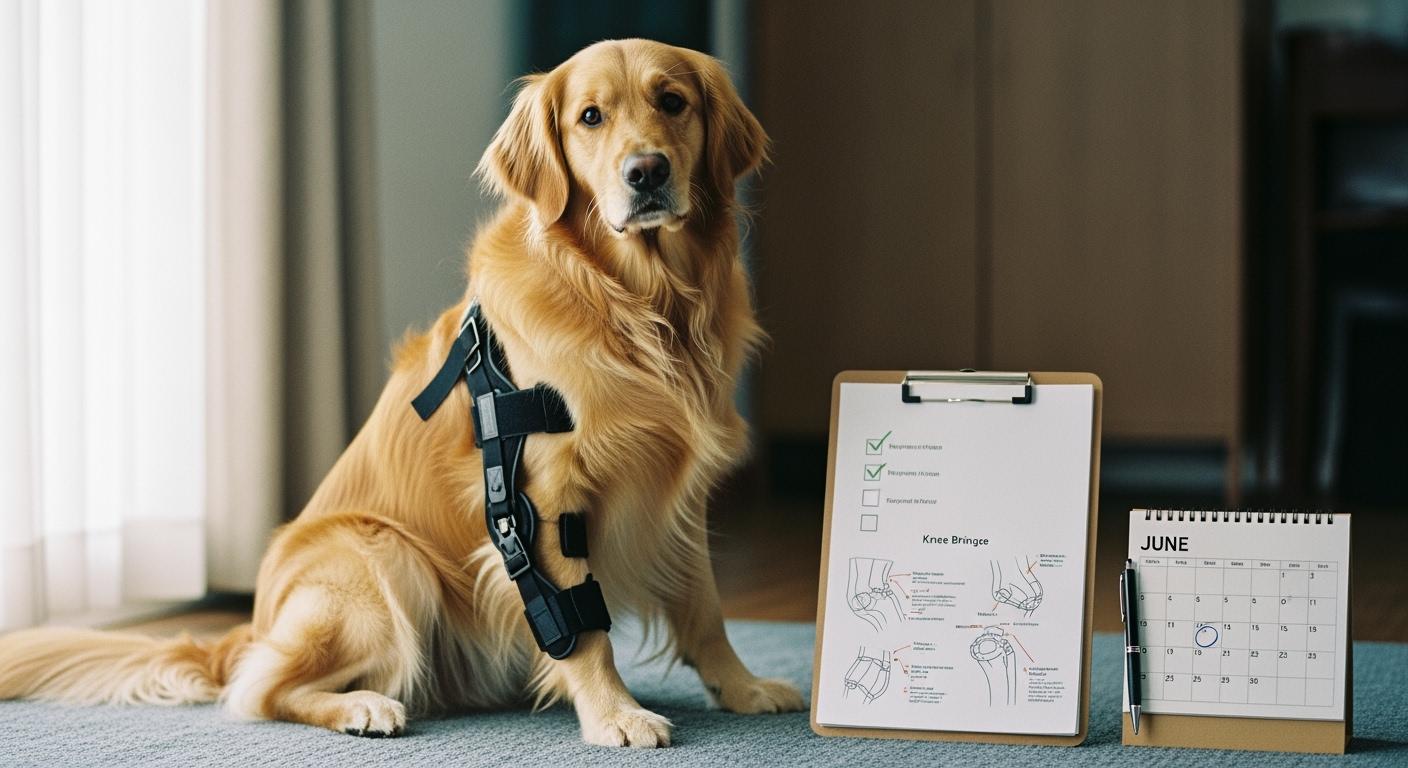
You should pick a dog knee brace acl that gives support for your dog’s acl injury. A brace that fits well stops strange movement. It also lowers pain and helps your dog use the leg. Hinged dog knee brace designs copy how the joint moves. They also lower stress on the knee. Using the brace every day with slow steps and help can make muscles stronger. This also helps your dog get better. Talk to your veterinarian and think about how active your dog is. This will help keep your dog safe and comfortable.
Key Takeaways
Pick a dog knee brace made for ACL injuries. It gives more support and keeps the leg steady compared to regular braces.
Measure your dog’s leg carefully to get the right size. A tight fit stops pain and helps the brace work well.
Let your dog get used to the brace slowly. Begin with short times and make them longer so your dog feels okay.
Watch your dog every day to see if they are comfortable. Look for any redness or pain to make sure the brace is helping.
Talk to your vet often. They can tell you which brace is best and help you make changes for your dog.
Dog Knee Brace ACL: Targeted Support and Stability
Why Targeted Knee Bracing Matters
You want your dog to move with less pain after a torn acl. A dog knee brace acl gives focused support to the joint. This is different from a generic rear-leg brace. Targeted bracing helps your dog by copying the function of the torn ligament. Hinged braces add stability and let your dog walk more naturally.
Many veterinarians trust targeted knee bracing for acl injuries.
A 2020 survey showed that 78% of veterinary professionals see knee braces as effective for non-surgical recovery.
A 2018 study in Veterinary Surgery Journal found that dogs with supportive bracing had better joint function and less pain than those who only rested.
Dr. Kevin McBride, a canine rehab expert, says knee braces can delay or even avoid surgery when used with other treatments.
A 2022 review noted that bracing can help dogs with partial tears as an alternative or addition to surgery.
Targeted bracing works best for dogs with a torn acl who are not good candidates for surgery. This includes older dogs, large breeds, or those with other health issues. You can read more about the science behind acl bracing in our ACL/torn-ACL article.
ACL Injury and Brace Selection
Choosing the right dog knee brace acl means looking at your dog’s needs. You should not use a generic brace for knee injuries in dogs. Instead, pick a brace that fits the knee and supports the torn acl. Targeted braces, especially hinged ones, stabilize the joint and lower the risk of more injury. They also help reduce pain and support healing.
Veterinarians look at several factors when picking a brace:
Ask your vet if your dog has a partial or complete torn acl.
Think about your dog’s age, size, and activity level.
Measure your dog’s thigh, knee, and lower leg for a good fit.
Choose a brace made from strong, comfortable materials.
Soft neoprene wraps work for minor knee injuries in dogs. Rigid or semi-rigid braces help most with severe torn acl cases. You can find more details on brace types and condition-based support on our ACL/CCL support page.
A dog knee brace acl does not replace surgery in every case. It gives your dog a chance to heal, move, and stay active. Always talk to your vet before starting any new support plan.
Choosing the Right Dog Knee Brace Fit
A proper fit is the most important part of choosing a dog knee brace for ACL support. You want the brace to feel snug but not tight. This helps your dog move with less pain and keeps the knee stable. The best dog knee braces offer comfort and adjustability, so your dog can wear them every day without problems.
Measuring and Sizing Tips
You need accurate measurements to get the right fit. Follow these steps to measure your dog for a dog knee brace:
Lay your dog on their side and gently extend the leg you want to measure.
Use a soft measuring tape to measure three areas:
Thigh length: From the groin to the knee cap.
Knee length: From the knee cap to the tibial tuberosity.
Tibia length: From the knee cap to the back of the hock.
Make sure the tape is flat and snug, but not tight.
Write down each measurement and double-check for accuracy.
You should also measure the thigh circumference about one inch above the knee joint, the knee circumference over the knee cap, and the lower leg just below the knee. If you are considering a double knee brace, measure the distance between the legs. Careful measuring helps you avoid sizing errors that can cause discomfort or make the brace less effective.
Tip: Always check the sizing chart on the main knee-brace guide before you buy. Each brand may have different sizing rules.
Comfort and Adjustability
Comfort and adjustability help your dog wear the brace for longer periods. Look for these features when you choose a dog knee brace:
Feature | Description |
|---|---|
Adjustable Straps | Lets you change the fit for different leg shapes. |
Breathable Materials | Keeps your dog cool and reduces heat build-up. |
Custom Fitting Options | Matches your dog’s unique body shape. |
Padding | Adds extra comfort and protects the skin. |
Hinged Design | Supports the knee while allowing natural movement. |
Waterproof/Durable | Stands up to daily use and outdoor play. |
Adjustable Mechanical Strapping | Makes it easy to adjust as your dog’s muscles change. |
Custom dog knee braces give the best fit and comfort. They match your dog’s leg shape and feel like a second skin. This helps your dog move better and lowers the risk of rubbing or slipping. Off-the-shelf braces may not fit as well and can slide or cause skin problems. If your dog has a unique shape or size, a custom brace is often the best choice.
Common Fit Mistakes
Many owners make mistakes when choosing a dog knee brace. Here are the most common problems and how to avoid them:
Picking a one-size-fits-all brace. There are over 360 dog breeds, so one size rarely fits all.
Not measuring carefully. A brace that is too loose will not stabilize the knee. A brace that is too tight can cause skin sores or cut off circulation.
Ignoring signs of discomfort. Watch for redness, swelling, hair loss, or your dog trying to remove the brace.
Skipping daily checks. Look at your dog’s skin and the brace every day to catch problems early.
Increasing activity too soon. Even if your dog walks better, do not let them run or jump right away.
Custom fitting is crucial. If you are not sure, choose a custom brace to prevent skin sores and brace failure. Always check for rubbing or slippage, and adjust the straps as needed. You can find more tips and a full sizing guide on our main knee-brace guide.
Note: Proper fit helps your dog heal and stay comfortable. Take your time with measuring and checking the brace each day.
Hinge Type and Support Level
Rigid, Semi-Rigid, and Soft Designs
It is important to know about the three main brace types. Rigid braces give the most support. They keep your dog’s knee from moving. These braces help dogs with very weak joints. Custom rigid braces are made to fit your dog’s leg. This kind of support is needed for ACL injuries that cause a lot of pain or trouble walking.
Semi-rigid braces are both strong and flexible. They let your dog move a little but still protect the knee. These braces are good when your dog needs to move for rehab but also needs support.
Soft braces are sometimes called dynamic braces. They support the knee but let your dog move more naturally. These are best for small injuries or for dogs who are getting better.
Type of Orthosis | Advantages | Clinical Outcomes |
|---|---|---|
Rigid | Most stable, keeps the joint still | Good for very weak joints |
Semi-Rigid | Both flexible and supportive | Helps when some movement is needed |
Dynamic | Supports and lets the joint move | Good for rehab and stopping injuries |
Matching Hinge Type to Injury Severity
You need to pick the right hinge type for your dog’s injury. Different ACL injuries need different braces. If your dog has a small tear, a semi-rigid or soft brace may help. These braces are good for slow rehab. For a full tear, rigid or hinged braces give more support.
Braces keep the knee steady and stop bad movements.
Soft sleeves are good for small tears or mild problems.
Hinged braces are best for dogs who cannot have surgery or need more help after surgery.
Vets say braces can help dogs walk better and feel less pain.
The best results happen when you control your dog’s activity and do therapy.
Braces are tools for rehab, not forever fixes.
Always ask your vet which hinge type is best for your dog’s injury. Your vet will help you choose between soft sleeves, hinged braces, or full-leg support.
Support Level Considerations
There are a few things to think about when picking the right support level for a dog knee brace acl:
Type of brace: Use single or double braces based on the injury.
Hinged or non-hinged: Pick one based on how bad the injury is and how active your dog is.
Size and fit: Measure your dog well so the brace is not too tight or too loose.
Material and comfort: Choose a brace with breathable material for long use.
Ease of use: Make sure you can put the brace on and take it off easily.
“A proper diagnosis is very important. Ask your vet if your dog has a small or full tear and if rehab is a good choice.”
You need to find a balance between support and comfort. The right brace helps your dog move safely and heal better.
Daily Use and Break-In Plan
Introducing the Brace Gradually
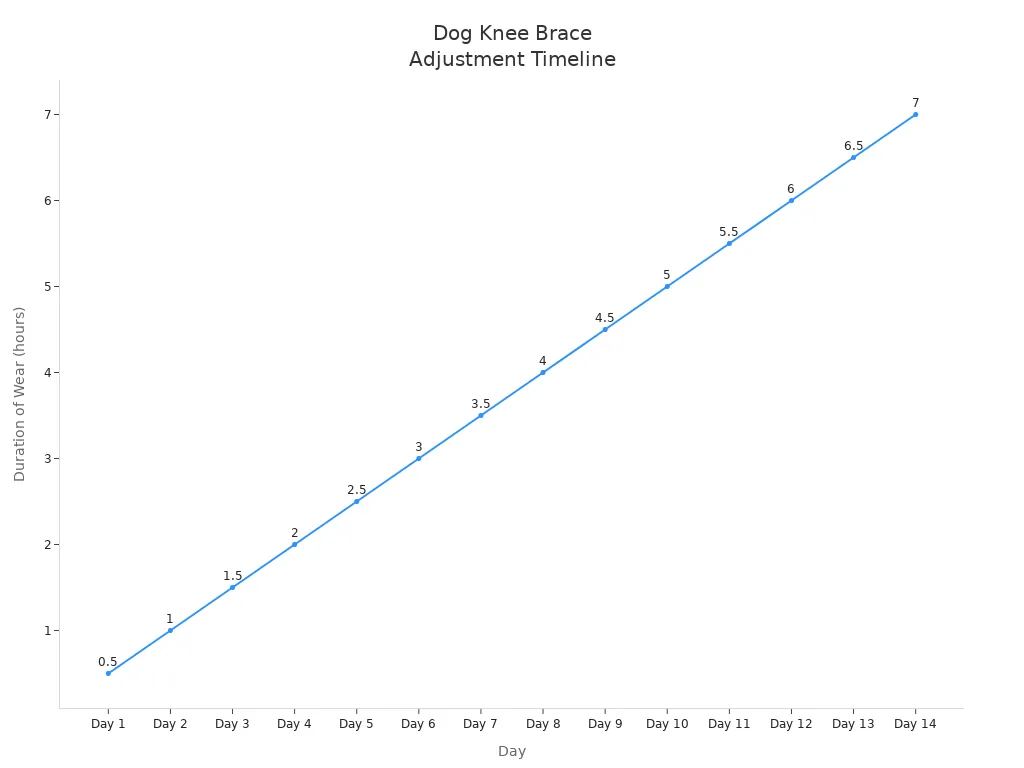
You need to introduce the dog knee brace acl slowly. Start with short sessions of 15 to 30 minutes. Use treats and praise to help your dog feel comfortable. Increase the wear time each day by 30 minutes. Always watch your dog for signs of stress or discomfort. Consult your veterinarian for guidance and choose a brace recommended for ACL recovery.
Day | Duration of Wear |
|---|---|
1 | 30 minutes |
2 | 1 hour |
3 | 1 hour 30 minutes |
4 | 2 hours |
5 | 2 hours 30 minutes |
6 | 3 hours |
7 | 3 hours 30 minutes |
8 | 4 hours |
9 | 4 hours 30 minutes |
10 | 5 hours |
11 | 5 hours 30 minutes |
12 | 6 hours |
13 | 6 hours 30 minutes |
14 | 7 hours |
Monitoring Comfort and Tolerance
You must check your dog’s comfort every day. Begin with short periods, two to five times daily. Inspect the skin under the brace twice a day. Look for redness, rubbing, or sores. Remove the brace at night and during crating unless your vet says otherwise. Watch for limping, swelling, or knuckling. Contact your vet if you see any of these signs.
Tip: Proper fit prevents sores and discomfort. Daily skin checks help you catch problems early.
Maintenance and Cleaning
Keep the dog knee brace acl clean and in good shape. Wash the brace with mild soap and water. Dry it completely before you use it again. Check for frayed straps or broken buckles often. Repair or replace damaged parts right away. Store the brace in a cool, dry place. Keep your dog’s skin clean and dry under the brace.
Clean regularly with mild soap and water.
Dry the brace fully before reuse.
Inspect for wear and tear.
Repair or replace damaged parts.
Store away from sharp objects.
Keep skin under the brace clean and dry.
Adjusting for Activity Level
You need to adjust the brace based on your dog’s activity. Use the brace during walks, therapy, and potty breaks. Remove it during rest, sleep, or crating. If your dog becomes more active, you may need a brace with stronger hinge resistance. Monitor your dog’s skin for rubbing or sores, especially in the first weeks. Combine brace use with controlled exercise and weight management for the best results.
Note: Braces support stability and help your dog move safely. They do not heal the ligament or replace veterinary care. Always follow your veterinarian’s advice.
Veterinary Guidance and Next Steps
When to Consult a Veterinarian
You should always talk to your veterinarian about an acl injury. Some signs mean you need help right away. Watch for these important signs:
Limping that does not go away or using one leg less
Swelling around your dog’s knee
Your dog suddenly does not want to play or move
Trouble standing up or sitting down
Hearing a pop from the joint
Redness or sores under the brace
Your dog will not walk
If you see any of these, call your vet. Getting help early stops more damage and helps your dog’s acl heal better.
Surgery vs. Bracing Decisions
Your veterinarian will help you choose between surgery and bracing for your dog’s acl injury. The choice depends on a few things. Here is a simple table to help you:
Criteria | Details |
|---|---|
Dog’s Size | Bigger dogs (over 15 kg) usually do better with surgery. |
Dog’s Age | Young and active dogs often heal better with surgery. |
Activity Level | Very active dogs may need surgery for the best results. |
Severity of Injury | Surgery is best for joints that are not stable or have big tears. |
Conservative Management | Bracing helps with small tears or if surgery is not possible. |
Bracing can help if your dog cannot have surgery. You might use a dog knee brace acl for small tears, mild problems, or for older dogs with arthritis. Some dogs get up to 65% better at moving in eight weeks with a brace for medium injuries. Surgery is still the main way to fix many acl injuries, but bracing is a good choice if you want less risky care.
Continuing Education and Support
You are very important in helping your dog get better from a torn acl. Keep learning about acl care and talk to your vet often. Here are some ways to help your dog:
Go to check-ups to see how your dog is healing and if the brace fits.
Use the brace with therapy and help your dog stay at a healthy weight.
Watch for skin problems or changes in how your dog walks.
Ask your vet questions about acl care and how to adjust the brace.
Read guides and FAQs to learn more about knee braces.
A good diagnosis and support help you make the best choices for your dog’s acl injury. Braces, along with therapy and checking your dog, can help your dog feel better and move more easily.
You can help your dog recover by choosing the best dog knee braces with a proper fit. Start with a custom brace, then introduce it slowly over several days. Check your dog’s skin and movement every day. Work with your veterinarian to adjust the plan as needed. Track progress by watching your dog’s walk and comfort. Measure your dog today and explore brace options for the best support.
FAQ
How do I know if my dog needs a knee brace for ACL support?
Watch for limping, trouble standing, or less activity. If you see these signs, talk to your veterinarian. A dog knee brace acl can help with stability and comfort during recovery.
Can my dog wear a knee brace all day?
You should start with short periods. Increase wear time slowly. Remove the brace at night or during rest. Always check your dog’s skin for redness or sores.
How do I clean a dog knee brace acl?
Use mild soap and water. Rinse well and let it dry completely before putting it back on your dog. Clean the brace regularly to prevent skin irritation.
Will a knee brace cure my dog’s ACL injury?
A dog knee brace acl supports healing and helps with movement. It does not cure the injury. Always follow your veterinarian’s advice for the best results.
What if my dog tries to remove the brace?
Check the fit and adjust the straps. Use treats and praise to help your dog get used to the brace. If problems continue, ask your veterinarian for help.
