
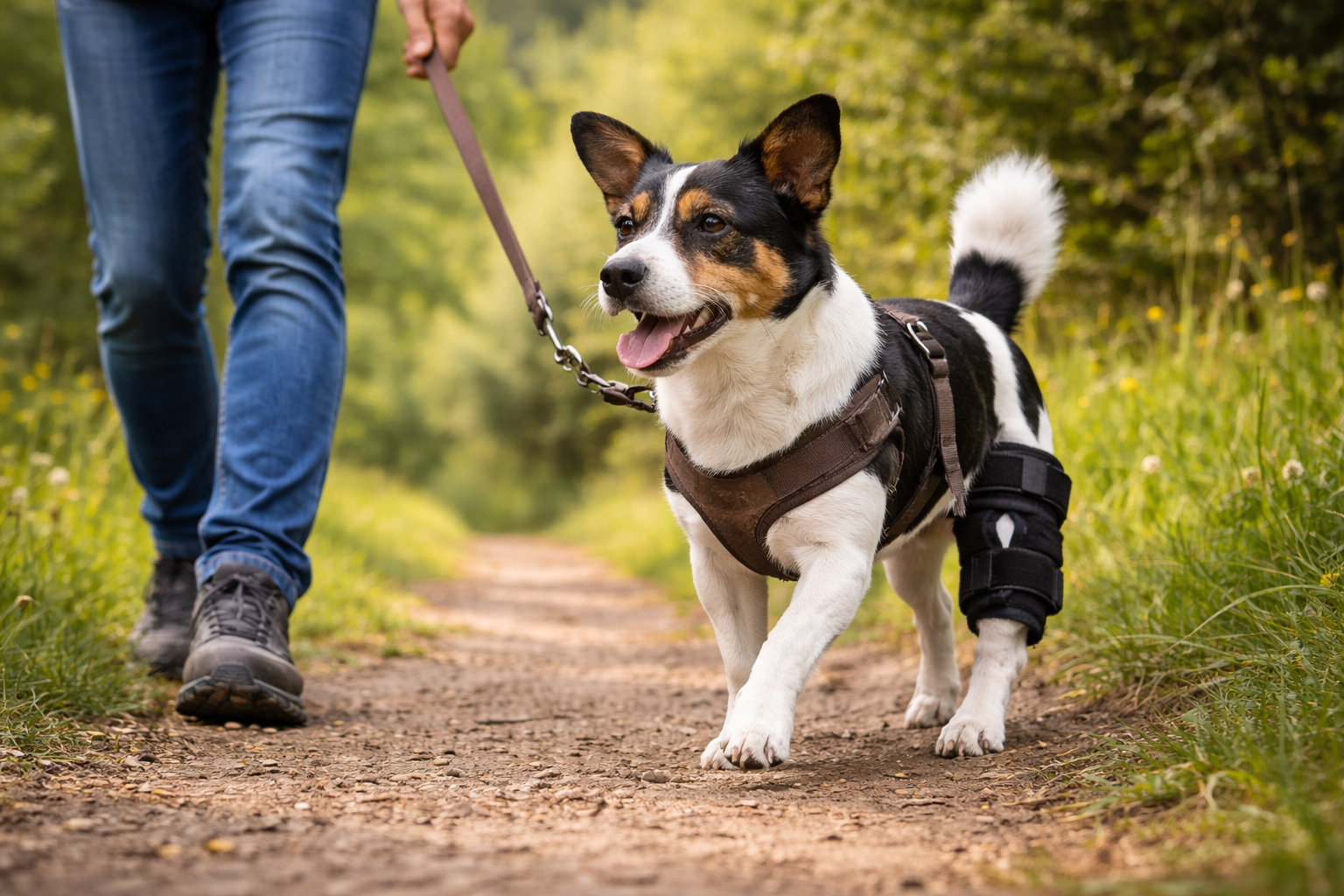
Yes, a knee brace dog luxating patella for daily walking can help keep the joint steady and lower pain for dogs. Daily walks put stress on weak knees again and again, so you need support that stops strange movement and makes your dog feel better. Many dogs get help from knee brace dog luxating patella for daily walking because braces keep the knee straight and help control how it moves.
“A properly fitted knee brace can keep the joint steady, lower swelling, and help the dog stand and walk better—making healing and comfort easier,” says Dr. Emily Carter, DVM, a canine orthopedic specialist.
You should think about support goals, how the brace fits, and how it controls movement. Knee brace dog luxating patella for daily walking also means you need to have real expectations and ask a vet for advice. Studies show that knee support helps dogs walk better and carry weight during daily walks.
Key Takeaways
A knee brace helps dogs with luxating patella. It keeps the knee steady and lowers pain during walks.
The brace must fit well and feel good. A good brace can make your dog feel braver and move better.
Watch how much your dog moves with the brace. Begin with short walks. Make walks longer as your dog gets used to it.
Ask a veterinarian for help picking a brace. They can also check your dog’s health. This gives your pet the best care.
Only use the brace when your dog is active. Take it off when your dog rests. This stops skin problems and keeps your dog comfy.
Walking Support Goals for Knee Brace Dog Luxating Patella
Mobility and Pain Management
Daily walks can be hard for dogs with luxating patella. You want your dog to walk safely and feel good. Dog knee braces help your dog walk with less pain. Braces keep the knee steady and stop odd movement. This helps lower stress on the knee. Your dog is less likely to slip or hear knee clicking.
Braces help fix the joint’s wobble. When the joint is steady, it moves the right way. This helps stop pain and damage.
Dog knee braces help the knee move the right way. They support the knee and the parts around it. You may see your dog limp less and use the leg more. Braces let muscles get stronger over time. Your dog can get stronger without more pain. You help your dog enjoy walks and feel better each day.
Controlled Activity Benefits
Dogs with luxating patella need safe activity. Dog knee braces help during walks by lowering stress on the knee. You can control how fast your dog walks. Braces keep the knee steady while moving. They help muscles work better. Your dog is less likely to slip and can move smoothly.
Dog knee braces help you control how much your dog does. You can use the brace with rest, therapy, and weight checks. Vets say braces help with pain and movement. You may see your dog walk with more confidence and less pain. Safe activity helps your dog heal and stay active.
Alignment and Stability
Alignment and stability are very important for dogs with luxating patella. Dog knee braces help keep the thigh bone and shin bone in line. Braces give gentle pressure around the knee. This helps your dog know where its leg is. Walking feels more normal and safe.
Dog knee braces help stop more injuries. Good alignment lowers the risk of ligament tears. Studies show that braces and compression wraps help joints stay steady. You help your dog walk better and put weight on the leg.
Here is a table with real examples of how dog knee braces help dogs with luxating patella:
Evidence Type | Findings |
|---|---|
Study 1 | Bracing can help dogs move better and put weight on the leg if they have CCL problems. |
Study 2 | Good stifle braces can help dogs limp less and feel better. |
Study 3 | Orthoses can help joints move better and hold weight, but they do not always replace surgery. |
You help your dog’s knees stay healthy on daily walks. Dog knee braces help the knee move right, keep it steady, and stop odd movement. You help your dog get stronger, hurt less, and walk straighter. Patella luxation needs special care. Dog knee braces give this care and help your dog enjoy walks every day.
Evaluating Dog Knee Braces for Daily Walking
Picking the right support for dogs with luxating patella is important. You need to check if the brace fits well and feels good. The brace should also help control how your dog moves. These things change how your dog walks and how much better they feel. Use this part to help you make a good choice and help your dog do well.
Brace Fit and Comfort
Fit and comfort are the most important parts of a good dog knee brace. The brace should wrap around your dog’s leg but not pinch or slide. A good fit helps lower pain and makes your dog feel better. It also helps your dog move and enjoy walks with less worry.
Dogs may limp, walk differently, or hurt when moving. These signs show your dog might need a canine knee brace.
A good fit can make your dog’s life better. You might see your dog walk with more confidence and use the leg more.
Braces that do not fit can cause skin problems or slip off. This makes the brace not work well and can cause new problems. Always check the fit and ask your vet if you need help.
Tip: Look at the brace after every walk for rubbing or slipping. Change the fit if needed so your dog stays comfy.
Checklist for Brace Fit and Comfort:
Measure your dog’s leg before you buy a brace.
Pick braces with straps you can adjust and soft padding.
Watch for red spots, hair loss, or sores.
Ask your vet to check the fit at your next visit.
If you want more help with fitting, see our dog leg brace fit guide for easy steps.
Movement Control and Wear Tolerance
A good canine knee brace does more than just fit well. It helps control how your dog’s knee moves on walks. This keeps the joint steady and stops more injury. The brace gives gentle pressure, so your dog knows where the leg is. This helps your dog walk better and keeps the bones in the right place.
The brace controls the knee’s movement, which helps keep it steady.
Gentle pressure helps your dog feel where the leg is.
The brace lines up the femur and tibia, which helps stop new injuries.
Wear tolerance is important too. Start with short times and make them longer as your dog gets used to the brace. Most dogs should wear the brace only when active. Begin with 30 to 60 minutes each time and slowly build up to more hours if needed. Always watch your dog and ask your vet for advice.
Phase | Duration per Session | Sessions per Day | Total Daily Wear Time |
|---|---|---|---|
Day 1–3 | 30 minutes | 2–3 | 1–1.5 hours |
Day 4–7 | 45–60 minutes | 3–5 | 2.25–5 hours |
After Comfort | 2–4 hours during walks, outdoor breaks, light play | N/A | 2–4 hours |
Note: Watch your dog closely the first week. If you see any pain, stop and check the brace.
For more about movement control and safe activity, see our mobility support guidance page.
Types of Dog Knee Braces
There are different types of braces you can pick from. Each type works best for certain needs. Think about your dog’s problem, how active they are, and which leg needs help.
Type of Brace | Best For |
|---|---|
Single Knee Braces | One injured leg, stabilizes without affecting the healthy limb. |
Double Dog Knee Braces | Both knees unstable or compensating healthy leg after CCL tears. |
Hinged Knee Braces | Heavier dogs, athletic dogs, and advanced knee problems, allowing longer wear times safely. |
Flexible braces are soft and let your dog move more naturally. These are good for mild luxating patella or early help. Rigid braces are hard and give strong support. These are better for bad cases or when your dog needs strict movement control. Hinged braces mix both, giving support and some movement for active dogs.
About 45% of dogs with partial CCL tears walk almost normal again in six months with a good knee brace.
Most dogs should wear a brace only when active. Make wear time longer slowly and always check for comfort.
If you want to know more about knee support for different problems, see our patellar luxation knee support solutions or look at our dog knee brace product category.
Always talk to your vet before picking a brace. A vet can help you get the best results for your dog.
Practical Walking Tips and Common Mistakes
Leash Pace and Surface Choice
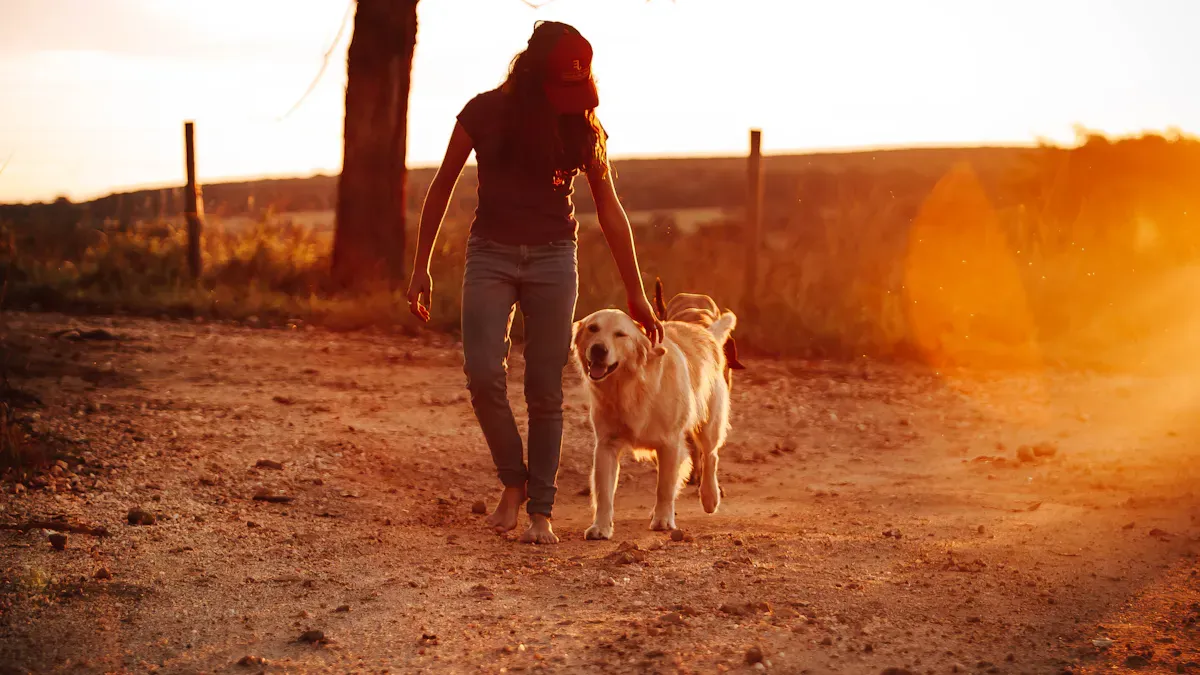
You should keep your dog’s pace slow and steady during walks. Fast walking or running can put extra stress on a knee with luxating patella. Use a short leash to guide your dog and prevent sudden moves. Choose flat, even surfaces for daily walks. Grass, rubber mats, or smooth sidewalks work best. Avoid steep hills, stairs, or rocky paths. These surfaces can make your dog’s knee twist or slip.
Tip: Walk at your dog’s natural pace. Watch for signs of limping or hesitation. Change direction or stop if your dog seems uncomfortable.
Session Length and Monitoring
Start with short walks when your dog first uses a knee brace. Ten to fifteen minutes is enough for most dogs with luxating patella. Watch your dog closely during each session. Look for signs of fatigue, limping, or licking at the brace. If your dog seems tired or stressed, end the walk early. You can slowly increase walk time as your dog gets used to the brace.
Check the brace fit before and after each walk.
Give your dog water and a chance to rest after activity.
Keep a simple log of walk times and your dog’s comfort level.
Mistakes in Brace Use During Walks
Many owners make common mistakes when using a knee brace for luxating patella. You should avoid these errors to keep your dog safe:
Do not leave the brace on all day. Use it only during walks or active times.
Do not skip regular checks for rubbing or skin problems.
Do not force your dog to walk if they resist or show pain.
Do not use the brace on rough or wet surfaces that can cause slips.
Do not ignore changes in your dog’s walking pattern.
Note: Always ask your veterinarian if you see swelling, redness, or sudden changes in your dog’s movement.
By following these tips, you help your dog walk safely and get the most from their knee brace. Careful monitoring and good walking habits support better outcomes for dogs with luxating patella.
Limitations and When to Seek Guidance
When a Brace May Not Be Enough
You want your dog to feel better and walk safely with a knee brace. A brace can help your dog by keeping the knee steady and making walks more comfortable. You should know that a knee brace does not fix the bones or stop joint damage in serious cases. Most veterinarians say that bracing is a short-term help. It does not cure the problem, especially if your dog has a severe grade of luxating patella.
A knee brace helps with mild to moderate luxating patella.
It does not repair bone changes or advanced joint damage.
Bracing works best as part of a bigger care plan.
If your dog has Grade 4 luxating patella, severe bone deformities, or advanced joint misalignment, a brace may not be enough. In these cases, surgery is often the best option. Braces help manage symptoms, but they do not solve the main problem when the joint is very unstable.
Note: Always watch for signs that your dog’s condition is getting worse, such as more limping, pain, or trouble walking.
Consulting a Veterinarian or Rehab Specialist
You should always talk to a veterinarian or rehab specialist before starting or changing brace use. A professional can check how bad the luxating patella is and help you make a plan. You should seek guidance if your dog shows symptoms that affect quality of life, such as pain, limping, or less activity.
Ask for a vet’s advice if your dog has frequent dislocations, like in Grade 2 luxating patella.
Use a knee brace for conservative management when surgery is not needed right away.
Braces can help with partial ligament tears, post-surgery recovery, or chronic knee pain in older dogs.
A vet can help you decide if a brace is right for your dog’s needs.
You should use a knee brace as part of a full care plan. Always check with your vet if you see new symptoms or if your dog’s walking gets worse. This helps you give the best support for luxating patella and keeps your dog safe during daily walks.
You now know that a knee brace can help your dog with luxating patella on walks. The way the brace fits and controls movement is very important for safety. You should use simple walking tips and watch how your dog feels. Always talk to a vet before picking a brace. Here are some easy steps for people buying braces, clinics, and owners who want to help their dogs:
Check that the brace matches your dog’s size.
Get advice from a vet about how to fit and use the brace.
Look at both bracing and surgery to see what is best for your dog.
Make a plan to check the brace and see how your dog is doing.
Planning well helps your dog walk easier and feel good with luxating patella.
FAQ
How does a knee brace help dogs with luxating patella during daily walks?
You use a knee brace to steady your dog’s knee. The brace helps control movement and lowers pain. Your dog can walk more comfortably and safely with support for luxating patella.
Can you use a knee brace for all grades of luxating patella?
You use a knee brace mostly for mild or moderate luxating patella. Severe cases may need surgery. Always ask your veterinarian before choosing a brace for your dog’s needs.
How do you know if the brace fits your dog correctly?
You check for snug straps and no slipping. Your dog should walk without rubbing or red spots. You ask your vet to review the fit if you see any discomfort.
Should your dog wear the brace all day?
You use the brace only during walks or active times. Remove the brace when your dog rests. This helps prevent skin problems and keeps your dog comfortable.
What signs show you need to consult a veterinarian?
You watch for limping, pain, swelling, or changes in walking. If your dog shows these signs with luxating patella, you contact your veterinarian for guidance.
