

You want the best for your dog, especially when searching for a vet recommended dog knee brace for small dogs. Many owners notice that small dogs need a perfect fit to move without pain. A good vet recommended dog knee brace for small dogs helps your dog walk, play, and recover. You might struggle to find a brace that offers the right fit, comfort, and support level. Your vet can guide you to a vet recommended dog knee brace for small dogs that matches your dog’s injury and daily routine. Choosing the correct fit and support means your dog gets the help needed for daily movement. You can explore more about vet recommended dog knee brace for small dogs and related topics in our main resources.
Key Takeaways
Talk to your veterinarian to pick the best knee brace for your dog’s injury and size.
It is very important to measure your dog’s leg carefully. This helps make sure the brace fits right.
Pick a brace that matches how active your dog is. Make sure it gives the support your dog needs.
Let your dog get used to the brace slowly. Watch your dog for any signs of pain or discomfort.
Clean and check the brace often. This keeps it working well and keeps your dog comfortable.
What Is a Vet Recommended Dog Knee Brace?
A vet recommended dog knee brace helps your dog move safely. It gives support so your dog can heal. Veterinarians check your dog’s injury and size before they suggest a brace. They also think about what your dog does every day. The brace must fit your small dog’s knee just right. Small breeds have special needs, so a veterinarian will help you choose the best dog knee brace.
How Vets Choose Dog Knee Braces
Veterinarians use their training to pick the right brace for each dog. They look at what kind of injury your dog has, like a torn ligament or luxating patella. They measure your dog’s knee and watch how your dog walks. Your veterinarian may ask about your dog’s daily activities and habits. This helps them choose a brace that supports your dog but does not hurt. You can learn more about how veterinarians pick braces for big dogs in our large-breed knee brace guide.
Tip: Ask your veterinarian which dog knee brace is best for your dog’s injury and size. This way, you get a brace that fits your dog’s needs.
Why Small Dogs Need Special Fit
Small dogs need dog knee braces that fit exactly right. Their knees are tiny and gentle. If a brace is too big or loose, it can hurt or fall off. Veterinarians say small dogs should wear light braces. You should pick braces with straps you can adjust and soft materials. Your dog will wear the brace longer if it feels good and lets them move. For more about support for different problems, visit our dog knee brace support page.
You can find more about dog knee braces and veterinarian tips in our main dog knee brace category.
Types of Dog Knee Braces for Small Dogs
When you pick a dog knee brace for your small dog, you need to know the main types. Each type gives different support, comfort, and fit. The best one depends on your dog’s injury and daily life. You can check our support page for more about matching braces to injuries.
Flexible vs. Rigid Braces
There are two main kinds of dog knee brace for small dogs: flexible and rigid. Flexible braces use soft stuff like neoprene. These wraps give gentle pressure and help with small injuries or swelling. Rigid braces use strong medical materials and sometimes have hinges. They give strong support for bad injuries, like CCL tears.
Here is a table to help you compare the main types:
Type of Dog Knee Brace | Description | Function and Use Case | Key Differences and Considerations |
|---|---|---|---|
Neoprene Dog Knee Sleeve | Soft, stretchy wraps with Velcro or padded straps; some allow insertion of rigid stays. | Provides compression to reduce swelling, protects from licking, supports mild injuries like sprains or mild arthritis. | Limited sizing, not ideal for very small or large dogs; short-term use (~6 months); not suitable for severe injuries or high-energy dogs. |
Thermoformed Semi Rigid/Rigid Braces | Made from medical-grade polypropylene, often custom or semi-custom, sometimes with hinges. | Offers robust support, allows full or limited range of motion; suitable for chronic or severe injuries like CCL tears. | Customizable for any breed size; more expensive; may require professional adjustments; durable and waterproof; tailored to specific injuries. |
You can also compare support and comfort levels:
Type of Brace | Support Level | Comfort Level |
|---|---|---|
Flexible | Mild injuries | High |
Rigid | Severe injuries | Moderate to High |
Adjustable and Custom Options
Small dogs do well with adjustable and custom dog knee brace choices. Adjustable braces let you change the fit as your dog’s leg changes. This helps if your dog has swelling or needs a brace while waiting for a custom one. Custom dog knee brace options are made just for your dog’s shape and size. This makes sure the brace fits right and helps your dog move better.
Benefits of adjustable and custom dog knee brace options include:
Adjustable splints give quick support for hurt legs.
You can change the width for swelling.
They work as a brace before a custom one comes.
Small changes help fit many small dogs.
Custom dog knee brace designs use new materials for comfort and strength. These braces support your dog’s knee and let them move naturally. You can read more about custom options and how they compare to big dog braces in our other articles.
How to Measure and Fit a Dog Knee Brace
Measuring Steps for Small Dogs
Measuring your small dog for a dog knee brace takes careful attention. You want the brace to fit perfectly so your dog can move comfortably and safely. Small dogs need extra precision because their legs are delicate and their knees are tiny. You should gather the right tools before you start measuring. Use a soft measuring tape, a notebook or notes app, and treats to keep your dog calm. Ask a helper to hold your dog steady if possible.
Follow these steps to measure your dog for a knee brace:
Measure the thigh circumference. Wrap the tape around the upper part of your dog’s thigh, about one inch below where the leg meets the body.
Measure the knee circumference. Find the center of your dog’s knee joint and wrap the tape around this midpoint.
Measure the hock to knee length. Start at the knee and measure down to the hock joint.
Measure the lower leg circumference. Place the tape halfway between the hock and the paw.
Note your dog’s weight and breed. Some braces are designed for specific breeds or weight ranges.
You should repeat each measurement twice to make sure you get the same result. Never measure your dog while lying down. Stand your dog up and keep the leg straight. Take photos or videos if you plan to order a custom dog knee brace. This helps you remember the leg’s shape and alignment.
Tip: Accurate measurements help you avoid a brace that is too loose or too tight. This keeps your dog safe and comfortable.
If your veterinarian recommends a custom brace, you may need to make a mold. Cover your dog’s leg with a stockinette. Dip casting tape in water for three to five seconds. Wrap the tape around your dog’s leg, starting just above the hock. Squeeze the mold at the knee as it dries. Cut down the strip and remove the cast. This process helps create a brace that fits your dog’s knee exactly.
You can find more detailed guides and videos in our main dog knee brace category and condition-based support pages.
Fit-Check and Adjustment Tips
Fitting a dog knee brace for a small dog requires patience and careful checks. You want the brace to fit snugly but not cause discomfort. Start with a vet check to confirm the diagnosis and get advice on the right brace. Choose a brace that matches your dog’s injury, body size, and daily routine.
When fitting a dog ccl brace or any dog knee brace, follow these steps:
Align the brace with your dog’s knee joint. Make sure the hinge or support sits directly over the knee cap.
Adjust the straps. Tighten them so the brace stays in place but does not cut off circulation. The brace should not slide down or twist.
Check the fit by running your finger under each strap. You should feel gentle pressure but no pinching.
Watch your dog walk and move. The brace should support activity and allow natural movement. If your dog limps or shows discomfort, adjust the straps or check the fit again.
Start with a break-in schedule. Let your dog wear the brace for short periods at first. Increase the time as your dog gets used to the brace. Monitor skin and fur for signs of rubbing or irritation.
Note: Fitting a dog ccl brace for small dogs often needs extra attention to strap adjustment and comfort. Small dogs may have sensitive skin and thin fur, so check for redness or swelling after each use.
You should never use a dog knee brace as a permanent cast. The brace supports your dog during activity and rehab. Remove the brace at night or during rest unless your vet says otherwise. Clean the brace regularly to keep it comfortable and safe.
If you notice any signs of pain, swelling, or trouble walking, contact your veterinarian. You can learn more about fitting and adjustment tips in our large-breed knee brace article and main product pages.
Choosing Support Level and Dog CCL Braces
Matching Support to Injury Severity
You need to match the right dog knee brace to your dog’s injury. Small dogs often face CCL tears or luxating patella. Dog bracing helps your dog move and recover. Veterinarians use a grading system for luxating patella. This system helps you understand which dog ccl braces work best for your dog.
Grade I: Kneecap moves out easily but pops back in.
Grade II: Slips out on its own and stays briefly.
Grade III: Always out but can be moved back by hand.
Grade IV: Always out and can’t be moved back.
Dog ccl braces come in different support levels. You must choose the right level for your dog’s injury. The table below shows how each dog knee brace matches injury severity:
Brace Type | Support Level | Injury Severity Match |
|---|---|---|
Simple dog knee braces | Light compression | Mild injuries, soft support |
Hinged knee braces | Moderate to strong | Partial or complete ACL tears |
Double dog knee braces | Strong | Bilateral injuries |
Custom dog knee braces | Maximum comfort | Tailored for specific injury needs |
Dog bracing gives your dog the right support. You can find more details about knee brace for dog support and condition-based support in our main product pages.
Activity Level and Daily Routine
Your dog’s daily routine affects which dog ccl braces you choose. If your dog walks often or plays, you need a brace that fits well and supports movement. Dog bracing must match your dog’s activity level. Canine rehabilitation helps your dog regain strength. You should ask your veterinarian about the best dog knee brace for your dog’s needs.
Dog bracing works best when you follow a plan. You can use dog ccl braces during walks, playtime, or rehab sessions. The benefits of dog ccl braces include improved movement and comfort. You must check the fit often. Small dogs need a brace that fits snugly but does not cause pain. Dog bracing supports your dog’s knee and helps with canine rehabilitation.
You can learn more about dog bracing for small breeds and compare options in our large-breed article and main dog knee brace category. Visit our condition-based support page for more tips on matching dog ccl braces to your dog’s injury and daily routine.
Comfort, Bulk, and Wear Tolerance
Materials and Lightweight Design
You want your dog to feel comfortable every day. Small dogs need a knee brace that uses soft, lightweight materials. Heavy braces can slow your dog down or cause dog knee pain. Look for designs that use breathable fabrics and gentle padding. These materials help your dog move without extra weight. Many braces use neoprene or medical-grade plastics. These options give support while keeping bulk low.
Here is a quick comparison table:
Material | Comfort Level | Bulk | Wear Tolerance |
|---|---|---|---|
Neoprene | High | Low | Good |
Medical Plastics | Moderate | Low | Excellent |
Soft Padding | High | Low | Good |
You should check the brace for adjustable straps. These straps help you fit the brace to your dog’s knee. Small dogs often have sensitive skin. Lightweight designs reduce rubbing and dog knee pain. For more tips on brace materials and fit, visit our main dog knee brace category and condition-based support pages.
Monitoring for Dog Knee Pain or Discomfort
You must watch your dog closely after you start using a knee brace. Signs of dog knee pain include limping, licking the knee, or avoiding walks. Your dog may show discomfort by whining or refusing to wear the brace. You should check the knee area for redness or swelling. Remove the brace if you see any problems.
Follow these steps to monitor your dog:
Watch your dog walk and play.
Check the knee for skin changes.
Listen for signs of pain or discomfort.
Adjust the brace if needed.
Tip: Ask your veterinarian for advice if your dog shows signs of dog knee pain. Veterinary guidance helps you choose the right support and keeps your dog safe.
Comfort and wear tolerance matter most for small dogs. You want your dog to enjoy daily movement and rehab. The right knee brace gives support without causing pain. For more advice, see our large-breed knee brace article and main product pages.
Daily-Use Plan for Dog Knee Braces
Introducing the Brace Gradually
You want your dog to feel comfortable with a new brace. Start slow and let your dog get used to the brace in short sessions. Place the brace on your dog for a few minutes while offering treats or gentle praise. Watch your dog walk and move. If your dog shows signs of discomfort, remove the brace and try again later. Gradual introduction helps your dog accept the brace as part of daily life. Veterinary guidance can help you adjust the plan for your dog’s needs. For more tips, visit our main dog knee brace category.
Wear Schedule and Break-In Period
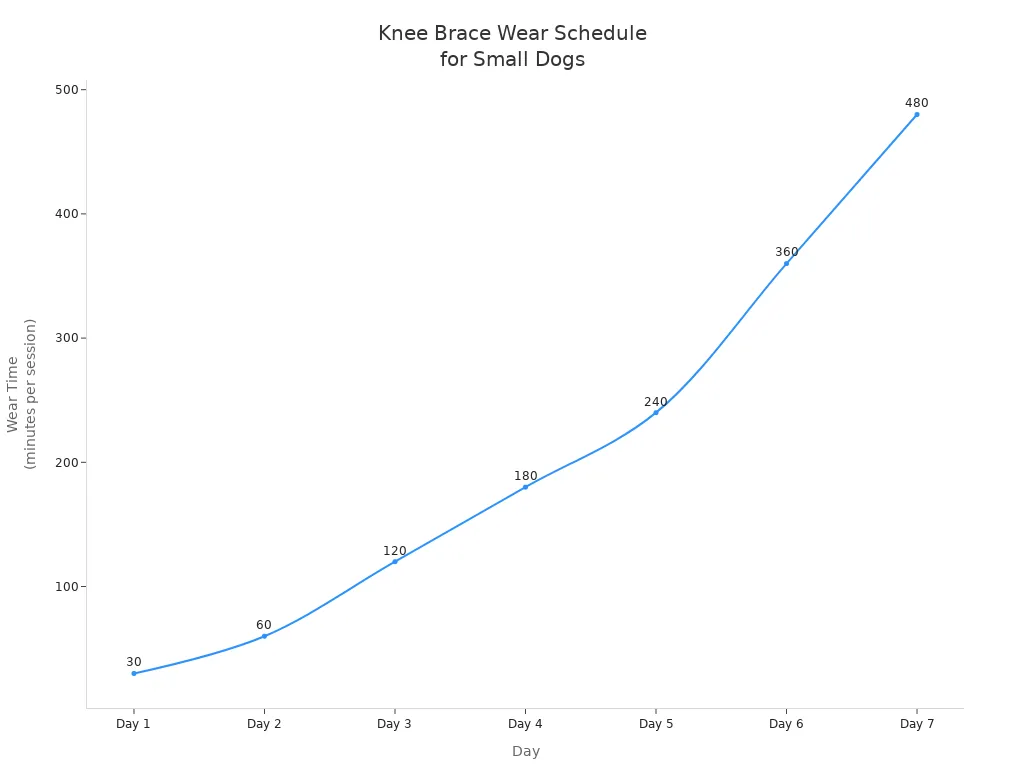
A careful wear schedule helps your dog build tolerance and get the right support. Begin with short sessions and increase the time each day. Use the table below to guide your break-in period:
Day | Wear Time (per session) | Frequency |
|---|---|---|
1 | 30 mins | 2-3 times |
2 | 1 hour | 2-3 times |
3 | 2 hours | 2-3 times |
4 | 3 hours | 2-3 times |
5 | 4 hours | 2 times |
6 | 6 hours | 1 time |
7 | 8 hours | 1 time |
Up to 12 hours daily | ||
Off at night |
Remove the brace at night or during rest. Check your dog’s knee for redness or swelling after each session. Adjust the brace if needed. Consistent support helps your dog recover and move comfortably. For more guidance, see our condition-based support page.
Cleaning and Maintenance
Keep your dog’s brace clean and safe. Regular care extends the life of the brace and protects your dog’s skin. Follow these steps:
Wipe the brace down with a damp cloth to remove dirt.
Clean with mild soap and water as needed.
Make sure the brace is dry before putting it back on your dog.
Inspect straps and buckles for wear or damage.
Repair minor issues quickly or replace the brace if needed.
Store the brace in a cool, dry place away from sharp objects.
Follow the manufacturer’s instructions for washing fabric braces.
Routine cleaning and inspection keep the brace comfortable and effective. For more maintenance tips, visit our main product pages and large-breed knee brace article.
Common Mistakes and When to Consult Your Vet
Fit and Comfort Errors
You want your dog to feel comfortable and get the right support from a knee brace. Many owners make mistakes that can affect recovery from dog knee injuries. Accurate measurement is key. If you guess or round numbers, the brace may not fit well. Using a stiff ruler instead of a soft measuring tape can also cause problems. Always measure your dog while standing, not sitting or lying down.
Common Measurement Errors | Description |
|---|---|
Guessing or rounding numbers | Leads to poor fit and less support |
Using a stiff ruler | Gives incorrect measurements |
Measuring while dog is not standing | Results in a brace that does not fit properly |
Other common mistakes include:
Choosing a brace that is too loose or too tight, which can cause skin irritation or fail to provide support.
Relying only on the brace and skipping rehab exercises, which can lead to muscle loss.
Forgetting to check your dog’s skin for redness or moisture, which can cause infections.
Letting your dog return to normal activity too soon after seeing improvement, risking new canine knee injuries.
Signs of Dog Knee Pain or Complications
Watch your dog closely for signs that the knee brace is not working as it should. Discomfort can show up as limping, licking the knee, or refusing to move. Some dogs may feel anxious or avoid walking. You might notice muscle spasms or your dog shifting weight to another leg. These signs can mean the brace does not give enough support or fits poorly. Improper fit or the wrong type of support can even cause new dog knee injuries or stress other joints.
When to Seek Veterinary Help
You should contact your veterinarian if you see any of these signs:
Limping or favoring one leg
Stiffness after resting
Clicking or popping sounds from the knee
Swelling or warmth around the joint
Reluctance to jump or climb stairs
Walking on three legs
Shorter stride length
Reduced range of motion
Hip hike or pelvic tilt
Toe-touching or shifting weight
Your vet can help you adjust the brace, choose better support, or recommend further treatment. Regular check-ins help you track recovery and avoid complications. For more tips on fitting, support, and care, visit our main dog knee brace category, large-breed knee brace guide, and condition-based support pages.
Next Steps and Related Resources
Internal Links to Large-Breed and Condition Pages
You can find more help by looking at other pages. These resources let you compare braces for different dog sizes and problems. The table below shows links for both large and small breeds, plus support for certain conditions:
Product Name | Link |
|---|---|
Knee Brace for Dogs | |
Double Knee Brace for Dogs | |
Hinged Knee Brace for Dogs | |
Dog Knee Brace for Luxating Patella | |
Dog Knee Brace for Torn ACL |
Note: Small dogs can get pressure sores if the brace does not fit right. Make sure the brace fits well and check your dog often. This helps your dog stay comfortable and heal better.
Where to Learn More About Dog Knee Braces
You can read trusted guides and stories from other owners to learn more. Many people have seen their dogs walk better and feel less pain with the right brace. Braces help small dogs with partial ligament tears or older dogs who need extra support. Always use a brace as part of a plan with your veterinarian.
Here are some helpful resources:
Dog knee braces can help with ACL and CCL injuries in small dogs.
Braces give support to dogs that cannot have surgery.
Stifle braces can help with luxating patella, especially if it is mild.
You can also check out these guides:
Tip: Getting the right size and putting the brace on correctly is very important. Always talk to your veterinarian before using a new brace.
You want your dog to move with comfort and confidence. To choose the right brace, follow these steps:
Work with your vet for a clear diagnosis.
Measure your dog’s leg above and below the knee, and check the length.
Pick a brace that matches your dog’s size, activity, and need for support.
Introduce the brace slowly and monitor your dog’s comfort.
Clean the brace often and check for signs of irritation.
Ongoing veterinary guidance ensures the brace gives the best support during recovery. Explore our main dog knee brace category and condition-based support pages for more help.
FAQ
How do you choose the right knee brace for your small dog?
You need to measure your dog’s leg carefully. Ask your veterinarian for advice. Pick a brace that matches your dog’s injury and daily routine. Visit our main dog knee brace category for more tips.
Can a dog knee brace help with CCL tears or luxating patella?
A dog knee brace can support mild CCL tears or luxating patella. Your veterinarian will help you decide if a brace fits your dog’s needs. Learn more about condition-based support.
How long should your dog wear a knee brace each day?
Start with short sessions. Increase wear time as your dog gets used to the brace. Remove the brace at night. Follow your veterinarian’s advice. See our daily-use plan for guidance.
What signs show your dog needs a different brace or veterinary help?
Watch for limping, swelling, or discomfort. Your dog may lick the knee or avoid walking. Contact your veterinarian if you see these signs. Find more advice in our large-breed knee brace guide.
Are custom knee braces better for small dogs?
Custom braces fit your dog’s leg exactly. They offer more comfort and support. Ask your veterinarian if a custom brace suits your dog. Compare options in our main product pages.
