
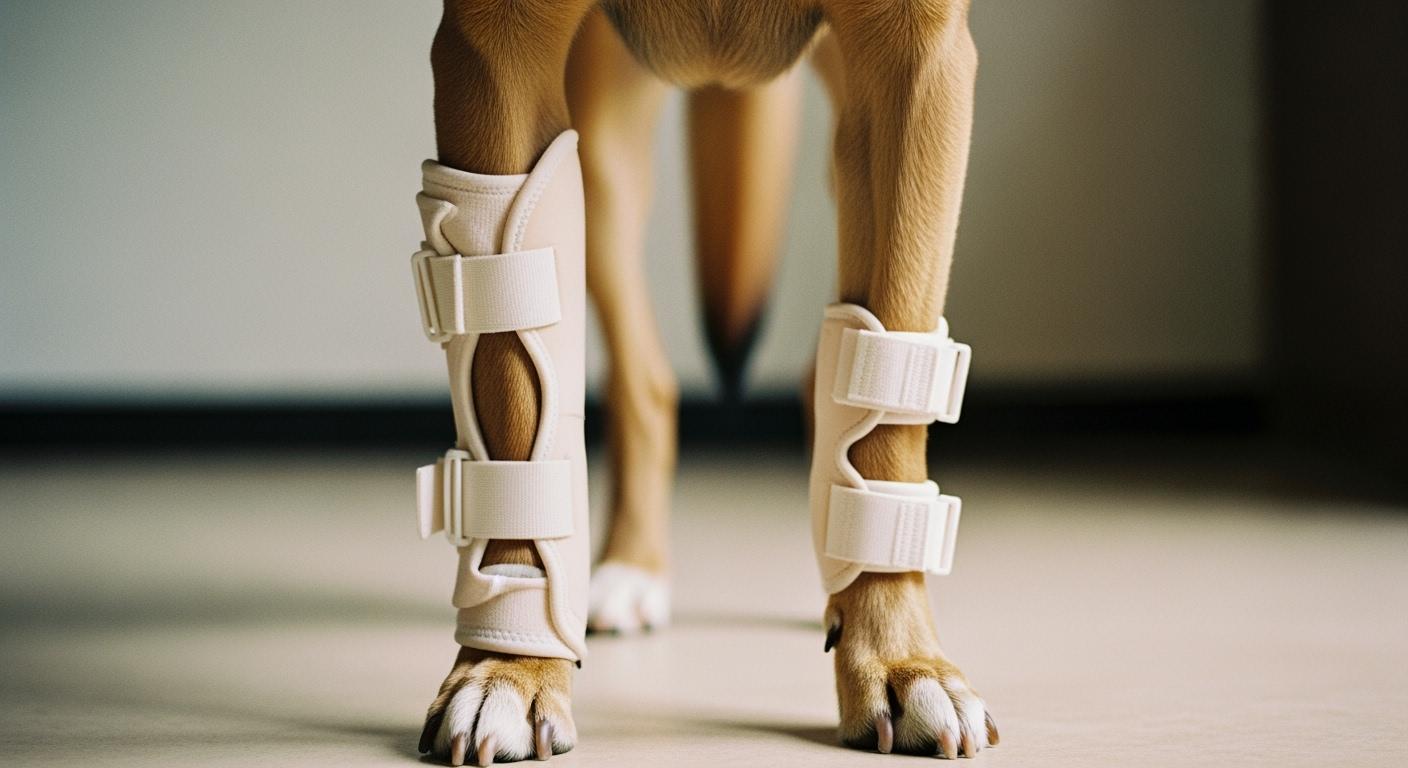
Hind leg dog brace fit and slipping matter because a rear-leg brace only helps when it stays aligned during real movement. A brace that fits well should feel stable, support the target area, and stay in position through walking, standing, and resting transitions without drifting or twisting. If you want a broader framework for measuring, recording, and checking brace fit before daily use, start with this dog brace sizing guide.
Key Takeaways
- A hind leg brace should stay aligned during movement, not just look correct while the dog is standing still.
- Slipping usually points to a problem with measurement, strap adjustment, body-shape match, or brace design.
- Daily checks should focus on rubbing, drift, strap tension, and whether the dog still moves in a steady and comfortable way.
Understanding Hind Leg Dog Brace Fit and Slipping
What Buyers Look For in Dog Leg Braces
When you evaluate hind leg dog brace fit and slipping, the most important question is whether the brace can stay stable on the dog’s rear limb during daily use. Clinics, resellers, and informed buyers should assess size, body shape, movement pattern, and tolerance together rather than treating fit as a one-time setup step. The table below works best when you use it as a daily stability checklist instead of a simple product checklist.
Criteria | Description |
|---|---|
Proper Fit | Makes sure the brace is the right size and in the right spot. |
Regular Adjustments | You may need to adjust the brace often at first as the dog gets used to it. |
Monitoring for Skin Irritation | Check the dog’s skin and the brace for any sores or damage. |
Re-evaluation Appointment | Go back to the clinic two weeks after getting the brace to fix any problems. |
Device Inspection | Look for cracks or tears in the brace to keep it working well. |
You also need to decide whether the brace type matches the dog’s actual support goal. Custom fit, daily adjustability, stable materials, and regular rechecks all matter because a brace that slips repeatedly is no longer giving reliable support. If you need a broader condition-first path before comparing brace details, use the Dog Brace Solutions by Condition page together with this article.
Why Fit and Hold Matter for Mobility
Fit and hold matter because a hind leg brace only helps when it stays in the working position through normal daily movement. A brace that fits correctly should reduce unstable motion, support the targeted rear-leg area, and stay steady while the dog walks, stands, and settles down to rest. If the brace keeps shifting, the support becomes less predictable and the dog may move with less confidence.
A good brace should feel supportive without becoming the new source of discomfort. That means watching for drift, pressure, or gait change every day, especially during the early wear period. If you need a broader page on walking, stability, and daily comfort for rear-end support, compare this article with the dog mobility support solutions page.
By paying attention to hind leg dog brace fit and slipping, you help dogs move better and stay comfortable while they heal or need long-term care.
Key Signs of Good or Poor Fit
Practical Fit Checks for Dog Braces
You need to check the fit of a hind leg dog brace before trusting it for daily use. Start with precise measurements and compare them to the product chart, then confirm the fit during actual movement instead of only at rest. For a more detailed step-by-step framework on measuring, recording, and fit-checking, use this dog brace sizing guide.
Use this practical checklist to evaluate fit before extending daily wear time:
- Measure the dog at the recommended points before selecting a size.
- Check that the brace sits snugly without pinching or obvious gapping.
- Use the finger test to confirm secure but comfortable strap tension.
- Watch the dog walk, sit, and stand to see whether the brace stays aligned.
- Recheck straps, padding, and edge contact after short activity.
- Inspect for wear or stretched fasteners that can lead to slipping.
Tip: Small fit changes are usually easier to manage than major corrections later. Recheck the brace after movement instead of assuming the first adjustment will hold all day.
Common Indicators of Slipping or Discomfort
You can spot signs of poor fit by watching both the dog and the brace during daily activity. A well-fitted brace should stay aligned, feel tolerable, and support steadier movement. Poor fit usually shows up as slipping, skin irritation, or a clear drop in movement quality.
Common signs of poor fit include:
The brace slides below the dog’s ankle or shifts during movement.
The dog shows signs of discomfort, such as licking or biting at the brace.
Skin irritation or redness appears under the brace.
Padding wears out quickly, creating pressure points.
Straps become frayed or stretched, making the brace loose.
The dog loses muscle tone or develops chafing from the brace.
Do not mistake “the brace is on” for “the brace is working.” If it slips, bunches, twists, or changes the dog’s gait, treat that as a support problem rather than a small comfort issue. For a broader daily-use reference, compare this section with the canine rehabilitation brace fit and safety guide.
Note: Persistent slipping or repeated discomfort usually means the fit, design, or support type needs to change. Veterinary guidance is still the right next step when the dog’s tolerance or gait keeps worsening.
A good fit starts with accurate measurements and regular checks. Clinics and informed buyers use these steps to ensure the dog brace supports mobility and comfort. For more guidance, visit our knee brace fit pillar page or explore solutions for hind leg weakness and arthritis support.
Factors Affecting Brace Stability
Dog Movement and Leg Shape
You need to understand how the dog’s gait and leg shape affect brace stability. Some dogs have thinner rear limbs, stronger joint flexion, or more forceful push-off patterns that make slipping more likely. A brace only works when it matches the way the hind leg bends and loads during daily movement.
That is why you should watch the brace during walking, sitting, and standing instead of judging fit only while the dog is still. If the brace keeps moving out of position, you may need a different size, a different adjustment pattern, or a different brace type altogether. For a broader rear-leg support framework, review the dog rear leg brace solutions page.
Design Features That Improve Hold
You can improve brace stability by choosing the right design features instead of assuming all rear-leg braces behave the same way. Adjustable straps, non-slip contact areas, breathable lining, and a support shape that follows the hind limb all help the brace stay aligned during movement.
Here is a table showing how different materials affect fit and stability:
Material Type | Fit Characteristics | Stability Characteristics |
|---|---|---|
Fabric Braces | Flexible, breathable, lightweight | Gentle support, suitable for daily wear |
Plastic Braces | Sturdy, durable, waterproof | Superior stability, ideal for severe injuries |
You should select a brace with features that match both the injury and the dog’s daily routine. If you want a product-level example designed around adjustable fit and slipping control, review this Adjustable Dog Rear Leg Brace. If you still need condition-first planning, use the Solutions by Condition page first.
Tip: Check the brace after the dog moves, not only before. Slipping problems usually show up under motion, not during the first static fitting.
Reducing Slipping in Daily Use
Adjusting Straps and Position
You can reduce slipping by focusing on strap adjustment and brace position every day. A good fit should feel secure without squeezing, and the brace should support the intended hind-leg area without migrating as the dog moves. Daily strap checks matter because even a good brace can start slipping when tension changes after activity.
Here is a table that shows what to look for in daily adjustments:
Characteristic | Description |
|---|---|
Snug and comfortable fit | Keeps the brace in place without slipping |
Supportive of the problem area | Gives stability to the hind leg |
Easily adjustable | Lets you change the fit as needed |
Quick to put on or take off | Makes regular checks and adjustments simple |
Made of durable materials | Lasts through daily wear and activity |
You should always recheck the brace after the dog walks, sits, or lies down. If you see sliding, twisting, or edge pressure, fix the fit right away instead of waiting for the problem to become a skin issue. These checks are especially important for thin legs, changing muscle tone, or dogs with active daily routines. For broader planning, use the condition-based brace planning page.
Tip: Use the finger test every time you refit the brace, but do not stop there. A brace can pass the finger test and still slip if the position or strap path is wrong.
Maintenance and Monitoring Tips
You need to follow a routine to keep the brace working well and reduce slipping. Start slow when you introduce You need a simple routine to keep the brace working well and reduce slipping. Start with shorter wear periods, especially in the first few days, so you can check comfort and skin response before increasing daily use. Build wear time gradually only when the brace stays aligned and the dog still moves comfortably.
During early use, watch for the most common warning signs of slipping or discomfort:
- Redness or chafing under the brace
- Swelling above or below the brace
- Licking or chewing at the brace
- Reluctance to walk or move
- Changes in gait or visible limping
You should clean the brace with mild soap and water, dry it fully, and inspect it for frayed straps, worn padding, or broken support parts. Daily care matters because slipping often begins when worn parts stop holding the brace in the correct position.
Note: Regular checks and maintenance help the brace last longer, but they do not solve every slipping problem. If slipping or discomfort continues, compare the dog’s condition on the Solutions by Condition page or ask a veterinary professional whether the support plan needs to change.
You can help the dog move better and stay comfortable by following these steps every day. For product comparison after fit and maintenance checks, review the dog knee brace category and use it alongside the sizing guide rather than choosing by product image alone.
Choosing the Right Dog Brace for Mobility
When to Consider Different Brace Types
YoYou should think about brace type before assuming any hind leg brace will solve slipping. Every dog is different because of leg shape, injury location, support level, and activity pattern. A brace only helps when it fits the leg correctly and matches the joint or body area that actually needs support.
Different braces help with different rear-leg problems. Hock braces support the lower hind limb, knee braces target stifle support, and hip braces work higher around the pelvis and upper rear limb. Picking the right type matters because a slipping brace may be the wrong brace style, not only the wrong size.
You can compare broader brace types and support paths on the dog brace selection by condition page before moving into product choice.
Limitations and Professional Guidance
You need to know that standard-size braces do not fit every dog equally well. If a brace does not match the leg shape or support goal, it can create sore spots, skin damage, or repeated slipping. That does not automatically mean every dog needs a custom brace, but it does mean fit should be judged by performance, not by label alone.
Always look for signs that the brace is slipping, rubbing, or making the dog move differently. If you see red skin, sores, swelling, or a clear gait change, talk to a veterinarian. A brace should support a treatment plan, not replace professional diagnosis or follow-up.
Tip: Work with your clinic or provider to confirm size, placement, and strap path. Correct positioning usually does more to reduce slipping than tightening the brace harder.
For more help with picking a brace for certain problems, visit our solution page for hind leg weakness or arthritis support. You can also check our product page for new dog leg braces.
You improve hind leg brace performance when you treat fit and slipping as daily checks rather than one-time setup tasks. A brace should stay aligned, feel tolerable, and support steadier movement without turning into a skin or slipping problem.
- Measure carefully before choosing a size.
- Check fit again after walking, sitting, and standing.
- Adjust small slipping issues early before they become skin problems.
- Use condition-based planning when the brace type may be wrong for the injury.
- Clean and inspect the brace regularly so worn parts do not create new fit problems.
For next steps, continue to the dog brace sizing guide, the dog rear leg brace solutions page, the dog knee brace category, or the Adjustable Dog Rear Leg Brace product page depending on whether you need education, condition matching, or product review. Data authenticity note: This article is for educational purposes only. It is designed to help readers evaluate hind leg dog brace fit and slipping, not to replace veterinary diagnosis or individualized treatment advice.
FAQ
How do you know if a dog knee brace fits correctly?
A hind leg brace fits correctly when it stays aligned during walking without pinching, twisting, or sliding. The finger test helps, but movement is still the real fit test.
What causes a dog knee brace to slip?
A hind leg brace usually slips because of sizing error, poor strap adjustment, leg-shape mismatch, or a brace style that does not match the dog’s actual support need.
When should you choose a custom brace?
You should consider a custom brace when the dog has an unusual leg shape, a more severe injury, or repeated fit failure with standard sizes. Customization matters most when standard sizing cannot keep the brace stable.
How does a custom dog knee brace help with canine rehabilitation?
A custom rear-leg brace can improve fit, reduce slipping, and make daily wear easier because it follows the dog’s anatomy more closely than a generic size alone.
What is the best way to maintain a custom dog knee brace?
Clean the brace with mild soap and water, dry it completely, and inspect the straps, padding, and contact areas every day. Good maintenance helps prevent slipping that starts from worn-out parts instead of poor sizing.
