
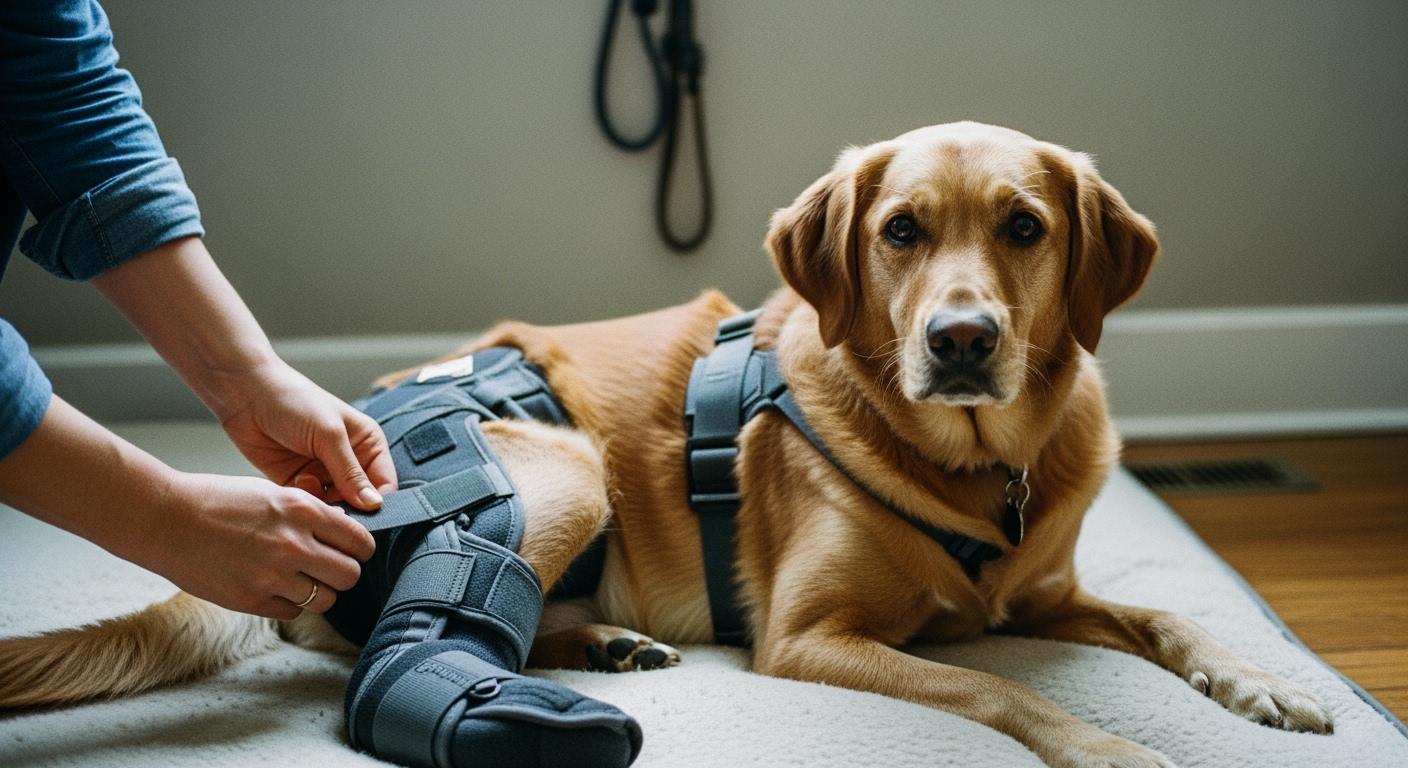
A hip dysplasia dog brace is a targeted support tool used to improve hip-area stability, daily comfort, and safer movement in dogs affected by hip dysplasia. This guide is for owners, rehab teams, and buyers who want to understand what a hip dysplasia brace helps with, how it differs from lift-assist tools, and how to choose, fit, and monitor it safely. If you are comparing condition-led support in the Solutions hub, deeper educational content in the GaitGuard blog, or product-level options in the products hub, this page should work as the main starting point for this topic.
Quick Answer: A hip dysplasia dog brace is usually most useful when a dog needs added hip support, better rear-end stability, and more controlled daily movement. It does not cure hip dysplasia, but it can play an important role in a broader mobility-support plan.
- Best for: hip-area support, rear-end weakness, and daily movement confidence
- Not always enough for: dogs that mainly need lifting assistance rather than joint-area support
- Most important factors: support area, fit, comfort, and daily movement checks
Key Takeaways
- A hip dysplasia dog brace is a condition-focused support tool designed to improve hip stability and daily comfort.
- The right brace depends on where your dog needs support most, how much daily assistance is required, and how well the brace fits into the dog’s normal routine.
- Comfort matters as much as support. A brace that rubs, shifts, or feels too restrictive will be harder to use consistently.
- Daily fit checks, skin checks, and movement observation help you see whether the brace is helping the dog safely.
What Is a Dog Brace for Hip Dysplasia?
A hip dysplasia dog brace is a support device designed to improve hip-area stability, reduce unnecessary strain, and help dogs move more comfortably during daily routines. It is most often used as part of a broader mobility-care plan rather than as a stand-alone solution.
A hip dysplasia dog brace usually wraps around the hips and lower back, and sometimes extends into the rear-end support zone depending on the design. Most braces use adjustable straps and soft but supportive materials so the dog can keep moving while receiving targeted support.
Tip: A brace should support the hips without creating new rubbing, bunching, or pressure points. Fit quality matters as much as the brace design itself.
A dog brace for hip dysplasia does not correct the underlying joint condition. Its job is to improve comfort, stability, and function as part of a broader support plan that may also include weight management, rehab work, activity adjustment, and ongoing monitoring.
Key features of a hip dysplasia dog brace:
- targeted support for the hip area
- added stability through the lower back and rear end
- less strain during ordinary movement
- daily-wear comfort when properly fitted
You can use a hip dysplasia dog brace for senior dogs, dogs with rear-end weakness, or dogs that need more structured daily support. For broader mobility planning, you can also connect readers to the dog mobility support solutions page.
What Hip Dysplasia Support Braces Are Designed to Help With
Hip-area stability
You want your dog to move with more confidence. Hip dysplasia support braces are designed to improve hip-area stability and reduce excessive strain during everyday movement. The goal is not to lock the hips completely, but to give the dog steadier support while walking, standing, or changing position.
Lower-back support
Many dogs with hip dysplasia also need help around the lower back. A good hip brace often supports this area too, which can make standing up, walking, or shifting weight feel easier and less tiring.
Rear-end assistance during daily movement
Dogs with hip dysplasia often show weakness in the back end. A hip dysplasia dog brace can support the rear area during normal activities such as walking, climbing stairs, or getting into a car. This makes daily movement feel steadier and more controlled.
| Daily Activity | How a Brace May Help |
|---|---|
| Walking | Improves hip-area steadiness and movement confidence |
| Climbing stairs | Supports the rear end during weight transfer |
| Getting up | Reduces strain and improves stability |
| Entering a car | Helps the dog move with less slipping or hesitation |
Comfort as part of broader mobility care
Comfort matters as much as support. A hip dysplasia brace should feel stable, breathable, and wearable enough for realistic daily use. That is why this page should position the brace as one part of a broader support plan that may also include the Solutions hub, the Blog hub, and the Products hub.
Main Types of Support for Dogs with Hip Dysplasia
Hip support braces
Hip support braces usually provide gentler, more flexible support around the hip area. They are often a strong fit for dogs that need daily stability and comfort without the most rigid support level.
Tip: Hip support braces often work well for senior dogs or dogs with mild to moderate hip weakness.
More structured hip brace designs
Some dogs need more control than a lighter support brace can provide. More structured hip brace designs use firmer construction or extra stabilization features to help dogs with more obvious instability or more demanding daily support needs.
Hip support combined with hind-leg assistance
Some designs support the hip area while also helping the rear end. These are more useful when the dog has both hip discomfort and back-leg weakness.
Mobility-support harness options
Mobility-support harnesses are different from braces. They do not stabilize the hip joint directly in the same way. Instead, they help you guide or lift the dog during walking, stairs, or transitions. They make sense when the dog needs more handling assistance than brace-only support can provide.
Note: A brace and a harness can work together, but they do not solve the same problem.
Dog Brace for Hip Dysplasia vs Other Support Tools
Hip support brace vs more structured hip brace
A lighter hip support brace usually focuses on comfort, flexible support, and daily wearability. A more structured hip brace usually focuses on stronger stabilization and better control during more difficult movement. The right choice depends on how much support your dog actually needs.
| Feature | Hip Support Brace | More Structured Hip Brace |
|---|---|---|
| Support level | Gentler, more flexible | Stronger, more controlling |
| Best for | Daily support and comfort | Higher instability or heavier support needs |
| Daily wear | Usually easier | Needs closer monitoring |
Hip brace vs lift-assist harness
A hip brace mainly supports the hip area and helps stabilize movement. A lift-assist harness mainly helps you support the dog’s body weight during stairs, car entry, or standing transitions. One is a joint-area support tool. The other is a handling and mobility-assistance tool.
When combined support routines make sense
Some dogs need both. A brace may help the dog feel steadier during normal movement, while a harness may help during harder transitions such as stairs or getting into a car. Combined use makes the most sense when the dog has both instability and rear-end weakness.
Tip: Use a brace for targeted hip-area support. Use a harness when the dog mainly needs lifting or movement assistance.
How to Choose the Right Dog Brace for Hip Dysplasia
Choose by support area
You need to look at where your dog needs the most help. Some dogs mainly need hip support. Others also need lower-back support or more rear-end assistance. Start with the actual support zone rather than choosing by product name alone.
Tip: Record your dog’s measurements and compare them carefully against the brace sizing guidance.
Choose by comfort and adjustability
Comfort is essential for daily use. You want a brace that feels stable without rubbing, bunching, or pinching. Adjustable straps matter because they help you fine-tune the fit as your dog moves through different routines.
Choose by daily routine needs
Think about your dog’s real day. A dog that walks, climbs stairs, or gets in and out of a car may need different support than a dog that mainly rests and takes short walks. Choose a brace that matches the dog’s real mobility pattern.
| Routine Activity | What to Consider | Why It Matters |
|---|---|---|
| Walking | Hip-area steadiness | Improves daily confidence and support |
| Climbing stairs | Rear-end support level | Helps with harder weight-transfer moments |
| Resting | Comfort and pressure control | Keeps daily wear more realistic |
Choose by ease of fit and monitoring
You need a brace that is easy to put on, take off, and check every day. Good monitoring helps you see whether the brace is actually improving comfort and movement rather than creating new problems.
How Fit and Positioning Affect Performance
Why accurate sizing matters
You need to measure your dog’s hips and lower back carefully before choosing a brace. Accurate sizing helps the brace stay aligned, improves support quality, and reduces slipping or pressure problems.
Tip: Use a soft tape measure and check the sizing chart carefully before choosing the brace size.
How a hip brace should sit
A hip dysplasia dog brace should sit snugly around the hips and lower back without twisting or shifting. The support panels should stay over the intended support area, and the dog should still be able to walk, sit, and lie down normally.
Checklist for proper positioning:
- straps lie flat against the body
- support panels stay over the hip area
- the brace does not twist or slip
- the dog moves without obvious restriction
Common slipping or pressure issues
You may notice the brace slipping, bunching, or causing pressure spots if the fit is not correct. These problems reduce support and can make the dog less comfortable.
| Issue | What to Look For | What to Do |
|---|---|---|
| Slipping | The brace moves or drops during use | Adjust fit or reassess the size |
| Pressure | Redness, rubbing, or hair loss | Loosen or reposition the brace |
When to adjust or reassess fit
You should adjust or reassess fit if your dog’s weight changes, if the brace starts slipping, or if you notice discomfort, poor movement, or skin changes. Regular fit checks are a normal part of safe brace use.
Common Use Cases for Hip Dysplasia Support Braces
Support for senior dogs
Older dogs often move more slowly because the hip area feels weaker or more painful. A hip dysplasia dog brace can help support daily walking, standing, and resting as part of a long-term comfort plan.
Tip: Check the skin and fur under the brace every day so you can catch fit problems early.
Support for rear-end weakness
Rear-end weakness is a common reason to use a hip brace. Some dogs struggle to stand up, move on slippery floors, or keep the back end steady during normal activity. A brace can help improve stability and reduce effort.
Hip-area support during recovery routines
Some dogs need extra hip-area support during recovery after injury, surgery, or a flare-up in mobility problems. In those cases, the brace helps make movement more controlled while the dog heals or rebuilds confidence.
| Recovery Routine | How a Brace May Help |
|---|---|
| Post-surgery | Keeps the hip area steadier during recovery |
| After injury | Helps reduce strain during healing |
| Physical therapy | Supports safer, more controlled movement |
Help with stairs and car entry
Stairs and car entry can be especially hard for dogs with hip dysplasia. A brace can improve stability during these moments, especially when paired with careful supervision or a mobility-support harness if needed.
What to Consider Before Daily Use
Short supervised wear sessions
You should start with short supervised sessions when your dog first wears a hip dysplasia dog brace. This helps you see how the dog moves, rests, and reacts before you build a longer daily routine.
Tip: Use praise and treats to help your dog build a positive association with the brace.
Skin and comfort monitoring
Check your dog’s skin every time you remove the brace. Look for redness, swelling, rubbing, or hair loss. These are early signs that the fit or wear routine needs adjustment.
| What to Check | Why It Matters |
|---|---|
| Redness | Helps catch irritation early |
| Swelling | Helps prevent pressure problems |
| Hair loss | Shows possible rubbing or friction |
Movement observation
Watch how your dog walks, sits, stands, and turns while wearing the brace. The brace should support movement, not make the dog stiffer, less willing to move, or more awkward during normal routines.
Note: Recording short notes about your dog’s movement can make daily monitoring much easier.
Cleaning and maintenance
Keep the brace clean to protect your dog’s skin and keep support quality consistent. Wash it as directed, dry it fully before use, and inspect straps, seams, and support panels regularly for wear or damage.
- remove dirt and hair after use
- wash with mild soap and water when needed
- check straps and support areas for wear
Related Guides and Next Steps
Dog hip support brace guide
Use a dog hip support brace guide when you want a broader comparison of lighter hip-support options, fit logic, and daily comfort needs.
Dog hip brace guide
Use a dog hip brace guide when you need more detail on stronger brace designs, structure, and higher-support use cases.
Dog brace for hips guide
Use a dog brace for hips guide when you want a wider look at hip-area and rear-end support beyond the narrower hip dysplasia use case.
Mobility support harness guide
Use a mobility-support harness guide when the dog needs more lifting or handling assistance than brace-only support can provide.
You can continue from this page into these internal paths:
- Solutions hub for condition-first and support-first planning
- Blog hub for narrower comparison and troubleshooting articles
- Products hub for product-level support review
- dog mobility support solutions page for broader movement-planning context
- brace fit, comfort, and safety guide for broader fitting education
This internal structure makes the page more useful for both users and search engines because it clearly connects the hip dysplasia guide to supporting content and product paths.
Frequently Asked Questions About Dog Braces for Hip Dysplasia
You may have questions about using a hip dysplasia dog brace safely and effectively. Here are the most common ones.
1. How do I know if the brace fits my dog properly?
The brace should sit snugly around the hips and lower back, stay in place during movement, and avoid obvious rubbing, slipping, or pressure marks.
2. Can I use a dog brace for hip dysplasia every day?
Many dogs can use a hip dysplasia brace daily, but the routine should build gradually and include regular skin and comfort checks.
3. What should I do if my dog seems uncomfortable?
Remove the brace, check for rubbing or pressure spots, and reassess the fit before the next session. If discomfort continues, the support plan may need adjustment.
4. How do I clean and care for the brace?
Clean the brace with mild soap and water as needed, dry it fully before reuse, and inspect it regularly for worn straps, damaged seams, or support-panel wear.
5. When should I consult a veterinarian?
You should consult a veterinarian before starting brace use and whenever you see worsening pain, poor tolerance, skin injury, or movement that looks worse instead of better.
Tip: A short daily record of movement, comfort, and brace fit makes follow-up decisions much easier.
Simple Daily Hip Brace Log
| Date | Wear Time | Main Activity | Movement Check | Skin Check | Next Step |
|---|---|---|---|---|---|
| Example | 30 min | walk / stairs / rest | better / same / worse | clear / red / rubbing | hold / adjust / shorten use |
This simple log helps you track whether the brace is improving stability and comfort, whether fit changes are needed, and whether your dog is tolerating daily use safely.
You help your dog most by choosing the right support level, fitting the brace carefully, and checking movement, comfort, and skin every day. A hip dysplasia dog brace works best when it improves hip-area stability without creating new rubbing, slipping, or daily-use stress. Use this page as the starting point, then move into the Solutions hub, the Blog hub, and the Products hub depending on whether you need condition planning, article-level comparison, or product review. Data authenticity note: This guide is for educational purposes only. It is designed to help readers understand hip dysplasia dog brace fit, support, and daily use, not to replace veterinary diagnosis or individualized treatment advice.
