
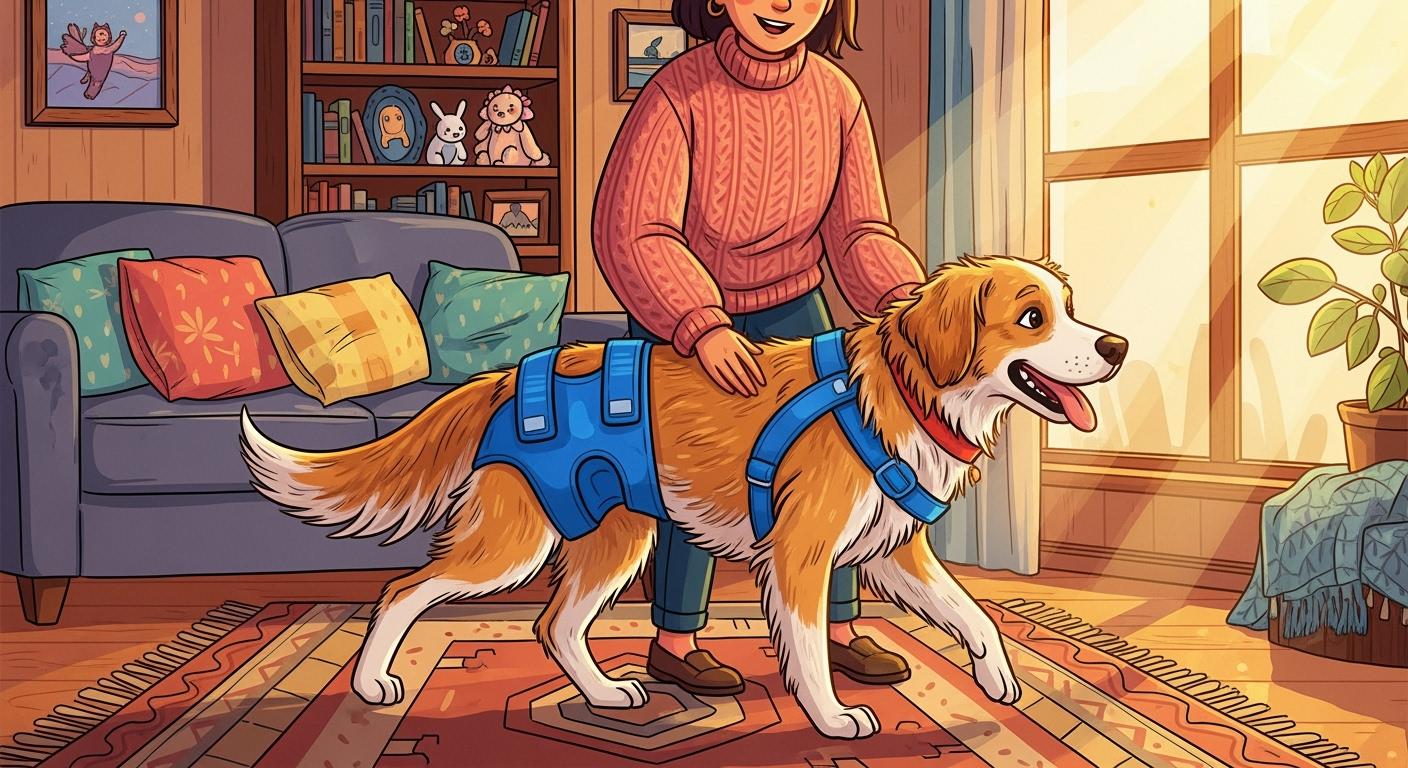
A dog hip dysplasia support brace can help your dog feel more comfortable at home by supporting the hips and encouraging improved mobility. You may notice pain reduction and better movement, but results do not happen right away. Most owners report changes over time, so patience is important. Braces do not cure hip dysplasia, and you should use them with other care like weight management and exercise. Watch your dog’s comfort and work with your veterinarian to find the best plan.
Will my dog feel better? Yes, some dogs show progress.
How soon? Benefits often take time.
What are the limits? A hip brace for dogs supports, not cures.
Key Takeaways
A dog hip dysplasia support brace can help your dog feel better and move easier, but you need to wait for results. Be patient and watch how your dog does over time.
Use the brace with other care like keeping your dog at a healthy weight and giving safe exercise for the best help.
Always put the brace on the right way and let your dog get used to it slowly so your dog does not feel sore or get skin problems.
Look at your dog’s skin every day for any redness or sore spots and change the brace if needed so it fits well and feels good.
Talk to your veterinarian if your dog has a lot of pain or cannot move much, because a brace might not help in those cases.
Hip dysplasia basics and support options
Hip dysplasia is common in dogs, mostly in big breeds. Your dog may have trouble getting up. You might see soreness after your dog plays. Some dogs hop like a bunny or seem stiff. They may not want to jump. If you notice these signs early, you can help your dog sooner.
How hip dysplasia leads to arthritis
Hip dysplasia makes the hip joint loose. This looseness causes extra wear on the joint. Over time, the cartilage gets damaged. The bones start to change shape. Swelling builds up and makes the joint worse. These changes cause osteoarthritis. Osteoarthritis hurts and makes it hard to move.
Hip dysplasia makes the hip joint unstable.
Extra wear harms the cartilage.
Swelling makes the joint get worse faster.
Bone changes lead to arthritis.
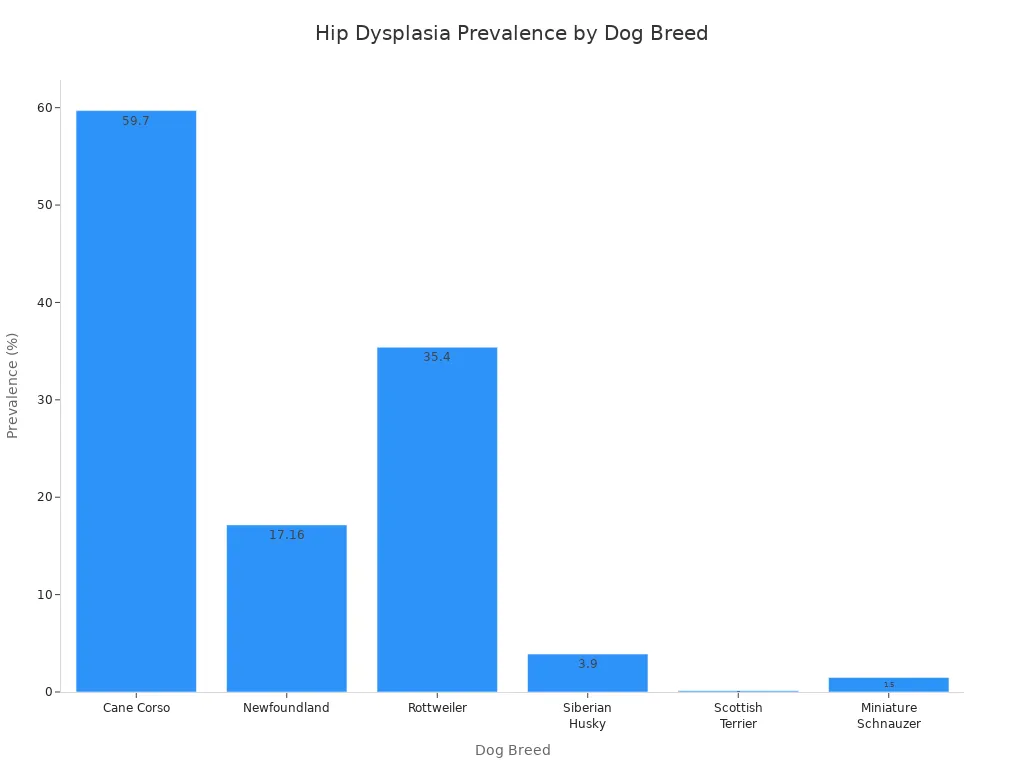
Different breeds have different chances of hip dysplasia. Big dogs get it more often. The table below shows how common it is in some breeds:
Breed | Prevalence (%) |
|---|---|
Cane Corso | 59.7 |
Newfoundland | 17.16 |
Rottweiler | 35.4 |
Siberian Husky | 3.9 |
Scottish Terrier | 0.12 |
Miniature Schnauzer | 1.5 |
Kuvasz | 10.2 |
Why a dog hip dysplasia support brace is not a cure
A dog hip dysplasia support brace helps keep the hips steady. It supports your dog when moving. Your dog may walk better and feel less pain. But a hip brace cannot fix the joint or cure hip dysplasia. The brace does not grow back cartilage or stop arthritis. You should use dog hip braces with other care.
Hip braces give support and keep hips steady.
They do not fix joint damage.
Bad cases need more than a brace.
It takes time to see results.
Always use a brace with other care.
Three pillars: weight, movement, pain plan
To help hip dysplasia, focus on three main things. Keep your dog at a healthy weight. Make sure your dog moves in a safe way. Have a plan to help with pain. These steps help your dog feel better and move more.
Pillar | Description |
|---|---|
Weight Management | Keep your dog at a Body Condition Score (BCS) of 4–5/9. Calorie control can slow down arthritis. |
Use exercises and rehab to make muscles stronger and ease pain. | |
Surgical Interventions | Surgeries like triple pelvic osteotomy (TPO) or juvenile pubic symphysiodesis (JPS) help young dogs’ joints. |
You can try other ways to help hip dysplasia and arthritis:
Hydrotherapy uses water to help joints stay steady.
Acupuncture may help some dogs feel better.
Chiropractic care can help with pain from moving differently.
Nutraceuticals like glucosamine and omega fatty acids help joints.
NSAIDs help with pain but can have side effects.
CBD has helped some dogs with osteoarthritis.
Regenerative medicine like stem cell therapy and platelet-rich plasma can lower pain.
Step-by-step protocol for managing hip dysplasia at home
Describe the symptom pattern
Look for soreness after play, trouble getting up, bunny hopping, or not wanting to jump.Classify your dog
Track A: Young dog (timing matters for surgery; JPS under 18 weeks, DPO/TPO under 8–10 months).
Track B: Adult or older dog (use careful management).
Track C: Bad or fast-worsening signs (see a vet).
Choose the support option
Use the traffic-light table below to see if a hip support brace is right today.Fit the brace and follow the break-in schedule
Start with 30–60 minutes each time, 3–5 times a day. Add 25% more time every 3–4 days.Build your multimodal plan
Aim for BCS 4–5/9, use safe movement, and follow a pain plan.Reassess after 1 week
Check the fit, how long your dog wears it, and how much your dog moves. Change things if needed.
Is a hip support brace appropriate for this dog today?
Criteria | Green (brace is reasonable) | Yellow (brace only with controls) | Red (brace not appropriate today) |
|---|---|---|---|
Symptom severity | Mild/moderate | Moderate with caution | Severe pain |
Ability to rise and walk | Stable | Some instability | Cannot rise |
Age/timing window relevance | Adult, outside surgery window | Young, screening needed | Young, urgent screening needed |
Body condition | BCS 4–5/9 | Slightly above ideal | Well above ideal |
Owner routine | Consistent, short sessions | Some inconsistency | Unable to follow routine |
Tip: If your dog cannot get up or has a lot of pain, do not use a brace. Go to the vet first.
Support and treatment pathways for hip dysplasia
Option | Best for | Limits | What it pairs with | When to escalate |
|---|---|---|---|---|
Hip support brace | Mild/moderate cases | Not for severe pain | Weight, exercise, meds | Rapid decline, severe pain |
Lift harness | Weakness, instability | Not for arthritis relief | Rehab, meds | Unable to walk |
Rehab/strengthening | All stages | Needs consistency | Brace, harness, meds | No improvement |
Meds plan | Pain management | Side effects possible | Weight, exercise | Pain not controlled |
Surgery consult | Young or severe cases | Age/size limits | Rehab, weight management | Failed conservative care |
Show-your-work mini calculations
Daily brace exposure on day 1:
30–60 minutes x 3–5 times a day = 90–300 minutes total each day.Weight-loss target math for the example dog:
Example dog: 60 lb
6.10% weight loss = 3.66 lb
8.85% weight loss = 5.31 lb
Goal: 6–10% loss with a vet’s help.Monitoring workload:
2 checks a day for 14 days = 28 checks (skin, fit, rubbing, behavior).
Top mistakes with dog hip braces and prevention tips
Thinking the brace will fix dysplasia – Use it for comfort, not a cure.
Skipping the break-in schedule – Go slow to stop rubbing.
Using the brace all day while resting – Take it off when your dog rests.
Ignoring BCS – Keep your dog at BCS 4–5/9.
Raising activity too fast – Watch for soreness and go slow.
Missing delayed muscle soreness – Soreness can show up 1–2 days later.
Using a brace when early screening is needed – Check the right age for surgery.
Letting floors be slippery – Use rugs or mats for grip.
Not checking skin and fit – Look twice a day for 14 days.
Forgetting to check after 1 week – Change fit and wear time if needed.
Not using a pain plan – Use a brace with pain care.
Not seeing a vet for bad signs – Get help if your dog gets worse or cannot get up.
Note: You can help your dog by using a dog hip dysplasia support brace with weight control, safe movement, and a pain plan. Always watch your dog’s comfort and change your plan if needed.
Who benefits from a dog hip brace
Mild to moderate hip dysplasia cases
You might wonder if your dog should use a dog hip dysplasia support brace. Dogs with mild or moderate hip dysplasia usually get the most help. These dogs can stand up and walk by themselves, but you may see pain or stiffness. They might not want to jump or may hop like a bunny. You could notice soreness after your dog plays or exercises. A hip brace helps keep the joint steady and supports your dog during daily movement.
Studies show most dogs with mild or moderate hip dysplasia do better with a brace. You can see the results in this table:
Outcome / Metric Category | Specific Measure / Result | Description / Clinical Significance |
|---|---|---|
Reduced Lameness Scores | 80% of dogs showed less lameness | Significant pain reduction |
Owner-Reported Positive Outcomes | 80% of owners saw improvements | Better quality of life |
Hip Range of Motion (ROM) | Measured at 0° and 90° hip flexion | Improved joint movement |
Pain Intensity (Visual Analog Scale) | Lower pain scores with brace | Trend toward pain relief |
Caregiver Satisfaction (Likert Scale) | Moderate satisfaction scores (1-5 scale) | Owners accept and value the brace |
You should think about a dog hip brace if your dog fits this group. Dogs with a lot of pain or who cannot stand up need to see a vet before using any brace.
Dogs with stiffness or activity pain
Many dogs with hip dysplasia feel stiff after resting or hurt during activity. You might see your dog limp after a walk or not want to go up stairs. A hip brace can help by giving gentle pressure and keeping the hips steady. This support lowers pain and stiffness, so your dog can move more easily.
The brace keeps the hips steady, which helps with hip dysplasia.
Pressure from the brace lowers pain and stiffness, so your dog can be more active.
Gentle pressure around the hip and lower back helps the joint and makes moving less painful.
The brace helps your dog use muscles and stops muscle loss, which keeps your dog moving.
Dogs can walk, run, and play with less pain when they wear a hip brace.
You should look for soreness after your dog exercises. If your dog gets sore muscles later, it usually starts one or two days after activity and goes away by day three. Change how much your dog does and how long the brace is on if needed.
Confidence on slippery floors
Dogs with hip dysplasia often have trouble on slippery floors. You might see your dog slip or not want to walk on tile or wood. A dog hip dysplasia support brace can help your dog feel more sure by giving extra support. The brace helps your dog feel safe and lowers the chance of falling.
Neoprene panels give a snug fit around the joint, which helps lower swelling and helps healing.
The brace wraps over the lower back, so walking is easier and hurts less.
Dogs feel more steady and less worried on slippery floors.
Tip: Put rugs or mats where your dog walks the most. This easy change, along with a hip brace, can make moving around safer and more comfortable.
You should always watch your dog’s comfort and change your plan if you see problems. Dog hip braces work best for dogs who need extra help but can still move on their own.
When a hip brace for dogs is not enough
Severe pain or rapid decline
You may notice your dog struggling to get up or refusing to walk. Severe pain or a sudden decline in movement means you need to act fast. A hip brace for dogs cannot replace medical care in these cases. If your dog cannot rise, cries out, or stops using a leg, you should contact your veterinarian right away. Dog hip braces work best for mild or moderate cases. When pain is severe, you must seek professional help before using any gear.
Signs that require a vet visit:
Your dog cannot stand or walk.
Pain gets worse quickly.
Lameness appears suddenly.
Your dog stops eating or seems depressed.
Tip: Never use a dog hip dysplasia support brace to “cover up” severe pain. Always get a veterinary check first.
Major muscle loss or weakness
Muscle loss around the hips and thighs makes hip dysplasia harder to manage. You may see your dog’s back legs look thinner or weaker. This weakness means your dog relies more on the brace, which can lead to more problems.
Muscle wastage matters because the big butt muscles support the hip and are Mother Nature’s equivalent of a hip brace. If these are allowed to grow weaker, it seems reasonable to assume the dog becomes more dependent on the dog hip brace and enters a downward spiral of dependency on the brace.
You should focus on strengthening exercises and physical therapy as part of treatment for hip dysplasia. If you notice major muscle loss, talk to your vet about rehab options. A hip brace helps with support, but it cannot rebuild lost muscle.
Surgical consult timing for young dogs
If you have a young dog with hip dysplasia, timing matters for surgery. You should discuss surgical options during puppy vaccinations, especially if your dog belongs to a breed at risk. If you see lameness, ask your vet for hip radiographs and an Ortolani assessment. Procedures like DPO may help if your puppy has hip dysplasia without secondary changes. Early total hip replacement may be an option for severe cases, but vets usually wait until your dog is at least 10 months old unless there is a special reason.
A hip brace supports your dog, but surgery may offer better long-term results for young dogs with severe hip dysplasia. Always follow your vet’s advice about the best time for surgery.
Screening and timing for hip dysplasia
Early puppy exams and Ortolani sign
You can help your dog by checking for hip dysplasia early. Vets say puppies should be screened between 8 and 16 weeks old. At this age, your vet may use the Ortolani sign to test for loose hips. This test works best in young puppies. The vet’s skill matters for good results. If your puppy has a positive Ortolani sign, the hips are loose. Your vet will need more tests to know for sure if it is hip dysplasia.
Evidence Description | Details |
|---|---|
Recommended Age for Screening | Between 8 and 16 weeks |
Reliability of Ortolani Sign | Most reliable in this age range; depends on veterinarian experience |
Importance of Further Evaluation | Positive test means joint laxity; more tests needed for diagnosis |
Tip: Screening early helps you find hip dysplasia before pain starts.
JPS, DPO/TPO, and age cutoffs
If your puppy shows hip dysplasia signs, surgery timing is important. Juvenile Pubic Symphysiodesis (JPS) works best for puppies under 18 weeks old. This small surgery changes how the pelvis grows and helps the hips. Double or Triple Pelvic Osteotomy (DPO/TPO) is for dogs under 8–10 months old. These surgeries cut and turn the pelvic bones to cover the hip joint better.
Surgical Procedure | Age Cutoff | Success Rate |
|---|---|---|
Juvenile Pubic Symphysiodesis (JPS) | Less than 18 weeks | Not specified |
Double or Triple Pelvic Osteotomy (DPO/TPO) | Less than 8–10 months | Not specified |
Ask your vet about these surgeries if your puppy is young and has hip dysplasia.
OFA and PennHIP for hip evaluation
You have two main ways to check for hip dysplasia: OFA and PennHIP. OFA looks for changes in the hip joint and works best for dogs 24 months or older. PennHIP can test puppies as young as 16 weeks. PennHIP uses a Distraction Index to see how loose the hip joint is. Studies show PennHIP predicts hip dysplasia better than OFA. PennHIP results come from strict science and appear in many research journals.
Aspect | OFA | PennHIP |
|---|---|---|
Primary Purpose | Diagnose existing changes | Measure joint laxity (predict risk) |
Testing Age | ≥ 24 months | ≥ 16 weeks |
Measurement Type | Qualitative (radiologist grade) | Quantitative (Distraction Index) |
Database Submission | Voluntary | Mandatory (no selection bias) |
Usefulness for Breeding | Confirm mature joint health | Screen young prospects early |
PennHIP gives you an early and accurate way to predict hip dysplasia. This helps you make better choices for your dog’s future.
Fitting and break-in for dog hip braces
Measuring and aligning the brace
You want your dog’s hip dysplasia support brace to fit well. Start by measuring your dog’s hip circumference. Use a flexible tape and wrap it around the widest part of the hips, just below the waistline. Next, measure the leg length from the hip joint down to the top of the paw. Measure the waist by wrapping the tape around the narrowest part of the abdomen, just in front of the hind legs. Compare these numbers to the sizing chart from the manufacturer. If your dog falls between sizes, choose the larger size for comfort.
High-quality, breathable fabrics help prevent irritation. Soft padding protects your dog’s skin and stands up to daily use. Look for braces with adjustable straps or buckles. These let you fine-tune the fit, which is important if your dog’s weight changes or if your dog is still growing.
Break-in schedule and wear time
Introduce the hip dysplasia support brace slowly. On the first day, let your dog wear the brace for 30 minutes. On the second day, increase wear time to 1 hour. On the third day, try 1 hour and 30 minutes. Keep adding 30 minutes each day until your dog wears the brace for several hours. Most dogs adjust within two weeks.
Use the brace during walks and active times. Remove it during lunch or when your dog rests. Many owners find it helpful to use the brace for 2 to 3 hours in the morning, take it off at midday, and put it back on in the afternoon. Always remove the brace before bedtime.
Tip: Watch your dog’s comfort during the break-in period. Adjust the schedule if you see any signs of soreness.
Skin checks and adjustments
Check your dog’s skin every day for irritation. Clean both the brace and the skin that touches it. A clean brace helps prevent infections and keeps odors away. If you see redness or rubbing, adjust the straps or padding. Regular checks help you catch problems early and keep your dog comfortable.
Note: Consistent skin checks and cleaning are key for dogs with hip dysplasia. This routine helps you avoid common issues and keeps your dog happy.
Multimodal care for best results
Body condition and weight loss goals
Keeping your dog at a healthy weight is one of the best ways to help with hip dysplasia. Extra weight puts more stress on sore hips. Aim for a Body Condition Score (BCS) of 4–5 out of 9. You can feel your dog’s ribs without pressing hard. If your dog is overweight, even a small weight loss can make a big difference. Losing just 6–10% of body weight often leads to less pain and better movement. Work with your veterinarian to set a safe weight loss plan. Feed measured meals and limit treats. Use a kitchen scale to track progress.
Controlled exercise and strengthening
Exercise helps dogs with hip dysplasia stay strong and mobile. You should choose activities that protect the joints. Try short, controlled walks on a leash. Gentle stretching keeps muscles flexible. Hydrotherapy, such as underwater treadmill sessions, lets your dog move without stressing the hips. These activities help in several ways:
Customized exercise programs build muscle around the hip joint and reduce pain.
Low-impact exercises, like slow walks and stretching, improve strength and flexibility.
Hydrotherapy supports muscle growth while lowering joint stress.
Always watch for signs of soreness after activity. If your dog seems stiff or tired, give extra rest. Increase exercise slowly to avoid injury.
Home modifications for comfort
You can make your home safer and more comfortable for a dog with hip dysplasia. Place rugs or mats on slippery floors to prevent falls. Use ramps instead of stairs when possible. Provide a soft, supportive bed in a quiet spot. A hip brace can help stabilize the hips and reduce pain during daily activities. Many braces use breathable neoprene for comfort. Some dogs need extra support after surgery or injury. A brace can protect the joint and help with recovery. Dogs benefit from joint support and pain relief whether they are active or resting.
Tip: Small changes at home can make a big difference in your dog’s comfort and confidence.
Decision tables and quick reference
Traffic-light: Is a dog hip dysplasia support brace right today?
You might want to know if a support brace is good for your dog now. Use this traffic-light table to help you decide:
Criteria | Green (Go) | Yellow (Caution) | Red (Stop) |
|---|---|---|---|
Pain level | Mild to moderate | Moderate, needs control | Severe or worsening |
Ability to walk | Stable, can rise | Some instability | Cannot rise or walk |
Body condition | BCS 4–5/9 | Slightly above ideal | Well above ideal |
Owner routine | Consistent sessions | Some inconsistency | Unable to follow routine |
If your dog cannot get up or has strong pain, see your veterinarian before using a brace.
Comparison: best dog hip dysplasia brace vs harness, rehab, meds, surgery
You may wonder how the best dog hip dysplasia brace is different from other choices. This table shows what each option does:
Option | What it does | Best for | Limits | What to pair with |
|---|---|---|---|---|
Hip brace | Stabilizes joint, reduces pain | Mild/moderate hip dysplasia | Not for severe pain | Weight control, exercise |
Harness | Assists with lifting, control | Weakness, instability | Does not relieve arthritis | Rehab, meds |
Rehabilitation | Strengthens muscles, improves movement | All stages | Needs consistency | Brace, harness, meds |
Medication | Manages pain, reduces inflammation | Pain management | Possible side effects | Weight control, exercise |
Surgery | Corrects joint, restores function | Severe or young cases | Age/size limits, recovery | Rehab, weight management |
Using braces, weight control, and exercise together helps dogs with hip dysplasia more.
Clinic handout for discharge notes
You can use this handout at clinics or stores:
For dogs with hip dysplasia, a support brace gives comfort and keeps hips steady during movement. Use the brace with a plan: keep your dog at a healthy body condition (BCS 4–5/9), follow a pain plan, and do safe exercise. Start with short brace sessions (30–60 minutes, 3–5 times daily), add more time slowly, and check skin often. Check fit and comfort after one week. Always ask your veterinarian if your dog gets worse.
Quick Reference Card
Unified Key Numbers for Hip Dysplasia Management
Hip dysplasia often progresses to osteoarthritis over time.
Target Body Condition Score: 4–5/9.
Weight-loss goal: 6–10% for symptom improvement.
Brace break-in: 30–60 minutes per session, 3–5 sessions daily.
Increase wear time by 25% every 3–4 days.
Screening ages: Ortolani sign at 10–16 weeks; JPS before 18 weeks; DPO/TPO before 8–10 months.
Recovery timelines: TPO/THR usually 6–8 weeks.
Show-your-work mini calculations:
Daily brace exposure: 30–60 minutes × 3–5 sessions = 90–300 minutes per day.
Weight-loss target math (for a 60 lb dog): 6.10% = 3.66 lb; 8.85% = 5.31 lb.
Monitoring workload: 2 skin checks per day × 14 days = 28 checks.
Use these numbers to watch progress and set good goals for your dog’s hip dysplasia care.
Top mistakes with hip brace for dogs
Dog hip braces can help manage hip dysplasia, but you need to avoid common mistakes to get the best results. Paying attention to fit, activity, and weight management will help your dog stay comfortable and active.
Fit issues: slipping, chafing, wrong size
A poor fit is one of the biggest problems with hip braces. If the brace slips or rubs, your dog may get sore spots or refuse to wear it. Braces come in many sizes to fit different breeds and conditions. Always measure your dog’s hips and legs carefully before choosing a brace. Custom hip braces, made from a mold of your dog’s legs, can give the best fit. If you notice the brace slipping or causing redness, adjust the straps or padding right away. Some cases need a more rigid brace for extra support.
Fit Issue | Prevention Tip |
|---|---|
Slipping | Measure carefully and adjust straps as needed |
Chafing | Check skin daily and add padding if needed |
Wrong size | Use manufacturer’s sizing guide or ask for custom brace |
Tip: Check your dog’s skin every day for signs of rubbing or irritation.
Activity errors: overdoing movement
You want your dog to stay active, but too much movement can cause pain. Start with short walks and slowly increase activity. Watch for signs of soreness, like limping or stiffness after exercise. If your dog seems tired or sore, give extra rest. Using the brace during controlled activity helps support the hips and reduces pressure on the joints.
Weight and compliance mistakes
Weight control is key for dogs with hip dysplasia. Extra pounds put more stress on the hips. Aim for a healthy body condition score. Feed measured meals and limit treats. Some dogs may not accept the brace at first. Introduce it slowly and use positive reinforcement. If your dog refuses the brace, try shorter sessions and reward calm behavior. Non-compliance can lead to skin issues and less improvement.
Top 12 mistakes and prevention tips:
Choosing the wrong size – Measure carefully.
Ignoring skin checks – Inspect daily.
Skipping the break-in schedule – Increase wear time slowly.
Leaving the brace on all day – Remove during rest.
Raising activity too fast – Increase exercise slowly.
Not watching for soreness – Rest if your dog seems stiff.
Forgetting weight control – Keep your dog at a healthy weight.
Not adjusting the brace as your dog grows – Refit as needed.
Using the brace for severe pain – See your vet first.
Not cleaning the brace – Wash regularly.
Missing follow-up checks – Reassess fit after one week.
Giving up if your dog resists – Use treats and patience.
Note: Good fit, gradual activity, and weight control help your dog with hip dysplasia get the most from a hip brace.
FAQs about dog hip dysplasia support braces
Daily wear time for dog hip braces
You want your dog to get help from a hip brace. Vets say to use the brace when your dog is active. Take the brace off at night so your dog can sleep well. Using the brace often helps your dog get used to it and feel better over time. This is most true for dogs with early or moderate hip dysplasia.
Put the brace on for walks, play, or therapy.
Take the brace off at night and when your dog rests for a long time.
Dogs with mild or moderate hip dysplasia do best with regular brace use.
Follow a break-in plan and slowly add more time wearing the brace.
Tip: Check your dog’s comfort and skin every day. Change the brace if you see red spots or rubbing.
Can a hip brace for dogs replace medication?
A hip brace helps your dog move and feel less pain. You should not use only a brace instead of medicine. Most dogs with hip dysplasia need more than one kind of help. Medicine, physical therapy, and a hip brace work together to lower pain and help your dog move. Your vet may suggest anti-inflammatory drugs, supplements, or other treatments with the brace. Using many types of care gives your dog the best chance to feel good.
Note: Always ask your vet before you change your dog’s pain plan.
When to consider surgery for hip dysplasia
Sometimes, dogs with hip dysplasia need surgery. You should think about surgery if your dog hurts a lot, cannot walk well, or if other treatments do not work. Age, size, and other health problems matter too. Your vet will look at many things before saying yes to surgery.
Factor | Description |
|---|---|
Severity of the condition | How bad the hip dysplasia is decides how urgent surgery is. |
Age and size of the dog | Young dogs and big breeds may need different surgeries. |
Presence of other conditions | Problems like osteoarthritis can change what treatment is best. |
Effectiveness of non-surgical treatments | Surgery may be needed if braces and other care do not help. |
Overall quality of life | Surgery is an option if hip dysplasia makes daily life hard. |
Surgery is usually the last choice after trying braces, medicine, and therapy. Your vet will help you pick the best plan for your dog.
You can help your dog manage hip dysplasia at home with a dog hip dysplasia support brace. Results vary, but many dogs show less pain and better movement. For best results, use the hip brace as part of a multimodal plan. Watch your dog’s comfort and adjust the fit as needed. Consult your veterinarian if you notice changes.
Fit the brace properly.
Follow a gradual break-in schedule.
Check your dog’s skin every day.
You give your dog the chance to live more comfortably and stay active at home.
FAQ
How do I know if my dog needs a hip support brace?
Look for soreness after exercise, trouble rising, bunny hopping, or reluctance to jump. If your dog shows mild or moderate signs and can walk, a brace may help. Severe pain or inability to rise means you should see your veterinarian first.
How long should my dog wear the hip brace each day?
Start with 30–60 minutes per session, 3–5 times daily. Increase wear time by 25% every 3–4 days. Remove the brace when your dog rests indoors. Check your dog’s comfort and skin every day.
Can a hip brace replace medication for hip dysplasia?
No, you should not use a brace instead of medication. A hip brace supports movement and comfort. Most dogs need a multimodal plan, including pain management, weight control, and controlled exercise. Always follow your veterinarian’s advice.
What is the best way to fit and break in a hip brace?
Measure your dog’s hips, waist, and leg length. Use the manufacturer’s sizing guide. Start with short sessions and increase wear time slowly. Check for rubbing or redness daily. Adjust straps or padding as needed.
What should I do if my dog resists wearing the brace?
Use treats and praise to help your dog accept the brace. Try shorter sessions at first. Make sure the brace fits comfortably. If your dog continues to resist, consult your veterinarian for advice.
