

“Dog paw brace” is a broad search term, not one exact product type. Some dogs need a protective boot because the paw surface is scraping. Others need toe-up or no-knuckling support because the paw folds under during walking. A problem higher on the limb may instead require a carpal, hock, knee, or other joint-specific brace. The correct category depends on where support is needed and what movement is failing.
This guide explains how to separate paw protection from paw-lift support and joint bracing. It does not diagnose the cause of limping, knuckling, weakness, or pain. Sudden inability to bear weight, rapid loss of coordination, severe swelling, an open wound, or obvious pain should be assessed by a veterinarian before selecting a device.
Quick answer: Choose a protective boot for surface protection, a toe-up or no-knuckling device for paw-lift problems, and a joint-specific brace only when the affected joint and support goal are clear.
Key Takeaways
- A dog paw brace may refer to a boot, toe-up support, no-knuckling device, or lower-limb brace.
- Paw dragging and knuckling are not the same as a paw-pad cut or a carpal joint problem.
- A device should match the location of the problem, the movement that needs support, and the dog’s remaining weight-bearing ability.
- Fit, alignment, walk-testing, and skin checks are required for any device that contacts the paw or lower leg.
- A brace does not diagnose or treat the underlying neurologic, orthopedic, or wound-related cause.
What Does “Dog Paw Brace” Actually Mean?
Owners often use “paw brace” to describe any support worn near the foot. That label can include several products with different jobs. A boot mainly covers the paw surface. A toe-up device adds lift assistance to the toes. A no-knuckling brace may combine paw positioning with broader lower-limb support. A carpal or hock brace supports a joint above the paw rather than the paw itself.
Choosing by product name alone can lead to the wrong support level. Start with the visible failure: is the paw surface being damaged, are the toes failing to clear the ground, is the paw folding under, or is a joint collapsing higher on the leg?
| What You See | Likely Product Category to Discuss | Main Selection Question |
|---|---|---|
| Paw pads or nails scraping on the ground | Protective boot or paw cover | Does the dog need surface protection only, or active paw-lift assistance? |
| Toes drag during the swing phase | Toe-up support | Can the dog still move the limb forward and bear weight? |
| Paw folds under or lands on the top surface | No-knuckling support | Is toe lift enough, or is broader lower-limb control needed? |
| Front wrist drops, bends, or moves excessively | Carpal or wrist brace | Which carpal motion needs to be limited? |
| Rear ankle-like joint needs support | Hock brace | Is the problem at the hock rather than the paw? |
| Sudden non-weight-bearing, marked pain, deformity, or open injury | Veterinary assessment first | Is a brace appropriate at all? |
Paw Protection vs Toe-Up Support vs Joint Brace
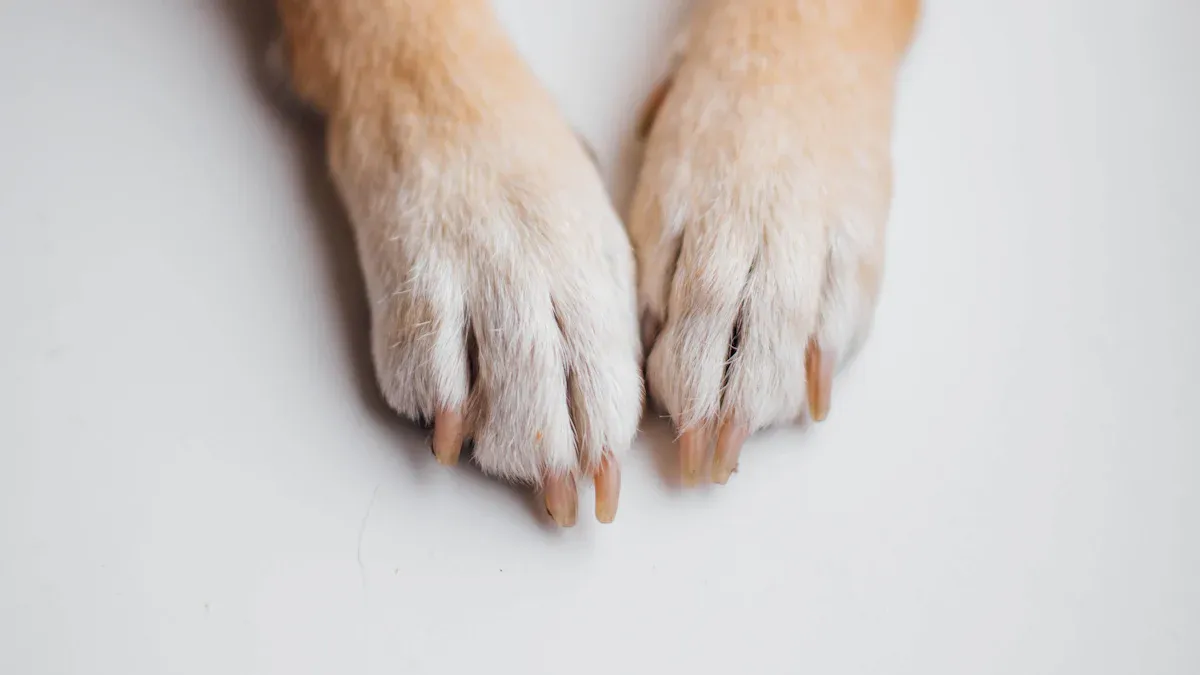
Protective Boot or Paw Cover
A protective boot is primarily a surface barrier. It may be considered when the paw pads, nails, or top of the paw need protection from abrasion, rough ground, or repeated scuffing. A boot does not automatically correct paw lift or stabilize a joint.
- Best matched to a surface-protection goal.
- Must stay aligned without rotating around the paw.
- Should not add so much bulk that toe clearance becomes worse.
- Requires moisture and skin checks after use.
Toe-Up or No-Knuckling Support
Toe-up support is designed for a different task: assisting paw clearance when the dog can still advance the limb but struggles to lift the toes. A broader no-knuckling device may add more control around the paw or lower leg. The toe-up brace guide explains the fit, walk-test, and monitoring boundaries for this category.
If the paw drags, folds under, or repeatedly lands on the top surface, do not assume that a heavier or tighter device is better. The dog’s remaining limb movement, weight-bearing ability, skin condition, and gait response determine whether toe-up assistance is suitable.
Carpal, Hock, or Other Joint-Specific Brace
A paw-level device is not a substitute for support at the actual joint. Front-leg wrist problems may require a carpal brace or splint. Rear-leg ankle-like problems may require a hock brace. Knee, hip, elbow, and other joint problems each need a structure that matches that anatomical area.
Use the dog front leg brace guide when the problem may be at the elbow, carpus, or broader front limb. For rear hock support, review the dog hock brace guide.
When a Protective Boot May Be Enough
A boot or paw cover may be enough when the support goal is limited to shielding the paw surface and the dog otherwise places the limb normally. Examples include supervised protection from repeat scraping, rough surfaces, or selected paw-dragging cases in which the main concern is abrasion rather than active toe lift.
During a short walk-test, check whether the boot:
- stays centered on the paw;
- does not rotate or pull the toes sideways;
- does not make the dog lift the limb unusually high;
- does not trap moisture or create rubbing;
- protects the intended surface without changing gait in a new way.
If the paw continues to fold under or the toes still fail to clear the ground, a protective boot alone may not match the movement problem.
When Knuckling Needs Toe-Up Support
Toe-up support may be considered when the dog still moves the limb forward and bears some weight but needs assistance lifting the paw during the swing phase. The goal is not to lock the entire leg. It is to add controlled paw-lift assistance and reduce repeated scuffing during supervised movement.
| Toe-Up Support May Fit Better When | Toe-Up Support May Not Be the First Step When |
|---|---|
| The dog still advances the limb | The dog cannot bear weight |
| The main failure is toe lift or paw clearance | Knuckling appeared suddenly or is rapidly worsening |
| The paw and skin can tolerate device contact | There is an open wound, marked swelling, or severe pain |
| A short walk-test shows more consistent paw placement | The device increases twisting, stumbling, or resistance |
| The support plan includes ongoing monitoring | The underlying problem has not been assessed |
For product-category comparison, the dog knuckling brace range separates boot-style, training-sock, and brace-style routes by their structure and intended support task.
When the Problem Is Actually the Carpus, Hock, or Another Joint
The paw can look abnormal because a higher joint is unstable or because the dog is unloading part of the limb. A front wrist that collapses toward the ground is not the same problem as paw knuckling. A rear hock that needs motion control is also not a paw-pad issue.
Signs that the support area may be above the paw include:
- visible bending or collapse at the wrist or hock;
- swelling centered around a joint rather than the paw;
- a brace that protects the paw but does not change the unstable motion;
- repeated slipping because the selected device does not anchor above and below the affected joint.
For front-wrist support, see the dog carpal brace guide. A joint-specific brace should be chosen by joint location, required motion control, fit, and the permitted activity plan—not by the general phrase “paw brace.”
When Not to Choose a Dog Paw Brace First
A product-selection guide should not delay assessment of a new or worsening problem. Contact a veterinarian before fitting a brace or boot when the dog shows sudden loss of weight-bearing, severe pain, obvious deformity, rapidly worsening coordination, an open wound, active bleeding, marked swelling, or a major change after surgery.
Bandages, incision coverings, and wound-protection plans also have different requirements from braces. Do not place a standard brace over an incision, open injury, or veterinary bandage unless the care team has confirmed the device and fitting method.
Boundary: A boot or brace may protect, position, or limit selected movement. It does not diagnose the cause, treat infection, repair a torn structure, or replace procedure-specific veterinary care.
Fit, Walk-Test, and Skin Checks
Check the Support Area
Confirm what the device is intended to support. A boot should protect the paw surface. A toe-up device should assist paw clearance. A joint brace should sit around the correct joint with enough anchoring above and below the support area.
Use a Short, Controlled Walk-Test
Test the device on a flat, non-slippery surface. Watch several straight steps and a gentle turn. The device should stay aligned and should not create new twisting, exaggerated lifting, stumbling, or refusal to move.
Inspect the Paw and Skin After Use
- Check for redness, swelling, pressure marks, moisture, or hair disturbance.
- Inspect the top of the paw, paw pads, toes, and every strap edge.
- Stop use and reassess if the device rotates, slips, rubs, or changes gait negatively.
- Follow the product-specific cleaning instructions and allow the device to dry fully.
Dog Paw Brace Selection Table
| Main Need | Likely Category | What to Confirm | Common Mismatch |
|---|---|---|---|
| Protect pads or the top of the paw | Protective boot or paw cover | Coverage, rotation control, sole bulk, moisture | Using a heavy boot when active toe lift is needed |
| Assist toe clearance | Toe-up support | Remaining limb advance, lift tension, paw alignment | Over-pulling or using it when the dog cannot bear weight |
| Control broader knuckling | No-knuckling brace | Support level, lower-limb alignment, walk-test response | Treating every paw-dragging pattern as identical |
| Support the front wrist | Carpal brace or splint | Joint location, required motion limit, anchoring | Choosing a paw-only device for carpal instability |
| Support the rear hock | Hock brace | Hock position, support structure, strap placement | Confusing hock support with paw protection |
| Protect an incision or wound | Veterinary-directed protection | Wound status, coverage, moisture, access prevention | Placing a standard brace over a wound without approval |
FAQ
Is a dog paw brace the same as a dog boot?
No. A boot mainly covers and protects the paw surface. Some products also add traction or limited positioning, but they do not automatically provide active toe lift or joint stabilization.
What type of support helps a dog that knuckles?
Toe-up or broader no-knuckling support may be considered when the dog still advances the limb but needs help with paw clearance or placement. The correct type depends on remaining movement, weight-bearing, fit, and veterinary assessment.
Can a paw brace support a carpal problem?
A carpal problem usually requires a carpal or wrist-specific brace rather than a device that covers only the paw. The structure must anchor around the affected joint and match the amount of motion control required.
How long should a dog wear a paw brace?
There is no single wear schedule for every device or condition. Follow the product instructions and the veterinary or rehabilitation plan. Use early sessions to check alignment, gait response, skin condition, and tolerance before increasing use.
What should I do if the brace twists or rubs?
Stop the session and reassess the size, strap placement, device category, and support location. Do not solve rotation by repeatedly tightening the brace if that creates pressure or changes paw position.
Choose by Support Task, Not by a Broad Product Name
A dog paw brace should not be selected from the phrase alone. Separate surface protection, toe-lift assistance, broader knuckling control, and joint stabilization before comparing products. The best-fit category is the one that addresses the correct location and movement without creating new pressure, rotation, or gait problems.
For pet brands and distributors developing paw, knuckling, carpal, or other canine support products, GaitGuard’s custom dog brace manufacturing page explains the available B2B development and supply path. Product claims and intended use should remain tied to the device structure and defined support task.
