
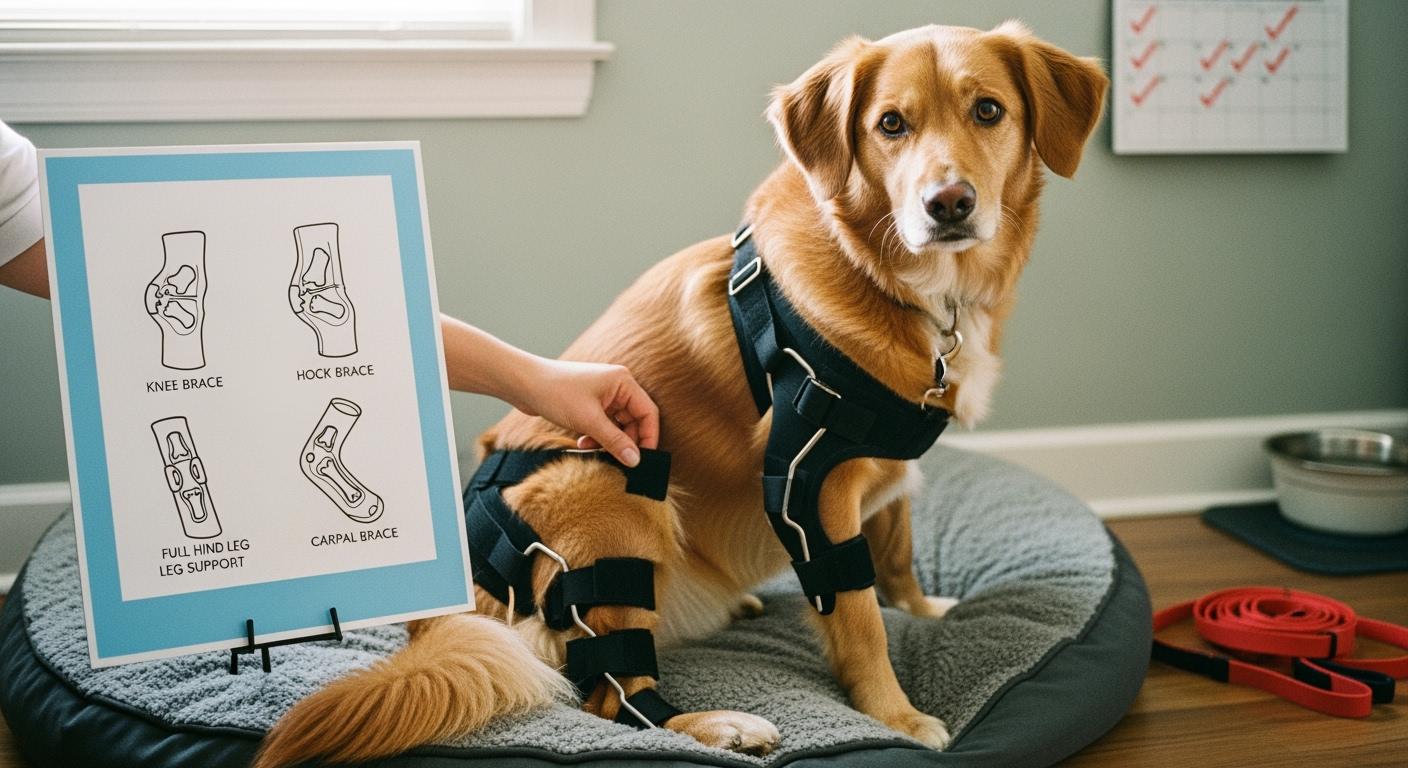
A dog back leg brace helps support your dog’s movement. You use a dog leg brace when your dog needs more help with its back legs. A good fit makes the brace more comfortable. It also helps your dog walk the same way each time. Your dog might put more weight on the hurt leg. Your dog may also walk better and feel braver with the brace on. Look for any skin problems or changes in how your dog moves. Always ask your vet for advice that fits your dog’s needs.
Key Takeaways
A dog back leg brace helps dogs move better. It also helps dogs heal after injuries or surgeries.
Picking the right brace means comparing support area, injury type, fit quality, and your dog’s activity level.
You need to check the brace every day. This keeps your dog comfortable and stops skin problems.
Ask your veterinarian for help choosing the best brace and checking whether it still fits as healing progresses.
Clean and take care of the brace often. This makes the brace last longer and keeps your dog happy.
What Is a Dog Back Leg Brace?
Definition & Purpose
A dog back leg brace helps support movement in the rear limb when a dog needs help at the knee, hock, hip, or along the full hind leg. It is commonly used to improve stability, reduce strain during walking, and support safer movement during recovery or daily management. The main goal is to limit harmful joint motion while allowing more controlled weight-bearing and better comfort.
How Dog Leg Braces Work
You might wonder how these braces help your dog move and heal. Dog braces use different ways to keep your dog safe:
Bracing makes the joints more steady. This stops injuries from getting worse and helps the body heal by stopping bad moves.
A strong brace helps your dog move the right way. It helps scar tissue grow in the right spots, following the body’s lines.
You can use a dog leg brace at different times while your dog heals. These times are Acute Protection, Controlled Support, Active Recovery, and Lifetime Maintenance.
You can see how braces work when your dog walks with less pain and more courage. The brace lets your dog stay active and keeps the back legs and spine safe. With the right brace, you give your dog a better chance to heal well and stay steady.
For product-side comparison of rear-limb support styles, review our dog leg brace options.
When Dogs Need Leg Braces
Common Conditions & Indications
You might wonder why some dogs need braces for their back legs. Many dogs have trouble moving as they get older or after getting hurt. There are a few main reasons why a dog back leg brace is needed:
Cruciate Ligament (CCL) injuries
Hip dysplasia
Arthritis
General back end weakness
Injuries to the tarsal (hock) joint, like hyperextension, sprains, or strains
A dog back leg brace can help your dog walk with less pain. It can also make your dog feel braver. Braces give support to the joint and help stop more injuries. Sometimes, you use a brace instead of surgery or after surgery to help your dog heal. Older dogs or dogs with weak legs can get a lot of help from a brace. Dogs with long-lasting arthritis or hip problems may also use braces. Knowing why dogs need braces helps you compare the best support type for your dog.
For diagnosis-led reading on arthritis, cruciate injury, hip dysplasia, and other support scenarios, continue with our dog brace solutions by condition.
Veterinary Recommendations
Vets look at a few things before they say a dog needs a back leg brace. Here are some things they think about:
Type of Brace: Each brace helps in a different way, like for small injuries or after surgery.
Size and Fit: The right size makes the brace comfy and helps it work well.
Type of Injury: The kind of problem, like a knee or hock issue, helps pick the right brace.
Activity Level: Dogs that move a lot may need stronger support.
Comfort: Padding and straps that adjust help your dog wear the brace longer.
Durability: A strong brace lasts longer and gives better support.
You should always ask your vet before you pick a brace. Your vet can explain why your dog needs a brace and which one is best. They may also talk about how well dog knee braces work for some injuries. With good advice, you can help your dog move better and stay healthy. Dog knee braces and other supports are important for helping dogs get better.
Tip: Check in with your vet often to see how your dog is doing and change the brace if you need to.
Dog Leg Brace Support Categories
Dog braces come in different types. Each type helps your dog in its own way. You need to know which brace is right for your dog. This part explains the main types of dog leg braces. It also shows how each one helps your dog move and get better.
Knee Support
Knee support braces are used a lot. You use these braces when your dog hurts its knee. Dogs with ligament tears or arthritis need them. Knee braces keep the stifle joint steady. They stop bad moves and help your dog walk with less pain. Many dogs with cranial cruciate ligament injuries use knee support. Studies show most dogs with knee braces walk better or limp less.
Study | Findings | Methodology |
|---|---|---|
Tomlinson et al. | 79% of dogs walked normal; limping got better | Looked back at dogs with carpal ligament problems |
Hart et al. | 88% of dogs had little or no limping | Owners checked dogs with stifle orthoses for CCLD |
Bertocci et al. | Joints moved better in computer test | Compared orthosis to CCL-deficient stifle |
Case et al. | One dog got better with Type 2c tendinopathy | Case report with force plate walking test |
Carr et al. | 5.1% better pressure on legs | Study with pressure walkway for 10 dogs with stifle orthosis |
Knee support is often the best match when instability is centered around the stifle rather than the hock or hip.
Hock Support
Hock support braces help dogs with tarsal joint problems. These braces go around the lower back leg. They keep the hock joint steady and lower pain from sprains or strains. Hock braces are good for dogs after injury or surgery. You might see your dog walk with more confidence with this brace. For more, check our hock support for dogs guide.
Hip Support
Hip support braces help dogs with hip dysplasia or weak hips. These braces give compression and keep the hip joint steady. The brace helps your dog by lowering pain and making movement easier. Compression helps muscles around the hip work better. Hip braces also stop big moves that can hurt your dog.
Hip braces keep the hip joint steady and help dogs move.
Compression makes muscles stronger and keeps the joint safe.
The brace stops painful moves and helps your dog feel braver.
You can find more in our dog hip brace guide.
If hip weakness, dysplasia, or rear-end instability is the main issue, compare our dog hip brace options.
Hind-Leg Stability
Hind-leg stability braces help both back legs at once. These braces are for dogs with weak legs or after surgery. They help dogs stand and walk better. Stability braces help dogs put weight on their legs the right way. Studies show dogs with these braces walk and stand better after surgery.
Evidence Type | Study Reference | Findings | Limitations |
|---|---|---|---|
Prospective Trial | Rosen et al., 2022 | All dogs with stifle braces put more weight on legs; 91% had small problems | Few dogs; short time |
Retrospective Study | Carr, 2016 | Dogs put more weight on legs after 90 days | No control group; looked back at cases |
Case Report | Muršec et al., 2025 | Two dogs walked more evenly | Very few dogs |
Note: Braces can help dogs who do not have surgery. Braces also give support before or after surgery.
For more, see our dog hind leg brace guide and dog rear leg brace guide.
Post-Activity Support
Post-activity support braces help your dog after exercise or surgery. These braces keep joints steady and stop bad moves. You use them after surgery, for small ligament tears, or for old dogs with arthritis. Post-activity braces also help during rehab therapy.
Post-activity braces give support while your dog heals.
They keep the knee joint steady and help spread weight.
These braces stop more injury and help your dog heal.
You can read more in our monitoring guides.
Summary Table: Types of Dog Braces and Their Uses
Type of Dog Brace | Main Use | Support Goal |
|---|---|---|
Knee Brace | Ligament injuries, arthritis | Keep stifle joint steady, lower pain |
Hock Brace | Tarsal injuries, arthritis | Support hock joint, stop hyperextension |
Hip Brace | Hip dysplasia, weakness | Steady hip, help movement |
Hind-Leg Stability Brace | Weakness, after surgery | Support both legs, help walking |
Post-Activity Brace | Recovery, rehab, arthritis | Steady joints, help healing |
You can learn more about dog braces in our fitting guides.
Tip: Always ask your vet which dog brace is best for your dog.
When you know about the types of dog braces, you can pick the right one for your dog. Each type of dog leg brace gives special support. They help your dog move with more comfort and confidence.
For a narrower, diagnosis-led read on rear-limb walking support, see our dog hip brace support for arthritis and senior dogs with weak hips article.
Choosing the Right Dog Back Leg Brace
Assessing Support Needs
When you start finding the right brace for your dog, you need to look at what kind of support your dog needs. Each dog has a unique body and injury. You want to make sure the brace gives the right amount of stability and comfort. A proper fit helps your dog heal and move with confidence. Use the table below to guide your assessment:
Factor | Description |
|---|---|
Accurate Measurements | Take precise measurements at specific points on your dog’s leg. This ensures a proper fit. |
Proper Placement | Place the brace in the correct spot on the leg. This helps the brace work as intended. |
Adjustment for Comfort | Look for braces with adjustment points. These let you fine-tune the fit for your dog’s comfort. |
Monitoring for Issues | Check your dog often for signs of discomfort or poor fit. This keeps the brace effective. |
Use the same measurement method each time and check placement after walking, resting, and strap adjustment. Regular checks help you spot problems early and keep your dog safe.
Factors: Injury, Size, Activity
Finding the right brace depends on your dog’s injury, size, and activity level. Each factor changes what kind of dog leg brace will work best.
Different braces help with different injuries. For example, dog knee braces work well for ACL tears. Hock braces support tendon injuries. Hip braces help with hip weakness.
The size and fit of the brace matter. A perfect fit keeps the injured area stable and stops more injury. Dogs come in many sizes, so always check the size and fit before you choose.
Active dogs need more support. If your dog runs or plays a lot, look for a brace that gives extra stability. This helps your dog stay safe during daily activities.
You should always think about your dog’s daily routine and needs. If your dog needs a brace for post-surgery recovery, talk to your vet about the best type. Our monitoring guides can help you track your dog’s progress and comfort.
Custom vs. Standard Braces
You can choose between custom and standard dog leg braces. Each type has its own benefits. Custom braces are made for your dog’s exact shape. They give a perfect fit and high comfort. These work well for dogs with special needs or unusual injuries. Standard braces come in set sizes. They fit many dogs and are easy to use for post-surgery recovery or common injuries.
When finding the right brace, think about your dog’s body, injury, and how much support is needed. Custom braces may take more time to make, but they offer a tailored solution. Standard braces are ready to use and work well for many dogs. Both types can help your dog move better and heal faster.
Tip: Always check the brace for comfort and fit after you put it on your dog. Good monitoring helps you catch problems early.
Finding the right brace means looking at your dog’s needs, measuring carefully, and checking comfort every day. Use our fitting guides and monitoring guides for more help with proper fitting and daily checks. This will help you give your canine the best support possible.
Measuring & Fitting Dog Leg Braces
Measurement Steps
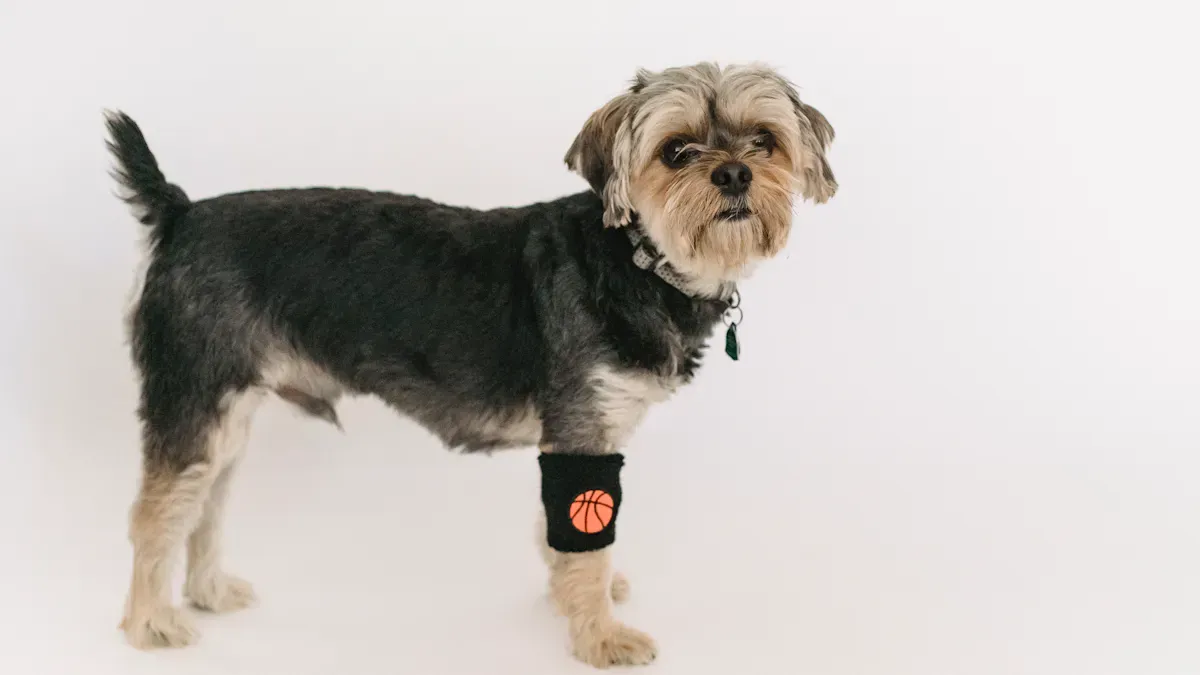
You need to measure your dog’s leg carefully. Lay your dog on its side. Keep the other leg flat on the floor. Bend the hip, knee, and hock of the leg you want to measure. Use a soft tape and press it flat against the leg. Make sure the room is bright so you can see well. Take pictures of each measurement for your records. Write down the numbers and check them with your photos. Ask someone to help hold your dog still. Give treats to keep your dog calm.
Thigh Length: Measure from the groin to the knee cap.
Knee Length: Measure from the knee cap to the tibial tuberosity.
Tibia Length: Measure from the knee to the back of the hock.
Thigh Circumference: Wrap the tape around the upper thigh, about one inch above the knee joint.
Knee Circumference: Measure directly over the knee cap.
Lower Leg Circumference: Place the tape just below the knee.
Leg Length: Measure from the top of the thigh to the hock joint.
Fitting Tips
Your dog should feel safe and comfy. Make sure the brace fits snug but not too tight. This lets your dog move and keeps blood flowing. Add padding where the brace might rub or cause sore spots. Watch your dog walk and check the fit. Adjust the brace if needed. Clean the brace with mild soap and water. Let it dry in the air before using it again. Look for damage and fix problems right away.
Tip: Give treats and gentle praise to help your dog like the brace during fitting.
Ensuring Comfort & Effectiveness
A good fit helps your dog feel better and heal. Custom fitting, like casting or 3D scanning, spreads pressure evenly and keeps the leg lined up right. Owners must follow daily routines and check the brace often. Vets need to watch for changes and make adjustments. Rehab helps your dog get stronger with exercise and weight control.
Evidence-Based Practice | Importance |
|---|---|
Custom fitting | Spreads pressure and keeps alignment |
Owner compliance | Needed for daily use and checking |
Veterinary oversight | Important for changes and progress |
Integration with rehabilitation | Helps healing with exercise and weight control |
Start with short sessions each day to get your dog used to the brace. Check often for skin problems, swelling, or slipping. Work with your vet and brace experts for the best fit. A perfect fit gives your dog the best chance to recover and stay comfortable.
Daily Use & Monitoring
Recommended Wear Time
You should follow a daily schedule when using a dog back leg brace. Veterinary guidelines recommend that most dogs wear their brace for 8 to 12 hours during active periods. Remove the brace at night or when your dog rests for a long time. This routine lets the skin breathe and helps prevent irritation. Giving your dog time off from the brace also supports good circulation. You help your canine recover by balancing support and rest each day.
Adjusting to the Brace
Many dogs need time to get used to wearing a brace. Start by letting your dog sniff and explore the brace. Put it on for short periods at first, then slowly increase the time. Use treats and praise to create a positive experience. Watch your dog for signs of discomfort or resistance. Adjust the brace if needed to improve fit and comfort. If you have questions about the brace or your dog’s reaction, ask your veterinarian for advice.
Here are some tips to help your dog adjust:
Let your dog sniff the brace before putting it on.
Begin with short wear times and increase slowly.
Use treats and praise for positive reinforcement.
Check your dog’s reaction and adjust as needed.
Ask your vet for fitting advice.
Fit-Check & Skin Monitoring
Daily checks keep your dog safe and comfortable. Inspect the skin under the brace twice a day for redness, rubbing, or sores. Clean and dry the fur before putting the brace on. Trim any extra fur that bunches under straps. Wash the brace as the manufacturer suggests and replace padding if it wears out. If you notice swelling, more limping, or your dog starts knuckling the paw, remove the brace and call your vet. These steps help you maintain maximum comfort and support for your dog.
Cleaning & Maintenance
Cleaning Instructions
You need to keep your dog back leg brace clean to protect your canine’s skin and extend the brace’s life. Start by taking the brace apart if possible. Soak each piece in warm water mixed with a small amount of laundry detergent for five minutes. Gently scrub away dirt using a washrag or a toothbrush for tough spots. Rinse every part under warm water until all soap is gone. Let the brace air-dry completely before you use it again. You can use a hairdryer on a cool setting if you need to speed up drying. Clean the brace every two to three days or more often if your dog is active outdoors.
Tip: Clean straps and pads often to prevent odor and skin irritation.
Maintenance Tips
You should follow a routine for regular maintenance to keep the brace working well. Use the table below to guide your schedule:
Maintenance Tip | Frequency | Description |
|---|---|---|
Inspect Skin & Fit | Daily | Check for redness, sores, or swelling. Adjust straps for proper fitting. |
Clean the Brace | Every 2–3 Days | Use mild soap and water. Air dry fully before use. |
Veterinary Check-Up | Every 4–6 Weeks | Visit your vet to check healing and see if adjustments are needed. |
Brace Adjustment | As Needed | Refit the brace if your dog’s leg changes shape or size. |
Regular maintenance helps you spot problems early and keeps your dog comfortable. Always follow the manufacturer’s instructions for cleaning and care.
Troubleshooting Issues
You may notice some common problems when using a dog back leg brace. Here are issues you might see and ways to address them:
Slipping or shifting: Check the straps and adjust for a snug fit.
Redness or sores: Remove the brace and let the skin rest. Clean the area and consult your vet.
Odor or buildup: Wash the brace more often and let it dry completely.
Stiffness or wear: Inspect for cracks or worn parts. Replace damaged pieces as needed.
Difficulty walking: Make sure the brace is on the correct leg and fits well.
If you see swelling, limping, or changes in your dog’s movement, remove the brace and contact your veterinarian. Proper fitting and maintenance will help your canine stay safe and active.
For walk planning, fit checks during activity, and safety routines with braces, review our dog gait training support guide.
Picking the right dog back leg brace helps your dog feel better. You should choose a brace that matches your dog’s injury. Make sure the brace fits well and check it every day. Daily checks help lower pain and help your dog walk better. This also helps your dog heal faster. Your vet should look at your dog often to make sure the brace is working. The vet will also check if the brace still fits right. Use this guide to help you and look at the table below for more tips on dog orthopedic care.
Topic | Details |
|---|---|
Fitting Procedures | Work with a rehab therapist or orthotist |
Monitoring | Check skin and adjust as your dog changes |
FAQ
How do you know if your dog needs a back leg brace?
You notice limping, weakness, or trouble standing. Your veterinarian can help you decide if a brace supports recovery or daily movement.
How long should your dog wear a back leg brace each day?
Most dogs wear their brace for 8 to 12 hours during active times. Remove the brace at night or when your dog rests.
What signs show a brace fits correctly?
You see snug straps, no slipping, and your dog moves comfortably. Check for redness or swelling under the brace.
How do you clean a back leg brace?
Remove the brace. Wash with mild soap and warm water. Air dry completely before use. Clean every two to three days.
Can you use a brace during rehabilitation exercises?
You use the brace during rehab sessions to support safe movement. Ask your veterinarian for guidance on exercise routines.
