
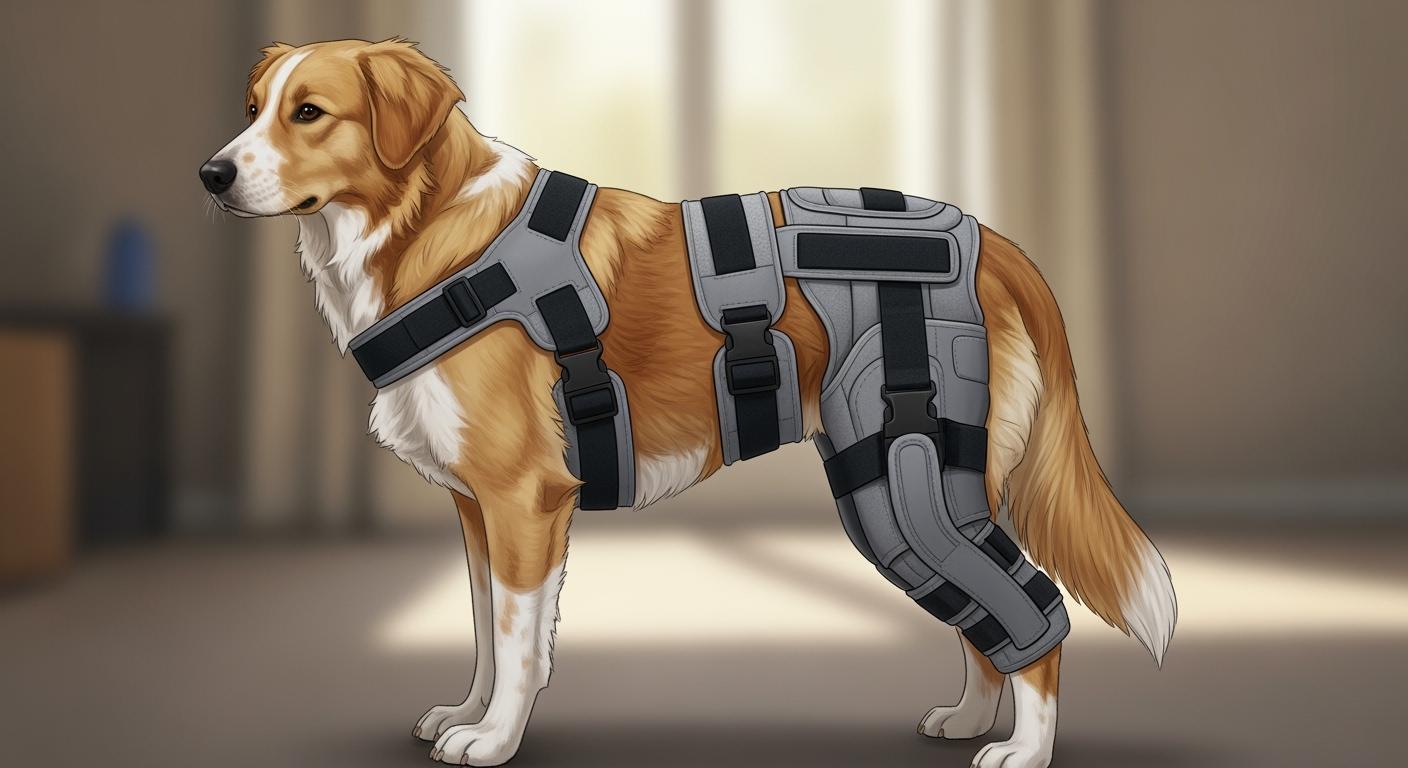
You are important in helping dogs who have trouble moving. Many dogs, especially medium and large ones, get hip dysplasia. Some pure breeds can have this problem in more than 70% of dogs. Older dogs often have joint problems. Over 80% of dogs that are eight years or older may need a hip support brace. A dog brace for hips can help dogs walk better and feel more comfortable. When you know what each dog needs for support, you help them feel confident and live better.
Key Takeaways
Many dogs, especially older ones, use hip braces to help them move and feel better.
Watch for signs of hip problems in dogs, like limping or not wanting to walk, to see if a brace is needed.
Pick the right kind of brace for your dog’s needs, age, and how active they are to give the best support.
Check the brace often to make sure it fits well and does not bother your dog.
Ask a veterinarian for help choosing and fitting the brace so your dog can heal well.
Can a Dog Brace for Hips Help?
Which Dogs Benefit
Many dogs have trouble moving as they get older or after an injury. A dog brace for hips can help dogs who have weak hips or back legs. It also helps dogs who need extra support after surgery. Some breeds and ages are more likely to have hip problems. The table below shows which dogs often need senior dog hip support:
Breeds | Age Group |
|---|---|
Labrador Retrievers | Senior Dogs |
Boxers | Senior Dogs |
German Shepherds | Senior Dogs |
Pitbulls | Senior Dogs |
Australian Shepherds | Senior Dogs |
Golden Retrievers | Senior Dogs |
Doodles | Senior Dogs |
Mixed breed pups | Senior Dogs |
Puppies and Young Dogs |
Senior dogs usually need more help with their hips. Puppies and young dogs can also use braces if they show early signs of hip dysplasia or get hurt. Picking the right support can help dogs move better and feel happier.
Common Signs of Hip Issues
You can notice hip problems in dogs by watching how they move and act. Here are some signs that show a dog may need a brace:
Weakness in the back legs
Limping, mostly in the back legs
Not wanting to go up stairs or jump on things
Pain in the joints when walking
Dog looks shaky or not steady on their feet
Not wanting to stand up
Moving slowly or not moving much
Limping on one side, often from a stiff hip joint
Having trouble getting up after lying down for a long time
Losing muscle in the back legs
Acting different, like not playing as much
Dogs with hip problems may show one or more of these signs. Giving support early with a dog brace can help dogs feel better and stay active. If you see these changes, it is a good idea to ask a vet for help.
Understanding Hip Support Brace Function
How Hip Braces Work
You use a hip support brace to help dogs with mobility issues. The brace gives joint support and keeps the hip stable. When you fit a brace, you guide the dog’s movement and prevent abnormal motion. This helps reduce stress on damaged ligaments or cartilage. You also help the dog move in a way that supports healing. The brace keeps the hip in a safe position and helps the dog walk with more confidence.
Here is how dog braces work to improve hip stability:
Bracing enhances joint stability by preventing abnormal movement.
The brace reduces stress on damaged ligaments or cartilage.
A structured brace guides movement and promotes organized scar tissue growth along natural tension lines.
You see these effects when you use a brace for dogs with mobility issues. The brace helps the dog move better and feel less pain.
Support Goals and Limitations
You use a hip support brace to reach several goals. You want to improve the dog’s comfort and help them walk. You also want to protect the hip joint and slow down further injury. The brace supports the dog’s daily activities and helps them stay active. You can use a brace for dogs with hip dysplasia, arthritis, or after surgery.
You must know that a brace does not cure hip problems. The brace gives support and stability, but you still need to monitor the dog’s progress. You should check the fit and make sure the brace stays comfortable. You may need to adjust the brace as the dog’s needs change. You should talk to a veterinarian if you see new mobility issues or if the brace does not help.
A hip support brace works best when you use it as part of a care plan. You help the dog stay active and comfortable while protecting their hip joint.
Types of Dog Braces for Hips
There are many kinds of dog braces for hips. Each one has special features and helps in different ways. Knowing the differences lets you pick the best hip brace for your dog. You should think about your dog’s needs and health.
Compression Braces
Compression braces give gentle pressure around the hip joint. These braces are good for dogs with hip dysplasia or arthritis. The pressure helps keep the joint steady and lowers pain. Dogs with mild trouble moving can use this hip support brace. Compression braces are also helpful for older dogs. You can use them for dogs after surgery or for extra comfort.
Tip: Compression braces are simple to put on and take off. You can use them for short walks or when your dog is resting.
Compression braces are good for dogs with early hip dysplasia. They help with pain and make movement easier. Dogs with arthritis feel better and move more when using compression braces.
Supportive Harnesses
Supportive harnesses let you control your dog’s movement better. You use a dog support harness for dogs with weak hips or back legs. These harnesses help dogs after surgery or during rehab. Vets suggest supportive harnesses for recovery and therapy.
Here is a table showing the advantages of supportive harnesses:
Advantages of Supportive Harnesses | Description |
|---|---|
Provides temporary assistance | Helps dogs recover from injuries by supporting movement without overexertion. |
Recommended for rehabilitation | Veterinarians advise harnesses for pets undergoing physiotherapy, aiding in controlled movement and muscle recovery. |
Enhances quality of life | Offers dignity and comfort for aging or injured dogs, improving their overall well-being. |
Reduces risk of injury | Distributes weight safely, preventing back injuries for owners when lifting dogs. |
Stress-free daily routines | Makes activities like walks and bathroom breaks easier and less stressful for both dog and owner. |
You can use a full body support harness for dogs with serious trouble moving. This dog brace for hips helps you lift and guide your dog. Supportive harnesses make life easier for older dogs and their owners.
Rear Leg and Hip Combo Braces
Rear leg and hip combo braces support the hips and back legs together. You use these braces for dogs with more than one joint problem or bad hip dysplasia. Dogs with arthritis or trouble moving get help from this brace. Combo braces keep the joints steady and spread out weight. Dogs move better and feel less pain.
Joint stabilization helps dogs with hip dysplasia and arthritis move safely.
Weight redistribution reduces stress on weak hips and legs.
Improved movement efficiency allows dogs to walk and stand with less discomfort.
You can use rear leg and hip combo braces for older dogs who need full body support. These braces help dogs with big mobility problems.
Custom vs. Off-the-Shelf Types
You can pick custom or off-the-shelf dog hip braces. Custom braces fit your dog’s body shape exactly. Off-the-shelf braces are made to fit most dogs. The table below compares the features:
Feature | Custom Braces | Off-the-Shelf Braces |
|---|---|---|
Fit | Tailored for individual dogs | One-size-fits-all |
Support | Superior support | May not provide adequate support |
Comfort | More comfortable and tolerable | Less comfortable |
Price | Higher price tag | More affordable |
Accessibility | Longer wait times | More accessible |
Custom braces are less likely to slip or twist. You get better support for your dog’s needs. Off-the-shelf braces are easier to buy and cost less. Small fit problems can change how the brace works. Custom braces fit better and are best for dogs with special needs.
Comparing Main Types of Dog Braces
There are different dog braces you can buy. Adjustable hip braces can be changed to fit your dog. Non-adjustable hip braces have a set design and usually cost less.
Type | Features |
|---|---|
Adjustable Hip Braces | Customizable fit and versatility |
Non-Adjustable Hip Braces | Standardized design, often more cost-effective |
You should pick the best hip brace for your dog based on their health, age, and activity. Dogs with hip dysplasia, arthritis, or trouble moving need different braces. Orthopedic brace designs give strong support. Dog leg braces help dogs with hip and leg problems.
Note: You should think about why your dog needs a brace before picking one. Dogs after surgery or older dogs need special brace types.
The right hip brace can make your dog’s life better. You help your dog stay active and comfortable. You support healing and daily movement with the best hip brace. Different dog braces help with hip dysplasia, arthritis, and trouble moving. You see good results when you match the brace to your dog’s needs.
Dog Hip Brace Fit and Positioning
Measuring for Proper Fit
You need to measure your dog before picking a hip brace. Good measurements help you choose the best brace. Follow these steps:
Make sure your dog stands up straight.
Use a soft tape to measure. Wrap it gently and leave space for one finger.
Measure the chest at the widest part behind the front legs.
Measure from the bottom of the back paw to the top of the hip.
Measure the thigh halfway between the knee and groin.
Put these numbers in the sizing form. For German Shepherds, check if there are special rules.
These steps help you find the right brace. The brace will give your dog good support.
Ensuring Comfort and Stability
The brace must fit well to work right. Check the brace often. Look for redness or sores. A snug brace stops rubbing and keeps your dog safe. Dogs feel better and move easier with the right brace. Good sizing lets your dog walk normally and lowers injury risk.
Good measurements make the brace work better.
Checking often keeps your dog safe and happy.
Watching your dog helps you pick the best brace as needs change.
Adjustment Tips
To help your dog feel comfortable, let them get used to the brace slowly. Ask experts like orthotists or physical therapists for help. Start therapy before using the brace so your dog builds strength and learns how to move.
You can change the brace to make your dog feel better. The joint system helps your dog walk by controlling leg movement. A two-piece side design lets you adjust it a lot. The pelvic part sits under the iliac crest so your dog is comfortable when sitting. Use the compression belt with pull tabs to make the brace tight. Soft pads and cushions make the brace more comfy. These things help you find the right brace and keep your dog steady.
Finding the right brace means you measure, fit, and adjust carefully. You help your dog move and feel good every day.
Evaluating Support Needs and Brace Selection
Matching Brace Type to Condition
You need to pick the right brace for your dog’s problem. First, talk to your veterinarian. They will tell you if your dog has hip dysplasia, arthritis, or another joint issue. Each problem needs a different kind of brace. Dogs with arthritis do best with a maintenance brace. Use this brace on long walks, when playing outside, or when it is cold. Dogs with hip dysplasia often need shoulder and hip braces. These braces help with movement and pain as part of a rehab plan.
Condition | Recommended Brace Type | Usage Recommendations |
|---|---|---|
Arthritis | Maintenance brace | Use during longer walks, outdoor play, or colder weather |
Hip Dysplasia | Shoulder and hip braces | Use for rehabilitation and pain management |
Tip: Always ask your veterinarian before you choose a brace. They can help you find the best one for your dog.
Considering Age, Breed, and Activity
Think about your dog’s age, breed, and how active they are when you pick a hip brace. Big dogs like Labradors, Golden Retrievers, and German Shepherds may need help at 12 to 18 months old. Medium dogs like Bulldogs and Pit Bulls might need support by age 2 or 3. Small dogs such as Dachshunds and Pugs can have joint problems between 2 and 4 years old. Active dogs need braces that are strong and can be adjusted. Older or less active dogs may like softer, more comfy braces.
Large breeds (start at 12-18 months): Labradors, Goldens, German Shepherds, Rottweilers, Great Danes
Medium breeds (start at 2-3 years): Bulldogs, Pit Bulls, Chow Chows, Shar Peis
Small breeds (start at 2-4 years): Dachshunds, Cavalier King Charles Spaniels, Pugs, French Bulldogs
When to Consult a Veterinarian
You should always talk to your veterinarian or a rehab expert when you pick or change a hip brace. They will check if the brace fits well and does not hurt your dog’s skin. They can help you pick braces made from safe materials. Regular checkups make sure the brace still helps your dog move and heal. If you see your dog is uncomfortable, has red skin, or moves differently, call your veterinarian right away.
Note: Picking and caring for the right brace helps your dog feel better, move more, and enjoy life.
Daily Use and Care for Hip Support Braces
Introducing the Brace
When you introduce dog braces to your patient or pet, you help set the stage for a positive experience. Start in a quiet, calm space so your dog feels safe. Let your dog sniff and explore the brace before you put it on. This step helps reduce stress and builds trust. Once you secure the brace, take your dog for a short, easy walk on a leash. Watch how your dog moves and give plenty of praise or treats. Every dog adapts at a different pace, so move forward slowly and let your dog set the tempo.
You should check that the harness fits snugly, like a collar around the neck. Thigh straps need to sit above the knee bend without pinching. Leg panels should hug the hips, and adjustable velcro helps you get the right fit. Remove the brace at night to let the skin breathe. Take off the brace if you crate your dog or leave them alone.
Monitoring and Maintenance
Daily care keeps dog braces working well and supports your dog’s recovery. Wipe down the brace with a damp cloth to remove dirt and debris. Check for signs of wear, such as frayed straps or damaged materials. Inspect the fit each day to make sure it stays snug but not too tight. Watch your dog’s skin for any irritation or rubbing.
Regularly look for loss of elasticity or other damage. If your dog seems uncomfortable or you notice irritation, consider replacing the brace. Keep an eye on your dog’s weight, as changes can affect how the brace fits. Consistent monitoring and maintenance help dog braces provide steady support and comfort during recovery.
When to Seek Professional Guidance
Signs of Poor Fit or Ineffectiveness
You want dog braces to help dogs move better and feel less pain from hip dysplasia. Sometimes, a brace does not fit right or does not work as expected. You need to watch for signs that show the brace is not helping. If you see any of these signs, you should stop using the brace and talk to a professional.
Your dog shows signs of discomfort, such as whining or trying to remove the brace.
You notice redness or sores on the skin under the brace.
Skin irritation appears, especially when you first start using dog braces.
Your dog limps more or moves less than before.
The brace slips out of place or twists during normal activity.
Dog braces should support the hips and help with hip dysplasia. If you see these problems, the brace may not give enough support. A poor fit can slow down recovery or even cause new problems. You should check the brace every day and look for changes in your dog’s movement or skin.
Veterinary Assessment
You should always ask a veterinarian for help if you have concerns about dog braces. A professional can check if the brace fits well and supports your dog’s hips. They can also help you choose the right brace for hip dysplasia or other joint issues. If your dog has trouble walking, loses muscle, or does not improve during recovery, a veterinary assessment is important.
Veterinarians know how to spot problems early. They can suggest changes to the brace or recommend a different type. You may need a new fitting if your dog gains or loses weight. Regular checkups help you make sure dog braces work well for hip dysplasia and support your dog’s recovery. You help your dog stay active and comfortable when you seek professional guidance at the right time.
You are important in helping dogs move better. When you pick and use a dog brace for hips, follow these steps:
Ask a veterinarian for help and advice.
Measure your dog carefully in the right spots.
Put the brace on the right way so it works well.
Make changes to keep your dog comfy and safe.
Watch your dog for any pain or if the brace does not fit.
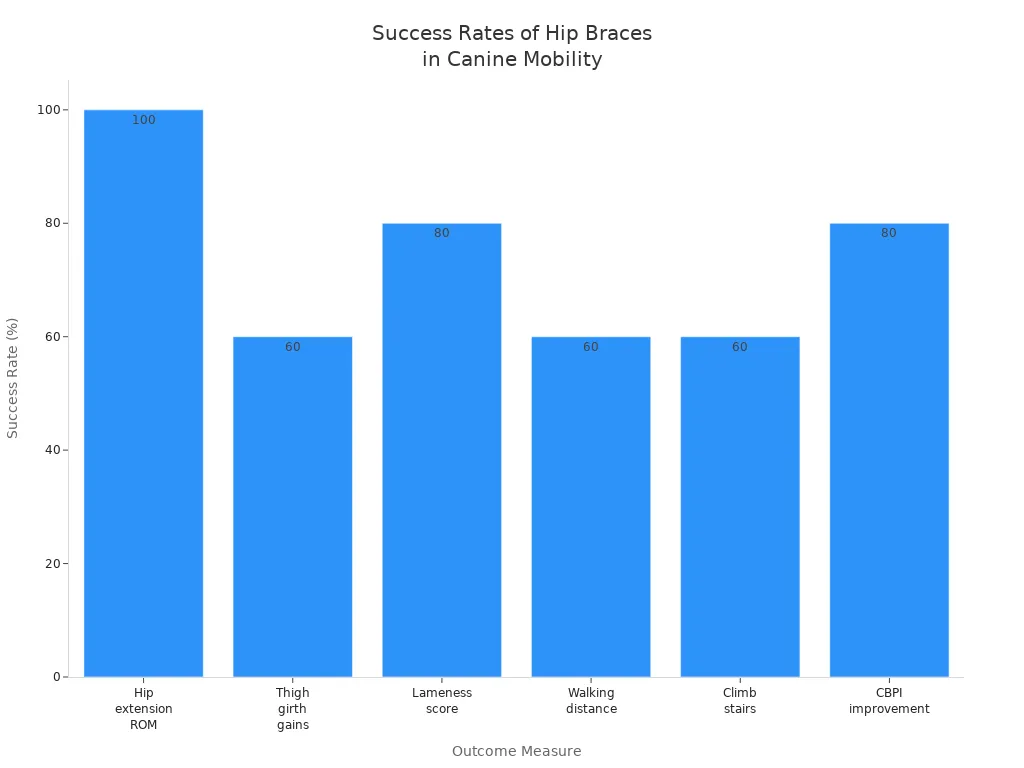
Dog hip braces can lower pain and make hips more steady. They also help dogs get better after an injury. You will see dogs stretch their hips more, walk farther, and limp less.
Outcome Measure | Success Rate |
|---|---|
Gains in hip extension ROM | 100% |
Decreased lameness score | 80% |
Improvement in walking distance | 60% |
Use this guide to help you do the right things for your dog’s hips. Keep checking with your vet and watch your dog every day to get the best results.
FAQ
How do you know if your dog needs a hip brace?
You notice signs like limping, weakness in the back legs, or trouble standing up. If your dog avoids stairs or shows pain while walking, a hip brace may help. Always ask your veterinarian for guidance.
Can you use a hip brace for dogs with hip dysplasia?
Yes, you can use a hip brace for dogs with hip dysplasia. The brace supports the hip joint and helps your dog move with less pain. It also improves stability during daily activities.
How should you clean and maintain a dog hip brace?
Wipe the brace with a damp cloth every day. Check for damage or wear. Inspect your dog’s skin for irritation. Replace the brace if you see frayed straps or loss of elasticity.
How long should your dog wear a hip brace each day?
You start with short periods and gradually increase time as your dog adjusts. Remove the brace at night or when your dog rests. Monitor your dog’s comfort and follow your veterinarian’s advice.
What is the best way to measure your dog for a hip brace?
Use a soft tape measure. Measure the chest behind the front legs, the thigh, and the distance from the paw to the hip. Record these numbers and check the sizing guide for your dog’s breed.
