
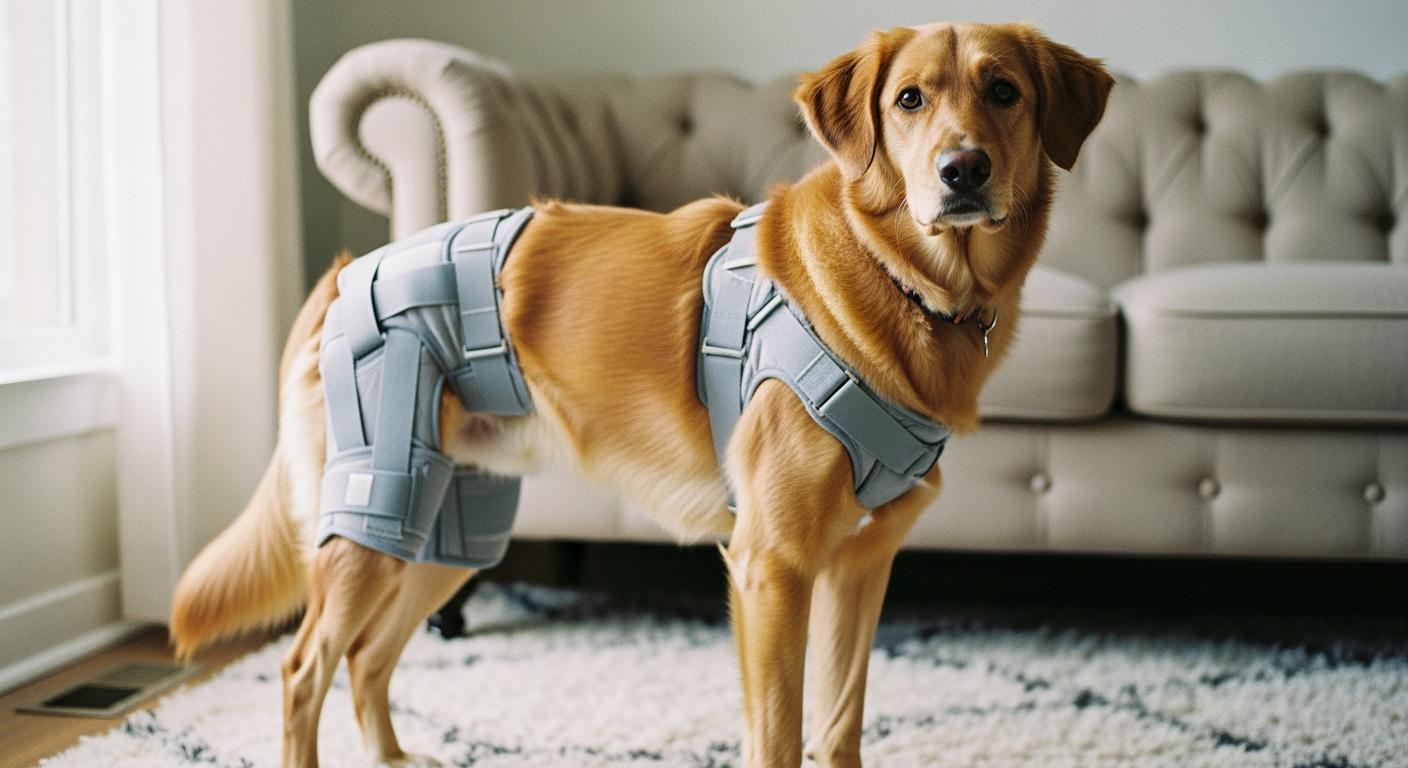
A dog hip support brace is commonly considered for hip dysplasia, arthritis, rear-end weakness, and daily mobility support in dogs that need more stability through the hip area. The right setup depends on support level, fit quality, daily-use tolerance, and whether the goal is comfort, walking support, or short-term recovery management. This guide explains how to compare brace types, fit checks, and related support options in a more structured way.
Key Takeaways
A dog hip support brace may improve stability, comfort, and daily movement in selected cases such as hip dysplasia, arthritis, or rear-end weakness.
Pick the right brace by comparing support level, comfort, adjustability, and the dog’s daily routine needs.
Check the fit of the brace every day. A tight fit keeps it from slipping and lets your dog move easily.
Let your dog wear the brace for a short time at first. Slowly let your dog wear it longer as they get used to it.
Ask your veterinarian for help picking and fitting the brace. They can make sure your dog gets the best support.
What Is a Dog Hip Support Brace?
A dog hip support brace gives extra help to your dog’s hip area. You use this tool when your dog has trouble moving because of hip dysplasia, arthritis, or weakness in the back legs. The brace wraps around the hips and lower back. It helps your dog walk, stand, and play with more comfort and stability. You see these braces in clinics, rehab centers, and homes where dogs need extra support for daily life.
How Hip Braces Work
A dog hip support brace uses simple but effective mechanical principles to help your dog move better. When you fit the brace on your dog, it acts like an extra set of ligaments. The brace keeps the hip joint in a natural position. This limits odd movements that can cause pain or more damage. You help your dog by giving the hip joint more stability.
The brace also spreads out the forces that press on the hip. This means less stress on the sore or weak parts. Your dog feels less pain and can move with more confidence. The brace gives gentle pressure to the skin and muscles. This helps your dog sense where its hip is and how it moves. Over time, your dog learns to walk and stand with better balance.
Joint support and stabilization: The brace acts as an external ligament. It keeps the hip joint in line and reduces pain.
Biomechanical offloading: The brace shifts weight away from damaged hip areas. This lowers joint stress.
Proprioception and neuromuscular re-education: The brace gives feedback to your dog’s body. This helps your dog move with more control and confidence.
You use a dog hip support brace to help with hip dysplasia, arthritis, or after surgery. The brace does not cure these problems, but it makes daily life easier for your dog.
Types of Dog Hip Braces
You find several types of hip braces for dogs. Each type gives a different level of support and comfort. You choose the right brace based on your dog’s needs and your daily routine.
Soft hip support braces: These braces use flexible materials. They give gentle support and are easy to put on. You use them for mild hip dysplasia or early signs of weakness.
Structured hip braces: These braces have firmer panels or stays. They give more stability to the hip joint. You use them for moderate to severe hip dysplasia or after surgery.
Hip support combined with hind-leg assistance: Some braces connect to rear leg straps. They help dogs with both hip and rear-end weakness.
Hip support used with mobility harnesses: You can pair a hip support brace with a mobility harness. This gives your dog help with standing, walking, or climbing stairs.
You may also see terms like dog hip joint corrective brace, dog hip correction brace, or canine orthopedic brace. These names describe braces that help align the hip joint and support your dog’s movement. You use these tools to help dogs with hip dysplasia, arthritis, or general weakness in the back end.
A dog hip support brace is not the same as a simple wrap or bandage. It is a special tool made for canine anatomy. You choose the right brace by looking at your dog’s size, hip condition, and daily needs. Always check the fit and comfort each day to make sure your dog gets the best support.
Tip: Always talk to your veterinary team before starting a new brace. They can help you choose the right type and show you how to fit it safely.
For product-side comparison of support styles, review our dog hip brace options.
What a Dog Hip Support Brace Is Designed to Support
Hip-area stability
A dog hip support brace helps the pelvis and top of the back legs. The brace wraps around these spots to stop strange hip movements. It gives your dog more balance and helps weak muscles work better. This is good for dogs with hip dysplasia or hip joint problems. Your dog can walk with less pain and feel braver.
Lower-back support
A dog hip support brace may also provide secondary support around the pelvis and lower-back area when rear-end weakness affects balance and posture. In this context, the goal is not spinal bracing, but better hip-area stability and improved confidence during standing, walking, and assisted daily movement.
Rear-end assistance during daily movement
Mechanism | Description |
|---|---|
Compression and Support | Gives gentle pressure around the hip. This makes the hip steadier and hurts less. |
Muscle Engagement | Helps the muscles near the hip work better. This makes the joint stronger and steadier. |
Pain Reduction | Stops big movements and gives steady pressure. Many dogs like this feeling. |
Improved Confidence | More balance helps your dog move with courage. This helps muscles grow and work well. |
A hip support brace helps dogs with weak back ends. The brace gives pressure and support, helps muscles, lowers pain, and boosts confidence. Your dog can do daily things more easily.
Comfort as part of broader mobility care
A hip support brace can make dogs much more comfortable. The brace keeps the hips steady and supports the joint. This lowers pain and swelling. Your dog feels better when moving and walks in a smoother way. You will see your dog do more things with less trouble. This is important for your dog’s movement and healing.
Main Types of Hip Support for Dogs
There are different kinds of hip support for dogs. Each kind helps with hip dysplasia, hip joint problems, and moving around. You pick the best one for your dog’s needs and daily life.
Soft hip support brace designs
Soft braces let your dog move more freely. They help your dog feel where its body is.
How well soft braces work depends on how stiff the material is and how much pressure they give. This changes how comfy the brace is and how well your dog can feel its hips.
More structured hip brace designs
Structured braces keep the hip steady and stop bad movements. You use them for dogs with worse hip dysplasia.
These braces give your dog more safety and support for the hip.
Hip support combined with hind-leg assistance
Hip support braces keep your dog’s hips steady and give pressure to lower swelling and help healing.
They help dogs with early or medium hip dysplasia walk without pain.
If your dog cannot move well, you might need extra help like a wheelchair.
Hip support used with mobility harnesses
You can use a hip support brace with a mobility harness. This helps your dog stand up, walk, or go up stairs. You give your dog more help for getting better and moving every day.
Tip: Check your dog’s comfort and support needs every day. Change the brace if needed so it fits right and keeps your dog safe.
If the dog also needs help with stairs, car entry, or assisted walking, compare our dog lift harness options.
Dog Hip Support Brace vs Other Support Tools
Hip support brace vs hip brace
You may see the terms “hip support brace” and “hip brace” used in clinics or guides. These tools both help your dog’s hip, but they have different goals. A hip support brace gives gentle support to the hip area and helps your dog move with less pain. You use it for daily comfort and stability. A hip brace often gives firmer control and may limit movement more. You may choose a hip brace for dogs after surgery or when you need to keep the hip joint very still. Both options help with hip problems, but you pick the one that matches your dog’s needs and activity level.
Hip support brace vs lift-assist harness
A lift-assist harness works in a different way. You use a harness to help your dog stand, walk, or climb stairs. The harness lets you lift your dog’s back end with your hands. A dog hip support brace stays on your dog and gives steady support to the hip and lower back. You do not need to hold your dog all the time. Many clinics use both tools for dogs with rear-end weakness. You may use a harness for short tasks and a brace for daily movement.
Tool | Main Purpose | How You Use It |
|---|---|---|
Hip support brace | Hip and lower back support | Worn daily for steady support |
Lift-assist harness | Lifting and guiding | Used for stairs or car entry |
When combined support routines make sense
You may find that your dog needs more than one tool. Some dogs use a hip support brace with a lift-assist harness or other dog leg braces. This helps when your dog has both hip and rear leg weakness. You can switch tools based on your dog’s daily routine. You may use a brace for walks and a harness for stairs. Always talk to your veterinary team about treatment options. They can help you build a safe and helpful support plan for your dog.
Tip: Watch your dog closely when you use more than one support tool. Make sure each tool fits well and does not cause rubbing or pressure.
For broader setup advice on walking support, stability, and daily comfort, continue with our dog mobility support solutions.
How to Choose the Right Dog Hip Support Brace
Selecting the best dog hip support brace can help your canine patient or companion move with more comfort and stability. You need to look at several factors before you choose the right hip correction brace. Each dog has unique needs, so you must match the brace to the support area, comfort, daily routine, and ease of fit.
Choose by support area
You want the brace to give the right amount of support for your dog’s hip. If you pick a brace that is too stiff, your dog may lose muscle strength. If you pick one that is too soft, your dog may not get enough stability. You should look for a brace that matches the level of support your dog needs.
Here is a simple way to check if you have chosen the right hip correction brace for the support area:
Pick a brace that gives enough support but does not stop all movement. Your dog should still use its muscles.
Make sure the brace covers the right part of the hip and leg. For example, a dog hip joint corrective brace should cover the hip and upper thigh, not just the lower leg.
Check that the brace fits snugly and follows the shape of your dog’s body. A loose or pipe-like brace will not help stabilize the joint.
Tip: Always measure your dog’s hip and leg before you buy a brace. Accurate measurements help you choose the right hip correction brace for your dog’s needs.
Choose by comfort and adjustability
Comfort is key for daily use. Your dog should feel good wearing the brace for long periods. Look for a brace with soft padding and smooth edges. Adjustable straps help you get a snug fit without making the brace too tight.
A good dog hip correction brace lets you change the fit as your dog moves or as swelling goes down. You should check for signs of rubbing, chafing, or pressure marks every day. If you see any of these, adjust the brace right away.
Comfort Feature | Why It Matters |
|---|---|
Soft padding | Reduces rubbing and skin irritation |
Adjustable straps | Allows for a custom, secure fit |
Breathable material | Keeps your dog cool and comfortable |
You want your canine patient or pet to walk, sit, and lie down without pain. If your dog limps or tries to remove the brace, check the fit and comfort again.
Choose by daily routine needs
Your dog’s daily routine will guide your choice. Some braces work better for active dogs, while others suit dogs who rest more. You should think about how often your dog will wear the brace and what activities it does each day.
Consider these daily routine factors:
Fit and measurement: You need to measure your dog before you buy a brace. This ensures the brace will work during walks, play, or rest.
Involvement of a veterinarian or canine orthotic specialist: You should ask a professional to help you choose and fit the brace. This helps you avoid mistakes and keeps your dog safe.
If your dog climbs stairs, goes outside often, or plays with other dogs, you may need a brace that is easy to put on and take off. For dogs in recovery, a more structured brace may be best for short, supervised walks.
Note: Always follow your veterinarian’s advice for daily use and activity levels.
Choose by ease of fit and monitoring
A good fit is the most important part of using a dog hip support brace. You must measure your dog’s hip and leg carefully. The brace should feel snug but not tight. Your dog should walk without limping or discomfort.
Common challenges include:
A brace that is too loose will not support the hip.
A brace that is too tight can cause pain or skin problems.
Accurate measurements are key. Measure the joint and the length from the hip to the ground.
Place the brace in the correct spot for the best results.
You should start with short wear sessions. Let your dog get used to the brace slowly. Watch for signs of irritation, redness, or discomfort. If you see any problems, adjust the brace or ask your veterinarian for help.
Monitoring Checklist | What to Look For |
|---|---|
Snug but not tight fit | No pinching or slipping |
No rubbing or chafing | Skin stays healthy |
Normal walking and movement | No limping or stiffness |
Tip: Check the brace every day. Make small adjustments as needed to keep your canine patient or pet comfortable and safe.
By following these steps, you can choose the right hip correction brace for your dog’s needs. You help your dog move better, feel less pain, and enjoy daily life.
How Fit and Positioning Affect Performance
Why accurate sizing matters
You need to choose the right size and fit for your dog’s hip support brace. Accurate sizing helps the brace work as designed. If the brace is too loose, it will slip and not give enough support. If it is too tight, it can cause pain or skin problems. Always measure your dog’s hips and legs before you select a brace. Use a soft tape measure and follow the sizing chart from your provider. This step helps you avoid common problems and gives your dog the best chance for comfort and stability.
How a hip support brace should sit
The brace should sit snugly around your dog’s hips and lower back. It must cover the hip joint and upper thigh. Make sure the straps are even and do not twist. The brace should not pinch or gap. You want your dog to walk, sit, and lie down without trouble. Start with short wear sessions so your dog can get used to the new feeling. Increase the time each day as your dog adapts. This break-in schedule helps prevent rubbing and lets you check for any problems early.
Common slipping or pressure issues
Many dogs experience slipping or pressure spots with a new brace. You can prevent these issues by checking the fit every day. A well-fitted brace gives gentle compression and supports the hip. This reduces pain and helps your dog move with more confidence. If you see the brace sliding or causing red marks, adjust the straps or padding. The design of the brace should help engage the muscles around the hip joint. This keeps the brace in place and improves stability. Regular monitoring and small adjustments make a big difference in your dog’s comfort.
When to adjust or reassess fit
You should reassess the fit of your dog’s hip support brace every few months. Changes in weight, muscle, or age can affect how the brace works. If your dog seems uncomfortable or the brace does not stay in place, check the fit right away. Work with your veterinarian or orthotist during these checks. They can help you make changes to keep the brace safe and effective. Ongoing monitoring helps prevent new injuries and keeps your dog moving well.
Tip: Always check your dog’s skin and movement after putting on the brace. Comfort and safety come first.
Common Use Cases for Dog Hip Support Braces
Support for senior dogs
Older dogs often have trouble with their hips and back legs. A dog hip support brace helps keep the hip joint steady and lowers pain. Your dog can move better and feels more sure when walking. The brace helps weak muscles and makes daily life easier. Many older dogs like the gentle support because it helps them walk, stand, and rest.
Keeps the hip joint steady
Lowers pain
Helps your dog move better
Supports weak back legs
For a narrower read on weak hips, arthritis, and senior-dog use cases, see our dog hip brace support for arthritis and senior dogs with weak hips article.
Support for rear-end weakness
Many dogs have weak back legs as they get older or if nerves are hurt. A dog hip support brace gives extra help to the hips and lower back. This tool helps your dog stay balanced and not fall. You see your dog walk and play with less trouble. Check the brace often to make sure it fits and helps your dog get better.
Hip-area support during recovery routines
Dogs need special care after injuries or surgery. A dog hip support brace helps your dog heal by keeping the hip steady. The brace takes pressure off parts that are still healing. You let your dog wear the brace for short times and check for comfort every day. Clean the brace to keep it safe and clean for your dog.
Routine Step | Purpose |
|---|---|
Short wear sessions | Helps your dog get used to it |
Daily monitoring | Makes sure it fits and feels good |
Cleaning | Keeps the brace clean and safe |
Help with stairs and car entry
Some dogs need more help going up stairs or getting in cars. A hip support brace gives your dog more balance for these hard tasks. The brace helps your dog move safely and not slip. Watch how your dog moves and change the brace if needed. If your dog seems hurt or limps, ask your vet for help.
Tip: Always watch how your dog gets used to the brace. Clean the brace often and look for any signs of pain or skin problems.
For a broader comparison of harness-led support setups for older dogs, review our senior dog mobility support harnesses guide.
What to Consider Before Daily Use
Short supervised wear sessions
Start with short, supervised sessions when you use a dog hip support brace. This helps your dog get used to the new feeling. Begin with just a few minutes. Watch your dog for signs of discomfort or stress. Slowly add more time each day. This helps your dog’s muscles adjust and keeps skin safe. Supervision makes sure your dog stays comfortable and does not get hurt.
Skin and comfort monitoring
Check your dog’s skin and comfort every day when using a hip support brace. You want to keep your dog’s skin safe and avoid problems. Use the table below to help your routine:
Best Practices for Monitoring Skin and Comfort | Description |
|---|---|
Start with short wearing sessions | Slowly add more time so your dog can adjust. |
Daily skin inspection | Look for redness, hair loss, chafing, or sores. |
Clean and dry skin and brace | Keep both clean to stop irritation from moisture. |
Ensure proper fit | Use straps and padding to keep your dog comfortable. |
Consult a veterinarian | Ask a professional for help with fitting and changes. |
Monitor for signs of discomfort | Watch for licking, chewing, or not wanting to walk. |
Regular checks | Make sure the brace fits well and does not cause pain or stiffness. |
Always keep the skin under the brace clean and dry. If you see redness or sores, take off the brace and call your vet for advice.
Movement observation
Watch your dog move each time you use the brace. Look for signs your dog is getting used to it. You want to see steady walking, better balance, and less pain. Check these points:
Watch how your dog gets used to the brace. Some dogs may have trouble at first.
Slowly add more time so your dog can adjust.
Look for signs your dog feels comfortable and steady with the brace.
Notice if the brace gives gentle pressure and helps your dog feel its body position.
If your dog does not want to walk or seems uncomfortable, check the fit or ask your vet.
Cleaning and maintenance
Clean and care for the brace to keep it safe and working well. You should:
Wipe the brace often with a damp cloth to remove dirt.
Wash it as the manufacturer says, especially if it is made of fabric.
Replace the brace if straps are frayed or support is weak.
Keep the brace clean to stop bacteria and protect your dog’s skin.
Regular cleaning helps your dog feel good and makes the brace last longer. Good care also keeps your dog safe and helps it heal.
FAQ
How long should my dog wear a hip support brace each day?
You should start with short sessions, about 15–30 minutes. Watch your dog for signs of comfort. Gradually increase the time as your dog adjusts. Always follow your veterinarian’s advice for daily wear.
Can my dog sleep while wearing a hip support brace?
You should remove the brace during sleep unless your veterinarian says otherwise. This gives your dog’s skin time to breathe and prevents pressure spots.
What signs show the brace fits correctly?
You see the brace sit snugly without slipping or pinching. Your dog walks, sits, and stands comfortably. You do not see redness or rubbing on the skin.
How do I clean a dog hip support brace?
You can wipe the brace with a damp cloth after each use. For fabric parts, follow the manufacturer’s washing instructions. Always let the brace dry before using it again.
Will a hip support brace help with stairs or car entry?
Yes, a hip support brace gives extra stability for stairs and car entry. You should supervise your dog during these activities and adjust the brace if needed.
Tip: Always check your dog’s skin and comfort after using the brace. Contact your veterinary team if you see any problems.
