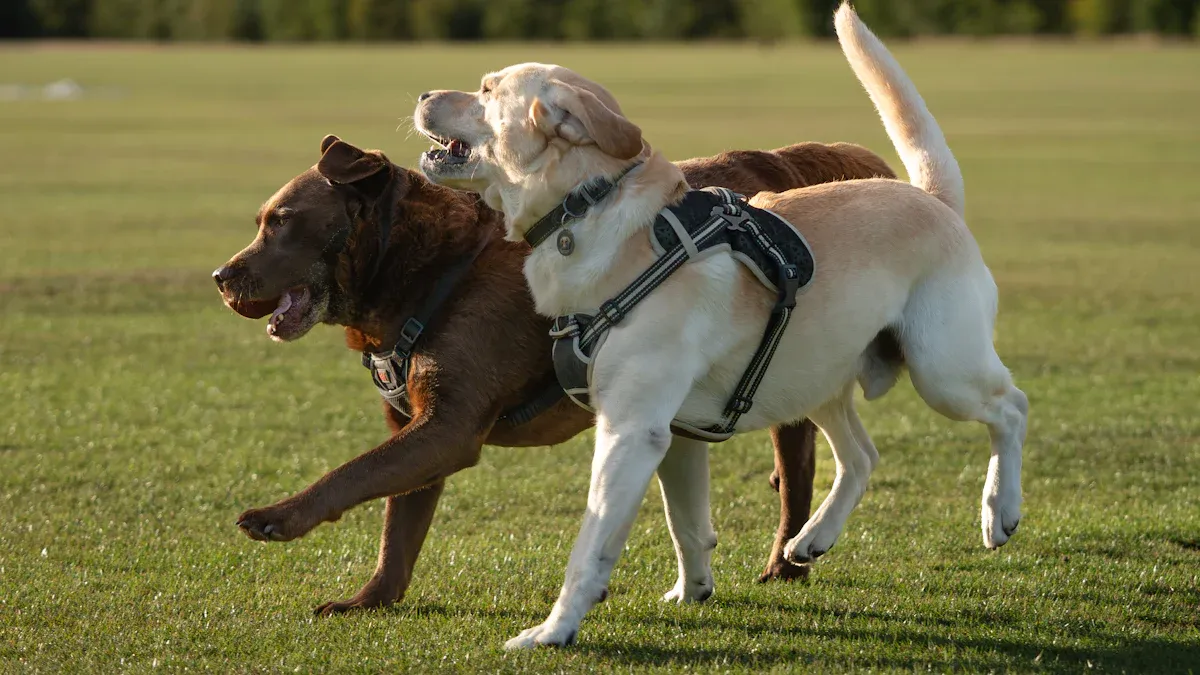
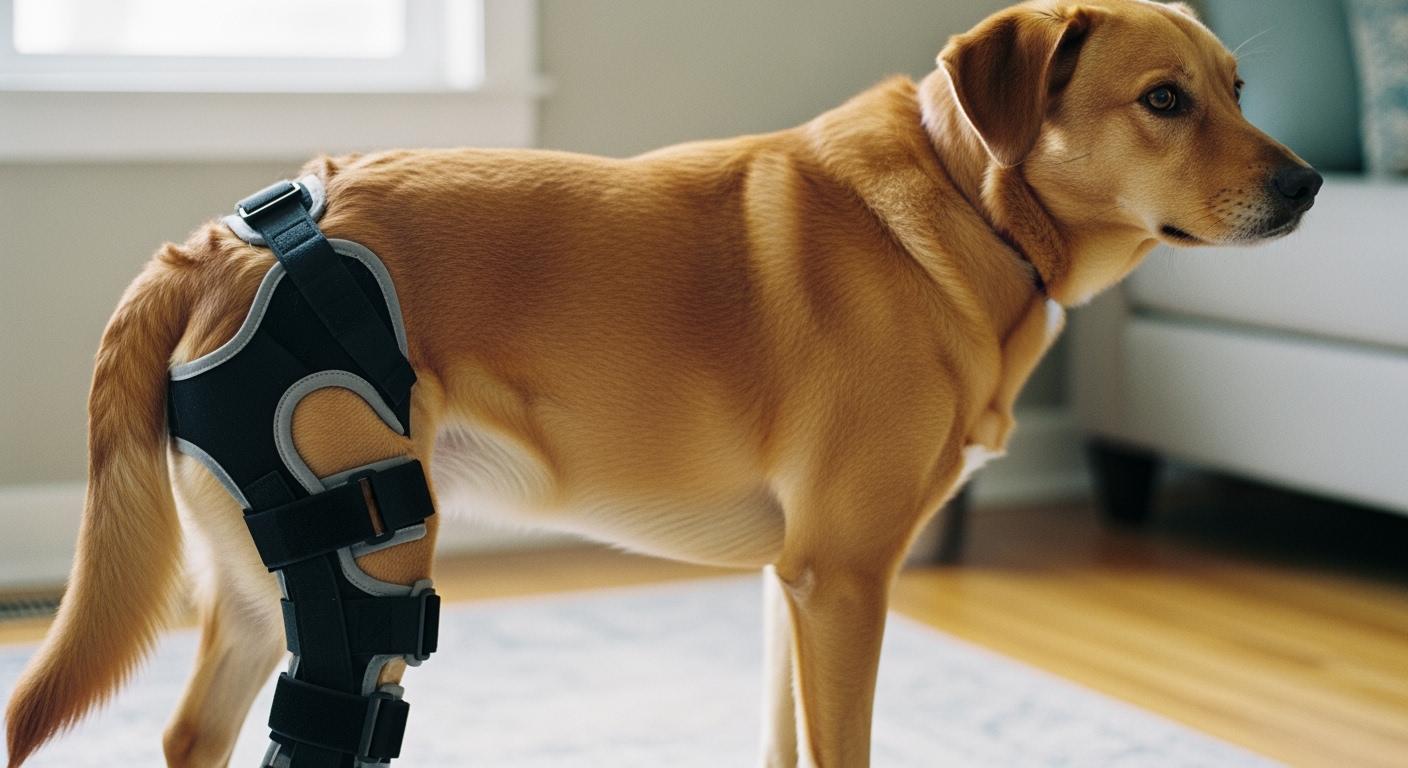
A dog rear leg brace is commonly considered when a dog needs support for knee, hock, hip, or general hind-leg weakness. It may help improve stability, comfort, and safer daily movement in selected cases such as arthritis, CCL injury, post-op recovery, or hip-related weakness. The most effective setup depends on which rear-limb area needs support, how the brace fits, and how well it matches the dog’s diagnosis and activity level.
Key Takeaways
A dog rear leg brace may improve stability, comfort, and safer daily movement when it matches the correct rear-limb support area and fits properly. Start with short wear periods, monitor skin and gait changes, and adjust the brace based on veterinary guidance and daily response.
What Is a Dog Rear Leg Brace
A dog rear leg brace is a special tool. It helps your dog move with more balance and comfort. You use this brace to give extra help to the back legs. The brace wraps around the leg and keeps it steady. There are many sizes to fit different dogs. Most braces let your dog walk, stand, and do daily things without taking it off.
Here is a table that shows the main parts and features of a dog rear leg brace:
Component/Feature | Description |
|---|---|
Comfort | Made to fit well so the dog feels good. |
Support | Gives support from important spots to keep the back steady. |
Functionality | Good for stopping problems and for helping heal. |
Pressure | Gives steady pressure to help with pain. |
Ease of Use | Has an easy and safe way to put on and take off. |
Size Variability | Comes in many sizes for the best fit and care. |
Physical Needs | Lets the dog do what it needs without taking it off. |
For product-side comparison of rear-limb support styles, review our dog leg brace options.
Common Uses and Benefits
You use a dog rear leg brace for many reasons. The brace may support recovery, reduce strain during movement, and improve comfort in selected daily-use situations. You can use it to stop problems or help healing. The brace helps with pain by giving soft pressure and stopping painful moves. It also helps your dog feel better and more sure when walking.
Many studies show these good things for dogs using a brace:
Benefit | Description |
|---|---|
Improved Mobility | Many dogs moved better with the brace. |
Reduced Lameness | Dogs limped less when they wore the brace. |
Increased Comfort | Owners saw their dogs were more comfortable. |
Conditions Supported by Dog Leg Braces
You can use dog leg braces for many common problems. These braces help with pain, balance, and moving. Here are some ways a brace helps your dog:
Hock splints keep the lower back leg steady and help with weak joints.
Knee braces hold the knee and let your dog put weight on the leg while healing.
The brace stops bad movement but lets your dog walk like normal.
It keeps the joint still so it can heal.
The brace gives more help for weak joints, like those with arthritis.
Pain gets better because the brace squeezes gently and stops too much movement, so your dog uses the leg more.
You should always talk to your veterinarian before picking a brace. This helps you choose the right one for your dog’s problem and daily life.
Types of Dog Leg Braces
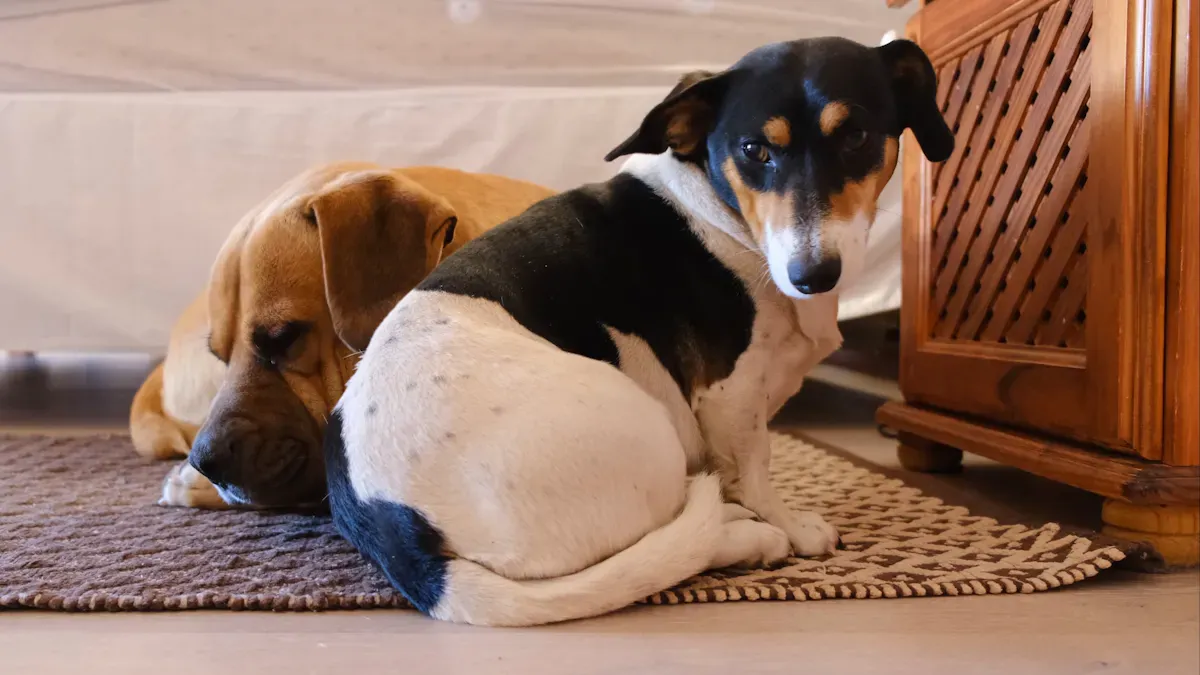
Dog rear leg brace options come in several forms. Each type gives a different kind of support for your dog’s needs. You can choose from knee, hock, hip, and CCL braces. Some braces are custom-made, while others come in standard sizes. Understanding these brace types helps you compare support needs for recovery and daily comfort.
Tip: Always check with your veterinarian before choosing a brace. This ensures you match the right support to your dog’s condition.
Knee Support Braces
Knee support braces help dogs with knee injuries or pain. You use a knee brace for dog support when your dog has trouble with the stifle joint. These braces keep the knee steady and reduce pain. They also help your dog move better and prevent further injury.
You can use a single knee brace for one leg or a double knee brace for both legs.
Knee support braces work well for dogs after surgery or for those who cannot have surgery.
They help older dogs with arthritis or chronic knee pain.
These braces also help active dogs recover from injuries.
A knee support brace gives stability and helps your dog walk with less pain. It also helps with joint stability and improves mobility.
Hock Support Braces
Hock support braces focus on the hock joint, also called the ankle. These braces help dogs with weak or unstable hocks. You use a hock brace when your dog has trouble standing or walking due to hock problems.
Hock support braces stabilize the tarsal joint.
They reduce pain and discomfort during movement.
These braces help your dog heal after an injury.
They improve your dog’s quality of life by making movement easier.
You can find hock braces in soft or rigid materials. Choose the type that matches your dog’s needs and activity level.
Hip Support Braces
Hip support braces help dogs with weak hips or hip pain. You use a hip brace when your dog cannot have surgery or needs extra help moving. These braces wrap around the hips and lower back to give support.
Hip support braces work well for senior dogs with weak joints.
They help dogs with hip dysplasia or arthritis.
These braces improve mobility and comfort.
You can use a hip brace when your dog is not fit for anesthesia or when surgery is not possible.
A hip support brace can make a big difference in your dog’s daily life. It helps your dog walk, stand, and play with less pain.
If hip weakness or dysplasia is the main issue, compare our dog hip brace options for product-side support choices.
Dog CCL Braces
Dog CCL braces support the cranial cruciate ligament in the knee. These braces help dogs with CCL injuries or after CCL surgery. You use a dog CCL brace to keep the knee stable and prevent further injury.
Approach | Recovery Time |
|---|---|
Surgical | 8 to 12 weeks of strict crate rest |
Bracing | Days to weeks for comfort and stability |
Dog CCL braces encourage your dog to use both legs. This helps build muscle and improves mobility. You can use these braces after surgery or as part of a non-surgical plan. Many dogs show better limb function and comfort with a dog CCL brace. Hinged braces give extra support and help your dog move more naturally.
Note: Bracing often helps your dog feel better in days or weeks, while surgery may take months for full recovery.
Custom vs. Standard Dog Leg Braces
You can choose between custom and standard dog leg braces. Each type has its own benefits.
Metric | Custom Braces | Off-the-Shelf Braces |
|---|---|---|
Fit | Precision-made for your dog | General sizes (S, M, L, XL) |
Cost | $1,000 – $1,800 | Under $100 to over $1,000 |
Effectiveness | Improves weight-bearing and gait | May not help all dogs |
Custom braces fit your dog perfectly. They give the best support and comfort. Standard braces come in set sizes. They are easier to get and cost less. You should choose the type that matches your dog’s needs, size, and activity level.
Types of Dog Braces: Quick Reference Table
Here is a table to help you compare the main types of dog braces:
Brace Type | Primary Joint Supported | Support Level | Best For | Material Type |
|---|---|---|---|---|
ACL Braces | Stifle (Knee) | High | Cruciate injuries, post-op recovery, arthritis | Neoprene, elastic, reinforced panels |
Hock Braces | Hock (Ankle) | Medium to High | Hock instability, neuropathy, degenerative conditions | Soft elastic to rigid plastic, depending on model |
Wrap-Around Braces | Knee, Hock, Ankle | Medium | Multi-joint issues, overuse, general support | Elastic, neoprene, Velcro straps |
You can use this table to match the right brace to your dog’s needs. Each type of dog brace offers unique support for different joints and conditions.
Types of Dog Braces: Key Points
Knee support braces help with knee injuries and arthritis.
Hock support braces stabilize the ankle and help with movement.
Hip support braces give extra help for weak hips.
Dog CCL braces support the knee after ligament injuries.
Custom braces fit your dog exactly, while standard braces come in set sizes.
Choosing the right type of dog rear leg brace helps your dog move better and feel more comfortable every day.
For a narrower comparison focused on knee, hock, and hip positioning, see our dog back leg brace guide.
Choosing the Right Dog Leg Brace
Assessing Injury and Support Needs
You need to look at your dog’s injury and daily needs before choosing the right dog brace. Some dogs need a brace for a ccl injury, while others may need help with a knee injury or weak joints. Dogs that are older or have other health problems often do better with a brace instead of surgery. If your dog cannot have surgery, a dog rear leg brace gives support during recovery and helps with mobility. Use the table below to compare when a brace or surgery may be best:
Criteria for Bracing | Criteria for Surgery |
|---|---|
Geriatric dogs | Active, young dogs with full ligament tears |
Dogs with other health issues | Dogs with partial injuries |
Owners unable to pursue surgery |
For diagnosis-led reading on arthritis, cruciate injury, and other common support scenarios, continue with our dog brace solutions by condition.
You should always match the level of support to your dog’s condition. This helps your dog get the most effective support and joint stability.
Fit and Comfort Considerations
Fit and comfort play a big role in how well a dog leg brace works. A good fit means your dog gets effective support and can move with less pain. You want your dog to feel comfortable so they can wear the brace every day. Here are key points to remember:
A well-fitted brace keeps the injured area stable and helps healing.
It reduces pain and supports mobility.
A poor fit can cause discomfort or even new injuries.
Always check the brace for proper adjustment.
Choosing the right brace with the best fit helps your dog recover and stay active.
Veterinary Consultation
You should talk to your veterinarian before choosing the right brace. A vet can check your dog for a ccl injury, arthritis, or other joint problems. They use exams and imaging to find the best brace for your dog’s needs. Veterinary guidance ensures you get the right type of support and fit for your dog’s recovery. Vets can also spot hidden issues that you might miss. This step is important for choosing the right dog brace and making sure your dog gets effective support.
Breed and Activity Factors
Breed and activity level matter when you select a dog rear leg brace. Large breeds may need more support for a ccl injury or joint stability. Active dogs often need a brace that allows for more movement and flexibility. Small breeds may need lighter dog braces for comfort. You should think about your dog’s daily routine and how much they move. This helps you choose a brace that matches your dog’s lifestyle and supports mobility during recovery.
Tip: Always consider your dog’s breed, age, and activity level when choosing the right dog brace. This ensures the brace gives the best support and comfort for your dog’s needs.
Fitting and Positioning
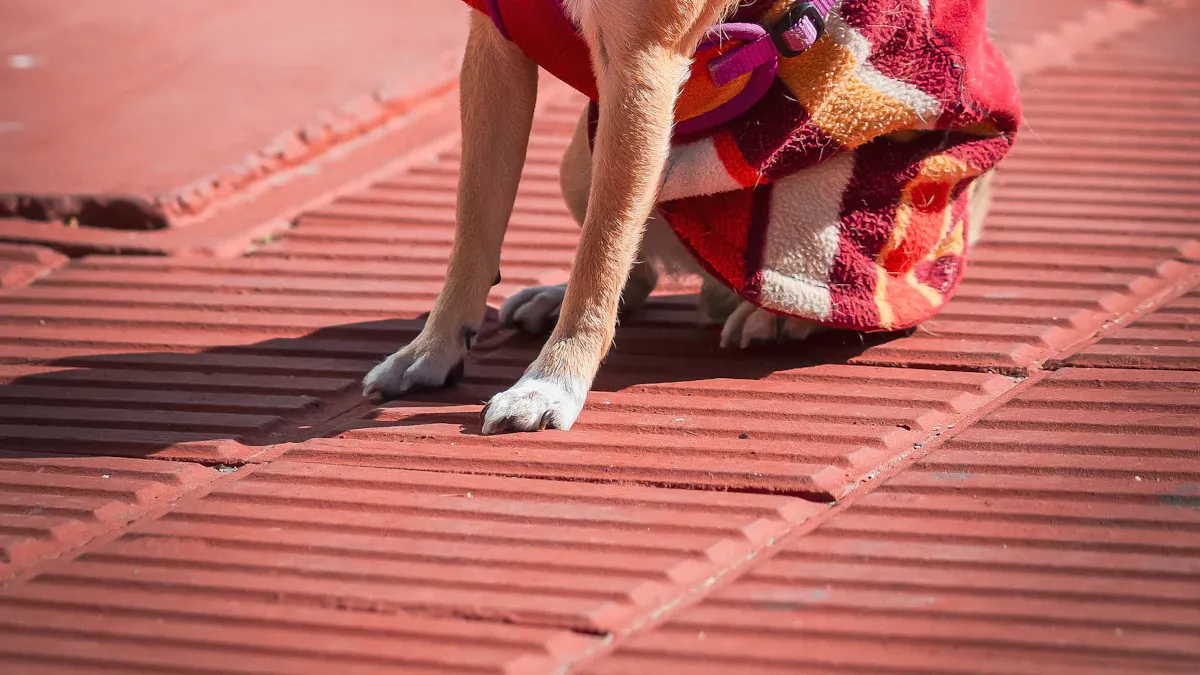
Measuring for Dog Rear Leg Brace
You want the right fitting steps to ensure your dog rear leg brace works well. Accurate measuring helps you get a well-fitted brace that supports your dog’s mobility and recovery. Start by gathering a soft measuring tape, treats, and a helper if possible. Make sure your dog stands calmly. Measure only the injured leg. Keep the tape snug but not tight. Double-check your numbers for accuracy. Consider your dog’s breed and build.
For custom dog braces, you may need to follow a casting process. Here is a basic fitting sequence you can use:
Cover your dog’s leg with a stockinette to protect fur and skin.
Prepare the casting tape in the right size.
Wrap the tape around the leg, starting above the hock.
Repeat with a second roll if needed.
Squeeze the mold gently at the knee as it dries.
Remove the mold carefully and prepare it for shipping.
These steps help you achieve proper fitting and ensure the brace matches your dog’s needs.
Ensuring Proper Fit and Safety
A well-fitted brace keeps your dog safe and comfortable. You want to check for optimal support, comfort, and circulation. Follow these safety checks:
Start with a veterinary check to confirm the injury and select the best brace.
Align the brace with your dog’s knee or hock.
Secure the straps so you can slide a finger underneath.
Look for gaps or bunching that may cause slipping.
Allow your dog to wear the brace for short periods at first.
Use the brace during activity to support mobility.
A proper fitting brace prevents rubbing, chafing, and injury. Always monitor your dog for any signs of discomfort.
Adjusting for Comfort
You want your dog to feel good while wearing the brace. Begin with a break-in schedule. Let your dog wear the brace for short times, then increase as they adjust. Check the fit every two to three hours. Make sure the brace is not too tight. Give your dog breaks to manage swelling and use gentle massages to help fluid movement.
A well-fitted brace improves your dog’s mobility and comfort. Regular checks and small adjustments help your dog get the most from their dog leg brace during recovery.
Daily Use and Monitoring
Wear Time and Activity Guidelines
You should follow clear daily wear guidelines when using a dog rear leg brace. Dogs should not wear the brace all day and night. Start by letting your dog wear the brace for 30 to 60 minutes at a time. Gradually increase daily wear to 6–12 hours as your dog adjusts. Always remove the brace at night or during long rest periods. This allows the skin to breathe and helps prevent irritation. Use the brace during active times, such as walks or supervised play. Avoid leaving the brace on when your dog is unsupervised.
Begin with short sessions and increase wear time each day.
Aim for 8–12 hours of daily wear during active periods.
Remove the brace overnight or when your dog rests for long periods.
Supervise your dog during all brace use.
Skin Inspection and Comfort Checks
Daily wear of a dog leg brace requires regular skin checks. Inspect your dog’s skin under the brace every day. Look for redness, chafing, or sores, especially around the hock or stifle. Check for hair loss or irritation. Clean the brace with mild soap and water to keep it hygienic. Adjust the fit if you see any signs of discomfort.
Check the skin daily for redness or irritation.
Clean the brace regularly to prevent buildup.
Adjust straps and cuffs several times a day if needed.
Integrating Brace into Routine
You can help your dog adjust to daily wear by following a gradual schedule. Start with short periods and slowly increase the duration. This helps your dog get used to the brace and supports better mobility and recovery. Use the table below to guide your routine:
Day | Duration of Wear | Frequency |
|---|---|---|
1 | 30 mins | 2-3 times a day |
2 | 1 hour | 2-3 times a day |
3 | 2 hours | 2-3 times a day |
4 | 3 hours | 2-3 times a day |
5 | 4 hours | 2 times a day |
6 | 6 hours | 1 time a day |
7 | 8 hours | 1 time a day |
Continue | Up to 12 hours | Off at night |
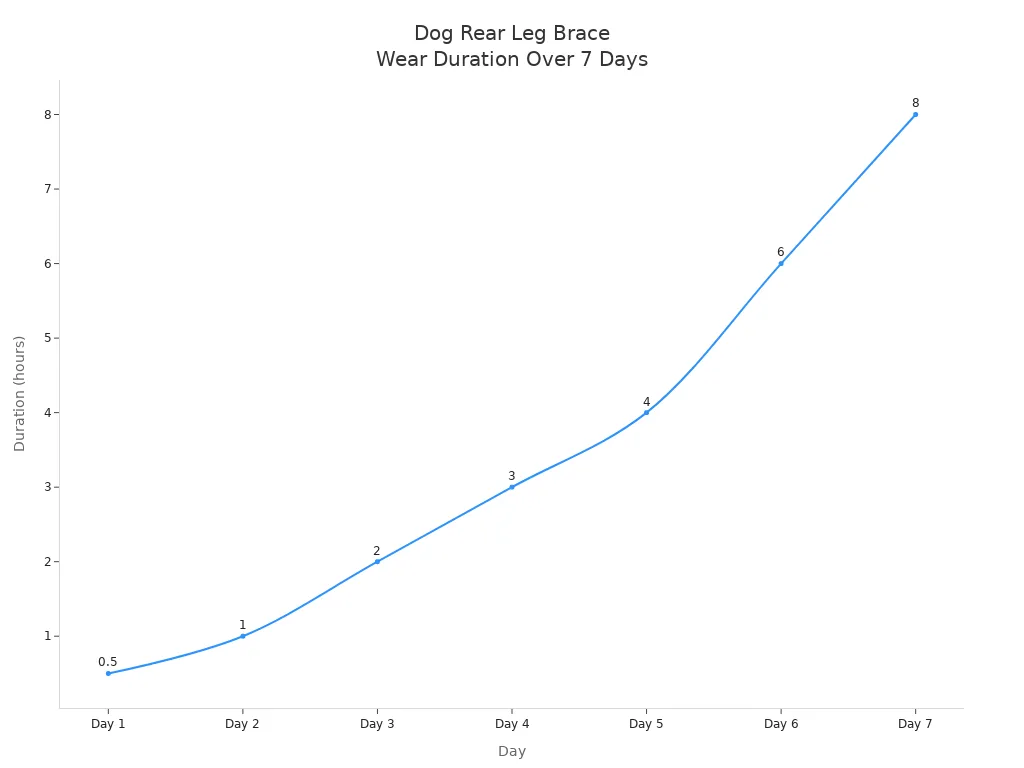
Adjust the fit as needed throughout the day. Watch for any changes in your dog’s mobility or comfort. Consistent daily wear and monitoring help your dog get the most benefit from dog braces and support ongoing recovery.
For walk planning, monitoring routines, and brace use during activity, review our dog gait training support guide.
Maintenance and Care
Cleaning Dog Leg Braces
You need to keep your dog’s brace clean to protect your dog’s skin and help the brace last longer. Clean braces also help prevent odors and bacteria. Follow these steps to clean your dog’s brace:
Take the brace apart and soak it in warm water mixed with laundry detergent for five minutes.
Gently scrub the brace with a washrag or toothbrush to remove dirt.
Rinse the brace under warm water until all soap is gone.
Let the brace air-dry. You can use a hairdryer on a cool setting if you need to dry it faster.
Clean the brace often, especially after walks or outdoor play. This keeps your dog comfortable and supports good hygiene.
Inspecting for Wear and Tear
You should check your dog’s brace every day. Look for signs of damage or wear. This helps you spot problems early and keeps your dog safe. Watch for these signs:
Check your dog’s skin after each session for redness, irritation, or sores.
Look for any cracks, loose straps, or worn-out areas on the brace.
Notice if your dog starts limping or shows swelling. If you see these signs, remove the brace and talk to your veterinarian.
Daily checks help you keep the brace working well and support your dog’s mobility and recovery.
When to Replace a Dog Leg Brace
You need to replace the brace if you see damage that cannot be fixed. Replace the brace if it no longer fits or gives enough support. If your dog grows or loses weight, the brace may not fit right. A brace that slips, causes pain, or does not help with mobility should be replaced. Always choose a new brace that matches your dog’s needs for support and comfort.
Tip: Regular care and inspection help your dog braces last longer and keep your dog moving with confidence.
Troubleshooting and Common Issues
Signs of Poor Fit
You want your dog to feel comfortable and safe while wearing a brace. Poor fit can cause problems and slow down recovery. Watch for these common signs that a dog rear leg brace does not fit well:
Discomfort, such as your dog licking or biting at the brace
Chafing or redness on the skin under the brace
Looseness, where the brace slips or moves out of place
If you notice any of these signs, stop using the brace and check the fit. A well-fitted brace should stay in place and allow your dog to move with ease.
Addressing Discomfort or Resistance
Sometimes, your dog may resist wearing a brace or show signs of discomfort. You can help your dog adjust by introducing the brace slowly. Start with short wear times and offer treats or praise. Make sure the brace does not pinch or rub. Check for swelling or changes in how your dog walks. If your dog limps more or avoids using the leg, remove the brace and inspect it. You may need to adjust the straps or padding for better comfort and support.
Tip: Always monitor your dog’s skin and behavior during the first week of brace use. Early attention helps prevent bigger problems and supports better mobility.
Solutions for Common Problems
You may face a few common issues when using dog braces. Here are some practical solutions:
Problem | Solution |
|---|---|
Brace slips or rotates | Recheck the fit and tighten straps as needed. |
Skin irritation | Add soft padding and clean the brace daily. |
Dog resists wearing | Use positive reinforcement and short sessions. |
You can improve your dog’s mobility and comfort by checking the brace often and making small adjustments. Regular care and attention help your dog get the most benefit from the brace and support a smooth recovery.
FAQ
How do you know if your dog needs a rear leg brace?
You notice your dog limping, struggling to stand, or showing signs of pain in the back legs. A veterinarian can help you decide if a brace will support mobility and comfort.
Can your dog wear a rear leg brace during walks?
Yes, your dog can wear the brace during walks. You should monitor your dog for signs of discomfort and adjust the brace as needed. Start with short walks and increase time gradually.
How do you clean a dog rear leg brace?
You remove the brace and soak it in warm water with mild detergent. Use a soft brush to clean all surfaces. Let the brace air-dry before you put it back on your dog.
What signs show a brace does not fit correctly?
You see redness, chafing, or slipping. Your dog may lick or bite at the brace. If you notice these signs, check the fit and consult your veterinarian for guidance.
How long should your dog wear a rear leg brace each day?
Day | Recommended Wear Time |
|---|---|
1 | 30–60 minutes |
7 | Up to 8 hours |
Tip: Remove the brace at night and during long rest periods.