
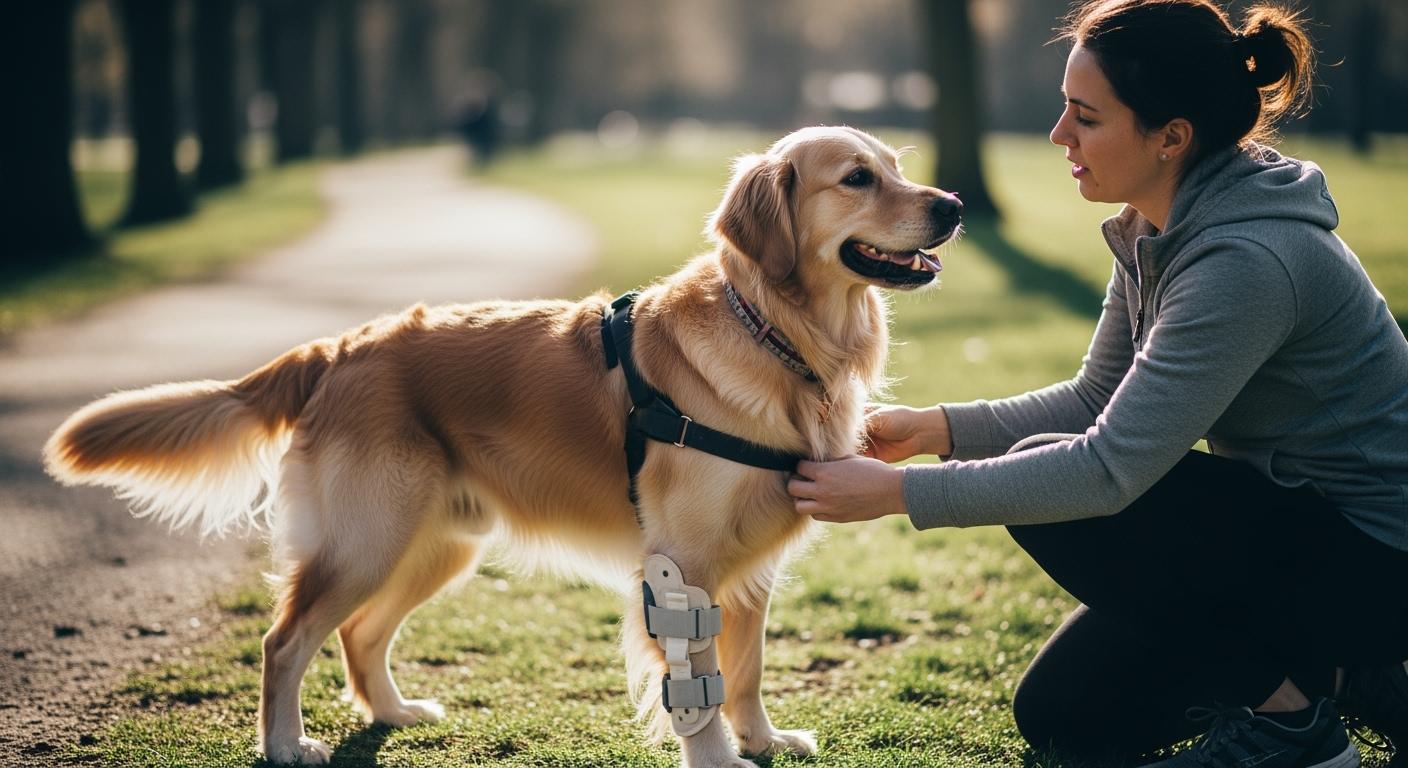
You can help your dog heal from knee injuries with a dog stifle brace. This brace gives support to the stifle and keeps the knee steady. It helps your dog put weight on the leg, as studies by vets show. If you fit the dog stifle brace the right way, your dog can walk better and move more easily. Using the stifle brace every day and putting it on right stops bad movement and keeps the joint healthy. Vets and rehab workers see that using the stifle brace often makes activity safer and helps your dog get better. Always use a dog stifle brace as part of your dog’s care and ask your vet team for help.
Key Takeaways
A dog stifle brace helps support knee injuries. It helps your dog walk better and heal faster. – It is very important to fit the brace the right way. Measure your dog’s leg carefully for comfort and good results. – Check your dog’s skin and how they move every day. This helps stop discomfort and makes sure the brace works well. – Talk to your veterinarian often to see how your dog is doing. Change the brace if needed to help your dog get better. – Let your dog wear the brace for a short time at first. Slowly let your dog wear it longer as they get used to it and heal.
What Is a Dog Stifle Brace?
Purpose and Function
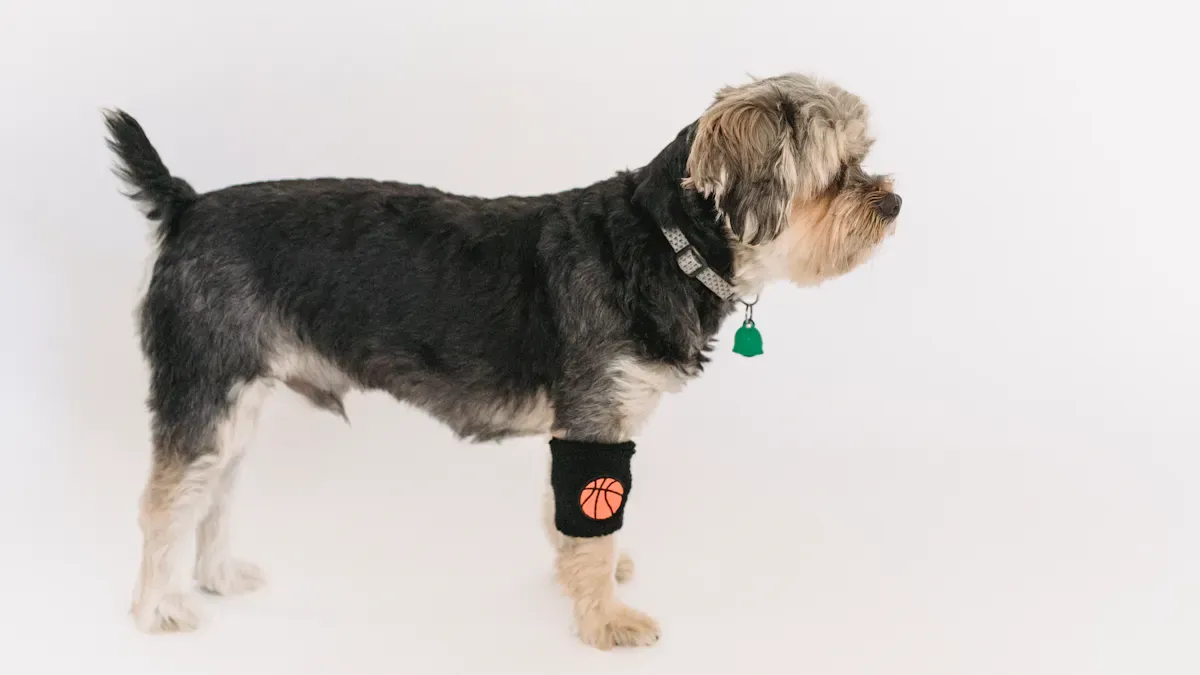
A dog stifle brace is a special tool that helps the knee. You use this brace when your dog hurts its knee or the knee is weak. In vet medicine, the stifle joint is like a person’s knee. The main job of the stifle brace is to keep the joint steady. It is very helpful if your dog has a cranial cruciate ligament (CCL) injury. The brace stops the tibia from moving in ways it should not. This helps your dog feel better and move well.
You put the brace around the knee to control how it moves. The brace keeps the knee from stretching too much or twisting sideways. It also stops the tibia from sliding forward, which keeps the knee strong. By stopping bad movement, the brace keeps the knee safe and lets your dog walk and play.
Note: A dog stifle brace does not take the place of surgery for bad injuries. It gives good support while your dog heals, especially if the tear is small or surgery is not possible.
How Knee Support Helps Recovery
Knee support is important for your dog to get better. For condition-led next steps across knee bracing and controlled rehab walking, review our dog knee brace solutions by condition. When you use a dog knee brace, your dog can put weight on the hurt leg. Studies show that custom stifle orthoses help many dogs with CCL injuries walk better. Using a knee brace often, along with rehab and weight control, helps your dog improve over time.
Function | Description |
|---|---|
Excessive Movement Control | Stops too much movement between femur and tibia so the knee can heal. |
Side-to-Side Rotation Prevention | Stops the knee from moving sideways and helps the cruciate ligament. |
Forward Slide Control | Stops the tibia from sliding forward, which keeps the knee steady. |
You may see your dog walk better and have less pain as it heals. Knee support helps your dog walk evenly and keeps other legs from working too hard. This support makes your dog feel better and enjoy life more.
Common Dog Knee Injuries
ACL and CCL Injuries
Dogs often get ACL and CCL injuries. For fit, traction, and safe daily use after cruciate problems, see our dog knee brace for CCL tear guide. The CCL is the main ligament that keeps the knee steady. If your dog tears the CCL, the knee loses support. The joint can then move in ways it should not. Most CCL tears happen slowly as the ligament gets weaker. About 80% of these injuries build up over time. This is common in dogs between 5 and 7 years old. Younger dogs under 4 years old can tear the CCL suddenly from an accident. You might see your dog limping or not using the leg. Your dog may also show pain in the knee. Some breeds have a higher chance of getting hurt. These include pit bulls, Rottweilers, golden retrievers, Labrador retrievers, and German shepherds.
Type of Injury | Description | Affected Breeds |
|---|---|---|
Cranial Cruciate Ligament | A tear that can happen from a sudden injury or from the ligament getting weak over time. | Pit bulls, Rottweilers, Golden retrievers, Labrador retrievers, German shepherds |
Patellar Luxation | The kneecap slips out of place, and this often starts when the dog is born. | Pomeranians, Chihuahuas, Boston terriers, Miniature poodles, Yorkshire terriers |
Luxating Patella
Luxating patella means the kneecap moves out of place. You might see your dog skip or run on three legs. Then your dog may walk normally again. Sometimes your dog holds up the leg until the kneecap goes back. The tissues around the joint can stretch and get weak. This makes the kneecap slip more easily. Small breeds often have this problem. These breeds are Pomeranians, Chihuahuas, Boston terriers, miniature poodles, and Yorkshire terriers. Medial patellar luxation causes mild limping. Lateral luxation makes walking much harder. If you do not treat luxating patella early, your dog can get arthritis. Your dog may also lose the ability to move well. Surgery helps if you do it before arthritis starts.
Sudden or bad limping
Limping that does not go away or gets worse
Swelling or redness you can see
Clicking or popping sounds
Not wanting to move or play
For mild-case bracing limits, fit reminders, and vet red flags, review our luxating patella knee brace guide.
Arthritis and Chronic Instability
Arthritis and chronic instability are common in dogs. Osteoarthritis affects about 20% of all dogs. It affects over 90% of dogs older than 5 years in North America. You may notice your dog moving slower or not wanting to exercise. Your dog may have trouble climbing or jumping. The joint can hurt and feel stiff. This makes your dog less active. Dogs with joint problems in the back legs do not like to exercise. They may not want to move much. In the United States, 11 to 15 million dogs have osteoarthritis. Chronic instability in the knee makes arthritis worse. It also makes it harder for your dog to move. You need to watch your dog’s activity and joint health to help them feel better for a long time.
Dog CCL Braces and Support Types
Rigid vs. Soft Braces
You can pick rigid or soft dog ccl braces. The choice depends on your dog’s knee injury. Rigid braces give strong support for bad injuries like CCL tears or arthritis. These braces keep the knee steady and stop wrong movement. Soft braces are good for mild sprains or strains. They give gentle support and comfort. Soft braces do not limit your dog’s motion much. You can use soft braces for early injuries or dogs needing light help.
Type of Brace | Support Level | Best For | Durability |
|---|---|---|---|
Rigid | High | Severe injuries | Long-term |
Soft | Moderate | Mild injuries | Short-term |
Rigid braces give strong support for serious injuries.
Soft braces feel comfortable and work for mild injuries.
Rigid braces are custom-made and may have hinges.
Soft braces use stretchy materials and may not fit all dogs.
Custom and Off-the-Shelf Options
You can choose custom or off-the-shelf dog ccl braces. Custom braces fit your dog’s leg exactly. They give the best comfort and support for special injuries. Custom braces last longer and help with tough knee problems. Off-the-shelf braces are easy to buy and cost less. You can use them for short support or mild injuries. These braces may not fit perfectly and can wear out faster.
Type | Advantages | Disadvantages |
|---|---|---|
Custom Dog Leg Brace | Tailored fit and comfort, Best for unique injuries, Long-lasting | Higher cost, Takes time to make, Not always easy to get |
Off-the-Shelf Brace | Affordable, Quick to buy, Good for temporary use | May not fit perfectly, Limited adjustments, May wear out faster |
Custom braces are made for your dog’s needs. Off-the-shelf braces work well for short-term use or less serious knee injuries.
Structured Stabilization and Post-Surgery Use
Dog ccl braces help with stabilization and after surgery care. You can use these braces to help your dog heal after knee surgery or manage knee problems. Studies show stifle-braced dogs walk better and put more weight on the leg. Experts agree orthotics are good for dogs not having surgery. Surgery is still best for bad injuries, but braces help dogs heal and move better.
Evidence Type | Study Reference | Findings | Limitations |
|---|---|---|---|
Prospective Trial | Rosen et al., 2022 | 100% of stifle-braced dogs improved weight-bearing; 91% had mild complications | Small cohort; short follow-up |
Retrospective Study | Carr, 2016 | Improved limb loading after 90 days | No control group; retrospective |
Case Report | Muršec et al., 2025 | Improved gait symmetry in 2 dogs | Very small sample |
Expert Consensus | Dycus & Carr, 2015; VCA Hospitals, 2024 | Bracing suitable for non-surgical cases; surgery remains gold standard | Lacks large-scale trials |
Dog ccl braces help your dog recover and support the knee. They improve daily movement. Pick the right brace based on your dog’s injury, activity, and comfort.
Choosing the Right Dog Stifle Brace
Evaluating Support Goals
When you choose a dog stifle brace, you need to think about your dog’s needs and the type of knee injury. Each injury or condition needs a different level of support. Some dogs need strong stabilization for a torn ligament, while others need gentle support for mild strains or arthritis. You must match the brace to your dog’s activity level and daily routine. Large breeds, like German Shepherds or Rottweilers, often need a more robust brace. Small breeds need a compact design that fits their frame.
To set clear support goals, follow these steps:
Put the brace on and take it off each day to keep the knee stable.
Make small adjustments as your dog gets used to the brace. Work with your veterinarian for the best results.
Schedule regular checkups with your veterinary team to track progress.
Use a tailored rehabilitation plan so your dog learns to move with the brace.
Manage arthritis early to help your dog stay active and comfortable.
You can find more details about support goals, brace categories, and next-step options in the related solution, blog, and product pages linked below.
Comfort and Fit Considerations
Comfort and fit are key when you select a knee brace for dog support. A good fit keeps the brace in place and helps your dog move without pain. If the brace is too tight or too loose, it can cause discomfort or even make the injury worse. You should always measure your dog’s leg carefully before choosing a brace.
Follow these best practices for comfort and fit:
Measure the circumference of your dog’s thigh, hock joint, or wrist. The tape should be snug but not tight.
Measure the length from the top to the bottom of the area that needs support.
Double-check each measurement and write them down.
Place the brace on your dog’s leg and align it with the knee or problem area.
Fasten the straps so they are snug but not too tight. Make small adjustments for comfort.
Watch for signs of discomfort, such as limping, licking, or resistance.
Check the brace often to make sure it stays comfortable and effective.
The right material also matters. Soft, breathable materials can improve comfort, while sturdy designs offer better support for active dogs. You can learn more about measuring and fitting in our fitting guide.
Measuring and Fitting the Brace
Step-by-Step Measurement
Getting the right measurement is very important for a dog CCL brace. You should follow each step carefully to help your dog’s knee. If your dog’s leg is swollen or hurt, measure it again. Use a soft measuring tape for the best results. Measure around the upper thigh, just below the knee, and at the hock. Write down the full leg length from hip to paw pad while your dog stands. Keep your dog calm so you do not make mistakes. Check your numbers with the sizing chart from the company.
People sometimes guess or round numbers, which is not good. Using a hard ruler can also cause problems. If you measure your dog while it sits or lies down, the brace may not fit. Jake, a Labrador, was measured while lying down. His brace was too tight. When he was measured standing, the new brace fit well and Jake walked better.
Proper Positioning and Adjustment
Putting the brace on the right way helps keep the knee steady. Pull your dog’s leg straight down when you make the cast. Wrap the casting tape snugly to show the shape of the bones. If the tape is too loose, the brace can slip. Make sure the stockinette goes high into the groin for a good cast. Overlap the tape halfway as you wrap up the leg. Criss-cross the tape for a strong but thin cast. These steps help the brace fit well and support the knee.
Safety and Skin Checks
Safety checks keep your dog safe from skin problems. Let your dog get used to the brace slowly. Start with short times, like 30 to 60 minutes, two to five times a day. Make the time longer as your dog gets used to it. Take the brace off at night and when your dog is in a crate, unless your vet says not to. Look at your dog’s skin two times a day for redness or sores in the first three days. Keep checking every day for two weeks. Make sure the fur under the brace is clean and dry. Cut extra fur that could bunch under the straps. Clean the brace as the directions say and change old padding. Watch for limping, swelling, or knuckling. If you see these signs, take off the brace and call your vet.
Tip: Skin problems like scrapes and pressure sores can happen with orthotic devices. Checking often helps stop these problems.
Daily Use and Monitoring
Wearing Schedule and Activity
You help your dog get used to a stifle brace by starting slow. Begin with short times so your dog can adjust. Make the sessions longer as your dog feels better and moves easier. Check your dog’s skin every day. Look for redness or swelling near the knee. Adjust the brace often to keep it fitting right. Your dog needs time to feel confident with the brace. Encourage gentle walks or light play to help with pain and keep joints healthy. Do not let your dog do hard exercise until your vet says it is okay.
Start with short times wearing the brace.
Make the time longer as your dog gets used to it.
Check your dog’s skin every day for problems.
Adjust the brace so it fits well.
Encourage gentle walks and play for pain relief.
If your dog needs short lifts, help on stairs, or more controlled support during early recovery, compare our dog lift harness options.
Cleaning and Maintenance
Keep the brace clean and working well by following a routine. Wash the brace with mild soap and water. Dry it all the way before putting it back on your dog. Check the brace often for broken straps or buckles. Fix small problems quickly to keep support strong. Store the brace in a cool, dry place. Keep it away from sharp or heavy things. Clean and check the brace every day. After each use, wipe the brace with a damp cloth to remove fur, dirt, and sweat. Do a deep clean once a week or every two weeks by hand washing in lukewarm water with pet-safe soap. Rinse well and let it air dry.
Clean the brace with mild soap and water often.
Dry the brace fully before using it again.
Check for broken parts or damage.
Fix or replace parts if needed.
Store the brace in a cool, dry spot.
Wipe the brace after each use.
Deep clean every week or two.
Monitoring for Discomfort
Watch your dog for signs of discomfort when using the brace. Look for changes in how your dog moves or acts. If you see pain, swelling, or redness, take off the brace and call your vet. Use the table below to spot common signs of discomfort:
Sign of Discomfort | Description |
|---|---|
Popping/clicking noise | May mean meniscal injury, often linked to CCL disease. |
Swelling or thickening | Body may try to make the knee stable. |
Muscle atrophy | Thinner thigh on the sore side shows less use of that leg. |
Shortened stride | Dog may walk differently to protect the knee. |
Labored getting up | Stiffness after sleep can mean pain. |
Flinching or pulling | Dog feels discomfort when you touch the knee. |
Not bearing weight | Shows your dog has a lot of pain. |
Hot, swollen knee | Dog may cry out when moving. |
Watch for signs of pain or discomfort.
Look for swelling or redness near the brace.
You help your dog feel better by checking daily use and making changes when needed.
When to Consult a Veterinarian
Signs of Improvement
You want your dog to get better with the knee brace. You will see good changes as your dog gets used to the brace and starts to heal. The table below lists signs that show your dog is getting better:
Clinical Sign | Description |
|---|---|
Improved weight-bearing | Your dog puts more weight on the sore leg. |
Increased willingness to be active | Your dog wants to move and play more. |
Decreased limping | Your dog limps less when walking. |
Better mobility | Your dog moves easier with the brace on. |
Improvement timeline | Most dogs get better in a few days and keep improving for weeks. |
You should watch for these signs every day. If your dog keeps getting better, keep using the brace as your vet says. Always talk to your veterinarian to make sure your dog is healing well.
Warning Signs and Next Steps
You need to look for warning signs that mean your dog needs a vet. Some problems need fast help. If you see any of these signs, call your veterinarian right away:
Your dog cannot put weight on a leg.
Your dog has sudden or very bad pain.
You see swelling or feel heat in a leg.
Limping lasts more than one or two days with no change.
There is bleeding or an open wound.
Your dog has a fever.
Your dog seems tired all the time.
Your dog does not want to eat.
A brace that fits well helps stop bad movement and helps healing. Your veterinarian should make the best plan for your dog’s knee injury. Using a random brace or making one at home can slow down healing. Your vet will help you pick the right brace, tell you how long to use it, and check your dog’s progress. Some dogs only wear the brace when active. Others may need it for longer times.
Tip: Always ask your veterinarian if you have questions about your dog’s knee brace or see any changes in how your dog acts or moves.
Choosing the right dog stifle brace helps you support your dog’s knee health. You need to measure your dog carefully and fit the brace with care. Start with short sessions so your dog can adjust. Regular checks with your veterinarian help you spot skin issues or brace slippage early. Daily use and ongoing monitoring let your dog move better and feel more comfortable. For complex cases, review related guides or consult a specialist to plan the best care for your dog.
FAQ
How do you know if your dog needs a stifle brace?
You notice limping, trouble walking, or pain in your dog’s knee. Your veterinarian may recommend a stifle brace for support after injury or surgery. Always ask your vet before starting any new support.
Can your dog wear a stifle brace all day?
You should follow your veterinarian’s advice. Most dogs start with short sessions and increase time as they adjust. Remove the brace at night or during rest unless your vet says otherwise.
How do you clean a dog stifle brace?
You wash the brace with mild soap and water. Dry it completely before putting it back on your dog. Check for broken parts and replace them if needed. Clean the brace regularly to keep your dog comfortable.
What activities can your dog do with a stifle brace?
Your dog can walk, play gently, and do light exercise. Avoid jumping or running until your veterinarian approves. The brace helps your dog move safely while healing.
How do you check for discomfort in your dog?
You look for redness, swelling, limping, or changes in movement. If your dog shows pain or avoids using the leg, remove the brace and contact your veterinarian. Daily checks help prevent skin problems.
