
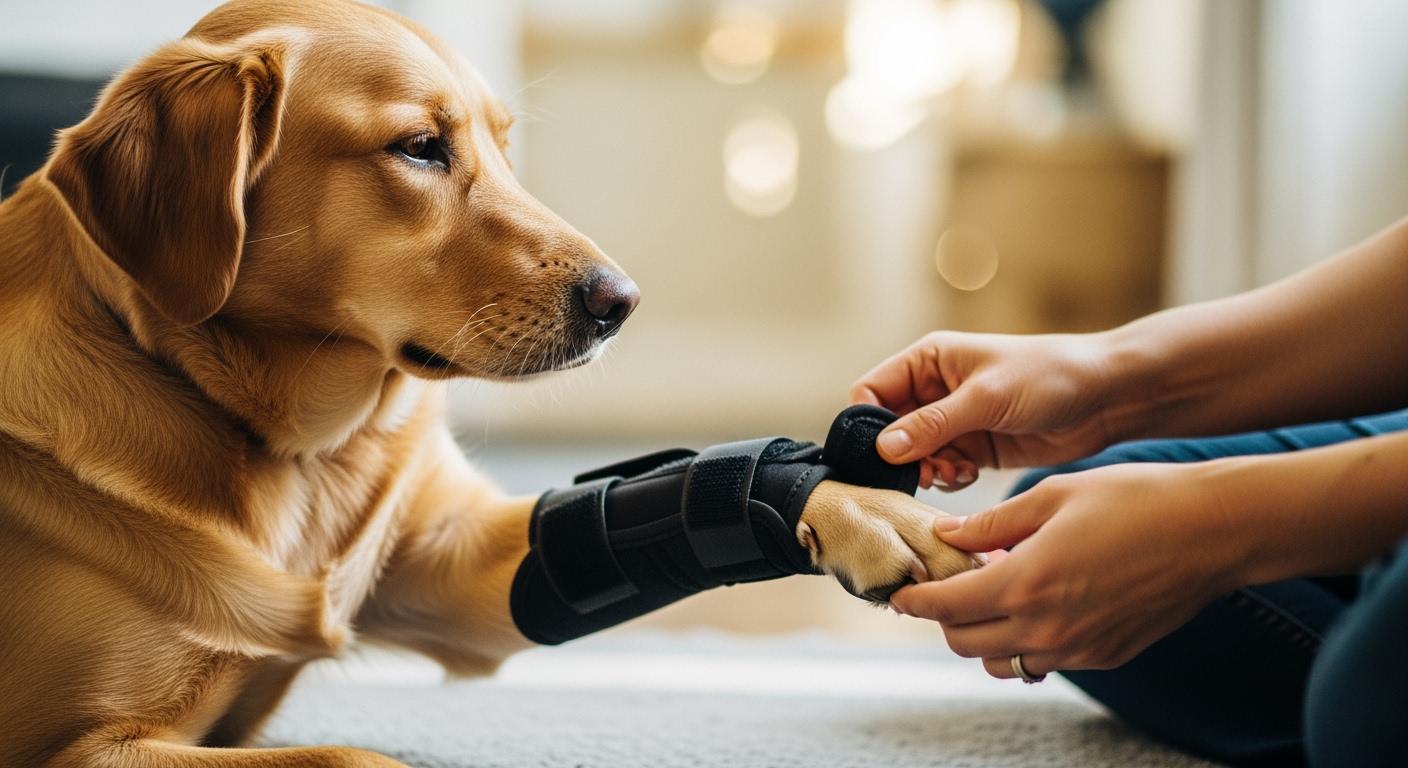
You use a dog wrist brace to help your dog’s carpal joint. It gives support when your dog is healing or getting better. The right brace keeps the joint steady. It helps lower pain and lets your dog move better. Picking the right brace and making sure it fits is important for every dog. You must watch your dog every day. You should adjust the brace when needed. This stops skin problems or bad results. Look at the table below to see what affects how well the brace works:
Factor | Why It Matters |
|---|---|
Customized fit for each dog | Ensures support and comfort |
Regular monitoring and adjustment | Maintains brace effectiveness |
Preventing improper fit | Reduces risk of sores and secondary injuries |
Always ask a vet or rehab expert for help.
Key Takeaways
A dog wrist brace helps heal carpal joints. It lowers pain and helps your dog move better. Picking the right brace type is important. You can choose rigid, soft, or hybrid. The best one depends on your dog’s needs and how active they are. You need to check and adjust the brace often. This stops skin problems and keeps your dog comfy. Ask your veterinarian for help with fitting and using the brace. They can also help if you see any problems. Check your dog’s skin and how they move every day. This keeps them comfortable and helps them heal well.
Dog Wrist Brace Benefits and Applications
Key Benefits for Mobility and Pain Relief
You want your dog to move with less pain and more confidence. A dog wrist brace gives steady support to the carpal joint. This support helps your dog walk, run, and play with less discomfort. When you use a brace, you help keep the wrist from moving too much. This reduces pain and helps your dog feel better during daily activities.
A dog wrist brace keeps weak or injured carpal joints steady.
The brace stops harmful movement and lowers pain.
Your dog can move more easily and do daily tasks with less trouble.
The brace helps with support during healing after injury or surgery.
You give your dog a better chance to recover and stay active.
Note: A study at the University of Minnesota found that most dogs with ligament instability walked better and limped less when they wore a brace.
You see these dog wrist brace benefits in many situations. Dogs with arthritis, sprains, or joint weakness often show more comfort and better movement with the right support. You can use wrist support for dogs to help with pain, swelling, and stiffness. This makes life easier for both you and your dog.
For broader product-side browsing across current brace categories, review our dog braces options page.
Common Clinical Uses and Indications
You may use a dog wrist brace in many clinical and daily care settings. Veterinary professionals often choose a brace when surgery is not the best option. You can use a brace for support during healing, or as a long-term solution for chronic conditions.
Common reasons to use a dog wrist brace include:
Dogs recovering from sudden injuries to the carpal joint.
Senior dogs with arthritis or weakness in the front legs.
Active dogs who need extra support to prevent injury.
Dogs with joint laxity or instability.
Working or sporting dogs who need preventive support.
You may also use a brace as part of a larger treatment plan. Bracing is important for many carpal and tarsal problems, especially when you want to avoid surgery. The brace helps stabilize the joint and gives your dog the support needed to heal.
Tip: Always check with your veterinary team before starting or changing any support plan for your dog.
A dog wrist brace can help in clinics, at home, or during rehab sessions. You can use it for short-term injuries or for ongoing support during daily life. This makes the brace a valuable tool for improving your dog’s comfort and mobility.
If the diagnosis is already confirmed and you want a condition-first path instead of a body-part-first path, start with our solutions by condition hub.
Understanding Dog Carpal Injuries
Carpal Joint Anatomy in Dogs
It is important to know about the carpal joint. This helps you care for your dog’s movement. The carpal joint is between the lower front leg and the paw. It works like a wrist for your dog. The joint has many small bones, ligaments, and tendons. These parts help your dog walk, run, and jump. The carpal joint needs to be steady to stop pain or injury. When you look at how braces are made, you see that a carpal orthotic device gives strong carpal support. It also keeps the joint from moving the wrong way. This is helpful for dogs with joint problems or odd shapes. The brace can also help with hyperextension and other deformities.
Typical Injuries and Causes
Dogs can get many kinds of wrist injuries. Some common ones are sprains, ligament tears, fractures, and arthritis. These injuries often happen when dogs fall or jump from high places. Dogs can also get hurt by running into things or falling in holes. Hyperextension injuries happen the most. If a fracture happens where the ligament attaches, the joint can become weak. You should watch for swelling, limping, or changes in how your dog moves. These signs mean your dog may need more help.
Tip: Dogs that play or work a lot can get carpal injuries more often. Always look for pain or changes in movement after your dog is active.
How Wrist Braces for Dogs Help
Wrist braces for dogs can help with many carpal problems. These braces give strong support to the lower front leg. They keep the carpal joint steady. Braces can help fix deformities and manage problems like carpal varus or valgus. The brace lets your dog move but keeps the joint safe. You can use a brace for sprains, ligament injuries, fractures, arthritis, tendon injuries, after surgery, and for carpal instability.
Here is how wrist braces for dogs help your dog:
Benefit | Description |
|---|---|
Stabilization | Helps keep weak or hurt carpal joints steady and stops too much movement. |
Pain Reduction | Lessens pain from injuries, arthritis, or other problems. |
Improved Mobility | Makes it easier for your dog to move. |
Support During Healing | Protects the wrist and helps it heal after injury or surgery. |
Conservative Management | Can be used instead of surgery for some problems. |
When you use the right support, your dog has a better chance to heal and stay active. Wrist braces for dogs are important for daily care and recovery.
Types of Wrist Braces for Dogs
Soft, Rigid, and Hybrid Designs
You can compare different dog wrist brace types before choosing the right support level. Each kind helps your dog’s carpal support in its own way. There are three main types:
Rigid Braces: These braces keep the joint very still. Vets use them for big injuries or after surgery. They are made from strong materials like hard plastic or metal. They give strong support, but your dog may not move much or feel as comfortable.
Soft Braces: These braces are light and easy to wear. They use soft materials like neoprene or nylon. You use them for small injuries, arthritis, or to stop problems during play. Your dog gets some support and can move more easily.
Hybrid or Adjustable Braces: These braces mix soft and rigid features. They have straps you can change and shapes that fit well. You can make them fit your dog’s leg shape. These braces work for many dogs and different needs.
Tip: Adjustable braces let you change the fit for your dog. You can use them for dogs with legs of different shapes or sizes.
Stabilization vs. Controlled Activity Support
You must choose if your dog needs strict stabilization or controlled movement. Rigid Braces keep the carpal joint steady and stop movement. You use them for serious injuries or after surgery. Soft Braces let your dog move more. You use them for small injuries or to stop strain when your dog exercises. Hybrid Braces let you change how much support your dog gets. You use them for dogs who need both stability and movement.
Braces help your dog walk better and carry weight. They help your dog line up the carpal joint and feel less pain. Sometimes, you can wait on surgery by using braces with exercise and weight control. You help your dog feel good and move well every day.
When to Use Each Brace Type
You pick the right brace by looking at your dog’s needs and activity. The table below shows which brace to use:
Brace Type | Recommended Use |
|---|---|
Soft sleeves | Small arthritis or light sprains |
Semi-rigid/hinged braces | Medium injuries or need for more support |
Custom braces | Big injuries or long-term support |
Many pet owners buy braces for older dogs or dogs that play a lot. You use carpal braces at home to stop injuries. Custom braces help dogs with tough jobs. Vets use braces to help dogs do their best and avoid getting hurt. Light and adjustable braces help clinics work faster and help dogs heal better.
You can find more about dog carpal brace selection in our carpal-support guide. For broader fitting and monitoring steps, use the related resources listed below.
Selecting the Right Dog Wrist Brace
Fit, Sizing, and Material Considerations
You should measure your dog’s front leg before you buy a dog wrist brace. First, use a soft tape to measure around the carpal joint. Then, measure from the paw up to the elbow. Write down these numbers. Make sure the tape is flat and not too loose or tight. The brace should fit close but not squeeze the leg. If the brace is too loose, it can move and rub the skin. If it is too tight, it can stop blood flow and hurt your dog.
The material of the brace is important for comfort and how long it lasts. Neoprene and nylon are soft and let air in. Hard plastic and metal give strong support for bad injuries. Some braces use both soft and hard parts. Pick the material that matches how active your dog is and what your vet says. Dogs with soft skin need extra padding. Braces that keep out water stay clean and dry longer.
A vet or rehab expert can help make sure the brace fits right. They may use a mold or a 3D scan to shape the brace. Always ask a vet for help if you are not sure. A good fit helps stop sores and helps your dog heal.
Tip: Look at the brace every day for rubbing, slipping, or swelling. Change the fit if your dog looks uncomfortable.
Matching Brace to Support Goals
You need to pick a brace that matches your dog’s needs. Dogs with small problems need light support. Dogs healing from surgery or big injuries need more support. Here are steps to help you choose:
Pick a brace that gives the right amount of support. Too much support can make muscles weak. Too little support will not help the joint heal.
Choose a brace that fits well. A good fit helps healing and stops the brace from moving or rubbing.
Think about how much of the leg the brace should cover. A short brace gives light support. A longer brace gives more support.
Think about how much your dog moves and what your vet says. Dogs that play a lot need braces that let them move some. Dogs with long-term problems need braces that give steady support. Always talk to your vet when picking a brace.
Comfort and Safety Factors
Comfort and safety are very important when you pick a brace. You want your dog to wear the brace without pain or trouble. Vets say these things matter most:
Factor | Description |
|---|---|
Customization | Custom braces can change hinge tightness, padding, and water protection. These things make the brace last and feel better. |
Proper Fit | A brace made from a mold or scan spreads pressure and lines up the joint. |
Rehabilitation Integration | Using the brace with exercise or water therapy helps your dog get better. |
Check your dog’s skin and how they walk every day. Watch for red spots, swelling, or changes in movement. Change the brace or call your vet if you see problems. Braces that are safe and comfy help your dog heal and stay active.
Note: A vet should check the brace often to make sure it still works for your dog.
Fitting and Introducing the Brace
Step-by-Step Fitting Process
You need to fit the dog wrist brace carefully to help your dog get the best carpal support. Start by placing the brace on your dog’s front leg. Make sure the brace covers the carpal joint and lines up with the paw. Adjust the straps so the brace feels snug but not tight. Check that the brace does not pinch or rub the skin.
Follow this schedule to help your dog get used to the brace:
Day 1: Let your dog wear the brace for 30 minutes, 2-3 times.
Day 2: Increase wear time to 1 hour, 2-3 times.
Day 3: Let your dog wear the brace for 2 hours, 2-3 times.
Day 4: Raise wear time to 3 hours, 2-3 times.
Day 5: Use the brace for 4 hours, 2 times.
Day 6: Wear the brace for 6 hours.
Day 7: Wear the brace for 8 hours.
Continue up to 12 hours a day. Remove the brace at night.
You should adjust the straps and neoprene cuffs several times each day. Watch for hair loss or rubbing. If you see any problems, contact your veterinary professional.
Tip: Always ask a vet or rehab expert to check the fit and supervise the first few days.
Acclimating the Dog to the Brace
Dogs need time to accept the brace. You can use two main strategies to help your dog feel comfortable:
Strategy | Description |
|---|---|
Systematic Desensitization | Gradually introduce the brace to reduce fear and stress. |
Counter-Conditioning | Pair the brace with treats or praise to create a positive experience. |
Start by letting your dog sniff and see the brace. Put the brace on for short periods and reward your dog with treats or gentle praise. Increase the time slowly. If your dog shows stress, remove the brace and try again later.
Systematic desensitization helps your dog feel less afraid.
Counter-conditioning makes the brace a positive part of your dog’s routine.
Note: Stay patient and use rewards to help your dog adjust to carpal support.
Monitoring Fit and Comfort
You must check your dog’s comfort and the brace fit every day. Look for signs that show the brace is working well or needs adjustment.
Check the skin under the brace for redness or sores.
Watch your dog walk and stand. Your dog should limp less.
Monitor your dog’s activity. Your dog should want to walk more.
Look for swelling, redness, or sores under the brace.
Keep a journal of your dog’s mood, appetite, and movement.
Also, watch for these signs:
Redness or chafing around the brace.
Swelling above or below the brace.
Licking or chewing at the brace area.
Reluctance to walk or move.
Changes in gait, such as a new limp.
If you see any of these signs, remove the brace and call your vet. Daily checks help your dog stay safe and comfortable with carpal support.
Alert: Veterinary supervision is important for fitting, acclimation, and ongoing care. Always involve a professional for best results.
Daily Use and Maintenance
Wear Time and Supervision
You should use a schedule for your dog’s brace. Begin with short times and slowly make them longer. Most dogs wear the brace for 8 to 12 hours each day. Take the brace off at night so your dog’s skin can breathe. Watch your dog closely when starting the brace. Look for signs your dog feels uncomfortable or moves differently. Change the brace if you see rubbing or slipping. Dogs need exercise and stretching to stay strong and healthy. Walk your dog and do gentle stretches to help muscles and joints. Ask your vet for advice about safe activities and activity limits while your dog is wearing the brace.
Cleaning and Hygiene Practices
Keeping your dog clean helps stop skin problems under the brace. Bathe and groom your dog often. A deep bath removes dirt and stops hot spots. Wash your dog’s paws after walks with mild soap or baby wipes. This gets rid of germs and things that make skin itchy. Treat skin problems right away to stop more issues. Do not let your dog scratch too much or hurt their skin. Use cornstarch or baby powder under the brace to keep skin dry and lower rubbing. Clean the brace with gentle soap and water. Make sure the brace is dry before you put it back on your dog.
Bathe and groom your dog often.
Wash paws after walks.
Treat skin problems quickly.
Clean the brace often.
Use cornstarch or baby powder to keep skin dry.
Monitoring Skin and Mobility
Check your dog’s skin and how they move every day. Look for red spots, swelling, or sores under the brace. Watch how your dog walks and see if they limp or do not want to walk. Do a simple check of your dog’s walk and muscles before and during brace use. If your dog limps more or moves differently, take off the brace and call your vet. Skin sores and brace problems can happen if the brace does not fit right. Careful checks help you find problems early and keep your dog comfortable. Write down your dog’s activity and mood to track how they are doing.
Tip: Finding skin or movement problems early helps your dog feel better.
When to Consult a Veterinarian
Signs of Improper Fit or Complications
You need to watch your dog closely when using a brace for carpal support. Some signs show that the brace does not fit well or causes problems. If you see these signs, you should contact your veterinarian right away. Your dog may limp more or refuse to walk. Swelling, redness, or sores under the brace mean the skin is not healthy. Your dog may lick or chew at the brace area. Sometimes, your dog cannot put weight on the leg. This can mean the brace is too tight or the injury is worse. If your dog becomes tired or shows pain, you need to act quickly.
Red Flag | What It Means |
|---|---|
Limping or reluctance | Brace may not fit or injury worsens |
Swelling or redness | Skin irritation or infection |
Sores under brace | Pressure points or rubbing |
Licking or chewing | Discomfort or pain |
No weight on leg | Over-tightening or severe injury |
Lethargy or pain | Complication or new injury |
Alert: If you notice any of these signs, remove the brace and call your veterinarian. Early action helps your dog recover and prevents further injury.
Adjusting the Care Plan
You must adjust your care plan if your dog shows signs of complications. Follow these steps to keep your dog safe and comfortable:
Inspect your dog’s limb every 2–3 hours for swelling, redness, or sores.
Make sure your dog can bear light weight on the leg. If your dog cannot touch the ground, the brace may be too tight or the injury may be worse.
Keep the brace clean and dry. Moisture can cause skin infections and discomfort.
Never leave the brace on overnight or when your dog is unattended for long periods.
Contact your veterinarian right away if your dog’s lameness gets worse, pain increases, or your dog becomes lethargic.
You help your dog heal by checking the brace often and making changes when needed. Your veterinarian can guide you in adjusting the brace or changing the support plan. Regular supervision and quick response protect your dog’s carpal joint and improve recovery.
Tip: Consistent monitoring and early intervention keep your dog comfortable and active with carpal support.
Related Supports and Resources
Dog Carpal Brace vs. Front Leg Brace
You may see many types of dog braces in clinics and rehab centers. Each brace helps your dog in a different way. A dog carpal brace gives support to the wrist joint. For product-side browsing across current brace lines, review our dog braces options. It helps prevent hyperextension and keeps the joint steady during healing. You use this brace when your dog has pain or weakness in the carpal area. The brace allows normal movement but stops harmful motions. It also gives compression to reduce pain.
A front leg brace covers more of your dog’s limb. It supports the whole front leg, not just the carpal joint. You use this brace when your dog needs help with the elbow, wrist, or even the shoulder. The front leg brace helps dogs with weak muscles or after surgery. It gives stability and helps your dog walk with less pain.
Here is a table to show the main differences:
Brace Type | Area Covered | Main Use | Key Benefit |
|---|---|---|---|
Carpal Brace | Dog’s wrist joint | Carpal support, pain reduction | Limits harmful movement |
Front Leg Brace | Whole front leg | Full limb support, stability | Helps weak structures |
You should choose the right brace based on where your dog needs support. Ask your vet if you are not sure which brace is best.
Internal Links to Fitting and Use Guides
You want your dog to get the best results from a brace. You need to measure your dog’s leg with care. Make sure the brace lines up with the right part of the leg. Adjust the brace for comfort and check for rubbing or sores. You can find more help in these resources:
These resources show you how to fit a dog brace, place it on the leg, and adjust it for comfort. You also learn how to check your dog’s skin and movement. You can use these guides to keep your dog safe and active with carpal support.
Tip: Always check your dog’s brace every day. Early checks help you find problems before they get worse.
You can help your dog walk better and hurt less with the right dog wrist brace. Picking a good brace and making sure it fits well keeps the joint safe and helps it heal. Your dog will feel less pain, move more easily, and get hurt less often. The brace gives extra support and spreads out your dog’s weight. This can help your dog get better without needing surgery. Always talk to a vet for advice. Check the brace often and change your care plan if your dog needs something different.
Benefit | Description |
|---|---|
Pain relief | Makes movement hurt less |
Better movement | Helps your dog feel braver and move more |
Stops injury | Protects the joint from too much stress |
Tip: Checking and changing the plan often keeps your dog happy and moving.
FAQ
How do I know if my dog needs a wrist brace?
You should look for signs like limping, swelling, or pain in your dog’s front leg. If your dog has trouble walking or shows weakness, a brace may help. Always ask your veterinarian before starting any new support.
Can my dog wear a wrist brace all day?
You should not let your dog wear the brace all day. Most dogs wear it for 8 to 12 hours. Remove the brace at night. Check your dog’s skin and comfort often.
How do I clean my dog’s wrist brace?
Use mild soap and water to clean the brace. Dry it fully before putting it back on your dog. Clean the brace often to prevent skin problems and keep your dog comfortable.
Will a wrist brace help my dog after surgery?
A wrist brace can support your dog’s joint during recovery. It helps keep the joint steady and reduces pain. Always follow your veterinarian’s advice for post-surgery care.
What activities can my dog do while wearing a wrist brace?
Short walks
Gentle play
Light exercise
You should avoid running, jumping, or rough play. Watch your dog closely during all activities.
