
Last updated: 2026-05-08 – Prepared by: GaitGuard Editorial Team – Content type: product-side educational blog, not a peer-reviewed veterinary publication – Medical review status: not formally reviewed or endorsed by a licensed veterinarian or veterinary specialty organization – Commercial disclosure: GaitGuard designs and sells canine mobility and bracing products, which creates a commercial interest in this topic. This article is informational only and is not a substitute for diagnosis, treatment, or advice from your own veterinarian.
Reviewer transparency: No veterinarian is named as an author or reviewer for this page. The medical framing below is based on the cited veterinary sources and should be used as a safety-oriented discussion aid with your own veterinarian, not as a diagnosis.
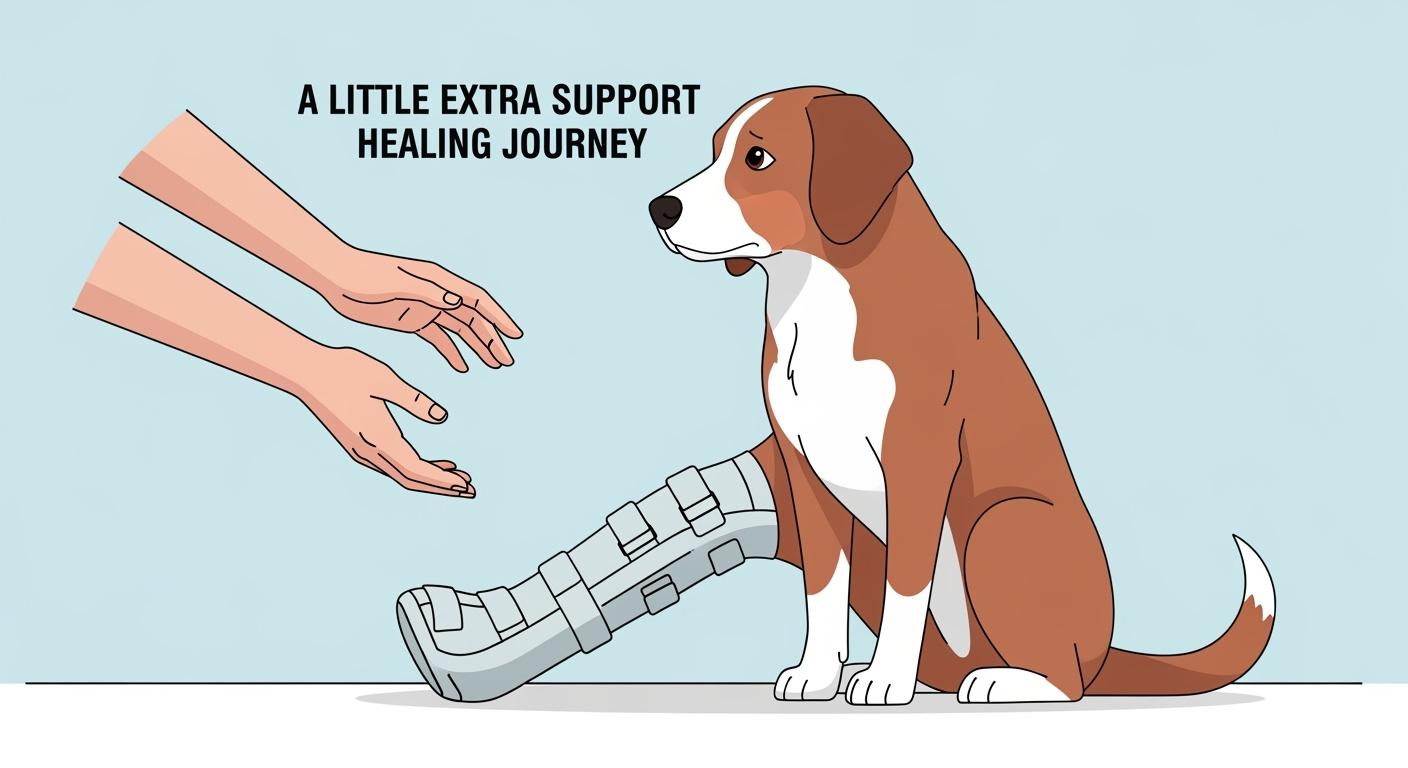
An ACL injury dog cruciate brace can help some dogs move with better control, but support is not the same as repair. If the brace slips, rubs, makes the limp worse, or hides a painful knee change, the safest next step is not more wear time. It is removing the brace, recording what changed, and asking your veterinarian whether the injury stage, fit, or treatment plan needs to change.
Note: Dog owners often say ACL, while veterinarians usually use CCL or CrCL for the cranial cruciate ligament in the canine stifle, or knee. This article uses ACL in the title because that is the common search term.
Key takeaways
- A dog knee brace may support controlled movement, but it cannot repair a torn cranial cruciate ligament or replace diagnosis, pain control, surgery discussion, or rehabilitation planning.
- Get the injury assessed before relying on a brace. Brace fit and comfort checks work best when they are tied to a clear veterinary support goal.
- Stop brace use and contact your veterinarian if limping worsens, swelling or heat appears, the paw feels cold, skin breaks down, or your dog refuses to move.
- Start with short, supervised indoor sessions, then increase only if gait, skin, paw warmth, behavior, and brace position stay stable.
- Record what you see the same day. Repeated slipping, rubbing, chewing, or gait change means the brace plan needs reassessment.
What a dog knee brace can and cannot do
Cranial cruciate ligament disease is a common cause of hind-limb lameness in dogs, and treatment can range from conservative management to surgical stabilization depending on the dog, injury, pain level, and joint instability [1]. A brace should come after that condition-first thinking: identify the problem, define the support goal, then judge whether the product is helping.
A dog leg brace may limit some unwanted knee motion during controlled activity. Biomechanical modeling suggests a stifle orthosis can reduce cranial tibial translation and internal rotation in a CrCL-deficient knee, but the modeled brace did not restore the joint to a normal state. In plain English, a brace can add stability, but it cannot make a damaged ligament whole again.
| Support goal | What it may help with | Main limitation | Decision direction |
|---|---|---|---|
| Controlled stability | Reducing unwanted knee motion during slow, supervised movement | Does not repair the torn ligament or correct severe instability | Continue only if gait stays the same or improves |
| Activity management | Supporting short leash walks while other care decisions are made | Does not make running, jumping, stairs, or rough play safe | Keep activity restricted unless your veterinarian changes the plan |
| Comfort monitoring | Making gait, skin, and tolerance changes easier to observe | Does not prove the injury is healing | Use daily observations to decide whether to adjust or stop |
Red flags that mean brace support is not enough
When an ACL tear knee stability support plan is working, the dog should not look more painful after the brace goes on. Watch the whole picture: gait, paw warmth, skin, behavior, brace alignment, and willingness to move. A brace can support selected movement, but it cannot rescue a plan that is making the dog worse.
Worsening limp, skipping, or refusal to bear weight
A mild, familiar limp is different from a limp that gets sharper during brace use. Stop the session if your dog starts holding the leg up, bunny-hops more often, skips on turns, sits with the leg angled out, or suddenly avoids weight-bearing. Clicking or popping does not automatically diagnose the problem, but a new sound with worse gait is an escalation cue.
Swelling, heat, pain, discharge, or odor
Swelling around the knee, heat under the brace, pain when touched, discharge, or a foul odor should not be treated as normal break-in friction. If your dog has an incision, any wound change deserves prompt veterinary guidance. A brace may cover the area where a problem is developing, so remove it before checking skin and tissue response.
Chewing, freezing, panic, or repeated refusal
Some dogs need time to accept a wearable support, but panic behavior is not a training challenge to push through. Whining, shaking, chewing the brace, freezing in place, or repeatedly trying to remove it can mean pain, pressure, heat, fear, or poor fit. A brace helps only if the dog can tolerate it safely.
Cold toes, toe dragging, or abnormal paw position
Cold toes, unusual paw color, toe dragging, loss of paw awareness, or a paw that knuckles under can signal a circulation, nerve, fit, or injury-stage problem. Remove the brace right away and contact your veterinarian before using it again. Do not loosen and continue if the paw signs are new or worsening.
Quick decision rule: Continue only when the brace stays aligned, the dog tolerates it calmly, skin remains normal, paw warmth is unchanged, and gait is stable or better. Stop and call your veterinarian when pain, swelling, cold toes, skin breakdown, panic, or worse lameness appears.
Green, yellow, red, and urgent warning signs
Not every brace problem has the same risk level. Some issues mean the session can continue. Others mean the session should stop and the fit should be checked before the next use. The highest-risk signs mean the brace should stay off until a veterinarian has advised you. Because CCL disease and stifle instability can require different treatment paths depending on severity, do not use the brace to delay care when symptoms are escalating [1].
| Risk level | Observable sign | Next step |
|---|---|---|
| Green: continue short supervised use | Brace stays centered, dog walks steadily, no rubbing, no swelling, normal paw warmth, calm behavior | Continue the current short-session plan and record the result |
| Yellow: stop, adjust, and monitor before next use | Minor shifting, short hesitation, or a light rubbing line that resolves quickly and does not return | Shorten the next session, improve the surface, recheck alignment, and stop if the signal repeats |
| Red: same-day veterinary or rehabilitation check | Limp worsens during or after use, repeated brace refusal, repeated chewing, new clicking with worse gait, or pressure marks that do not settle after removal | Keep the brace off, record what happened, and ask whether fit, activity, or the treatment plan should change |
| Urgent: seek veterinary guidance before further use | Cannot bear weight, severe pain, cold or discolored toes, paw knuckling, loss of paw awareness, open wound change, discharge, foul odor, or marked swelling and heat | Remove the brace and seek urgent veterinary guidance before any further use |
Common reasons an ACL brace fails during daily use
A brace can look correct while the dog is standing still and still fail when the dog starts moving. That is why at-rest checks are not enough. The real test is whether the brace keeps its position during slow walking, turning, stopping, rising, and short leash movement.
The brace shifts during walking
Slipping, twisting, gapping, or strap migration can turn support into irritation. If the brace moves every time your dog turns or sits, the fit, size, strap tension, or support category may be wrong. Fit can improve comfort, but it cannot rescue the wrong support category.
The activity level is too high for the injury stage
A brace supports controlled movement; it does not make a torn ACL safe for running, jumping, stairs, or rough play. If the dog feels more confident and does too much too soon, pain and lameness can worsen. Use the activity limits your veterinarian gives you, not the dog’s enthusiasm, as the boundary.
Skin pressure builds under the straps
Skin problems are a known issue with canine orthoses. In a prospective 43-dog study of orthosis and prosthesis use, 91% of users experienced at least one complication; among stifle orthosis users, skin issues such as abrasions, alopecia, and ulceration were common in the first 3 months. Redness that fades quickly may simply need a fit adjustment, but persistent redness, sores, heat, moisture, or hair loss means stop and reassess.
| Check point | Pass signal at rest | Fail signal during movement | Why it matters |
|---|---|---|---|
| Brace alignment | Centered over the knee without obvious gaps | Slides, twists, or rides down | Support is not staying where it needs to work |
| Strap response | Secure without pinching | Leaves marks, loosens, or makes the dog chew | Pressure or movement may injure skin |
| Gait control | Dog stands calmly and rises without struggle | More limping, skipping, stopping, or stumbling | The brace may be insufficient or poorly matched |
| Surface tolerance | Stable on a flat, non-slip surface | Hesitates or slips on stairs, slick floors, or turns | The environment may exceed the safe support plan |
Safe use checklist before the next brace session
Confirm the diagnosis and support goal
Ask your veterinarian what the brace is meant to do for this dog: temporary support, conservative management support, post-operative guidance, activity restriction support, or comfort during controlled leash walks. Knee brace fit and support needs should be matched to the diagnosis, not chosen only because the dog is limping.
Use a short supervised trial
Begin indoors on a non-slip surface. Watch the dog stand, take a few straight steps, turn slowly, stop, and rise. Remove the brace after the short session and check the skin, straps, paw warmth, gait, and behavior. Increase time gradually only when the previous session stayed green.
Record owner-observable signals
The best record is simple enough to complete the same day. Do not rely on memory when symptoms are changing. A small pattern, such as repeated rubbing after turns or more hesitation after longer walks, can show that the support plan needs adjustment.
| What to record | Why it matters |
|---|---|
| Gait before and after use | Shows whether support is helping, neutral, or making lameness worse |
| Brace position after walking and turns | Reveals movement failures that may not appear while standing still |
| Skin, hair, heat, moisture, and pressure marks | Helps catch rubbing and pressure injury before they become wounds |
| Paw warmth and paw placement | Cold toes, dragging, or knuckling need fast reassessment |
| Behavior during the session | Chewing, freezing, or panic can signal pain, pressure, or poor tolerance |
Use photos and short videos as practical evidence
This page does not include a first-hand case record or a dog-specific fitting video, so your own observations matter. If your dog is safe to stand or walk, take a short side-view video before the brace, during a few slow steps with the brace, and after removal. Photograph strap position, pressure marks, swelling, or skin changes in the same lighting. These records can help your veterinarian or rehabilitation provider see whether the brace changes gait or creates pressure that is hard to describe in words.
Escalation rule: If the same yellow signal appears more than once, do not simply add more wear time. Reduce activity, reassess fit, and ask whether the brace still matches the injury stage and support goal.
When a different treatment discussion may be needed
Some dogs use a brace because surgery is not selected or is not appropriate for the dog at that moment. That can be reasonable in selected cases, but the decision should stay open as symptoms change. In one owner-satisfaction comparison, many owners in both orthosis and TPLO groups were satisfied, but TPLO was associated with stronger reported lameness and outcome measures, and some orthosis users later proceeded to surgery.
That does not mean every dog needs surgery, and it does not mean every dog should use a brace. It means the brace response should be judged honestly. A brace can be part of management for selected dogs, but it cannot hide progressive pain, major instability, infection signs, poor tolerance, or a plan that no longer fits the dog.
What the evidence supports, and what it does not
The evidence base supports cautious statements, not certainty. Veterinary references support that CCL disease is a major cause of canine hind-limb lameness and that treatment choices vary by case [1]. Biomechanical modeling supports the idea that a stifle orthosis can reduce some abnormal motions in a CrCL-deficient knee, but not that it restores a normal joint. Complication and owner-satisfaction studies support monitoring for skin problems, intolerance, and later treatment changes, but they do not prove that every dog with an ACL injury should use a brace.
For that reason, the strongest claim this page makes is practical and safety-oriented: a brace may be useful only when it is matched to the dog’s diagnosis, tolerated by the dog, and monitored for red flags. The page does not claim that GaitGuard, a brace, or any article can diagnose the injury, choose surgery versus conservative care, or predict recovery for an individual dog.
FAQ
What should I do if my dog refuses to walk with the brace?
Remove the brace, check the skin and paw, and let your dog settle. If refusal repeats, appears with pain, or your dog still will not bear weight after the brace is removed, contact your veterinarian before trying again.
How often should I check my dog’s skin during brace use?
Check skin before and after every session, especially under straps and pressure points. Stop if redness persists after removal, sores appear, heat builds, hair loss develops, or the dog starts chewing at one area.
Can a dog knee brace fix a torn ACL?
No. A dog knee brace can support selected movement and may reduce some unwanted joint motion, but it cannot repair the torn ligament, reverse joint damage, or replace a veterinary treatment plan.
Which signs mean I should stop using the brace and call the vet?
Stop and call for veterinary guidance if you see worse limping, swelling, heat, pain, discharge, odor, cold toes, toe dragging, open sores, panic behavior, or inability to bear weight.
How long should the first brace session last?
Keep the first session short and supervised on a non-slip indoor surface. The exact timing should follow your veterinarian’s or brace provider’s instructions, but the session should end immediately if gait, skin, paw warmth, or behavior worsens.
