
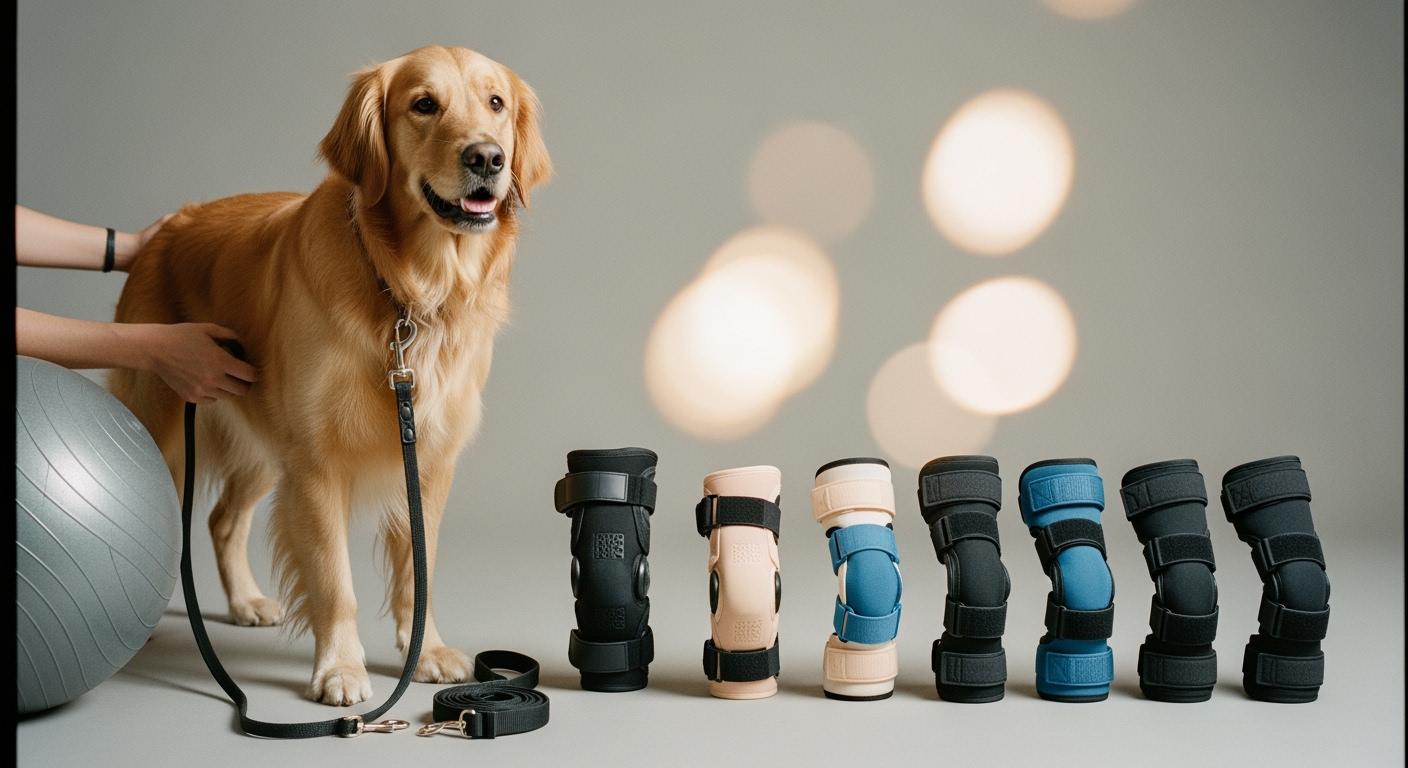
A dog brace for a torn ACL should be considered by asking one practical question: does your dog need direct knee support, rear assistance for standing and walking, or a combination of both? A knee brace may be the more direct support option when the veterinary or rehabilitation plan calls for external stifle support. Rear support devices and lifting slings serve a different role by assisting standing, transfers, and controlled daily movement. For a broader overview of knee braces, lift support, fit checks, and safe movement during recovery, start with the Dog Recovery Support Guide before comparing knee-support and rear-assistance options.
Key Takeaways
- For a dog with a diagnosed cruciate injury, a knee brace may be the more direct support option when the veterinary or rehabilitation plan calls for external stifle support.
- Rear support devices can still help with standing, stairs, and rehab mobility, but they usually do not replace direct knee bracing.
- The best support choice still depends on fit, stability need, daily-use tolerance, and veterinary guidance.
Dog Brace for Torn ACL: What It Means
A dog brace for torn ACL usually means one of two things in practice: a brace that directly supports the knee, or a support tool that helps the rear of the body during movement. These are not the same job. A knee brace targets the stifle joint more directly. A rear support device helps with mobility and handling. This page works best when it makes that distinction clear before you choose a product.
Types of Dog Knee Braces
There are different dog knee braces for a torn ACL, but the most useful way to compare them is by support level rather than by product label alone.
- softer braces usually fit lighter support needs and easier daily tolerance
- hinged or semi-rigid braces usually fit moderate instability and controlled rehab walking
- more individualized or stronger braces matter more when lighter options do not keep the knee stable enough
Dog knee braces are intended to provide more direct external support around the knee than generic rear-leg coverage. Their suitability depends on diagnosis, fit, alignment, skin tolerance, and the wider rehabilitation plan. For more detailed fit logic, compare this section with dog knee brace for CCL tear: fit, traction, and safe use and the dog knee brace category.
When to Use Rear Support
Rear support devices work differently from a true dog brace for torn ACL. They usually help by sharing body weight during standing, walking, stairs, or bathroom breaks. That means they can be useful during rehab, but they are usually not the main brace when the goal is direct knee stabilization.
Rear support is most useful when:
- your dog needs help standing up or walking short distances
- the rehab phase still involves rear-end weakness or fatigue
- stairs, transfers, or bathroom breaks are harder than the knee brace alone can manage
For a stronger rear-assistance comparison, review the support sling guide and the hind-leg weakness solution page.
Use this comparison instead:
| Support Path | Main Job | Usually Best For | Main Limitation |
|---|---|---|---|
| Dog Knee Brace | Direct knee stabilization | Torn ACL cases needing more targeted stifle support | Needs careful fit and daily monitoring to work well |
| Rear Support or Sling | Mobility assistance and weight-sharing | Standing help, walking assistance, stairs, bathroom breaks | Usually does not replace direct knee support |
For most torn ACL support decisions, the knee brace is the primary brace path and rear support is the secondary mobility-assist path. For more about rear-assistance tools, see the support sling guide and the Solutions hub.
Comparing Dog Knee Braces and Rear Support Options
Best Dog Knee Braces: Features to Look For
When picking a dog knee brace for torn ACL support, focus on features that improve both stability and daily wear tolerance.
- make sure the brace fits your dog’s actual measurements, not just the size label
- choose the support level that matches the knee’s real instability pattern
- look for adjustability, breathable materials, and secure strap placement
You should also look for:
- a brace that stays aligned during walking
- padding at contact points to reduce rubbing
- enough hinge or structure for the rehab stage
- materials strong enough for repeated daily use
- a design your veterinarian considers appropriate for the case
The best brace is not always the most rigid or the most customized-looking one. It is the one that provides the needed control and stays wearable in daily rehab use.
Rear Support and Lifting Slings: When They Help
Rear support devices and lifting slings help dogs in a different way than a dog brace for torn ACL. These tools are mainly about assisted movement. They can help a dog stand, walk, use stairs, or complete bathroom breaks when rear-end control is weak or the rehab phase still needs handling support.
You might use rear support:
- early in rehab when the dog still needs weight-sharing help
- if standing and walking are harder than the knee brace alone can manage
- for senior or weaker dogs that fatigue quickly during short daily tasks
Rear support is useful, but it is usually a mobility-assist layer, not the direct ACL brace itself. For more on these tools, review the support sling guide and the products hub.
Benefits and Limitations of Each Option
You may want to know how a dog brace for torn ACL compares to rear-support tools. Use this comparison instead:
| Type | Main Benefit | Main Limitation |
|---|---|---|
| Dog Knee Brace | Direct knee support during rehab and controlled movement | Only helps if the fit and wear tolerance are good enough |
| Rear Support Device | Helps dogs stand, walk, and manage daily mobility tasks | Usually does not replace targeted knee stabilization |
In most torn ACL decision paths, the knee brace is the more direct support option, while rear support is a useful add-on when daily mobility still needs handling help.
A hinged brace may be considered when more structured lateral support is appropriate and the hinge can remain aligned with the dog’s knee during controlled movement. Softer or standard support may be considered for lighter support needs when it remains stable, tolerable, and consistent with the rehabilitation plan.
Brace Type Support Level Main Use Best For Hinged Dog Knee Brace Moderate to higher control Guided knee support during rehab walking Partial or more unstable ACL/CCL support needs Softer or Standard Knee Brace Lighter control Basic support with easier daily tolerance Lighter instability patterns or lower-control use For a broader comparison of support levels, review the non-surgical dog ACL brace guide and the torn ACL brace comparison guide.
Choosing the Right Support for a Torn ACL
Consulting Your Veterinarian
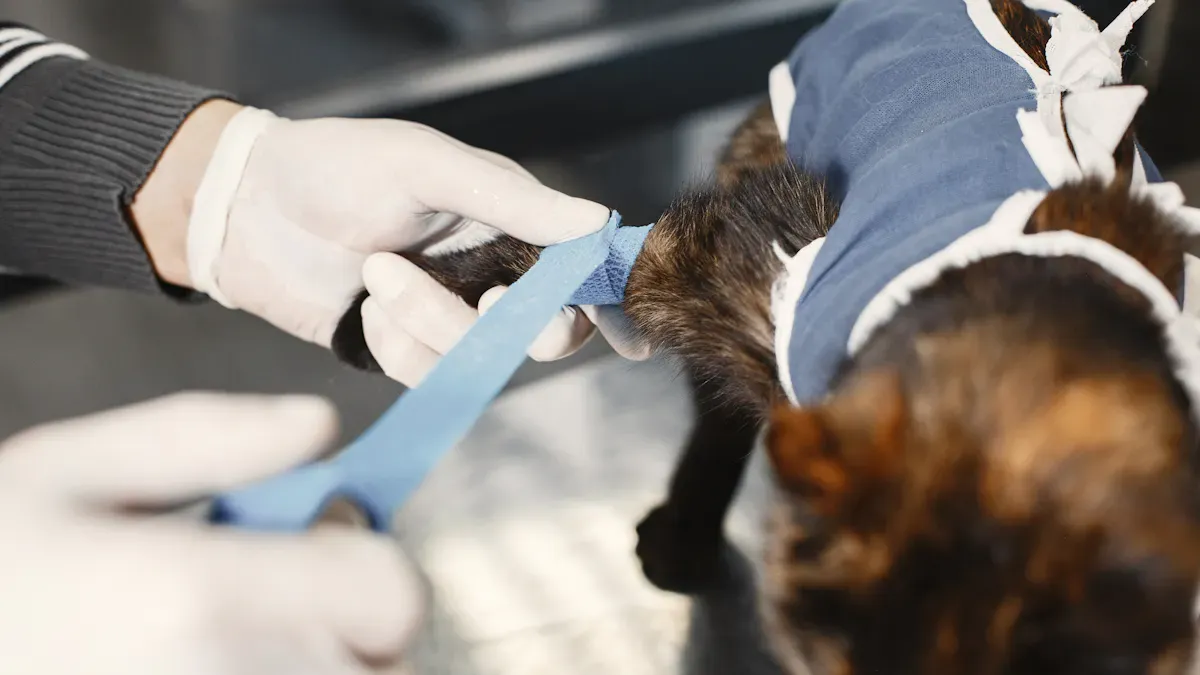
You should always consult your veterinarian before choosing a dog brace for a torn ACL. The most important questions are whether the dog needs direct knee support, whether rear assistance is also useful, and whether bracing is being used as the main conservative path or as one part of a broader rehab plan.
Veterinarians usually compare support options by function, not just by product name. This is a more useful framework:
| Support Path | Main Goal | When It Usually Matters |
|---|---|---|
| Dog Knee Brace | Direct knee stabilization | When the dog needs more targeted stifle support during conservative care or rehab |
| Rear Support or Sling | Assisted movement and weight-sharing | When daily mobility tasks still need handling help |
| Combined plan | Use knee support and mobility support together | When the dog needs both knee control and safer assisted movement |
Your vet will help decide whether a brace is the main support path, whether rear assistance is only supplemental, and whether the current rehab stage needs more or less control. Braces can help many dogs, but they should still be treated as one part of a larger veterinary recovery decision. For broader condition planning, compare this section with the Solutions hub.
Evaluating Fit and Comfort
A proper fit is one of the most important parts of choosing a dog brace for torn ACL. If the brace does not stay aligned under movement, the support value drops quickly. If it is too tight, your dog may develop rubbing, heat, or pressure marks. Fit should be judged during real daily movement, not only when the brace is first put on.
Use these fitting rules:
- start with a veterinary diagnosis and confirm that direct knee support is appropriate
- measure the upper thigh, knee support zone, lower leg, and brace length carefully
- align the brace so the support zone sits correctly over the knee
- use a short break-in period before expanding activity
- check the skin and gait after every early session
A brace that fits well should not slip, twist, or create worse limping. If you see redness, sores, or repeated slide-down, adjust the fit or reassess the brace path. For a deeper fit workflow, review dog knee brace for CCL tear: fit, traction, and safe use.
Tip: Always check the brace after walks or rehab sessions. A brace that looks fine before activity can still fail once the dog starts moving.
Matching Support to Your Dog’s Activity Level
Your dog’s activity level helps decide whether a more structured knee brace is needed and whether rear support should be added for daily tasks. A calmer dog doing short controlled walks may need a different setup than a dog that still tries to move more actively and challenges brace stability every day.
- more active dogs often need stronger brace control and closer daily monitoring
- less active or weaker dogs may still need rear assistance even if the knee brace is appropriate
- stairs, bathroom breaks, and transfers may need a different support mix than short leash walks
- fit and comfort still matter more than product category alone
If your dog had surgery or is in a harder rehab phase, rear support devices or lifting slings may help as a secondary support layer. For more on these mobility-aid tools, see the support sling guide.
Note: Braces and rear support tools can work together, but they should not be confused as doing the same job.
Common Mistakes and How to Avoid Them
Poor Fit and Sizing Issues
You might think any brace will help, but a poor fit can create additional pressure, rubbing, brace migration, or unwanted gait changes. If a dog brace for a torn ACL is too loose, it may slip or fail to remain aligned. If it is too tight, pressure, heat, and skin irritation may develop. The goal is controlled external support without creating a second fit or skin problem.
Here is a better summary of common fit failures:
| Common Mistake | What It Usually Causes |
|---|---|
| Improper fit | Loose braces fail to stabilize. Tight braces create pressure and irritation. |
| Skin neglect | Moisture and friction can lead to sores or brace intolerance. |
| False sense of security | The dog may look better briefly even though the injury still needs controlled rehab. |
Repeated slipping, pressure, rubbing, or gait changes can make continued use unsuitable and should prompt a fit reassessment. That is why fit and rechecking matter as much as the brace choice itself.
Misunderstanding the Role of a Dog Knee Brace
Many owners believe a dog brace for torn ACL will solve the whole problem by itself. That is not true. Braces give support and control, but they do not repair the ligament on their own. They are most useful when paired with weight control, controlled activity, rehab planning, and veterinary follow-up.
- braces support the knee, but they do not replace the full recovery plan
- rear support devices help mobility, but they do not become direct ACL braces by doing so
- the better support path is the one that fits the dog’s real rehab needs, not just the product label
Skipping Rehab and Follow-Up
You may feel tempted to skip rehab or follow-up visits once the dog starts wearing a brace, but that is a common mistake. Bracing works best when paired with controlled exercise, gradual progress, and rechecks for fit, skin condition, and gait quality.
Tip: Regular veterinary follow-up helps catch slippage, swelling, skin problems, or support mismatch before they become bigger setbacks.
You should introduce the brace slowly, monitor skin and comfort every day, and keep the overall rehab plan realistic. For more on mobility support during rehab, compare this section with the support sling guide and the Solutions hub.
Choosing the right dog brace for torn ACL starts with a few practical steps:
- confirm whether your dog needs direct knee support, rear assistance, or both
- pick the knee brace support level that matches real instability and rehab needs
- measure carefully so the brace can stay aligned during movement
- use rear support only when mobility assistance is still needed for daily tasks
- check skin, gait, and fit every day during the early wear phase
For next steps, continue to the torn ACL brace comparison guide, the dog knee brace fit guide, the support sling guide, the Solutions hub, or the dog knee brace category depending on whether you still need brace comparison, fit guidance, mobility-aid planning, condition planning, or product comparison. Data authenticity note: This article is for educational purposes only. It is designed to help readers compare support paths for dogs with torn ACL-related knee injuries, not to replace veterinary diagnosis or individualized treatment advice.
FAQ
How long should my dog wear a brace for a torn ACL?
You should follow your veterinarian’s advice. Most dogs use a brace during controlled activity and remove it during longer rest, but the right schedule depends on fit, gait, and skin tolerance rather than on one fixed routine for every dog.
Can a dog brace for torn ACL replace surgery?
A brace supports your dog’s knee and helps with movement, but it does not repair the ligament by itself. In some cases it may be part of conservative care, but you should always ask your veterinarian what role bracing should play in the full treatment plan.
How do I know if the brace fits my dog correctly?
Check for a secure fit that stays aligned during walking without slipping, twisting, or leaving pressure marks. Measure your dog carefully before buying and recheck the fit after movement, not only at first application.
When should I use a rear support or lifting sling instead?
Use a rear support or lifting sling if your dog has trouble standing, walking, or handling daily tasks during rehab. These tools are usually best as mobility aids rather than as direct torn ACL braces. For more details, visit the support sling guide.
