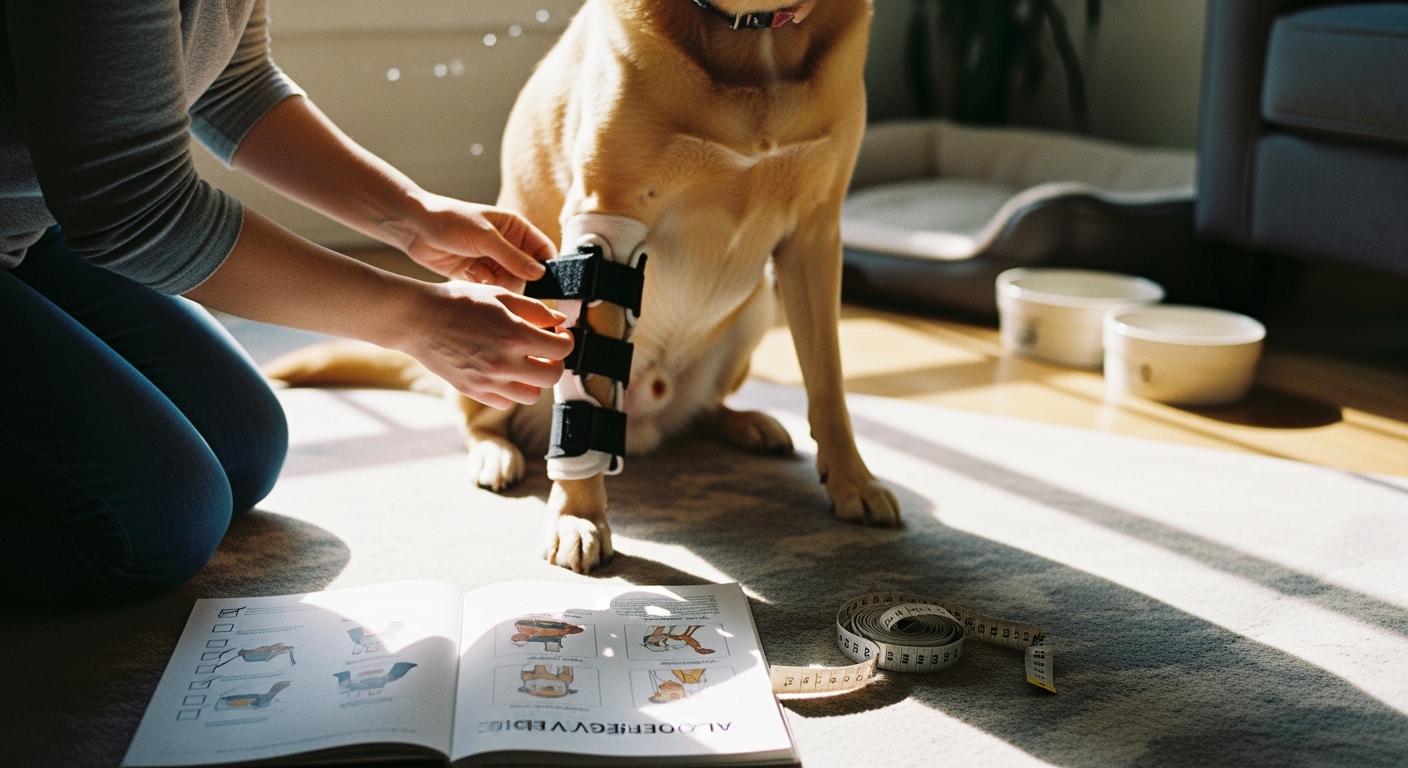
Dog knee brace for ACL injury should be judged by one practical question: how much knee control does your dog actually need, and can the brace fit well enough to work during daily use. Dog owners often search “ACL injury,” while canine rehab and veterinary discussions often refer to cruciate or CCL-related knee support. In practice, the support goal is the same: improve stifle stability during controlled movement without creating new fit or comfort problems. If you want a broader starting point before comparing brace types, begin with canine rehabilitation brace fit, comfort, and safety and the GaitGuard guides hub.
Key Takeaways
- A dog knee brace for ACL injury should be chosen by stability need, fit quality, and daily-use tolerance rather than by keyword alone.
- Soft, semi-rigid, and more structured braces solve different support problems, so brace type should match the dog’s real knee instability pattern.
- A brace can support rehab and safer daily movement, but only when the fit, wear schedule, and veterinary plan all work together.
Dog Knee Brace for ACL Injury: Search Intent and Support Goal
ACL Search Term vs. Canine Cruciate Support
Many dog owners search for “ACL injury,” but canine knee-support discussions often use terms like cruciate injury or CCL-related instability. For this page, the practical issue is the same: your dog needs a brace that supports the stifle joint more directly than a generic rear-leg wrap or soft sleeve can.
A dog knee brace for ACL injury is most useful when the goal is targeted knee support during controlled movement. It is not just meant to cover the leg. It should help reduce unstable knee motion, support safer walking, and fit into a broader plan that may include rest, weight management, and rehab work. For more on targeted fit and use, compare this section with dog knee brace for CCL tear: fit, traction, and safe use and the dog knee brace category.
- It should support the knee more directly than generic rear-leg coverage.
- It should work with controlled activity instead of replacing the full recovery plan.
- It should improve stability without creating rubbing, slipping, or worse gait quality.
When to Use a Dog Knee Brace for Torn ACL
You should consider a dog knee brace when your veterinarian wants more controlled knee support during conservative care, early rehab, or selected post-surgical recovery. A brace may also be relevant when the dog is not a strong surgery candidate, when support is needed while a broader plan is being decided, or when daily walking needs more knee stability than rest alone can provide.
A dog knee brace can help with comfort and controlled movement, but it does not automatically replace surgery or fully solve every cruciate case. That is why brace use should always match veterinary guidance and the dog’s actual instability pattern. For condition-first planning, compare this section with the Solutions hub and the dog knee braces for torn ACL recovery guide.
- support during healing and controlled daily movement
- more structure for walking than generic rear-leg support provides
- better rehab planning when fit and use are monitored closely
Choosing the Best Dog Knee Brace: Support Level & Type
When you look for the best dog knee braces, you need to pick the right support level and type for your dog’s torn acl. The right brace helps your dog walk safely and supports rehab. It does not fix the ligament or replace your veterinarian’s care. But it can make your dog feel better every day and help recovery.
Custom vs. Off-the-Shelf Braces
There are two main brace-fit paths for ACL-related knee support: more individualized custom-fit bracing and off-the-shelf bracing. The better choice depends on how hard your dog is to fit, how much support is needed, and whether standard sizing keeps sliding, twisting, or failing to stay aligned.
Here is a better comparison:
| Comparison Point | Custom-Fit Brace | Off-the-Shelf Brace |
|---|---|---|
| Fit approach | Built around more individualized leg measurements | Based on standard size ranges and adjustment points |
| Usually best for | Hard-to-fit dogs, repeated slippage problems, higher support demands | Faster trial fitting, mild-to-moderate support needs, transitional use |
| Main strength | More precise fit potential | More accessible starting point |
| Main tradeoff | More setup and commitment | Less individualized fit control |
Custom-fit braces become more valuable when standard sizes repeatedly fail or the dog needs stronger and more precise support. Off-the-shelf braces can still work well when the support need is lower, the fit is straightforward, or the brace is being used as part of a shorter-term or transitional plan.
Tip: Ask your veterinarian whether the bigger risk is not enough support or not enough fit precision. That question usually clarifies custom versus off-the-shelf faster than price or brand alone.
Soft, Semi-Rigid, and Rigid Braces Explained
You will see three main types of braces when picking the ideal dog knee brace: soft, semi-rigid, and rigid. Each type gives a different level of support for acl injuries.
| Brace Type | Support Level | Usually Best For | Main Tradeoff |
|---|---|---|---|
| Soft Brace | Lighter | Milder support needs, easier daily tolerance, lower-control use | May not control a more unstable knee well enough |
| Semi-Rigid or Hinged Brace | Moderate | Controlled rehab walking, moderate instability, partial-tear or post-op support paths | More fit-sensitive than softer options |
| More Rigid Brace | Higher | Higher-control needs, more unstable cases, stronger movement guidance | Harder daily tolerance if fit or schedule is poor |
Soft braces are best for mild acl injuries. They are easy to use and comfy for short times. Semi-rigid or hinged braces give more stability. They help dogs with moderate to severe injuries or those healing from surgery. Rigid braces offer the most support. They help dogs with bad torn acl who need to avoid surgery or need strong pain control.
Matching Brace Type to Torn ACL Severity
Picking the right knee brace depends on how unstable the knee is during normal movement, how much control the rehab plan needs, and how well your dog can tolerate the brace in daily life.
- Lighter support need: softer support may be enough when the knee still carries weight fairly well.
- Moderate support need: semi-rigid or hinged support often works better when rehab walking needs more control.
- Higher control need: stronger or more individualized bracing becomes more relevant when lighter options do not stabilize the knee well enough.
- Fit still matters: more support is not automatically better if the brace slips, twists, or creates worse gait.
You can use this decision rule:
- Match support level to the dog’s actual instability, not only to the keyword “ACL injury.”
- Choose the brace type your dog can actually wear consistently.
- Reassess the plan if daily use causes rubbing, poor gait, or brace refusal.
Note: A knee brace supports rehab and safer movement. It does not “fix” the ligament by itself. For broader comparison, review the dog knee braces for torn ACL recovery guide and the Solutions hub.
Fit and Comfort: Measuring and Adjusting Your Dog Knee Brace
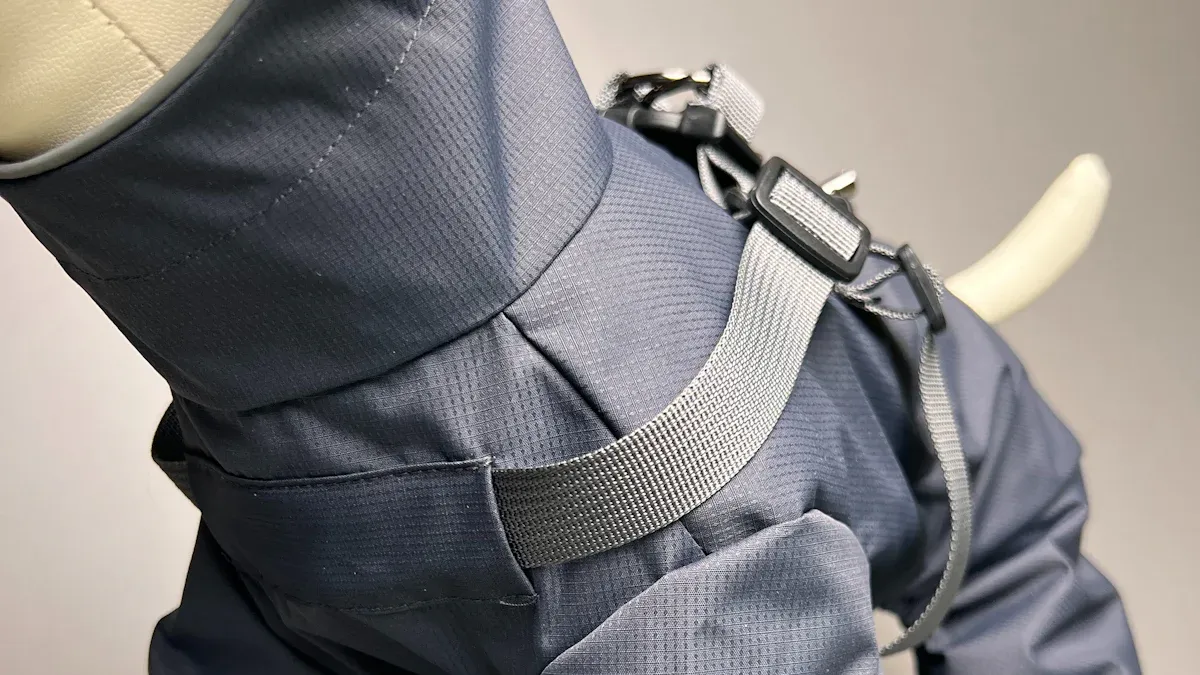
Getting the right fit for your dog’s knee brace is one of the most important steps in ACL-related recovery support. A dog knee brace for ACL injury works best when it matches the dog’s actual leg shape, stays aligned during movement, and provides support without creating new pressure or gait problems.
How to Measure for the Right Fit
You need to measure your dog’s leg in several places so the brace can stay aligned and support the knee correctly. Use a soft tape measure and keep your dog standing calmly during the process.
- Measure the upper thigh where the brace will anchor.
- Measure around the knee support zone.
- Measure the lower leg above the hock.
- Measure the brace length from upper anchor to lower support point.
- Compare the injured side with the healthier side when possible.
Tip: A brace that looks “close enough” on paper can still fail in daily use. Accurate measurements matter because fit precision affects both support and tolerance.
Adjusting for Comfort and Security
Once you have the brace, you need to adjust it for comfort and security. Start slow. Let your dog wear the brace for short supervised sessions first, then increase use only if gait and skin stay stable.
Use this simpler break-in structure:
| Phase | Main Goal | What to Check |
|---|---|---|
| Days 1–3 | Short supervised wear only | Rubbing, slipping, twisting, worse limping |
| Days 4–7 | Use during calm controlled activity | Whether the dog still walks comfortably after use |
| Week 2+ | Use during selected active periods as tolerated | Ongoing fit, skin response, and gait quality |
Check the straps and fasteners each time you put the brace on. The brace should feel secure without pinching, and it should stay aligned once your dog starts walking. Remove the brace during longer rest periods unless your veterinarian gives a different plan.
Note: Break-in is not just about increasing time. It is about confirming that the brace remains wearable and stable under real movement.
Signs of Good vs. Poor Fit
You need to watch for signs that show whether the brace fits well or needs adjustment. A proper fit should improve control without creating new discomfort.
Good Fit:
- the brace stays aligned during short controlled walks
- your dog accepts the brace without constant chewing or resistance
- there are no lasting red marks, sores, or hair loss
- the brace does not twist, slide down, or bunch up
Poor Fit:
- you see skin irritation, heat, or pressure marks
- the brace rotates or slips during movement
- your dog limps more or refuses to walk naturally
- you notice swelling or obvious discomfort near the brace edge
Use this table to review common fit failures:
| Problem Type | What It Usually Means |
|---|---|
| Skin complications | The brace is rubbing, too tight, or poorly aligned. |
| Mechanical fit failure | The brace slips, twists, or does not hold the knee correctly. |
| Brace non-acceptance | The dog cannot tolerate the current fit, type, or wear plan. |
If you see these problems, stop the session, reassess the fit, and speak with your veterinarian if the issue continues.
Always check the brace daily for signs of wear or damage. Clean it as directed to prevent skin problems. If you have questions about fit, ask your veterinarian for help. A dog knee brace for ACL injury can make a big difference when you focus on comfort and proper fit.
Daily Use Plan: Introducing and Maintaining the Brace
Gradual Break-In and Wear Schedule
You want your dog to get used to the dog knee brace for ACL injury slowly. Instead of following a rigid day-by-day script, use a phase-based wear plan that changes only when tolerance stays stable.
| Phase | Brace Goal | Activity Rule |
|---|---|---|
| Early break-in | Short supervised wear only | Calm indoor movement and very short leash use if tolerated |
| Early daily use | Use during controlled active periods | Short walks and rehab tasks without sharp turns or overexertion |
| Stable routine | Repeatable use during selected daily activity | Increase only when gait, skin, and comfort remain steady |
Start with short wear windows, remove the brace for skin checks and rest, and increase only if the dog is moving comfortably. It is usually safer to expand wear during active periods instead of assuming longer total wear is always better.
Monitoring Comfort and Activity
Check your dog’s comfort and activity every day. Watch not just whether the dog is wearing the brace, but whether the brace is actually helping movement stay safer and steadier.
Look for warning signs that mean you should adjust or stop the current plan:
- obvious discomfort or brace refusal
- increased limping or shorter stride after use
- rubbing, slipping, or twisting that keeps recurring
If you see any of these, stop the session and reassess the fit or the support level.
Simple daily brace log:
| Date | Wear Time | Activity Type | Gait After Use | Skin Check | Next Step |
|---|---|---|---|---|---|
| Example | 45 min | short walk / rehab / rest | steady / mild limp / worse | clear / red / rubbing | hold / increase / adjust |
Daily checks matter because poor brace tolerance usually appears gradually, not all at once.
Cleaning and Maintenance Tips
Keep the brace clean to protect your dog’s skin and preserve fit quality. Wipe hard surfaces after use, wash liners or soft covers as directed, and make sure every part is dry before the next wear session. Check straps, closures, and moving parts regularly so small failures do not become fit problems.
Inspect your dog’s skin every day for red marks, sores, moisture, or hair loss. Limit slippery-floor exposure and keep activity controlled so the brace is helping support safer movement rather than encouraging careless overuse.
A clean, well-maintained brace is easier to tolerate and easier to trust. That makes daily recovery management more realistic for both the dog and the handler.
You can help your dog recover from an ACL-related knee injury by following a few key steps:
- Confirm the diagnosis and support goal with your veterinarian.
- Measure carefully so the brace can stay aligned under movement.
- Choose the support level your dog actually needs, not just the brace type that sounds strongest.
- Use a gradual wear plan and adjust early if fit or tolerance drops.
For next steps, continue to dog knee brace for CCL tear: fit, traction, and safe use, dog knee braces for torn ACL recovery support, the Solutions hub, the dog knee brace category, or the GaitGuard guides hub depending on whether you still need fit guidance, brace comparison, condition planning, product comparison, or broader education. Data authenticity note: This article is for educational purposes only. It is designed to help readers compare dog knee brace options for ACL-related support needs, not to replace veterinary diagnosis or individualized treatment advice.
FAQ
How long should my dog wear a knee brace each day?
Start with short supervised wear and increase only when fit, gait, and skin response stay stable. The right schedule depends more on tolerance and activity type than on one fixed number of hours for every dog.
Can a dog knee brace for ACL injury replace surgery?
A brace supports the knee and may help with rehab and daily control, but it does not repair the ligament by itself. You should use it as part of a broader veterinary plan rather than treating it as an automatic surgery replacement.
How do I know if the brace fits correctly?
Check that the brace stays aligned, does not twist or slide, and does not leave lasting pressure marks. A good fit should support steadier walking instead of making gait more awkward.
What activities are safe for my dog while wearing the brace?
Gentle leash walks and controlled rehab activity are usually safer than free running or rough play. Avoid jumping, sharp turns, and uncontrolled activity unless your veterinarian has cleared that stage of recovery.
How do I clean a dog knee brace for ACL injury?
Wipe the brace after use, wash soft parts as directed, and let everything dry fully before reuse. Regular cleaning and hardware checks help prevent both skin problems and mechanical fit failure.