Choosing a dog knee brace for a CCL tear involves more than matching a size label. The brace must stay aligned during short, controlled movement, avoid concentrated pressure, and be used on surfaces where the dog’s paws can maintain traction without repeated slipping or twisting.
This page focuses on one defined intent: CCL-specific brace fit, traction, slipping, skin checks, and daily-use boundaries. For a wider comparison of knee-brace types, support levels, sizing systems, and everyday use, start with the orthopedic dog knee brace guide.
Key Takeaways
- A dog knee brace may help support controlled movement, but it does not repair a torn CCL or replace veterinary care.
- Choose a knee brace based on diagnosis, fit, stability, wear tolerance, and skin comfort—not only on the size label.
- Home traction is a separate requirement. A stable brace cannot compensate for slippery floors, sudden turns, stairs, or jumping.
- Remove the brace and call your veterinarian if your dog shows worsening pain, swelling, heat, skin irritation, sudden limping, or refusal to use the leg.
What a CCL Tear Changes in the Knee
A CCL tear can make the knee unstable. Dogs may limp, sit differently, avoid stairs, hold the leg up, or place less weight on the affected side. Some dogs show a mild limp at first, while others suddenly stop using the leg after a painful movement.
A knee brace can support the outside of the joint and help limit unwanted motion during controlled activity. That support may make short, supervised movement steadier for some dogs. However, a brace does not reconnect the torn ligament, remove the underlying injury, or make normal activity safe again.
The right plan depends on the dog’s diagnosis, size, pain level, activity level, and whether the tear is partial or complete. Some dogs may use a brace as part of a conservative management plan. Other dogs, especially highly active dogs, large dogs, or dogs with severe instability, may need a different treatment plan from a veterinarian.
What a brace can support
- Short, controlled leash movement
- More stable footing during supervised daily activity
- Help limiting unwanted twisting during short, controlled movement when the brace remains aligned
- Owner monitoring of skin, movement, and comfort
What a brace cannot do
- Repair the torn CCL
- Replace diagnosis, pain control, surgery, or rehabilitation when needed
- Make running, jumping, stairs, or rough play safe
- Fix poor traction, poor fit, or activity that is too intense
When a Brace Is Only Part of the Plan
A dog knee brace for a CCL tear should be treated as one support tool, not as the entire recovery plan. It may be useful when the goal is controlled support, but it should be used with clear activity limits and regular checks.
Before relying on a brace, the dog should be evaluated by a veterinarian. The veterinarian can confirm whether the problem is a CCL tear, whether there are other issues such as patellar luxation or hip problems, and whether bracing is appropriate for that dog’s case.
A brace may not be enough if the dog has severe pain, sudden non-weight-bearing lameness, major swelling, repeated falls, skin problems under the brace, or worsening movement after activity. In those situations, the brace should not be used as a way to keep the dog walking through pain.
Questions to ask before daily brace use
- What type of CCL injury does the dog have?
- How much movement is allowed each day?
- Should the brace be used for every walk or only selected activities?
- How long should each wear session last?
- What skin or gait changes mean the brace should be removed?
- When should the dog be rechecked?
For condition-level planning beyond daily fit checks, review the dog cruciate ligament brace solution. It explains where brace support may fit within a broader CCL management plan, while the final decision should still follow the veterinarian’s diagnosis, the dog’s stability, pain level, and activity needs.
How to Check Fit Before Daily Use
The brace should sit in the same position each time it is used. If it shifts down the leg, rotates around the knee, pinches the skin, or changes the dog’s gait sharply, the fit needs to be checked before the dog continues walking.
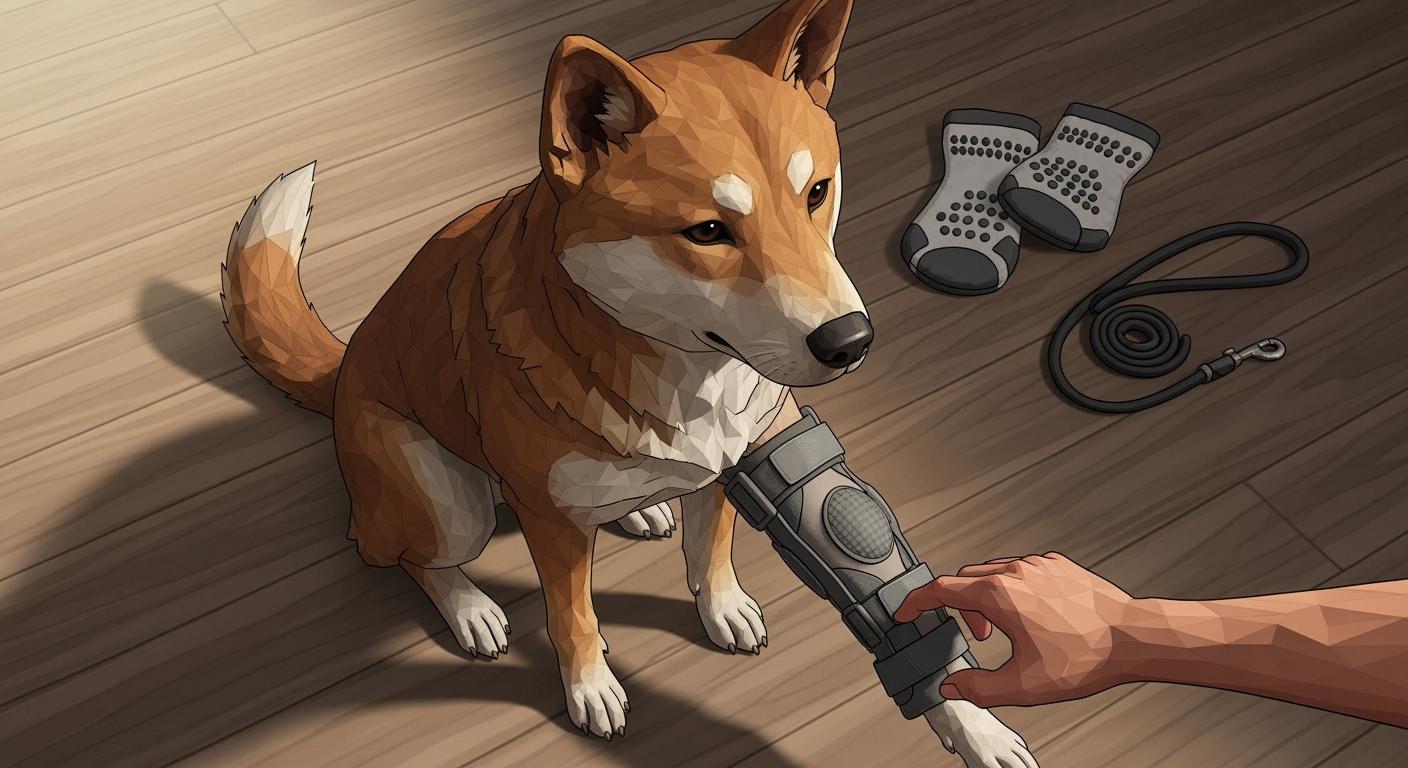
Start by placing the dog in a calm standing position. The knee area should line up with the brace’s support area or hinge. Straps should lie flat, with no folding, twisting, or bunching. The brace should feel secure, but not so tight that it leaves deep marks or changes circulation.
Basic fit check
- The brace sits straight on the leg.
- The knee aligns with the brace support area.
- Straps are flat and even.
- The brace does not slide during the first few steps.
- The dog can stand without leaning away from the brace.
- There is no immediate rubbing, pinching, or skin folding.
After the dog takes a few slow steps, pause and check the brace again. A brace that looks correct before movement may still slip once the dog starts walking. If it rotates or slides repeatedly, the dog should not continue wearing it until the fit is adjusted.
Custom and off-the-shelf fit
Custom and off-the-shelf designs can both create problems if they are not checked during real movement. A custom brace may match the dog’s shape more closely, but it still needs careful break-in and skin monitoring. An off-the-shelf brace may be faster to obtain, but it can be more likely to shift if the dog’s leg shape does not match the size pattern. For a product-side comparison after the support requirements are clear, review the dog knee brace category.
The safer comparison is not simply custom versus off-the-shelf. The better question is whether the brace stays aligned, spreads pressure comfortably, avoids rubbing, and remains stable during the dog’s actual daily routine.
First Week: Break-In and Skin Checks
The first week should be treated as a break-in period. A dog may need time to accept the brace, and the owner needs time to learn whether the brace stays stable. Start with short, supervised sessions instead of long wear periods.
Do not leave the dog unsupervised in a new brace. Do not let the dog sleep in the brace unless the veterinarian or brace provider specifically says to do so. The early goal is to watch fit, comfort, skin, and gait, not to increase activity quickly.
Break-in routine
- Start with short supervised sessions.
- Use the brace during calm standing or slow leash movement.
- Watch whether the dog freezes, kicks, chews, or tries to remove the brace.
- Remove the brace after the session and check the skin.
- Increase wear time only if the dog remains comfortable and the brace stays stable.
Skin checks after every session
After removing the brace, check the skin under each strap and around bony areas. Look for redness, heat, swelling, hair rubbing, pressure marks, dampness, or small bumps. Mild temporary marks from contact may fade quickly, but redness that remains, worsens, or feels warm should not be ignored.
- Check before and after each wear session.
- Look closely at the inside of the leg and around strap edges.
- Keep the brace dry and clean.
- Do not apply oils, creams, or thick ointments under the brace unless your veterinarian instructs you to.
- Stop use and ask for help if rubbing appears repeatedly.
Home Traction Setup to Reduce Slipping
Traction is a major part of safe brace use. A knee brace cannot protect the dog well if the floor is slippery, the dog turns suddenly, or the dog rushes toward stairs, doors, food bowls, or furniture.
Create a simple traction path before using the brace for daily movement. The goal is to reduce panic steps, sudden slides, and twisting. Focus on the areas the dog uses most: bed to door, bed to food bowl, hallway to potty exit, and any area near stairs.
Safer home setup
- Use runner rugs or non-slip mats on smooth floors.
- Keep walking paths dry and free of clutter.
- Block stairs unless the veterinarian allows stair use.
- Use a leash indoors if the dog tends to rush.
- Place food, water, and bedding where the dog does not need to turn sharply.
- Use a sling or harness for extra support if the dog struggles to rise.
Traction socks or booties may help some dogs on slick floors, but they also need fit checks. If socks twist, slide, or make the dog step awkwardly, they can create new problems. Use them only when they improve stability, not just because they look protective.
When the Brace Is Stable but the Paws Still Slip
Brace stability and paw traction are separate checks. A brace can remain correctly aligned while the paws still slide on hardwood, tile, laminate, or another smooth surface. In that situation, tightening the brace further is unlikely to solve the floor-grip problem and may increase pressure against the skin.
Build a continuous traction route rather than placing isolated mats in only one or two spots. The route should connect the dog’s bed, food and water area, normal potty exit, and other essential locations without forcing sharp turns or steps across uncovered flooring. Block stairs when they are not part of the veterinarian-approved activity plan, and supervise unavoidable thresholds or surface changes.
| What you observe | More likely issue | Next check |
|---|---|---|
| The brace stays aligned, but the paws slide | Insufficient floor traction | Add a continuous non-slip route and reassess movement |
| The paws grip, but the brace rotates | Fit, sizing, strap position, or alignment problem | Stop the session and recheck the brace before walking again |
| Socks or booties twist or are kicked off | Paw-product fit or tolerance problem | Remove the item and use another traction method |
| The dog still slips after traction changes | The current support plan may be insufficient | Stop the activity and ask the veterinarian or rehabilitation professional for guidance |
Home safety changes such as a simple traction lane, controlled walking paths, and appropriate lifting support can also reduce rushed or unstable movement during daily transfers.
Daily Use Rules With a CCL Knee Brace
Daily use should stay calm, short, and predictable. The brace should not be treated as permission for running, jumping, climbing, rough play, or sudden increases in walking time.
Use a leash even for short potty breaks if the dog may rush or turn quickly. Keep the dog close, walk slowly, and avoid uneven ground. If the dog starts pulling, hopping, twisting, or sitting suddenly, stop and reassess.
Before each walk
- Check that the brace is clean and dry.
- Confirm the straps are flat and secure.
- Watch the dog stand for a few seconds before moving.
- Start with slow, straight steps.
- Avoid slippery surfaces and sharp turns.
During the walk
- Keep the leash short enough to prevent sudden lunging.
- Do not allow running, jumping, or rough play.
- Stop if the brace slips or rotates.
- Stop if the dog becomes more lame, anxious, or unwilling to continue.
- Keep the walk within the veterinarian’s activity limits.
After the walk
- Remove the brace if the session is finished.
- Check the skin and coat under the brace.
- Write down slipping, rubbing, limping, or behavior changes.
- Clean and dry the brace if needed.
- Do not increase the next session if the dog looked sore afterward.
If the dog is also using traction socks, a sling, or another support device, check each item separately. Extra support only helps when it stays in place and does not create new rubbing, slipping, or balance problems.
Slipping, Rubbing and Other Brace Problems
If a brace slips once, it may only need a small adjustment. If it slips repeatedly, twists around the leg, or causes the dog to change posture, the brace is not working correctly for daily use.
Common causes include loose straps, poor alignment, damp liners, uneven leg shape, weak traction, or activity that is too intense for the dog’s current condition.
| Problem | What it may mean | What to do next |
|---|---|---|
| Brace slides down | Loose straps, wrong size, or poor alignment | Stop, reposition, and recheck fit before walking again |
| Brace twists | Uneven tension or movement beyond the brace’s control | Shorten the session and check strap placement |
| Red skin | Pressure, friction, dampness, or liner bunching | Remove the brace and let the skin recover |
| Hair rubbing | Repeated friction in the same area | Stop long sessions and ask for fitting help |
| More limping after wear | Too much activity, poor fit, or pain | Stop use and contact the veterinarian if it continues |
| Dog chews the brace | Discomfort, stress, or poor fit | Remove the brace and reassess before another session |
Do not keep tightening the brace to solve every problem. A brace that only stays in place when it is very tight may create pressure and skin irritation. Fit should be stable, but the dog should still be able to stand and move without obvious discomfort.
Rehab Support Without Overdoing Activity
Rehabilitation exercises, range-of-motion work, hydrotherapy, or strengthening routines should come from a veterinarian or rehabilitation professional. A brace can be part of that plan, but it should not be used to create a home exercise plan without guidance.
Some dogs need strict rest first. Others may be allowed short, controlled leash movement. Activity should increase only when the veterinarian allows it and the dog is not showing worse pain, swelling, or lameness after use.
Any rehabilitation schedule should be adjusted to the individual dog, the injury, and the veterinarian’s plan. The brace should not be used as a reason to increase activity faster than the dog can tolerate.
Signs the routine may be too much
- The dog limps more after brace sessions.
- The dog is slower to rise later in the day.
- Swelling or warmth appears around the knee.
- The dog starts avoiding the brace.
- The dog slips, falls, or twists during movement.
- The dog becomes more tired, withdrawn, or irritable.
If any of these signs appear, reduce activity and contact the veterinarian if the change does not quickly improve or if the dog seems painful.
When to Stop Using the Brace and Call a Vet
Remove the brace and contact your veterinarian if the dog shows clear pain, sudden worsening lameness, swelling, skin damage, heat around the joint, repeated slipping, or refusal to use the leg. These signs can mean the current support plan is not safe enough.
Call your veterinarian if you notice:
- Sudden non-weight-bearing lameness
- Worsening swelling around the knee
- Heat, redness, sores, or open skin under the brace
- Repeated brace slipping or twisting even after adjustment
- More limping after each wear session
- Whining, panting, hiding, or guarding the leg
- Loss of appetite or a sudden change in behavior
- Any new injury, fall, or twisting event
A brace should make controlled movement easier to manage, not hide a worsening problem. If the dog looks worse with the brace than without it, stop using it until the fit and treatment plan are reviewed.
Brace Success Checklist
- The brace sits straight and does not twist.
- The straps are flat, secure, and not overly tight.
- The dog can stand without leaning away from the brace.
- The dog walks slowly without sudden hopping or panic steps.
- The skin stays clear after wear.
- The brace stays dry and clean.
- The home walking path has enough traction.
- Activity stays within the veterinarian’s limits.
- The owner checks fit before and after each session.
A dog knee brace for a CCL tear is most useful when it stays aligned, the dog has reliable traction, the skin remains clear, and activity stays within the veterinarian’s limits. It becomes unsafe when it repeatedly slips, rubs, hides worsening pain, or encourages more movement than the knee can tolerate.
For clinics, rehabilitation suppliers, distributors, and private-label programs: product evaluation should focus on sizing logic, strap stability, pressure distribution, liner comfort, cleaning requirements, and clear use boundaries. Teams developing a canine knee-support line can review GaitGuard’s custom dog brace manufacturing capabilities.
FAQ
Can a dog knee brace repair a torn CCL?
No. A brace may provide external support during controlled movement, but it does not reconnect or repair the torn ligament. Diagnosis and treatment planning should come from a veterinarian.
Should I tighten the brace if my dog slips on hardwood floors?
Not automatically. If the brace remains aligned but the paws slide, the problem is more likely floor traction than brace tightness. Add a continuous non-slip route and check the brace and the paws separately.
How often should I check the skin under the brace?
Check the skin before and after each supervised wear session, especially during the break-in period. Remove the brace if redness, heat, swelling, sores, dampness, or repeated hair rubbing appears.
When should brace use stop?
Stop use and contact the veterinarian when the dog develops worsening pain, sudden non-weight-bearing lameness, swelling, skin damage, repeated falls, or more limping after each session.