
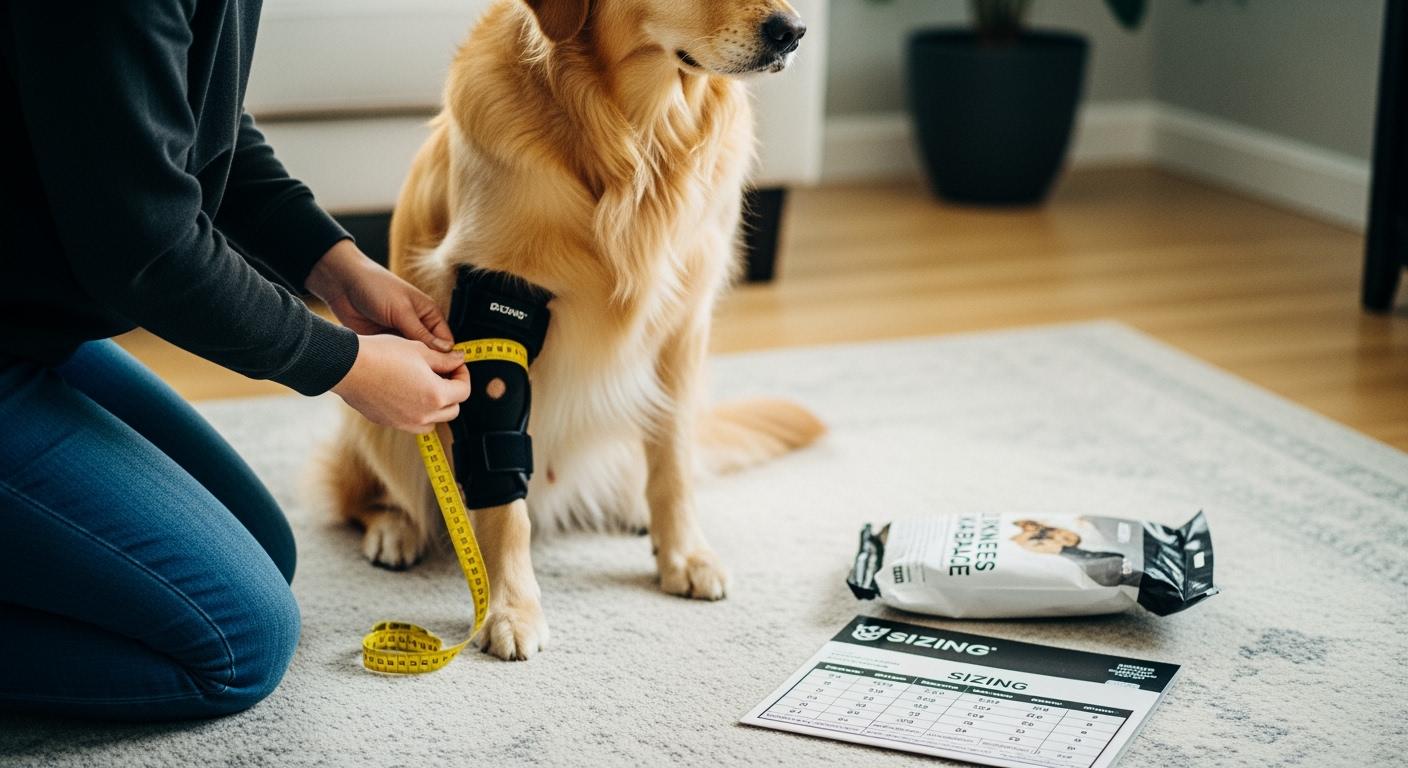
Dog knee support brace fit and sizing should be judged by one practical question: does the brace stay aligned and comfortable during real movement. A well-fitted brace should support the knee, reduce slippage, and let the dog walk, sit, and stand without obvious rubbing or awkward gait changes. If you want a broader step-by-step framework before fitting a knee brace, start with this dog brace sizing guide.
| Fit Factor | Why It Matters |
|---|---|
| Correct measurements | Help the brace match the dog’s leg shape and reduce slipping. |
| Proper knee alignment | Keeps support centered where the joint actually needs control. |
| Daily fit checks | Catch drift, rubbing, and strap loosening before they become bigger problems. |
| Wear tolerance | A brace only helps if the dog can actually wear it comfortably and consistently. |
Braces can support recovery and daily mobility, but they do not replace diagnosis or treatment planning from a licensed veterinarian.
Key Takeaways
- A dog knee support brace should stay aligned during movement, not just look correct while the dog is standing still.
- Correct measurements, knee alignment, and daily rechecks matter more than guessing by breed or weight.
- Fit decisions should balance security, comfort, and slippage control instead of simply choosing the tighter option.
Why Dog Knee Support Brace Fit and Sizing Matter
Impact on Performance and Stability
It is important to make sure the dog knee support brace fits correctly because fit changes how much support the dog actually receives. A correct size and alignment can help the dog move with better balance, keep the brace centered on the knee, and reduce unnecessary motion that makes recovery harder.
| Support Goal | How Proper Fit Helps |
|---|---|
| Joint stability | Keeps support positioned correctly around the knee. |
| Walking comfort | Reduces rubbing, drift, and awkward brace movement. |
| Daily tolerance | Makes the brace easier to wear during repeated short sessions. |
| Slippage control | Helps the brace stay secure during walking, sitting, and standing. |
A brace can support recovery and improve daily movement, but it does not replace diagnosis, surgery decisions, or rehabilitation planning. Measuring the dog correctly is one of the simplest ways to improve brace performance from the start.
Comfort and Consistency of Wear
Dog knee support brace fit and sizing also change how comfortable your dog feels. If the brace fits well, your Dog knee support brace fit and sizing also affect daily wear tolerance. If the brace fits well, the dog is more likely to accept it during short repeated sessions and less likely to scratch, resist, or try to remove it. Good daily tolerance usually comes from correct alignment, comfortable contact points, and gradual wear rather than from wearing the brace longer on day one.
| Wear Factor | What to Check |
|---|---|
| Strap comfort | Snug enough to hold the brace without pinching. |
| Skin contact | No rubbing, heat buildup, or visible pressure marks. |
| Movement tolerance | The dog can walk, sit, and stand without obvious resistance. |
| Session length | Increase only when the dog still looks comfortable after use. |
For a broader comfort-and-safety framework after this section, compare this article with the canine rehabilitation brace fit and safety guide.
Risks of Incorrect Fit
If the dog knee support brace does not fit correctly, several problems can appear at the same time. Poor fit usually means the brace is no longer giving consistent support, and it may start creating new discomfort instead.
- skin irritation, rubbing, or pressure marks
- brace slippage or twisting during movement
- reduced willingness to walk or wear the brace
- more awkward gait instead of steadier movement
- strap loosening or brace drift after short activity
Watch for red spots, missing hair, swelling, or clear discomfort after use. If the dog resists the brace or starts moving worse instead of better, recheck the fit before extending wear time.
Tip: A brace that looks correct while the dog is standing still can still fail once the dog starts walking. Always judge fit under movement, not at rest only.
How to Measure Your Dog for a Knee Brace
Key Measurements Needed
You need to collect a few key measurements to make dog knee support brace fit and sizing more accurate. Each number helps you choose a brace that matches the dog’s leg shape instead of relying on breed, weight, or guesswork. Use the table below as a measuring reference, then confirm the fit during actual movement.
| Measurement Point | Why It Matters |
|---|---|
| Upper thigh circumference | Helps anchor the top of the brace securely. |
| Knee circumference | Helps position support around the knee itself. |
| Lower leg circumference | Helps control lower hold and reduces slide-down risk. |
| Leg length | Helps prevent choosing a brace that is too tall or too short. |
You should measure your dog at these points:
Thigh circumference at the groin
Knee circumference at the joint
Lower leg circumference just above the hock
Leg length from groin to hock
Distance between legs (if the manufacturer requests it)
Tip: If your dog falls between two sizes, do not default to the smaller one automatically. Choose based on the chart, adjustment range, coat thickness, and whether the brace can still align correctly without over-tightening.
Tools and Preparation
Gather the right tools before you begin. For most brace sizing workflows, you need a flexible tape measure, a phone or notepad to record the numbers, treats to keep the dog calm, and ideally a helper. The dog should stand on a non-slip surface in a relaxed posture so the leg shape is closer to normal daily use.
- a flexible soft tape measure
- a phone or notebook for recording measurements
- a helper to keep the dog steady if needed
- a non-slip surface so the dog does not shift unnecessarily
Good preparation reduces measuring errors and usually leads to fewer fit problems later.
Measurement Steps
Follow these steps to measure your dog for a knee brace:
- Place your dog on a non-slip surface and wait for a relaxed standing posture.
- Measure the upper thigh circumference with gentle tape tension.
- Measure around the knee area where support will need to align.
- Measure the lower leg below the knee to help control lower hold.
- Measure leg length from the upper fitting point to the lower fitting point required by the brace style.
- Record every number clearly and recheck at least once before choosing a size.
Note: Always reference the manufacturer’s sizing chart before ordering. Different brace designs can use different measurement points and sizing logic.
Sizing Checklist
Use this checklist to review your measurements before you select a brace:
Did you measure your dog at all required points (thigh, knee, lower leg, leg length)?
Did you use a flexible tape or casting tape for accuracy?
Did you record each measurement in centimeters or inches as requested?
Did you check the manufacturer’s sizing chart?
Did you choose the smaller size if your dog’s measurements fall between two sizes?
Did you keep your dog calm and standing during the process?
A careful measuring process improves the chance of a proper fit, but the final test is still how the brace behaves during movement. For a broader fit-check workflow after measuring, compare this article with the dog knee brace for CCL tear fit and traction guide.
Evaluating Dog Knee Brace Fit
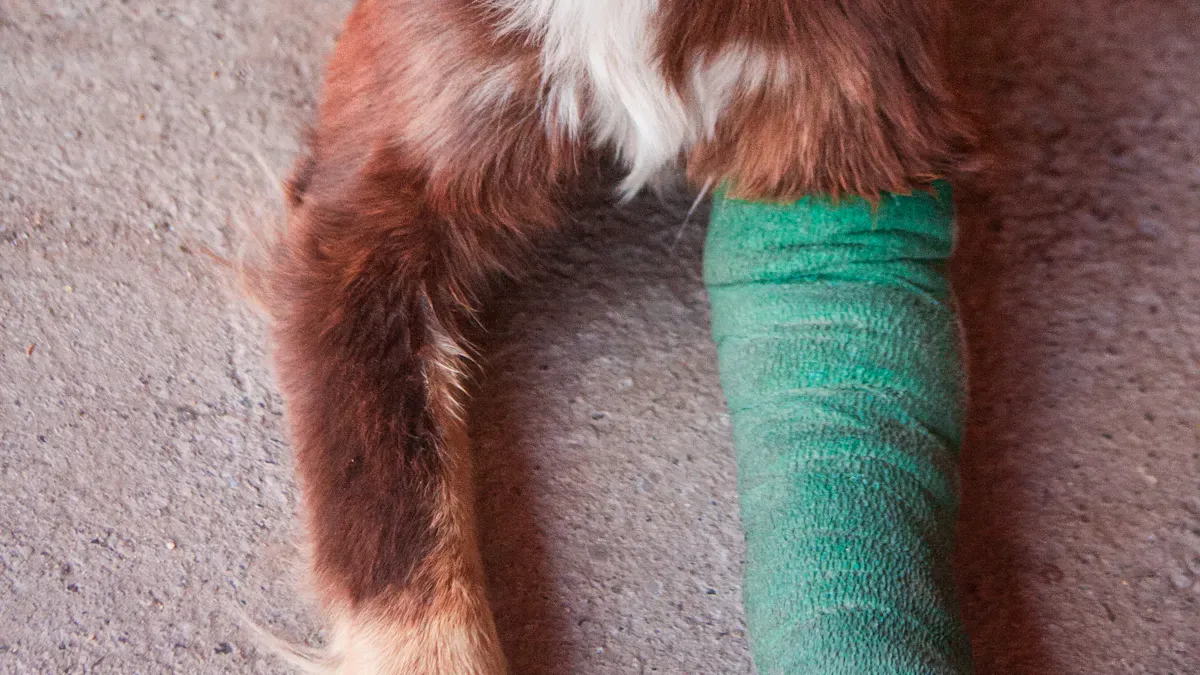
Signs of Proper Fit
You need to check a few things to see if the dog knee brace fits correctly. The brace should support the knee without hurting the dog, restricting movement too much, or sliding out of place.
| Indicator | What It Means |
|---|---|
| Snug but not tight | You can still slide one or two fingers under the straps. |
| No rubbing or chafing | The brace does not create red marks or hot spots. |
| Stable movement | The brace stays aligned during walking, sitting, and lying down. |
| Acceptable comfort | The dog does not fight the brace or move worse because of it. |
Watch your dog walk, sit, and lie down. The brace should stay in place without slipping or twisting.
Signs of Poor Fit
If the brace does not fit correctly, problems usually appear quickly. Common warning signs include:
- red skin, missing hair, or sores under the brace
- the dog trying to remove the brace or refusing to move normally
- the brace sliding down, twisting, or shifting during movement
- more limping or reduced weight use on the supported leg
If you notice these signs, take off the brace and check the measurements, alignment, and strap tension again.
Tip: If correct remeasurement and repositioning still do not solve the problem, ask your vet whether the brace type or fit approach needs to change.
Tip: If you cannot fix the fit, ask a vet or think about getting a custom brace.
Adjustability and Movement
Adjustability is important because fit can change as the dog heals, gains confidence, or changes shape slightly. Look for straps and closures that let you make small corrections instead of forcing one fixed position all day.
- A good brace keeps the knee steady without over-restricting movement.
- It should stay aligned during walking instead of drifting lower on the leg.
- It should protect the joint without becoming the cause of new rubbing or discomfort.
- Controlled movement usually works better than maximum tightness.
Check the fit often, especially during the first week or after weight and activity changes. For a broader support-planning path beyond sizing alone, use the Solutions by Condition page together with this article.
Common Sizing Mistakes and Limitations
Overlooking Body Shape Differences
Dogs come in many shapes and sizes, and body shape affects brace fit more than many buyers expect. Two dogs with the same weight can still need different brace sizes because of thigh thickness, leg length, coat volume, or knee shape. That is why sizing should start with measurements, not breed labels alone.
You should think about leg shape, muscle tone, and how the dog actually moves. If the dog has unusual proportions or repeated fit failure with standard sizes, more individualized fitting may be necessary.
Ignoring Sizing Charts
Many sizing problems happen because buyers skip the chart or guess from breed and weight instead of measuring. That usually leads to slipping, rubbing, or choosing a brace that is too tall, too short, or too loose in the wrong area. Always measure first, then compare the numbers directly to the chart for that specific brace design.
Bad fit can make the brace slip or rub the skin.
Each brand may use a different way to size.
Some dogs need custom braces for their shape.
If you want more help, see our mobility solutions page for step-by-step tips.
Understanding Bracing Limitations
Dog knee support braces help many dogs, but they do not solve every knee problem by themselves. They work best when the dog needs external support for stability, comfort, or activity control and when fit is checked carefully over time.
- Braces do not replace diagnosis or surgery decisions.
- Braces cannot compensate for incorrect measurements or poor alignment.
- Braces work best when combined with veterinary guidance, controlled exercise, and regular rechecks.
Remember: Correct measuring helps prevent many fit problems, but daily movement checks are still necessary to confirm the brace is actually working.
Dog knee support brace fit and sizing work best when you treat measuring, fit-checking, and daily monitoring as one process instead of separate tasks. A good brace should stay aligned, feel tolerable, and support steadier movement without turning into a slipping or rubbing problem.
For next steps, continue to the dog brace sizing guide, the canine rehabilitation brace fit and safety guide, the dog knee brace for CCL tear fit and traction guide, the Solutions by Condition page, or the dog knee brace category depending on whether you still need measurement help, fit logic, condition matching, or product comparison. Data authenticity note: This article is for educational purposes only. It is designed to help readers evaluate knee brace fit and sizing for dogs, not to replace veterinary diagnosis or individualized treatment advice.
FAQ
How do you know if a dog knee support brace fits correctly?
A dog knee support brace fits correctly when it feels snug without pinching, stays aligned during movement, and does not slip or twist. Your dog should also walk comfortably rather than more awkwardly.
What measurements matter most for dog knee support brace fit and sizing?
Focus on thigh circumference, knee circumference, lower leg circumference, and the brace length required by the design. Then compare those numbers to the manufacturer’s sizing chart instead of guessing from breed or weight alone.
Can you use a standard size brace for any breed?
No. Breed differences, coat thickness, muscle tone, and leg shape all affect fit. Some dogs need more individualized brace options when standard sizes cannot stay aligned correctly.
What should you do if your dog falls between two sizes?
Tip: If your dog falls between two sizes, compare adjustment range, coat thickness, and knee alignment before choosing. Smaller is not always better if it creates pressure or poor positioning.
How often should you check the fit of a dog knee support brace?
Check the fit daily, especially during the first week and after activity. Dogs can change shape slightly as they heal, and brace drift often shows up after movement before it becomes obvious at rest.
