
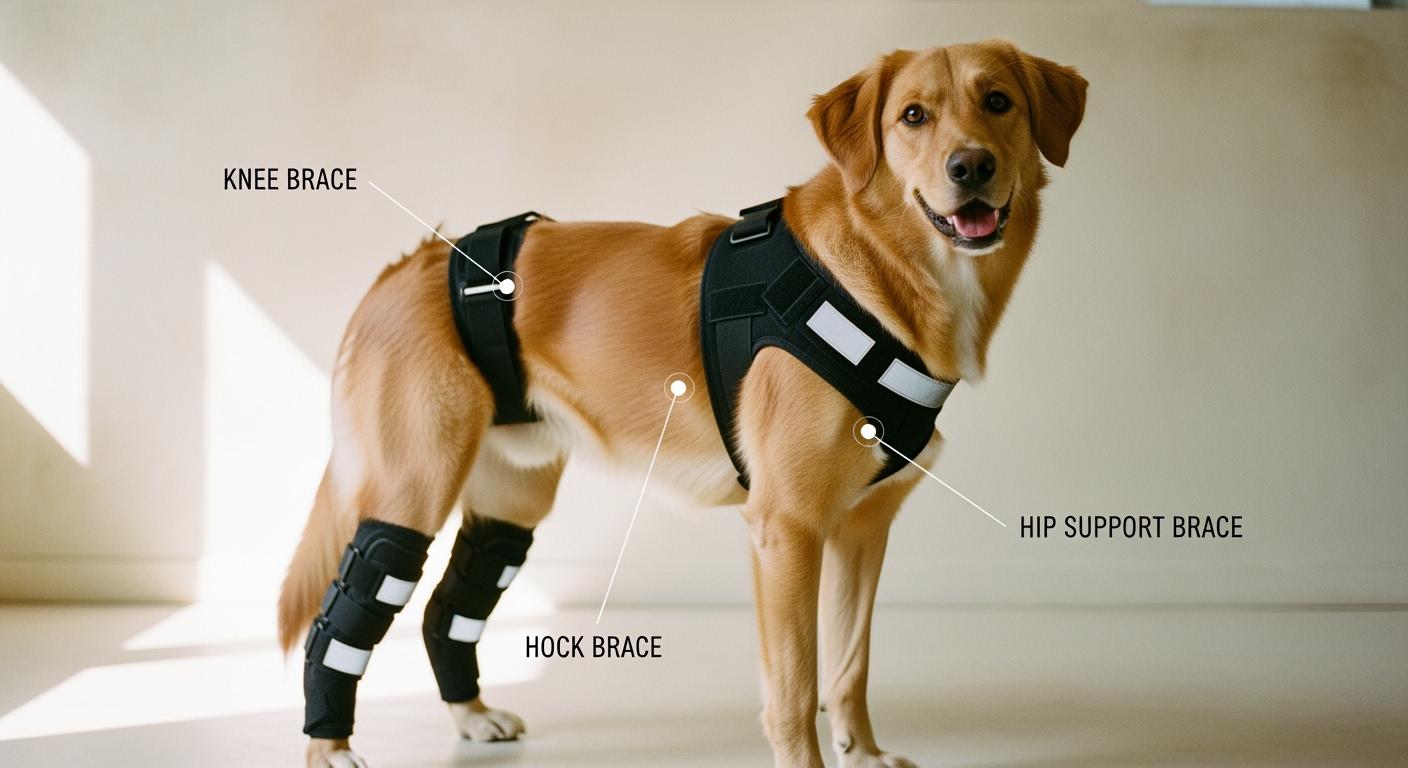
A dog brace for back leg support is usually the right next step when your dog is limping, slipping, struggling on stairs, or showing weakness in the knee, hock, or hip. This article is for owners and rehab-minded buyers who need to compare support zones before they spend money or start daily use. Read it to identify which joint likely needs support, what signs justify a veterinary exam, and what questions to ask before reviewing condition-based support options. In most cases, the best choice is not “the strongest brace,” but the brace that matches the affected joint, your dog’s diagnosis, and the amount of support needed for walking, recovery, or long-term comfort.
Key Takeaways
Knee support is usually the first option for CCL or stifle instability.
Hock support fits lower-leg weakness, hyperextension, or ankle-level instability.
Hip support is better when the problem is hip pain, arthritis, or rear-end weakness.
What Does Dog Brace for Back Leg Mean?
A dog brace for back leg support is an external support device that helps control motion, improve stability, and reduce stress on an injured or weak rear limb. It is commonly used when a dog has joint instability, soft-tissue injury, arthritis-related discomfort, or needs structured support during recovery. A brace does not replace diagnosis, rehabilitation, or medication, but it can make movement safer and more predictable when the correct joint is targeted. If you want broader background before selecting a style, review the educational material in our GaitGuard Guides hub.
Areas of Back Leg Support
Rear-leg bracing is joint-specific. The most common support zones are the hip, the knee (stifle), and the hock (tarsal joint). When owners choose the wrong zone, the brace may feel supportive but still fail to address the real cause of limping or instability.
Hip joint: Best when the issue starts at the hip, pelvis, or overall rear-end weakness.
Tarsal joint: Used for lower-leg instability, hock hyperextension, and some chronic ankle pain.
Knee joint: Used when the stifle needs controlled motion after ligament strain, sprain, or partial tear.
Matching the brace to the true problem area usually improves comfort faster than simply choosing a more rigid design.
Common Conditions Requiring Support
Most rear-leg brace decisions come down to the joint involved and the job the brace must do:
Condition focus | What the brace is trying to do |
|---|---|
Hock instability or hyperextension | Limit excess motion in the lower rear leg and protect healing tissue. |
Knee instability after CCL/ACL strain | Support the stifle, reduce unwanted movement, and improve confidence during walking. |
Hip arthritis or hip dysplasia discomfort | Add stability around the rear end and make daily movement more manageable. |
Patella luxation, post-operative weakness, and age-related rear-end instability can also change which brace category makes sense.
Comparing Knee, Hock, and Hip Braces
To compare brace types, think in decision rules: where is the unstable joint, what movement needs to be limited, and is your goal short-term recovery or daily support? A brace works best when the supported area matches the painful or unstable area rather than the place where the limp simply looks most obvious.
Knee Braces: Uses and Benefits
Knee braces, also called stifle braces, are usually considered when the problem centers on the dog’s knee joint. They are commonly reviewed for CCL or ACL-related instability, mild sprains, and cases where controlled movement is needed during recovery. A knee brace helps reduce forward-backward instability and gives owners a more structured option than rest alone. If your dog’s symptoms clearly center on the stifle, this is the most relevant place to review dog brace product options before comparing individual designs.
In practical use, a well-fitted knee brace tends to work best when the dog still bears some weight, the joint has been evaluated by a veterinarian, and the owner can monitor fit every day. It is less useful when the source of pain is actually the hip or the lower hock.
Hock Braces: When to Choose
Hock braces, sometimes called tarsal braces, support the lower part of your dog’s back leg. You should consider a hock brace if your dog has weak ankles, joint instability, or a hock injury. These braces help with problems like hyperextension, arthritis, or soft tissue injuries. About one in five adult dogs has arthritis, so hock braces are common for older dogs or those with chronic pain.
A hock brace keeps the tarsal joint steady. This reduces pain and helps your dog move better. You may notice your dog stands taller and walks with less discomfort. Hock braces also help after surgery or injury by giving the joint time to heal. They are useful for both short-term recovery and long-term support. If you want more details about these support options, check our guides on hind-leg support.
Hip Braces: Support for Mobility
Hip braces help dogs with hip dysplasia, arthritis, or general weakness in the back legs. These braces wrap around the hips and lower back. They give gentle compression and keep the hip joint stable. This support can make a big difference for senior dogs or those with chronic hip pain.
Hip braces reduce extra movement in the joint. This helps your dog walk, stand, and even climb stairs with less pain. Many owners see their dogs become more active and comfortable. Hip braces are not a cure, but they can improve quality of life for dogs with hip problems. You can find more information about hip support in our hip support category.
Tip: Always talk to your veterinarian before choosing a dog leg brace. A proper diagnosis helps you pick the right support and avoid mistakes.
Here is a quick comparison to help you decide:
Brace Type | Main Area Supported | Common Conditions | Key Benefit |
|---|---|---|---|
Knee Brace | Knee (Stifle) | ACL/CCL injuries, sprains | Stabilizes knee, reduces pain |
Hock Brace | Ankle (Tarsal) | Hyperextension, arthritis | Supports weak ankles, aids healing |
Hip Brace | Hip Joint | Hip dysplasia, arthritis | Improves mobility, adds stability |
Dog leg braces come in different shapes and sizes. Each one helps with a specific problem. Matching the right brace to your dog’s needs gives the best results. For more details on choosing the right dog leg brace, explore our educational resources on rear-leg support.
How to Identify the Right Dog Leg Brace
Signs and Symptoms to Watch
Watch for where the limp begins and what movement makes it worse. Knee-related issues often show up when the dog turns, sits, or pushes off the ground. Hock problems are more obvious lower on the leg and may look like weakness or collapse near the ankle. Hip-related problems often show up as stiffness after rest, bunny-hopping, trouble rising, or reduced willingness to climb stairs.
Behavior changes also matter. A dog that walks less, hesitates before jumping, shifts weight to the front limbs, or licks one rear joint repeatedly may need structured support. Record when symptoms appear, what activity triggered them, and whether rest improves them.
Note: Early tracking makes brace selection more accurate. Write down the joint you suspect, the activity that triggers limping, and how long stiffness lasts after exercise.
If you are still unsure whether the problem is joint-specific or more general, start by reviewing your dog’s symptoms against the use cases in our Solutions overview.
Vet Consultation and Diagnosis
A veterinary exam should come before purchase, especially when swelling, persistent lameness, toe-dragging, or sudden weakness is involved. Your vet can check joint stability, pain response, range of motion, and whether imaging is needed. This is the step that prevents owners from buying a knee brace for a dog whose primary issue is actually in the hock or hip.
Once the diagnosis is clear, the brace decision becomes simpler: identify the joint, define the activity goal, and confirm whether the brace is for short recovery windows, exercise-only use, or daily mobility support.
Bring a simple 5-line note to the appointment: date symptoms started; joint area you suspect; activities that worsen limping; time to recover after rest; current medications or rehab plan.
That short record gives the clinician more usable information than a general description such as “sometimes limps.”
The right brace choice usually comes after diagnosis, not before it. Accurate problem-matching improves comfort, wear tolerance, and the odds that the brace will be used consistently.
Key Features and Common Mistakes
Fit, Comfort, and Material
You want your dog to feel comfortable when wearing dog leg braces. Fit matters most. A brace that is too tight can cause rubbing or sores. A loose brace will not give enough support. Measure your dog’s leg carefully before you buy. Many brands offer sizing charts. Choose soft, breathable materials. These help prevent skin irritation and keep your dog cool. Padding adds comfort for long wear. If you need more details about materials and fit, check our brace feature guides.
Adjustability and Ease of Use
You need a brace that is easy to put on and take off. Look for adjustable straps. These let you change the fit as your dog’s leg changes shape during healing. Velcro or buckle closures make daily use simple. You should also check if the brace is washable. Clean braces last longer and keep your dog’s skin healthy. Some braces have removable liners for easy cleaning. A custom-fitted brace may offer the best comfort and support for unique needs.
Mistakes to Avoid When Buying
Many owners make common mistakes when choosing dog leg braces. Here are some tips to help you avoid them:
Do not skip measuring your dog’s leg. Guessing size leads to poor fit.
Do not buy a brace without talking to your vet. You need a diagnosis first.
Do not choose the cheapest option. Quality materials last longer and protect your dog better.
Do not ignore your dog’s reaction. If your dog seems uncomfortable, check the fit or try a different style.
Tip: Read reviews and ask your vet for recommendations. You can also explore our guides on brace features for more advice.
A good brace supports healing and helps your dog stay active. Careful selection makes a big difference in your dog’s comfort and recovery.
Benefits and Proper Use of Dog Leg Braces
Mobility and Recovery
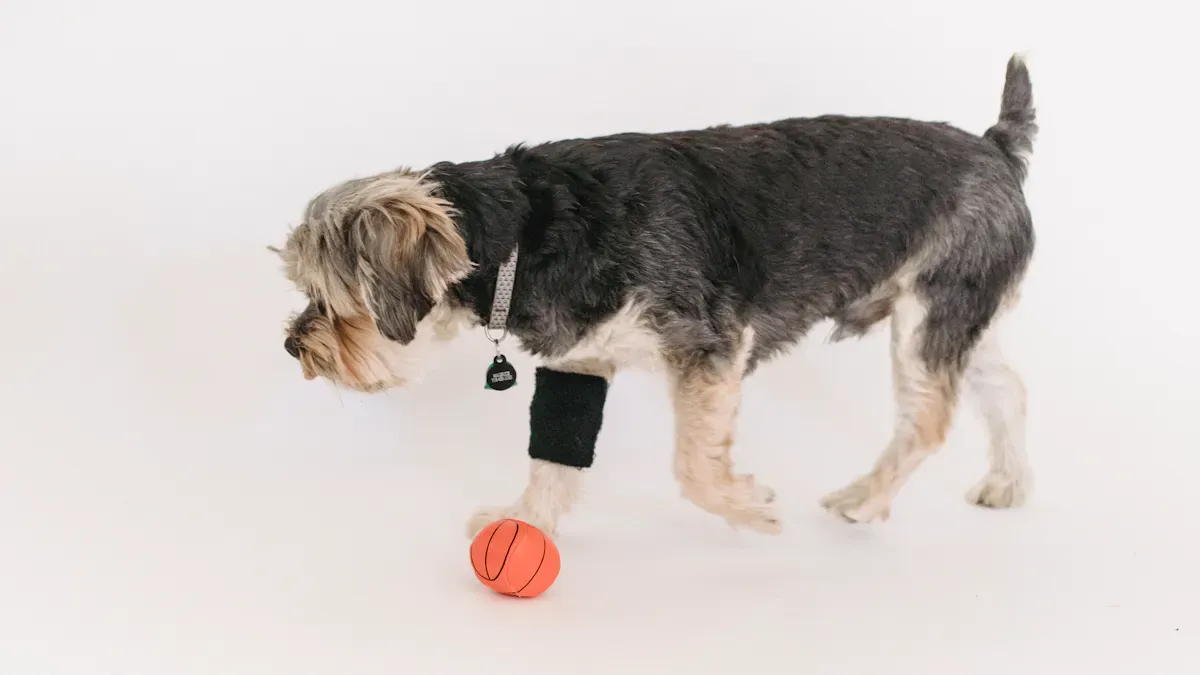
You want your dog to move with less pain and more confidence. Dog leg braces help support weak joints and muscles. They give your dog extra stability when walking, running, or standing. Many dogs show better balance and smoother steps after using a brace. You may notice your dog gets up faster or enjoys walks again. A dog brace for back leg can also help prevent further injury during recovery. Your dog can heal while staying active. Always follow your veterinarian’s advice for the best results. If you want more tips on helping your dog recover, check our rear-leg support resources.
Tips for Daily Use
You can help your dog adjust to wearing a brace with a few simple steps:
Start with short periods. Let your dog wear the brace for 15–30 minutes at first.
Watch for signs of discomfort, like licking or limping. Remove the brace if you see redness or swelling.
Check the fit every day. Adjust straps to keep the brace snug but not tight.
Clean the brace often. Use mild soap and water to keep it fresh and safe for your dog’s skin.
Give your dog praise and treats. This helps your dog feel good about wearing the brace.
Note: Never leave the brace on overnight unless your vet says it is safe. Always check your dog’s skin for any changes.
You can find more advice on daily care and brace use in our educational guides. Using dog leg braces the right way helps your dog stay comfortable and active.
Choosing the right dog brace for the back leg means matching the brace to the actual joint involved, then checking that the fit and wear plan make sense for daily life. Use this simple tracking template after your dog starts wearing the brace:
Day/time: when the brace was worn and for how long.
Activity: walk, stairs, standing up, rehab session, or rest period.
Response: steadier gait, same limp, rubbing, fatigue, or easier recovery after activity.
Review the notes every few days and share patterns with your veterinarian if progress stalls. For broader background on rear-limb support decisions, continue in our guides. Data authenticity note: This article is for educational purposes only. It is designed to help owners organize observations and compare support categories, not to replace a veterinary diagnosis, imaging, or an individualized treatment plan.
FAQ
How do I know which back leg brace my dog needs?
Start with the joint that seems unstable or painful, not just the side of the limp. Knee issues usually affect push-off and turning, hock issues look lower on the leg, and hip issues often show up as stiffness, trouble rising, or reduced rear-end drive.
Can my dog wear a brace all day?
Most dogs should begin with short, supervised sessions. Wear time usually increases only after you confirm there is no rubbing, swelling, paw dragging, or strong resistance to the brace.
Will a brace cure my dog’s injury?
No. A brace supports function and can reduce excessive motion, but it does not correct the underlying cause by itself. It works best as part of a broader plan that may include veterinary care, rehabilitation, exercise changes, or medication.
How do I clean my dog’s leg brace?
Use mild soap, rinse thoroughly, and let the brace air dry completely before the next session. A clean, dry brace is less likely to irritate the skin or trap debris.
