
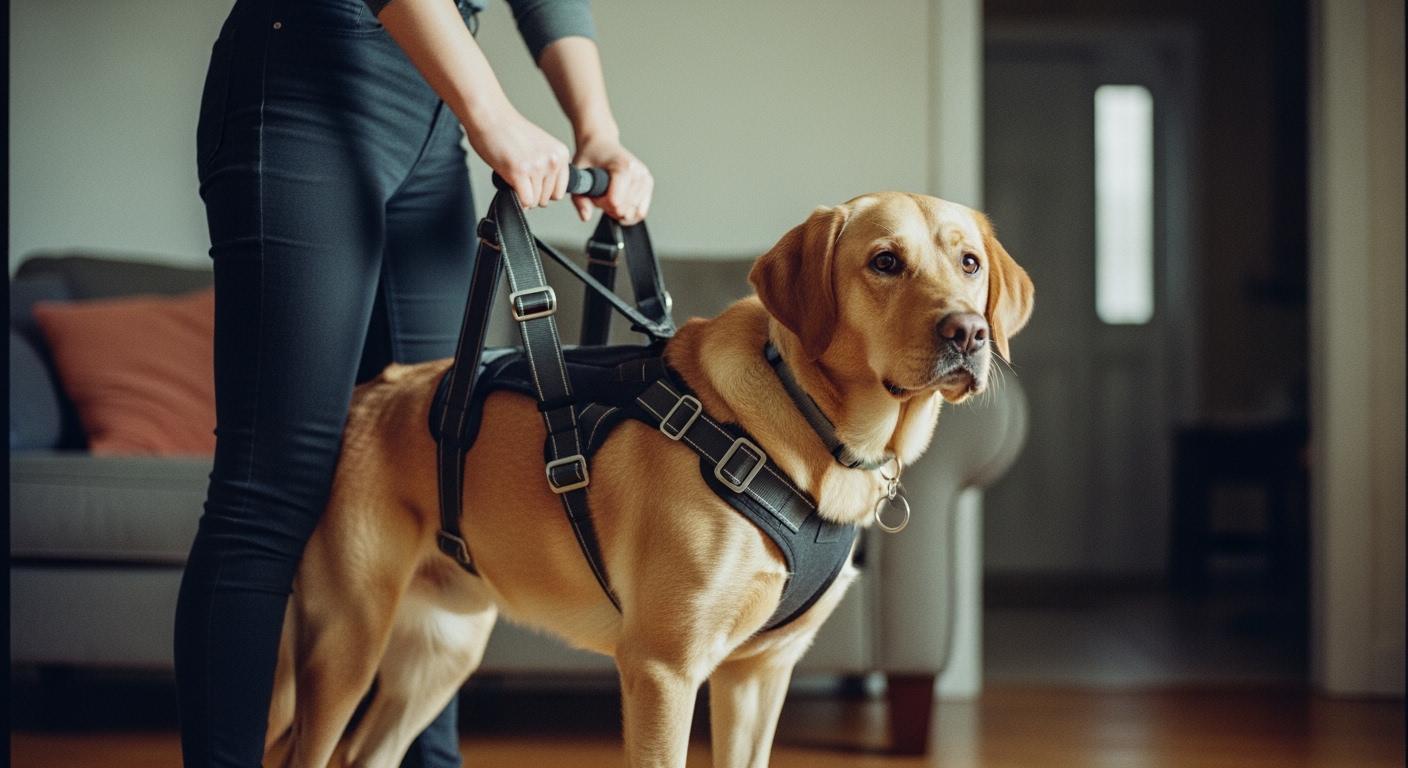
A dog lift harness full body is designed for dogs that need coordinated support across both the front and rear body during standing, short assisted walks, bathroom trips, stairs, or transfers. Unlike a rear sling or front-support harness, a full-body design uses separate support zones and lifting points to help the caregiver share the load more evenly. The right choice depends on where the dog is weak, how much weight the dog can still bear, whether the harness stays centered, and whether the support panels avoid the armpits, groin, and other high-friction areas.
This guide explains how to choose the appropriate support level, measure and fit the harness, test front-to-rear balance, and use it during daily mobility tasks. A lift harness is a handling aid, not a treatment for the cause of weakness, pain, paralysis, or post-operative limitation. Follow the veterinarian or rehabilitation professional’s activity restrictions when a dog is recovering from surgery or has a neurologic or orthopedic condition.
| Use this guide to check | What a suitable setup should do |
|---|---|
| Support coverage | Match the dog’s actual pattern of weakness instead of automatically choosing the largest harness. |
| Front and rear balance | Engage both lifting points without tipping the shoulders, dropping the hips, or rotating the body. |
| Fit and clearance | Keep panels and straps flat while avoiding concentrated pressure near the armpits, belly, groin, and hips. |
| Daily handling | Provide controlled assistance for transfers, bathroom trips, short walks, and other approved activities. |
Key Takeaways
- A full-body lift harness is most appropriate when both the front and rear body need assistance, or when a single-area sling cannot keep the dog stable.
- A rear support harness may be sufficient when the front legs remain strong and the dog only needs help at the hindquarters.
- Measure neck girth, chest girth, body length, and any product-specific support points instead of choosing by weight alone.
- Test the front and rear handles on level, non-slip ground before using the harness on stairs, in a vehicle transfer, or outdoors.
- Use the harness to support part of the dog’s weight when possible. Do not suspend, swing, or force the dog through a movement.
- Check the skin and harness position after every assisted session, especially around the armpits, chest, belly, groin, and hips.
When a Full-Body Lift Harness Is the Right Choice
Choose the support pattern before comparing materials, handles, or appearance. A full-body harness is intended for dogs that need help across more than one body region. This may include generalized weakness, limited balance, weakness in both the front and rear limbs, or a temporary need for controlled assistance during approved post-operative activities.
For a closer look at the product structure and available support zones, review the Dog Lift Harness Full Body Support page.
| Mobility pattern | Support option to consider | Reason |
|---|---|---|
| Weakness in both front and rear limbs | Full-body lift harness | Provides coordinated support at more than one lifting point. |
| Rear-leg weakness with stable front limbs | Rear support harness or sling | Targets the hindquarters without adding unnecessary front coverage. |
| Front-leg weakness with stable rear limbs | Front support harness | Places assistance closer to the chest and shoulder region. |
| Single joint needing stabilization | Appropriate brace, if professionally recommended | A brace supports a joint; it is not a substitute for a lifting device. |
| Unclear or rapidly changing weakness | Professional assessment before selecting equipment | The support pattern may need to change as the underlying condition changes. |
When a Rear Sling May Be Enough
A rear sling may be more practical for a dog that can still bear weight through the front legs and only needs short-duration hind-end assistance. It can be useful for a brief bathroom trip or a controlled transition from lying to standing. A full-body design becomes more relevant when the dog tips forward, cannot stabilize the shoulders, rotates during lifting, or needs coordinated control during transfers.
What a Lift Harness Cannot Do
A lift harness does not diagnose the cause of weakness, stabilize every orthopedic injury, or replace prescribed rest, medication, rehabilitation, or surgical aftercare. It should not be used to make a dog walk farther than allowed or to force movement when the dog cannot bear weight as expected.
Choose the Support Zones, Handles, and Daily-Use Structure
Chest, Belly, and Rear Support Zones
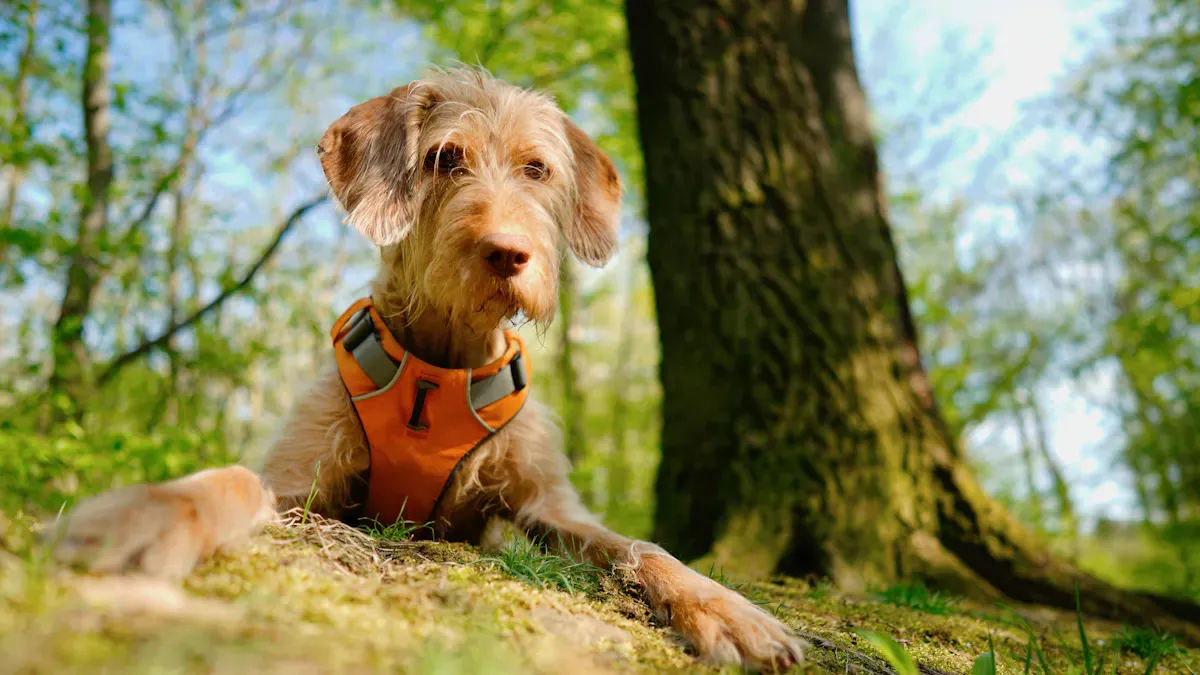
The support panels should spread contact across sufficiently broad areas rather than concentrating the load under a narrow strap. The chest section should sit clear of the throat and front-leg movement. The middle section should lie flat without bunching into the abdomen. The rear section should support the hindquarters without cutting into the groin or interfering with urination and defecation.
Wide, shaped panels can improve load distribution, but more coverage is not automatically better. A panel that is too long may block limb movement, while one that is too short may shift or create edge pressure. The harness should match the dog’s body length and proportions, not only the chest measurement.
Handle Placement and Caregiver Control
A full-body design normally uses separate front and rear lifting points. Their position should allow the caregiver to provide light upward support without pulling the shoulders first or leaving the hips behind. Handles that sit too far forward, too far back, or at different effective lengths can make the dog tilt, rotate, or place more pressure on one support panel.
- Both handles should be easy to grip without forcing the caregiver to bend or twist excessively.
- The connection between the front and rear sections should limit migration without pulling either section out of position.
- Buckles and adjustment points should remain accessible when the dog is lying down or has limited limb movement.
- For a large or difficult transfer, use a second person or another approved handling method rather than relying on one handle.
Bathroom Access and Male-Dog Clearance
Bathroom access is a functional requirement, not a minor convenience. Check whether the belly and rear panels leave enough clearance for the individual dog. Removable, divided, or repositionable sections may make cleaning and bathroom trips easier, but they must still remain stable during assisted movement. Recheck panel placement after each trip because the harness may shift as the dog changes posture.
How to Measure and Fit a Dog Lift Harness Full Body
Measurements to Record
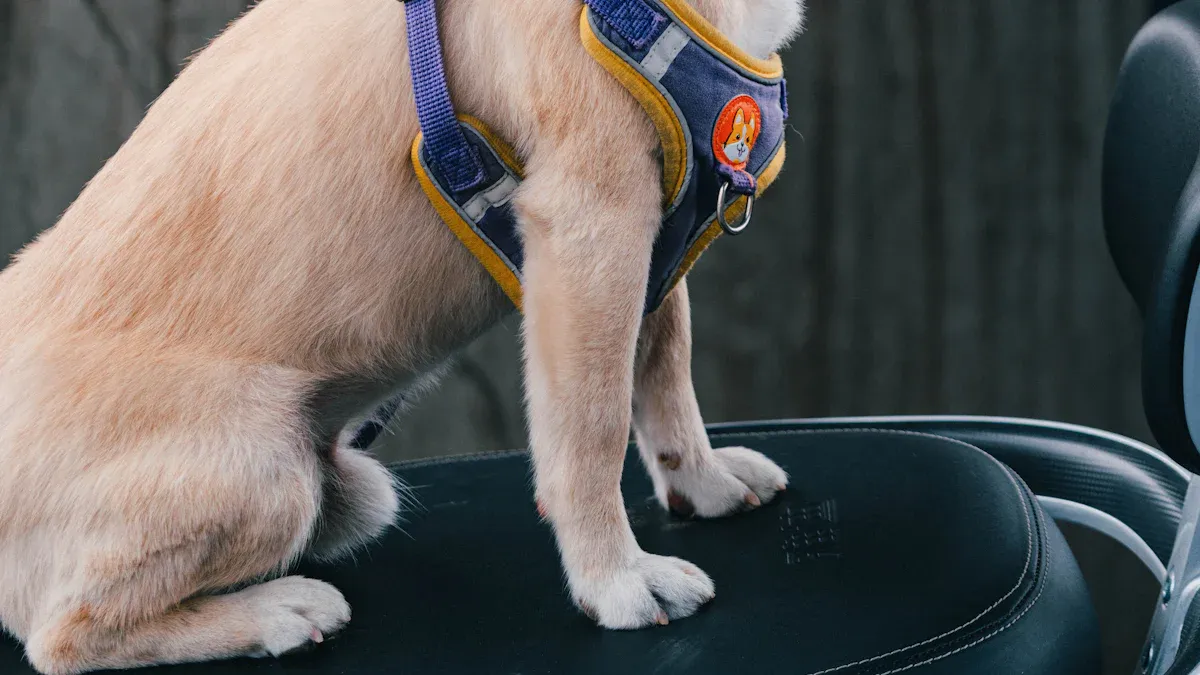
- Neck girth: Measure where the upper harness section will sit, following the manufacturer’s sizing method.
- Chest girth: Measure around the widest part of the ribcage behind the front legs.
- Body length: Measure the specified topline or torso distance so the front and rear support sections align with the dog’s body.
- Rear or waist measurement: Record any product-specific circumference required for the belly or hindquarter panel.
- Body weight: Use weight as a load and handling reference, not as the only sizing measurement.
Measure twice and compare every required measurement with the specific product chart. Breed labels such as “Labrador size” or “Corgi size” are not reliable because chest depth, body length, muscle loss, coat thickness, and weight distribution vary between individual dogs.
Initial Fit Check
- Open or loosen the harness enough to position it without dragging the panels across sore or sensitive areas.
- Center the chest, belly, and rear sections before tightening the straps.
- Tighten paired straps evenly so the harness does not pull to one side.
- Check that straps lie flat and do not cross the armpits, press into the groin, or bunch under the abdomen.
- Allow the dog to stand or take a few slow steps on level, non-slip ground while you watch for shifting or restricted movement.
A two-finger check can be a useful starting point, but it is not sufficient by itself. The harness must also remain centered under light load and allow the dog to breathe, place the feet, and move the limbs without the panels cutting into adjacent areas.
Signs the Fit Needs Adjustment
- The harness rotates, slides backward, or leaves one support panel off-center.
- One handle becomes tight before the other begins to support the body.
- The dog shortens the stride, crosses the feet, resists moving, or cannot place a limb normally.
- Straps or panel edges rub the armpits, belly, groin, chest, or hips.
- Redness, hair breakage, indentations, dampness, or skin irritation appears after use.
Test Front and Rear Balance Before Daily Use
A full-body harness should not raise the shoulders while the hips remain unsupported, or lift the rear while the chest stays low. Test the setup on level, non-slip ground before using it on stairs, during a car transfer, or for a longer assisted walk.
- Start with the dog naturally positioned. Confirm that the support panels lie flat and the connecting straps are not twisted.
- Remove excess slack. Adjust the front and rear handles so one end does not engage much earlier than the other.
- Apply light support through both handles. Lift only enough to reduce part of the dog’s weight. Do not suspend the dog.
- Watch the shoulder-to-hip line. The front and rear should respond together without obvious tipping or side-to-side rotation.
- Take a few slow steps. Check whether the harness stays centered and whether the dog can place the feet without strap interference.
- Inspect the contact areas. Recheck the armpits, chest, abdomen, groin, and rear panels for bunching or concentrated pressure.
| What you observe | What it may indicate | What to recheck |
|---|---|---|
| Shoulders rise before the hips | The front handle engages too early or the rear section has excess slack. | Rear-handle length, rear-panel position, and connecting-strap adjustment. |
| Hips rise while the chest stays low | The rear handle is too short or the front section is not engaging. | Front-handle length, chest-panel placement, and front strap tension. |
| The harness rotates to one side | Left-right strap tension is uneven or a support panel is off-center. | Matching strap lengths, centered panels, and twisted webbing. |
| Pressure concentrates under one panel | The load is not being shared across the intended support zones. | Panel position, body-length setting, handle balance, and edge placement. |
| The dog shortens the stride or resists | A strap or panel may be restricting limb movement or causing discomfort. | Armpit clearance, groin clearance, strap position, and overall tightness. |
Using the Harness for Potty Breaks, Transfers, and Stairs
Use the “Support, Don’t Suspend” Rule
During assisted standing or walking, keep the dog’s paws in contact with the ground whenever the dog can safely bear some weight. The handles should provide controlled assistance, not lift the dog completely off the floor. Move slowly, avoid sudden pulling, and stop if the dog cannot place the feet or becomes markedly less stable.
A Controlled Potty-Break Routine
- Fit the harness and confirm that the bathroom-access area is clear.
- Use the shortest safe route to a level area with reliable traction.
- Apply light, balanced assistance through the front and rear handles.
- Allow the dog time to position without pulling upward or twisting the body.
- Guide the dog back along the same controlled route.
- Remove or loosen the harness as appropriate, then inspect the skin and panel position.
Bed, Floor, and Vehicle Transfers
Before a transfer, prepare the destination so the dog does not have to remain partially lifted while space is cleared. Stand close to the dog, keep the back in a neutral position, and use the legs rather than twisting at the waist. For a heavy dog or an awkward transfer, use a second person or a ramp when appropriate. Do not lift from only the rear or only the front handle unless the harness is specifically designed and the situation calls for partial support.
Stairs, Ramps, and Slippery Surfaces
Stairs increase the consequences of poor balance. Use them only when they are allowed for the dog’s condition and when the caregiver can maintain control. Move one step at a time, keep the dog aligned with the stair direction, and avoid lifting high enough to swing the legs. A ramp may reduce the vertical lifting demand, but it still requires adequate traction and controlled guidance.
Non-slip runners, mats, or other appropriate traction measures can reduce sliding during setup and transfers. For broader information on matching support equipment to daily walking and stability needs, see the Dog Mobility Support Solutions page.
Skin Safety and Chafing Prevention
Dogs that need lifting assistance may have reduced muscle coverage, fragile skin, altered sensation, incontinence, or repeated daily contact with the harness. These factors make routine skin checks essential.
High-Friction Areas to Inspect
- Behind and beneath the front legs
- Chest and sternum contact areas
- Belly panel edges and strap paths
- Groin and inner-thigh clearance
- Hip and rear-panel edges
- Any area where moisture, hair, or folded fabric collects
Check before use, after the first short trial, and after each assisted session. Repeated redness, hair loss, broken skin, swelling, dampness, or a concentrated indentation means the setup should be reassessed rather than simply tightened further.
When to Pause Harness Use
Stop and reassess if the harness cannot remain centered, if the dog shows marked discomfort, if a support panel presses on an incision or wound, or if skin damage appears. A different size, support pattern, adjustment method, or professionally guided handling plan may be needed.
Daily Care, Cleaning, and Troubleshooting
Daily Equipment Check
- Confirm that buckles close securely and webbing has not slipped through the adjusters.
- Check handles, seams, and connection points for wear before lifting.
- Remove trapped hair, dirt, and moisture from the support panels.
- Recheck the fit if the dog’s weight, muscle mass, coat thickness, or mobility changes.
- Do not leave the harness on during unsupervised rest or sleep unless the product instructions and care plan specifically allow it.
Cleaning
Follow the care label for the specific product. Close fasteners before washing, use a mild cleaning method suitable for the material, rinse away residue, and allow the harness to dry fully before reuse. Heat, harsh chemicals, or aggressive machine cycles may damage padding, elastic sections, coatings, or hook-and-loop closures.
Common Problems
| Problem | Likely cause | Next check |
|---|---|---|
| Harness slides backward | Chest section is loose, body length is mismatched, or rear tension pulls the harness out of position. | Chest fit, connecting straps, and body-length setting. |
| Rear panel moves forward | Rear straps are loose or the panel shape does not match the dog. | Rear circumference, groin clearance, and strap routing. |
| Dog tips during lifting | Front and rear handles engage at different times. | Handle length and panel placement on level ground. |
| Redness appears after short use | Edge pressure, moisture, movement, or excessive tightness. | Contact area, panel size, strap position, and cleaning. |
| Dog refuses to move | Pain, fear, fatigue, restricted limb movement, or unsuitable support. | Stop the session and reassess the dog and harness before continuing. |
When to Contact a Veterinarian or Rehabilitation Professional
Seek professional guidance when weakness is new, worsening, or unexplained; when the dog suddenly cannot bear weight as expected; when movement changes sharply; or when the harness contacts an incision, wound, swollen area, or painful region. Also ask for help when repeated fitting changes do not keep the harness centered or when the caregiver cannot perform transfers safely.
Bring the harness, the dog’s measurements, and a short video of the fit test to the appointment when possible. This makes it easier to evaluate panel placement, handle balance, limb clearance, and the amount of assistance being applied.
Pet brands and distributors evaluating full-body mobility products can review GaitGuard’s private-label and wholesale supply options for product-line planning, packaging direction, and bulk supply requirements.
FAQ
How do I know whether my dog needs a full-body lift harness?
A full-body harness is generally considered when the dog needs assistance at both the front and rear body, cannot remain balanced with rear-only support, or needs coordinated control during approved transfers. New or worsening weakness should be assessed professionally before selecting equipment.
What is the difference between a full-body harness and a rear support harness?
A full-body harness supports both the front and rear body through separate support zones. A rear support harness focuses on the hindquarters and is better suited to dogs that can still stabilize themselves through the front limbs.
Can a full-body lift harness be used for potty breaks?
Yes, when the design leaves adequate bathroom clearance and the dog’s care plan allows the activity. Check the belly and rear panels before each trip and make sure the harness remains centered as the dog changes posture.
Should the dog be lifted completely off the ground?
During assisted standing or walking, support part of the dog’s weight when possible rather than suspending the dog. Complete lifting may be necessary for a specific transfer, but it should be controlled and appropriate for the harness design, the dog’s condition, and the caregiver’s ability.
How do I know whether the front and rear lift is balanced?
Test on level, non-slip ground with light support through both handles. The shoulders and hips should respond together, the body should not rotate, and the support panels should remain centered. Recheck handle length and panel position if one end lifts first.
Can the harness stay on all day?
Do not assume that a lift harness is suitable for continuous wear. Remove it for unsupervised rest or sleep unless the product instructions and professional care plan specifically allow longer wear. Repeatedly inspect the skin and keep the harness clean and dry.
What should I do if the harness causes redness or twisting?
Stop the session, remove the harness, inspect the skin, and recheck size, panel placement, strap tension, and handle balance. Do not keep tightening a harness that remains off-center or continues to create concentrated pressure.
