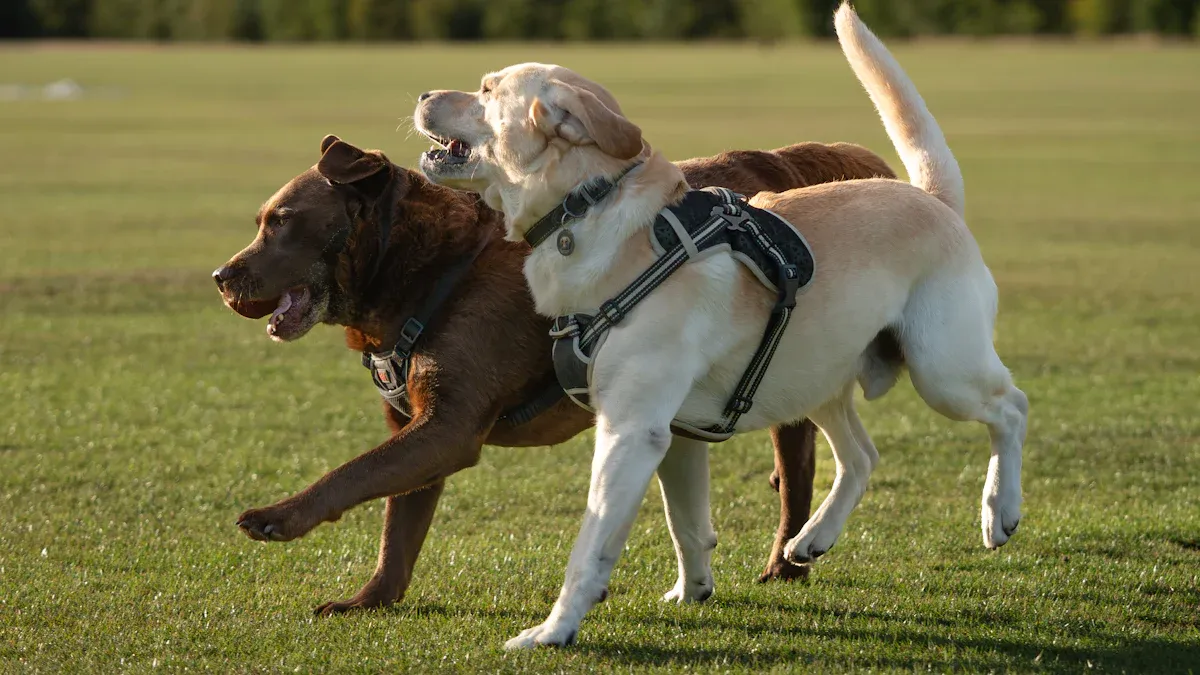
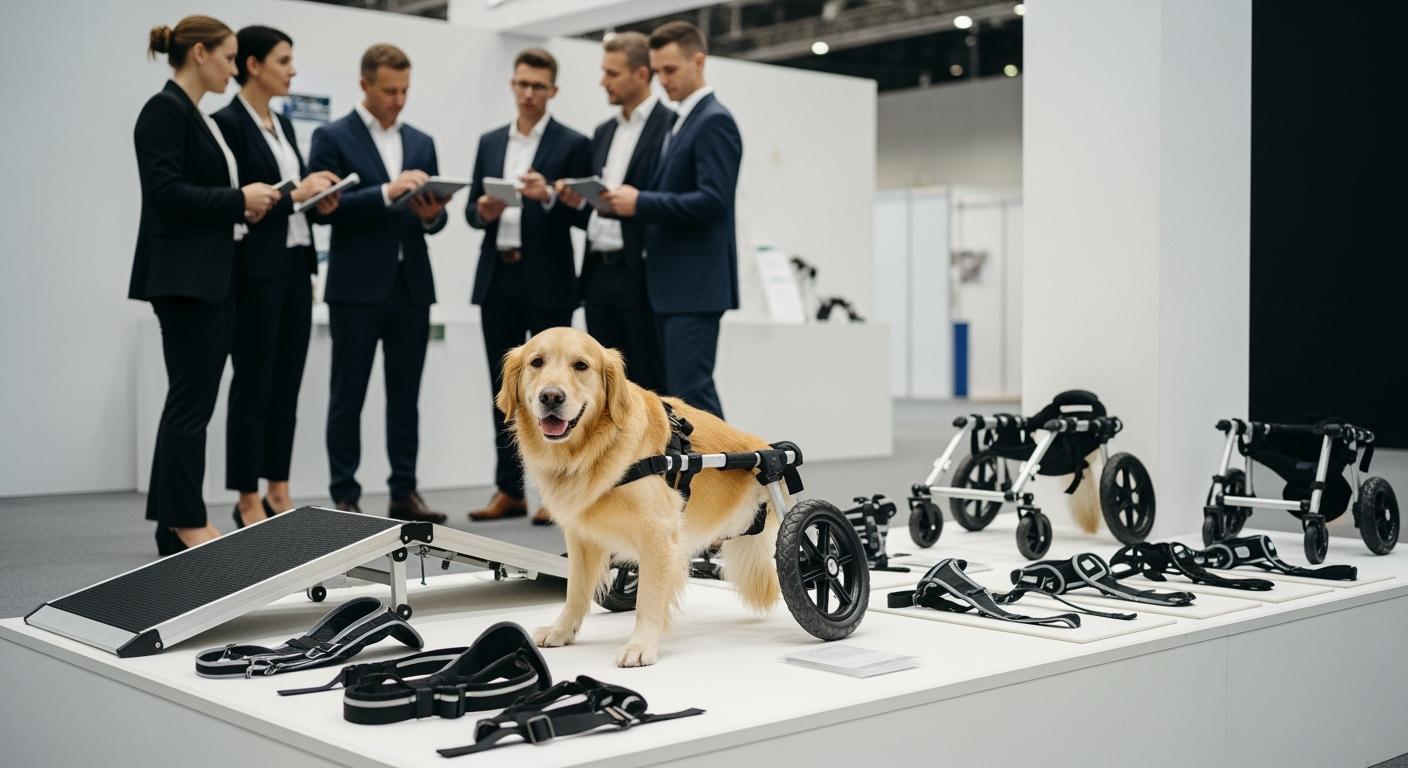
A brand planning to enter the canine mobility category often starts with a list of conditions—IVDD, degenerative myelopathy, post-surgical recovery. But procurement decisions built around diagnosis names rather than support tasks tend to produce product lines with overlapping SKUs, unclear differentiation between models, and sizing logic that breaks down across breed types. For dogs with paralyzed back legs, the more reliable starting point is defining what each product needs to help the dog and handler accomplish: stand, walk, transfer, protect skin, or cover longer distances. A task-first architecture also makes it easier to explain product roles to downstream channel partners and reduces the risk of stocking items that compete with each other on the same shelf.
Product-Line Architecture Starts With Support Tasks, Not Diagnoses
Two dogs can share the same diagnosis but require entirely different product routes. One may retain enough front-limb strength to use a rear-support harness for assisted standing and toileting. Another with the same condition may need a full-body harness for balanced transfers or a wheelchair for independent movement. When a product line is structured around condition names, these distinctions collapse into a single SKU that fits neither case well.
The alternative is to build the range around six support needs, each tied to a specific structural requirement. This approach forces decisions about load zones, handle placement, material selection, and size grading before a single sample is ordered. It also surfaces which products can share materials or production processes and which need independent development.
| Support Need | Product Route | Key Structural Requirement | Sample Validation Priority | Planning Consideration |
|---|---|---|---|---|
| Standing and toileting | Rear-support harness | Rear load zone with reinforced lift handle | Assisted standing and weight-shift test | Not a substitute for whole-body support; define this boundary in product documentation |
| Assisted walking | Rear-support harness | Adjustable rear straps, stable handle placement | Controlled walking on multiple surfaces | Limited for extended transfers; pair with a full-body option in the range |
| Balanced transfer | Full-body harness | Front and rear handles with even load distribution | Transfer stability and handler leverage test | Higher material and assembly cost; needs clear handler instructions |
| Longer-distance mobility | Wheelchair or cart | Frame geometry, harness-to-cart attachment system | Surface compatibility and stability test | Not for stairs or uneven terrain; wheel type affects channel fit |
| Drag and skin protection | Drag garment, protective boots | Full-coverage skin-contact materials, paw shielding | Post-use skin and paw inspection | Not designed for weight-bearing; separate from active mobility SKUs |
| Pressure-area relief | Bedding, ramps, non-slip flooring | Pressure-distributing surface, non-slip backing | Environmental fit and hygiene test | Indoor and stationary use; may sit in a separate accessory category |
Mapping tasks to product routes before development also helps define which SKU tier each product occupies. Rear-support harnesses often serve as the entry product. Full-body harnesses and wheelchairs form the core. Drag-protection garments and environmental aids can round out the specialist tier. This tier structure gives channel partners a narrative for presenting the range rather than handing them an undifferentiated list of items. Support slings and lift harnesses should remain clearly differentiated by load zone, transfer task, and intended duration of assistance so that adjacent SKUs do not compete for the same product role.
What Each Support Route Requires Structurally
Once the task map is defined, the next step is translating each support need into structural specifications. This is where a supplier either demonstrates product-development capability or reveals that they are primarily an assembler of generic designs.
Rear-support harnesses concentrate load in a narrow zone under the abdomen and rear legs. The handle position determines whether the handler can lift without straining or twisting. If the handle is placed too far forward, the dog tips. Too far back, and the harness migrates under load. Adjustable straps need to hold their setting during repeated use—strap slippage after several standing cycles is a common failure that only appears after extended sample testing. The groin-contact area must provide enough clearance for toileting without creating pressure points when the dog is stationary.
Full-body harnesses add a second load zone at the chest or sternum, which changes the sizing requirements. A harness graded only by girth fails on dogs with longer torsos or deeper chests, because the front and rear handles end up misaligned with the body segments they are supposed to support. Brands sourcing full-body harnesses should expect the supplier to explain how the front and rear anchor points scale across sizes.
Wheelchairs and carts introduce a frame-and-harness interface. The attachment between harness and cart frame must remain secure through turns, stops, and surface changes. A harness that fits well during a static fitting session may disconnect or shift when the dog is in motion. Wheel material and tread pattern determine which surfaces the cart can handle, which in turn affects which sales channels the product suits—hard-tread wheels for indoor and pavement use, softer tread for grass or trail. For brands adding rear-support products, the dog lift harness category shows how harness configurations vary by support zone and handle type.
Drag-protection garments and environmental aids sit at the boundary of the mobility category. These products do not assist movement directly, but they reduce secondary injury from friction, pressure, and hard surfaces. Their structural requirements center on material durability, coverage area, and cleanability rather than load-bearing capacity. Brands should decide early whether these sit inside the mobility line or in a separate accessory category, since the supplier capabilities needed differ from those required for load-bearing products.
Why Size Grading Affects SKU Count, Inventory, and Sample Scope

A size chart based on only one measurement—typically girth or weight—may not capture the body-shape differences that affect support-zone placement and strap alignment. Dogs with the same girth can differ substantially in body length, leg circumference, and joint position. When a harness is graded by girth alone, those variations land in the same SKU, producing fit problems that downstream customers interpret as a product defect rather than a sizing limitation.
The measurements required depend on the product’s support zone and pattern structure. Rear-support harnesses may need girth, torso length, and rear-leg clearance, while full-body designs may also require chest-depth and body-length references. Wheelchair sizing follows a separate frame-fitting system. Each additional measurement point can increase pattern complexity and sample scope, so the measurement set should be defined before the size range is approved.
The practical procurement question is how many size breaks the target market can support without creating excessive inventory or leaving major coverage gaps. Brands should validate the smallest and largest planned sizes before approving the complete size run. If a supplier cannot explain the basis for its size breaks, the brand should request additional fitting records or sample validation before assuming the grading will transfer consistently across breed types. The lift harness sizing and fit guide covers measurement points and grading logic in more detail.
Sample Validation Beyond Visual Inspection
A sample that looks well-constructed on a table tells a brand very little about how it will perform under load, across body types, and over repeated use. Mobility products for dogs with paralyzed back legs need to be validated through task-specific testing, not just appearance checks and material swatch approval.
Five validation tasks cover the functional range that most mobility product lines need to demonstrate:
- Assisted standing. Can the handler lift the dog to a standing position without the harness shifting or the handle pulling at an angle? Does the load remain distributed across the intended support zone, or does it concentrate at a single contact point?
- Controlled walking. Does the harness or cart remain stable through a short walking sequence with turns? Strap migration during direction changes is a common failure that static fit checks will not catch.
- Toileting posture and clearance. Does the product allow the dog to squat or assume a natural toileting position without restriction? For rear-support harnesses, this is one of the most frequently overlooked validation steps.
- Short transfer or repositioning. Can the handler move the dog from floor to bed or into a vehicle using the product’s intended grip points? This tests both handle placement and seam strength under real-world loading.
- Post-use skin and pressure-area inspection. After each test session, check contact zones for redness, moisture buildup, or friction marks. These observations reveal material and design issues that comfort claims on a spec sheet cannot.
Running these tests on a single size and a single dog produces limited information. A harness that passes on a medium-sized, moderately active dog may fail on a smaller dog with different body proportions or a larger dog that loads the handles more heavily. If practical, validate the two most-different sizes in the planned range—typically the smallest and largest—to surface scaling problems early. Brands evaluating rear-lift products can cross-reference testing observations with the fit and pressure-point evaluation guide for rear harnesses.
Supplier Evaluation for Consistent Long-Term Production
A supplier that delivers an acceptable first sample has cleared the earliest filter. The more important question is whether the second sample, the third, and the first production batch will match. Consistent output across samples and batches separates a supplier with real production control from one that can produce a single good unit.
| Evaluation Area | What to Request | Capability Signal | Risk Signal |
|---|---|---|---|
| Task-specific product design | Samples with documented design rationale | Products clearly built around defined support tasks with explainable structural choices | Generic designs with no task mapping or rationale for structural decisions |
| Size grading and pattern development | Size chart, grading rules, fitting documentation | Multiple sizes with measurement-based grading logic, fitting guide that references specific anatomical landmarks | One-size-fits-all approach or size breaks with no documented measurement rationale |
| Harness-to-accessory compatibility | Mating samples for harness-cart or harness-sling combinations | Secure, adjustable attachment system tested across paired products | Loose connections, incompatible attachment points, or no paired-product testing |
| Handle, webbing, and seam durability | Load test records, seam construction details | Reinforced stitching at load points, smooth contact surfaces, consistent stitch density | Weak or uneven stitching, rough edges, exposed hardware on skin-contact sides |
| Skin-contact material selection | Material specifications, washability test results | Soft, breathable, moisture-wicking contact zones; materials that maintain properties after repeated cleaning | Hard, narrow, or non-breathable contact surfaces; materials that stiffen or degrade after washing |
| Golden-sample and batch control | Batch sample, QC documentation, production records | Consistent quality across multiple samples; documented inspection criteria and pass/fail thresholds | Variable quality between samples, no written QC criteria, reliance on visual inspection only |
| Production planning and replenishment | Production schedule, capacity explanation, replenishment process | Clear production planning, defined reorder workflow, transparent about lead-time variables | Vague timelines, no documented replenishment process, unwilling to explain capacity constraints |
Customization depth interacts with production stability in ways that are easy to miss during early sourcing conversations. Logo and packaging changes are low-complexity customizations that typically do not affect product function or sample timelines. Material substitutions, structural modifications, or size-chart adjustments are higher-complexity changes that should trigger re-sampling and re-validation. A supplier who treats all customization requests the same way—or who accepts structural changes without recommending re-validation—may not have the production controls to catch downstream deviations. For a broader view of what to ask during supplier evaluation, B2B buyer questions for veterinary rehab braces covers additional evaluation dimensions.
In practice: Before approving a production sample, brands should confirm that the size logic, material specification, support level, and acceptable-use boundaries for the intended product line are finalized. Changes to any of these after sample approval often reset the validation cycle and introduce variables that batch-level QC may not catch.
Building a mobility product line for dogs with paralyzed back legs is fundamentally a product-architecture exercise. The brands that get it right define support tasks before selecting SKUs, validate samples under realistic loading conditions rather than on a table, and choose suppliers who can explain their structural and sizing decisions—not just produce a single acceptable unit. The product categories covered here—rear-support harnesses, full-body harnesses, wheelchairs, drag protection, and environmental aids—each serve a distinct support need. Keeping those needs separate in the product architecture prevents the range from becoming a collection of items that look different but solve the same problem. For brands evaluating rear-leg mobility support solutions, the hind-leg weakness and lift harness solutions page provides additional product-category context for procurement planning.