
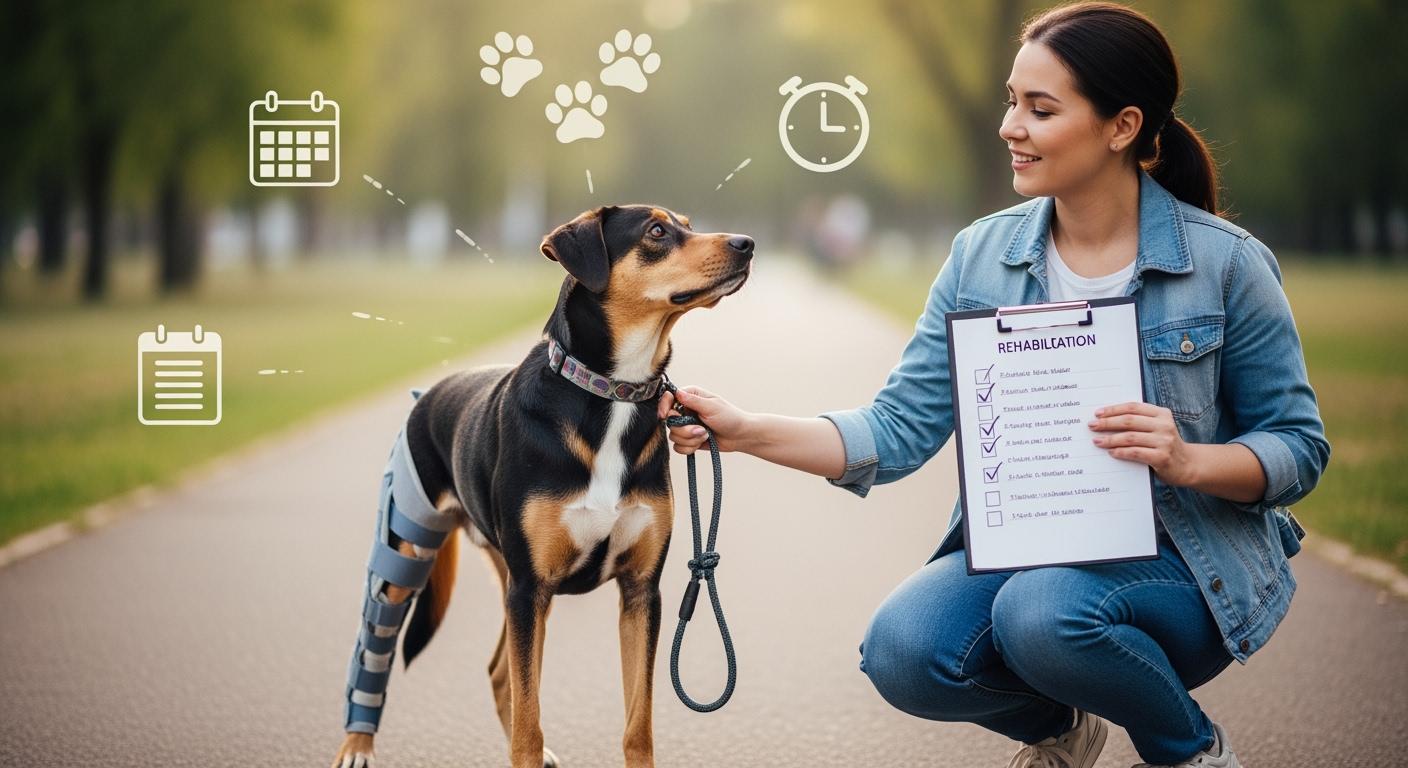
Dog stifle brace walking plan and wear schedule should be judged by one practical question: can your dog build safer daily movement without increasing pain, slipping, or brace intolerance. A good plan starts with short, controlled walking, careful brace checks, and slow progression based on how your dog actually responds. If you want a broader rehab and fit foundation before building the walking schedule, start with the GaitGuard guides hub.
- confirming the brace stays aligned during walking
- building a repeatable leash-walk routine without overloading the joint
- checking skin, gait, and tolerance after every session
Focus on straight-line leash walking, gradual increases, and clear stop signals. For a more specific brace-fit reference before walking progression, compare this article with dog knee brace for CCL tear: fit, traction, and safe use.
Key Takeaways
- Start with short, structured brace sessions and short leash walks instead of long wear times or long walks on day one.
- Increase only one variable at a time—either brace wear time or walking duration—so setbacks are easier to identify.
- Skin checks, gait checks, and simple daily logging matter just as much as the walking plan itself.
Dog Stifle Brace Basics and Walking Control
What Is Dog Bracing
Dog bracing helps manage movement during recovery by adding external support around the stifle joint. A dog stifle brace is not just something the dog wears while walking. It is part of the rehab plan, because it helps control motion, supports confidence during weight-bearing, and makes short, structured walking safer when used correctly.
- A stifle brace can help support the knee during controlled rehab walking.
- The brace should reduce uncontrolled motion, not replace all movement.
- Good fit matters because walking progression only works if the brace stays aligned.
For a broader fit-and-comfort framework before building daily rehab structure, compare this article with canine rehabilitation brace fit, comfort, and safety.
Why Walking Plans Matter
You need a walking plan because brace use without activity structure is incomplete rehab. The brace works best when walking is controlled for duration, surface, speed, and direction. That is why short leash walks in straight lines usually work better than “letting the dog move naturally” too early.
A walking plan helps you:
- control how much load the joint takes each day
- give the dog time to adapt to the brace before harder activity
- track whether recovery is moving forward or starting to stall
For a leash-handling reference that pairs well with this article, compare it with dog walk after surgery: step-by-step safe leash guidance.
Risks of Unstructured Activity
If you let your dog move without a plan, you lose the main benefit of brace-guided rehab. Unstructured activity often means fast acceleration, sharp turns, jumping, sliding, or sudden pulling on the leash. Those movements can overload the healing knee even when the brace is on.
Tip: A brace is not permission for normal activity. It is a tool for more controlled activity.
You protect your dog best when the brace and the walking plan work together instead of separately.
Dog Stifle Brace Walking Plan and Wear Schedule

A safe dog stifle brace walking plan and wear schedule should give you three things: a starting point, a progression rule, and a clear reason to pause if tolerance drops. The goal is not to increase everything quickly. The goal is to build repeatable, low-risk movement that the dog can tolerate consistently.
Initial Wear and Walk Schedule
Start your dog’s stifle brace routine with short, supervised sessions. Your dog needs time to adapt to both the brace and the walking pattern. Use this as a sample progression, not a rigid rule:
| Phase | Brace Use | Walking Goal |
|---|---|---|
| Days 1–3 | Short supervised sessions only | Very short straight-line leash walks and potty trips |
| Days 4–7 | Longer active-period wear if tolerated | Short repeatable walks with the same calm routine |
| Weeks 2–4 | Use during structured activity windows | Gradually extend walking only if gait and skin stay stable |
Use a walking harness instead of a neck-only setup, keep all walks slow and leash-controlled, and write down session length, tolerance, and any change in gait. For more detail on brace fit before progression, use dog knee brace for CCL tear: fit, traction, and safe use.
Tip: During the first week, do not increase walk length and brace wear time aggressively on the same day. Make one change at a time.
Gradual Increase in Brace Time
As your dog adjusts, increase brace time gradually and with a clear reason. More wear time is only useful when the dog still tolerates the brace well and the walking pattern stays controlled. It is usually safer to increase wear time during active periods only rather than leaving the brace on for long passive periods.
- Increase only when skin, gait, and comfort remain stable for several sessions in a row.
- Add wear time during walks, potty trips, and planned rehab windows instead of all-day use.
- Remove the brace during rest or sleep unless your veterinarian gives a different plan.
- Reduce or hold the schedule if you see limping, licking, rubbing, swelling, or obvious fatigue.
Note: If your dog comes back from a walk more sore, more stiff, or less willing to use the leg, the schedule is progressing too fast.
For broader condition-first planning beyond wear time alone, compare this article with the dog cruciate ligament brace solution page.
Integrating Walks with Dog Rehab Exercise Schedule
You need to blend walking with rehab instead of treating walks as the whole rehab plan. In most cases, the walk should be the central controlled activity, then other rehab tasks can be added around it based on veterinary guidance.
- Begin each walk with a short calm start instead of rushing into pace.
- Use straight-line walking as the main rehab movement during early phases.
- Add turns, brief pauses, or other drills only when the dog is already tolerating the base walking plan well.
- Record how the dog moved during and after the walk, not just how long the session lasted.
- Keep the rehab schedule repeatable enough that setbacks are easy to spot.
Callout: Consistency matters more than variety early on. The best rehab walk is usually the one the dog can repeat safely tomorrow.
A well-structured dog stifle brace walking plan and wear schedule works best when it supports the rehab plan instead of competing with it.
Comfort Checks and Activity Limits
Monitoring Brace Fit and Skin
You want your dog to stay comfortable and safe during recovery, so check the brace before and after each walk. The brace should feel secure without pinching, and it should stay aligned once the dog starts moving. A good fit is confirmed under motion, not only when the dog is standing still.
Check the skin under and around the brace for redness, heat, hair loss, swelling, or new rubbing patterns. Keep the skin and brace clean and dry, and adjust the fit early if you see irritation building. For a broader fit-and-safety reference, compare this article with canine rehabilitation brace fit, comfort, and safety.
Tip: The first few days should be treated as a skin-and-tolerance test, not just a walking test.
Signs of Discomfort or Poor Tolerance
You need to watch for signs that your dog is not tolerating the current plan well. Common warning signs include:
- redness, sores, or hair loss under the brace
- more limping or a shorter stride after walking
- licking at the joint or trying to remove the brace
- obvious hesitation before walking, turning, or weight-bearing
- more stiffness after the session instead of steadier movement
If you see these signs, hold the progression, reduce one variable, and reassess fit before you continue. Poor tolerance should change the plan, not be ignored.
Setting Safe Activity Limits
You must set clear activity limits so the walking plan stays therapeutic instead of becoming ordinary exercise. Start with short supervised walks, avoid off-leash activity, rough play, stairs when avoidable, sudden turns, and jumping. During early rehab, activity quality matters more than total activity time.
Note: Consistent activity limits protect the joint and make the effect of the brace easier to judge. Never assume the brace alone makes unsupervised activity safe.
By keeping the plan controlled, you make it easier to see real progress and easier to catch setbacks early.
Common Mistakes and Practical Tips
Avoiding Overuse and Underuse
You want your dog to improve without drifting into overuse or underuse. Overuse happens when owners increase walking time, brace time, and freedom too quickly. Underuse happens when the brace is worn but the rehab plan never becomes structured enough to build better movement.
- Do not increase walk duration and brace duration aggressively at the same time.
- Do not use brace wear as a substitute for a real rehab walking plan.
- Do not ignore fit drift, skin problems, or post-walk soreness.
- Do not assume one better day means the dog is ready for a major jump in activity.
Tip: When in doubt, keep the routine repeatable for a few more days before progressing. A slightly slower plan is usually safer than a rushed one.
Handling Slipping or Rubbing
Slipping and rubbing can make brace-based rehab fail even when the walking schedule looks correct on paper. Keep the brace dry, recheck strap tension after walks, and watch for swelling or shape changes that alter the fit. If the brace keeps slipping, twisting, or creating sore spots, correct the fit before increasing activity again.
Note: A brace that repeatedly slips under walking load is a fit problem first, not a “keep trying” problem.
Tracking Progress in Rehab Exercise Schedule
Tracking progress matters because walking plans often fail gradually, not all at once. A simple rehab journal helps you see whether the dog is tolerating the brace better, walking more steadily, or getting more sore after activity. Focus on the basics: duration, gait quality, skin response, and how the dog acts later the same day.
Simple daily rehab log:
| Date | Brace Wear Time | Walk Duration | Gait After Walk | Skin Check | Next-Step Decision |
|---|---|---|---|---|---|
| Example | 45 min | 6 min | steady / mild limp / worse | clear / red / rubbing | hold / increase / reduce |
For broader condition planning after tracking response, compare this article with the ACL/CCL condition support page.
To build a safe dog stifle brace walking plan and wear schedule, keep the structure simple: introduce the brace gradually, keep walks short and repeatable, increase only one variable at a time, and check skin and gait after every session.
- Introduce the brace slowly and confirm fit under movement.
- Use the brace during structured walks, potty trips, and planned rehab windows.
- Check skin, comfort, and alignment after every session.
- Keep the brace and fur clean and dry.
- Hold or reduce the plan if limping, swelling, rubbing, or fatigue increases.
For next steps, continue to the dog knee brace for CCL tear: fit, traction, and safe use, the safe leash walking guide, the ACL/CCL solution page, or the dog knee brace category depending on whether you still need fit guidance, walking structure, condition planning, or product comparison. Data authenticity note: This article is for educational purposes only. It is designed to help readers build safer brace wear and walking routines for dogs using stifle braces, not to replace veterinary diagnosis or individualized rehabilitation advice.
FAQ
How long should my dog wear a stifle brace each day?
Start with short supervised sessions and increase gradually based on fit, skin tolerance, and gait response. The exact schedule should follow your dog’s recovery status, not one fixed number for every case.
Can I walk my dog outside with a stifle brace?
Yes. Outdoor walks are appropriate when they are short, leash-controlled, and built around straight-line movement. Avoid rough play, sharp turns, and uncontrolled activity.
What signs show my dog needs a break from the brace?
Watch for redness, sores, more limping, licking at the brace area, or less willingness to use the leg. If you see these signs, stop the session, reassess the fit, and contact your veterinarian if the problem continues.
Should I use the brace during rehab therapy or post-surgery recovery?
Yes, when your veterinarian recommends it. A stifle brace can support rehab walking and post-surgery recovery, but it should be part of a broader rehab plan rather than the only recovery step.
How do I track progress with a custom stifle brace?
Track brace wear time, walk duration, gait after the session, skin response, and whether the next step should hold, increase, or reduce. A simple rehab log usually shows progress patterns faster than memory alone.
