
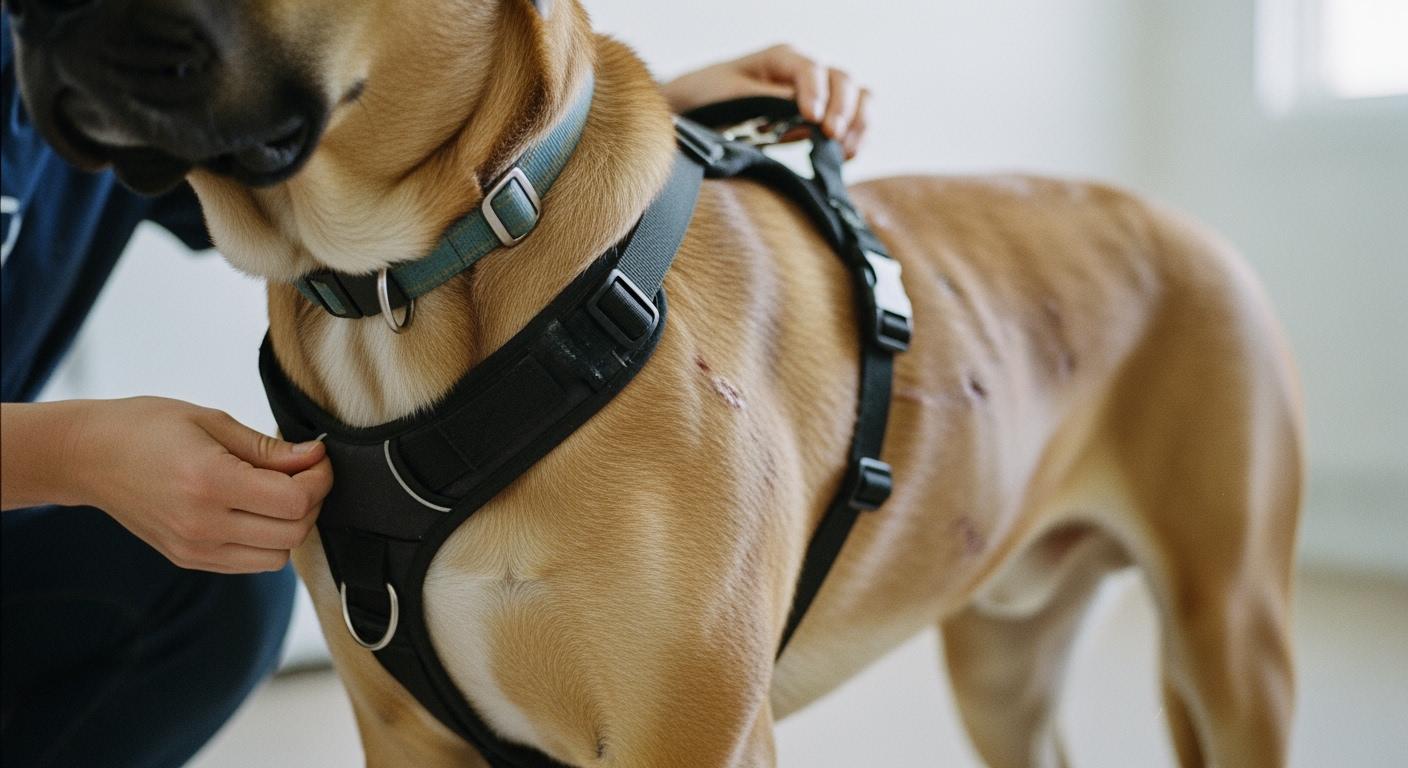
A full body dog harness for large dogs can slip, rub, or twist when the fit does not match the dog’s body shape, support need, or front-rear load balance. Large dogs often have heavier bodies, deeper chests, stronger movement, and wider pressure zones, so small sizing or strap placement mistakes can become obvious during stairs, standing support, car transfers, or short assisted walks. This guide explains the main reasons a full-body harness moves out of place, where rubbing usually starts, and what fit checks help reduce pressure points before daily use.
Key Takeaways
- A full body dog harness for large dogs may slip or rub when the front and rear sections do not stay aligned during movement.
- Deep chests, narrow waists, heavy frames, and coat changes can make a standard harness pattern less stable.
- Strap tightness alone does not solve rubbing; contact zones, padding width, and handle balance also matter.
- Test the harness indoors for 10–15 minutes before using it on stairs, ramps, or car transfers.
- Stop use and reassess the fit if you see twisting, pressure marks, skin redness, hair loss, or strong resistance from the dog.
Why Full Body Dog Harnesses for Large Dogs Fail
Large dogs present unique challenges when you use a full body dog harness for large dogs. Their weight, deep chests, and body shapes make it harder to achieve a secure fit. Even with careful adjustment, you may notice slipping, rubbing, or twisting. These problems often come from harness sizing mistakes, poor balance, or the wrong support level.
Load and Body Shape Challenges
You need to consider your dog’s weight and chest depth. A harness must fit at the chest bone where the neck and chest straps meet. This keeps pressure off the throat and allows free shoulder movement. If your dog has a deep chest or a narrow waist, the harness may slide or twist. Some breeds, like Dachshunds or Basset Hounds, have long bodies and heavy frames. These shapes need wide, padded harnesses to prevent discomfort. Large harnesses that do not match your dog’s body can cause rubbing or restrict movement.
The harness should sit low on the chest, not near the throat.
Wide chest straps may not suit dogs with narrow builds.
The leash attachment should rest over the ribs, not the neck.
Support vs. Lifting
A full body dog harness for large dogs should provide support, not lift the entire weight. Support harnesses help with joint pain or mild mobility issues. Lifting harnesses are for dogs with severe problems, like paralysis. If you try to lift too much, you risk causing sores, muscle strain, or joint pain. Always use proper technique. Support your dog’s rear end and avoid grabbing only the chest. Poor fit or improper lifting can lead to long-term discomfort.
Poor Front-Rear Balance
Balance matters. If the front and rear handles do not share the load, the harness may twist or lift unevenly. This can cause pressure points or make your dog refuse to walk. Harness sizing mistakes, such as straps that are too loose or too tight, also lead to shifting and rubbing. Always check the adjustment before each use.
For a deeper explanation of load sharing and handle placement, see our guide to front and rear balance in a full-body dog lift harness.
Quick Reference Card: Top Reasons for Harness Failure
Reason for Failure | What Happens |
|---|---|
Wrong size | Shifts, slides, or chafes |
Poor adjustment | Restricts movement or rubs |
Body shape mismatch | Harness twists or creeps |
Over-tightening | Restricts breathing |
Worn hardware | Risk of breakage |
Harness Sizing Mistakes and Fit Problems
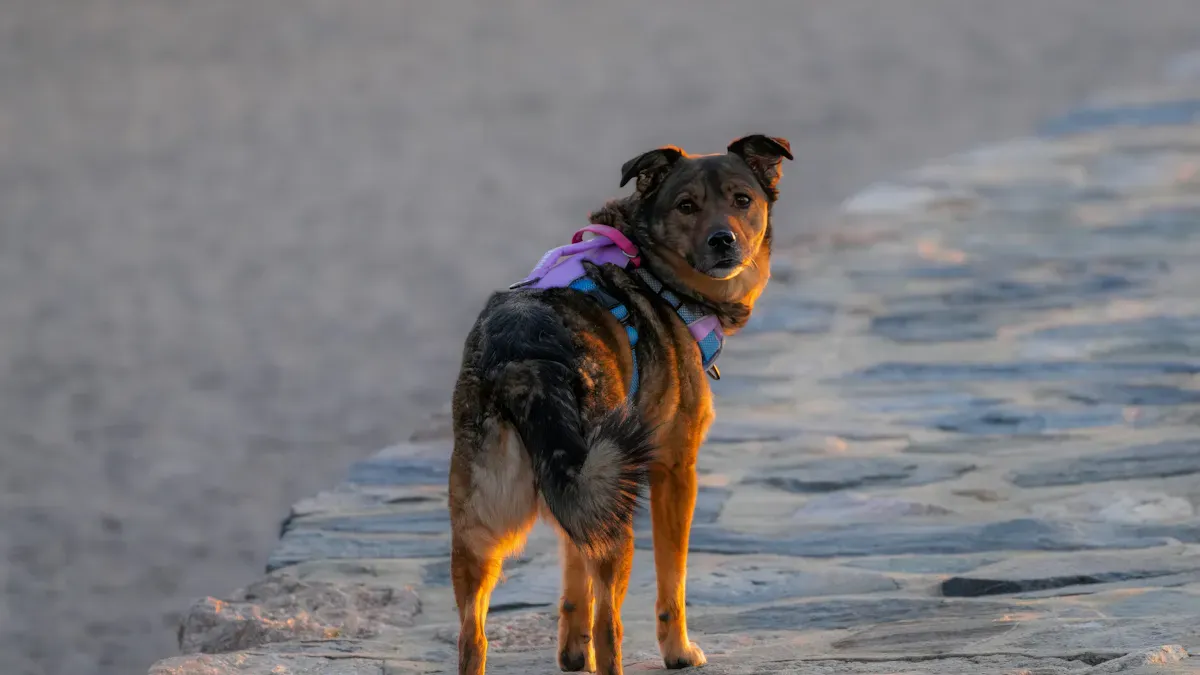
Choosing the right size and making careful adjustments are the most important steps when you use a full body dog harness for large dogs. Many common fit mistakes happen because of loose or tight straps, mismatched body shapes, misaligned sections, or pressure on the wrong zones. Each of these problems can lead to slipping, rubbing, twisting, or even injury. You can prevent discomfort and keep your dog safe by learning how to spot and fix these issues.
What This Means for Brands and Distributors
For brands, distributors, or private-label buyers sourcing full-body lift harnesses for large dogs, repeated slipping or rubbing is not only a sizing issue. It often points to pattern design, strap width, padding coverage, buckle placement, and front-rear load balance. A product line for large dogs should be tested around real support tasks such as standing assistance, short walks, stair support, car transfers, and skin-pressure checks, not only static size charts.
When comparing supplier samples, check whether the harness stays centered during movement, whether the front and rear sections lift evenly, and whether pressure concentrates under the chest, belly, armpit, groin, or rear support zone.
For sourcing discussions, review GaitGuard’s dog lift harness product range and send fit, size, quantity, and private-label requirements through the RFQ form.
Loose or Tight Straps
Straps that are too loose or too tight cause most harness problems. You should always check that a fitted harness allows you to slip two fingers between the strap and your dog’s body. Loose straps let the harness slide out of place or even allow your dog to escape. Tight straps can pinch, restrict movement, and cause rubbing or chafing. Both mistakes can make your dog feel insecure or lead to injury.
Loose straps may cause the harness to shift, slide, or twist.
Tight straps can press into the skin, causing discomfort and limiting movement.
A harness that is too big or too small will not stay in place and may ride up or down.
Always inspect buckles, D-rings, and seams for wear.
Adjust the harness for seasonal coat changes or weight gain or loss.
Deep Chest, Narrow Waist Mismatch
Large dogs often have deep chests and narrow waists. This shape makes it hard to get a good fit with standard harness patterns. If the harness does not match your dog’s body, it may creep forward or twist. Some breeds, like Bulldogs, have wide chests and short backs. Others, like Greyhounds, have deep chests and slim waists. You need to measure your dog’s chest girth, neck, and back length before choosing a harness.
Factor | Description |
|---|---|
Breed Characteristics | Wide-chested breeds like Bulldogs often have unique proportions that affect harness fit. |
Measurement Importance | Accurate measurements of chest girth, neck circumference, and back length are crucial for fit. |
Fit Issues | Standard patterns often do not accommodate the unique shapes of breeds like French and English Bulldogs, leading to discomfort. |
Misaligned Front and Rear Sections
A harness must fit evenly from front to back. If the front and rear sections do not line up, you may see twisting, uneven lifting, or pressure on the spine. Always measure your dog while standing. Make sure the harness allows your dog to move, breathe, and turn without shifting or rubbing. After fitting, watch your dog stand, walk, and turn. If the harness moves or pinches, you need to adjust it.
A harness that is too tight can pinch the chest and limit movement.
A loose harness can slide around, reducing control and making your dog feel insecure.
Misalignment can lead to uneven pressure and possible spinal strain.
Wrong Contact Zones
The harness should rest on broad, padded areas of your dog’s body. If straps land on the throat, armpits, spine, belly, or groin, your dog may feel pain or develop sores. Thin straps can create pressure points and cause posture problems. Always check that the harness sits low on the chest, away from the throat, and allows full shoulder movement.
Pressure on sensitive areas can cause discomfort or injury.
Poor fit may strain the spine or create skin irritation.
Harnesses must avoid the throat and allow natural movement.
Tip: Always check your dog’s skin after each use. Look for redness, hair loss, or pressure marks.
Fit-Failure Troubleshooting Table
What you see | Likely cause | What to check | Safer next step |
|---|---|---|---|
Harness slides | Loose straps, wrong size | Strap tightness, chest measurement | Adjust straps, re-measure, retest |
Harness creeps up | Deep chest, narrow waist | Body shape match, harness pattern | Try breed-specific harness, adjust fit |
Harness pulls/twists | Misaligned sections | Front-rear alignment, standing fit | Refit on flat surface, check movement |
Dog freezes/won’t move | Pressure on wrong zone | Strap placement, skin check | Move straps, check for sores, stop use |
Uneven lifting | Poor handle balance | Handle position, load sharing | Adjust handles, use two hands |
Belly strap pressure | Strap too tight/low | Belly strap position, tightness | Loosen strap, reposition, retest |
Rubbing/sores | Tight straps, thin padding | Skin under straps, padding | Add padding, loosen, check skin daily |
Slipping on stairs | Traction issue, poor fit | Paw grip, harness stability | Use non-slip mat, adjust fit, retest |
Red-Yellow-Green Safety Table
Signal level | What happens | Action |
|---|---|---|
Green | Harness stays centered, no rubbing, dog moves well | Continue use, check fit before each session |
Yellow | Harness shifts, mild rubbing, dog hesitates | Shorten session, adjust fit, retest indoors |
Red | Dog panics, harness twists, pressure marks appear | Stop use, check for injury, contact veterinarian |
Note: If you see red signals, stop using the harness right away. Your dog’s safety comes first.
By learning to spot these common fit mistakes, you can keep your dog comfortable and safe. Always check the fit and make small adjustments as needed. A well-fitted harness supports your dog’s movement and prevents discomfort.
Testing Harness Fit Before Use
Before you use a full body dog harness for large dogs, you need to test the fit and comfort. A careful pre-use check helps prevent slipping, rubbing, or twisting. Follow these steps to make sure your dog stays safe and comfortable.
Indoor Fit Test (10-15 Minutes)
Start by putting the harness on your dog while they stand calmly on a non-slip surface. Adjust the straps at the chest, belly, pelvis, and rear. Use the two-finger check to make sure the harness is snug but not tight. Let your dog stand and shift weight for 10-15 minutes. Watch for any signs of discomfort or resistance. The harness should stay centered and not press on the throat or armpits.
Fitting Aspect | Best Practice |
|---|---|
Chest Bone | Place the connection point on the chest bone, not soft tissue. |
Armpits | Leave space behind the front legs for movement. |
Between the Front Legs | Make sure the chest piece is not too wide. |
Straps Adjustment | Allow two fingers between the harness and your dog’s body. |
Regular Inspection | Check for chafing or irritation after fitting. |
Movement Test on Flat Surface
Walk your dog slowly on a flat, non-slip surface for 5-10 minutes. Observe if your dog moves freely or hesitates. The harness should not rotate or shift to one side. If your dog tries to wiggle free or shows fur loss, the harness may need more adjustment. A back clip harness or no pull harness should not restrict natural movement.
Handle Balance Check
Apply light support using both the front and rear handles. Do not lift your dog fully. The harness should distribute weight evenly. Uneven lifting can cause twisting or pressure points. If you notice the harness pulling more on one side, adjust the handles for better balance.
Skin and Pressure Point Inspection
After the test, remove the harness and inspect your dog’s skin. Look for redness, heat, hair pulling, or dampness, especially in high-movement areas like armpits. Regular checks help you catch early signs of rubbing or irritation before they become serious injuries.
Tip: Always decide if the result is green (good fit), yellow (needs adjustment), or red (stop use).
Caregiver Checklist for Harness Fit
Item | Description |
|---|---|
Tape measure/scale | Measure your dog’s size and weight for accurate fitting. |
Threading tool | Help adjust straps through tight slots. |
Scissors/duct tape | Trim or secure loose ends if needed. |
Seat check forms | Keep records of each fit test and adjustment. |
You should repeat these checks before each use to keep your dog safe and comfortable.
When a Harness Is Not the Right Tool
A harness does not fix every problem for your dog. Sometimes, you need something else, especially for big dogs with special needs or health problems. Knowing what a harness cannot do helps you keep your dog safe.
Rear Support Only Needs
If your dog only needs help with back legs, a full body harness might not work well. Rear slings are better for dogs with weak back legs. You can use a sling for short walks or bathroom trips. A harness can slip or twist if you use it for just the back legs. Always check the fit and straps before each use.
If the dog mainly needs hind-leg help instead of full-body balance, compare rear lift vs full-body support for stairs, walks, and hind-leg weakness.
Traction, Ramp, or Second Handler
Big dogs can have trouble on slippery floors or stairs. A harness will not fix slipping. You should use traction mats or ramps to help your dog walk safely. Sometimes, you need another person to help guide your dog, like when getting in a car or going up stairs. Lifting a heavy dog alone can hurt you or your dog.
Medical Issues Requiring Vet Care
Some health problems need a vet’s help. If your dog cannot stand, has bad pain, or falls down, a harness is not enough. You should call your vet for help. Harnesses do not take the place of treatment for broken bones, nerve problems, or sudden loss of movement.
Comparing Harness, Sling, and Mobility Aids
Different tools help in different ways. You cannot swap them for each other. The table below shows what each tool is best for, its main problem, and signs it is not working.
Tool | Best use | Main limit | Use-failure sign |
|---|---|---|---|
Full body harness | Assisted standing, short walks | Poor fit, uneven lifting | Slipping, rubbing, twisting |
Rear sling | Rear-only support, bathroom breaks | No front support | Dog drags front, sling creeps |
Front support harness | Front leg weakness | No rear support | Dog drags rear, harness shifts |
Ramp | Stairs, car entry | Needs training | Dog refuses, slips, panics |
Traction mat | Slippery floors | Limited to flat surfaces | Dog slips, mat moves |
Wheelchair | Severe mobility loss | Needs vet approval | Dog resists, pressure sores |
Note: Big dogs pull harder. A harness that does not fit right can hurt your dog. Always pick the best tool for your dog’s needs.
You want your dog to be safe and feel good. Harnesses can fail if you pick the wrong size or miss changes in your dog’s body. Twisted straps also cause problems. Look at the table below for easy reminders:
Reason for Fit Failure | Problem Description |
|---|---|
Size too large | Slides or rubs |
Size too small | Restricts movement |
Twisted straps | Creates hotspots |
Always use fit tests and check safety tables before every walk. If you notice red-flag signs, stop using the harness right away. Ask your vet team for help. Sometimes, another mobility tool is a better choice.
FAQ
How do you know if a harness fits your large dog correctly?
You should check that the harness stays centered and does not rub or twist. Use the two-finger rule for strap tightness. Watch your dog walk and stand. Look for signs of discomfort or resistance.
What should you do if the harness slips or rubs?
Adjust the straps and check the fit. Make sure the harness matches your dog’s body shape. If slipping or rubbing continues, stop using it and consult your veterinary team.
Can you use a harness for dogs with severe mobility issues?
You should not use a harness for dogs with severe pain, paralysis, or uncontrolled collapse. Seek veterinary advice for these cases. Harnesses work best for assisted standing and mild mobility support.
How often should you check for skin irritation when using a harness?
Inspect your dog’s skin before and after each session. Look for redness, hair loss, or pressure marks. If you see any signs of irritation, stop using the harness and reassess the fit.
What is the safest way to lift a large dog with a harness?
Apply light support using both handles. Do not lift the dog fully. Share the load evenly between front and rear handles. If you feel resistance or see twisting, adjust your technique or ask for help.
