
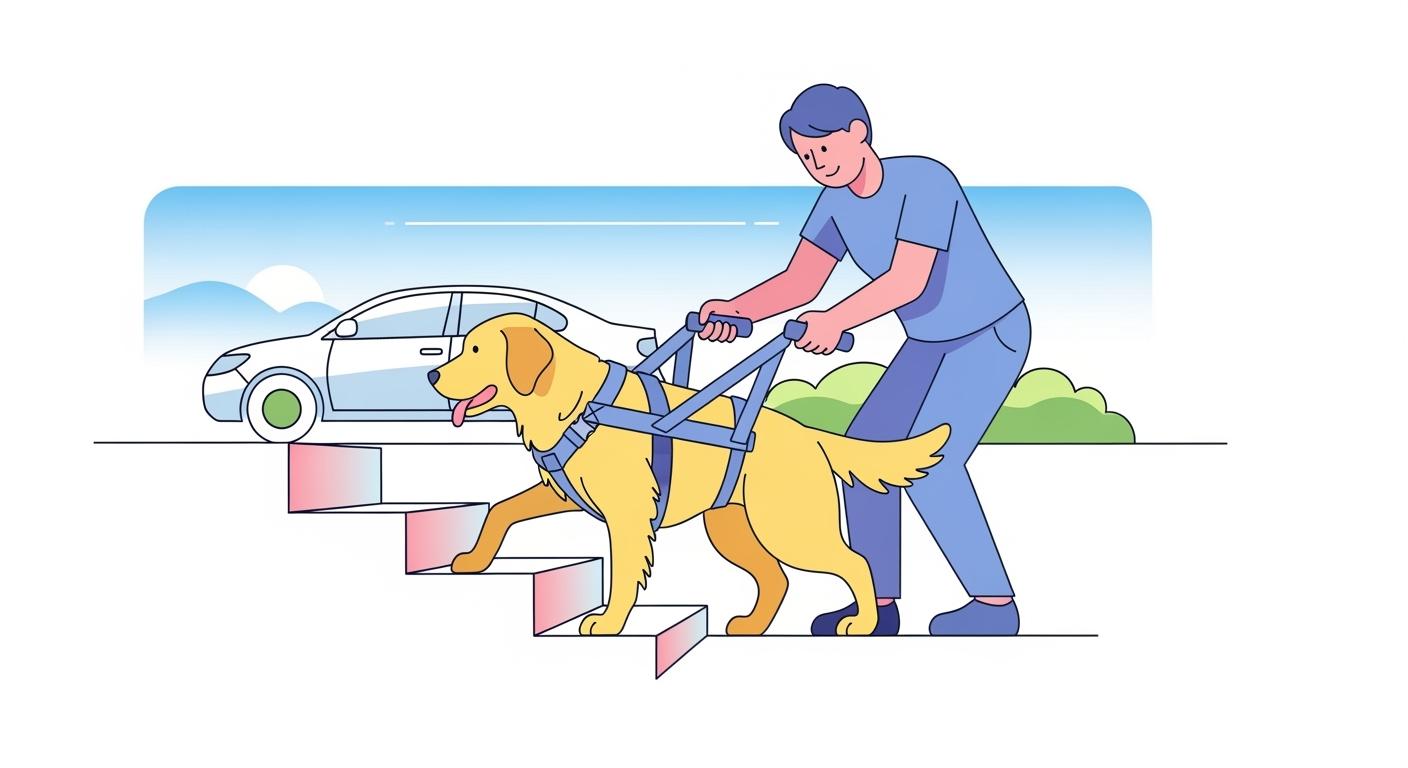
Imagine your large dog struggles to stand after surgery or shows signs of aging. You want to keep your pet safe and comfortable. A large breed dog lift harness gives you control when helping your dog get around, especially for senior dogs. For stairs and car rides, a full body harness or a rear lift sling supports your dog best. Always check for proper fit and comfort. Inspect your dog’s skin daily. If you see swelling, wounds, or increased pain, contact your veterinarian right away. Safety matters every time you use a dog lift harness.
Key Takeaways
Choose the right harness type based on your dog’s needs. Use a rear lift sling for weak back legs and a full body harness for senior dogs or those needing extra support.
Always measure your dog for a proper fit. Ensure you can fit two fingers under each strap to prevent chafing and discomfort.
Inspect your dog’s skin daily after using the harness. Look for redness, swelling, or sores, and contact your veterinarian if you notice any issues.
Use treats and praise to create a positive experience when introducing the harness. This helps your dog feel more comfortable and relaxed.
Move slowly and carefully when assisting your dog with stairs or car transfers. Always support both front and rear legs for safety.
Large breed dog lift harness types and uses
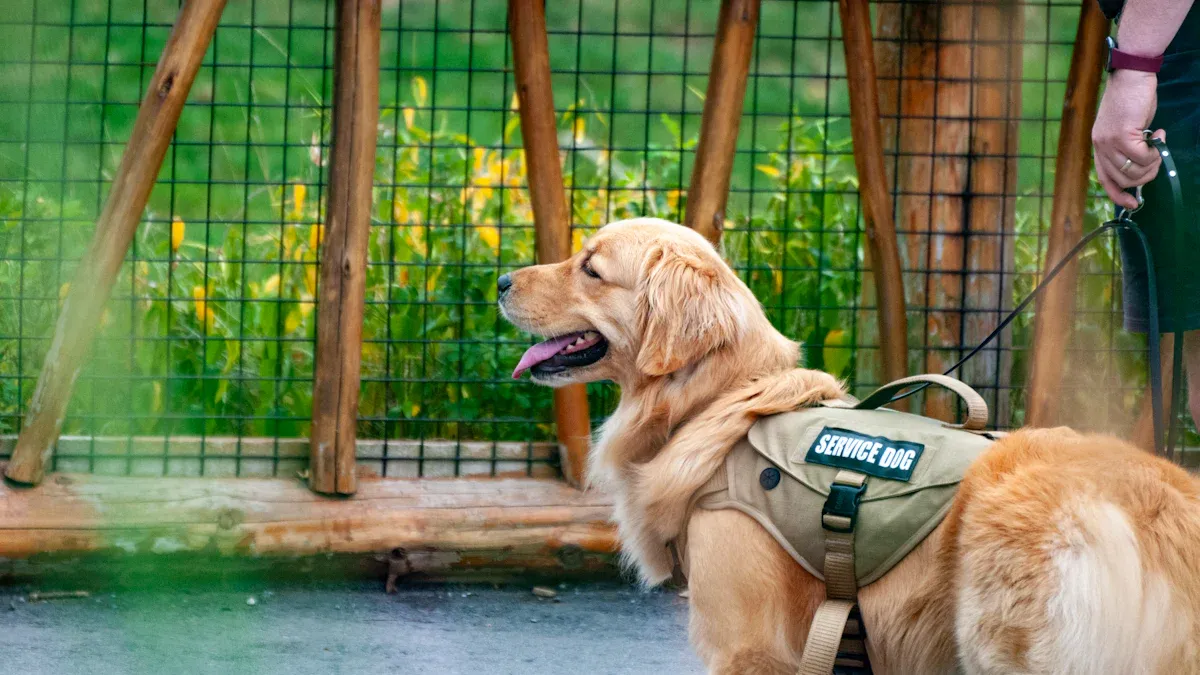
Rear lift sling vs full body harness
You need to pick the best large breed dog lift harness for your dog. Rear lift slings and full body harnesses help in different ways. The table below shows how they are not the same:
Feature/Function | Rear Lift Slings | Full Body Harness |
|---|---|---|
Support Area | Rear legs only | Entire body |
Use Case | Hind leg weakness | Senior dogs, post-surgery |
Mobility Assistance | Lifts rear legs | Helps with stairs, walking |
Weight Distribution | Rear support | Even body support |
A rear lift sling is easy to use. It helps you lift your dog’s back legs. You can use it if your dog has weak back legs or is healing from an injury. This harness has two loops for lifting the rear legs. It is simple and does not cost a lot. Rear lift slings are good for short walks, bathroom breaks, and quick moves.
Full body harnesses support your dog’s whole body. They are good for older dogs, after surgery, or when your dog needs help with stairs. These harnesses spread your dog’s weight all over. They make lifting safer and more comfortable.
Safety Tip: If your dog has more pain, swelling, or gets weak fast, stop using the harness and call your veterinarian right away.
Mobility harness and support sling overview
Mobility harnesses and support slings help dogs with many problems. These include ACL or CCL tears, hip or back surgery, arthritis, hip dysplasia, IVDD recovery, and weak back legs. The table below shows important features:
Feature | Description |
|---|---|
Support for Mobility | Helps with many injuries and conditions |
Types of Harnesses | Front lifting, rear lift sling, and full body support harness |
Comfort Features | Padded, soft lining, adjustable height |
Usability | Easy to use, machine washable, optional stay-on straps |
Storage | Rolls up for easy storage |
You can use a support sling for short times or a support harness every day. Always check if it fits well and feels good for your dog. If your dog has wounds, swelling, or pain, do not use a support harness. Call your vet for help.
Choosing the right dog lifting harness
Assessing your dog’s mobility and needs
You want to help your dog move safely. Start by looking at your dog’s size, body type, and how they walk. Large dogs with mobility issues need more support than smaller breeds. Some dogs have weak back legs, while others struggle with balance or full-body weakness. Senior dogs often need extra help for stairs or car rides.
Ask yourself these questions:
Does your dog have trouble standing or walking?
Does your dog drag their back legs or stumble?
Is your dog recovering from surgery or injury?
Does your dog show signs of pain or stiffness?
If you answer yes to any of these, your dog may benefit from a large breed dog lift harness. Choose a harness that matches your dog’s needs. For rear leg weakness, a rear lift sling works well. For full-body support, pick a full body harness. If your dog has multiple mobility issues, a mobility harness with several handles gives better control and balance.
Tip: Always check your dog’s skin and comfort after using any harness. If you see swelling, wounds, or your dog’s pain gets worse, stop using the harness and call your veterinarian.
Measuring for fit and comfort
A proper fit keeps your dog safe and comfortable. You need to measure your dog before buying a dog lifting harness. Use a soft tape measure for accuracy.
Follow these steps:
Measure your dog’s neck where a collar sits.
Wrap the tape around the widest part of your dog’s chest, just behind the front legs.
Check your dog’s weight. This helps you pick the right size.
Make sure you can fit two fingers between the tape and your dog’s skin. This prevents chafing and allows your dog to breathe and move.
Use adjustable straps for a snug but gentle fit.
A harness that fits well will not rub, pinch, or restrict your dog’s movement. If the harness is too loose, your dog could slip out. If it is too tight, it may cause pain or skin problems. Always check for signs of discomfort, redness, or sores after each use.
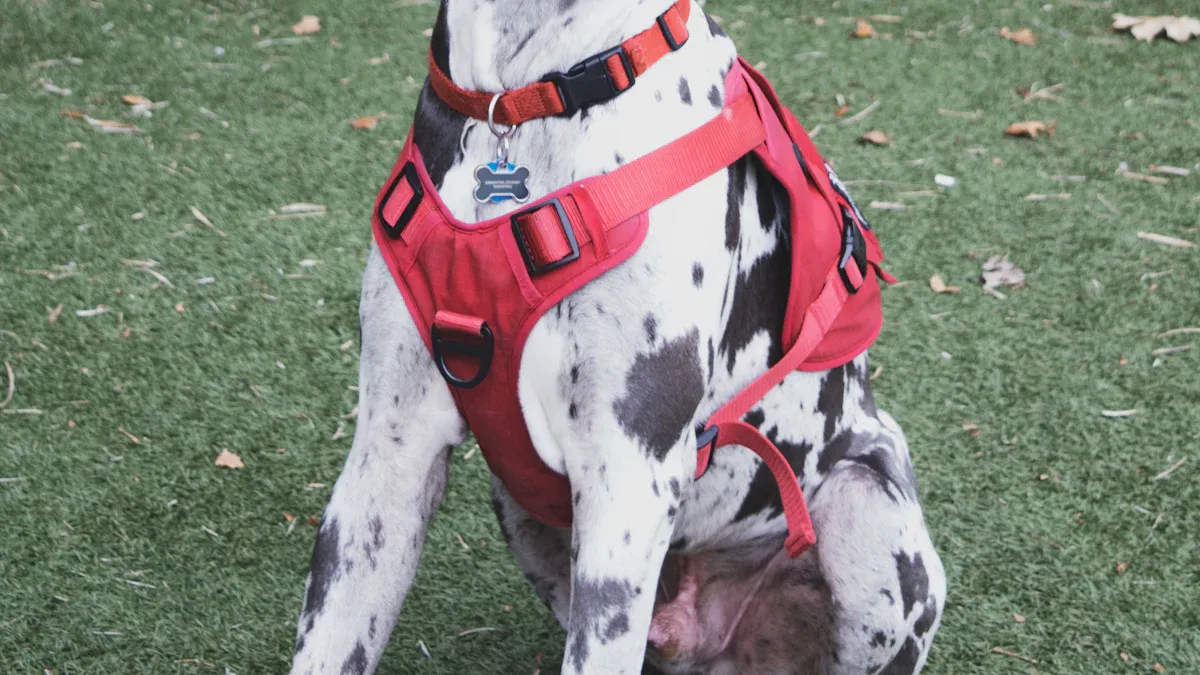
Safety Alert: An improperly fitted harness can cause chest injuries, chafing, or even joint strain. Dogs with deep chests, like Great Danes, need extra care to prevent slipping out. If you notice any of these problems, adjust the harness or try a different size.
Selection checklist for harness type
Choosing a dog-lifting harness can feel overwhelming. Use this checklist to make the process simple and safe:
Measure your dog’s neck and chest girth with a soft tape.
Record your dog’s weight.
Check the manufacturer’s size chart for the harness you want.
Choose a harness based on your dog’s mobility issues:
Rear lift sling for weak back legs.
Full body support harness for senior dogs or dogs with full-body weakness.
Mobility harness for dogs with multiple support needs.
Make sure the harness has padded straps and breathable material for comfort.
Try the harness on your dog. Adjust the straps so you can fit two fingers under each strap.
Watch your dog walk, climb stairs, and get in the car with the harness. Look for signs of rubbing or restricted movement.
Inspect your dog’s skin after each use. Check for redness, swelling, or sores.
If your dog shows pain, lameness, or new wounds, stop using the harness and contact your veterinarian.
Harness Type | Best For |
|---|---|
Rear lift sling | Rear leg weakness |
Full body harness | Senior or post-surgery dogs |
Mobility harness | Multiple mobility issues |
You can find more details and sizing guides on our large dog lift harness, rear lift sling, full body support harness, and mobility harness for senior dogs product pages. For step-by-step tutorials, visit our guides on dog stairs after surgery, help dog get in car after surgery, and dog potty breaks after TPLO.
Note: Always choose a harness that matches your dog’s needs and body type. A good fit and the right harness type keep your dog safe and comfortable during every activity.
Safely lifting your pet: stairs, car, and potty breaks
Preparing and fitting the harness
You want your large breed dog lift harness to fit perfectly before you help your dog move. A good fit keeps your dog comfortable and safe. Start with the harness fully assembled. Adjust the straps for comfort and safety. Swing the bottom support pad between your dog’s front legs. Lift the chest straps and reconnect them. Disconnect three of the four straps on the rear half and reconnect the rear half to the front. Center the hip lift portion over your dog’s spine and reconnect the belly band strap. Pull the trailing straps between your dog’s hind legs and refasten them. Make final adjustments so the harness fits snugly, like a collar, but still lets your dog lie down. You should always be able to fit two fingers between the harness and your dog’s body. If the harness feels too tight or too loose, adjust the straps. Watch for signs of chafing or discomfort.
Checklist for fitting your dog lifting harness:
Measure your dog’s neck and chest girth.
Adjust neck and chest straps to the largest setting before placing the harness.
Slip the harness over your dog’s head or guide their legs into the loops.
Buckle all straps securely.
Tighten straps so you can fit two fingers between the strap and your dog’s body.
Make sure the harness sits flat against the chest and back.
Check for twisting or bunching.
Observe your dog for any signs of discomfort or skin irritation.
Do not use a harness for lifting unless it is designed for that purpose. Using a non-lifting harness may cause injury. Always choose a quality harness made for large dogs. If you notice pain, swelling, or wounds, stop using the harness and contact your veterinarian.
How to climb up the stairs with support
Helping your dog climb up the stairs with a rear lift sling or full body harness requires patience and care. Make sure the harness fits comfortably. You should be able to fit two fingers between the harness and your dog. Keep your dog relaxed and calm. Use treats and praise to create a positive experience. Introduce the harness slowly and let your dog adjust.
Steps for safely lifting your pet on stairs:
Stand beside your dog and hold the harness handles firmly.
Support your dog’s rear legs with the rear lift sling. Use the front handles for extra balance if needed.
Guide your dog up one step at a time. Move slowly and watch your dog’s reaction.
Pause if your dog seems tired or anxious. Give praise and treats.
Never let your dog use stairs alone if they are in pain or recovering from surgery.
Block off stairs when you cannot supervise your dog.
Avoid carrying your dog up and down stairs. This can cause anxiety and may worsen their condition.
Checklist for stair safety considerations:
Check harness fit before starting.
Use slow, controlled movements.
Watch for signs of fatigue or limping.
Never rush your dog.
Stop if your dog shows pain or discomfort.
Contact your veterinarian if symptoms worsen.
For more tips, visit our dog stairs after surgery tutorial and see our large dog lift harness and rear lift sling product pages.
Car transfers with a rear lift sling or full body harness
Getting in and out of the car can be hard for large dogs with mobility issues. Use a rear lift sling or full body harness to provide balanced support. Choose a full body harness for dogs needing more support. This harness lifts from the chest, abdomen, and rear legs. A combo harness with multiple handles gives you better control and helps your dog stay balanced.
Steps for car transfers:
Fit the harness snugly before approaching the car.
Support both the front and rear legs using the harness handles.
Lift gently and guide your dog into the car seat or ramp.
Use slow, controlled movements to avoid sudden shifts.
Make sure your dog feels secure and balanced during the transfer.
When exiting the car, support your dog’s weight and help them step down safely.
Checklist for car transfer safety considerations:
Choose a quality full body support harness.
Ensure the harness supports both front and rear legs.
Use handles for stability and balance.
Avoid lifting your dog by only one end.
Watch for signs of anxiety or discomfort.
Prioritize safety for yourself and your dog.
Contact your veterinarian if your dog shows pain or weakness.
For more details, see our help dog get in car after surgery guide and explore our rear lift sling and full body support harness product pages.
Potty breaks and short walks
Potty breaks and short walks are important for your dog’s health. Use a rear lift sling or mobility harness to support your dog during these activities. Make sure the harness fits well and does not restrict movement. Watch for signs of discomfort, such as limping, fatigue, or paw injuries. If your dog shows any of these signs, stop and check the harness fit.
Steps for safe potty breaks and walks:
Fit the harness and check for comfort.
Support your dog’s rear legs with the rear lift sling.
Guide your dog outside for a potty break.
Use gentle, slow movements.
Watch your dog for signs of fatigue or pain.
Limit walks to short distances.
Inspect your dog’s paws for cuts, torn nails, or infections after each walk.
Checklist for potty and walk safety:
Check harness fit before each use.
Support your dog’s rear legs at all times.
Watch for limping or fatigue.
Inspect paws after walks.
Stop if your dog shows pain or discomfort.
Contact your veterinarian if wounds, swelling, or weakness occur.
For more information, visit our dog potty breaks after TPLO guide and see our mobility harness for senior dogs and rear lift sling product pages.
Remember: Safely lifting your pet means using the right harness, checking fit, and moving slowly. Always watch for signs of pain, discomfort, or skin problems. If you notice any serious symptoms, contact your veterinarian immediately.
Comfort, skin safety, and troubleshooting
Fit checks and skin inspection
You want your large breed dog lift harness to provide safe lifting support without causing harm. After each use, check your dog’s skin and the fit of the harness. This helps you spot problems early and keep your dog comfortable. Use this checklist after every walk, stair climb, or car transfer:
Look for redness, rubbing, or dampness under the straps.
Adjust the harness fit if you see any marks or pressure spots.
Inspect all contact points daily for irritation.
Brush your dog’s coat to keep it clean and reduce friction.
Give your dog breaks from the harness so the skin can breathe.
Use soothing creams for irritated spots, but ask your vet first.
If you see redness or sores, stop using the harness until the skin heals.
If you notice swelling, wounds, or your dog’s pain gets worse, contact your veterinarian right away. Safety comes first for every dog lifting harness.
Preventing chafing and pressure sores
Chafing and pressure sores can happen if the harness rubs or fits poorly. You need to check common trouble spots, especially over bony points like the knee cap, ankle, back of the leg, heel, wrist, and top of the paw. Areas under straps and at the harness edges also need attention.
To prevent these problems:
Inspect contact points often for signs of rubbing.
Adjust the harness as your dog changes size or shape.
Groom your dog regularly to keep the coat smooth.
Allow breaks from the harness to let the skin rest.
Apply soothing creams for mild irritation, but always consult your vet.
Address any skin issues quickly with your veterinarian.
Dogs with hind leg weakness or post-surgery needs may need extra support and more frequent checks. Always use a harness designed for lifting support, especially for senior dogs.
When to adjust or replace your harness
You should adjust your lifting harness if you see any signs of discomfort, redness, or slipping. Replace the harness if you notice broken straps, worn padding, or if your dog outgrows the size. Never use a harness that does not provide proper lifting support or safety.
Contact your veterinarian if you see:
Worsening pain or lameness
Abnormal wounds or swelling
Discharge from any sore
Sudden weakness
For more tips on harness fit and skin safety, visit our tutorials on prevent chafing from dog harness and pressure sores from dog brace. Explore our large dog lift harness and dog lifting harness product pages for more options.
Choosing the right large breed dog lift harness starts with measuring your dog’s neck and chest. Use a rear lift sling for dogs with weak back legs. Pick a full body harness for senior dogs or those needing extra support on stairs and in cars. Always check harness fit and inspect your dog’s skin before each use. Look for durable stitching and easy-to-adjust straps. Regular skin checks help prevent problems. If you notice pain, swelling, or sudden weakness, contact your veterinarian. Stay patient and use treats to make the lifting harness experience positive for your dog.
FAQ
How do you choose the right size lift harness for your large dog?
Measure your dog’s neck and chest with a soft tape. Check your dog’s weight. Use the manufacturer’s size chart. Make sure you can fit two fingers under each strap for comfort.
Can you leave a lift harness on your dog all day?
No. Remove the harness every few hours. Let your dog’s skin breathe. Check for redness or sores. Give your dog breaks to prevent chafing and pressure spots.
What should you do if your dog shows pain or swelling while using a harness?
Stop using the harness right away. Look for wounds, swelling, or discharge. Contact your veterinarian immediately. Safety comes first for your dog.
Is a rear lift sling safe for stairs and car transfers?
Yes, if you use it correctly. Support your dog’s rear legs and move slowly. Always check harness fit before each use. Watch for signs of discomfort or fatigue.
How often should you inspect your dog’s skin when using a harness?
Check your dog’s skin after every use. Look for redness, rubbing, or sores. Adjust the harness if you see any marks. Contact your veterinarian if problems do not improve.
