
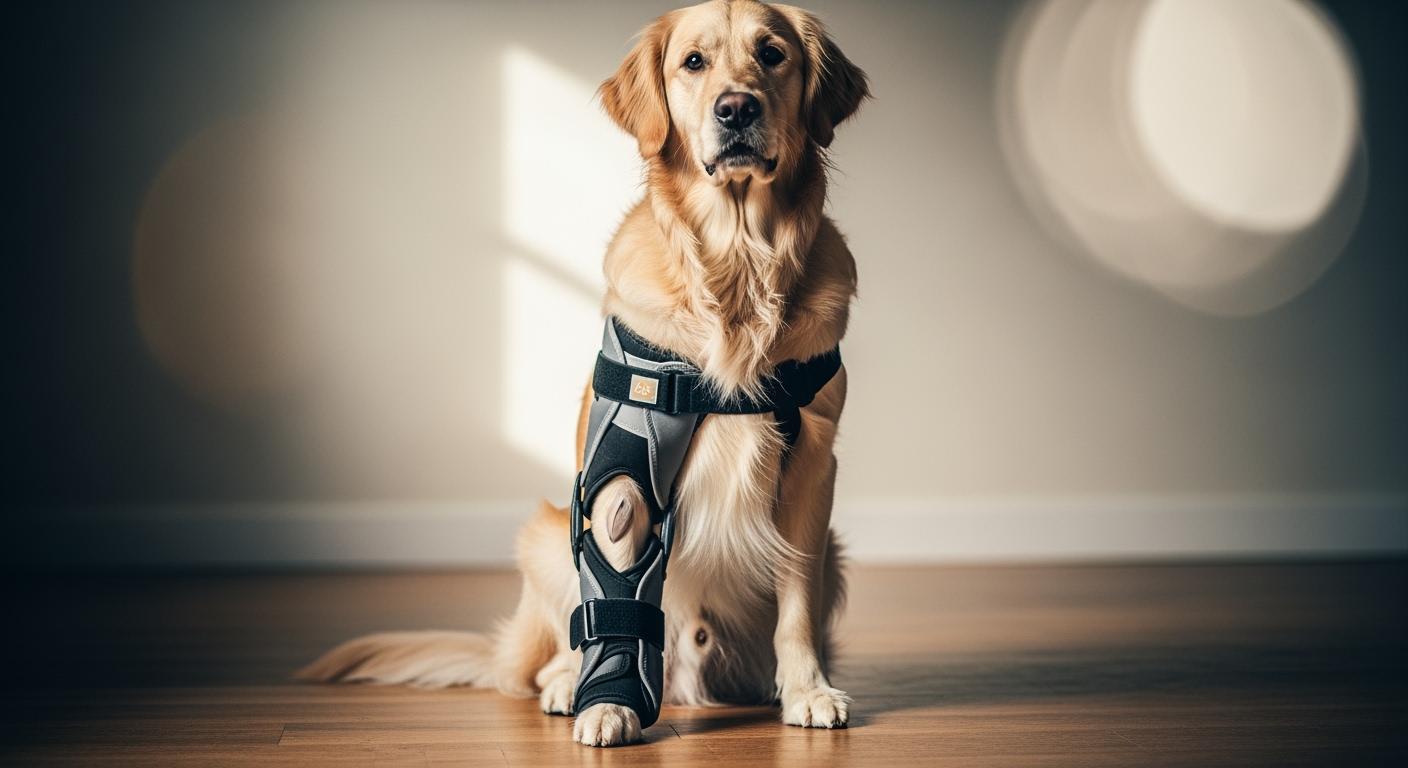
Leg brace for dog ACL injury fit and stability should be judged by one practical question: does the brace stay aligned and supportive during real movement. A well-fitted brace should help stabilize the knee, reduce slipping, and make walking, standing, and daily activity more controlled without creating rubbing or pressure problems. If you want a broader overview of ACL brace fit, daily use, and recovery expectations before focusing on stability alone, start with this dog knee brace for ACL injury guide.
Key Takeaways
- A leg brace for dog ACL injury should stay aligned during walking and standing, not just look correct while the dog is still.
- Correct measurements, stable strap adjustment, and daily rechecks matter more than size labels alone.
- The right brace should improve knee stability without creating slipping, rubbing, or a more awkward gait.
Leg Brace for Dog ACL Injury Fit and Stability
What Fit Means in Practice
When you pick a leg brace for your dog, fit means more than choosing a size that looks close enough. A good fit should keep the brace centered on the knee, hold support steady during movement, and stay comfortable enough for repeated daily use. The brace should feel secure without squeezing, and it should move with the dog instead of sliding, twisting, or bunching as activity changes.
Tip: Check the brace after your dog has walked a short distance. A brace that looks correct at rest can still lose alignment once real movement begins.
Signs of Proper Fit
You can look for several signs to tell whether the brace fits correctly:
- Your dog walks, stands, and sits without obvious new resistance.
- The brace stays aligned and does not slide down or rotate.
- There are no red marks, rubbing, swelling, or heat buildup under the brace.
- The straps feel secure but do not dig into the skin.
- Your dog does not keep biting at, shaking, or trying to remove the brace.
If your dog seems uncomfortable or the brace shifts after movement, recheck the fit before increasing wear time. For a broader comfort and safety framework, compare this section with the canine rehabilitation brace fit and safety guide.
Measuring for Correct Size
Getting the right size is the first step in choosing a brace that can actually stabilize the knee. You need to measure your dog’s leg carefully so the brace can stay aligned and supportive instead of slipping under load. Use these main steps:
- Measure the upper thigh circumference where the top of the brace will anchor.
- Measure the knee area where the support center needs to align.
- Measure from the knee to the hock so the brace height matches the leg.
- Measure the lower leg circumference at the point required by the brace design.
- Record the numbers clearly and compare them to the chart for that specific brace.
If you measure incorrectly, the brace may slip, pinch, or fail to stabilize the knee well enough during movement. For a more detailed step-by-step workflow, use this dog brace sizing guide.
Note: Correct measurements reduce common fit problems such as rubbing, loose top hold, and lower strap drift. Always use the sizing logic for the exact brace you are selecting.
Practical Checklist for Assessing Fit and Stability
Use this checklist to judge whether the brace fit and stability logic is correct before you commit to daily use:
- Did you confirm with your veterinarian what level of ACL support is actually needed?
- Did you measure the upper thigh, knee area, lower leg, and brace length correctly?
- Does the brace feel secure without pinching soft tissue?
- Can the straps be adjusted easily for small corrections?
- Does the brace stay aligned after short walking and standing transitions?
- Does the material feel stable enough for daily use without causing obvious heat or rubbing?
- Does your dog move more confidently instead of more awkwardly?
Comparison Table: Fit and Stability Factors
| Factor | What to Check | Why It Matters |
|---|---|---|
| Measurement accuracy | Upper thigh, knee, lower leg, and brace length | Wrong numbers usually lead to slipping or poor support placement |
| Knee alignment | Brace center stays aligned with the knee during movement | Stability depends on support staying where the joint needs it |
| Strap security | Snug without pinching or loosening too quickly | Poor strap tension causes drift and discomfort |
| Wear tolerance | Dog can walk and stand comfortably in the brace | A brace only helps if the dog can actually wear it consistently |
Next Steps for Fit and Support Planning
If you want to keep comparing support logic after this section, continue to the dog knee brace for CCL tear fit and traction guide, the ACL support solution page, or the dog knee brace category depending on whether you still need fit guidance, condition planning, or product comparison.
Reminder: Only a veterinarian can diagnose ACL injury severity and make a full treatment plan. Braces support recovery, but they do not replace professional care.
Stability and Support Evaluation
Stability Expectations by Activity Level
You need to pick a brace that matches how active your dog is. Dogs with an anterior cruciate ligament injury neYou need to pick a brace that matches how active your dog is because activity level changes how much stability the brace has to maintain. Dogs that take short controlled walks may tolerate lighter daily support, while dogs that move quickly, turn often, or still try to play hard usually reveal fit and stability problems much faster.
Here is a more useful way to judge stability expectations by activity level:
| Activity Level | Stability Expectation |
|---|---|
| Low activity | The brace should stay comfortable and stable during short controlled movement. |
| Moderate activity | The brace should resist slipping during repeated daily walking and standing transitions. |
| Higher activity tendency | The brace needs stronger stability control and more frequent rechecks because movement exposes fit problems faster. |
You should always judge brace stability with your veterinarian in mind, because activity level changes how much support the dog can safely use. For broader condition guidance, use the ACL support solution page.
Testing Brace Support
It is important to test whether the brace actually supports your dog in practice. Use these steps:
- Confirm with your veterinarian that the support goal matches the dog’s ACL injury and not another condition.
- Check fit before movement, then watch for slipping, twisting, or rubbing after a short walk.
- Use the brace together with controlled activity, weight management, and rehab guidance when appropriate.
- Increase wear time gradually instead of assuming the brace can be worn at full duration from day one.
Use this table to judge support quality more clearly:
| Support Check | What to Look For |
|---|---|
| Alignment | The brace stays centered on the knee during movement. |
| Retention | The brace does not slide or rotate after short activity. |
| Comfort | The dog does not show clear rubbing, heat, or stress signs. |
| Movement quality | The dog moves more steadily instead of becoming more awkward. |
For product-level comparison after you finish the fit review, use the dog knee brace category.
Common Stability Issues
Some stability problems appear even when the brace size looks correct on paper. The most common issues are slide-down, rotation, poor strap retention, and reduced support after the dog starts moving. These problems matter because a brace that will not stay stable is no longer giving dependable ACL support.
Common causes include:
- inaccurate measurements before sizing
- poor knee alignment at the time of fitting
- missing early signs of rubbing, heat, or stress
- choosing a support level that does not match the dog’s activity pattern
Tip: Always check the brace after your dog has moved, not just right after you put it on. If you see swelling, red skin, more limping, or repeated slipping, stop and reassess the fit.
If you are unsure which support path makes sense after testing fit and stability, continue to the ACL support solution page.
Braces help with support and stability, but they do not replace veterinary diagnosis or treatment planning.
Daily Use and Design Features
Comfort and Wearability
You want your dog to tolerate the brace in real daily use, not just during the first fitting. Soft contact areas, stable padding, and adjustable straps usually matter more than generalized material claims. A good brace should feel supportive without becoming the source of new rubbing or heat buildup.
| Comfort Factor | Why It Matters |
|---|---|
| Padding | Helps reduce rubbing around contact points. |
| Adjustability | Allows small fit corrections as the dog moves. |
| Breathability | Helps reduce heat and moisture buildup during wear. |
Tip: Check the skin under the brace after use. Early red marks are easier to fix than full rubbing problems later.
Ease of Use and Maintenance
You need a brace that is practical to use every day. Easy application, simple strap logic, and repeatable fit checks reduce handling stress and make the brace more likely to be used correctly. A good routine should include daily skin checks, short early wear sessions, and small strap corrections when movement changes the fit.
| Daily Practice | What to Do |
|---|---|
| Skin checks | Look for redness, rubbing, missing hair, or swelling. |
| Fit checks | Confirm the brace still aligns after movement. |
| Gradual wear | Increase time slowly instead of forcing long wear too early. |
| Strap review | Adjust if the brace loosens, twists, or drifts. |
Note: Daily use should always support the veterinary plan rather than replace it.
Material and Customization
You can compare brace materials and customization by asking how much support, durability, and fit precision your dog actually needs. Lighter materials may feel easier for daily wear, while more structured designs may offer stronger stability. More individualized options can help when standard sizing keeps slipping or failing to align correctly.
- lighter materials may improve daily tolerance
- more structured support may improve stability for higher-demand use
- more customized fit approaches can help when standard sizing keeps failing
If you want to compare current brace options after reviewing fit logic, visit the dog knee brace category.
Reminder: Only a veterinarian can diagnose the injury and help decide which support level is appropriate.
Limitations and Professional Guidance
When to Consult a Specialist
You should always involve a veterinarian before and during brace use for ACL injury. A veterinarian or rehab professional can confirm whether bracing is appropriate, what support level is needed, and whether the dog’s movement is improving in the right way.
Watch for these signs that mean your dog needs professional review:
| Clinical Sign | Why It Matters |
|---|---|
| Worsening limping | The brace may not be supporting the knee well enough. |
| Swelling or heat | Fit, friction, or injury status may need reassessment. |
| Refusal to bear weight | The dog may need more than a brace-only adjustment. |
| Skin injury under the brace | Fit or wear routine is no longer safe enough. |
If you see worsening limping, swelling, stiffness, or poor weight use, call your vet. Those signs may mean the brace is not enough or the fit strategy needs to change.
Note: Only a veterinarian can confirm ACL injury severity and make the full treatment plan. Braces help support recovery but do not replace professional care.
Recognizing Brace Limitations
A brace can help support the knee and improve controlled movement, but you need realistic expectations. Braces do not repair torn ligaments by themselves, and they do not replace surgery decisions, diagnosis, or structured rehabilitation when those are needed.
- Braces support the knee but do not restore the ligament itself.
- They work best when fit is correct and daily use is monitored closely.
- Some dogs will still need more than bracing alone.
- Adjustment, rechecking, and veterinary follow-up remain necessary.
| Brace Limitation |
|---|
| Does not replace diagnosis |
| Does not replace surgery decisions |
| Requires correct fit and regular monitoring |
| May not be enough for every case on its own |
You should expect an adjustment period and regular fit review. For broader condition planning after this section, continue to the ACL support solution page.
Tip: If your dog seems more painful, less stable, or the brace will not stay aligned, ask your veterinarian for help before extending wear time.
When choosing a leg brace for dog ACL injury fit and stability, the best results usually come from treating measurement, alignment, comfort, and daily recheck as one system. A brace should stay aligned, feel tolerable, and improve support during real movement without turning into a slipping or rubbing problem.
| Key Point | Why It Matters |
|---|---|
| Measurement | Sets the starting point for secure sizing. |
| Alignment | Keeps support centered where the knee needs it. |
| Comfort | Improves daily wear tolerance and compliance. |
| Daily recheck | Catches slippage, rubbing, and stability loss early. |
For next steps, continue to the dog knee brace for ACL injury guide, the dog brace sizing guide, the canine rehabilitation brace fit and safety guide, the ACL support solution page, or the dog knee brace category depending on whether you still need education, fit logic, condition planning, or product comparison. Data authenticity note: This article is for educational purposes only. It is designed to help readers evaluate ACL leg brace fit and stability for dogs, not to replace veterinary diagnosis or individualized treatment advice.
FAQ
How do you know if a dog’s leg brace fits correctly?
The brace should stay in place without sliding, twisting, or pinching. Your dog should also walk comfortably instead of showing more awkward movement.
What should you look for in brace stability?
You want the brace to keep the knee steady during movement without twisting or slipping. Proper alignment, secure straps, and accurate sizing all work together to maintain stability.
Can your dog wear a brace all day?
Most dogs should not wear a brace all day at first. Start with short periods, increase gradually, and always check the skin and comfort after use.
What materials offer the best comfort for daily use?
Soft padding, breathable materials, and adjustable straps usually provide the best balance of comfort and daily support. More individualized fit options can help when standard sizing keeps slipping or rubbing.
When should you consult a veterinarian about brace use?
You should contact your vet if your dog limps more, shows pain, develops skin injury, or if the brace will not stay aligned despite careful fitting. Only a licensed veterinarian can diagnose ACL injuries and recommend the right treatment plan.
