
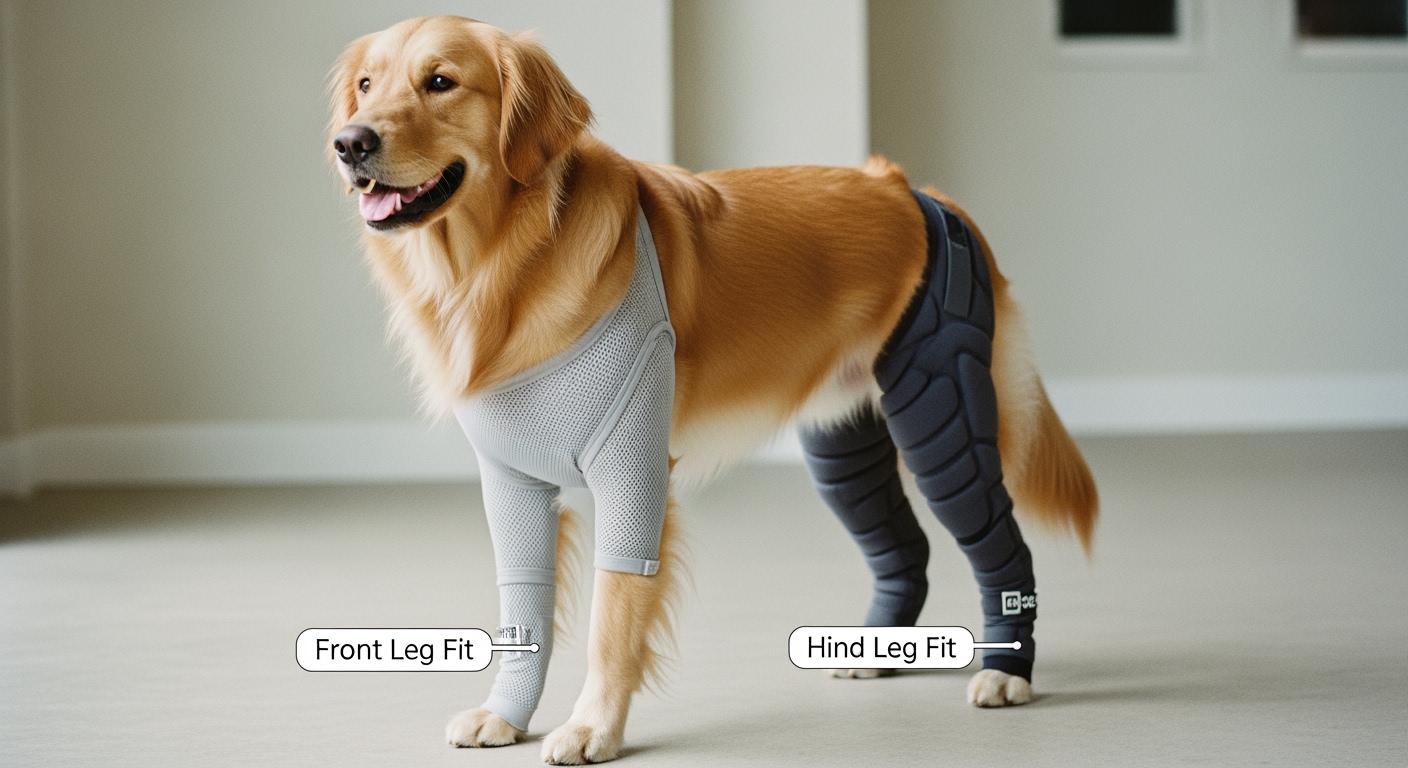
A leg sleeve for dog front vs hind leg should be chosen by wound location, movement pattern, and how securely the sleeve can stay in place during daily use. Front-leg sleeves and hind-leg sleeves are not interchangeable, because the front and rear limbs move differently and need different coverage shapes. If you want a broader overview of sleeve types, fit, and daily support before comparing front and hind leg options, start with this dog leg sleeve guide.
Key Takeaways
- Front-leg sleeves are usually better for shoulder, elbow, and lower front-leg coverage, while hind-leg sleeves are usually better for thigh, knee, and hip-area protection.
- The best sleeve is the one that matches the wound location and stays stable through your dog’s normal movement pattern.
- Fit, slip resistance, and daily comfort matter just as much as coverage when choosing between front and hind leg sleeves.
Leg Sleeve for Dog Front vs Hind Leg: What Buyers Need to Know
When comparing a leg sleeve for dog front vs hind leg, the main question is not which sleeve looks stronger, but which sleeve matches the injured area and the way that leg moves. Coverage, fit, and stability matter more than general product claims because a sleeve that works well on the front leg may still slip, bunch, or rub on the hind leg. For dogs that mainly need anti-lick coverage during recovery, this dog sleeve to stop licking for limb wounds and hot spots article is also helpful for understanding day-to-day use.
Key Differences in Sleeve Design
You will see that the design of a leg sleeve for dog front vs hind leg changes depending on what part of the leg it protects. Companies make sleeves with different shapes and special parts for the front and back legs. The table below shows how these sleeves are not the same:
Sleeve Type | Purpose | Design Features |
|---|---|---|
Front Bilateral Suit | Protects both front legs from licking and irritation | Durable, full coverage, designed for comfort |
Rear Bilateral Suit | Protects both hind legs from licking and infection | Sure-fit design, allows more mobility |
Shoulder Protective Sleeve | Protects wounds on the front leg after surgery or skin issues | Lightweight, breathable fabric for healthy healing |
Hip and Thigh Protective Sleeve | Protects wounds on the back leg after surgery or skin issues | Lightweight, breathable fabric for healthy healing |
Front-leg sleeves usually need to work around the shoulder, elbow, and paw-driven movement pattern, while hind-leg sleeves need to stay stable around the thigh, knee, or hip during stronger push-off and weight-bearing motion. If you want to compare product-level examples, review the front leg sleeve and the hind leg sleeve side by side.
Typical Use Cases for Dogs
Use cases differ by limb. Front-leg sleeves are often chosen for elbow, shoulder, or lower front-leg irritation, while hind-leg sleeves are more often chosen for thigh, knee, hip, or back-leg wound protection. The right choice depends on where the dog keeps licking, where the wound sits, and whether the sleeve can stay aligned during normal movement.
Tip: Always ask your veterinarian before you choose a sleeve. This helps you fix the right problem and helps your dog get better.
A leg sleeve can make recovery easier when it protects the correct area without slipping or restricting movement. For a broader fit-and-coverage overview, continue to this Dog Leg Sleeve Guide before moving into product selection.
Coverage Area Comparison
Front Leg Sleeve Coverage
Front-leg sleeves are usually designed to cover the paw-to-elbow area or extend higher toward the shoulder, depending on the wound location. They are most useful for protecting front-leg wounds, elbow irritation, post-surgical areas, and skin problems that the dog keeps licking. Because front legs bend, balance, and reach differently from hind legs, the sleeve must stay secure without twisting during walking or rest. For a product-level example, review this front leg sleeve.
Hind Leg Sleeve Coverage
Hind-leg sleeves usually need to cover a larger movement range because the back legs generate more push, weight-bearing force, and extension during walking and jumping. They are often used for thigh, knee, hip-adjacent, or lower hind-leg protection when the dog needs a cover that can move with the leg without bunching. Because hind-leg movement is stronger and more forceful, sleeve stability matters even more here. For a product example focused on back-leg coverage and daily wear, review this hind leg sleeve.
Choosing Based on Wound or Injury Location
Choose the sleeve by the exact wound location first, then by movement pattern second. A front-leg sleeve is usually the better fit for shoulder, elbow, and front-leg irritation. A hind-leg sleeve is usually the better fit for thigh, knee, hip, or back-leg wounds where rear-limb motion makes coverage harder to keep stable.
- Match the sleeve to the actual wound zone, not just the side of the body the dog is licking.
- Choose a sleeve that covers the area fully without leaving the wound edge exposed.
- Check whether the sleeve will stay aligned during the kind of movement that leg does most often.
If you still need a broader recovery framework before choosing front-leg or hind-leg coverage, go next to this Solutions by Condition page and compare whether the dog needs simple wound protection, anti-lick coverage, or additional support beyond a sleeve.
Tip: Ask your veterinarian before you pick a sleeve. The vet can help you choose the best one for your dog.
You can read more about how sleeves fit and cover in our Dog Sleeve Protection Guide. For more help with healing and wound care, visit our solution page or look at our leg sleeve products for dogs.
Fit and Comfort for Dogs
Fit Challenges: Front vs Hind Leg
Fit challenges are different for front and hind legs because the two limbs move differently. Front-leg sleeves have to stay stable through reaching, elbow bend, and weight shifts during balance. Hind-leg sleeves have to hold position through stronger rear-limb extension, push-off, and thigh movement. That is why a sleeve that fits well on one leg does not automatically fit well on the other.
Body shape, coat thickness, and breed structure also change how a sleeve behaves in daily use. A good sleeve should stay close to the body without squeezing, twisting, or sliding after a short period of movement. For more fit details, sizing logic, and daily-use checks, continue to this Dog Leg Sleeve Guide.
Comfort and Movement
Comfort is critical for daily use. Dogs wear sleeves for many hours. If the sleeve feels tight or loose, your dog may not want to walk or play. A good fit lets your dog move naturally. The sleeve should not block the joint or pinch the skin. Dogs need to bend their legs, lie down, and get up with ease. You want your dog to feel safe and relaxed. The right size helps prevent chafing and keeps the wound covered.
Check the sleeve often for rubbing, redness, twisting, or chewing at the edge. If the dog keeps trying to remove the sleeve, the issue may be fit, coverage, or tolerance rather than material alone. For more on anti-lick behavior and how wearable protection compares with broader barriers, read this dog sleeve to stop licking for limb wounds and hot spots article.
Note: Comfort and fit go together. A sleeve that fits well will help your dog heal and stay active.
How to Choose the Right Size
Choosing the right size is important for both fit and comfort. You need to measure your dog carefully. Use a soft tape measure and follow these steps for the most critical measurements:
Prepare your dog. Pick a calm time and have your dog stand on a flat surface.
Measure the neck. Wrap the tape around the base of the neck.
Measure the chest. Find the widest part behind the front legs and wrap the tape around it.
Measure the back length. Start at the base of the neck and run the tape to the base of the tail.
Measure the waist. Wrap the tape around the narrowest part before the hind legs.
Measure the legs. For sleeves, measure from the top of the leg to the paw.
You should write down each size. Compare your numbers to the size chart for the sleeve you want. Each brand may have a different size chart. Always check before you buy. If your dog is between sizes, choose the larger size for comfort. Some sleeves have extra straps or Velcro for a better fit. This helps you adjust the sleeve for your dog’s shape.
Tip: Measuring your dog the right way helps you choose the right size and avoid returns.
Once the measurements are recorded, compare them to the brand’s chart before choosing a size. If you want to review available sleeve formats and current size guidance in one place, use the dog anti lick product category alongside the Dog Leg Sleeve Guide.
Daily Use and Practicality
Ease of Application and Removal
Application and removal are often easier on the front leg because the front limb is more accessible and easier to observe while fastening. Hind-leg sleeves can be more challenging because the rear limb has a stronger curve and is easier to fit incorrectly if the dog is moving. That does not make hind-leg sleeves worse, but it does mean they usually need closer attention to fit and strap path.
- Front-leg sleeves are often easier to apply and visually check during fitting.
- Hind-leg sleeves often need more careful positioning to avoid slipping or bunching.
- With both types, the right size and correct strap setup matter more than speed of application.
Impact on Dogs’ Activity
Dogs need to move, play, and walk every day. You want a sleeve that lets your dog stay active. Front-leg sleeves usually allow dogs to bend their elbows and use their paws. Hind-leg sleeves must fit the curve of the thigh and hip so dogs can run and jump. If the sleeve does not fit the right size, your dog may limp or avoid walking. You should watch your dog for signs of discomfort. Some sleeves have adjustable straps to help you match the size to your dog’s shape. Dogs with larger or smaller legs need special attention to size and fit. You want to keep your dog safe while letting them move freely.
Tip: Watch the sleeve during real movement, not just while the dog is standing still. Slipping, bunching, or edge rubbing usually show up after a short period of walking.
Cleaning and Maintenance
You need to clean the sleeve to keep your dog safe and healthy. Most sleeves, like the Lick Sleeve, are machine washable. You can hang the sleeve to dry or use a low-heat cycle. Always follow the cleaning instructions for each sleeve. For hind legs, secure the sleeve as directed in the instructions. For front legs, drape the long strap across the chest and use the correct side for each limb. Cleaning keeps the sleeve fresh and protects your dog from dirt and germs. You should check the sleeve for wear and tear. Replace the sleeve if you see damage or if the size no longer fits your dog.
Machine wash the sleeve for easy cleaning.
Hang to dry or use low heat for best results.
Follow instructions for each sleeve type to maintain safety and fit.
Cleaning and maintenance matter because a sleeve only helps if it stays clean, wearable, and structurally sound through daily recovery use. For more on daily wear, fit checks, and sleeve selection, continue to the Dog Leg Sleeve Guide and then compare products in the dog anti lick category.
Common Mistakes When Comparing Leg Sleeves
Overlooking Coverage Needs
One of the most common mistakes is choosing by appearance, material, or price before confirming coverage. A front-leg sleeve will not solve a hind-leg problem, and a hind-leg sleeve will not protect a shoulder or elbow wound correctly. Always match the sleeve to the exact wound site first, then compare fit and comfort second. For more detailed coverage logic, go back to the Dog Leg Sleeve Guide before making a product choice.
Ignoring Fit and Comfort
Fit and comfort play a big role in your dog’s recovery. If you ignore these factors, your dog may not wear the sleeve as needed. Problems can include:
Restricted movement if the sleeve does not fit properly
Discomfort that leads to behavioral issues
Licking or chewing at the sleeve due to irritation
Measure carefully, compare the chart, and then check the sleeve during real movement. A sleeve that fits well should let the dog walk, rest, and reposition without rubbing, sliding, or obvious discomfort. For more on fit behavior during daily use, read this dog sleeve to stop licking article alongside this comparison page.
Not Considering Daily Routine
Your dog’s daily routine affects how well a sleeve works. Some dogs stay active and need a sleeve that stays in place during running or jumping. Others rest more and need soft, breathable fabric for long periods. If you do not think about your dog’s habits, the sleeve may slip or cause discomfort. Watch how your dog moves and rests. Choose a sleeve that matches their activity level and lifestyle. This helps your dog heal while staying comfortable throughout the day. For more information on choosing the right sleeve for your dog’s routine, see our product and solution pages.
When to Seek Veterinary or Product Guidance
Signs a Sleeve May Not Be Enough
You want your dog to heal and feel good. Sometimes, a leg sleeve for the front or hind leg is not enough. You might see signs that show the sleeve is not working well for your dog. Watch for these problems:
The wound does not get better or looks worse after a few days.
Your dog keeps licking, biting, or scratching even with the sleeve on.
You see swelling, redness, or fluid around the covered spot.
Your dog limps, does not want to walk, or acts like it hurts.
The sleeve falls off a lot or makes the skin sore.
If you notice these signs, contact your veterinarian and reassess whether the sleeve is the right tool for the problem. Some dogs need a different support method, a broader recovery cover, or treatment beyond wearable protection. For a stronger next step, return to the main dog leg sleeve guide and compare it with your veterinary advice before switching products.
When to Explore Other Dog Support Solutions
A leg sleeve helps many dogs, but it is not the answer for every condition. If the dog needs joint stability, pain management, or more structured support than a sleeve can provide, compare options through the Solutions by Condition page instead of forcing a sleeve to do more than it should. Sleeves are best for protection, anti-lick coverage, and everyday recovery comfort, not for every support problem.
Quick Reference: Front vs Hind Leg Sleeve Comparison
You want your dog to heal well. This quick guide helps you see the differences between front-leg and hind-leg sFront-leg and hind-leg sleeves are best understood as different coverage tools for different movement patterns. The right choice depends on where the wound is, how much the dog moves, and which sleeve can stay in place more reliably through daily use.
| Decision Factor | Front Leg Sleeve | Hind Leg Sleeve |
|---|---|---|
| Best for | Shoulder, elbow, and lower front-leg coverage | Thigh, knee, hip-adjacent, and lower hind-leg coverage |
| Main fit challenge | Staying stable through reaching and elbow flexion | Staying aligned through stronger rear-leg push and extension |
| Main daily-use concern | Twisting or slipping during front-leg balance activity | Bunching or drifting during walking, jumping, or push-off |
For next steps, move from this article to the Dog Leg Sleeve Guide, then compare product options in the dog anti lick category. If the dog may need more than wound coverage, use the Solutions by Condition page before choosing a sleeve. Data authenticity note: This article is for educational purposes only. It is designed to help readers compare front-leg and hind-leg sleeve coverage and fit, not to replace veterinary diagnosis or individualized treatment advice.
Note: Only veterinarians should diagnose and make treatment plans. Use sleeves as part of your dog’s recovery with your vet’s advice.
You can tell that front-leg and hind-leg sleeves are not the same. Front sleeves help dogs with elbow injuries or joint problems. Hind sleeves are better for knee or hock wounds. Pick the sleeve that fits your dog’s needs. This helps your dog feel safe and comfortable. Small wounds need sleeves that cover just the spot. Big wounds need sleeves that cover more of the leg. Make sure the sleeve fits well so it does not slip. A good fit keeps the sleeve in place when your dog moves.
Use front leg sleeves for elbow injuries or joint support.
Pick hind leg sleeves for knee or hock injuries.
Choose the sleeve that helps your dog heal and feel good.
Get targeted or bigger coverage based on how big the wound is.
Make sure the sleeve fits right for stability and movement.
Always ask your veterinarian for help with diagnosis and treatment.
For more help, read our Dog Sleeve Protection Guide, visit our recovery solution page, and check our leg sleeve product category for sizes and choices.
FAQ
What is the main difference between a front-leg and a hind-leg dog sleeve?
The main difference is coverage shape and movement pattern. Front-leg sleeves are built around shoulder and elbow movement, while hind-leg sleeves are built for thigh, knee, and hip-area motion.
How do I know which sleeve my dog needs?
Choose by the exact wound location first, then by which sleeve can stay stable during that leg’s normal movement. If the wound is on the front limb, compare front-leg sleeves first. If it is on the rear limb, compare hind-leg sleeves first.
Will a leg sleeve stop my dog from licking the wound?
Yes, a well-fitted sleeve can help reduce licking by covering the area directly, but success still depends on fit, coverage, and how persistent the dog is. If licking continues, reassess the sleeve fit or consider a broader recovery barrier.
Can my dog walk and play while wearing a leg sleeve?
Yes, most dogs can walk normally in a properly fitted sleeve, but the sleeve should be checked during movement to make sure it does not slip, bunch, or create rubbing at the edges.
When should I ask my veterinarian about using a leg sleeve?
Contact your veterinarian if the wound worsens, the sleeve keeps slipping, the dog seems painful, or the skin becomes red, wet, or swollen under the sleeve.
