
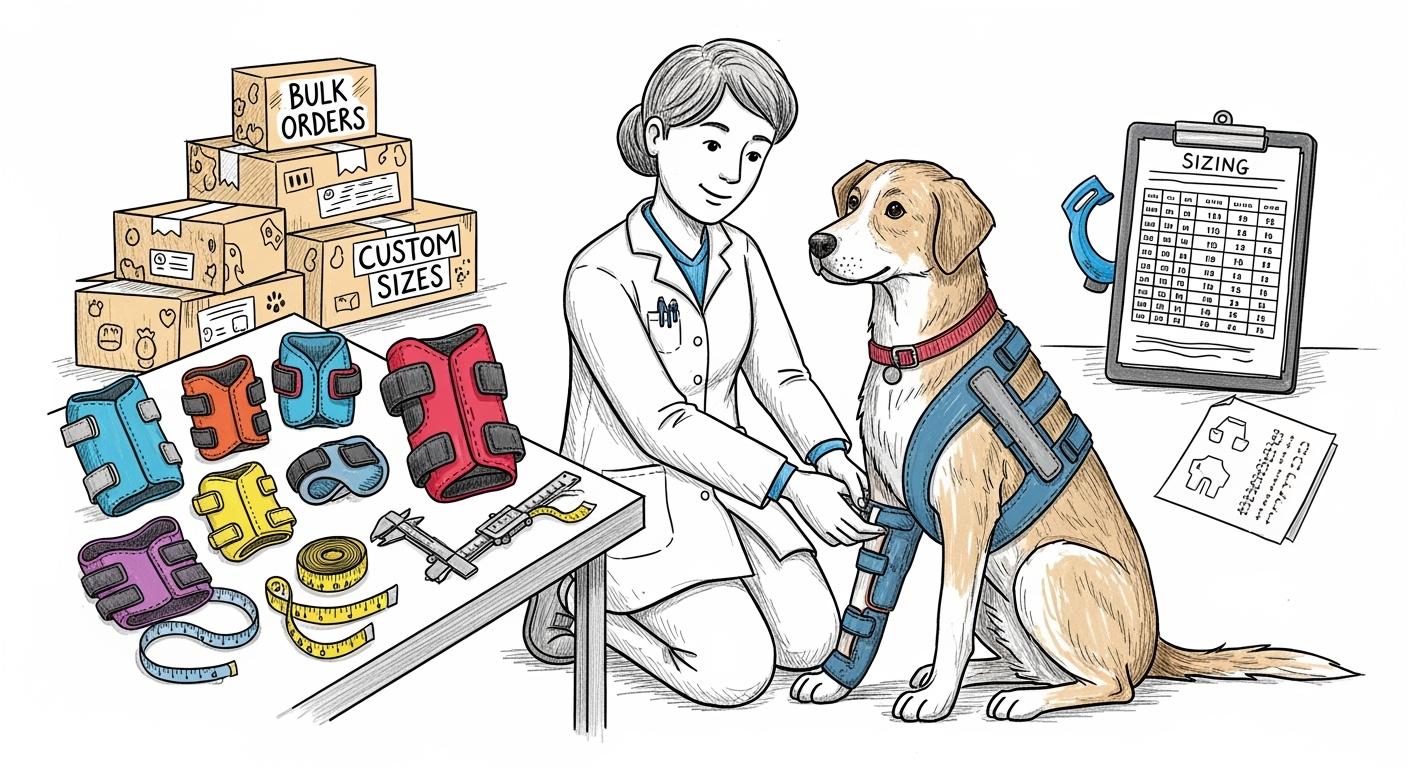
You have a tough job when you order lots of support gear for dogs. Picking good veterinary rehab equipment suppliers is important for each clinic. Getting the right size and keeping skin safe helps your work and keeps dogs comfortable. You need to look at every product to check quality and fit before you put it on your shelves. Tell your staff that braces cannot take the place of a veterinary diagnosis. If you notice skin problems, swelling, or pain, stop using the brace and talk to a vet.
Key Takeaways
Pick suppliers who have easy sizing systems. This helps stop fitting problems. Always look at their size charts. Compare them with your clinic’s records.
Make skin safety important. Choose braces made from breathable and hypoallergenic materials. Check often for skin irritation or discomfort.
Do trial orders before buying a lot. Test the fit and comfort on demo dogs. This makes sure the braces are good quality.
Set up a clear return policy and a way to keep records. This helps you handle returns well. It also keeps your clinic neat.
Teach your staff how to fit braces right and check skin every day. Give them written rules. This helps everyone give the same care.
Understanding Veterinary Rehab Equipment Suppliers
Product Categories for Dogs
When you look for veterinary rehab equipment suppliers, check what products they have for your clinic. Most suppliers sell braces, harnesses, recovery wear, bandages, and anti-slip gear. These items help you from getting new stock to sending dogs home. The table below shows the main product categories you should get from good suppliers:
Product Category | Examples |
|---|---|
SUPPORTIVE HARNESSES | Belly Bands Systems, Combination Front & Back Harness, Life Jackets, Amputation Support Harness |
BRACES | Knee, hock, and carpal braces, custom-fit or adjustable options |
RECOVERY WEAR | Recovery suits, sleeves, anti-lick garments |
BANDAGES & FIXATION | Cohesive wraps, splints, wound protection |
ANTI-SLIP TRACTION | Non-slip socks, shoes, floor traction accessories |
You can learn more about each category by checking the dog braces, mobility harness/sling, recovery suit/sleeve, anti-lick options, and non-slip traction pages on our website. Always tell your staff that braces do not replace a vet’s diagnosis. If you see skin problems, swelling, or pain, stop using the product and call a vet.
Supplier Types and Service Models
There are three main types of veterinary rehab equipment suppliers. Direct manufacturers make braces and gear in their own factories. They usually have better prices and can make custom orders for your clinic. Distributors get products from many brands and give you lots of choices. This helps if you want to compare different braces or recovery wear. Custom solution providers create special braces for unique cases. They work with your team to fit each dog’s needs.
Tip: Ask every supplier about their sizing systems and after-sales support before you order a lot. This helps you avoid wrong sizes and makes sure your patients get the right fit.
Always check the supplier’s paperwork and return policy. This keeps your clinic safe from surprise costs and helps your work go smoothly. If you notice heat, discharge, bad smell, or more pain under a brace, stop using it and talk to a vet right away.
Common Procurement Pitfalls in Canine Rehabilitation
When you buy braces and recovery gear, you want to avoid mistakes. These mistakes can make your work harder and hurt your patients. Here are some problems you should look out for:
Sizing Inconsistencies
Suppliers use different sizing systems for braces. A medium from one brand might fit like a small from another. This can cause you to have the wrong sizes in stock. It also wastes time when you try to fit dogs. Always check the supplier’s measurement guides. Compare them with your clinic’s records. Try a few sizes from each batch before you order a lot. This helps you find mistakes early and keeps returns low. You can see sizing guides and tutorials on our dog braces and mobility harness/sling pages.
Skin Safety and Irritation Risks
Skin safety is very important for dogs in rehab. Braces that do not fit well can hurt the skin. They can cause pressure sores, friction burns, and moisture problems. These issues may lead to hair loss, skin color changes, or open wounds. Studies show half of dogs after surgery get skin problems in three months. Some materials trap heat and moisture, like SBR. Medical-grade neoprene lets skin breathe better. Always check the skin under the brace two times a day. Look at places where the brace presses on the skin. If you see redness, swelling, heat, discharge, smell, or pain, stop using the brace. Call a vet for help. For more tips, visit our recovery suit/sleeve and anti-lick options pages.
Note: Braces do not replace a vet’s diagnosis. Stop using the brace and talk to a vet if you see skin problems or pain.
Documentation and Return Policy Issues
Missing instructions and paperwork can slow down your rehab work. Some suppliers do not give clear fitting guides or return rules. This can confuse your staff and upset clients. Always ask for product instructions and a written return policy before you order a lot. Try to keep your return rate under 3%, mostly because of sizing mistakes. You can find more about returns and support on our non-slip traction and bandage pages.
If you watch out for these problems, you can help your clinic work better. You will also help dogs heal safely after surgery.
Building a Canine Rehab Product Matrix
Making a simple product chart helps your clinic stay ready. You need rehab gear for every step of a dog’s recovery. Stock items that help dogs after surgery and during daily exercises. This way, your clinic can help many cases fast. It also keeps work safe and smooth.
Braces and Support Harnesses
You should have joint braces for dogs in your clinic. These include knee, hock, and carpal braces. Braces keep joints steady and help dogs heal. Some braces can be adjusted or made to fit each dog. New ideas like 3D-printed orthotics use light and airy materials. They fit well and help stop skin problems. These braces make dogs more comfortable as they get better. Support harnesses help dogs with weak back legs or arthritis. Mobility slings and combo harnesses are good choices. For more info, check our dog braces and mobility harness/sling pages. Remember, braces do not replace a vet’s checkup. If you see skin trouble, swelling, or pain, stop using the brace and call a vet.
Recovery Wear and Protective Gear
Recovery suits and sleeves keep wounds and surgery spots safe. Anti-lick clothes stop dogs from bothering healing skin. These are important after surgery and for dogs with sensitive skin. Pick recovery wear made from soft, airy materials. This helps lower the chance of skin problems. Staff should look at the skin under these clothes two times a day. See more choices on our recovery suit/sleeve and anti-lick options pages. Always stop using the item and talk to a vet if you see redness, heat, or discharge.
Bandages and Anti-Slip Equipment
Bandages and wraps hold dressings in place and help small injuries. Anti-slip socks, shoes, and floor grips help dogs walk safely. These items lower the chance of falls and help with exercise. For more info, visit our bandage and non-slip traction pages. Staff should check with clients to make sure items are used right and fix any problems.
Product Matrix and Application Scenarios Table:
Product Type | Post-Surgery | Arthritis | Hind Limb Weakness | Skin Sensitivity |
|---|---|---|---|---|
Joint Braces for Dogs | ✔ | ✔ | ✔ | ✔ |
Mobility Harness/Sling | ✔ | ✔ | ✔ | |
Recovery Suit/Sleeve | ✔ | ✔ | ||
Anti-Lick Options | ✔ | ✔ | ||
Non-Slip Traction | ✔ | ✔ | ✔ |
Use this table to help pick products, try new items, train staff, and teach clients. Always put safety first and ask for feedback to keep getting better.
Evaluating Veterinary Rehab Equipment Suppliers
Picking the right supplier for dog braces and recovery gear is important. It can help your clinic do well. You want every product to be safe, fit well, and give good support. Check each supplier step by step before you buy a lot. This helps you avoid mistakes and keeps dogs safe.
Quality and Safety Standards
Start by asking suppliers how they check quality. Good suppliers use batch management and traceability systems. These systems let you track every brace from the factory to your clinic. You can see how these work in the table below:
Feature | Description |
|---|---|
Batch History Screen | See all batch details for traceability and recall management. |
Tracking Across Batch Numbers | Assign and track batch numbers for every movement. |
Top-Down and Bottom-Up Traceability | Investigate supply chain issues from any point. |
Mock Recalls | Run practice recalls to meet audit needs. |
Flexible Batch Management | Record batches as items arrive. |
Supplier Batch Tracking | Keep supplier batch numbers for full compliance. |
Compliance Support | Use batch rules to meet regulations. |
Quality Control and Release | Only release stock after passing quality checks. |
Controlled Stock Release | Move only compliant goods into inventory. |
Ask your supplier if they follow these steps. This makes sure each batch is the same and helps with recalls. Always check that braces are safe for dogs. Look for clinical papers and certificates. If you see skin problems, swelling, heat, discharge, smell, or pain, stop using the brace and call a vet. For more safety tips, visit our dog braces and recovery suit/sleeve pages.
Sizing Systems and Measurement Guides
Sizing mistakes are a big reason for returns. You need suppliers who give clear size guides for joint braces for dogs and other rehab gear for dogs. Ask for sample size charts and videos. Compare these with your clinic’s records. Good suppliers have breed sizes or adjustable options. This helps you fit more dogs and return less.
See if you can check 3–5% of each batch for size. This helps you find mistakes before you buy a lot. Train your staff to use the supplier’s tools. For more sizing help, see our mobility harness/sling and anti-lick options pages. Remember, braces do not replace a vet’s checkup. If you see skin problems or pain, stop using the brace and talk to a vet.
Clinical Support and After-Sales Service
Good clinical support makes some suppliers better than others. Look for suppliers who give guides for sizing, fitting, and cleaning braces. These guides help your team use the gear safely and keep dogs happy. Good suppliers also have clear warranty and return rules. This stops confusion and helps with returns.
Ask if the supplier gives training or scripts for your staff. These tools help you explain warranty rules to clients and make them happy. For more help, visit our recovery suit/sleeve and non-slip traction pages. Always tell clients that braces do not replace a vet’s care. Stop using any product if you see skin trouble or pain.
Tip: Use a supplier evaluation scorecard (Supplier Evaluation Scorecard) to compare choices. Score each supplier on sizing, skin safety, batch checks, training, and after-sales rules. This helps you pick the best one for your clinic.
Supplier Evaluation Scorecard Example
Evaluation Item | Excellent (3) | Good (2) | Needs Improvement (1) |
|---|---|---|---|
Sizing System | |||
Skin Safety Materials | |||
Batch Consistency | |||
Training Support | |||
After-Sales Terms |
Fill out this scorecard for each supplier. Go over it with your team before you choose. For more on picking products and training staff, see our dog braces, mobility harness/sling, and recovery suit/sleeve pages.
You can build a strong supply chain for your clinic by following these steps. Always put safety first. If you see skin problems, swelling, or pain, stop using the brace and call a vet. This way, you give good products and high-value rehab gear to every dog.
Sizing and Fit for Dogs in Bulk Orders

Getting the right size is very important when you order many braces and recovery gear. You need a simple way to measure, pick, and check each item before you put it on your shelves. This makes sure every dog gets a good fit. It also means you will have fewer returns and dogs will heal better.
Measurement Points and Tools
You should always use a soft measuring tape to size dogs for braces. Make sure the dog stands up straight and puts weight on all legs. Ask someone to help hold the dog if needed. Measure each spot two times to be sure you are right. Write down the dog’s weight and breed on a form. Measure both legs, even if you only need one brace.
Here are the main places you need to measure for braces and rehab gear for dogs:
Chest circumference: Wrap the tape around the widest part of the chest, just behind the front legs.
Thigh circumference: Put the tape halfway between the knee and groin.
Height: Measure from the bottom of the back paw to the top of the hip.
Neck circumference: Put the tape where the collar goes.
Waist circumference: Measure just after the last rib.
Leg measurements: Measure at the elbow and four inches below the elbow for front limb braces.
Thigh length: Measure from the groin to the knee.
Knee length: Measure from the knee to the tibial tuberosity.
Tibia length: Measure from the knee to the back of the hock.
Tip: Use a soft cloth tape, not a ruler. Always write your results on a form for checking and follow-up.
You can find more sizing guides and how-to videos on our dog braces, mobility harness/sling, and recovery suit/sleeve pages. Remember, braces do not take the place of a vet’s checkup. If you see skin problems, swelling, heat, discharge, bad smell, or pain, stop using the brace and call a vet.
Breed-Specific and Adjustable Options
Braces made for certain breeds help fit different dogs better. For example, a French Bulldog and a Greyhound need different neck and chest sizes. Adjustable braces let you fit more dogs with fewer products. This helps you save space and money.
Breed-specific braces fit better and feel more comfortable because they match the dog’s body shape.
Adjustable straps and closures let you change the fit for each dog.
Custom sensor spots based on breed shape help you check health during rehab exercises.
You should always write down the breed and weight when you take in a dog. This helps you pick the right size and style. Breed-specific and adjustable braces make it easier to help many kinds of dogs in your clinic. For more about these products, visit our dog braces and mobility harness/sling pages.
Size Sampling and Acceptance Process
You need a clear way to check every bulk order of rehab gear. Start by picking 3–5% of each batch to check the size. Open the boxes and measure the items using your supplier’s size chart. Try the braces on demo dogs or mannequins in your clinic. This helps you find mistakes before you put the gear on your shelves.
Use a checklist for every delivery.
Write down any size problems and tell your supplier.
Only keep batches that match your clinic’s size rules.
Note: Try to keep your return rate under 3%, mostly because of size mistakes. This keeps your work smooth and helps you give good products to every dog.
You can find sample checklists and trial order guides on our dog braces, recovery suit/sleeve, and anti-lick options pages. Always teach your staff to check fit and look at the skin every day. If you see any skin problems, stop using the brace and talk to a vet.
By doing these steps, you make a strong sizing and checking process for braces and other rehab gear for dogs. This helps dogs heal better, keeps them safe, and makes your clinic run well.
Skin Safety and Material ConsideratioAnti-Chafing and Breathable Designs
Dogs need to feel good while they heal. Braces with anti-chafing and breathable designs help stop skin problems. Pick braces with smooth edges and soft linings. These parts lower rubbing and help stop sores. Breathable fabrics let air move and keep skin dry. This is very important if dogs wear braces for a long time.
Here is a table to help you compare common materials and design features:
Material Type | Benefits | Considerations |
|---|---|---|
Breathable Fabrics | Flexible, lightweight, comfortable for daily wear | May wear out quicker with heavy use |
Neoprene | Wicks moisture, prevents skin irritation | Less durable than plastic |
Polyester Blends | Durable, comfortable, easy to clean | Fit must match the dog’s shape |
Plastic Braces | Strong support for severe injuries | Less flexible, may restrict movement |
Adjustable Straps | Custom compression, fits swelling changes | Needs proper adjustment for comfort |
You can read more on our dog braces, mobility harness/sling, and recovery suit/sleeve pages. Remember, braces do not take the place of a vet’s checkup. If you see skin problems, swelling, heat, discharge, smell, or pain, stop using the brace and call a vet.
Hypoallergenic and Veterinary-Approved Materials
Pick braces made from hypoallergenic and veterinary-approved materials. These materials help stop allergies and skin problems. Neoprene and good polyester blends are smart picks. They keep skin dry and feel soft during healing. Adjustable straps help you fit the brace to each dog. This is important for high-value rehab gear and rehab gear for dogs.
When you get new stock, check the material labels. Ask your supplier for proof that the braces are safe. Only keep braces that meet your clinic’s safety rules. For more info, visit our anti-lick options and non-slip traction pages.
Daily Skin Check and Issue Handling
You need to check dogs’ skin every day during rehab. Look under all braces and recovery gear two times a day. Pay close attention to spots where the brace touches the skin. Watch for redness, swelling, heat, discharge, smell, or pain. If you see any of these, stop using the brace and call a vet.
Follow these easy steps:
Brush the dog’s fur two or three times a week.
Use gentle, hypoallergenic shampoo for baths.
Look at the skin during grooming for early signs of trouble.
Check ears and paws once a week for problems.
If you find a skin problem, take off the brace right away. Clean the spot and tell your supplier about the issue. Use your clinic’s return steps for any bad braces. Try to keep your return rate under 3% by doing these things. For more help, see our recovery suit/sleeve and dog braces pages.
Safety Tip: Braces do not take the place of a vet’s checkup. Always stop use and talk to a vet if you see skin problems or pain.
Trial Orders and In-Clinic SOPs
Sample Packs and Real-World Testing
Start with a trial order before buying many braces. Try the braces in your clinic for 7–14 days. This helps you see how they fit real dogs. Work with a veterinary rehabilitation therapist or certified orthotist to measure dogs. For rigid braces, you might need to make a cast mold. When you get the sample pack, go to a fitting session. Learn how to put on each brace. Watch how the braces fit as dogs move and play. This helps you know if the braces work for your clinic. You can find more details on our dog braces and mobility harness/sling pages.
Trial Order Checklist:
Measure dogs at every needed spot.
Write down breed, weight, and limb info.
Put braces on demo dogs or mannequins.
Watch for changes in fit during rehab.
Note any skin or movement problems.
Safety Tip: Braces do not replace a veterinary diagnosis. Stop use and call a vet if you see skin breakdown, swelling, heat, discharge, odor, or pain.
Staff Training and Discharge Guidance
Teach your staff how to use rehab gear. Give written summaries with clear diagnoses and treatment steps. Go over all instructions and medicines with pet owners. Give handouts and pictures to help owners care for their pets at home. For serious cases, call owners to check on recovery. Use our recovery suit/sleeve and anti-lick options pages for more discharge tips.
Discharge Guidance Points:
Give written care instructions with clinic contact info.
Go over how to put on and take off braces.
List all medicines and how to use them.
Tell owners what to watch for at home.
Plan follow-up checks for dogs using braces or exercise gear.
Return and Exchange Protocols
Make a clear plan for returns and exchanges of rehab gear. Use one area to receive all shipments. Teach staff to check each box for damage, expiration dates, and correct labels. Only accept shipments from quality suppliers who follow your agreements.
Best Practice | Description |
|---|---|
Designated Receiving Area | Get all rehab gear for dogs in one place to check quality. |
Employee Training | Show staff how to handle and check braces and recovery shipments. |
Shipment Inspection | Look for damage, expiration, and correct labels before accepting. |
Quality Suppliers | Pick suppliers who send braces as promised. |
Purchase Agreements | Use agreements that let you check and return items. |
Note: Always check the skin under braces two times a day. Stop use and call a vet if you see any signs of irritation or pain.
For more on product categories, visit our dog braces, mobility harness/sling, recovery suit/sleeve, anti-lick options, and non-slip traction pages.
Bulk Procurement and Long-Term Supplier Partnerships
Restocking and Customization
You need a simple plan for restocking braces and rehab gear. Keep track of how many items you have for each product. This includes recovery suits and anti-lick options. Set reorder points by looking at what your clinic uses and what patients need. Many suppliers let you add your clinic logo or change sizes for special cases. Always ask if the supplier can customize braces without slowing down shipping. Check the dog braces and mobility harness/sling pages for more info about restocking and custom orders.
Tip: Custom braces help more dogs with special rehab needs. Make sure your supplier gives high-value rehab gear that fits your clinic’s work.
Compliance and Documentation
You must keep good records for every batch of rehab gear for dogs. Write down each delivery, including batch numbers and product details. Save certificates for veterinary-approved materials and safety standards. Use a checklist to make sure everything meets rules before you accept new braces or exercise gear. This keeps your clinic safe and helps you act fast if you need to recall a product. Visit the recovery suit/sleeve and non-slip traction pages for more info on compliance and documentation.
Compliance Checklist | Description |
|---|---|
Batch Number Tracking | Write down every batch for tracking |
Material Certificates | Save proof of veterinary-approved materials |
Safety Documentation | Keep clinical safety papers |
Return Policy Records | File supplier return and warranty terms |
Safety Alert: Braces do not replace a vet’s diagnosis. Stop use and call a vet if you see skin problems, swelling, heat, discharge, smell, or pain.
Ongoing Supplier Evaluation
You should check your suppliers often to keep your rehab program strong. Look at the product model and brand for each order. See how long you have worked with each vendor. Ask about the size of their veterinary team and what training they give after you buy. Good suppliers offer technical help, warranty levels, and loaner braces to stop delays.
Check product models and brands for quality and fit.
Look at how long you have worked with each supplier.
Think about the supplier’s veterinary team size.
Review training and technical support choices.
You can use a scorecard to compare suppliers and track how they do over time. This helps you make better choices for future bulk orders. For more tips, visit the dog braces, recovery suit/sleeve, and anti-lick options pages.
Note: Always watch how suppliers do to keep rehab safe and helpful for dogs.
Practical Tools for Canine Rehab Procurement
You need easy tools to help buy braces and recovery gear for dogs. These checklists and templates help your clinic team do each step right. They guide you from picking suppliers to teaching staff. Use these tools to make work smoother and avoid mistakes with canine rehab gear.
Supplier Questionnaire Template
Ask every supplier important questions before you buy braces or rehab gear for dogs. This helps you compare choices and pick the best rehab gear for your clinic.
Question | Why Ask? |
|---|---|
What sizing system do you use? | Makes sure braces fit dogs well |
Do you provide batch traceability? | Helps track safety and quality |
What materials are used? | Checks for skin safety and healing |
Can you supply clinical documentation? | Shows rehab standards are met |
What is your return policy? | Lowers risk of wrong sizes |
Do you offer staff training? | Helps clinic work better |
Tip: Always ask for sample packs before you buy a lot. Visit our dog braces, mobility harness/sling, and recovery suit/sleeve pages for more info.
Trial Order and Acceptance Checklist
Test braces and exercise gear in your clinic before you buy many. Use this checklist to help with your trial order and checking process.
Measure dogs using the supplier’s guide.
Put braces on demo dogs or mannequins.
Look for skin problems, swelling, heat, discharge, smell, or pain.
Write down how each product fits and feels.
Check 3–5% of each batch for size.
Go over the supplier’s paperwork and batch numbers.
Safety Alert: Braces do not replace a vet’s checkup. Stop use and call a vet if you see any skin problems.
Staff Training and Discharge SOPs
Teach your staff to use rehab gear for dogs safely. Show pet owners how to care for their dogs at home. Follow these steps for good rehab and recovery.
Go over fitting instructions for braces and recovery wear.
Give written care tips to pet owners.
Plan daily skin checks and follow-up calls.
Share links to dog braces, anti-lick options, and non-slip traction pages for more help.
Note: Always stop using braces if you see skin trouble or pain. Tell owners to call a vet if they have worries.
These tools help you keep track of gear, help dogs heal, and work well with suppliers. Download templates and checklists from our product pages to help your clinic’s rehab program.
You can make a good plan for braces and rehab gear for dogs by using easy steps. Measure dogs the right way so sizes fit well. Check the skin every day to keep dogs safe. Try braces with sample packs before you buy a lot. Use checklists to help with inventory and trial orders. Keep checking suppliers to make sure dogs get the best care after surgery. Download our supplier questionnaire and trial order checklist. You can also contact us for help with sizing, bulk orders, and more rehab gear for your clinic.
FAQ
How do you check the quality of dog braces in a bulk order?
You open each shipment in your receiving area. You measure 3–5% of braces using the supplier’s size chart. You check for defects and compare with your clinic’s records. For more details, see our dog braces and mobility harness/sling pages.
What should you do if a dog shows skin irritation under a brace?
You stop using the brace right away. You check for redness, swelling, heat, discharge, odor, or pain. You contact a vet for advice. Braces do not replace a veterinary diagnosis. See our recovery suit/sleeve and anti-lick options pages for more tips.
Why is a trial order important before a bulk purchase?
A trial order lets you test fit, comfort, and skin safety in real clinic cases. You can adjust your product matrix before buying more. Visit our dog braces and non-slip traction pages for trial order checklists.
How do you train staff for brace fitting and discharge guidance?
You use written SOPs and hands-on sessions. You review fitting steps, daily skin checks, and owner instructions. You share links to mobility harness/sling and recovery suit/sleeve pages for ongoing training.
What is the best way to handle returns and exchanges?
You set up a clear process. You inspect all returns for damage and batch numbers. You keep your return rate under 3%, mostly for sizing issues. For more, see our dog braces and bandage pages.
