
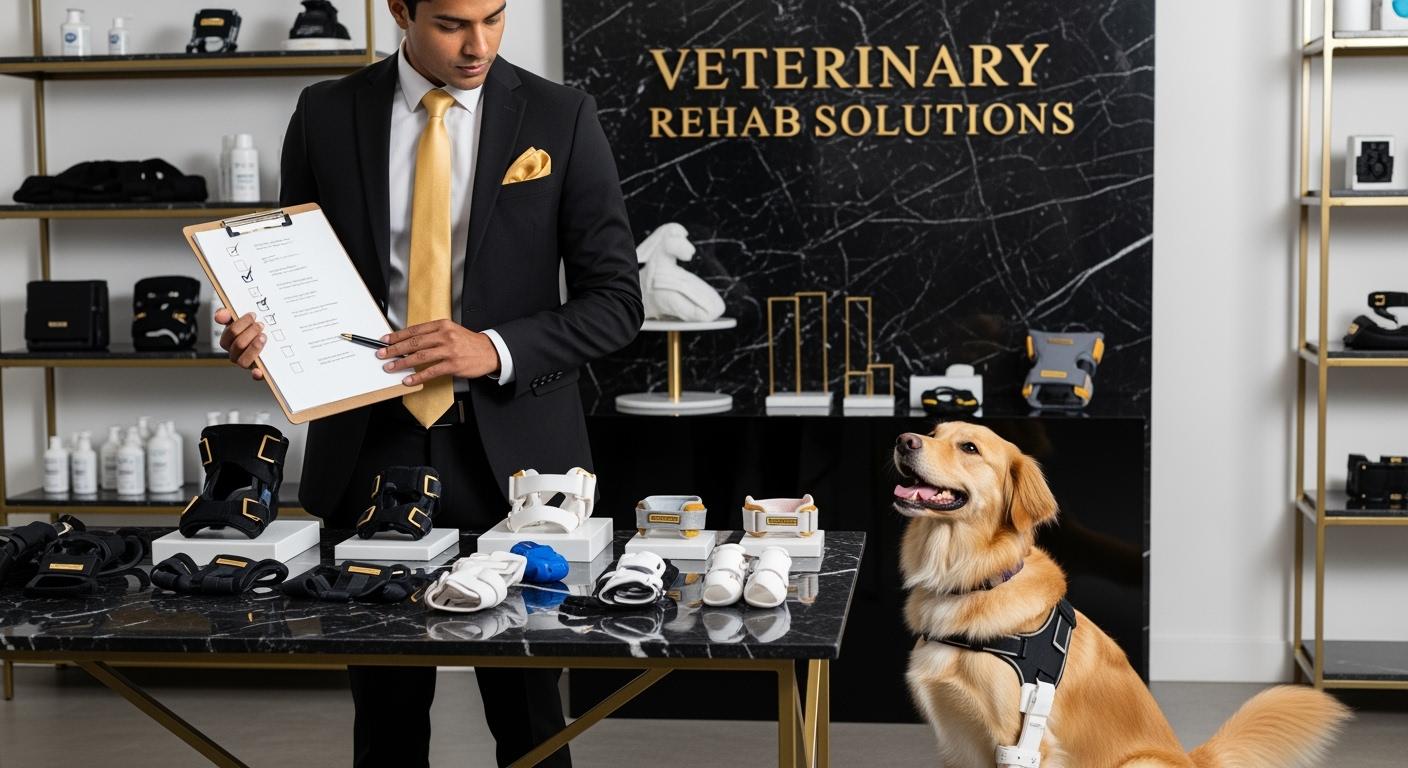
You have big choices when picking veterinary rehab equipment wholesale for your clinic, store, or business. Looking at your practice helps you not make expensive mistakes. Braces that do not fit or are bad quality can cause safety problems. Checking what you need makes sure each equipment buy fits your goals. When you look at your practice again, you see how a good partner means fewer returns. Setting up a demo before you buy lets you check product quality and vendor help. Veterinary rehab equipment wholesale needs careful checking to keep dogs safe and protect your reputation.
Key Takeaways
Always measure every dog with the vendor’s guide before you order braces. Correct measurements stop fit problems and keep dogs safe.
Pick the right rehabilitation equipment for each dog’s needs. This helps dogs move better and live happier lives.
Begin with small orders when you try new vendors. This lets you check product quality and vendor help before you buy more.
Understanding Veterinary Rehab Equipment Wholesale
Wholesale Models for Dog Rehab Gear
There are different ways to buy veterinary rehab equipment. Brand-direct programs let you talk to the manufacturer. You get new products and help from them. Distributors have many types of gear for your clinic or store. They help you keep track of what you have. OEM and ODM programs let you change products for your brand or special needs. Clinic partner programs give you training and handouts for patients. They also help your staff learn more. Each way works for different patients and business needs. You should look at each program and see which one fits your goals.
Dog Braces vs. General Pet Accessories
Dog braces are not the same as general pet accessories. Braces are medical devices used for veterinary rehabilitation. They help weak joints and make it easier for dogs to move. Medical-grade braces can lower pain and help weak joints. Custom-fit stifle orthoses help dogs walk with less pain. Braces used by vets can help dogs feel more confident and independent. General accessories do not give this kind of support or safety. Your staff needs to know the difference so you can help your patients better.
Role in Rehabilitation Plans
Dog braces are important in rehabilitation plans. You use them to help joints and make movement better. Each dog gets a plan that fits their needs. Problems can happen soon after you start using a brace. So, you need to fit them carefully and check on the dog often. A brace that fits well gives even pressure and keeps things lined up. This helps your exercise programs work better. Braces do not find injuries, but they help you reach your rehabilitation goals.
Table: Dog Braces vs. Other Therapeutic Equipment in Rehabilitation
Benefit | Dog Braces | Other Therapeutic Equipment |
|---|---|---|
Joint Support | Gives strong help to weak joints | May help, but not always focused |
Mobility Improvement | Makes movement easier and less painful | Might not help movement directly |
Quality of Life Enhancement | Helps dogs feel braver and more free | Depends on the equipment type |
You should always pick the right equipment for your rehabilitation needs to get the best results.
Demand Drivers for Rehabilitation Equipment
Prevalence of CCLD and OA in Dogs
Many dogs come to your clinic with joint problems. Two common reasons are cranial cruciate ligament disease (CCLD) and osteoarthritis (OA).
The study says that even if treatment for CCLD works well, the disease can still cause OA and pain. This pain can make a dog’s life much harder.
If you want to guess how many dogs need braces for CCLD, use this formula:
Estimated yearly CCLD brace cases = total dog patients × 3–5%.
So, if you see 1,000 dogs each year, about 30 to 50 may need help for CCLD.
The market for veterinary rehab services is getting bigger in the U.S.:
It may grow by 11.4% from 2024 to 2025.
It may grow by 10.6% from 2025 to 2029.
Another report says it could grow by 11.7% from 2023 to 2030.
Mobility Support Needs Across Ages
Dogs of all ages sometimes need help moving. Older dogs often need more support. Big dogs like German Shepherds and Labrador Retrievers can also have trouble walking. Health problems like arthritis and hip dysplasia make it hard for these dogs to move. You can help by picking the right equipment for each dog’s age and size.
Older dogs need more help to move.
Big breeds have more trouble with movement.
Arthritis and hip dysplasia are main reasons for using animal mobility equipment.
Matching Conditions to Product Categories
You need to pick the right rehab product for each dog’s problem. Treating osteoarthritis often starts with simple and cheap tools. You can use braces, sleeves, or other devices to help dogs walk better. Physical therapy helps dogs move after injuries or as they get older. You support your patients by choosing products that fit their needs. Safe exercises and good equipment help dogs get stronger and move with less pain.
Note: Always pick products that match the dog’s problem and use them safely. This keeps dogs comfortable and helps you reach your rehab goals.
Product Map for Veterinary Therapeutic Equipment
Orthoses: Uses and Fit Risks
Orthoses are a big group of veterinary therapeutic equipment. Dog braces help weak joints and let dogs move better when healing. These devices are important in many treatment plans. You often use them for knees, hocks, wrists, or elbows. When you put on a brace, watch for skin problems, pressure sores, and slipping. About half of dogs may get skin issues early if the fit is not managed. You need to check the fit often and follow a break-in plan. Regular checkups help you find problems early and keep dogs safe.
Tip: Always use a measurement guide and fitting checklist from your vendor. This helps you avoid common fit risks and improves treatment outcomes.
Type of Orthosis | Common Fit Risks | Notes |
|---|---|---|
Dog Braces | Skin irritation, pressure sores, brace slippage, mechanical wear, patient intolerance | Problems can happen in about half of dogs in the first weeks. Careful fitting and regular checkups are needed. |
Recovery Sleeves and Wraps: Benefits and Cautions
Recovery sleeves and wraps are another type of veterinary therapeutic equipment. These products protect cuts, stop licking, and give light pressure. Vet wraps help small sprains and hold dressings in place. Hock braces give strong support and stop bad movement. Remember, sleeves and wraps do not give strong support. They are not for big injuries. Overheating and trapped moisture can happen if you do not follow wear-time rules. Always check the skin before and after each use.
Use recovery sleeves to protect cuts and give light support.
Pick wraps for small injuries or after surgery.
Do not use these for problems that need strong support.
Type of Support | Benefits | Cautions |
|---|---|---|
Vet Wrap | Light pressure and protection; helps small sprains and dressings | Not much support; not for big injuries |
Hock Brace | Strong support; stops bad movement; good for long-term problems and after surgery | Needs good fitting; not needed for small problems |
Assisted Lifting Gear: Applications and Safety
Assisted lifting gear is important for dogs who have trouble moving. Lifting harnesses and slings help dogs walk, go up stairs, or heal after surgery. These products help dogs move safely while getting better. You must check that handles are in the right place and do not press on sore spots. Some harnesses are made for special jobs like water rescue or police work. Always use the vendor’s fitting guide and safe lifting tips.
Use lifting gear for weak, old, or healing dogs.
Make sure the harness fits well and does not hurt the dog.
Teach people how to lift dogs safely to avoid injury.
Product | Best For | Key Features | Pros | Cons |
|---|---|---|---|---|
Rear Support Harness | Everyday movement | Rear-lift help, easy handles | Good for stairs and walks | May hurt if not fitted right |
Full-Body Harness | Very weak dogs | Full-body help, adjustable straps | Good for big or still dogs | Can be heavy |
Water Rescue Harness | Water safety | Floats, dries fast | Safer in water | Not for land use |
Product Category Comparison Table
Table 1: Product Category Comparison Table
Category | Best for | Common pitfalls | What the vendor must provide |
|---|---|---|---|
Orthoses (Dog Braces) | Joint support during healing and recovery | Wrong size, skin problems, slipping | Measurement guide, fitting checklist, break-in plan, troubleshooting guide |
Recovery Sleeves & Wraps | Cut protection, small injuries, after surgery | Overheating, moisture, bad fit | Material care tips, wear-time rules, skin check reminders |
Assisted Lifting Gear | Help moving for weak or healing dogs | Pressure on sore spots, bad handle spots | Fitting guide, safe lifting tips, when not to use |
You should always pick the right equipment for each dog’s needs. This helps dogs heal safely and get good treatment. Always check that your vendor gives clear guides and help for every product type.
Fit, Comfort, and Skin Safety in Wholesale Orders
Causes of Rubbing and Prevention
You want every dog to feel good during therapy. Rubbing and skin problems can happen if a brace does not fit well or the material is rough. Dogs move a lot in therapy, so small fit problems can turn into big ones. If a brace slips or straps are too tight, the skin can get sore. Wetness under the brace can also make the skin hurt. You need to watch for these problems, especially in the first three months.
The best way to stop rubbing is to pick braces with smart designs. Look for materials that stay soft and cool during therapy. The table below shows which features help most:
Material/Feature | Benefit |
|---|---|
High-Quality Neoprene | Lasts long and feels comfortable |
Sandwich Mesh Fabric | Lets air move and keeps skin cool |
Secure Double-Layer Velcro | Stays closed for all sizes |
Gentle Non-Woven Fabric Lining | Feels soft against the skin |
Flat Cloth Strip Edging | Stops rubbing and irritation |
You should always check that the brace has these features. This helps lower the chance of rubbing during therapy and other veterinary therapeutic modalities. You also need to follow a break-in plan. Start with short sessions and add more time only if the skin stays healthy. This way works for all therapeutic modalities, like pain management and mobility support.
Skin Risk Baseline and SOPs
Skin safety is very important in every therapy session. About half of dogs may get skin problems early if you do not manage fit, break-in, and skin care. You need a clear standard operating procedure (SOP) for every veterinary therapeutic modality. This SOP should tell you how to check the skin, fit the brace, and change therapy if you see problems.
Follow these steps for every new brace:
Measure the dog using the vendor’s guide before you order.
Fit the brace snug but not tight. Make sure it does not slip during therapy.
Start with 10–15 minutes per session in week one.
Check the skin before and after every therapy session.
Add more wear time only if the skin looks normal and the dog moves well.
Watch for redness, swelling, or sores. If you see any, stop therapy and check the fit.
Tip: Always keep extra padding and clean liners ready. This helps you act fast if you see early signs of rubbing during therapy.
You should train your staff to follow these steps for all therapeutic modalities. This keeps dogs safe and helps you avoid returns or complaints.
Vendor Requirements: Guides and Troubleshooting
You need strong help from your vendor for every wholesale order. The best vendors give you clear guides for measuring, fitting, and break-in. They also give you help for common therapy problems. A good brace supports therapy, comfort, and safety. It should feel snug enough to hold the joint but never so tight that it stops blood flow. If the brace feels loose, it will not help with therapy. If it feels too tight, it can cause more problems.
Top vendors offer these troubleshooting steps:
Start with short wear times to help your dog get used to therapy gear.
Use treats to make therapy a good experience.
Add more wear time slowly while you watch for discomfort.
You should also look for vendors who give you a full set of guides for all veterinary therapeutic modalities. These guides should include:
How to check for rubbing or chafing during therapy.
How to adjust the brace for better comfort.
When to stop therapy and call the vet.
Type of Brace | Advantages | Disadvantages |
|---|---|---|
Custom-made Orthotics | Tailored fit, better support for therapy | Higher price, longer wait times |
Off-the-shelf Options | Easier to get, costs less for therapy | May not give the same comfort or work as well |
You should always watch for signs of rubbing or chafing during therapy. Change the brace as needed to keep therapy safe and helpful. This way works for all veterinary therapeutic modalities, like pain management and mobility support. Good vendor help lets you fix problems fast and keeps your therapy program working well.
Policies: Lead Times, Returns, and Custom Orders
Custom Build Times and Planning
You should plan before you order custom dog braces. Most vendors need about two weeks to make a custom brace. Some can finish in just 3–5 business days. Others might take up to four weeks. Always ask how long it will take before you order. This helps you know when your order will arrive. If you need braces for a busy time, order early so you do not wait too long. Good planning helps your patients stay on their rehab schedule.
Return Windows and Unused Condition
You must check the return policy before you buy wholesale. Most vendors let you return off-the-shelf gear if it is unused and still in the box. You usually have 14 to 30 days to send things back. You need to keep your receipt for all returns. Custom products and perishable goods cannot be returned. Your staff should check every item as soon as it comes in.
Tip: Only return items that are clean, unused, and in the original box.
Policy Provider | Return Period | Condition Required | Exceptions |
|---|---|---|---|
Vendor A | 30 days | Unused, original packaging | Custom gear, perishable goods |
Vendor B | 14 days | Unused, original packaging | Custom gear, perishable goods |
Custom Gear: Fit Adjustments vs. Refunds
Custom dog braces have special rules. Most vendors do not give refunds after they start making a custom brace. If you cancel early, you might get a credit, but there could be a fee. Vendors usually give free fit adjustments for 120 days after you get the brace. After 120 days, you may have to pay for changes. Always ask about fit adjustment rules before you order custom gear. This helps you help your patients and avoid problems.
Free fit adjustments for custom braces are common in the first 120 days.
Refunds are rare for custom gear after production starts.
You might get a credit if you cancel early, but there may be a fee.
Note: Always read vendor rules for custom orders to protect your clinic and your clients.
Piloting a Vendor for Veterinary Rehab Equipment Wholesale
Small Order Pilots and Tracking Outcomes
It is smart to start with a small order when you try a new vendor for veterinary rehab equipment. This lets you see if the products are good and if they fit well. You can also check if the vendor helps you when you have questions. Here is an easy plan you can use:
Step Block B: Pilot Order Plan
Pick 2 or 3 top products your clinic needs most.
Make a small order and write down how long delivery takes.
Try the products with real dogs and see how they fit and feel. Ask owners what they think.
See if the vendor answers your questions and helps you fix problems.
You can use a chart to keep track of any problems or good things you notice. This makes it easier to decide what to do next time you order.
Vendor Scorecard Table for Evaluation
A scorecard helps you compare vendors in a fair way. You should look at things like how good the products are, how much they cost, and how well the vendor talks to you. Use the table below to give each area a score from 0 (poor) to 5 (excellent):
Table 2: Wholesale Vendor Scorecard Table
Criterion | What ‘good’ looks like | How to verify | Score (0–5) + Note |
|---|---|---|---|
Competency | Proven quality, clear training guides | Review samples, check references | |
Capacity | Can fill orders on time, even during busy periods | Ask about lead times, check history | |
Commitment to Quality | Has clear quality checks and standards | Review policies, ask for SOPs | |
Communication | Fast, clear answers to questions | Test response time, review emails |
Add up the scores to see which vendor is best for your clinic.
Deciding to Expand or Switch Suppliers
After you finish your pilot, look at your results. If the vendor does a great job and helps your clinic, you can order more next time. If you see slow shipping, bad products, or poor help, you might want to try a different supplier. Many clinics change suppliers if prices go up, quality gets worse, or they need better service. Always listen to your staff and clients. Their ideas help you make the best choice for your clinic and your patients.
Implementation SOP for Staff and Owners
Staff Workflow: Intake to Follow-Up
You play a key role in every step, from intake to follow-up. Start by measuring each dog using the vendor’s guide. Record the size and select the right product. Fit the brace or gear in the clinic. Teach the owner how to put it on and take it off. Schedule a check-in after the first week. Track the dog’s comfort and skin health at every visit.
Step Block C: Client Safety Handoff
Show the owner how to fit and remove the gear.
Explain the break-in schedule and skin check routine.
Give the owner a printed handout with clear instructions.
Set a follow-up date and provide contact info for questions.
Break-In and Skin Check Protocols
Begin with 10–15 minutes of wear per session during the first week. Increase time only if the skin stays healthy and the dog moves well. Always check the skin before and after each session. Watch for redness, swelling, or sores. About 1 in 2 dogs may have early skin issues if you skip these steps.
Escalation and Vet Contact Cues
If you see any skin problems, stop using the gear. Contact the veterinarian if redness, swelling, or sores appear. Escalate if the dog limps, refuses to walk, or seems in pain. Quick action keeps dogs safe and supports recovery.
Printable Staff Checklist and Owner Handout
Staff Checklist
Measure using vendor guide
Teach owner fitting and removal
Review break-in and skin check steps
Schedule follow-up
Document all findings
Owner Mini-Checklist
Start with 10–15 minutes per session
Check skin before and after use
Watch for redness or sores
Call your clinic if you see problems
Common Mistakes, Red Flags, and Buyer FAQs
Red-Flag Triage Table for Risks
You need to spot risks early when you order veterinary rehab equipment wholesale. Use this table to help your team act fast and keep dogs safe.
Table 3: Red-Flag Triage Table
Status | What you observe | Action to take |
|---|---|---|
🟢 Green | Clear sizing, fast replies, detailed guides | Proceed with order |
🟡 Yellow | Slow answers, unclear fit, missing instructions | Ask for more info, pause order |
🔴 Red | No measurement guide, poor quality, safety issues | Stop order, report, switch vendor |
Mistakes: Sizing, Handouts, Claims
You can avoid many problems by watching for these common mistakes:
Sizing errors: If you skip the vendor’s measurement guide, you risk poor fit and returns. Always measure each dog as shown.
Missing handouts: If you do not give owners clear break-in and skin check steps, dogs may get skin issues. Always send home a printed handout.
Overstated claims: Never promise that braces cure injuries. Braces support rehab plans. They do not replace diagnosis or medical care.
Tip: Review your SOPs often. Make sure your team follows each step for sizing, fitting, and owner education.
FAQs for B2B Buyers
Q: How long does it take to get custom braces?
A: Most vendors need about two weeks. Some finish in 3–5 business days, others may take up to four weeks.
Q: Can I return custom gear?
A: Custom braces are usually non-returnable. Many vendors offer free fit adjustments for the first 120 days.
Q: What is the biggest risk with dog braces?
A: About 1 in 2 dogs may get early skin issues if you skip fit checks and break-in steps. Always follow the vendor’s protocol.
Q: Who should use these wholesale programs?
A: Clinics and retailers who can provide measuring, fitting, and follow-up support get the best results.
You keep dogs safe when you look at every detail before buying veterinary rehab equipment wholesale. Check if the product fits well, if the supplier helps you, and what the return rules are. Use the checklists and tables to help you pick the best options. Good planning helps you give better care and keeps your business doing well.
