
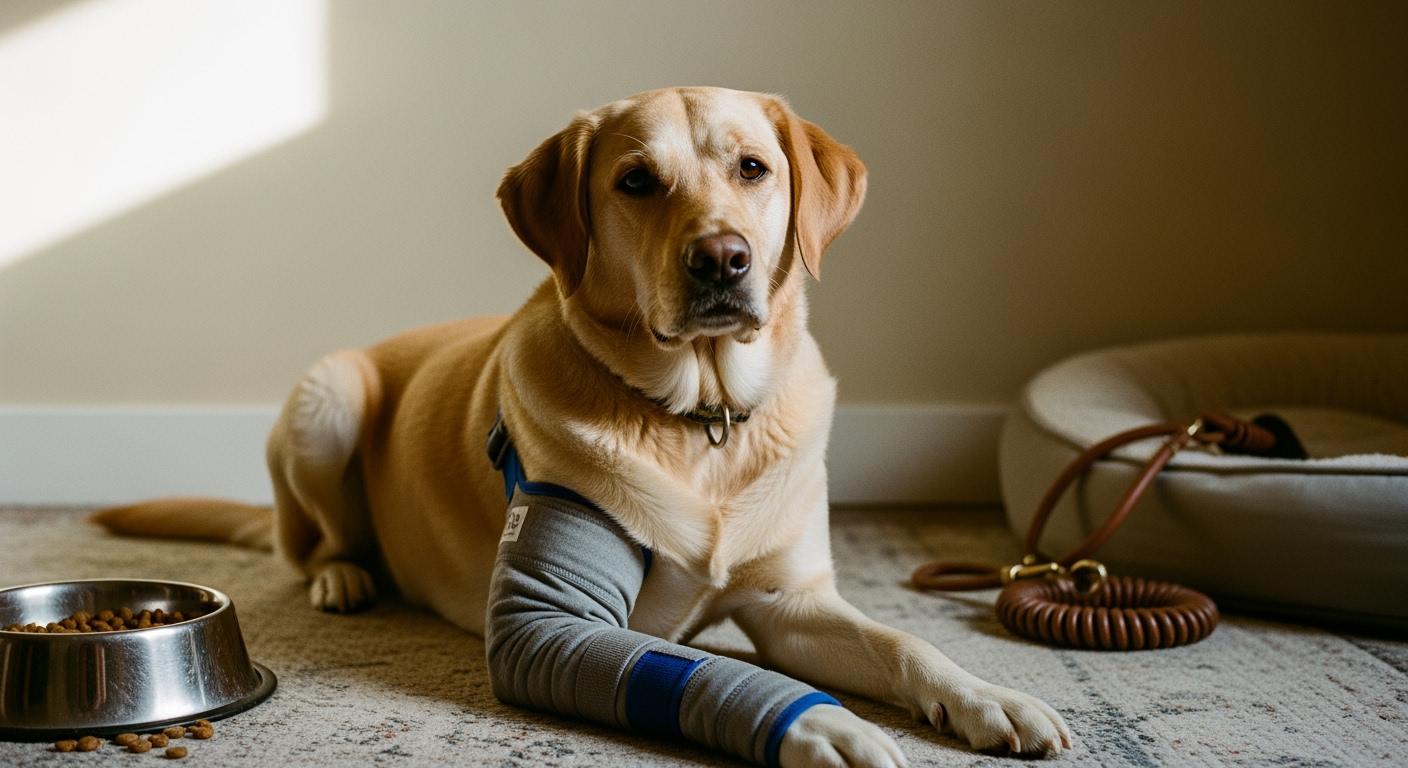
A dog recovery sleeve is a protective recovery garment used to cover a wound, surgical site, bandaged area, or skin-sensitive zone after surgery or injury. This guide is for owners, rehab teams, and buyers who want to understand when a dog recovery sleeve helps, how it differs from a full recovery suit or e-collar, and how to choose, fit, and monitor it safely. If you are comparing recovery planning in the Recovery Sleeve Solutions page, broader article-level education in the GaitGuard blog, or product-level options in the products hub, this page should work as the main recovery-sleeve starting point.
Quick Answer: A dog recovery sleeve is usually most useful when a dog needs targeted coverage for wound protection, anti-lick support, or safer daily recovery after surgery or injury. It is more flexible than a full recovery suit when only one body area needs protection, and it often feels less disruptive than an e-collar during supervised recovery.
- Most important factors: coverage zone, fit, slipping control, and daily skin checks
- Best for: wound coverage, bandage protection, anti-lick support, and daily recovery routines
- Not always enough for: dogs that need broader full-body recovery coverage
Key Takeaways
- A dog recovery sleeve is a targeted recovery tool used to protect wounds, dressings, and healing areas after surgery or injury.
- The right option depends on where the protection is needed, how much anti-lick coverage is required, and how well the sleeve fits into the dog’s daily routine.
- Correct fit, breathable fabric, and daily-use tolerance matter as much as the sleeve design itself.
- A recovery sleeve works best as part of a broader recovery plan that may include wound care, bandage checks, activity control, and veterinary follow-up.
What Is a Dog Recovery Sleeve?
A dog recovery sleeve is a protective recovery garment designed to cover a wound, surgical site, bandage, or skin-sensitive area while a dog heals. It is usually made from soft, flexible fabric that gives targeted coverage without stopping normal rest, walking, or supervised daily movement.
You choose a dog recovery sleeve when you need focused protection rather than broad full-body restriction. Some dogs need it after surgery. Some need it to keep a bandage cleaner. Some need it because they keep licking, chewing, or scratching one healing area. That is why this page should stay centered on targeted recovery coverage rather than drifting into unrelated garment types.
You pick a dog recovery sleeve for a few main reasons:
- you want to stop your dog from licking or biting a wound
- you need to keep bandages cleaner and more stable
- you want a calmer alternative to a cone in some recovery situations
- you want your dog to stay more comfortable during healing
Tip: A good recovery sleeve should feel protective without making the dog feel trapped, overheated, or unable to move normally.
Vets and pet owners use dog recovery sleeves in several ways. You might use one after surgery to cover stitches. You can use it for injuries to keep wounds cleaner. It can also help dogs with hot spots, irritated skin, or healing areas that need repeated protection during daily routines.
Here are some main things you find in a good dog recovery sleeve:
| Feature | Why It Matters |
|---|---|
| Targeted recovery coverage | Helps protect the exact healing area without over-covering healthy areas. |
| Soft, breathable fabric | Helps reduce heat buildup and makes daily wear more realistic. |
| Secure fit | Helps the sleeve stay in place during walking and rest. |
| Easy on-and-off routine | Makes wound checks and cleaning easier during recovery. |
| Anti-slip coverage | Helps reduce bunching or slide-down during daily use. |
| Adaptable protection zone | Helps match the sleeve more closely to the real recovery area. |
What a Dog Recovery Sleeve Is Designed to Help With
Post-surgery coverage
A dog recovery sleeve helps your dog heal after surgery by covering the healing area and reducing direct contact with stitches or tender tissue. This is especially useful when you need targeted protection without immediately moving to full-body recovery wear.
Wound and bandage protection
A dog recovery sleeve helps protect wounds and bandages during daily activity. It can reduce contact with dirt, bedding, licking, and scratching while helping the covered area stay cleaner and more stable.
Anti-lick and anti-scratch support
Dogs often slow their own healing by licking or scratching wounds. A recovery sleeve works like a direct barrier over the problem area, which makes it useful when the protection goal is local rather than whole-body.
Comfort during daily recovery
Comfort matters during healing. A good recovery sleeve should let the dog rest, walk, and move through ordinary routines without excessive stress. The goal is safer recovery with more realistic daily wear.
| Support Goal | How a Recovery Sleeve May Help |
|---|---|
| Post-surgery coverage | Helps protect stitches or healing tissue from contact and licking. |
| Wound protection | Helps keep the covered area cleaner during daily routines. |
| Anti-lick management | Creates a direct barrier over the target recovery zone. |
| Daily recovery comfort | Supports calmer routines with targeted protective wear. |
Main Types of Dog Recovery Sleeves
There are different kinds of dog recovery sleeves, and the best choice depends on where the dog needs protection and how targeted the coverage should be.
Front leg recovery sleeves
Front leg recovery sleeves are used when the dog needs targeted protection over the forelimb. They make sense after surgery, for wound care, or when a front-leg area needs anti-lick coverage during recovery.
Hind leg recovery sleeves
Hind leg recovery sleeves cover the back leg and are often used for post-surgical care, wound protection, or anti-lick management over a rear-limb recovery site. They are a strong option when only one hind leg needs protective coverage.
| Sleeve Type | Coverage Area | Usually Best For |
|---|---|---|
| Front leg recovery sleeve | Forelimb | Front-leg surgery sites, wounds, and anti-lick protection |
| Hind leg recovery sleeve | Hind limb | Back-leg healing zones, wound coverage, and daily recovery care |
| Localized body-part sleeve | Smaller targeted area | Small wounds, bandage protection, and limited recovery zones |
Sleeves for localized body-part coverage
Some recovery sleeves are made for smaller areas. These are useful for paws, elbows, hocks, or other more limited recovery zones when full-leg coverage would be unnecessary.
Recovery sleeves vs full recovery suits
Recovery sleeves cover one area. Full recovery suits cover much more of the body. Use a sleeve when the need is targeted and local. Use a full recovery suit when the dog needs broader recovery protection across multiple body areas.
- Sleeves: better for targeted coverage, easier checking, and more flexible daily use
- Suits: better for broader body coverage, but usually less targeted than a sleeve
Pick the type that matches your dog’s injury and what they do each day. Recovery sleeves are helpful for both vets and pet owners.
Dog Recovery Sleeve vs Other Recovery Tools
Recovery sleeve vs e-collar
Many people use e-collars, or cones, to stop dogs from reaching wounds. An e-collar blocks access from the head and neck. A dog recovery sleeve works differently by covering the exact healing area. For localized recovery, a sleeve often allows calmer movement and easier daily routines than an e-collar alone.
| Tool | Main Protection Method | Comfort | Movement Impact |
|---|---|---|---|
| E-collar | Blocks the dog from reaching many areas | Usually lower | Usually more disruptive |
| Recovery sleeve | Covers the exact target zone | Usually higher | Usually less disruptive |
Recovery sleeve vs recovery suit
A recovery sleeve is more focused. A recovery suit is more global. Choose a sleeve when the dog needs local protection. Choose a suit when the recovery need is broader than one body zone.
When targeted coverage makes more sense
Targeted coverage makes more sense when the dog has a wound, surgery site, or skin problem in one leg or one small area. It lets you protect the recovery zone without covering healthy areas unnecessarily.
Tip: Use a recovery sleeve when the protection goal is local and specific. Use a recovery suit when local coverage is not enough.
How to Choose the Right Dog Recovery Sleeve
Choosing the right dog recovery sleeve helps you support healing and comfort without creating new daily-use problems. The best sleeve is the one that matches the real coverage need, the dog’s tolerance, and the actual recovery routine.
Choose by coverage area
Start by identifying the exact area that needs protection. You want a sleeve that covers the wound, stitches, or bandage fully without leaving gaps or extending so far that movement becomes harder than necessary.
Choose by comfort and breathability
Comfort matters for repeated wear. You want soft, breathable fabric that helps reduce rubbing and overheating. A sleeve that feels too heavy, too hot, or too stiff will be harder to use safely every day.
Choose by anti-lick protection needs
If your dog licks or chews aggressively, you need a sleeve that gives stable direct coverage and stays in place during normal movement. A sleeve that slides or twists will not do this job well.
Choose by daily wear routine
Think about your dog’s real routine. Some dogs only need the sleeve during active periods. Others need it during most waking recovery hours. Pick a design that can be cleaned, checked, and reapplied without too much stress.
| Decision Factor | What to Ask |
|---|---|
| Coverage zone | Does the sleeve fully cover the recovery area? |
| Comfort | Can the dog wear it without visible stress or overheating? |
| Anti-lick need | Does it really block access to the healing area? |
| Daily routine | Can you check, clean, and reapply it consistently? |
How Fit and Coverage Affect Performance
Why correct sizing matters
You want your dog’s recovery sleeve to fit just right. A sleeve that is too loose can slip off during walks or play. A sleeve that is too tight can cause rubbing, discomfort, or poor tolerance. Correct sizing helps the sleeve stay in place and protect the healing area more effectively.
How a recovery sleeve should sit
A recovery sleeve should cover the wound or sensitive area without bunching or twisting. It should sit flat against the body, stay aligned during normal movement, and avoid obvious pressure at the edges.
Common slipping or bunching issues
- the sleeve slides after walking or resting
- fabric bunches around a joint or narrow area
- the dog keeps chewing or pawing at the sleeve
- redness or pressure marks appear after wear
When to adjust or reassess fit
You should reassess fit if you see slipping, bunching, chewing, redness, swelling, or if the recovery site is no longer fully covered. You should also recheck the fit when the wound changes, swelling changes, or the dog’s routine changes.
| Fit Check Step | What to Look For |
|---|---|
| Initial fit | Secure coverage without obvious pressure |
| Movement check | No major slipping, twisting, or distress |
| Skin check | No redness, rubbing, or hair loss |
| Ongoing review | Adjust for wound changes, swelling changes, or wear-related changes |
Common Use Cases for Dog Recovery Sleeves
Post-surgery support
People often use a dog recovery sleeve after surgery to help protect the incision area, reduce direct licking, and support calmer healing during daily routines.
Skin-sensitive areas and hot spots
Some dogs have irritated skin, hot spots, or allergy-prone areas that need targeted coverage. A recovery sleeve helps protect these areas from scratching, licking, and direct contact while the skin settles.
Wound protection during daily activity
Dogs still move during recovery, so the wound or bandaged area needs protection during ordinary activity. A recovery sleeve helps protect the site during walks, rest, and day-to-day home routines.
Coverage as part of broader recovery care
A recovery sleeve works best as one part of a broader healing plan. That plan may also include wound cleaning, bandage care, e-collar use when needed, activity control, and veterinary follow-up. For broader recovery planning, send readers into the Recovery Sleeve Solutions page and the GaitGuard blog.
What to Consider Before Daily Use
Skin and comfort monitoring
Check your dog’s skin and comfort every day. Look for redness, swelling, rubbing, dampness, or signs that the dog is uncomfortable while wearing the sleeve. Behavior changes such as chewing, pawing, or restlessness often mean the fit or wear routine needs work.
Cleanliness and wound checks
Keeping things clean is very important for healing. Change the recovery sleeve when it gets dirty or wet. Check the wound or recovery area each time you remove the sleeve so you can see whether healing is moving in the right direction.
Supervised wear time
Watch your dog when they wear the sleeve, especially during early use. This helps you catch slipping, chewing, bunching, or discomfort before those problems grow.
Cleaning and maintenance
Clean and care for the sleeve the right way. Wash it as recommended, dry it fully before reuse, and inspect it for holes, stretched areas, or damaged seams. A clean, intact sleeve makes daily care safer and easier.
| Daily Check | What to Look For |
|---|---|
| Skin check | No redness, dampness, rubbing, or swelling |
| Coverage check | The sleeve still covers the target recovery zone |
| Comfort check | The dog is not resisting or obsessing over the sleeve |
| Cleanliness check | The sleeve is dry, clean, and safe to reuse |
Tip: Good daily checks help the sleeve stay useful instead of becoming another recovery problem.
Related Guides and Next Steps
This page should work as the main entry point for your general dog recovery sleeve topic, then guide readers into more specific internal content depending on whether they need broader recovery planning, location-specific sleeve guidance, or product-level review.
Dog leg sleeve guide
If you want to compare protective sleeves across front legs, back legs, and more general limb use cases, continue into the dog leg sleeve guide.
Front leg sleeve guide
Use the front leg sleeve guide when the support need is specific to forelimb recovery, wound protection, or anti-lick coverage.
Hind leg sleeve guide
Use the hind leg sleeve guide when the recovery need is centered on the back leg and needs more location-specific fitting guidance.
Recovery suit guide
Use the recovery suit guide when the dog needs broader body coverage than one sleeve can provide.
You can continue from this page into these internal paths:
- Recovery Sleeve Solutions page for recovery-first planning
- Blog hub for narrower comparison and troubleshooting articles
- Products hub for product-level support review
- dog leg sleeve guide for broader leg-sleeve education
- dog sleeve protection guide for the broader protective-sleeve umbrella page
This internal structure makes the page more useful for both users and search engines because it clearly connects the general dog recovery sleeve page to supporting content and product paths.
Frequently Asked Questions About Dog Recovery Sleeves
1. When should you use a dog recovery sleeve?
You should use a dog recovery sleeve when your dog needs targeted protection after surgery, injury, or for skin-sensitive recovery areas.
2. How do you know if the sleeve fits your dog?
The sleeve should cover the target area fully, stay in place during normal movement, and avoid obvious pressure, redness, or slipping.
3. Can your dog wear a recovery sleeve all day?
Some dogs can wear a recovery sleeve for long daytime periods, but you should still check the skin, cleanliness, and fit regularly and give breaks when needed.
4. How do you clean a dog recovery sleeve?
You should wash the sleeve when it gets dirty, let it dry fully before reuse, and inspect it for wear or damage before putting it back on your dog.
5. What if your dog tries to chew or remove the sleeve?
Some dogs try to chew the sleeve at first. Supervised wear helps you catch that early. If the behavior continues, reassess fit and ask your veterinarian whether another recovery tool is needed.
6. Can you use a recovery sleeve instead of an e-collar?
Sometimes, yes. A recovery sleeve often works better when the healing area is local and targeted. An e-collar may still be necessary when the dog can still reach the area or when broader blocking is needed.
Tip: Always match the recovery tool to the real protection goal instead of using one tool for every case.
Simple Daily Recovery Sleeve Log
Date Wear Time Coverage Area Skin Check Sleeve Position Next Step Example 2 hrs front leg / hind leg / wound zone clear / red / damp stable / slipped / bunched hold / adjust / shorten use This simple log helps you track whether the sleeve is staying in place, whether fit changes are needed, and whether your dog is tolerating daily use safely.
You help your dog heal best when you choose the right recovery coverage type, fit the sleeve carefully, and check skin, comfort, and sleeve position every day.
- match the sleeve to the real recovery area
- make sure the fit stays secure without rubbing
- start with supervised use and build routine gradually
- check the wound and the skin every day
- adjust the plan if the dog shows stress, slipping, or poor tolerance
Use this page as the starting point, then move into the Recovery Sleeve Solutions page, the Blog hub, and the Products hub depending on whether you need broader recovery planning, article-level comparison, or product review. Data authenticity note: This guide is for educational purposes only. It is designed to help readers understand dog recovery sleeve fit, protection, and daily use, not to replace veterinary diagnosis or individualized treatment advice.
Remember, the safest recovery plan is the one you can monitor consistently and adjust early when your dog shows discomfort or healing changes.
