

A dog elbow brace is an external support worn around the elbow area of a dog’s front leg. Depending on its structure, it may provide soft coverage, localized padding, adjustable tension, or limited mechanical control around the joint.
The term is broad. Some products sold as dog elbow braces are flexible sleeves, some are padded elbow protectors, and others include stays or hinges. These products should not be treated as interchangeable simply because they share the same product name.
This Knowledge Base article explains the main dog elbow brace types, the physical functions each structure may provide, the terminology used in listings and technical documents, and the fit and skin checks that matter during use. It does not diagnose elbow conditions or determine whether a brace is appropriate for an individual dog.
What Area Does a Dog Elbow Brace Cover?
The canine elbow is located between the upper front-leg bone and the two lower foreleg bones. A brace may cover only the elbow point, wrap above and below the joint, or extend across both front legs through a chest or shoulder connection.
Coverage affects how the product behaves:
- A small elbow pad mainly covers the point of the elbow.
- A flexible sleeve covers a wider area but usually allows substantial movement.
- A wrap with adjustable straps can change local tension and fit.
- A hinged or stay-supported brace may limit selected movement if the hardware is correctly positioned.
- A bilateral design uses a connecting section to help hold both elbow sections in place.
Main Types of Dog Elbow Brace
| Product type | Typical construction | Main physical role |
|---|---|---|
| Dog elbow sleeve | Flexible textile or foam sleeve with no rigid hardware. | Provides coverage and light adjustable contact around the elbow area. |
| Elbow guard or protector | Localized padding over the elbow point, held by straps or a sleeve body. | Creates a padded contact layer over a pressure-prone area. |
| Hygroma pad | Cushioned elbow-point coverage with a focus on pressure distribution. | Provides padding around the elbow point; it is not automatically a joint-stabilizing brace. |
| Soft elbow wrap | Flexible body with adjustable straps and broader foreleg coverage. | Allows fit adjustment and may provide more circumferential support than a simple sleeve. |
| Stay-supported brace | Soft brace body with polymer or metal stays. | Adds directional resistance depending on stay location, length and stiffness. |
| Hinged elbow brace | Brace body with one or more mechanical hinges or range-of-motion components. | May influence movement when the hinge is correctly aligned and the brace remains in position. |
| Bilateral elbow support | Two elbow sections connected across the chest, shoulders or back. | Uses a shared suspension structure to support both sides and reduce local slipping. |
The current dog elbow brace product category includes products with different coverage and support structures. Buyers and users should compare the actual construction rather than relying only on the listing title.
What Can a Dog Elbow Brace Physically Do?
A dog elbow brace can influence the contact, pressure and movement around the elbow area, but the effect depends on the product structure.
Provide Coverage
A sleeve or guard can cover the elbow point and surrounding skin. Coverage may reduce direct contact between the elbow and external surfaces, but it does not guarantee that pressure, rubbing or skin problems will be prevented.
Add Padding
Padding can increase the contact area and reduce concentrated contact at one point. Its behavior depends on finished thickness, compression recovery, placement and whether the pad remains centered over the elbow.
Apply Adjustable Tension
Straps and elastic panels can create adjustable tension around the foreleg. This may help hold the product in place, but excessive tightening can create edge pressure, bunching, restricted circulation or migration.
Limit Selected Movement
A stay or hinge may resist selected movement when it is correctly positioned. The level of control depends on the hardware, brace length, mounting, strap system and fit. A soft sleeve should not be described as providing the same movement control as a rigid or hinged orthosis.
These are physical product functions. They do not by themselves prove pain relief, swelling reduction, faster healing, improved posture or better mobility.
Common Terms Used in Dog Elbow Brace Listings
| Term | What it means | Important limitation |
|---|---|---|
| Orthosis | An externally applied device intended to influence a body segment or joint. | The word does not prove clinical validation, custom manufacture or regulatory status. |
| Compression | Pressure created by stretch, straps or a defined compression system. | It does not automatically mean swelling or pain will decrease. |
| Support | A broad term for coverage, reinforcement, cushioning or contact. | It does not identify the direction or amount of mechanical control. |
| Stabilization | An intention to reduce selected movement through structure and fit. | It does not prove that the elbow is held in correct alignment. |
| Range of motion | The amount of movement available at the elbow or allowed by a mechanical hinge. | A hinge setting does not guarantee the same angle in the fitted brace. |
| Unilateral | Designed for one front leg. | It does not indicate the support level. |
| Bilateral | Designed to cover or connect both front legs. | It does not prove equal support on both sides. |
Dog Elbow Sleeve, Elbow Guard and Hinged Brace Are Not the Same
A dog elbow sleeve is usually flexible and provides coverage with limited structural control. An elbow guard focuses on padding over the elbow point. A hinged brace includes mechanical hardware intended to influence movement.
These differences matter because each product requires a different:
- Measurement method.
- Size system.
- Adjustment range.
- Skin-contact review.
- Care instruction.
- Usage boundary.
The separate dog elbow sleeve guide covers flexible sleeve structures in more detail.
Condition Names Do Not Define the Correct Brace Type
Product listings often mention elbow dysplasia, arthritis, osteoarthritis, hygroma, trauma, ligament injury, luxation or post-operative use. These terms describe a condition or care context, not a specific brace structure.
The same diagnosis may involve different severity, anatomy, skin condition, treatment plans and movement requirements. A condition name should therefore not be used as an automatic rule for choosing a sleeve, pad, wrap or hinged brace.
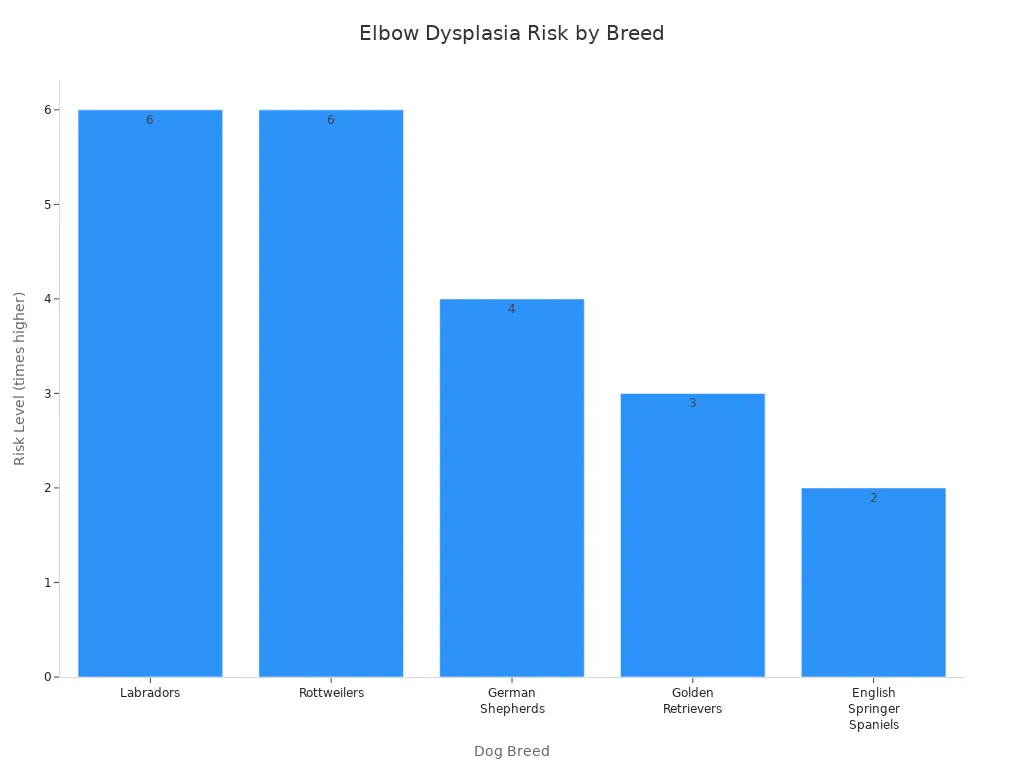
Breed charts should also be treated carefully. Unless the source, population, diagnostic criteria and calculation method are available, a chart should not be used to determine whether a dog needs a brace or which structure should be selected.
Materials Commonly Used in Dog Elbow Braces

Common components include foam laminates, spacer fabric, elastic panels, padding, hook-and-loop closures, webbing, polymer stays and metal hardware. Material names alone do not define the function of the finished brace.
| Listing term | More useful specification |
|---|---|
| Neoprene | Foam composition, thickness, density, laminate, stretch direction and care method. |
| Breathable fabric | Material construction, perforation, moisture behavior and drying method. |
| Soft padding | Finished thickness, compression recovery, placement and edge construction. |
| Anti-slip strap | Surface material, position, closure range and finished-product migration behavior. |
| Rigid support | Stay, splint, plate or hinge material, dimensions, location and removability. |
| Strong closure | Hook-and-loop type, engaged area, width, attachment and adjustment range. |
Production checks should confirm that material, dimensions, padding position, straps and workmanship match the approved sample. GaitGuard’s broader inspection stages are described on the Quality Management page.
Fit and Safe-Use Checks
A brace should be checked as a complete product rather than tightened until it “feels supportive.” The correct fit depends on the product design and the instructions supplied for that model.
- Confirm that the elbow opening, pad or hinge remains near the intended position.
- Check that upper and lower edges do not enter a joint crease.
- Make sure straps are secure without creating deep indentations or bunching.
- Inspect the skin after initial use and at regular intervals.
- Check whether the product rotates, slides or pulls one side more than the other.
- Follow the approved cleaning method for the complete brace structure.
Remove the product and seek appropriate veterinary guidance if there is persistent redness, broken skin, swelling, cold toes, marked discomfort, worsening lameness or another concerning change. Individual wear time, post-operative use and range-of-motion settings should follow the relevant veterinary plan.
Claims That Need Evidence
A dog elbow brace listing should not directly promise that the product:
- Relieves pain.
- Reduces swelling or inflammation.
- Improves posture or mobility.
- Makes walking, running or playing easier.
- Accelerates healing.
- Prevents further injury.
- Keeps the elbow in correct alignment.
- Is suitable for every breed or elbow condition.
A clearer product description explains coverage, structure, padding, adjustment, rigid components, size logic, care method and limitations. Medical or treatment outcomes require separate evidence and destination-market review.
FAQ
Is a dog elbow brace the same as an elbow sleeve?
Not always. A sleeve is usually flexible and textile-based. The term brace may also refer to a wrap, stay-supported product or hinged orthosis.
Is a hygroma pad a joint brace?
Usually not. A hygroma pad generally focuses on cushioning around the elbow point rather than controlling internal elbow movement.
Does compression mean pain or swelling will decrease?
No. Compression describes pressure created by the product. Pain-relief or swelling-reduction claims require evidence and appropriate medical context.
Can every dog elbow brace use the same wearing schedule?
No. A padded sleeve and a hinged orthosis have different structures and use boundaries. Wearing time should follow the instructions for the exact product and any relevant veterinary plan.
Pet brands and distributors developing an elbow-support range should first define whether the product is a sleeve, protector, padded support, soft wrap or hinged brace. Product teams requiring private-label or structure-specific development can review GaitGuard’s custom dog brace manufacturing capabilities.
