

Working with an OEM dog brace manufacturer in China is not only a matter of comparing unit prices. US pet brands and distributors need a controlled sourcing process that connects the product requirement, sample revisions, approved specifications, bulk production, packaging, and delivery.
This guide focuses on that cross-border workflow. It explains what a buyer should prepare, what the supplier should confirm, and where written approvals are needed before production moves forward. It does not attempt to rank individual manufacturers or replace a product-specific quality inspection plan.
Key Takeaways for US Buyers
- Define the target product, support structure, size system, materials, branding, packaging, quantity, and market before requesting a quotation.
- Use samples to confirm construction and fit-related details before approving bulk production.
- Keep all revisions in a written change record so the buyer, sourcing team, and factory work from the same version.
- Approve a final reference sample and written specification before the production schedule begins.
- Confirm quality checkpoints, packing requirements, shipping terms, and buyer-specific documentation before shipment.
- Evaluate the supplier as a long-term development and replenishment partner, not only as a one-time quotation source.
1. Prepare a Buyer-Ready Product Requirement
The sourcing process should begin before the first supplier email. A broad request such as “send your dog brace catalog and best price” does not provide enough information for a reliable quotation. The buyer should first define the product category, channel, expected customization, and commercial scope.
| Requirement Area | What the Buyer Should Provide | Why It Matters |
|---|---|---|
| Product category | Knee brace, hock brace, carpal support, anti-lick sleeve, or lift harness | Determines the structure, materials, size system, and sampling route |
| Target channel | DTC, marketplace, wholesale, veterinary, rehabilitation, or distributor program | Affects packaging, instructions, SKU depth, and support materials |
| Product route | Existing product adaptation, OEM specification, ODM development, or private label | Clarifies the amount of design work and revision responsibility |
| Estimated quantity | Expected total volume and preliminary size/color mix | Allows the supplier to review MOQ, material planning, and production capacity |
| Customization | Structure, dimensions, materials, logo, labels, inserts, and packaging | Prevents incomplete quotations and later scope changes |
| Target market | United States, Canada, EU, UK, or another market | Helps identify buyer-specific labeling, documentation, and testing questions |
| Delivery target | Required warehouse arrival date or launch window | Allows production and logistics planning to work backward from the deadline |
For an existing product, buyers should provide reference photos, current samples, known customer feedback, and the changes they want to make. For a new structure, the requirement may also include sketches, measurement logic, target support level, component preferences, and packaging concepts.
2. Select the Appropriate Cooperation Route
OEM, ODM, and private-label supply require different levels of product definition. The buyer does not need a long theoretical comparison, but the cooperation route should be agreed before sampling because it affects cost, timing, intellectual-property responsibilities, and the number of revisions.
| Route | Typical Starting Point | Buyer Responsibility | Supplier Responsibility |
|---|---|---|---|
| Private label | An existing product with branding or packaging changes | Choose the product, sizes, branding, quantity, and channel requirements | Confirm available options, samples, production, and packing |
| OEM | A buyer-defined design, sample, or specification | Provide the target specification and approve revisions | Review manufacturability and produce to the approved specification |
| ODM | A performance or market requirement that still needs product development | Define the use case, channel, price position, and approval criteria | Support structure development, material selection, prototyping, and revisions |
A buyer may also use a hybrid route. For example, an existing hinged knee brace can be adapted with revised sizing, strap placement, color, logo, instructions, and packaging without developing every component from zero.
3. Build a Complete RFQ Package
A useful request for quotation should enable the supplier to identify missing information rather than guess. The RFQ should separate confirmed requirements from options that still need supplier input.
- Identify the product and intended channel. State whether the program is for retail, wholesale, veterinary rehabilitation, or another B2B channel.
- Describe the required structure. Include soft support, side stabilizers, hinges, rigid inserts, lifting handles, anti-slip features, or other relevant components.
- Provide the proposed size system. Share measurement points, existing size charts, intended number of sizes, and known fit problems.
- List materials and components. Specify which items are fixed requirements and which can be proposed by the supplier.
- Define branding and packaging. Include logo method, label content, color requirements, packaging type, inserts, barcode needs, and carton marks.
- Provide commercial inputs. State the estimated quantity, size mix, delivery window, destination, and preferred shipping term.
- Define the sample objective. Clarify whether the sample is for appearance, construction, fit evaluation, packaging approval, or final pre-production confirmation.
The supplier’s quotation should identify the included customization, sample cost, tooling or development charges where applicable, MOQ, estimated sample timing, estimated bulk timing, packing basis, payment terms, and quotation validity. Any assumption should be stated clearly.
4. Use a Controlled Sample and Revision Workflow
Samples are not only sales demonstrations. They are working versions used to confirm whether the buyer’s requirement can be manufactured consistently. A controlled process normally separates construction review, revision, and final approval.
| Sample Stage | Main Purpose | Buyer Review |
|---|---|---|
| Construction sample | Confirm the basic structure, materials, dimensions, components, and assembly route | Record required changes rather than approving by appearance alone |
| Revised sample | Confirm that documented corrections were applied | Review fit-related details, strap routing, component placement, workmanship, and usability |
| Pre-production reference sample | Establish the approved version for bulk production | Approve the physical sample together with the written specification, artwork, labels, and packaging |
GaitGuard’s current planning reference for samples is approximately 7–14 days after the required specifications and sample details are confirmed. Complex structures, new materials, tooling, or repeated revisions can change this schedule.
Approval rule: Do not rely on a chat message saying “same as last time.” Use a sample code, dated revision record, approved specification, and final artwork files so every team works from the same version.
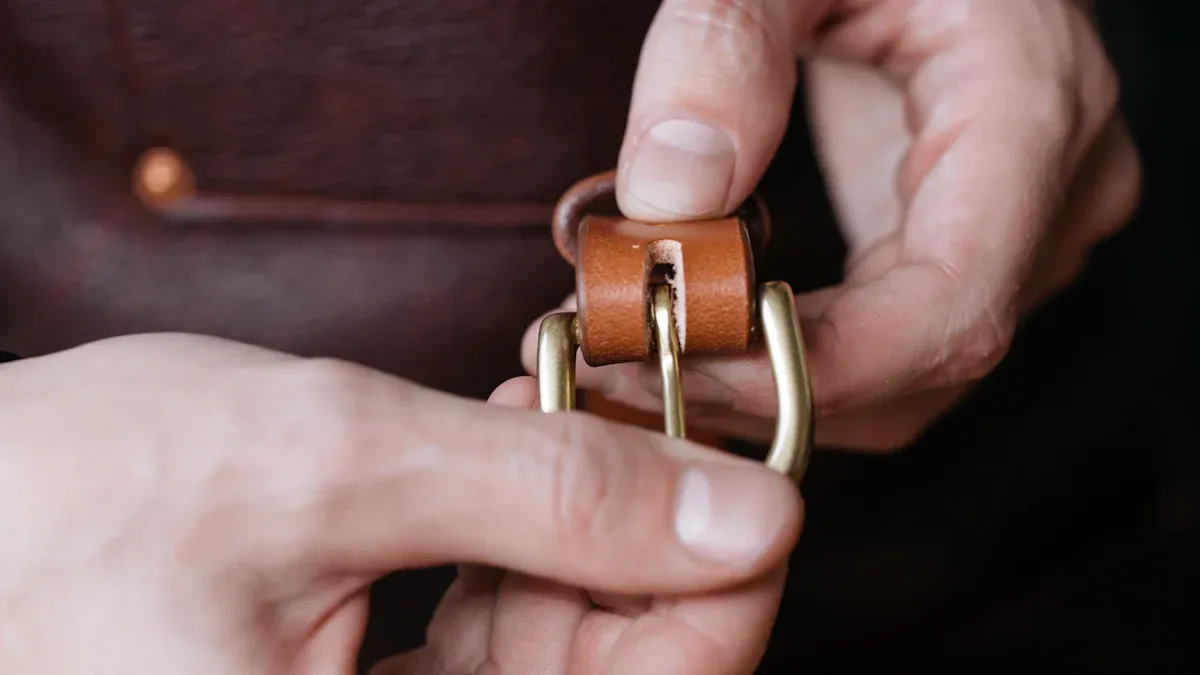
5. Convert Product Decisions Into Written Specifications
Once the sample direction is accepted, the buyer and supplier should convert visual decisions into repeatable specifications. This is especially important for canine braces because small changes in measurement points, strap angles, support components, or edge construction can change how the finished product fits and functions.
Size and Measurement Information
- Define the anatomical measurement points for each product style.
- Record finished-product dimensions and agreed tolerances where appropriate.
- Separate left/right products when the structure is not symmetrical.
- Confirm the size-to-size grading logic instead of checking only one sample size.
- Prepare a buyer-facing measurement guide that uses the same landmarks as the factory specification.
Materials, Components, and Construction
- Identify the approved fabric, foam, lining, webbing, hook-and-loop, buckles, stays, hinges, or molded parts.
- Define color, thickness, surface finish, stretch direction, and other relevant characteristics.
- Mark reinforced stitching zones and component attachment points.
- Confirm edge finishing, seam placement, exposed hardware protection, and replaceable parts.
- State the agreed cleaning, care, and packaging requirements without making unsupported performance claims.
The purpose is not to create unnecessary paperwork. The specification gives purchasing, product development, production, quality review, and the supplier a shared reference when questions arise.
6. Approve the Pre-Production Handoff
Before bulk production begins, the buyer should confirm that commercial and technical information is aligned. Starting production while artwork, size ratios, materials, or packaging remain open creates avoidable delays and rework.
| Pre-Production Item | Required Confirmation |
|---|---|
| Approved sample | Sample code, version, photos, and physical reference where applicable |
| Product specification | Dimensions, materials, components, workmanship details, and size grading |
| Order breakdown | Total quantity, SKU list, size/color mix, and spare or replacement components |
| Artwork | Logo files, labels, inserts, package graphics, barcodes, and carton marks |
| Quality review | Inspection points, defect definitions, sample expectations, and buyer-specific checks |
| Commercial terms | Price, payment, lead time basis, delivery term, and shipment destination |
GaitGuard’s current bulk-production reference is approximately 30–45 days after the deposit is received and all final product and order details are confirmed. The current payment reference is a 30% T/T deposit, with the balance due before shipment. The final schedule depends on product complexity, material readiness, quantity, revisions, and packing requirements.
7. Separate Process Review From Detailed Product Inspection
This sourcing guide explains where quality review belongs in the China-to-US workflow. It should not duplicate every dimension, seam, strap, hinge, closure, or packing checkpoint required for a specific product.
At a process level, buyers should confirm:
- Incoming materials match the approved order requirements.
- In-process workmanship and assembly details are reviewed during production.
- Finished dimensions, construction, appearance, labeling, and packing are checked against the approved references.
- Deviations are documented and approved before shipment rather than accepted informally.
- Buyer-specific testing or market documentation is discussed during RFQ and confirmed for the individual order.
For the detailed product-level inspection framework, use the dog brace supplier quality checklist. That supporting article should carry the deeper review of size grading, materials, stitching, straps, hinges, sample consistency, batch inspection, and packaging.
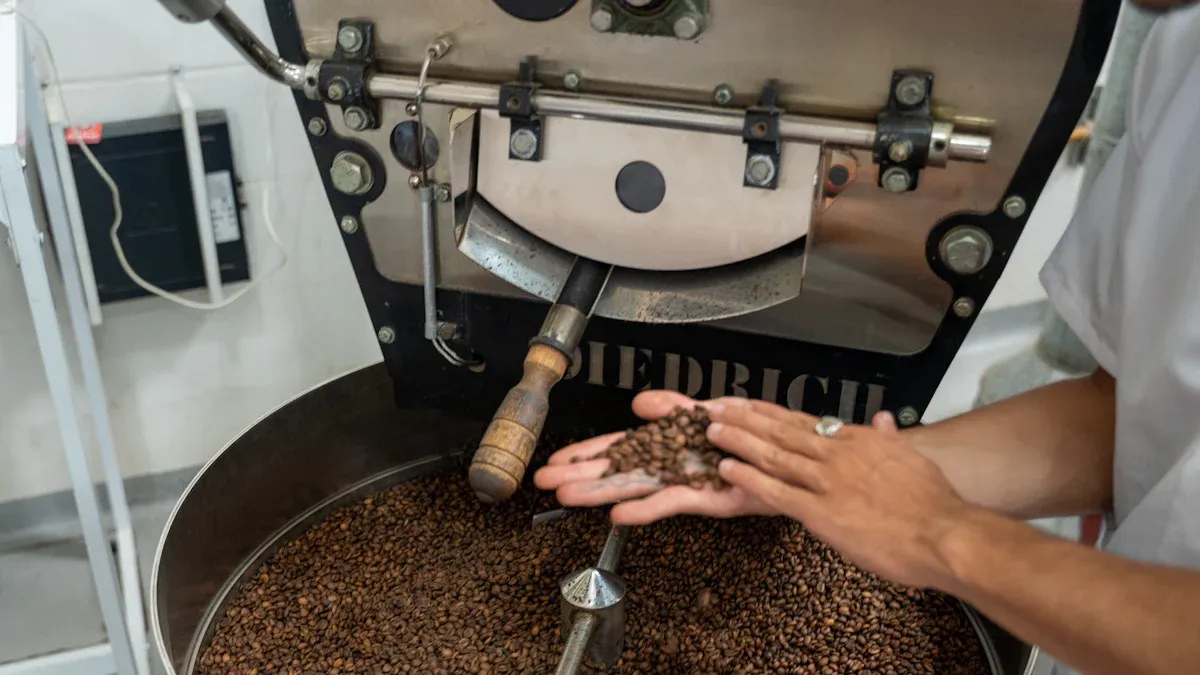
8. Confirm Packaging, Export, and Delivery Responsibilities
A production completion date is not the same as a US warehouse arrival date. Buyers should plan packaging approval, export preparation, freight booking, customs clearance, and inland delivery as separate stages.
Packaging and Shipment Preparation
- Confirm individual packaging, labels, inserts, barcodes, carton quantities, and carton marks.
- Clarify whether mixed SKUs are allowed within cartons and how size/color identification will be handled.
- Agree on the packing-list format and the documents required by the buyer, freight forwarder, marketplace, or warehouse.
- Review carton condition, package protection, and shipment photos before release.
Shipping Terms
FOB, CIF, DAP, DDP, and other Incoterms allocate different responsibilities and costs. Buyers should not choose a term only because the quoted freight looks lower. Confirm the named place, freight scope, insurance, customs responsibility, import duties, destination charges, and final-mile delivery with the supplier and freight forwarder.
Ask for two dates: the estimated production-completion date and the estimated delivery window. Keeping them separate improves launch and inventory planning.
9. Control Communication and Product Changes
Cross-border projects often involve the brand team, purchasing team, designer, supplier sales contact, product developer, production team, and freight forwarder. A decision made in one chat thread may not reach every person who needs it.
- Use one product name and SKU code across the quotation, specification, sample label, purchase order, packaging, and packing list.
- Number every revision and record the date, requested change, responsible party, and approval status.
- Confirm important decisions in writing after video calls or instant-message discussions.
- Freeze the specification before bulk production and price any later change separately.
- Escalate schedule risks early rather than waiting until the planned shipment date.
10. Common China-to-US Sourcing Failures
| Failure | Why It Happens | Prevention |
|---|---|---|
| Incomplete quotation | The buyer provides only a product photo and quantity | Send a structured RFQ with product, size, material, packaging, market, and delivery inputs |
| Repeated sample revisions | The use case and approval criteria were not defined | Separate required functions from optional design preferences before sampling |
| Incorrect bulk version | Changes are approved through scattered messages | Use revision numbers, a golden sample, and an approved specification |
| Size inconsistency | Only one size is reviewed or measurement points are unclear | Approve grading logic and check representative sizes before bulk production |
| Packaging delay | Artwork and barcode information arrive after production starts | Approve packaging files during the pre-production handoff |
| Unsupported claims | Marketing language is written without checking evidence or product scope | Use support-focused language and confirm market-specific requirements before launch |
| Missed launch date | Production and shipping are treated as one lead time | Plan sample, production, freight booking, customs, and warehouse delivery separately |
11. When to Move From Evaluation to RFQ
A buyer is ready to request a detailed quotation when the team can provide the product route, target channel, estimated quantity, proposed sizes, required customization, packaging scope, destination, and delivery target. Open technical questions can remain, but they should be listed rather than hidden.
GaitGuard’s current B2B order framework uses an MOQ of 500 units, an estimated sample time of 7–14 days, an estimated bulk lead time of 30–45 days, and a 30% T/T deposit. Final terms depend on the product, size mix, materials, customization, packaging, and order scope.
Review GaitGuard’s custom dog brace manufacturing capabilities before submitting your product requirements. The manufacturer page provides the high-level product scope and commercial framework, while this guide explains the detailed China-to-US cooperation process.
FAQ for US Pet Brands and Distributors
What information should I send to an OEM dog brace manufacturer in China?
Send the product category, intended channel, reference design or sample, support structure, size requirements, materials, branding, packaging, estimated quantity, target market, destination, and delivery window. Mark which requirements are confirmed and which need supplier recommendations.
How long does dog brace sample development take?
GaitGuard’s current planning reference is approximately 7–14 days after the required sample details are confirmed. New tooling, unusual components, material sourcing, and multiple revisions can extend the timeline.
Does every custom dog brace require tooling?
No. Branding, packaging, pattern, strap, textile, or size adjustments may not require a new hard mold. Molded shells, proprietary hardware, or new formed components may create tooling or development costs. Confirm this during quotation.
How should buyers control changes after sampling?
Use a dated revision list, sample codes, updated specifications, and written approval. Once the pre-production sample and order files are approved, later changes should be reviewed for cost, material, and schedule impact before implementation.
Should buyers rely only on supplier certifications?
No. Buyers should first define the documents, tests, labels, and market responsibilities relevant to the specific product and channel. Request current evidence for those requirements and confirm what the supplier can support before approving the order. A generic certificate list does not replace product specifications, sample validation, or order-specific quality review.
Build the Process Before Scaling the Order
The strongest China-to-US sourcing programs are built around clear product inputs, controlled samples, documented revisions, approved specifications, defined quality checkpoints, and coordinated delivery. These controls help buyers develop new canine brace and mobility-support SKUs, replace an inflexible supplier, or expand an existing line without relying on assumptions.
Prepare your product requirements first. Then use the RFQ process to confirm whether the supplier can support the required structure, size system, materials, branding, packaging, quantity, schedule, and market-specific needs.
