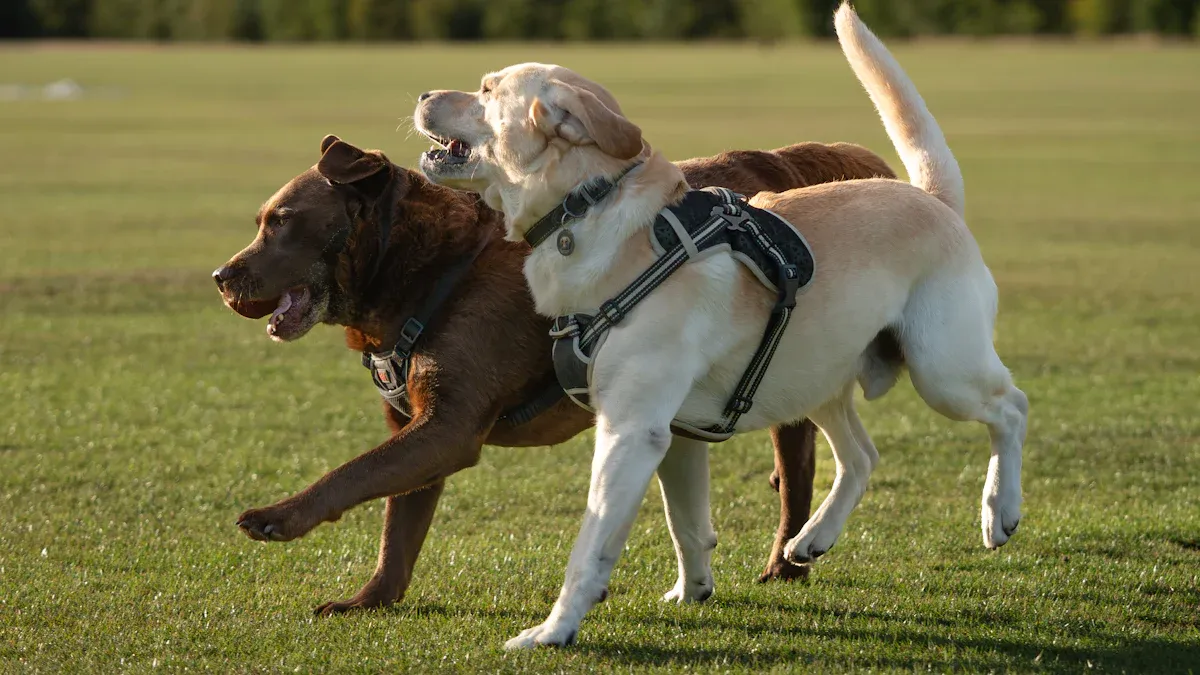

Private label dog rehabilitation gear refers to canine support products manufactured for sale under a buyer’s brand. Depending on the project, the buyer may use an existing product structure, request selected branding and packaging changes, or move into OEM or ODM development for new specifications, sizing, materials, or construction.
This knowledge-base article explains the differences between private label, OEM, and ODM programs for dog braces, anti-lick protection, and lift-support products. It also outlines the product, sizing, material, sampling, packaging, and quality details that brands, distributors, and sourcing teams should verify before approving a program.
Key Takeaways
- Private label is usually the fastest route when a buyer can work from an existing product structure and mainly needs branding, packaging, color, or selected material changes.
- OEM and ODM projects require a clearer division of responsibility for specifications, size logic, structure, samples, documentation, and final approval.
- Size architecture matters as much as the product itself. A range that works for one sample dog may still fail commercially if size intervals, measurement instructions, or strap adjustment are unclear.
- GaitGuard’s standard B2B framework is a 500-unit MOQ, sample preparation typically discussed within 7–14 days after requirements are confirmed, and an estimated 30–45-day order lead time after deposit and final order confirmation.
- Material, compliance, and performance claims should be verified for the specific product and target market. Terms such as “medical-grade,” “hypoallergenic,” or “clinically proven” should not be accepted without scope-specific evidence.
What Is Private Label Dog Rehabilitation Gear?
Private label dog rehabilitation gear refers to canine support products sourced from a manufacturer and sold under the buyer’s brand. The base product may already exist, while the buyer selects permitted branding, label, packaging, color, material, or product-line options.
The category can include dog braces, anti-lick sleeves and recovery wear, and lift-support harnesses. These products solve different fit and handling problems, so buyers should not treat them as interchangeable SKUs under one generic “rehab gear” specification.
Private Label vs OEM vs ODM
The three models are often used loosely. Before requesting a quotation, define who controls the product specification, who proposes changes, and who approves the final sample.
| Model | Typical Starting Point | Buyer Responsibility | Supplier Responsibility | Best Fit |
|---|---|---|---|---|
| Private Label | Existing product or selected catalog range | Brand, target market, quantity, packaging, artwork, channel requirements | Confirm available product, permitted changes, sampling, production, packing | Faster product-line entry with limited structural change |
| OEM | Buyer specification, reference sample, tech pack, or defined product requirements | Define specifications, approval criteria, documentation needs, and ownership terms | Review feasibility and manufacture to the confirmed scope | Brands with clear product requirements and internal product control |
| ODM | Product brief or market problem requiring supplier-led adaptation | Define target user, channel, price position, constraints, and final approval | Discuss structure, materials, sizing, samples, and production feasibility | Buyers that need product-development support rather than a finished tech pack |
Private label is not “total customization.” If a buyer needs a new support panel, different hinge position, revised coverage area, custom size logic, or a new pattern, the project is moving into OEM or ODM territory. Defining that boundary early prevents quotation gaps and sample revisions later.
Choose a Product Line Before Choosing Branding
Branding decisions should follow product-line decisions. A buyer first needs to determine which use scenarios, support areas, and sales channels the range will serve.
Dog Braces
Dog knee, hock, carpal, elbow, back, hip, and knuckling-support products use different shapes, pressure zones, strap paths, and adjustment requirements. A buyer should define the body part, intended support level, size system, and supervised-use instructions before building a multi-SKU brace range.
Anti-Lick and Recovery Protection
Recovery sleeves, suits, and protective covers should be selected by coverage location. Front-leg, hind-leg, body, paw, and head-area products require different closure positions and coverage shapes. Buyers should review whether movement, urination, ventilation, wound access, and washing instructions are practical for the intended channel.
Lift and Mobility Support
Rear, front, and full-body lift harnesses distribute load differently. Product selection should consider handle height, lifting angle, strap migration, pressure under the chest or abdomen, and the difference between brief transfer assistance and longer supervised mobility support.
Buyer note: A narrow, coherent launch range is usually easier to size, explain, stock, and support than a broad catalog assembled from unrelated products.
Build a Commercial Size System
Size planning is one of the highest-risk parts of private label dog rehabilitation gear. Dog weight alone is rarely enough. Depending on the product, the size chart may need limb circumference, joint circumference, back length, chest girth, body length, or other measurement points.
A commercial size system should answer five questions:
- Which measurements determine the size?
- Where exactly should each measurement be taken?
- How much adjustment is available within each size?
- What happens when a dog falls between two sizes?
- Which body shapes or use cases are not suitable for the product?
Before bulk production, test the size chart against more than one dog shape or a representative measurement set. The goal is not to prove a treatment result. It is to check coverage, strap position, adjustment range, edge contact, movement interference, and whether the instructions produce repeatable measurements.
Define Materials by Function, Not Marketing Labels
Material selection should be tied to a measurable function: stretch, thickness, compression, abrasion resistance, edge softness, moisture handling, cleanability, closure strength, or structural reinforcement. A vague label does not establish that a material is suitable for every dog or every product.
| Product Area | Questions to Confirm |
|---|---|
| Body-contact fabric | Thickness, stretch direction, surface texture, heat and moisture behavior, cleaning method |
| Padding and edges | Compression after use, seam position, edge stiffness, pressure concentration |
| Straps and closures | Adjustment range, holding strength, cycle durability, contamination sensitivity |
| Support panels or hinges | Position, stiffness, movement limit, attachment method, replaceability |
| Labels and printing | Skin-contact location, wash resistance, artwork legibility, required warnings |
If a sales channel requires a specific chemical, textile, labeling, or market-entry document, include that requirement in the RFQ. The supplier should confirm whether the requested document applies to the specific material, component, finished product, and order scope.
Branding and Packaging Options
Private-label customization can include logo placement, woven labels, rubber or PVC patches, printed marks, size labels, instruction cards, retail boxes, bags, barcode labels, and carton marks. Availability and MOQ implications should be confirmed for each option.
- Logo location: Check whether the logo interferes with straps, high-flex areas, skin-contact zones, or adjustment markings.
- Size identification: Use consistent labels on the product, inner packaging, outer packaging, and carton.
- Instructions: Include measurement points, fitting steps, cleaning guidance, supervised-use boundaries, and stop-use warnings appropriate to the product.
- Claims: Avoid unsupported treatment, recovery, pain-relief, certification, or universal-fit statements.
- Channel requirements: Confirm barcode format, language, importer information, carton labeling, and documentation before artwork approval.
OEM/ODM Project Workflow
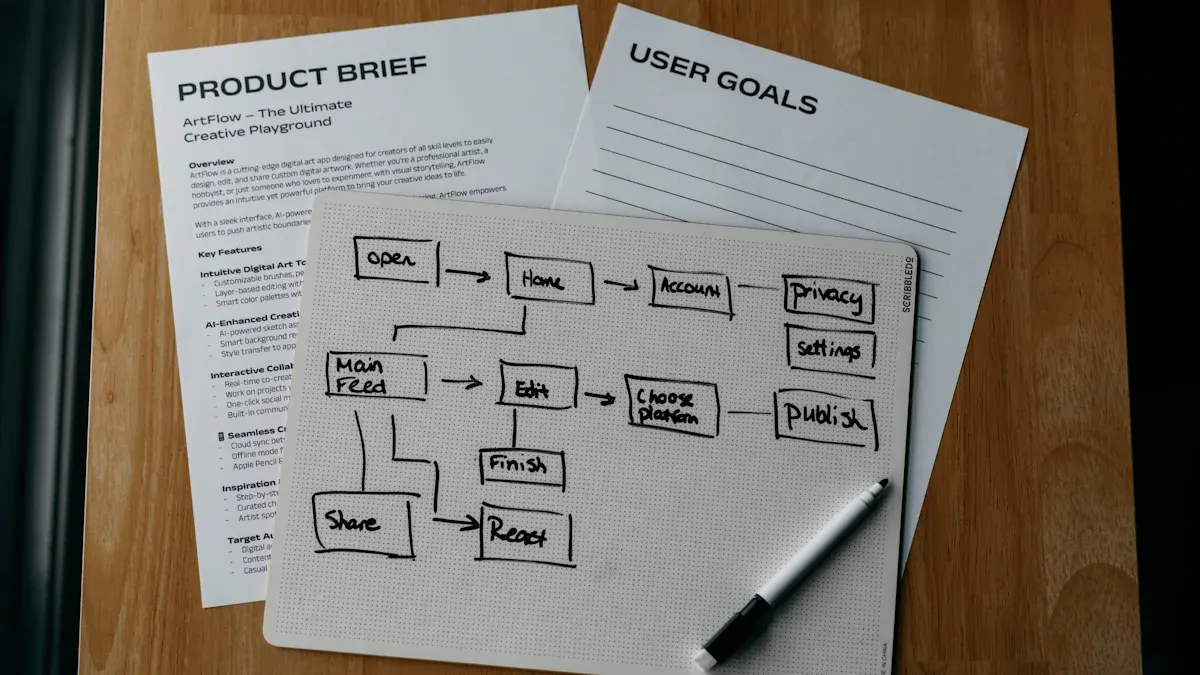
1. Requirement Review
The buyer provides the product category, target market, estimated quantity, size range, material or structure preferences, brand requirements, packaging needs, and any sales-channel documentation requirements.
2. Scope and Feasibility Confirmation
The manufacturer confirms whether the request is private label, OEM, or ODM; which changes are feasible; which details need buyer approval; and which requirements could affect MOQ, sampling, cost, or order lead time.
3. Sample Preparation and Review
Sample preparation is typically discussed within 7–14 days after the product details and available materials are confirmed. Complex structures, new patterns, special components, or multiple revisions may require additional time.
Review the sample against a written checklist rather than approving it only by appearance. Check measurements, symmetry, seams, strap position, closures, edge finish, support-panel placement, logo, labels, packaging, and the agreed size specification.
4. Pre-Production Confirmation
Before bulk production, confirm the approved sample or reference standard, bill of materials where applicable, size breakdown, artwork, packaging, inspection points, order quantity, shipment preparation, and change-control process.
5. Bulk Production and Shipment Preparation
Production follows the confirmed scope. GaitGuard’s estimated order lead time is approximately 30–45 days after the deposit is received and all final order details are confirmed. This is an order lead-time estimate, not a fixed promise for every structure, packaging format, quantity, or shipping method.
Quality Review Before Bulk Shipment
Quality review for canine protective gear should focus on the specifications that affect repeatability and order acceptance. Depending on the product and confirmed order scope, checks may include:
- Material type, surface condition, and order-specific material requirements
- Dimensions, size labels, symmetry, and shape
- Stitching, seam placement, reinforcement, and edge finishing
- Strap length, closure alignment, and adjustment range
- Support-panel, splint, or hinge placement where applicable
- Logo, print, label, instruction, and packaging accuracy
- Finished-product sampling and carton condition before shipment
A buyer should not assume that a general factory statement replaces product-specific evidence. Ask which checks will be performed, what the acceptance criteria are, how deviations are recorded, and how material or construction changes will be communicated.
MOQ, Payment, and Cost Planning
GaitGuard’s standard MOQ is 500 units for bulk B2B production. The normal payment framework is a 30% T/T deposit, with the balance paid before shipment. Final terms should be confirmed for the specific quotation.
Unit price alone is not enough to compare suppliers. Total project cost can be affected by:
- Product structure and number of components
- Material type, thickness, padding, and reinforcement
- Number of sizes and quantity distribution by size
- Logo method, labels, instructions, packaging, and carton requirements
- Sample revisions, molds, patterns, or special tooling where required
- Inspection, documentation, market, and channel requirements
- Freight, duties, insurance, and destination handling
To make quotations comparable, send the same RFQ structure to each supplier and separate product cost, branding, packaging, tooling, sampling, inspection, and shipping assumptions.
Supplier Verification Framework
| Review Area | What to Ask | Warning Sign |
|---|---|---|
| Product fit | How are size points, adjustment range, and unsuitable cases defined? | One chart is used across unrelated brace types |
| Scope control | Which details are existing, customizable, or newly developed? | “Anything is possible” without written limitations |
| Sample approval | What becomes the approved production reference? | Bulk production starts without a signed sample standard |
| Materials | Can the supplier identify the requested material and confirm its applicable documentation? | Marketing terms are used instead of specifications |
| Quality review | Which checkpoints and acceptance criteria apply to the order? | Only “strict QC” is stated |
| Packaging | Who approves labels, instructions, barcodes, and carton marks? | Packaging is discussed after production |
| Change control | How are substitutions or process changes approved? | Materials may change without buyer confirmation |
| After-sales | What evidence is required for a quality claim and who owns the response? | No documented issue-review process |
Common Specification and Launch Risks
- Starting with too many SKUs: A broad range multiplies size, artwork, inventory, and support complexity before demand is proven.
- Approving a sample without a checklist: Visual approval can miss strap length, measurement tolerance, edge contact, labeling, or packaging errors.
- Using claims before verifying evidence: Unsupported medical, certification, performance, or universal-fit claims can create channel and reputational risk.
- Ignoring size mix: Ordering equal quantities of every size without channel data can create overstock in slow sizes and shortages in core sizes.
- Comparing only unit price: A lower quote may exclude packaging, artwork, samples, tooling, inspection, or required documentation.
- Changing details after approval: Late changes to material, color, packaging, or size breakdown can affect cost and delivery planning.
Information to Prepare for Supplier Review
Prepare the following information before asking a supplier to review feasibility, sampling, and quotation:
- Product category or reference product
- Target market and sales channel
- Estimated order quantity and size breakdown
- Required size range and measurement method
- Material, structure, closure, or comfort requirements
- Logo, label, instruction, and packaging requirements
- Sample approval criteria
- Required compliance or channel documentation
- Expected delivery window and shipping destination
- Forecast for repeat orders or line expansion, if available
B2B sourcing note: Buyers who already have a sales channel and want selected products under their own brand can review GaitGuard’s private label dog braces and wholesale supply scope. Product structure changes, custom size logic, materials, and development requirements should be identified clearly during RFQ review.
FAQ
What is included in private label dog rehabilitation gear?
The scope may include an existing dog brace, anti-lick product, recovery-wear item, or lift harness with agreed branding, labels, packaging, colors, or selected material options. Structural changes and new size systems usually require OEM or ODM review.
What is GaitGuard’s standard MOQ?
The standard MOQ is 500 units for bulk B2B production. Product type, size mix, branding, packaging, and development requirements should be confirmed before quotation.
How long does sampling take?
Sample preparation is typically discussed within 7–14 days after the requirements and available materials are confirmed. New patterns, complex structures, special components, or revisions may take longer.
What is the estimated order lead time?
The estimated order lead time is approximately 30–45 days after the deposit is received and all final order details are confirmed. The final schedule depends on the product, quantity, customization, packaging, and shipment preparation.
Can different products be mixed in one order?
Mixed product or size plans need case-by-case review. Buyers should provide the product list, quantity by SKU and size, packaging requirements, and expected repeat-order plan so the supplier can confirm whether the proposed mix fits the production framework.
Does GaitGuard claim ISO, CE, RoHS, BSCI, FDA, or clinical certification?
GaitGuard does not currently claim ISO, CE, RoHS, or BSCI certification on the site, and dog rehabilitation gear should not be described as FDA approved, FDA compliant, or clinically proven without product- and market-specific evidence. Buyers should share any required documentation during RFQ review so support can be confirmed for the requested scope.