
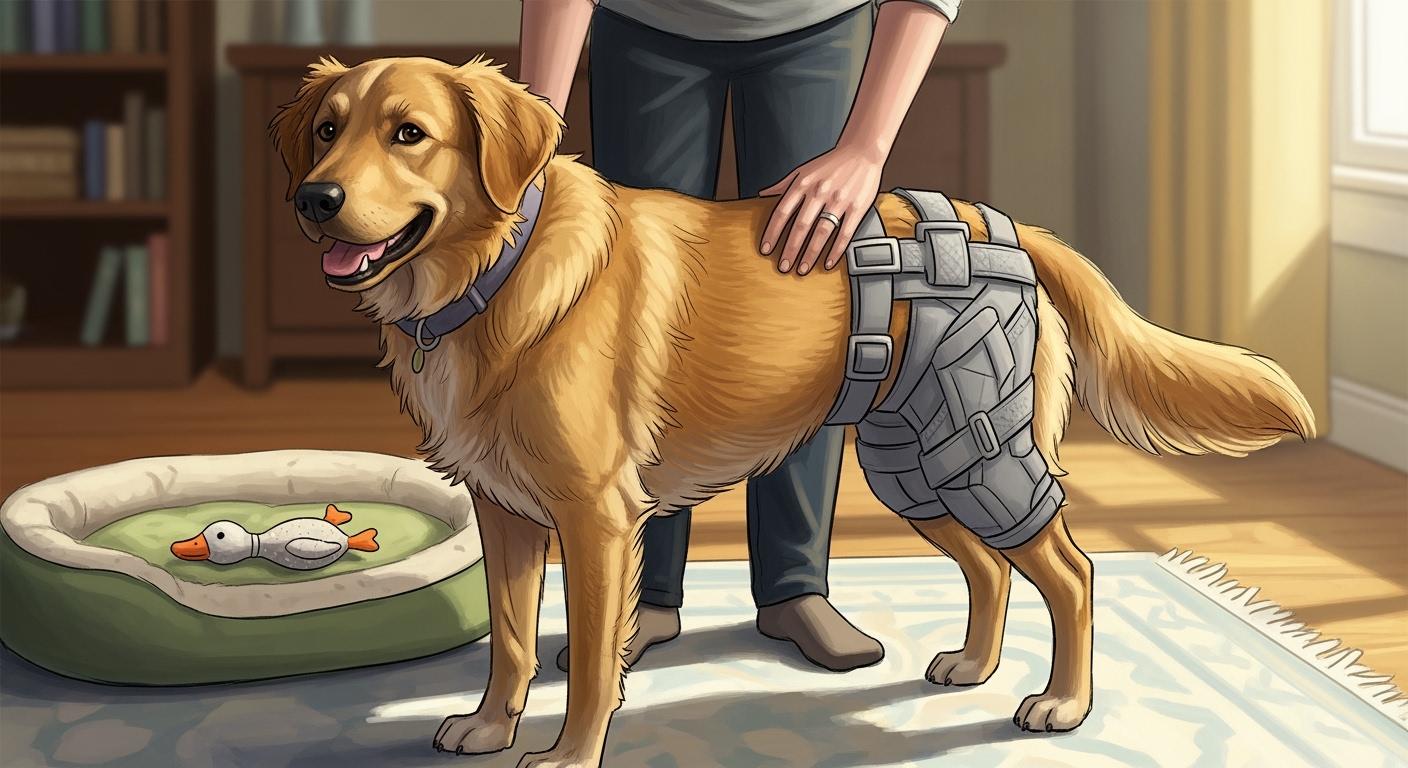
Dog hip support lets your dog move better and feel good. You might see your dog needs hip support if standing is hard, back legs sway, or your dog stops at stairs. Many owners notice weak back legs, stiff joints after sleep, or less play. Hip dysplasia happens in about 15% of dogs, but some breeds get it more. Dogs with arthritis, weak back legs, or trouble moving from age can use dog hip support. You might also see shaking legs, limping, or your dog putting weight on the front legs. Dog hip support helps your dog move and stay steady every day.
Key Takeaways
Dog hip support can help your dog move better and stay steady. It makes daily things easier and more comfy for your dog. Look for signs like a wobbly walk, limping, or trouble with stairs. These signs can show if your dog needs hip support. Pick the right support, like braces or harnesses, for your dog’s needs. Use helpful products like orthopedic beds and joint supplements. These can make your dog feel better and help their joints. Always ask your veterinarian for advice on hip support. Your vet can help you choose and check your dog’s progress.
Dog Hip Support and Rear-End Mobility
What Is Dog Hip Support
Dog hip support helps your dog move better and stay steady. You use hip support to help the hip joint and back end. These parts are important for walking and standing. The hip joint connects the back legs to the body. If your dog has problems here, you will see changes in how they walk or balance. Hip support devices like braces or harnesses give extra support and lower stress. These tools keep the hip joint steady. This makes it easier for your dog to stand, walk, or go up stairs. Some devices have special parts that help your dog get up from sitting. By helping the hip and back end, you make it easier for your dog to move and enjoy life.
Component/Mechanism | Description |
|---|---|
Linkage Mechanism | Gives support but lets your dog move in a set way. |
Damping System | Uses a small piston to help your dog stand up, so there is less stress on the hips. |
Grashof Linkage | Makes your dog more steady and helps them move smoothly when standing or sitting. |
Common Signs of Hip Issues
You can tell your dog has hip problems by some signs. These signs show you that your dog may need hip support:
Hip sway: Your dog’s hips move side to side, mostly in young dogs.
Bunny hopping: Both back legs move together when running.
Hard time jumping or climbing stairs: Your dog does not want to use stairs or jump into the car.
Limping: Your dog does not put weight on one back leg.
Loss of back leg muscle: The thighs look smaller because of muscle loss.
Gets tired fast: Your dog does not want to walk far or play much.
Tip: If your dog has trouble moving every day, hip support can help them move and feel better.
Conditions Like Dysplasia and Arthritis
Hip dysplasia and arthritis are main reasons for hip support. Hip dysplasia makes the hip joint loose and move in a strange way. Dogs with hip dysplasia often walk differently or limp when they are three to eight months old. Arthritis causes pain and stiff joints, so it is hard to move. Some breeds, like purebred dogs, get hip dysplasia more often. About 20% of purebred dogs and 17% of mixed-breed dogs have hip dysplasia. Joint problems depend on body shape and leg size. Getting older, weak back legs, and healing after surgery also make it hard to move. You might see hip sway, bunny hopping, or your dog getting tired fast. These problems make it hard for your dog to move every day, so hip support helps your dog stay active and comfortable.
Dog Hip Support Solutions
Dog Hip Brace Options
Dog braces help support hip stability and daily mobility. For a broader comparison of support types, fit priorities, and use cases, see our dog brace for hips guide. Some braces have adjustable suspension. These work well for dogs with hip dysplasia, arthritis, or after surgery. These braces give medium to high support and feel comfortable. They are good for daily use. Three-in-one braces give very strong support. They help dogs after surgery or with big balance problems. If your dog has a problem on one side, a single-hip support brace helps that side. It gives medium support. Rear support harnesses give low to medium support. They help older dogs walk and go to the bathroom.
Type | Best For | Support Level | Comfort | Use Case |
|---|---|---|---|---|
Adjustable Suspension | Hip dysplasia, arthritis, recovery | Medium to High | High | Daily wear, changing body conditions |
Three-in-One Brace | Post-surgery, instability | Very High | Medium | Rehabilitation, structured support |
Single-Hip Support | One-sided injury or surgery | Medium | High | Targeted leg support, mild cases |
Rear Support Harness | Mobility aid, elderly dogs | Low to Medium | High | Assistance with walking, toileting |
Dog braces use materials like neoprene, nylon, and elastic fabrics. Neoprene is soft and supports the hip. Nylon is strong and light. It is good for active dogs. Elastic fabrics let your dog move easily. The brace does not stop your dog’s normal walk. Orthotic devices like these help your dog stand, walk, and climb stairs with less pain. You can also use a dog leg brace or a dog knee brace for extra joint help.
Mobility Harnesses and Lifting Aids
Mobility harnesses and lifting aids help support the rear end during walking, standing, and transfer assistance. For product-side options, review our dog lift harness options. There are three main types: front lifting, rear support, and full support harnesses. Rear support harnesses are best for dogs with weak back legs. Full support harnesses help dogs with weak legs all over or with big movement problems.
Mobility harnesses and slings wrap around your dog’s back legs or middle. They give steady support.
These tools make walks easier for you and your dog.
They help old dogs stay active and help dogs with hip dysplasia, arthritis, or weak back legs.
Harnesses often have a leash for gentle lifting. This is called a rear support leash.
You can use these orthotic devices to help your dog stand, walk, or go to the bathroom more easily.
For buyers comparing age-related support needs, daily handling, and weak rear-leg assistance, see our senior dog mobility support harnesses guide.
Mobility harnesses lower the stress on your dog’s joints. They give you more control when your dog moves. They also help your dog exercise and keep muscle strength, even if your dog gets tired fast.
Orthopedic Beds and Comfort Products
Orthopedic beds and comfort products give your dog a safe place to rest. Memory foam beds keep your dog’s hips in a good position while sleeping. This support stops more damage and lowers stress on the hips and muscles. Solid memory foam and support foam beds shape to your dog’s joints. They have zero pressure points, which helps with pain. These beds also keep the spine straight and stop your dog from sinking to the floor.
Bed Material | Support Level | Impact on Hip Dysplasia | Recommended? |
|---|---|---|---|
Loose Poly-Fill (Standard) | Low | Hips hit the floor, increases stiffness | No |
Egg Crate Foam (Low Density) | Low/Medium | Collapses over time, poor for heavy dogs | Caution |
Solid Memory Foam (4lb+ Density) | High | Molds to joints, zero pressure points | Yes |
Structural Support Foam | Very High | Firm, keeps spine aligned | Yes |
When you pick an orthopedic bed, check the foam’s thickness and density. Beds that are 4 to 7 inches thick are best for big dogs. Studies show orthopedic beds help dogs heal faster, feel better, and have less swelling in their joints. Orthotic devices like these beds help your dog sleep well and wake up with less stiffness.
Joint Supplements for Hip Support
Joint supplements can help your dog’s hips stay healthy. These products have things that help joints and lower pain. Common ingredients are glucosamine, hyaluronic acid, chondroitin, omega-3 fatty acids, MSM, and turmeric.
Ingredient | Benefits |
|---|---|
Glucosamine | Supports cartilage maintenance, may reduce inflammation. |
Hyaluronic acid | Reduces friction, maintains joint lubrication, promotes comfort and mobility. |
Chondroitin | Reduces inflammation, alleviates pain, improves flexibility, better shock absorption. |
Omega-3 fatty acids | Boosts mobility, reduces stiffness, slows cartilage degeneration. |
MSM | Removes inflammation-causing toxins, enhances mobility, supports joint cartilage. |
Turmeric | Reduces inflammation, protects joint tissue, alleviates discomfort, manages arthritis. |
These supplements help keep cartilage, lower swelling, and make joints flexible. Glucosamine and chondroitin slow down joint damage and help joints bend. Hyaluronic acid keeps joints smooth and lowers rubbing. Omega-3 fatty acids and MSM lower stiffness and help joint health. Turmeric helps with swelling and protects joints. You can give these supplements every day to help your dog’s hips and comfort.
Note: Always talk to your veterinarian before starting any new supplement or orthotic device for your dog.
Dog hip support solutions include dog braces, mobility harnesses, orthopedic beds, and joint supplements. Each one helps your dog move better, lowers stress, and makes your dog more comfortable. You can pick the right support for your dog’s needs and how bad their movement problem is.
Mobility and Comfort Benefits
Improving Stability and Walking
You want your dog to walk with confidence and stability. Dog hip support solutions help your dog stand and move by giving steady support to the hip and rear legs. These devices, such as braces and harnesses, help distribute your dog’s weight and add gentle compression. This support improves your dog’s balance and coordination. When your dog uses a harness or brace, you may notice better posture and fewer wobbly steps. Some products, like ToeGrips, fit over your dog’s toenails and give extra grip on slippery floors. This traction helps prevent falls and boosts your dog’s confidence.
Dog hip support also improves proprioception, which means your dog knows where their legs are and how to move them. Better proprioception leads to smoother walking and less risk of injury. Studies show that dogs using custom braces or orthoses stand longer and walk more evenly. Owners often see their dogs walk farther, play more, and rest with less pain after using these supports.
Study Reference | Findings | Limitations |
|---|---|---|
Rosen et al. (2022) | Dogs with custom stifle orthoses could stand better and use their legs more. | Small group; short study time |
Carr (2016) | Dogs using stifle braces for 90 days had better pressure on their legs and walked more evenly. | No control group; retrospective |
Muršec et al. (2025) | Two dogs with CCL ruptures wore custom knee orthoses and had better weight on both legs and walked more evenly. | Very few dogs in the study |
Hip support solutions do more than improve walking. They also support safer movement planning, daily routines, and gradual activity progression. For practical walk routines and monitoring ideas, see our dog gait training support article.
Enhancing Daily Comfort
Dog hip support does not stop at walking. It also brings comfort to your dog’s daily routine. You can use orthopedic beds to keep pressure off your dog’s joints and support healthy rest. Memory foam beds shape to your dog’s body and help reduce pain from joint issues. Non-slip rugs and mats give your dog safe places to walk, which lowers the risk of slipping and hurting their hips.
You can also use ramps or low steps to help your dog get on furniture or into the car without jumping. Elevated food and water bowls make eating and drinking easier, especially for taller breeds. Short, frequent walks help your dog stay active without getting too tired. Lifting harnesses or slings give gentle help when your dog needs to climb stairs or get into the car.
Supportive bedding keeps pressure off the joints and improves comfort during rest.
Non-slip surfaces give your dog traction and prevent falls.
Ramps and steps reduce the effort needed to move around the house.
Elevated bowls minimize bending and make mealtime easier.
Frequent breaks and gentle assistance help your dog stay active and happy.
Many owners notice changes in their dogs within days of using hip support. Dogs often show more energy, better mood, and less pain. Owners also report that their dogs rest better and move with more ease. These changes improve your dog’s quality of life and make daily routines more enjoyable.
Suitability for Dysplasia and Arthritis
Dog hip support works well for dogs with dysplasia and arthritis. Hip dysplasia affects many dogs and causes pain, joint looseness, and trouble moving. You may see your dog struggle to get up, climb stairs, or play. Arthritis brings joint inflammation and stiffness, making movement hard for senior dogs and those with chronic joint health problems.
A brace can give your dog’s hip joint the support it needs. This support helps your dog move with less pain and more stability. Dogs with hip dysplasia often shift weight to their front legs or limp because of pain or weakness. Hip support solutions help balance your dog’s body and make walking easier. For dogs with arthritis, long-term support can help manage inflammation and improve joint health.
Hip dysplasia affects 10-15% of dogs worldwide. Some breeds have even higher rates.
Symptoms include shaking legs, limping, and less activity.
Dogs with arthritis may need hip support for life as their condition changes.
Dog hip support also helps with rehabilitation after surgery. It gives steady support during healing and helps your dog regain strength. You can use these solutions for post-operative comfort and to support canine joint health during recovery.
Tip: Always watch your dog for signs of pain, joint issues, or changes in movement. Early support can improve mobility and quality of life.
Dog hip support solutions give your dog the help they need for joint health, comfort, and daily happiness. You can choose the right support for your dog’s needs, whether they have hip dysplasia, arthritis, or need help after surgery. These tools help your dog move, rest, and enjoy life with less pain and more comfort.
Choosing Dog Hip Support Products
Fit and Adjustability
You want the hip support to fit your dog well. It should match your dog’s size and shape. Measure from the hip joint to the hock for the right size. Adjustable straps help you change the fit if your dog gains or loses weight. This means the support stays comfy and works well, even if your dog’s body changes. A good fit keeps the hip joint steady and stops too much movement. This helps your dog walk, stand, and heal from joint problems like arthritis. Some supports have adjustable thigh cuffs or quick-lock dials for easy changes.
Factor | Description |
|---|---|
Proper Sizing | Measure from hip joint to hock for best fit. |
Adjustable Straps | Change fit as your dog moves or changes weight. |
Material Quality | Choose durable, skin-friendly materials for comfort. |
Ease of Use | Wide Velcro closures make it simple to put on and take off. |
A hip support that fits well gives your dog gentle pressure. This helps with pain and helps the hip and thigh joint heal.
Comfort and Materials
Comfort is important if your dog wears hip support every day. You want soft materials that last a long time. Many hip supports use strong fabrics that do not bother your dog’s skin. Some have memory foam or padding to protect the hip joint and stop sore spots. Common materials are neoprene, nylon, and elastic fabric. These let your dog move easily but still support the joint. Some products have extra padding around the joint for more comfort.
Vets often say to use joint supplements like glucosamine and chondroitin for dogs with joint pain. These can help with stiffness and make joints move better. MSM, hyaluronic acid, and omega-3 fatty acids also help joints feel good. When you pick a hip support, look for strong materials that pass safety tests. These tests show the product protects the joint when your dog moves or falls.
Material Type | Durability Concerns | Health Implications |
|---|---|---|
Neoprene | High durability, flexible | Skin-friendly, supports joint health |
Nylon | Strong, lightweight | Comfortable for long wear |
Elastic Fabric | Stretches for movement | Reduces joint pressure |
Ease of Use for Daily Mobility
You want hip support that is easy to use every day. Look for designs with wide Velcro or simple buckles. These make it fast to put on and take off. This saves you time and keeps your dog calm. For walking, standing, and bathroom breaks, pick a support that lets your dog move naturally. Non-slip bottoms and raised parts help your dog stay steady on all floors. Some supports have openings or stretchy parts so your dog can go to the bathroom without taking it off.
You can also use non-slip mats or rugs at home to help your dog walk safely. Raised beds and easy-to-reach bowls make life easier for dogs with joint problems. These small changes help your dog feel more independent and comfortable. When you choose hip support, think about how it helps your dog walk, rest, and use the bathroom.
Tip: Always check if the hip support fits and feels good. Watch for rubbing or sore spots near the joint and fix the fit if needed.
Safe Use and Daily Integration
Proper Usage and Maintenance
You want your dog’s hip support to work well and last long. Safe use means you must take care of it often. Always check the brace or harness before you use it. Look for any fraying, cracks, or loose parts. Clean the support with mild soap and warm water. Let it dry in the air until it is fully dry. Never use a brace that is wet or broken. This can hurt your dog’s skin or make joint problems worse. Keep the support in a cool, dry place away from sunlight. Check the fit every week, especially if your dog is healing or changes weight. A good fit keeps your dog comfy and helps their joints stay steady.
Clean with mild soap and water
Check every day for damage or wear
Let it dry all the way before using again
Check the fit once a week
Store in a dry, cool spot out of the sun
Tip: Do not use a brace that does not fit right. It can make your dog’s joints worse instead of better.
Integrating Support into Routine
You can help your dog by making hip support part of daily life. Start with short times wearing the support and watch how your dog acts. Add gentle things like short walks or easy exercises. Give your dog breaks to move during the day. Try balance games or slow steps to help your dog get stronger. Encourage your dog to use orthopedic beds and non-slip mats for more comfort.
Add short “movement snacks” during the day
Use ramps or steps so your dog does not jump
Practice gentle hip stretches and balance moves
Keep routines simple and do them every day
Doing different hip stretches and balance games can help your dog move better and feel good every day.
Setting Realistic Expectations
Dog hip support helps your dog move and feel better, but it does not fix dysplasia or arthritis. You should look for slow progress, not quick changes. Watch for new ways your dog moves, acts, or plays. If you see new pain or problems, talk to your vet. Hip support works best with other care for joint health. Always follow your vet’s advice, especially for hip dysplasia or joint problems.
Expectation | What to Watch For |
|---|---|
Improved stability | More steady walking, less swaying |
Increased comfort | Easier rest, less stiffness |
Gradual progress | Small gains over weeks |
Need for vet guidance | Regular check-ins recommended |
Note: Hip support helps with joint issues like hip dysplasia, but it does not take the place of your vet. Be patient and celebrate small wins.
Dog hip support helps your dog stay steady and comfortable. It lets your dog move around more easily every day. Picking the right support helps your dog’s joints and protects sensitive skin. Look for signs like stiff or weak joints or if your dog has trouble moving. A good fit keeps the joint steady so your dog can walk and play. Custom fits work well for many types of dogs and help joints move better. Taking care early keeps your dog’s joints strong. Always ask your veterinarian for advice. You can help your dog feel better and enjoy life with less joint pain.
Key Benefit | Description |
|---|---|
Snug Fit | Gives steady pressure around the hips and keeps weak joints stable. |
Freedom of Movement | Lets your dog move all the way, which is important for healing and daily fun. |
Comfort for Sensitive Skin | Soft fabrics stop rubbing and are gentle for dogs with skin problems. |
Custom Fit | Special fits give better support and help many dog breeds feel better. |
Preventative Care | Used early for dogs at risk, so vets can help before problems start. |
FAQ
What is dog hip support and how does it help my dog?
Dog hip support includes braces, harnesses, and comfort products. You use these tools to help your dog walk, stand, and rest with less strain on the hips. They give stability and make daily movement easier.
When should I consider using dog hip support for my pet?
You should consider dog hip support if your dog has trouble standing, sways in the back legs, avoids stairs, or shows less interest in play. Early support can help your dog stay active and comfortable.
Can my dog wear hip support all day?
You can let your dog wear hip support during active times, walks, or rest. Always check for skin irritation and give breaks. Remove the support at night or when your dog relaxes for long periods.
How do I choose the right size and type of dog hip support?
Measure your dog’s hip and thigh area before buying. Look for adjustable straps and soft materials. Choose a support that matches your dog’s activity level and daily needs.
Does dog hip support replace veterinary care?
No, dog hip support does not replace your veterinarian’s advice. You should use these products as part of your dog’s daily routine. Always talk to your vet for guidance on your dog’s health.
For product-side options focused on comfort, stability, and daily mobility, explore our dog hip brace options.
