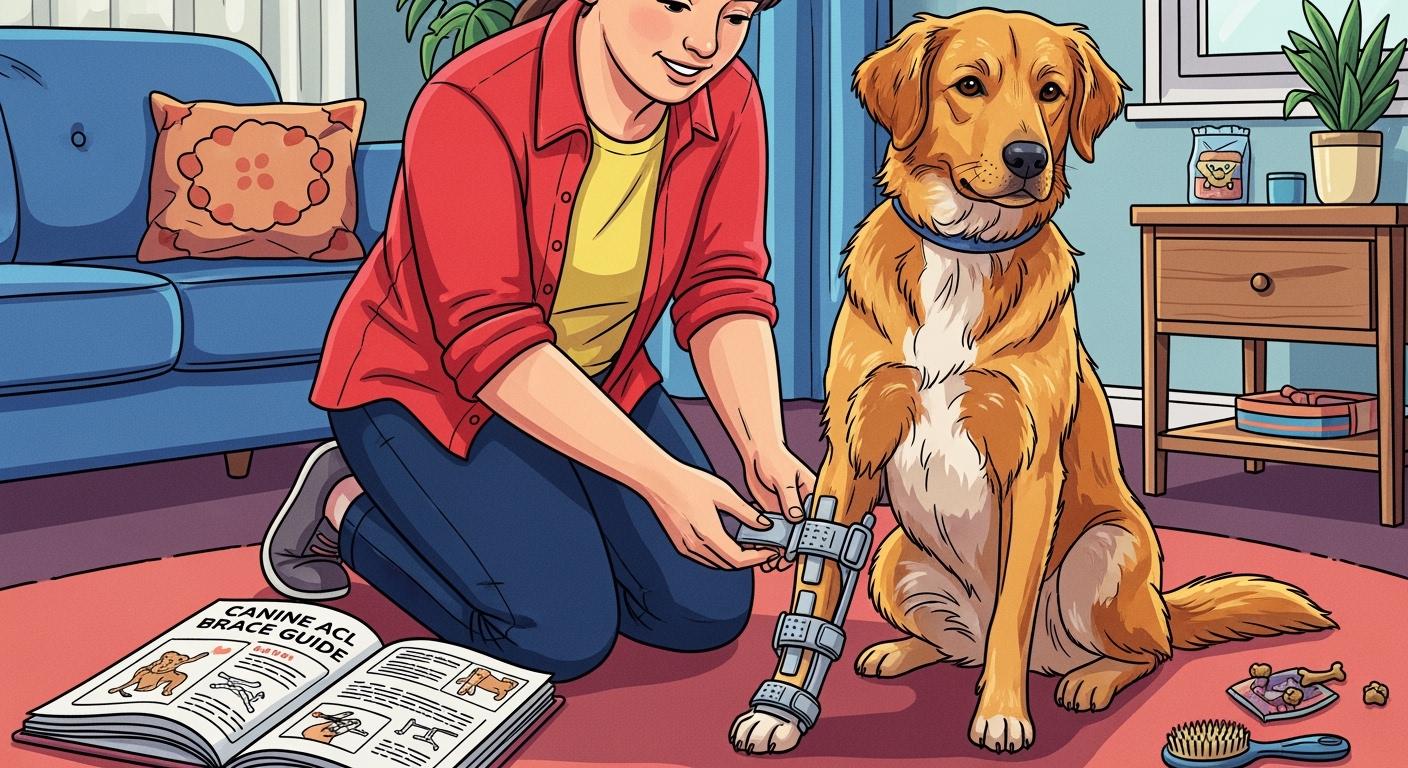
You want your dog to be safe and comfortable. Picking and fitting a dog ACL brace starts with careful measuring. Pay attention to what your dog needs. First, have your dog stand in a normal way. Use a soft tape to measure both legs. This helps you see if there are any differences. Write down your dog’s weight and breed. Measure each part two times to make sure it is right. Always check the healthy leg too. Injuries can make muscles smaller. Remember, support gear does not replace a vet’s check or pain medicine. Work with your vet for the best help.
Key Takeaways
Measure your dog’s legs with care. This helps the ACL brace fit well. Use a soft tape to measure. Check both legs, even if only one is hurt.
Talk to your veterinarian before using a brace. Your vet can tell you if your dog needs a brace. They will show you how to use it safely.
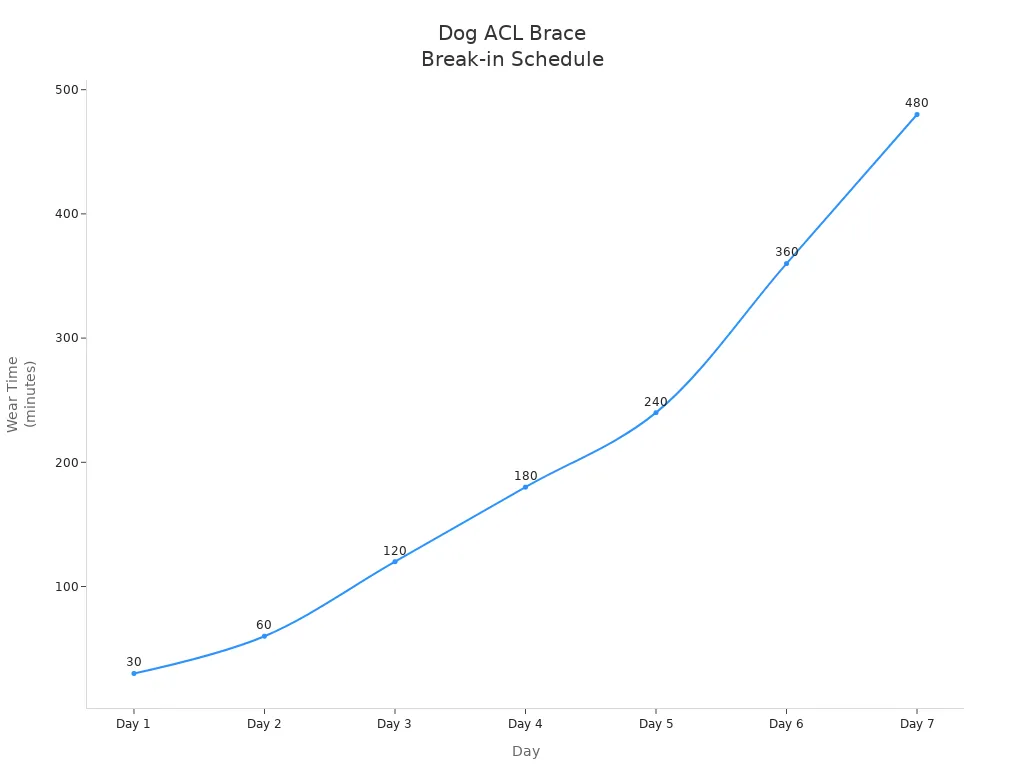
Let your dog wear the brace for a short time at first. Slowly let your dog wear it longer as they get used to it. Follow the schedule for comfort and safety.
Look for any signs that your dog is uncomfortable. Check for red spots or sores under the brace. If you see these, take off the brace and call your vet.
Keep your dog at a healthy weight to help them heal. Too much weight can make healing slower. It can also cause more injuries.
Dog ACL Brace Basics
ACL vs CCL Explained
People sometimes say ACL injury when talking about dogs. But in dogs, the right name is CCL. CCL means cranial cruciate ligament. The CCL keeps your dog’s knee steady. Many people call it a “dog ACL brace” when they mean a brace for the CCL. About 2% of dogs will have a CCL problem in their life. Some breeds are more likely to have this problem. You can look at the table below to see which breeds have the highest risk.
Note: Mobility support gear does not take the place of a vet’s check or pain medicine.
Breed | Prevalence of CCL Pathology |
|---|---|
Female Dogs | Increased prevalence |
Neutered Canines | Increased prevalence |
Rottweiler | Highest prevalence |
Newfoundland | Highest prevalence |
Staffordshire Terrier | Highest prevalence |
Neapolitan Mastiff | At risk before 2 years |
Mastiff | At risk before 2 years |
St Bernard | At risk before 2 years |
Akita | At risk before 2 years |
Labrador Retriever | At risk before 2 years |
American Staffordshire Terrier | At risk before 2 years |
What a Stifle Brace Does
A dog ACL brace can help by giving the knee more support. The brace helps stop movements that hurt. It can make walking easier for your dog. It may also stop more injuries from happening. The brace does not fix the injury. It is just one part of getting better. Always ask your veterinarian before you use new support gear.
When to Pause Brace Shopping
Stop looking for a dog ACL brace if your dog has these signs:
Swelling in the leg or joint
Not wanting to put weight on the leg
Limping, mostly in the back leg
Licking or chewing the leg or paw
Trouble getting up from lying down or sitting
These signs mean your dog should see a veterinarian soon. Getting help early can stop bigger problems.
Quick Reference Card for Dog ACL Braces
Key Prevalence and Risk Numbers
Mobility support gear is not a substitute for veterinary diagnosis or pain control.
About 2% of all dogs may develop a CCL injury in their lifetime.
Labrador Retrievers have a higher risk, with up to 5.79% affected.
If your dog has a CCL injury, there is an 11.8% chance the other knee may be affected later.
Older, medium-to-large dogs have about a 19% risk of a second injury, usually within 13 months.
Fit and Break-In Rules
You want your dog ACL brace to fit well and feel comfortable. Use these rules to help your dog adjust:
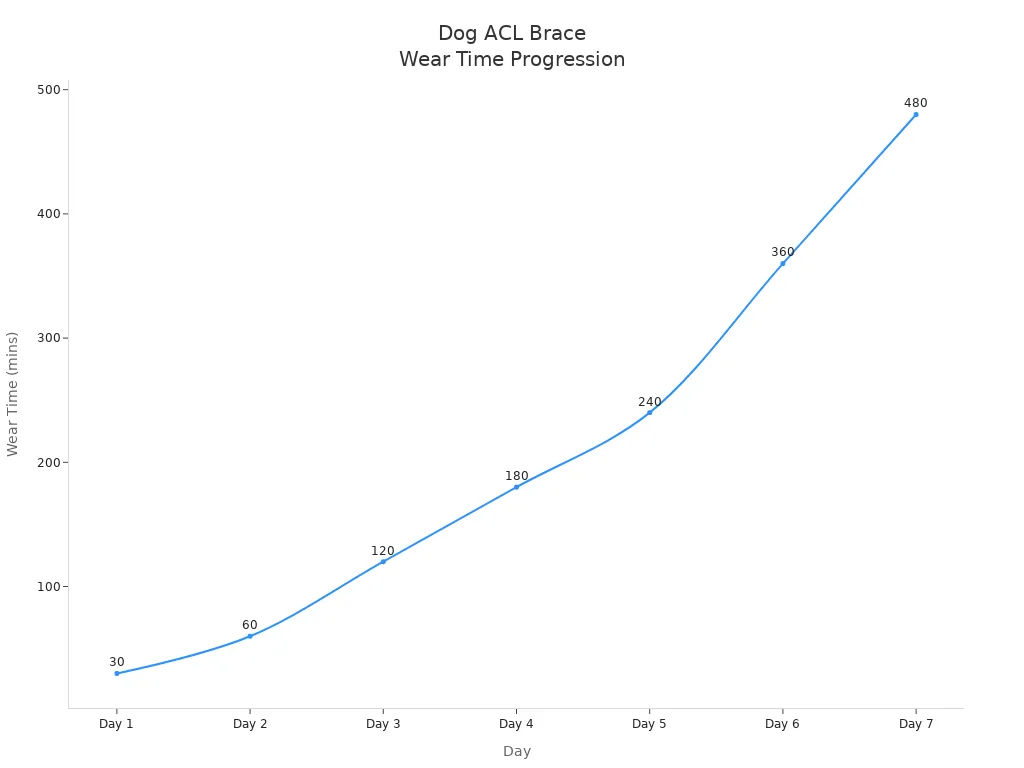
Day | Wear Time (per session) | Frequency per day |
|---|---|---|
1 | 30 mins | 2-3 times |
2 | 1 hour | 2-3 times |
3 | 2 hours | 2-3 times |
4 | 3 hours | 2-3 times |
5 | 4 hours | 2 times |
6 | 6 hours | 1 time |
7 | 8 hours | 1 time |
Start with 2–4 hours of wear during activity.
Increase to 6–12 hours as your dog gets used to the brace.
Always remove the brace at bedtime.
Let your dog’s skin rest overnight.
You should be able to slide two fingers under the straps for a safe fit.
Who Needs a Vet Plan First
Some dogs need a veterinary plan before using a brace. Check this table to see if your dog should see a vet first:
Criteria for Veterinary Plan | Description |
|---|---|
Partial CCL tears | Dogs with partial tears or early instability should be assessed. |
Not surgical candidates | Dogs not suited for surgery due to age, health, or owner choice need evaluation. |
Temporary support needed | Dogs needing support before or after surgery should have a vet plan. |
If you have any doubt, ask your veterinarian before starting a new brace.
When to Use a Dog ACL Brace
Common Conditions for Bracing
You might wonder when your dog needs more help. A dog ACL brace is used for dogs with CCL injuries. These injuries hurt and make walking tough. Your dog might limp or not want to use one back leg. Some dogs sit with one leg sticking out. You may see muscle loss in the thigh. The knee might make clicking sounds. Swelling, pain, and stiffness are also signs. Dogs that are overweight or have weak muscles are at higher risk. Some breeds get CCL injuries more often. These include Labrador Retrievers, Rottweilers, German Shepherds, and Golden Retrievers.
Here are the main reasons to use a brace:
Limping or using one leg less
Trouble getting up or walking
Sitting with one leg stretched out
Swelling or pain in the knee
Muscle loss in the thigh
Clicking or popping in the joint
Stiffness after resting
Mobility support gear does not replace a vet’s check or pain medicine.
When Not to Use a Brace
Do not use a brace if your dog has a lot of swelling, open wounds, or signs of infection. If your dog will not walk or seems in a lot of pain, stop and call your vet. Dogs that act very different or cannot move need a vet right away. Always ask your vet if you are not sure. Some dogs need surgery or special care before using a brace.
Surgery vs Conservative Care
You might have to pick between surgery and other care. Surgery often works better, especially for big or active dogs with full tears. Dogs that get surgery usually hurt less and heal faster. Other care can help small dogs or those with only a small tear. Your dog’s health, age, and how active they are matter most.
Here is a quick guide:
Surgery is best for big dogs with full tears.
Other care works for small dogs or partial tears.
Health, age, and activity level are important.
Treatment Type | Effectiveness | Best Candidates |
|---|---|---|
Surgical Options | Usually works well, mostly for big, active dogs. | Big, active, or young dogs; full tears. |
Conservative Care | Can work for some dogs, mostly with small tears. | Small dogs, partial tears, or health/financial limits. |
Most dogs that have surgery do well after one year. About two out of three dogs get better with other care after one year. Always talk to your vet before you choose.
Tip: Breed and how active your dog is matter a lot for recovery. See the table below for examples.
Breed | Activity Level |
|---|---|
Labradors | Very Active |
Rottweilers | Very Active |
Bulldogs | Not Very Active |
Mobility support gear can help your dog feel better and move safely. You must work with your vet to find the best plan.
Measuring and Fitting a Dog ACL Brace
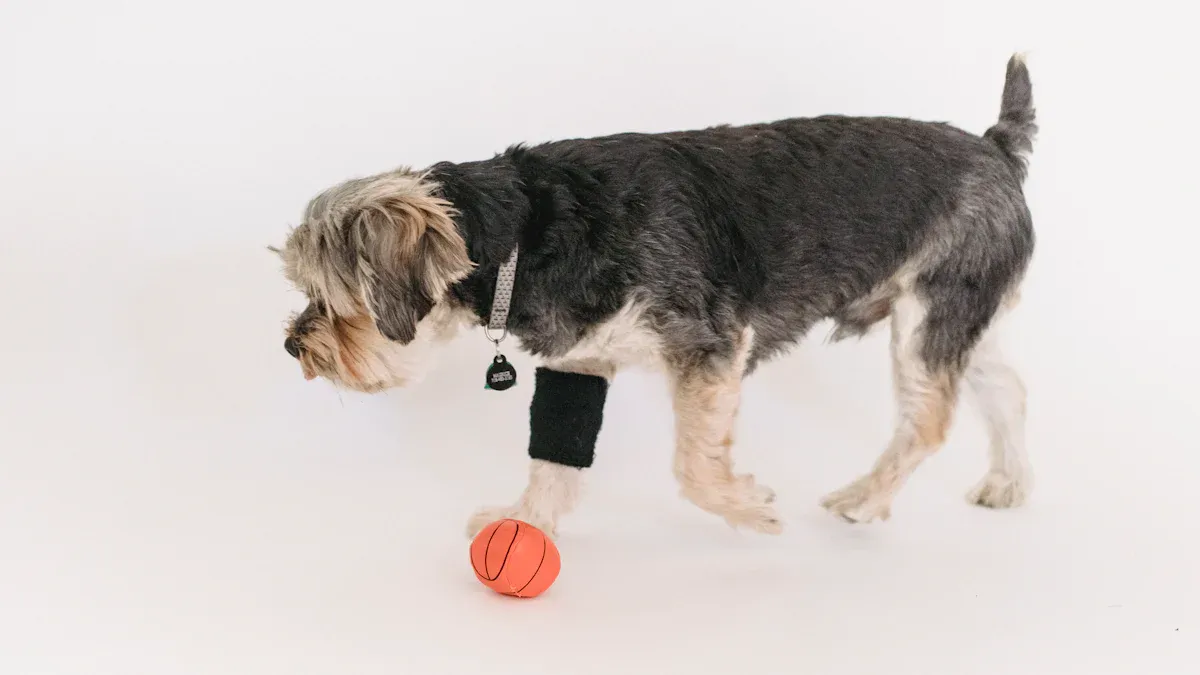
Fitting a dog ACL brace starts with careful measuring and regular checks. You want your dog to feel comfortable and safe. Follow these steps to help your dog get the best support.
Measurement Checklist
Accurate measurements help you choose the right brace size. Use a soft tape measure and write down each number. Measure both legs, even if only one is injured. Always measure twice to make sure you get the same result.
Measurement Step | Description | Example (inches) | Example (cm) |
|---|---|---|---|
Thigh Circumference | Measure around the top part of the thigh, one inch below the body joint. | 12 in | 30.5 cm |
Knee Circumference | Measure around the middle of the knee joint. | 9 in | 22.9 cm |
Hock to Knee Length | Measure from the center of the knee to the hock joint (ankle area). | 7 in | 17.8 cm |
Lower Leg Circumference | Measure halfway between the hock and the paw. | 6 in | 15.2 cm |
Dog’s Weight and Breed | Record your dog’s weight and breed for brace sizing. | 60 lbs, Lab | — |
Tip: To convert inches to centimeters, multiply by 2.54. For example, a thigh circumference of 12 inches × 2.54 = 30.5 cm.
Fit and Walk Test
A good fit keeps your dog safe and comfortable. Use the two-finger fit rule every time you put on the brace:
Slide two fingers under each strap. The brace should feel snug but not tight.
If you can fit more than two fingers, the strap is too loose.
If you cannot fit two fingers, the strap is too tight.
After your dog walks or plays, check the straps again. Movement may loosen them.
Next, do a 60-second walk test:
Put the brace on your dog.
Let your dog walk for one minute.
Watch for limping, slipping, or twisting of the brace.
Make sure your dog walks naturally and does not stop to chew or scratch at the brace.
Fit Check in Under 2 Minutes:
Check all straps with the two-finger rule.
Look for any twisting or slipping.
Watch your dog walk for 60 seconds.
Check the skin under the brace.
Repeat this fit check every week to keep your dog safe.
Mobility support gear is not a substitute for veterinary diagnosis or pain control.
Skin Check Points
Check your dog’s skin every time you put on or remove the brace. Look at these key spots:
Key Locations | Signs to Look For |
|---|---|
Behind the knee | Redness |
Under straps | Sores |
If you see redness, sores, or swelling, stop using the brace and talk to your veterinarian. Stop use and seek guidance if the dog shows increased pain, worsening lameness, or new swelling.
A dog ACL brace may help your dog feel more stable and comfortable, but it does not replace a full veterinary plan. Always follow your veterinarian’s advice.
For more information on choosing and fitting support gear, visit dog ACL brace options to see educational resources and products that may help your dog.
Recovery and Brace Use Timeline
TPLO Recovery Milestones
TPLO surgery is used for dogs with CCL injuries. You can see your dog’s progress by watching for important steps. Most dogs start walking on the leg in one day after surgery. By two weeks, your dog may put more weight on the leg. At ten weeks, your dog may walk with little or no limp. By four months, your dog can walk and play, but avoid hard activity. At six months, most dogs can do all normal activities.
Here is a simple timeline for TPLO recovery:
Week | Milestone Description | Example Activities |
|---|---|---|
1–2 | Strict rest | Leash-only potty, crate rest |
3–10 | Guided exercises | Controlled leash walks, figure 8s |
11–16 | Return to normal activity | Gradual increase, regular walks |
Tip: Your dog may walk better at ten weeks. Always listen to your veterinarian. Mobility support gear does not replace a vet’s check or pain medicine.
IVDD and Arthritis Support
IVDD and osteoarthritis are common in dogs. IVDD needs strict rest for four to six weeks. You can use a brace to help your dog feel steady. Most dogs with IVDD get better in a few weeks, but progress is different for each dog. Osteoarthritis affects about 20% of adult dogs. Older dogs show signs more often. Braces may help your dog move with less pain. Watch your dog for changes in movement and comfort.
Note: Braces may help your dog feel steadier, but they do not cure IVDD or arthritis.
Weight and Mobility Factors
Being overweight slows recovery after ACL injuries. About 60% of dogs in the US are overweight or obese. Extra weight puts more stress on joints and slows healing. Dogs with healthy weight heal faster and move more easily. You can help your dog by keeping weight healthy and encouraging gentle activity.
More CCL injuries happen as canine obesity rises.
Waiting longer to spay or neuter may lower risk of joint injuries.
Keeping your dog at a healthy weight can help recovery and stop future injuries.
Decision Table: Choosing the Right Support
Home Signs and Brace Choice
You want to pick the best support for your dog. Start by watching how your dog moves at home. Use this five-step guide to help you choose the right approach:
Watch your dog walk and note any limping or weakness.
Check for slipping or dragging of the leg.
Feel for muscle loss or swelling.
Test if your dog can stand and move without help.
Review your notes and match them to the table below.
Here is a decision table to guide your choice:
Limp Pattern | Slipping Signs | Weakness Signs | Best Support Option | Next Step |
|---|---|---|---|---|
Mild limp, no slip | None | None | Brace or harness | Monitor at home |
Moderate limp | Occasional slip | Some weakness | Start break-in schedule | |
Severe limp | Frequent slip | Marked weakness | Vet plan + brace | Schedule vet check |
Sudden non-weight | Sudden slip | Severe muscle loss | Vet only | Stop brace, call vet |
No limp | No slip | No weakness | No brace needed | Regular exercise |
Mobility support gear is not a substitute for veterinary diagnosis or pain control.
Adjusting Wear Time
You should adjust brace wear time based on your dog’s comfort. Use this red-yellow-green guide:
Color | Wear Time Guidance | Example |
|---|---|---|
🟢 Green | Dog walks well, no redness | Increase wear by 25% every 3–4 days |
🟡 Yellow | Mild redness, slight limp | Hold steady, check fit daily |
🔴 Red | More limping, skin sores | Stop use, call your vet |
When to Recheck or Stop
Check the fit of the brace every day. Look for these signs to know when to stop or call your vet:
The brace slides down or straps loosen quickly.
The hinge does not line up with the knee.
You see redness, sores, or swelling under the brace.
Your dog limps more or moves less with the brace on.
Your dog acts uncomfortable or tries to remove the brace.
Remove the brace during rest or sleep unless your veterinarian says otherwise. Always ask your vet if you see any problems.
For more educational resources and product options, visit dog ACL brace options.
Comparison Table: Braces, Harnesses, Home Mods
Use Cases and Limitations
You have a few ways to help your dog move. Each tool works in its own way. Check the table below to see how CCL braces, lift-assist harnesses, and home changes compare.
Option | Best For | Limitations | Common Mistakes to Avoid |
|---|---|---|---|
Dogs with knee instability or CCL injury | May not fit all breeds; needs accurate measurement | Not checking fit; expecting brace to be indestructible; neglecting activity limits | |
Lift-Assist Harness | Dogs needing help with stairs or standing | Not for full-time use; may cause skin irritation | Using in high-energy settings; assuming staff know proper use; not monitoring for pain |
Home Modifications | Dogs with mobility or joint issues | May not address all needs; requires regular upkeep | Choosing slippery floors; failing to set up safe spaces; not discussing emergency protocols |
Mobility support gear does not replace a vet’s check or pain medicine.
Comfort and Compliance Tips
You want your dog to feel good and stay safe. Try these best practices:
Best Practice | Description |
|---|---|
Accurate fitting | Use custom casting or 3D scanning for a proper fit. |
Gradual introduction | Start with short sessions and increase wear time slowly. |
Monitoring for skin irritation | Check for redness, swelling, or slippage after every use. |
Safe environment | Set up non-slip flooring and limit movement to leash walks. |
Veterinary oversight | Schedule regular check-ups for adjustments and progress. |
Start new gear slowly. Use it for thirty minutes on day one.
Keep movement to leash walks. Do not let your dog run or jump.
Watch for changes in eating or acting. Call your vet if you see anything strange.
Check the brace and your dog’s skin after each use.
Cleaning and Maintenance
Keep your dog’s gear clean and safe. Wipe the brace every day with a damp cloth or baby wipe. Use mild soap and cold water for a deeper clean. Let the brace dry in the air. Athletic braces can use disinfectant wipes. Store gear where air moves well. Look at straps for damage. Oil any hinges if needed. Baking soda and vinegar help with smells.
Tip: Measure your dog again if weight or muscle size changes. This keeps the fit safe and comfortable.
For more information about dog mobility and recovery, visit mobility and recovery solutions for dogs.
You can help your dog by doing these things when using a dog ACL brace: First, fasten the straps one at a time, starting at the hip and moving down. Next, check if the brace fits well by using your fingers under the straps. Watch your dog to see if they look uncomfortable or try to chew the brace. Let your dog wear the brace for a short time at first, then slowly let them wear it longer. Clean the brace every day and look for any damage or dirt. Always ask your veterinarian if you are not sure about the fit or how to use the brace. Use the quick reference card and tables to help you remember what to do. Mobility support gear does not replace a vet’s check or pain medicine. For more help with dog movement and healing, check out our resources. Your care really helps your dog.
FAQ
How long should my dog wear an ACL brace each day?
Start with 30–60 minutes, 3–5 times daily. If your dog feels comfortable and the skin looks healthy, increase wear time by about 25% every 3–4 days. Always check the fit and skin.
Can a dog ACL brace cure my dog’s injury?
A brace does not cure injuries. It may help support your dog’s knee and improve comfort. You should always follow your veterinarian’s advice.
Mobility support gear is not a substitute for veterinary diagnosis or pain control.
What should I do if my dog’s skin gets red under the brace?
Remove the brace right away. Check for sores or swelling. Call your veterinarian for advice. Do not put the brace back on until your vet says it is safe.
Is a dog ACL brace safe for all breeds and sizes?
Most braces fit many breeds and sizes. You must measure your dog carefully. Some dogs may need custom options. Ask your veterinarian if you are unsure.