If your dog has trouble with knee stability or an ACL injury, you might ask if a brace can help. In dogs, people use ACL and CCL for the same knee ligament issue. Many owners see limping, stiffness, or a wobbly walk and look for ways to help. A dog brace for ACL tear can give your dog more support and comfort when moving each day. Here are some common signs that make owners look for a brace:
Sign/Symptom | Description |
|---|---|
Lameness | Limping on the hurt back leg, sometimes off and on |
Stiffness | Hard time moving or getting up |
Muscle Atrophy | Less muscle in the hurt leg |
Abnormal Sit | Dog sticks the hurt leg out to the side when sitting |
You want your dog to feel good. A brace might help your dog’s healing or daily life, but always use it with other care steps.
Key Takeaways
A dog brace for ACL tears helps your dog walk better. It gives support and keeps the knee steady. Your dog will feel less pain when moving.
Watch for signs like limping or stiffness. If your dog does not want to play, it may need a brace.
Pick a brace that fits your dog well. For broader brace-selection logic, review our Guides. A good fit makes your dog comfortable and helps the brace work right.
Use the brace with advice from your vet. Make sure your dog rests and does gentle exercise. This helps your dog heal best.
For dogs that cannot go straight to surgery, review our non-surgical dog ACL brace options. Braces may also support post-op recovery and make daily movement easier.
What Is a Dog Brace for ACL Tear?
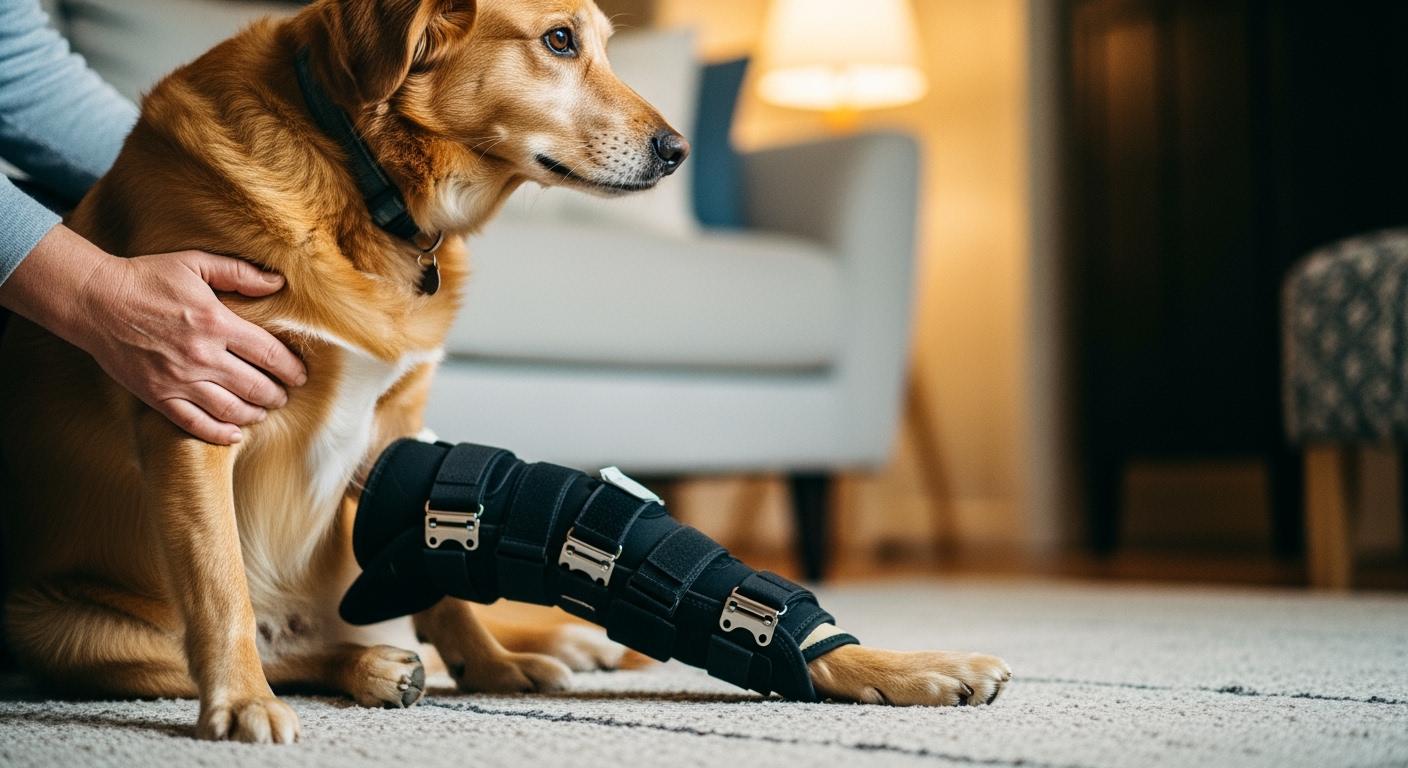
A dog brace for ACL tear is a tool that helps your dog’s knee. You put this brace on your dog’s leg to give support. It helps your dog walk and move when the knee feels weak. The brace wraps around the knee and makes it stronger. Many owners use a dog ACL brace if their dog limps or has pain after a torn ACL. You can use a dog knee brace to help your dog get better or stay active with knee problems. This brace does not fix the ligament, but it helps your dog walk, play, and rest with less pain.
ACL vs CCL in Dogs
You might hear both ACL and CCL when talking about your dog’s knee. These words mean the same ligament in dogs. The canine cruciate ligament (CCL) keeps your dog’s knee steady. In people, this ligament is called the anterior cruciate ligament (ACL). Vets and pet owners use ACL and CCL for the same thing. Both ligaments connect the thigh bone and shin bone. They help your dog stand, walk, and run without the knee slipping. If your dog hurts this ligament, you will see pain, limping, and less movement. The injury makes it hard for your dog to move every day.
Tip: If your dog limps or does not want to play, ask your vet about knee support like a dog acl brace. Early help can keep your dog happy and moving.
The CCL in dogs is like the ACL in people.
Both ligaments keep the knee steady and stop bad movement.
Vets use ACL and CCL to talk about the same dog knee problem.
How a Dog ACL Brace Works
A dog acl brace holds your dog’s knee still when they move. The brace keeps the bones in place and stops the tibia from sliding. This helps your dog avoid pain and keeps the knee safe. You use a knee brace to stop bad movement and help your dog walk or do rehab. Some braces have hinges so your dog can bend the knee but still get support. Custom braces fit your dog’s leg better and feel more comfortable.
Mechanism Type | Description |
|---|---|
Stabilization | The brace keeps bones lined up and stops the tibia from slipping. |
Proprioception | The brace helps your dog know where the leg is for better movement. |
Pain Reduction | The brace cuts down rubbing and swelling, so there is less pain. |
Support for Activity | The brace stops bad movement and lets your dog walk or do rehab safely. |
You can find different dog acl brace types for mild or bad knee problems. Single knee braces are good for small dogs or easy cases. Double braces help big dogs or dogs with worse knees. Hinged braces let the joint move like normal and give more support. Studies show a dog knee brace helps dogs put weight on the leg, move better, and do daily things again. Many dogs get used to a canine orthopedic brace in a few days or weeks and feel more steady.
A dog brace for acl tear gives support and helps muscles work better. It also makes the leg warmer. This helps blood flow, nerves, and healing. Your dog feels less pain, moves better, and bends the knee more easily. Studies say dogs with a dog acl brace for medium injuries move better in a few weeks, especially if you start early. Braces are good for old dogs or dogs who cannot have surgery. Always use a brace with your vet’s help and as part of a full plan to get better.
Signs Your Dog Needs Knee Support
Limping and Mobility Issues
You notice your dog limping after a nap or a walk. This limp often appears when your dog stands up after resting. Sometimes your dog skips or hops instead of walking normally. These changes in mobility signal knee instability. Your dog may avoid stairs, couches, or jumping into the car. Reluctance to climb or jump shows discomfort in the knee joint. You might hear a pop or click from the knee when your dog moves. Swelling or a firm ridge near the knee can also appear. These signs mean your dog needs extra support for daily mobility.
If your dog moves with a limp or skips steps, a dog brace for ACL tear can help stabilize the knee and improve mobility.
Symptom | What You Might See |
|---|---|
Limping after rest | Dog struggles to walk after sleeping |
Sudden skipping | Dog skips or hops during movement |
Reluctance to climb | Dog avoids stairs or jumping |
Knee swelling | Dog shows a firm ridge or puffiness |
Clicking noises | Dog’s knee makes popping sounds |
Stiffness and Weakness
Your dog may show stiffness after resting. Getting up seems hard, and your dog moves slowly at first. Weakness in the hind leg becomes clear when your dog stands or walks. You notice less muscle on the sore leg. This muscle loss means your dog avoids using the leg. Flinching or pulling away when you touch the knee signals pain. Stiffness and weakness affect your dog’s mobility and daily comfort.
Stiffness after sleep or rest
Weakness in the hind leg
Muscle loss on the affected side
Flinching when you touch the knee
Reduced Activity and Unstable Gait
Your dog may play less or avoid walks. Shorter strides, toe-tapping, or bunny hopping replace normal movement. The gait looks unstable, and your dog seems unsure on the affected leg. Sitting with a leg out to the side shows knee instability. Your dog’s mobility drops, and daily activity becomes limited. You notice improvement when your dog uses light support. A dog brace for ACL tear can help your dog regain confidence and stability.
Dogs with reduced activity and unstable gait benefit from extra knee support. For fit, traction, and safe daily use, see our dog knee brace for CCL tear guide.
Why Use a Dog Knee Brace?
Joint Stability and Comfort
You want your dog to feel steady and comfortable after a knee injury. A dog knee brace gives extra support to the knee joint, which helps your dog stand and walk with more confidence. When your dog wears a brace, it helps keep the bones in place and reduces the risk of the knee slipping. This support can make your dog feel less pain and more secure during daily movement.
Clinical studies show that a dog ACL brace can improve how your dog uses the leg after a torn ACL. Dogs wearing a brace often put more weight on the sore leg and move with better balance. The table below highlights some key findings from recent research:
Study/Author | Key Findings |
|---|---|
Prospective Study | Bracing improved limb mechanics and weight-bearing in dogs with CCL deficiency. |
Rosen et al. (2022) | Custom stifle orthoses led to functional gains and better weight-bearing over 12 months. |
Carr (2016) | Dogs with stifle braces showed improved pressure distribution after 90 days of use. |
A dog brace for acl tear can help restore joint support for dogs with knee instability. This means your dog can move more naturally and avoid putting too much strain on the other leg. You give your dog a better chance to stay active and comfortable during treatment.
Mobility and Daily Support
A dog acl brace does more than just hold the knee steady. It helps your dog enjoy daily life by making movement easier. Many owners notice their dogs walk, play, and even rest with more comfort after using a knee brace. Braces help dogs recover from injuries or surgery by giving the right support and stability. For decision points around bracing versus surgery, review our dog knee brace vs surgery article.
You may see your dog become more active and willing to join family walks or playtime. The brace reduces pain and helps prevent further injury, which supports your dog’s overall mobility. Modern braces fit your dog’s leg well and allow for natural healing while keeping your dog moving. This is important for building strength and helping the knee heal as part of a full treatment plan.
A dog knee brace can be a key part of treatment options for dogs with knee problems. It offers joint support, helps with daily activities, and gives your dog the confidence to move again. Many owners report that their dogs feel better and show improved mobility after using a brace. You help your dog get back to a happy, active life with the right support.
Note: Always talk to your vet before starting any new treatment or using a knee brace. Your vet can help you choose the best joint support for your dog’s needs.
When to Think About Dog Leg Braces
You want your dog to be active and feel good. Knee problems can make it hard for your dog to move. Dog leg braces give support in many cases. You can use them to help with acl injuries or knee trouble. Here are three main times when a brace can help:
Conservative Management
Dog leg braces are useful if you do not pick surgery. Many dogs do better with braces if they have small ligament tears or mild knee trouble. Older dogs with arthritis often need more help to move. You might use a brace if surgery is not safe because of age, health, or money. Not every dog can have surgery, so braces are a smart choice.
Partial ligament tears
Mild or medium knee trouble
Older dogs with arthritis
Non-surgery treatment plans
Times when surgery is not safe
Dogs with health or age issues
Money problems
Tip: If your dog has trouble moving and cannot have surgery, a brace can help your dog walk better.
If your dog needs short lifts, help on stairs, or extra support during bathroom breaks, compare our dog lift harness options.
Post-Surgery Support
Dog leg braces help after surgery. After acl surgery, your dog needs the knee to stay steady and safe. Vets use stifle orthotics to help dogs feel better and heal. Many owners say their dogs walk and stand better with a brace after surgery. For example, Penny, a big Newfoundland, got better after using a brace for nine months after acl surgery. Small studies show braces help stop bad knee movement and help dogs heal.
Benefit | How It Helps Your Dog |
|---|---|
Stability | Keeps knee steady after surgery |
Comfort | Reduces pain during movement |
Improved mobility | Helps your dog walk and play again |
Weight-bearing | Supports safe use of the hurt leg |
Rehab and Daily Stability
Dog leg braces help your dog during rehab and daily life. You may see your dog needs help moving while healing from an acl injury. Braces give support for walking, playing, and resting. Rehab plans often use braces to help your dog get stronger and feel sure. Most owners see their dogs move better and enjoy life with extra support. Braces help your dog stay active and take stress off the knee during rehab.
Note: Always talk to your vet to pick the best brace and plan for your dog’s needs.
Benefits of a Dog ACL Brace
Reducing Strain on the Knee
A dog acl brace helps your dog by taking pressure off the injured knee. When your dog wears a brace, it supports the joint and keeps the bones in place. This support lets your dog walk with less pain and more confidence. You help your dog avoid harmful movements that can slow recovery or cause more damage. Many braces use special hinges that move like your dog’s natural knee. These hinges lower the stress on the joint and help your dog heal faster.
Specialized hinges mimic natural joint motion, reducing pressure on your dog’s knee.
The brace limits harmful movements, such as tibial drawer, which can slow healing.
Your dog can relax the injured leg and still bear some weight, which prevents muscle strain.
“Conservative management using a quality brace can often help avoid surgery, especially for partial tears. It stabilizes the joint, controls inflammation, and supports healing.” – Dr. James St. Clair, DVM
A dog brace for acl tear gives your dog the extra support needed to move safely during daily life. You help your dog stay active while protecting the knee from further strain.
Supporting Recovery Routines
Using a dog acl brace during recovery routines helps your dog regain strength and comfort. The brace supports your dog’s knee as you follow your vet’s plan for rest, gentle exercise, or rehab. Many owners see their dogs walk better and show less lameness after using a knee brace.
Benefit | Description |
|---|---|
Improved Weight Distribution | Your dog puts more weight on the sore leg after 90 days of brace use. |
Enhanced Mobility | Most dogs move better and limp less with a brace. |
Increased Comfort | Dogs feel more comfortable after wearing a knee brace. |
You may notice your dog enjoys walks again and feels more secure during play. A dog knee brace helps your dog build muscle and balance as part of a full recovery plan. You give your dog the best chance to stay active and happy with the right support.
Improved weight distribution
Enhanced mobility
Increased comfort
A dog acl brace works best when you use it with your vet’s advice and a steady recovery routine. You help your dog heal and enjoy daily life with less pain and more stability.
How to Choose the Right Dog Knee Brace
Fit and Adjustability
You need to pick a brace that fits your dog well. For broader brace-category comparison and buying logic, review our Guides. A good fit gives your dog the support needed for the knee. If the brace is too tight, it can hurt or stop blood flow. If it is too loose, your dog will not get enough help. You should measure your dog’s leg with care and use the size guide. Custom braces need the right size to match your dog’s leg shape. Straps you can adjust help you make the fit just right. This keeps the brace in place when your dog moves. You want a brace that is easy to put on and take off. Look for Velcro or buckles to make this simple. This makes using the brace each day easier for you and your dog.
Tip: Take your time when you measure your dog for a brace. The right size helps stop new injuries and keeps your dog comfy.
Comfort and Materials
Your dog needs to feel good when wearing a brace for a long time. You should pick braces made from strong and airy materials. Medical grade plastic gives strong support. Hinges let your dog’s knee bend like normal. Neoprene is a good pick because it keeps water away and stops rubbing. Padding in the right spots helps stop sore spots and keeps your dog happy. Washable materials make cleaning the brace easy for you. The brace should spread weight over a big area so your dog does not feel pinching.
Medical grade plastic for strength
Hinges for normal movement
Breathable neoprene to keep dry
Padding in the right places for comfort
Washable and strong for daily use
Support Level and Straps
How much support and the strap style matter for your dog’s brace. You can pick single, double, or hinged braces for your dog’s needs. Single braces help with small injuries and let your dog move easy. Double braces help both knees and stop your dog from putting too much weight on one leg. Hinged braces give the most support and stop bad movement for big injuries. Strong straps, like Velcro or buckles, keep the brace in place. Non-slip linings and anchors help the brace stay put when your dog moves.
Brace Type | Support Level & Effectiveness | Strap Design & Effectiveness |
|---|---|---|
Single Brace | Good for small injuries; lets your dog move easy | Adjustable straps and non-slip lining keep brace in place |
Double Brace | Helps both knees; stops injury to the other leg | Chest or hip anchors keep brace steady when moving |
Hinged Brace | Most support; stops bad movement for big injuries | Strong straps stop slipping and keep the leg still |
Picking the right dog brace helps your dog’s knee stay strong and comfy. You help your dog move safe and feel sure every day.
Using a Knee Brace in Recovery
Integrating with Rest and Rehab
You want your dog to get better after an ACL injury. Using a dog knee brace helps your dog move safely and feel more comfortable. For product-side options, review our dog knee brace options. You should use the brace with rest and gentle activity. Your dog needs time to heal, so do not let them run or jump. The brace gives extra support and stops bad movements.
You can add physical therapy or hydrotherapy to help your dog. These activities build strength and help your dog move better. Anti-inflammatory medications lower pain and swelling. Keeping your dog at a healthy weight is important. Extra weight makes the knee work harder. Joint supplements may help your dog’s knee stay healthy.
Use bracing with limited activity
Add physical therapy or hydrotherapy
Give anti-inflammatory medications
Keep your dog’s weight healthy
Try joint supplements
You help your dog by following a steady rehab plan. The brace supports your dog’s knee during walks and gentle exercise. Your dog feels more confident and starts moving again. Recovery takes time, but you give your dog the best chance by using the brace with other treatments.
Veterinary Guidance and Monitoring
Your vet is very important for your dog’s recovery. You need a good fit for the dog knee brace so it works well. Problems happen if the brace does not fit right or you do not use it every day. Your vet will show you how to use the brace and check your dog’s progress.
Regular check-ups are needed. Your vet looks for signs of pain and checks the knee for soft tissue problems. You must follow your vet’s instructions about using the brace and doing rehab exercises. Vet visits help track your dog’s recovery and let your vet change the plan if needed.
Using a brace with your vet’s help makes recovery more likely. Good fitting, regular checks, and a full recovery plan help your dog get strong and stable. You support your dog by working with your vet and following all advice.
Safe Use and Expectations
What a Knee Brace Can and Cannot Do
When you use a knee brace for your dog, you want your dog to move safely and feel good. You should know what the brace can do and what it cannot do. A knee brace gives extra support to your dog’s knee joint. It helps your dog walk, stand, and play with more confidence. The brace can make moving easier every day. Many dogs feel better with a brace during ACL tear or CCL knee problems.
You must keep your dog safe. The knee brace needs to fit right. Adjustable straps stop slipping and rubbing. Soft padding keeps your dog’s skin safe. Check your dog’s skin every day for redness, hair loss, or sores under the brace. Dogs need time to get used to the brace. Start slow and let your dog adjust. Rest periods help your dog avoid new injuries. Keep your dog away from slippery floors.
Aspect | Details and Recommendations |
|---|---|
Proper Fit | Use adjustable straps to stop slipping and rubbing; soft padding keeps skin safe |
Skin Monitoring | Check for redness, hair loss, or sores under the brace every day |
Gradual Adaptation | Let your dog slowly get used to the brace for comfort |
Activity Management | Give rest breaks and avoid slippery floors to stop injuries |
Signs to Watch For | Watch for limping, clicking sounds, swelling, pain, licking, restlessness, or not using the leg |
When to Contact Vet | Call your vet if limping gets worse, swelling stays, pain shows, open sores appear, or the brace does not fit |
Benefits of Braces | Braces are non-invasive, adjustable, good for rehab and prevention, and often cost less than surgery |
Limitations of Braces | Braces must fit well and be checked often, do not always replace surgery, and dogs need time to accept them |
You need to have realistic hopes. A knee brace supports your dog’s knee but does not heal the ligament or fix the joint. Surgery is still best for full ligament tears. Braces work well for partial tears, dogs who cannot have surgery, or as a temporary help before surgery. Sometimes you may see skin irritation, brace slipping, or wear. These problems are common and usually small. You can fix them with changes or rest.
Knee braces give outside support and help short-term movement.
Braces do not replace surgery for severe injuries.
Skin sores or brace problems can happen.
You must check the brace often and follow your vet’s advice.
Braces help but do not cure.
You help your dog by using the knee brace as part of a full treatment plan. Work with your vet and watch your dog’s progress. You give your dog the best chance for comfort and stability.
A dog brace for ACL tear gives your dog more support. It helps keep the knee steady and safe. Your dog can move better and feel less pain during healing. Many dogs do well with a brace as part of their care. Vets say to use a brace with rest, medicine, and gentle exercise. Most dogs walk better and stand stronger after using a brace. Small problems with the brace can be fixed by making simple changes.
Study | Findings |
|---|---|
Carr (2016) | Dogs improved weight distribution in 90 days. |
Muršec et al. (2025) | Better gait and balance with custom braces. |
You help your dog most by picking a brace that fits well. Make sure your dog is comfortable and see your vet often for advice.
FAQ
How do I know if my dog needs a knee brace?
You may notice your dog limping, having trouble standing, or avoiding play. If your dog shows these signs, a knee brace can help provide support. Always ask your veterinarian before starting any new support for your dog.
Can a dog brace for ACL tear replace surgery?
A dog brace for ACL tear does not replace surgery. It gives your dog extra support and helps with daily movement. Some dogs use a brace if surgery is not possible. Always follow your veterinarian’s advice for your dog’s care.
How long should my dog wear a knee brace each day?
Your dog may need to wear the brace during most daily activities, especially when walking or playing. Remove the brace at night or during rest. Your veterinarian can guide you on the best schedule for your dog.
Will my dog get used to wearing a knee brace?
Most dogs adjust to a knee brace within a few days. Start with short periods and watch your dog for comfort. Give treats and praise to help your dog feel positive about wearing the brace.
Can I use a knee brace for both legs if my dog has problems in both knees?
Yes, you can use braces on both legs if your dog has knee issues on both sides. Double braces are available for extra support. Always check with your veterinarian to make sure this is right for your dog.