
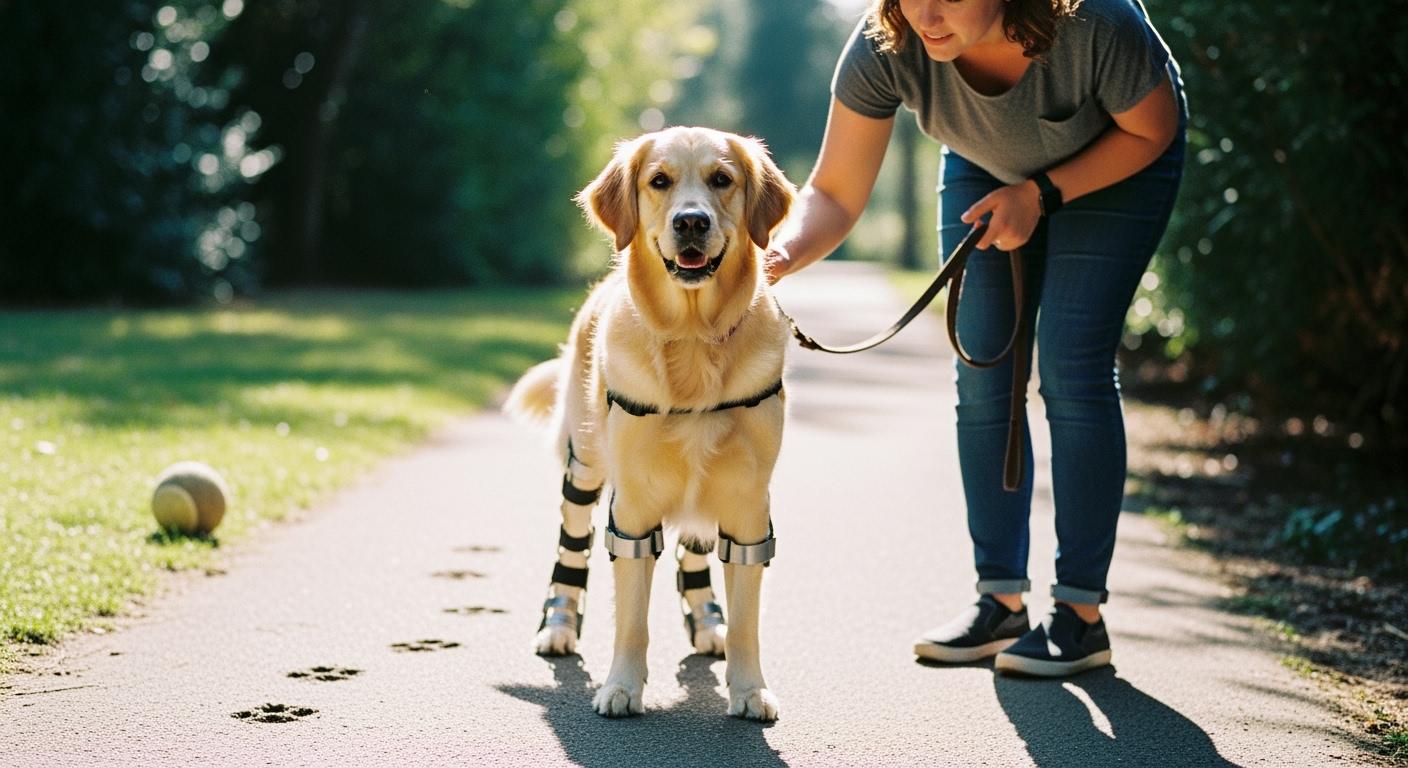
You may notice your dog limping, showing weakness, or having trouble moving each day. Dog braces can offer real support for your pet’s comfort and activity. Many studies show that braces help dogs gain stability and improve daily mobility by supporting joints and weak areas. You can find braces designed for the knee, hip, back, or even the paw. The right brace gives canine support where your dog needs it most. Your choice depends on your dog’s body and movement needs.
Key Takeaways
Dog braces help dogs who have trouble moving. They let dogs walk, run, and play with less pain.
Talk to your veterinarian to pick the best brace for your dog. Make sure the brace fits your dog well.
Let your dog get used to the brace slowly. Watch your dog to see if the brace feels good and fits right.
Clean dog braces often so they work well and feel good for your pet.
Watch for signs your dog is getting better, like less limping. Your dog may also want to go on more walks as it gets used to the brace.
What Are Dog Braces?
Dog braces are special tools that help support your dog’s body. You might need them if your dog has pain or trouble moving. Braces can help dogs with arthritis, hip dysplasia, or weak joints. They are also used after surgery. There are braces for the knee, hip, back, elbow, hock, carpal, paw, neck, and shoulder. Each brace helps a certain part of your dog’s body.
For a broader overview of brace categories, support goals, and buying logic, see our braces for dogs guide.
Neck and shoulder braces help keep these areas steady and ease pain.
Hinged braces let your dog move naturally and have straps you can adjust.
Stifle and hock braces keep joints steady and help after surgery.
Hip braces help dogs with hip dysplasia feel better and move easier.
Back braces give support to the spine and help your dog feel better.
Dog braces help your dog walk, stand, and play with more confidence. You can use them every day or while your dog is getting better.
How Dog Braces Provide Support
Dog braces help by giving support to joints and weak spots. They let your dog move with less pain and more balance. Here is how braces help:
Function | Description |
|---|---|
Joint Stabilization | Braces keep the joint steady and stop too much movement. This lowers pain, especially with arthritis. |
Load Distribution | Braces spread out your dog’s weight. This takes pressure off sore spots and makes moving easier. |
Proprioception Enhancement | Braces give gentle signals, so your dog knows where their leg is. This helps them move better. |
Braces do more than just hold a leg or joint. They give your dog the help needed for daily life and better movement.
Benefits for Dog Mobility
Dog braces have many good effects on how your dog moves. They help your dog walk, run, and play with less pain. Studies show braces help dogs put more weight on their legs and walk better. For example, one study found over 70% of dogs with elbow problems walked better and hurt less with custom braces. Another study showed dogs with knee arthritis moved about 40% better after three months with braces.
You may see your dog stand up easier, move steadier, and enjoy walks again. Braces support joints and help your dog stay active. Braces do not fix injuries, but they make your dog feel better and improve life.
Tip: Always talk to your veterinarian to pick the right brace and fit for your dog.
When Dogs Need Support
Signs of Mobility Issues
Sometimes, dogs slow down or have trouble moving. You might see your dog struggle with normal things. Look for these signs:
Hard time getting up from the floor or bed
Problems going up stairs or jumping in the car
Limping or using one leg less on walks
Swelling near the knee or other joints
Clicking noises when your dog moves around
Had surgery lately or has clear injuries
These signs can mean your dog has pain or weak joints. Your dog may wait before running or playing. Some dogs do not want to use a sore leg. If you see these changes, a brace can help your dog feel better and move easier.
Common Conditions Helped
Dogs need support for many reasons. Our dog braces options cover many injuries and joint problems. You might use a brace if your dog has:
Ligament injuries like cranial cruciate ligament (CCL) tears
Arthritis or swollen joints
Getting better after surgery
Patella luxation (kneecap moves out of place)
Joints that are weak or not steady
Sprains and strains from playing hard
Limping or stiff after resting
Joint problems from birth or getting older, like hip dysplasia or degenerative myelopathy
Dog braces help hurt legs, stop bad movement, and keep your dog safe when active. They also lower pain and swelling, and can stop more injuries.
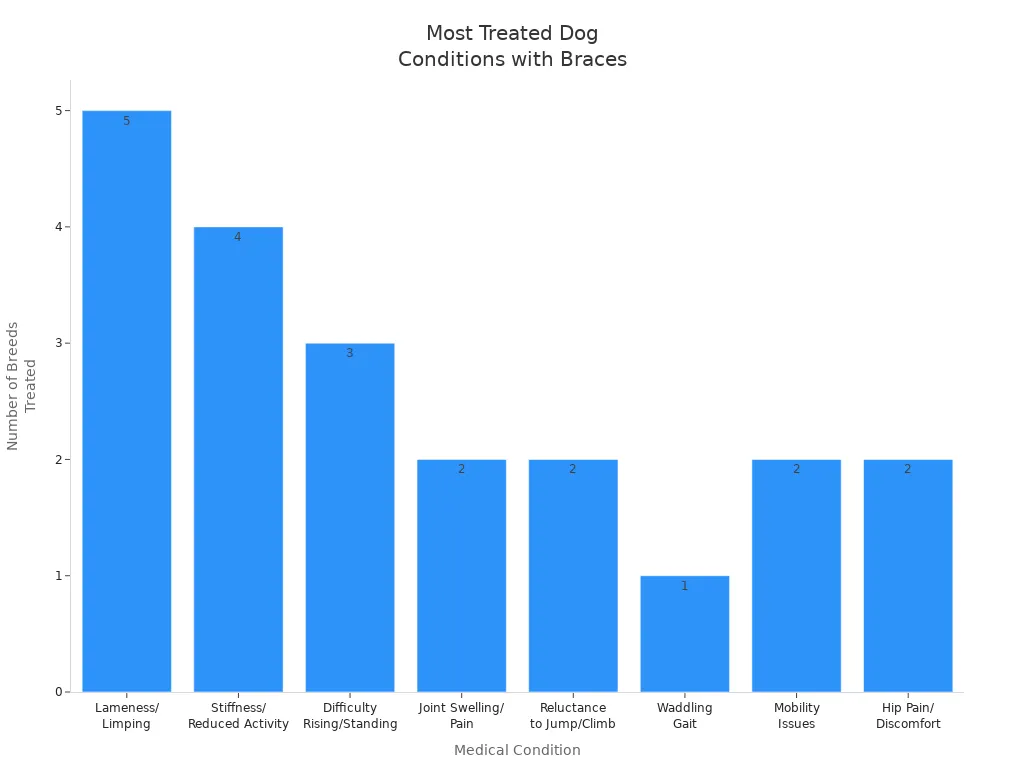
Some breeds need more help because of their size or how much they move. The table below shows how different breeds use braces for moving and joint help:
Dog Breed | Frequency of Brace Use | Common Medical Conditions Treated with Braces | Purpose/Benefit of Braces |
|---|---|---|---|
German Shepherd | High | Limping, difficulty rising, reduced activity | Improved stability, pain reduction, better gait |
Labrador Retriever | High | Stiffness after rest, bunny-hopping gait | Joint support during exercise, enhanced mobility |
Golden Retriever | High | Lameness, reluctance to jump or climb | Slows degeneration, supports aging joints |
Bulldog | Moderate | Waddling gait, discomfort on stairs | Stabilizes hips, reduces strain |
Standard Poodle | Moderate | Occasional limping, mild stiffness | Preventive support, maintains joint alignment |
Great Dane | High | Lameness, joint swelling, mobility issues | Supports rapid growth, reduces joint wear |
Saint Bernard | High | Difficulty standing, reduced endurance | Enhances stability, eases movement |
Irish Setter | Moderate | Uneven gait, hip pain | Improves joint function, reduces discomfort |
Spaniels | Low-Moderate | Occasional stiffness, mild lameness | Support during activity, comfort enhancement |
Mixed Breeds | Variable | Depends on lineage and size | Tailored support based on individual needs |
Tip: If your dog moves differently or seems in pain, talk to your vet. Dog braces can help your dog move and heal.
Dog Braces by Body Part
Dog braces come in many types. Each one helps a certain body part. The right brace helps your dog move better. You must pick the best brace for your dog’s needs. Some braces work for injuries, others for weak joints. The table below shows what each brace does for your dog:
Type of Brace | Body Part Supported | Function and Benefits |
|---|---|---|
Neck and Shoulder | Neck, Shoulder | Stabilizes, relieves pain, improves mobility |
Hinged | Limbs | Allows natural movement, supports active dogs |
Stifle and Hock | Knee, Ankle | Helps after surgery, adds stability, reduces pain |
Front Leg Braces | Carpal, Elbow | Supports joints with arthritis, improves mobility |
Hind Leg Braces | Hock, Knee | Stabilizes tarsal joint, helps recovery, improves quality of life |
Hip Braces | Hip | Supports hip dysplasia, stabilizes joints, helps after surgery |
Back Braces | Spine | Supports spine, improves posture, relieves discomfort |
Knee and Hock Braces
Knee and hock braces help dogs with weak or hurt joints. These braces are used for CCL or ACL injuries, arthritis, or after surgery. They support the knee and ankle so walking is easier. Studies show custom knee braces help dogs put weight on their legs. Your dog may walk steadier and feel less pain.
Knee and hock braces:
Help with CCL/ACL injuries
Protect knees after surgery
Lower pain and swelling in knee disease
Help with sprains or strains
Support chronic joint problems like osteoarthritis or hip dysplasia
Help with joint hyperextension or luxation
Give stability for weak knees or hocks
These braces give your dog more confidence to move. You can use them every day or while your dog heals. Custom leg braces fit your dog’s body and help with movement.
Tip: If your dog limps or avoids using a leg, knee or hock braces might help.
Hip and Back Braces
Hip and back braces support your dog’s hips and spine. Hip braces are used for arthritis, hip pain, or hip dysplasia. Back braces help with spine pain, paralysis, or trouble walking. These braces make it easier for your dog to move and stand tall.
Hip braces keep the hip joint steady and help your dog walk with less pain. Back braces support the spine and help your dog move every day. Some dogs move much better after using these braces. You may see your dog stand straighter and walk with more confidence.
Consulting a vet or rehab expert is important before using braces. They can help you choose the best option for your dog’s needs.
Hip and back braces do not fix injuries, but they help your dog feel better. Custom orthotics fit your dog’s body and give special support.
Elbow and Carpal Braces
Elbow and carpal braces help dogs with weak front legs. These braces are used for arthritis, injury, or weak joints. Elbow braces keep the joint steady and lower pain. Carpal braces support the wrist and help your dog walk better.
Benefit | Description |
|---|---|
Support Recovery | Braces help your dog heal by giving support to the limb. |
Improve Mobility | Braces help your dog move better even with weak front legs. |
Prevent Further Injuries | Braces stop more injuries by keeping the area steady. |
Custom front leg braces fit your dog’s elbow or wrist and give daily support. Some dogs need to wear them all the time, especially big dogs. Using braces for a long time helps your dog stay active and safe.
Custom braces can help with carpal hyperextension.
Some dogs need to wear braces all day for support.
Big dogs may need braces for a long time.
Elbow and carpal braces help your dog move better and stop new injuries.
Paw, Front Leg, and Hind Leg Braces
Paw, front leg, and hind leg braces help dogs with weak or hurt legs. Paw braces are used for knuckling, nerve problems, or paw injuries. Front leg braces keep the carpal and elbow joints steady. Hind leg braces support the hock and knee.
Dog leg braces help your dog walk better and put weight on the leg. Studies show braces help dogs with CCL problems move better. Owners say orthotics work well for weak legs. You may see your dog walk steadier and feel more sure.
Evidence Type | Findings |
|---|---|
Clinical Study | Bracing helps dogs with CCL problems walk and put weight on the leg. |
Owner Surveys | Owners think orthotics help with weak legs. |
Observational Analysis | Surgery works better than no surgery for long-term lameness in big dogs. |
Custom front and hind leg braces fit your dog’s shape. These braces help your dog move every day and stay active. Orthotics give special support to each leg and help your dog feel better.
Note: Always check if the brace fits well and is comfy. Good support helps your dog move safely and with confidence.
Dog braces for the paw, front leg, and hind leg give your dog the help needed for daily life. You can use these braces for healing, joint support, or when your dog gets older.
Choosing the Right Dog Brace
Picking the best dog brace helps your dog feel better. It can make your dog more comfortable and able to move. You want your dog to feel safe and walk with confidence. The right brace depends on what your dog needs. Think about which body part needs help and how active your dog is. Let’s see what matters most when you pick a brace.
Fit and Comfort
The way a brace fits is very important. If it fits well, your dog will feel good and get better support. Your dog should move easily and not feel pinched or rubbed. Here are some things to think about for fit and comfort:
Measure your dog’s leg, hip, or back before you buy.
Pick custom-made orthotics or adjustable braces for a better fit.
Find braces with soft padding to stop skin problems.
Choose materials like neoprene or fabrics that let air in.
Make sure your dog can walk, sit, and lie down with the brace.
The brace should have padding for dogs who need extra comfort.
Watch your dog to see if the brace stays in place and does not hurt.
A good fit helps your dog wear the brace every day. Custom braces or custom-made orthotics are best for dogs with special shapes. Some braces can change size as your dog grows or heals.
Tip: Always check the brace after walks or play. Look for red spots or rubbing. Change the fit if needed so your dog stays happy.
Adjustability and Support Level
Adjustable braces let you change the fit as your dog changes. Dogs are all different, so a brace with many ways to adjust gives better support. This helps when your dog is healing or needs extra help.
Key Factor | Explanation |
|---|---|
Personalized Fit | Adjustable braces fit dogs of many sizes and can change as your dog grows. |
Multiple Adjustment Points | Braces with more ways to adjust work better and feel better. |
Extends Usable Life | Braces that change size last longer as your dog’s body changes. |
You might need to change the brace as your dog gets stronger or swelling goes down. Adjustable braces help if your dog’s weight changes or if you use the brace to stop problems as your dog gets older. Custom-made orthotics often have these features for a perfect fit.
Pick a brace that matches how active your dog is. Some braces are stiff for after surgery or healing. Others are soft and bendy for daily use or to stop problems.
Materials and Fastening
The stuff used in dog braces matters for comfort and how long it lasts. You want a brace that feels good and does not break fast. Here is a table to help you compare common materials:
Material Type | Comfort | Durability | Stability |
|---|---|---|---|
Fabric | Soft, lets air in, light | May wear out faster with lots of use | Gentle support, easy to move in |
Plastic | Not as soft, can feel hard if worn long | Lasts longer and keeps water out | Very strong support for bad injuries |
Pick braces made from fabrics that let air in so your dog stays cool. Neoprene and soft padding help dogs feel better, especially with arthritis. Hard plastics give more support for dogs who need extra help after surgery or injury. Good fasteners, like Velcro or straps, keep the brace on during walks or play. Make sure the fasteners are easy for you but strong enough to stay put.
Note: Custom-made orthotics often use more than one material for the best mix of comfort, support, and strength.
Consulting Your Veterinarian
Talk to your veterinarian before you pick a dog brace. Your vet knows your dog’s health and can help you choose the right support. Here’s why your vet’s advice is important:
Your vet can tell you which brace is best for your dog.
They help you decide if you need custom-made orthotics or an adjustable brace.
Your vet checks if the brace fits and does not mess up other treatments.
They can make a plan for using the brace after surgery, for healing, or to stop problems.
Your vet’s help keeps your dog safe and avoids problems. They make sure the brace works with your dog’s daily life and other care.
Tip: Bring your dog and the brace to your vet to check the fit. This makes sure your dog gets the right support and feels good.
Picking the right dog brace means thinking about fit, how it adjusts, what it’s made of, and getting expert help. The right brace helps your dog move better, feel good, and be more confident. Custom-made orthotics, strong fasteners, and cool fabrics all help your dog stay active. Always think about your dog’s comfort and safety for the best results.
Daily Use and Care
Introducing the Brace
You want your dog to feel comfortable with new braces. Start by letting your dog sniff the brace. This helps your dog get used to the smell and shape. Put the brace on for short periods at first. Use treats and praise to make the experience positive. Watch your dog for signs of discomfort, such as limping or licking the brace. Adjust the fit if needed. For fit checks and gradual walk routines, see our dog gait training support article. Consult your veterinarian if your dog shows ongoing discomfort. Stick to gentle walks and light play while your dog adapts. Check the brace often for comfort and fit. Add padding to prevent chafing and keep the area clean and dry. Follow the instructions for adjustments and secure straps. Store the brace properly when not in use.
Tip: Slow introduction helps your dog accept braces and builds trust.
Wear Time and Adjustment
You need to manage wear time and adjustment for the best results. Begin with short sessions and increase gradually. The table below shows a typical schedule for building up wear time:
Day | Wear Time (per day) |
|---|---|
1 | 30 mins 2-3 times |
2 | 1 hour 2-3 times |
3 | 2 hours 2-3 times |
4 | 3 hours 2-3 times |
5 | 4 hours 2 times |
6 | 6 hours |
7 | 8 hours |
Up to 12 hours a day. Remove at night. |
Most dogs should not wear braces all day. Build up to 8-12 hours during active periods. Remove braces at night or during long rest. This lets your dog’s skin breathe and prevents irritation. Adjust straps and neoprene cuffs several times a day. Changes in your dog’s coat, swelling, or strap stretching may require adjustments. Watch for hair loss from rubbing and report it to your veterinarian.
Note: Increase wear time slowly. Check your dog’s skin often for signs of irritation.
Cleaning and Maintenance
Keeping dog braces clean ensures comfort and longevity. Clean braces regularly with mild soap and water. Dry the brace completely before putting it back on your dog. Inspect for wear and tear, such as frayed straps or broken buckles. Repair minor issues quickly or replace the brace if needed. Store braces in a cool, dry place. Keep them away from sharp objects and heavy items. After each use, wipe the brace with a damp cloth to remove fur, dirt, and sweat. Hand wash the brace weekly or bi-weekly with pet-safe soap. Rinse thoroughly and air dry. Check straps and Velcro closures to make sure they are clean and secure.
Keeping dog braces clean and well-maintained helps your dog stay comfortable and active every day.
Mobility, Stability, and Expected Results
Improvements to Expect
When your dog uses braces, you should see better movement and balance. Many owners notice their dogs limp less and take longer steps. Dogs also want to go on walks more after two to six weeks. Braces support weak joints and help dogs move with less pain. You might see your dog stand up faster and walk with more confidence. Braces do not fix injuries or arthritis, but they help with pain and daily movement.
Type of Brace | Benefits |
|---|---|
Elbow Brace | Less pain, better movement, keeps the joint steady for activity. |
Hock Brace | Keeps the tarsal joint steady, lowers pain, helps healing, and makes moving easier. |
Hip Brace | Helps hip dysplasia, gives comfort, helps movement, and makes life better. |
You can look for changes like:
Less limping
Longer steps
More interest in walks
Braces help your dog get balance and support during healing and after surgery. They make it easier and safer for dogs with arthritis, trouble moving, or joint injuries to get around.
Limitations and Safe Use
Dog braces give support, but you must use them the right way. Braces do not take the place of vet care or promise a cure. The brace must fit well to work best. Watch your dog for red skin, swelling, or if the brace slips. Owners must check the brace every day and make sure it is worn right. A vet should check the brace and your dog’s progress.
Braces help but do not cure problems.
Wearing braces too long can cause skin problems or weak muscles.
Take off braces at night and when your dog rests.
Braces are best for small ligament tears, early joint problems, arthritis, and trouble moving.
Start with short times each day when using a new brace. Use the brace as part of a full plan with gentle exercise and healthy weight. Always check for broken parts and make sure the brace fits well but is not too tight.
If your dog needs more rear-end assistance than joint bracing alone, compare our dog lift harness options for assisted walking and transfer support.
Note: Braces help dogs move and feel steady, but they do not fix injuries or make joint problems go away.
When to Seek Veterinary Advice
You should talk to your vet before using a brace. Your vet needs to find out why your dog has pain or trouble moving. The vet will help you pick the right brace and make sure it fits well. Some dogs need a custom brace for the best support. Braces should be used with rest, rehab, and other treatments.
Call your vet if your dog seems sore, has red skin, or moves worse.
Ask your vet for help if you need to change or replace the brace.
Your vet will make sure the brace is safe and helps your dog heal.
Tip: Your vet is the best person to help you use dog braces safely and get good results.
When you pick the right braces, your dog moves with more confidence and feels steadier. Research shows braces help dogs put more weight on their legs and walk more evenly. The table below shows what experts and owners found:
Evidence Type | Findings |
|---|---|
Owner Feedback | Dogs move better and feel more comfortable |
Clinical Studies | Dogs use their legs better and have less pain |
Expert Consensus | Braces work well for dogs who do not need surgery |
You should talk to your veterinarian and choose braces that fit your dog’s needs and the right body part. Good choices help your dog stay active and feel comfortable every day. 🐾
FAQ
How do I know which brace my pet needs?
You should look at where your pet has trouble moving. Check for signs like limping or weakness. Ask your veterinarian for advice. They can help you choose the right brace for the body part that needs support.
Can my pet wear a brace all day?
You should not let your pet wear a brace all day. Start with short periods and slowly increase wear time. Remove the brace at night or during long rest. This helps prevent skin problems and keeps your pet comfortable.
How do I clean and care for dog braces?
You can clean braces with mild soap and water. Dry them completely before use. Check straps and fasteners often. Make sure the brace stays in good shape. Clean braces help your pet stay comfortable and active.
Will a brace help my pet walk better?
A brace can support weak joints and improve movement. Many pets walk steadier and feel more confident with braces. You should watch for changes like less limping and more interest in walks.
Should I talk to my veterinarian before buying a brace?
You should always talk to your veterinarian before buying a brace. They know your pet’s health and can help you pick the best option. Your veterinarian will check the fit and make sure the brace works well.
