
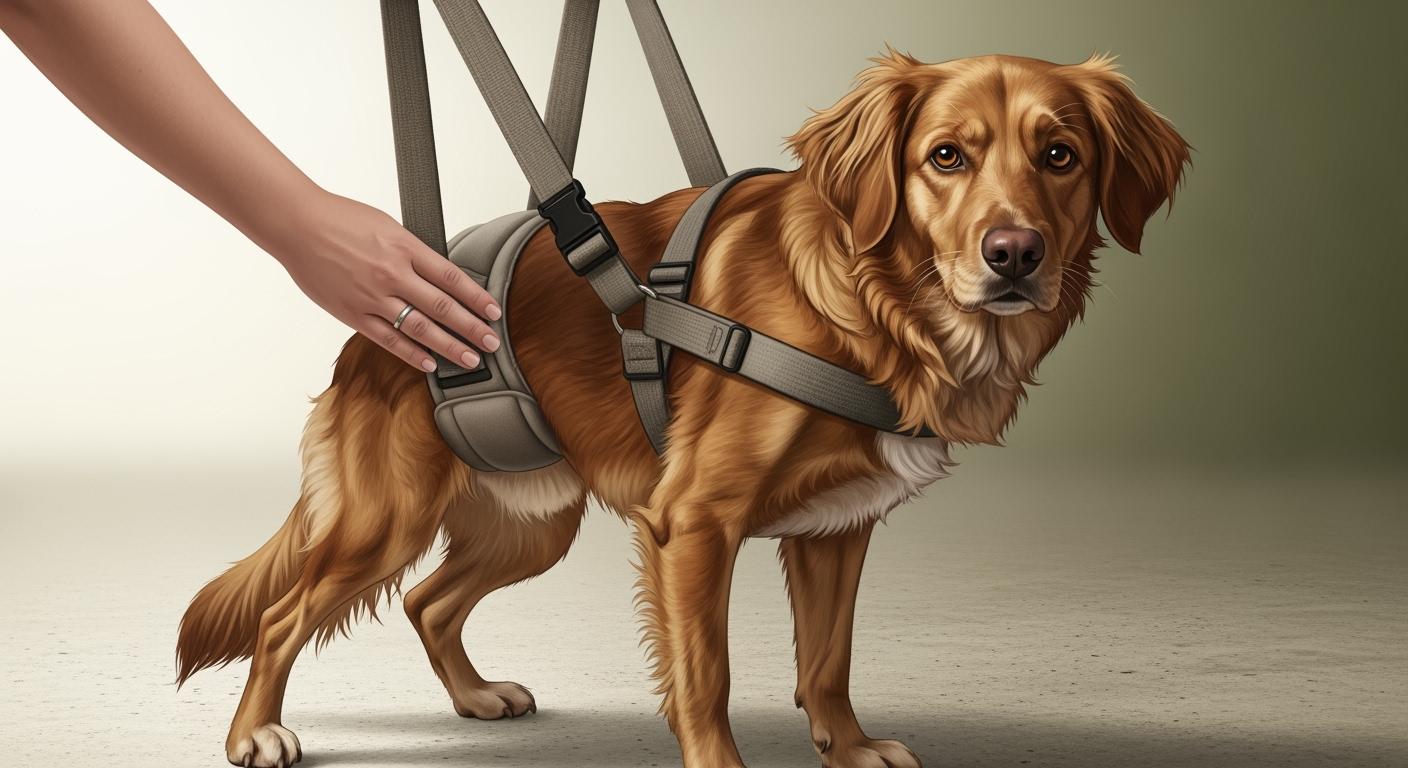
A dog lift harness gives your dog support when their hind legs feel weak or unstable. You use this harness to help your dog stand, walk, climb stairs, or go outside for bathroom breaks. Many dogs need this kind of help as they age, recover from surgery, or face conditions like hip dysplasia and arthritis. By reducing strain on your dog’s joints and back, you make daily movement safer and more comfortable. When you choose a harness, focus on your dog’s comfort, safety, and everyday needs.
Key Takeaways
A dog lift harness gives important help to dogs with weak back legs. It helps them stand up, walk, and do daily things safely.
Pick a harness that fits your dog well. This keeps your dog comfortable and makes the harness work better. A tight fit stops slipping and pain.
There are different harnesses for different needs. Rear lift harnesses help dogs with weak back legs. Full-body harnesses help dogs with bigger movement problems.
Using a dog lift harness makes it easier for you to help your dog. It also keeps your back from hurting while you help your dog.
Ask your veterinarian for advice on picking the best harness. Your vet will help you choose one that fits your dog’s special needs and size.
What Is a Dog Lift Harness?
Purpose and Function
A dog lift harness is a special support device that helps you assist your dog when they have trouble using their back legs. You use this harness to help your dog stand up, walk, or move around the house. Many owners find it helpful for dogs who are aging, recovering from surgery, or dealing with hip or joint problems. The harness wraps around your dog’s body and gives you handles or straps to gently lift and guide them.
You can find different types of harnesses, each designed for a specific need. Here is a simple table to help you understand the main types:
Type of Harness | Description |
|---|---|
Front Lift Harness | Supports dogs with weak front legs, ideal for shoulder or neck injuries. |
Dog Lift Harness for Back Legs | Provides support for hind leg weakness or paralysis, crucial for conditions like IVDD. |
Total Body Lift Harness or Sling | Offers balanced support for both front and back legs, suitable for dogs needing full-body assistance. |
A dog lift harness for back legs is the most common choice for dogs with hind leg weakness. You can use it to help your dog with daily activities like walking, climbing stairs, or going outside for bathroom breaks.
How It Supports Hind Legs
A rear lift harness gives gentle support to your dog’s back end. You place the harness under your dog’s abdomen or around their back legs. This support helps your dog move safely and reduces the risk of falls. You can help your dog keep their balance and take pressure off their joints.
You help your dog stand up from a lying position.
You guide your dog as they walk or climb stairs.
You support your dog during bathroom breaks.
You reduce the strain on your own back and arms.
Studies show that using assistive devices like a dog lift harness can change the way your dog moves. These changes can help your dog stay stable and comfortable during daily routines. You give your dog the chance to stay active and enjoy life, even with weak hind legs.
Mobility Support for Dogs with Hind Leg Weakness
Common Mobility Challenges
Dogs with weak back legs have trouble moving every day. You might see your dog struggle to stand after resting. Their walk may look different or slower. Some dogs sway in the back or lose balance quickly. Others trip while walking or take shaky steps. This makes them unstable. Many dogs do not want to play or go outside for walks. Jumping in or out of the car is hard for them. Climbing stairs can feel impossible. You may notice less muscle in their back legs. Sometimes, they fall over or collapse. In some cases, dogs drag their back legs, which can cause injuries.
Struggling to stand up after resting
Change in gait or speed of walking
Hind end swaying
Sudden loss of balance
Stumbling while walking
Taking wobbly steps or instability
Reluctance to play or go outside for a walk
Inability to jump in or out of the car
Struggling to climb stairs
Loss of muscle mass in the hind end
Falling over or collapsing
These problems can happen to older dogs, dogs healing from surgery, or dogs with hip dysplasia and arthritis. Your dog may lose confidence and feel less independent as these issues get worse.
Practical Value of Mobility Support
Mobility support helps your dog stay active and safe. A lifting harness lets you help your dog’s back legs during daily tasks. You can help your dog stand, walk, or climb stairs. This lowers the chance of falling. Mobility support lets your dog enjoy bathroom breaks and short walks, even with weak legs.
Rear lifting harnesses help dogs stand and move more easily.
Dog wheelchairs let dogs walk, run, and play, keeping their independence.
Canine rehabilitation uses exercises and therapies to build muscles and improve movement.
Using a dog lift harness takes strain off your body and helps your dog. This support is great for dogs with arthritis, hip problems, or after surgery. It helps your dog keep muscle strength and stops more decline. You give your dog a better life by making daily activities safe and possible.
Tip: Always pick a harness that fits your dog well and feels comfortable. A good fit gives the best support and keeps your dog safe.
When to Use a Dog Lift Harness
A dog lift harness can help your dog in many situations. You may notice your dog struggling with daily activities. The right harness gives you a way to support your dog’s back legs and improve their quality of life.
Senior Dogs
Older dogs often lose strength in their hind legs. You might see signs such as joint pain, leg weakness, or trouble with stairs. Some senior dogs sleep more and move less because of discomfort. Many have a hard time getting up from a lying position. If your dog shows these signs, a rear lift harness can make standing, walking, and bathroom breaks much easier.
Joint pain and stiffness
Weakness in the back legs
Difficulty climbing stairs
Sleeping more than usual
Struggling to rise from the floor
A dog lift harness gives you a safe way to help your senior dog move around the house or yard.
Post-Surgery Recovery
After surgery, your dog may need extra help to move safely. Post-surgery recovery often brings temporary weakness or loss of muscle. You can use a rear lift harness to support your dog as they heal. Follow these steps for best results:
Measure your dog for the correct harness size.
Lay the harness flat and let your dog step into it.
Guide your dog’s legs through the loops.
Pull the straps up gently and secure them.
Check that the harness fits snugly but does not pinch.
Attach the rear support if needed.
Make sure the handles are in the right place for lifting.
A dog lift harness helps you guide your dog during walks, up stairs, or outside for bathroom breaks during post-surgery recovery.
Hip and Joint Issues
Many dogs develop hip dysplasia or arthritis as they age. These conditions are common reasons for needing mobility support. You may notice your dog limping, slowing down, or avoiding activity. A rear lift harness can help your dog stay active and reduce the risk of falls. Elderly dogs with joint problems benefit most from this kind of support.
Hip dysplasia and arthritis are rising in older dogs.
More dogs need harnesses due to age-related mobility problems.
Rear lift harnesses help dogs with degenerative joint diseases move safely.
Temporary Weakness
Some dogs need temporary mobility support after an injury or illness. Leg injuries, muscle loss, or recovery from surgery can all cause short-term weakness. You can use a rear lift harness to help your dog stand, walk, or go outside until they regain strength.
Leg injuries like cruciate tears or fractures
Muscle atrophy from inactivity
Weakness during recovery from surgery
Tip: Always watch your dog’s comfort and adjust the harness as needed. A well-fitted harness supports your dog without causing pain.
A dog lift harness gives you a practical way to help your dog with walking, standing, climbing stairs, and bathroom breaks in all these situations.
Types of Rear Lift Harnesses
Picking the right rear lift harness depends on your dog’s needs. Each harness gives a different level of support. You can choose from several main types. Each type works best for certain situations.
Mid-Level Support
A mid-level support harness helps your dog move every day. You can use it for walking or climbing stairs. It also helps during bathroom breaks. These harnesses are good for dogs who need steady help but can still walk alone. The Walkin’ Warrior Rear Harness is a popular option. It feels comfortable and comes in many colors. You can attach it to a wheelchair if needed. This harness fits most dogs and lets you lift your dog safely.
Feature | Mid-Level Support Harness | Heavy Support Harness |
|---|---|---|
Design | Walkin’ Warrior Rear Harness | Help’Em Up Harness |
Function | Full rear lifting support, suitable for stairs and potty breaks | Patented Hip Lift design for significant support |
Adjustment Points | N/A | 10 adjustment points for a custom fit |
Recommended Use | Longer periods, independent use, wheelchair compatible | Recovery and mobility challenges |
Heavy Support
A heavy support harness gives more help for dogs with serious weakness. It is also good for dogs with joint problems. The Help’Em Up Harness uses a special Hip Lift design. This harness gives strong support for your dog’s back end. It also takes strain off your own body. There are ten adjustment points for a custom fit. This harness works well for recovery and ongoing mobility needs.
Full Body Harness
A full-body harness supports both front and back legs. You may need this if your dog has severe mobility issues. It is also good for dogs with many joint problems. The Doggie Stylz Multi-Functional Full-Body Lifting Dog Harness Vest connects the front and back with straps. Full support harnesses let you lift your dog completely. They are great for dogs with degenerative conditions or neurological disorders. Many full body harnesses have padded handles and adjustable straps. This makes them comfortable and easy to use.
Note: Full body harnesses are often used for walking, lifting, and rehab exercises at home or in clinics.
Rear-Only Harness
A rear-only harness supports your dog’s back end. You place it around the rear legs or under the hips. The Walkabout Back End Harness uses soft neoprene for comfort. It is made just for rear lifting. This harness is best for dogs who only need help with their hind legs. Rear-only harnesses are simple to use. They help you lift your dog for short walks, stairs, or bathroom breaks.
You can find trusted brands like Ruffwear, PETBABA, HandicappedPets, and Labra. These brands are known for durability and comfort. They are also easy to use. When you pick a rear lift harness, check for a good fit. Make sure it gives the right support for your dog.
Choosing the Best Rear Lift Harness
Comfort and Adjustability
Your dog should feel safe and calm in a rear lift harness. Comfort is very important for dogs with weak back legs. Straps that adjust help you get the right fit. The harness should not rub or hurt your dog’s skin. You can check the fit by sliding two fingers under the straps. Padding keeps your dog’s skin from getting sore. Buckles that adjust let you change the harness for your dog’s shape.
Here is a table with key things for comfort and adjustability:
Criteria | Description |
|---|---|
Material | Choose nylon or polyester for strong, tough harnesses. |
Adjustability Range | Make sure it fits your dog’s chest size. |
Weight Capacity | Check how much weight the harness can hold. |
Reflectivity | Reflective strips help keep your dog safe at night. |
Buckle Type | Strong buckles last longer and are easy to use. |
Handle Design | Padded handles help you lift your dog without pain. |
Compliance | Ask for safety test reports if you want extra proof. |
Tip: Always make the harness snug before lifting your dog. This keeps your dog safe and comfortable.
Durability and Materials
A strong harness will last a long time with daily use. Nylon is a great choice for rear harnesses. It is light, strong, and easy to wash. Nylon does not wear out fast, so it is good for active dogs. Polyester is flexible and does not soak up water. Cotton is soft for dogs with allergies but needs more care. The material you pick changes how long the harness lasts. You want a harness that can be washed often and used outside. Strong stitching and good hardware make the harness tougher.
A tough harness helps your dog move every day. It can handle lots of lifting and walking. You can trust a strong harness for your daily needs.
Ease of Use
You need a harness that is easy to put on and take off. Step-in harnesses save time and are less stressful for your dog. Handles and straps help you guide your dog easily. Some harnesses have parts you can remove for more options. If you can wash the harness in a machine, cleaning is simple. Support handles spread out your dog’s weight, so lifting is easier for you.
The CareLift harness has handles and a leash for easy lifting.
Machine washable harnesses are easy to clean.
Soft designs help you guide your dog up steps or into cars.
Note: Try the harness on your dog before using it every day. Make sure you can lift and guide your dog without trouble.
Matching Harness to Dog’s Needs
You need to pick a harness that fits your dog’s size, breed, and how active they are. Measure your dog to get the right fit. Some breeds, like barrel-chested dogs, may need a bigger front harness. If your dog is between sizes, you can mix and match for the best fit. Pick a harness based on how much help your dog needs and how often you will use it.
Fit should be close but not too tight.
Material should be strong and easy to wash.
Reflective strips help keep your dog safe.
Pick a design that is comfy for your dog, like step-in or over-the-head.
Strong stitching and hardware make the harness last longer.
You can watch your dog move to see what they need. Try different harnesses at the store to find the best one. Padding stops the harness from rubbing your dog’s skin. Reflective strips help when you walk at night. Make sure the harness works with your leash.
Ask your vet for advice. Vets can tell you what features are best for your dog’s age, size, and health. They help you pick the right rear lift harness for your dog.
Common mistakes are using a harness that is too loose or tight, lifting too quickly, only using the harness for support, and not checking it often. Always look for damage and adjust the harness as needed.
A good rear lift harness makes your dog more comfortable and safe. It helps your dog move and makes lifting easier for you.
Benefits of Dog Lift Harness Mobility Support
Improved Stability
You help your dog gain stability when you use a dog lift harness. Dogs with weak hind legs often struggle with balance and may have difficulty with stairs. A harness gives you control and lets your dog trust you during movement. You support your dog’s rear, which prevents falls and helps them walk with confidence. Many harnesses, like full-body designs, offer extra balance for aging pets. You can guide your dog up and down stairs, making each step safer. Dogs who use a rear support harness can enjoy walks and bathroom trips without fear of slipping.
You provide stability and balance control.
Your dog feels secure and trusts your support.
Rear harnesses assist dogs during walks and stairs.
Reduced Owner Strain
A dog lift harness reduces strain for you as well. You no longer need to bend or carry your dog’s weight with your arms alone. Handles and straps let you support your dog’s rear easily. You can help your dog stand, walk, or climb stairs without hurting your back. Many harnesses spread your dog’s weight, making lifting safer for both of you. You assist your dog with bathroom breaks and daily routines, saving energy and preventing injury.
Using a harness means you help your dog quickly and safely, especially during bathroom trips or short walks.
Safe Daily Assistance
You give your dog safe support every day with a dog lift harness. The harness lets you guide your dog during walks, stairs, and bathroom breaks. You support their rear, which protects their legs and spine. Many harnesses feature hip lifts and full-body designs for extra comfort. You can help your dog climb stairs, walk outside, or take breaks without covering their private parts. The harness works well for semi-mobile dogs and those needing rehabilitation. You enable your dog to perform exercises for strength and balance, improving their quality of life.
Assists dogs in climbing stairs by supporting their hips.
Facilitates bathroom breaks with easy access.
Supports dogs during walks, enhancing their outdoor experience.
Compatible with wheelchairs for longer outings.
A rear lift harness stands out as the best solution for helping dogs with hind leg weakness. You make daily activities safer and more comfortable for your pet.
When you choose a dog lift harness, focus on your dog’s comfort, safety, and daily needs.
Use the harness for bathroom breaks, stairs, and helping your dog stand or move inside.
Always measure your dog for the right fit and look for strong, breathable materials.
Pick a harness with easy-to-use handles and adjustable straps.
Check the harness for support and comfort.
Make sure it is simple to put on and take off.
Choose extra features like reflective strips for safety.
Before you buy, talk to a veterinarian recommended for advice. They can help you find the best harness for your dog’s condition and size.
Help your dog stay active and safe every day.
FAQ
How do you put on a dog lift harness?
You place the harness under your dog’s belly or hips. Secure the straps and handles. Adjust for a snug fit. Make sure your dog feels comfortable and can move freely.
Can you use a dog lift harness for bathroom breaks?
Yes, you can use a dog lift harness to help your dog stand and squat during bathroom breaks. The harness gives support and keeps your dog steady.
What size dog lift harness should you choose?
Measure your dog’s chest, waist, and weight. Check the manufacturer’s sizing chart. Pick a harness that fits closely but does not pinch or slip.
Is a dog lift harness safe for daily use?
A dog lift harness is safe for daily use when you check the fit and comfort often. You should inspect the harness for wear and adjust as needed.
