
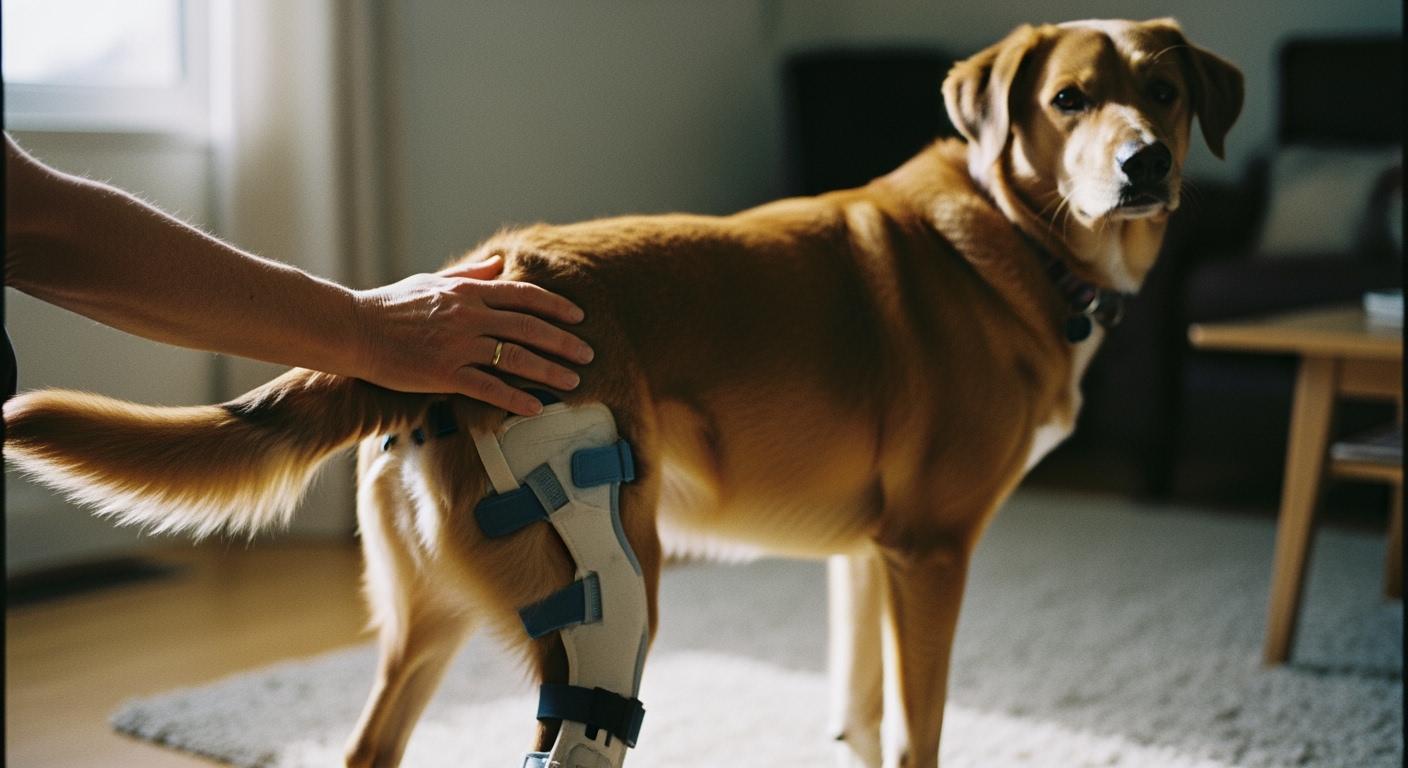
If you see your dog having trouble with weak back legs, limping, or moving slower, a dog rear leg brace can help your dog every day. It gives more support and helps your dog stay steady. Many owners want to help their dogs walk, stand, and go up stairs with less pain. Studies from vets show that dogs with braces can carry weight better, load their legs better, and walk more evenly:
Study Reference | Result |
|---|---|
Rosen et al., 2022 | 100% better weight-bearing |
Carr, 2016 | Better limb loading after 90 days |
Muršec et al., 2025 | Better gait symmetry |
You might ask if braces are comfy and work well. Most braces use soft and adjustable materials. They fit your dog’s needs and daily life.
Key Takeaways
A dog rear leg brace gives important help to dogs with weak back legs. It helps them walk, stand, and go up stairs more easily.
Watch for signs like shaking, trouble standing, or moving slowly. These signs show your dog might need a brace.
Pick a brace that fits well and can be changed in size. A good fit keeps your dog comfortable and helps the brace work well. It lets your dog move without problems.
Check your dog often when using the brace. Look for any pain or problems and change the brace if needed. This keeps your dog safe and happy.
Ask your veterinarian for tips about using a brace. This should be part of a full plan to help your dog move and feel better.
What Is a Dog Rear Leg Brace
Purpose and Support Function
A dog rear leg brace is a special device that wraps around your dog’s hind leg. You use it to give extra support when your dog shows signs of weakness, limping, or pain in the back leg. Many owners look for this solution when their dog struggles to stand, walk, or climb stairs. The main goal of the brace is to help your dog stay steady and move with more confidence.
Veterinary orthopedic experts say that a dog rear leg brace can help in many situations, such as:
Arthritis or pain in the ankle or wrist
Injury, sprain, or strain
Joint deviation or deformity
Protection from further injury
Support for the remaining limb after amputation
You want your dog to feel comfortable and safe during daily activities. Research shows that dog leg braces can improve function and comfort for dogs with different needs. The right fit, regular checks, and your care make a big difference in how well the brace works.
How It Assists Mobility
A dog rear leg brace works by giving mechanical support to your dog’s hind limb. The brace uses a special system that helps keep the leg stable. This system pushes against the forces that make your dog’s ankle joint weak. It keeps the joint from collapsing and helps your dog stand and walk better.
When you use a dog rear leg brace, you help your dog move more easily. Studies show that bracing can lead to real improvements in mobility and comfort. Many owners notice their dogs walk with less lameness and show more energy. Custom braces, when fitted and monitored well, can improve limb use and daily movement. Most owners report that their dogs feel more comfortable and active after using a brace.
Tip: Always check the fit of the brace and watch your dog for any changes in movement or comfort. Good support starts with the right brace and careful attention.
Signs Your Dog Needs Rear Leg Support
Hind Leg Weakness
You might see your dog’s back legs shaking or trembling. Sometimes, your dog loses muscle in the back legs. Your dog may have trouble getting up from sitting or lying down. Some dogs stumble or move in an unsteady way. Your dog could walk slower or lose balance. These changes mean your dog needs more help for the rear legs.
Common signs of hind leg weakness include:
Back legs shake or tremble
Hard time standing up after resting
Less muscle in the back legs
Walking slower than before
Unsteady or falling down
If you notice these signs, a dog rear leg brace can help your dog stay steady and move better.
Difficulty Walking or Standing
If your dog has trouble walking or standing, they may pause before moving. Some dogs drag their paws or walk in a wobbly way. Others may make noises or seem upset when walking. These signs show your dog has trouble moving and it affects their life.
Veterinarians use different tests to check for walking or standing problems:
Diagnostic Tests | Purpose |
|---|---|
Physical and neurologic exam | Checks your dog’s health and nerves |
Diagnostic imaging (X-rays, MRI) | Looks inside the leg or joints |
Blood tests | Finds hidden health issues |
Urinalysis | Checks for kidney or urinary problems |
Electrocardiogram (EKG) | Checks how the heart works |
Spinal tap | Looks for nerve or brain problems |
If your dog finds walking or standing hard, a rear leg brace can help your dog move easier every day.
Limping and Hesitation on Stairs
Limping means your dog’s back leg hurts. Your dog may use one leg less or avoid putting weight on it. Hesitating on stairs is another sign. Dogs with joint or hip problems often stop before going up or down steps. Arthritis, hip dysplasia, or muscle injuries can make stairs tough for your dog.
Watch for these signs:
Not wanting to use stairs
Limping after playing or exercising
Stopping at the bottom of stairs
Licking or paying extra attention to a back leg
If your dog does these things, a dog rear leg brace can help your dog move safely and feel more confident.
Dog Rear Leg Brace for Mobility Challenges
Dogs can have trouble moving as they get older or after injuries. You want your dog to feel safe and comfortable when moving. A dog rear leg brace gives support for daily tasks. This brace helps your dog walk, stand, and use stairs with less effort. You can use a brace for many problems like injury recovery, arthritis, or after surgery. Some dogs need help lifting if they have big mobility problems.
Here is a table showing common mobility challenges a dog rear leg brace can help with:
Mobility Challenge | Description |
|---|---|
Hyperextension Injuries | Happens when the joint bends too far, often from trauma. |
Sprains and Strains | Damages ligaments or muscles near the joint, usually from awkward moves. |
Arthritis | Causes stiff and painful joints, making movement hard. |
Growth Deformities | Problems in fast-growing dogs that change how joints work. |
Injury Recovery
If your dog gets hurt, you want them to heal and get stronger. A dog rear leg brace gives support right where your dog needs it. This support takes pressure off the joint and helps your dog use the leg better. You may see your dog limp or avoid using the back leg after an injury. The brace keeps the leg steady and helps your dog move safely while healing.
Studies show braces help dogs recover better. Here is a summary of findings from recent studies:
Evidence Type | Study Reference | Findings | Limitations |
|---|---|---|---|
Prospective Trial | All stifle-braced dogs used their legs better; most had mild problems | Small group; short follow-up | |
Retrospective Study | Dogs used their legs better after 90 days | No control group; retrospective | |
Case Report | Two dogs walked more evenly | Very small sample |
Most dogs show better leg use and weight-bearing with a brace. Dog knee braces and dog hip braces both help with recovery. Always watch your dog for changes and adjust the brace if needed.
Arthritis and Age-Related Decline
Older dogs often get arthritis or lose muscle in their back legs. You may see your dog move slower, pause at stairs, or have trouble standing up. A dog rear leg brace gives extra support and keeps your dog steady. The brace lowers strain on joints and makes moving easier.
A brace helps your dog in different ways:
Stability: The brace keeps joints steady and stops more injury.
Pain Reduction: Your dog feels less pain and swelling, so daily tasks are easier.
Improved Functionality: With support, your dog can be more active, which helps joint health.
Dog hip braces and dog knee braces are good for arthritis and age-related problems. You can help your dog stay comfortable and active with the right brace.
Note: If your dog has trouble getting up or walking, lifting support can help. Some braces have handles to help your dog with daily tasks.
Post-Surgery Support
After surgery, your dog needs time to heal and get strong again. You want to protect the surgery spot and stop new injuries. A dog rear leg brace gives gentle support and keeps the leg steady while healing. The brace helps your dog move safely and lowers the chance of hurting the leg again.
Dog knee braces are used after ligament or tendon surgery. Dog hip braces help dogs after hip surgery. Check the brace fit and watch for signs your dog is uncomfortable. The brace lets your dog walk, stand, and go outside for bathroom breaks with less risk.
You are important in your dog’s healing. Using a dog rear leg brace gives your dog support for better recovery. Dogs move better when you use the right brace, gentle exercise, and regular checks.
Benefits and Limitations of Dog Leg Braces
Stability and Daily Comfort
A dog rear leg brace gives your dog extra support where it is needed most. You help your dog feel more secure when walking, standing, or climbing stairs. The brace wraps around the rear leg and adds gentle pressure. This pressure helps your dog keep balance and move with more confidence. Many owners notice their dog stands taller and walks with less hesitation.
You can expect these main benefits from using a brace for your dog:
Support for mobility during daily walks and play
Pain reduction by limiting movements that cause discomfort
Improved confidence as your dog feels more stable
A brace can make daily routines easier for your dog. Your dog may show more interest in going outside or playing. You give your dog a chance to enjoy daily life with less struggle.
What Braces Can and Cannot Do
A dog rear leg brace offers practical support, but it is important to know its limits. The brace helps your dog with stability and comfort, but it does not cure leg problems or reverse joint changes. You should always check your dog’s skin under the brace to keep it clean and dry. Add padding if you see any signs of chafing or irritation.
Here are some things to keep in mind:
The brace should give the right amount of support. Too much support can lead to muscle loss.
Your dog may need a firm brace at first, but a lighter one as your dog gets stronger.
A brace that is too flexible may not give enough stability for healing.
A dog rear leg brace does not replace veterinary care. You should talk to your vet if you see new problems or if your dog does not improve. The brace works best as part of a daily support plan for your dog’s mobility and comfort.
Note: Always watch your dog for signs of discomfort. Adjust the brace as needed to keep your dog safe and happy.
Choosing the Right Dog Rear Leg Brace
Fit and Comfort
You want your dog to feel comfortable and safe every day. The fit of a rear leg brace matters most for your dog’s support and well-being. A brace that fits well gives steady support and helps your dog move with less effort. If the brace feels too tight or too loose, your dog may not get the support needed. Always measure your dog’s leg carefully before choosing a brace. Check the size chart and follow the instructions for measuring. A good fit keeps the brace in place and prevents rubbing or slipping. Your dog will wear the brace longer if it feels soft and does not cause discomfort. Proper placement and comfort help your dog accept the brace and use it for daily support.
Tip: Watch your dog when you first use the brace. Look for signs of discomfort or changes in movement.
Adjustability and Support Level
You should look for a brace with adjustable straps or closures. This lets you change the fit as your dog’s needs change. Adjustable features help you give the right amount of support for walking, standing, or bathroom breaks. Dogs come in many shapes and sizes, so a brace with multiple adjustment points works best. If your dog is older or recovering from an injury, you may need more support at first. Some braces have padding for extra comfort during long walks or play. Choose a brace that matches your dog’s activity level and support needs.
Measure your dog for the right size.
Pick a brace with adjustable straps.
Choose padding for comfort.
Match the support level to your dog’s daily routine.
Durable Materials and Ease of Use
The material of the brace affects how long it lasts and how easy it is to use. You want a brace made from strong, lightweight materials that stand up to daily wear. Some braces use soft fabrics for mild support, while others use rigid supports for more stability. Look for moisture-wicking linings and antimicrobial padding to keep your dog’s skin healthy. Water-resistant options help if your dog likes to swim or walks in wet grass. Easy-to-use closures make it simple to put the brace on and take it off.
Material Type | Description | Use Case |
|---|---|---|
Rigid supports | Lightweight aluminum or reinforced polymers | Maximum stability for severe injuries |
Soft braces | Neoprene or breathable mesh | Mild support for early-stage issues |
Moisture-wicking | Keeps skin dry and prevents odor | Extended daily wear |
Water-resistant | Handles wet conditions | Dogs that swim or live in humid climates |
Choose a dog rear leg brace that fits your dog’s needs for support, comfort, and daily movement. The right brace helps your dog walk, stand, and enjoy life with more confidence.
Fitting and Adjusting Dog Leg Braces
Measuring for Proper Fit
Getting the right fit for your dog’s rear leg brace is important for comfort and support. You want to measure carefully before you choose a brace. Follow these steps to help your dog get the best fit:
Measure the circumference. Wrap a soft tape around key points like the thigh, hock joint, or wrist. The tape should feel snug but not tight.
Measure the length. Start at the top of the area that needs support and measure down to the bottom.
Double-check your work. Take each measurement twice and write down the numbers.
A good fit helps your dog move better and keeps the brace from slipping or rubbing.
Tips for Safe Adjustment
When you first put the brace on your dog, take it slow. Let your dog sniff and explore the brace. Use treats and praise to make the experience positive. Start with short wear times and watch how your dog reacts. Here are some tips for safe adjustment:
Gradually introduce the brace.
Use positive reinforcement.
Watch for signs of discomfort.
Check the fit often.
Add padding if you see skin irritation.
Keep the area clean and dry.
Follow the instructions from the manufacturer.
These steps help your dog feel comfortable and safe while wearing the brace.
Monitoring During Use
You should check your dog’s brace every day. Look for changes in how your dog walks or stands. Watch for any signs of discomfort or skin problems. Use padding to prevent chafing and keep the area dry. If you notice swelling or irritation, talk to your vet. The table below shows what to watch for:
Monitoring Aspect | Recommendation |
|---|---|
Initial Fitting | Make sure the brace fits well and supports your dog’s rear leg. |
Gradual Introduction | Start with short sessions and increase time as your dog adapts. |
Regular Checks | Look for skin issues, swelling, or brace movement. |
Daily Routine | Combine brace use with gentle exercise for better mobility. |
Tip: Always keep an eye on your dog’s comfort and adjust the brace as needed. Your attention helps your dog stay active and happy.
Daily Use and Care for Dog Rear Leg Braces
Safe Use and Supervision
You want your dog to feel safe and comfortable while using a rear leg brace. Start with short daily leash walks on even surfaces. Avoid games that involve running, jumping, or fetch, as these can strain your dog’s rear leg. Let your dog play on soft grass or padded floors to protect the muscles and joints. Prevent risky movements by blocking access to stairs or high furniture. Use ramps or steps to help your dog reach couches or beds. Cover slippery floors with non-slip rugs or foam mats to reduce the chance of slipping. You can also ask your vet about joint-friendly supplements to give extra support.
Tip: Always watch your dog during activity. Supervise playtime and walks to make sure the brace stays in place and your dog moves safely.
Cleaning and Maintenance
Keeping the brace clean helps your dog stay healthy and comfortable. After each use, wipe down the inside and outside of the brace with a damp cloth. For a deeper clean, remove any inserts or straps and hand wash the brace in lukewarm water with mild, pet-safe soap. Gently scrub with a soft brush or cloth, then rinse well to remove all soap. Let the brace air dry completely before putting it back on your dog. Check the brace often for signs of wear, such as frayed straps or worn padding. Repair small issues quickly and replace the brace if needed. Store the brace in a cool, dry place and keep it away from sharp objects.
Signs of Discomfort
Watch your dog closely for any signs of discomfort while wearing the brace. Look for excessive licking of the rear leg, reluctance to move, or changes in behavior. If your dog seems upset or avoids walking, check the fit of the brace and the skin underneath. Remove the brace if you see redness, swelling, or sores. Contact your veterinarian if discomfort continues. Your attention helps your dog get the best support and comfort every day.
What to Expect with Dog Rear Leg Brace Support
Adjustment Period
When you first fit a dog rear leg brace, your dog needs time to get used to it. Most dogs do not adjust overnight. You should start with short sessions and slowly increase the time your dog wears the brace each day. This helps your dog feel comfortable and prevents irritation. Here is a simple guide for the first week:
Day | Duration of Wear | Sessions per Day |
|---|---|---|
1 | 30 minutes | 2-3 |
2 | 1 hour | 2-3 |
3 | 2 hours | 2-3 |
4 | 3 hours | 2-3 |
5 | 4 hours | 2 |
6 | 6 hours | 1 |
7 | 8 hours | 1 |
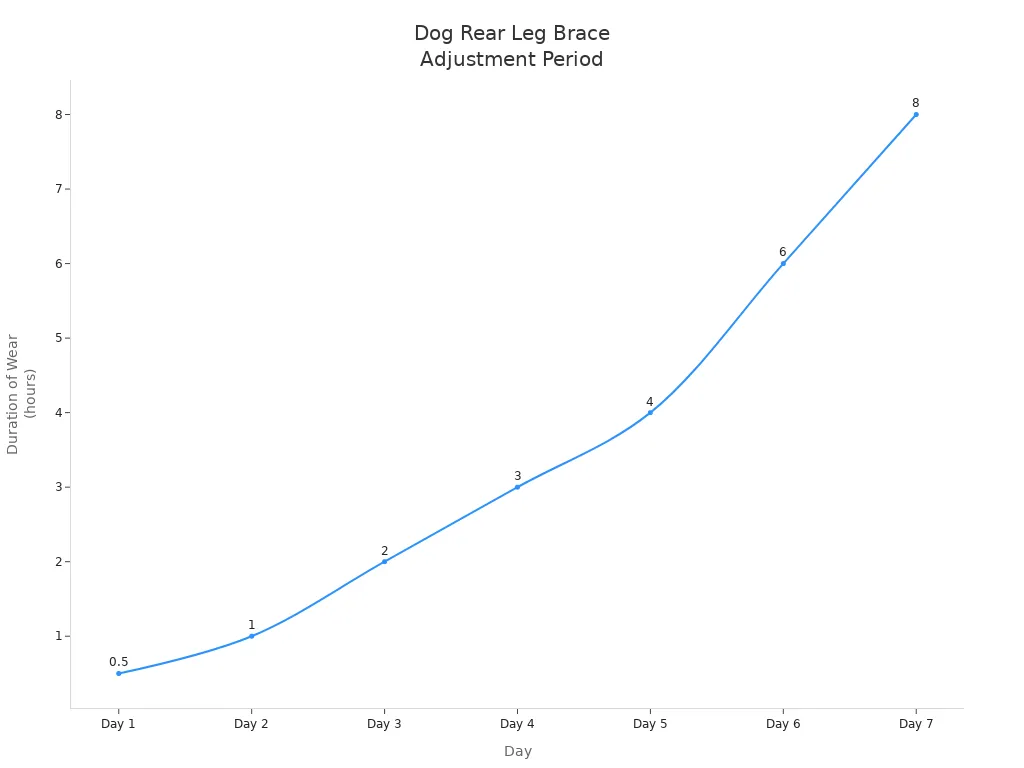
You should always supervise your dog during these sessions. Watch for any signs of discomfort or skin irritation. Most dogs become familiar with the brace after a week. Your patience helps your dog adjust and feel secure.
Signs of Improvement
As your dog gets used to the rear leg brace, you may notice positive changes. Look for these signs that show your dog is improving mobility and feeling better:
Enhanced stability when standing or walking
A more natural gait and smoother steps
Increased confidence during walks or play
Less swelling or pain in the rear leg
Willingness to walk, run, or climb stairs
More stamina during daily activities
A happier mood and more interest in exploring
You help your dog by watching for these changes. Many owners see their dog become more active and comfortable with daily routines.
When to Seek Veterinary Advice
You should contact your veterinarian if you notice any problems while your dog uses the brace. Watch for these warning signs:
Persistent limping or worsening mobility
Swelling, redness, or sores under the brace
Refusal to walk or sudden changes in behavior
Signs of pain that do not improve
Your veterinarian can check your dog and give advice on the best way to continue support. Always use the dog rear leg brace as part of a complete care plan for your dog’s comfort and mobility.
You give your dog the chance for better stability and comfort with a dog rear leg brace. This support helps your dog walk, stand, and enjoy daily life with less struggle. You should follow your veterinarian’s advice, use rest, and try physical therapy to help your dog adjust. Regular check-ins and proper fitting keep your dog safe. Explore brace options to find the best fit for your dog’s stability and mobility needs.
FAQ
How do I know if my dog needs a rear leg brace?
You may notice your dog limping, struggling to stand, or hesitating on stairs. If your dog shows weakness in the back legs or moves slower, a rear leg brace can give extra support for daily movement.
Can my dog wear a rear leg brace all day?
You can let your dog wear a rear leg brace during active times, like walks or play. Remove the brace at night or when your dog rests. Always check your dog’s skin and comfort during use.
Will a rear leg brace help my dog walk better?
A rear leg brace gives your dog more stability and support. Many owners see their dog walk with more confidence and less hesitation. The brace helps your dog move more easily during daily routines.
How do I clean my dog’s rear leg brace?
You should wipe the brace with a damp cloth after each use. For a deeper clean, hand wash with mild soap and let it air dry. Keeping the brace clean helps your dog stay comfortable.
Is a rear leg brace safe for older dogs?
A rear leg brace is safe for most older dogs. It supports weak joints and helps your dog stay active. Always watch your dog for signs of discomfort and ask your veterinarian if you have concerns.
